
Reviewed · TEMPLE & SHRINE TOURS IN KYOTO
Kyoto Early Bird English Tour: Fushimi Inari & Gion(Private opt)
Early gates, fewer crowds.
This Kyoto private early bird English tour strings together the city’s biggest icons in one smooth morning, starting with Fushimi Inari and ending in Gion. You’ll get a local English-speaking guide who keeps things moving and helps you make sense of what you’re seeing, not just where to stand.
I especially like two things about it. First, you get professional photos taken during the tour, so you are not stuck playing photographer every five minutes. Second, the guide named Ikki has a talent for explaining shrine and temple meaning in plain, practical language, with extra context that makes the sights feel personal.
One consideration: it is a walking-focused route, and the schedule can feel tighter than the full range of the listed duration. Also, Kiyomizu-dera admission is extra, so you’ll want to budget for the entry fee before you go.
Key highlights to pay attention to
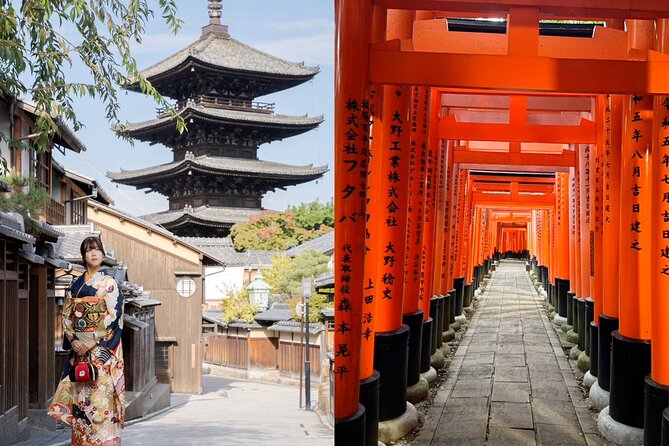
- Fushimi Inari early timing: Torii gates without the peak crush, plus better photo angles.
- Ikki’s English + explanations: You’ll learn what you are looking at, not just the name of it.
- Photo help included: The guide takes photos for you during key moments.
- Kiyomizu-dera viewpoint time: A classic stop that still feels manageable with guided pacing.
- Ends in Gion near Yasaka Shrine: You finish in an area where it’s easy to keep exploring.
Why this early bird Kyoto route works (and why it matters)
Kyoto’s top sights have a problem: they get popular fast. The early bird idea here is simple. You start with the one that usually fills up first, so you can enjoy the atmosphere, walk at your own speed, and take photos without constant shoulder-to-shoulder contact.
You also save energy by using a guided route instead of “wander and hope.” Kyoto is great, but it’s also easy to lose time between neighborhoods. This tour uses public transit and plenty of walking so you hit the main clusters efficiently.
And because it is private, your group sets the pace more than on big group bus tours. If you want photos at a certain torii angle, or you want a moment to look closely at temple details, your guide can adjust in real time.
More Temple & Shrine Tours in Kyoto
- Kyoto: Fushimi Inari, Kinkakuji, Bamboo Grove 1 Day Bus Tour
★ 4.8 · 4,316 reviews - Kyoto: Tea Ceremony Ju-An at Jotokuji Temple
★ 4.9 · 3,207 reviews - Fushimi Inari Hidden Hiking Tour (Private Option Available)
★ 5.0 · 1,750 reviews
Meeting at Kyoto Station, then switching to a walking rhythm
The tour starts at Kyoto Station, near Higashishiokoji Kamadonocho in Shimogyo Ward. That’s convenient because you’re already in the right transportation zone, whether you arrive by Shinkansen or local trains. It also makes it easier if you are coming from a hotel near the station.
From there, you move through Kyoto with public transportation and short walks between sights. The whole experience is designed around being on your feet, so plan for stairs and uneven stone paths. You do not need to be an athlete, but moderate fitness helps, especially around Fushimi Inari and Kiyomizu-dera.
The tour ends at Yasaka Shrine in the Gion area. I like endings like this because you do not feel trapped back at the starting point. You can keep strolling in the old streets, grab food nearby, or hop on transit to your next stop.
Fushimi Inari-taisha: torii gates first, best photos later
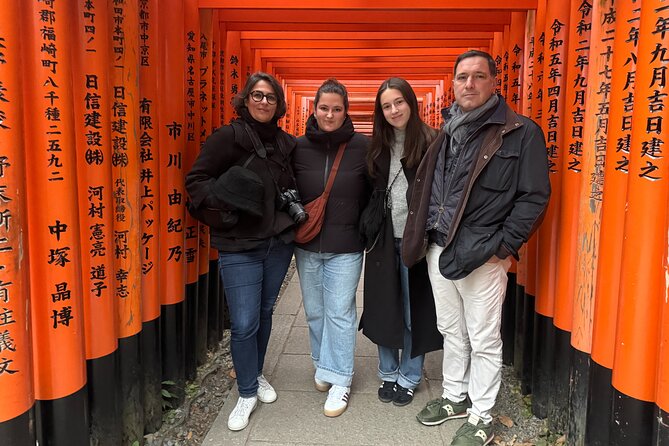
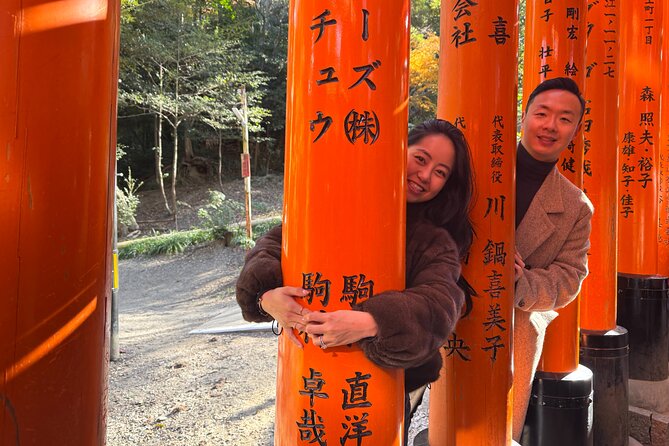
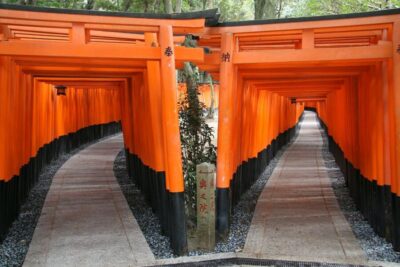
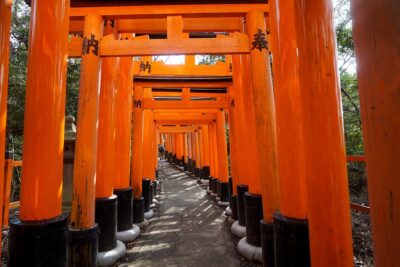
Fushimi Inari is the showstopper, the one people dream about. You’ll walk through thousands of red torii gates as they rise along Mount Inari, all tied to Inari, the god associated with rice and prosperity. The shrine is free to enter, which helps keep the early-morning cost under control.
Going first is the whole advantage. You’ll feel the difference right away, with more space to take photos and less time waiting for people to clear out at narrow sections. Even if you do not climb all the way, you’ll still get plenty of the iconic gate pathways and temple atmosphere.
A practical tip: wear shoes you trust. The route includes stairs and sloping paths, and you’ll be looking down to watch footing while you look up for torii framing. If you’re traveling with kids or older relatives, it’s still doable, just take slower breaks.
Kiyomizu-dera: the famous viewpoint stop, plus the entry fee
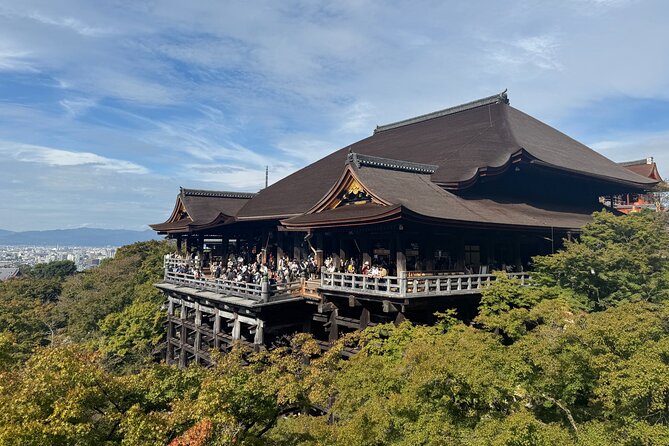
Kiyomizu-dera is the temple you have probably seen in photos, with a panoramic view over Kyoto from up on the hill. It is also one of the most popular stops, so even with an early start, expect it to be busy at least in parts.
The guide’s job matters here. When you understand what you’re seeing, the visit lasts longer than a quick look. Ikki, specifically, is praised for explaining what different elements mean and how the site connects to Kyoto’s beliefs and traditions.
Timing is another factor. You get about an hour at Kiyomizu-dera, which is enough to walk the main areas and enjoy the views, but not enough to treat it like a slow museum visit. If you want to take your time studying every structure, you may want extra time before or after the tour.
Budget note: Kiyomizu-dera admission is not included, listed at ¥500 per person. Build that into your total planning so you do not hit a surprise at the gate.
More geisha experiences in Kyoto:
- Kyoto Geisha Walking Tour: Gion District & Hidden Gems
★ 4.7 · 3,273 reviews - Kyoto: Gion Magical Night Walking Tour with Geisha Trivia
★ 4.9 · 2,393 reviews - Kyoto: Gion Geisha District Walking Tour – Stories of Geisha
★ 4.7 · 2,187 reviews - Best of Kyoto: Gion, Geisha, Pagodas & Cobblestones
★ 4.9 · 2,058 reviews
Sannenzaka and Ninenzaka: the streets that turn Kyoto into a movie
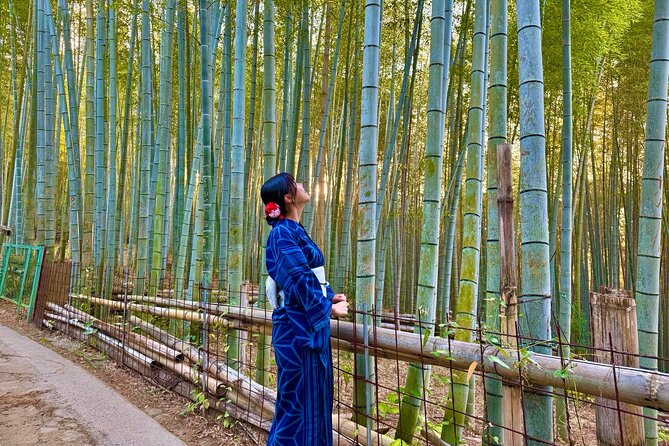
After the big shrine and temple moments, you shift to neighborhood Kyoto. Sannenzaka and Ninenzaka are charming stone-paved streets with souvenir shops and restaurants, all in historic wooden buildings. It’s one of those “slow down and look” places, because the details are the point.
You’ll only have about 15 minutes here. I like that format because it keeps the tour on track, but it also means you should treat this as a taste, not a full shopping session. If you love browsing, you can always return later on your own, or ask your guide where to stop for the best snacks.
This is also a good time for photos that are less about big monuments and more about street textures. You’ll find plenty of classic angles, especially if you’re trying to capture the atmospheric old-town feel.
Yasaka Pagoda (Hokanji) and the nails question
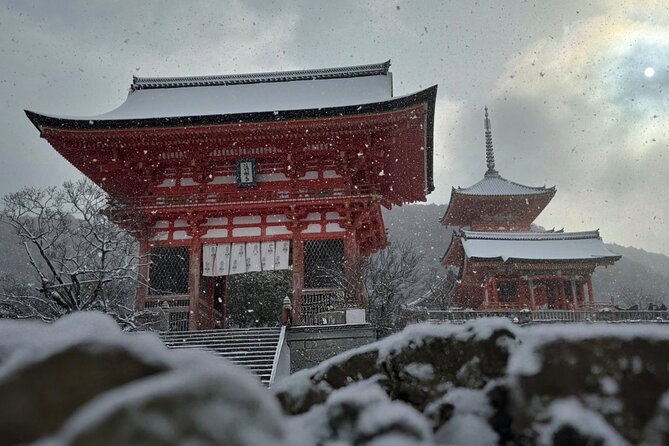
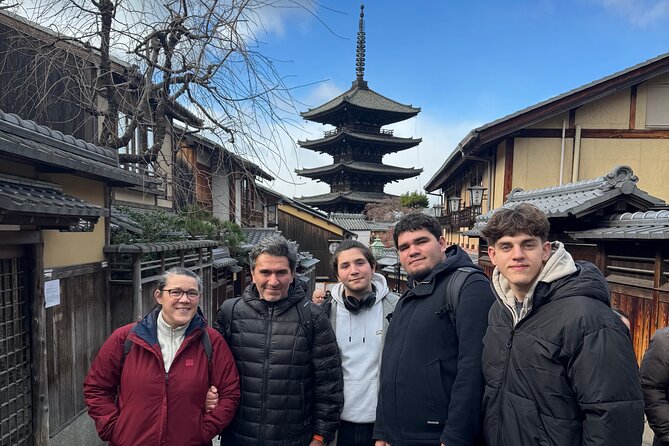
Next up is Yasaka Pagoda (Hokanji temple), known for being one of Japan’s older wooden structures. One detail people love is the claim that it was built without nails, and when you see the scale in person, it’s easy to feel impressed by the craftsmanship.
You get around 15 minutes at this stop. That’s enough time to take in the structure and get a few photos from respectful viewing points, but not enough to linger on every architectural detail. If you’re the type who could spend an hour studying old joinery and materials, you may want an extra visit later, outside this tour.
Still, as part of a highlights route, it works well. It adds a different feel from the bright red torii and the wide temple views. Here you’re focusing on wood, age, and Kyoto’s built heritage.
Yasaka Koshindo: color that makes temples feel alive
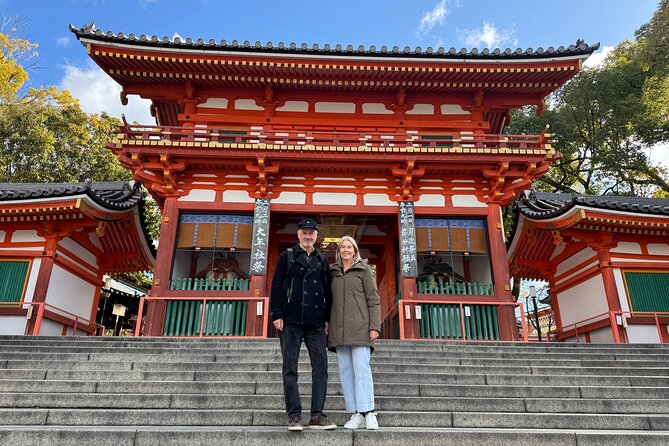
Then you’ll head to Yasaka Koshindo, a temple with an uncertain construction date that draws attention for its colorful decorations. Compared with places that are more restrained in color, this stop gives you a visual punch right away.
You’ll have about 15 minutes, which is perfect for soaking it in, snapping a few pictures, and moving on before the route gets too long. The guide’s explanations matter here again, because decorations without context can blur together. When you understand what you’re looking at, the colors feel intentional instead of random.
Also, this is a good moment to pause and refocus your camera. After multiple major sights, people tend to rush. A shorter stop like this helps you keep energy up.
Some past tour experiences mention a guide preparing extra materials, like a small booklet with pictures and tips about customs and prayers. If your guide has something similar that day, it can help you participate respectfully and understand what to look for.
Gion stroll: what you can see, and how not to rush it
Now you enter Gion, Kyoto’s most famous geisha district. You’ll notice the preserved street atmosphere, including traditional machiya houses and teahouses. This part of the tour is about the vibe, not checking off a single building.
You’ll spend about 15 minutes in Gion. That is a short window, but it’s enough to get your bearings and understand where the interesting lanes are. If you want a longer look, you’ll be positioned well to keep going on your own after the tour ends.
A helpful mindset: treat Gion like a neighborhood you’re visiting, not a theme park. Move slowly, keep your phone ready for details like wooden facades, and give space to locals. Your guide can point out what to notice without you feeling lost.
Yasaka Shrine to finish: a strong landing point in Gion
The final stop is Yasaka Shrine, with about 30 minutes. It matters for a reason beyond popularity: it’s described as the headquarters of 2,300 related shrines across Japan, dedicated to gods connected to prosperity and protection.
This is a strong ending because it gives you a meaningful cultural stop right when you’re ready to transition into evening Kyoto. You’re done near Gion and you can continue exploring without backtracking.
I like finishing with a shrine because it gives you something grounded to carry forward into the rest of your day. Even if you’re headed for dinner and shopping next, you’re leaving with a clearer sense of Kyoto’s belief system and how shrines shape neighborhood life.
Price and value: what $99.10 buys you, plus the extras
At $99.10 per person, this tour sits in the “worth it if you want a guide” category. Here’s why I think it’s good value.
You get an English-speaking local guide, and the big payoff is interpretation. You’re not just sightseeing, you are learning how the sights connect to Japanese culture and local traditions as you go. Add in the professional photos and it turns into a “two-for-one” deal, sightseeing plus a set of decent images that you did not have to fight for.
You also get a practical route across multiple neighborhoods, which helps reduce wasted time. Kyoto is not hard to navigate, but it is easy to miss the logical connections without local guidance.
Now the extras you must budget for:
- Public transportation fare: ¥390 per person (listed as not included)
- Kiyomizu-dera admission: ¥500 per person (not included)
- Food and drinks are also not included
If you were going solo, you’d pay for entry tickets where required and spend more time figuring out where to go next. With this tour, you are paying for time efficiency, translation, and photo help.
Who this Kyoto private English tour is best for
This tour is especially good if you want a compact Kyoto highlights plan without feeling rushed by your own indecision. I think it fits first-time visitors who want to see the major icons and learn what they mean.
It also works well for families. Several experiences highlight that the guide is patient and can keep conversations going for kids and teens while still satisfying adults who want real context.
If you are traveling with someone who hates planning, or who gets tired when you change routes every hour, a private walking tour like this can be a relief. You’ll get structure, pacing, and guidance, without losing the freedom to ask questions.
Just note the walking component. If you have limited mobility or you prefer mostly flat routes, you might find parts challenging. Fushimi Inari and Kiyomizu-dera both involve stairs and sloped walking.
Should you book this tour?
Book this tour if you want a tight, early morning route that hits Fushimi Inari, Kiyomizu-dera, and the Gion area with an English guide who explains what you see, and with photo help built in.
Skip it or adjust your expectations if you hate walking, or if you want to spend a long, slow half-day inside Kiyomizu-dera and on every street in the old districts. This is set up as an efficient highlights walk, not a full-day deep study.
My final take: if you’re spending a limited number of hours in Kyoto, this is one of the cleaner ways to get the big sights plus context, without turning your day into logistics math. If you can handle stairs and a brisk schedule, it’s a strong way to start Kyoto with fewer crowds and better photos.
FAQ
What does the tour include?
The tour includes an English-speaking local guide and professional photos taken during the tour. It also uses a mobile ticket.
Are admission tickets included?
Fushimi Inari, Sannenzaka Ninenzaka, Yasaka Pagoda (Hokanji), Yasaka Koshindo, and Yasaka Shrine are listed as free. Kiyomizu-dera admission is listed as not included and costs ¥500 per person.
How long is the tour?
The duration is listed as about 4 to 5 hours. The experience is designed as a walking-focused tour with breaks and transit between stops.
Where do we meet, and where does it end?
You meet at Kyoto Station near Higashishiokoji Kamadonocho, Shimogyo Ward. The tour ends at Yasaka Shrine in the Gion area (625 Gionmachi Kitagawa, Higashiyama Ward).
Is this a private tour?
Yes. It is a private tour or activity, and only your group participates.
Will I need to pay for transportation?
Yes. Public transportation fare is listed as ¥390 per person and is not included.
What is the cancellation policy?
Free cancellation is available if you cancel up to 24 hours in advance for a full refund. If you cancel less than 24 hours before the experience starts, the amount paid is not refunded.
Fresh options around Kyoto
- Kyoto: Quiet and Graceful Tea Ceremony★ 4.5 · 19 reviews
- Oboro | Mindful Tea Ceremony in a 100-Year-Old Kyoto Teahouse★ 5.0 · 19 reviews
- Ikebana Traditional Japanese Art of Flower Arranging★ 4.5 · 19 reviews
- Kyoto Satoyama Cycling with Lunch and English Guide★ 5.0 · 19 reviews
- Kyoto International Party Solo Friendly Expats and Locals★ 5.0 · 19 reviews
- Tea Ceremony Experience in Traditional Kyoto Townhouse★ 5.0 · 19 reviews
- Kyoto: Amanohashidate Ine Funaya Tour★ 4.4 · 19 reviews
- Kyoto Private Food Tours with a Local Foodie: 100% Personalized★ 4.5 · 19 reviews
Temple & Shrine Tours in Kyoto, compared.
Fushimi Inari, Kinkakuji, Bamboo Grove 1 Day Bus Tour
Read our review →
Fushimi Inari Hidden Hiking Tour (Private Option Available)
Read our review →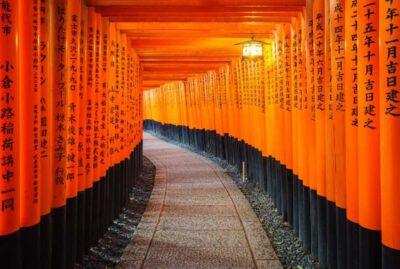
Osaka/Kyoto:Kinkakuji,Arashiyama,FushimiInariShrine,NaraPark
Read our review →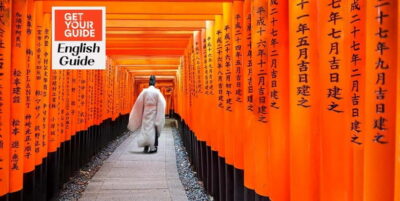
Kyoto/Osaka: Nara, Fushimi Inari Taisha, Arashiyama Bus Tour
Read our review →
Arashiyama Bamboo, Temple, Monkeys, or Secret Sake Brewery
Read our review →
Arashiyama Bamboo Forest, Monkeys, Matcha & Temple Tour
Read our review →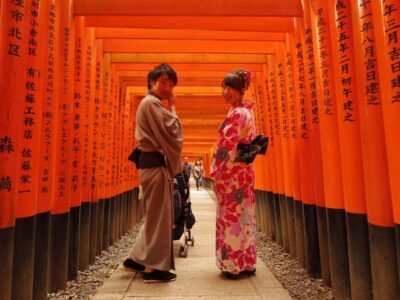
Osaka/Kyoto: Arashiyama, Nara & Fushimi Inari Shrine w/Lunch
Read our review →Browse the lists this tour appears in