
Reviewed · 1-DAY TOURS
Kyoto and Nara Day Trip from Kyoto
Kyoto and Nara in one day can be a lot. This tour strings together the key UNESCO sights, then adds the quieter meaning behind them through religion, politics, and daily life in Japan.
I like that you get air-conditioned transport plus admission fees, so you spend less time figuring things out and more time looking closely. I also like the English guide focus, since the stops are short and you need the story to land fast. One possible drawback: it is a long, packed schedule, and the end of the day near Nara Park can involve extra walking and a bit of a rush.
Quick hits
- UNESCO knockout lineup across both Kyoto and Nara, with the Golden Pavilion and the Great Buddha
- 50 to 70 minute stop windows that keep the day moving without totally killing your photo time
- Licensed English guide (names you may get include KC, Momo, Yoshito, Yuki, Etsuko, Tammy, and Keicy)
- Kasuga Shrine lantern atmosphere, including the Main Sanctuary special visit area when operations allow
- Nara Park deer time plus real-world caution about deer behavior
- Flexible sight substitutions if Imperial Palace or Nijo Castle are closed
Kyoto to Nara in One Long Day: pacing, time pressure, and what you gain
This is a classic “best-of” format. You are out for about 10 to 11 hours, moving through five main stops plus drives between cities, with optional lunch in the middle.
That time structure is the whole trade-off. You get a powerful sampler of Kyoto and Nara without needing two separate planning days, but you cannot settle into the slow, lingering temple rhythm that independent travel can offer. If you love quiet corners and long conversations with the site itself, you might want an add-on day.
A few more Kyoto days worth comparing
- PERFECT KYOTO 1-Day Bus Tour
★ 5.0 · 13,518 reviews - Kyoto: Fushimi Inari, Kinkakuji, Bamboo Grove 1 Day Bus Tour
★ 4.8 · 4,316 reviews - Kyoto: Tea Ceremony in a Traditional Tea House in Kiyomizu
★ 4.9 · 3,519 reviews
Meet at Avanti, use a mobile ticket, and plan for a smooth start
The meeting point is at the JTB SUNRISE TOURS DESK KYOTO inside or at AVANTI, near Kyoto Station. The start time is 8:20 am, and the tour ends around 6:30 pm back at Kyoto Station for the Kyoto Start and End option, with no hotel drop-off.
You will likely find a mobile ticket makes day-of logistics simpler, especially when your day starts early. Also note that seats are not designated, so you may want to board early to pick a comfortable spot.
Two small “heads up” that matter. First, one recurring theme in feedback was that the meeting point can feel unclear if you are not already comfortable around Kyoto Station. Second, the day depends on road conditions and congestion, so the schedule can shift by some minutes.
Nijo Castle: the Tokugawa stronghold, carvings, and short shoe-removal logistics
Your morning begins at Nijo Castle, a UNESCO World Heritage site tied to the Tokugawa Shogun. The castle is famous for the contrast between an imposing, solemn exterior and the intricate, detailed interior design.
You get about 50 minutes, including an admission ticket. That is enough time to see the core areas and get a feel for why this site mattered as a political “palladium” for Kyoto’s imperial authority.
One practical thing: at Nijo, you may need to remove your shoes indoors. Build that into your timing, because getting in and out smoothly helps you avoid losing precious minutes.
If Nijo Castle is closed, the tour switches to Ryoan-ji Temple instead. The closure windows mentioned are specific (like certain Tuesdays in January, July, August, December, and a year-end range), so if your dates hit one of those, expect the alternate stop without a refund.
Kinkaku-ji Golden Pavilion: gold-leaf views, pond photos, and crowd management
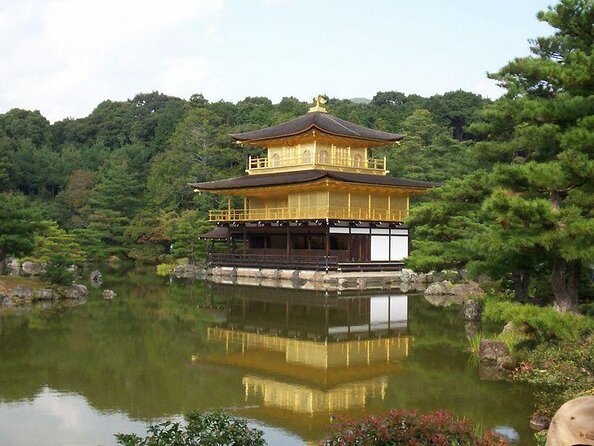
Next up is Kinkaku-ji Temple, the UNESCO site most people came for. You will see the Golden Pavilion, a three-story structure covered in thin layers of gold leaf, set beside a pond that makes the whole scene feel extra photogenic.
You get about 45 minutes, with admission included. That is a good window for getting the classic angles, walking the grounds, and snapping a few “mirror-in-the-water” style shots when the pond view opens up.
Here’s the real value of the guided approach at this stop. In a short visit, the guide helps you notice what makes the pavilion special beyond the shine, including how the setting and garden design shape the experience.
Same corner of Japan, a different kind of day:
- Kyoto Geisha Walking Tour: Gion District & Hidden Gems
★ 4.7 · 3,273 reviews - Kyoto: Tea Ceremony Ju-An at Jotokuji Temple
★ 4.9 · 3,207 reviews - Kyoto: Gion Magical Night Walking Tour with Geisha Trivia
★ 4.9 · 2,393 reviews - Kyoto: 45-Minute Tea Ceremony Lesson Experience
★ 4.3 · 2,378 reviews
Kyoto Imperial Palace grounds: history with a visitor-friendly backup plan
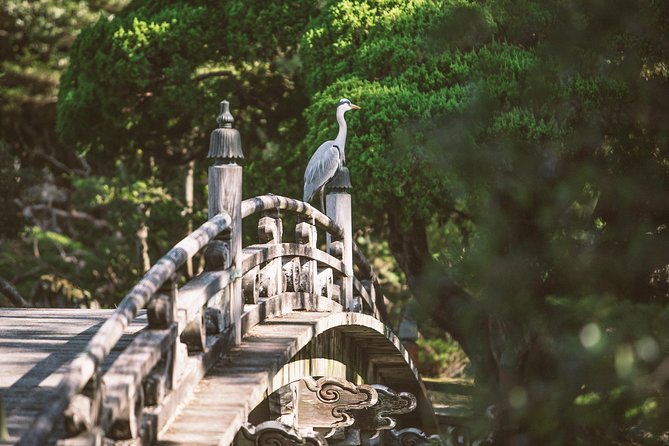
Your third stop is the Kyoto Imperial Palace area, used as the Emperor’s residence until about 150 years ago. You have around 40 minutes, and admission is free on this stop.
On days when the palace is closed, you do not lose the morning to disappointment. The tour goes to Kitano Tenmangu Shrine instead. If the closure falls on the 25th, the alternate is Nishi Hongan-ji Temple.
That backup matters because it protects your day flow. Also, if you like historical context, the imperial-palace stop is a helpful bridge from the shogun world of Nijo into the imperial storyline that continues throughout Kyoto.
Drive to Nara: what changes when you cross town lines
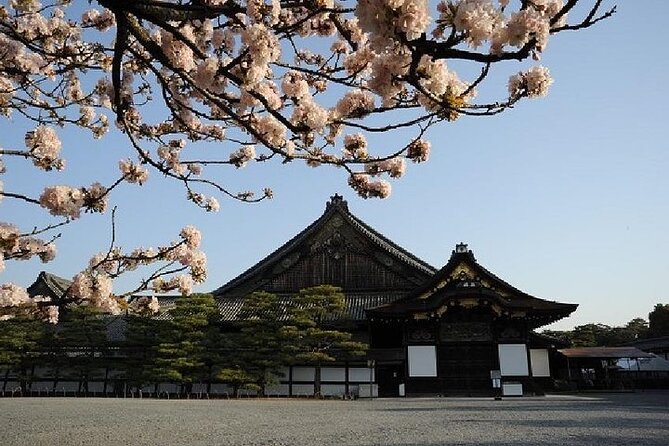
The bus ride south to Nara is part of the appeal. The transport is air-conditioned, and the guide uses the travel time to explain how Kyoto-style temple culture connects to what you will see in Nara.
This is when the day can feel longest, so plan for your comfort. If you are someone who gets stiff sitting, do some light stretching when you can, and keep your water handy.
You also have to mentally switch from “Kyoto highlights” energy to “Nara pilgrimage scale.” Nara tends to feel bigger, louder, and more outdoors.
Todai-ji and Nara Park: the Great Buddha Hall in a 70-minute reality
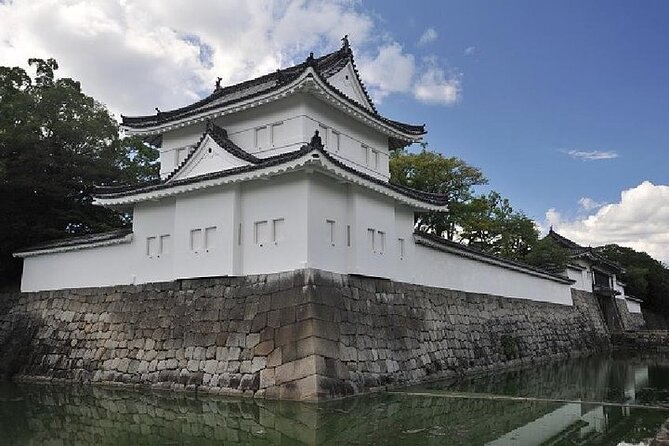
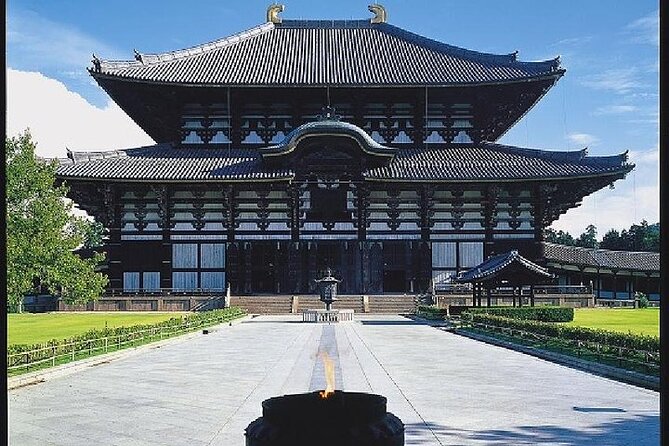
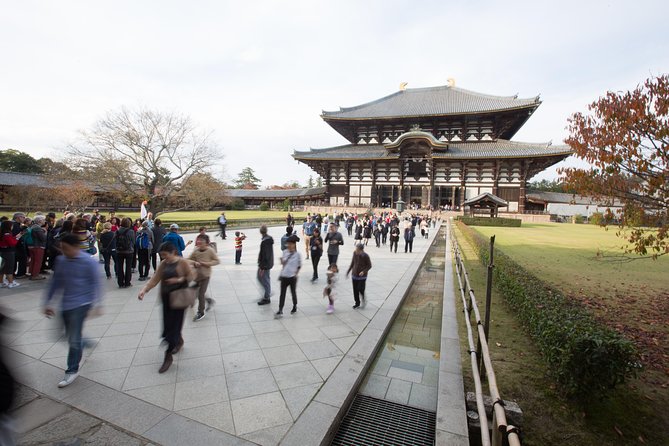
Your Nara anchor is Todai-ji Temple, another UNESCO World Heritage site and a symbol of the Nara Period. The main hall is known as one of the world’s largest wooden structures, and inside you will find the bronze Great Buddha.
You have about 1 hour 10 minutes, with admission included. That is enough to see the hall, spot the Buddha presence, and walk around the complex without feeling like you are sprinting through.
Todai-ji is also a good moment to slow your own pace slightly. Even if the tour keeps you moving, it is worth taking 30 seconds to notice the scale. When you see something this large up close, it changes how you read the history.
From here, you continue to the adjacent Nara Park area.
Kasuga Grand Shrine: lantern intensity and the Main Sanctuary special visit area
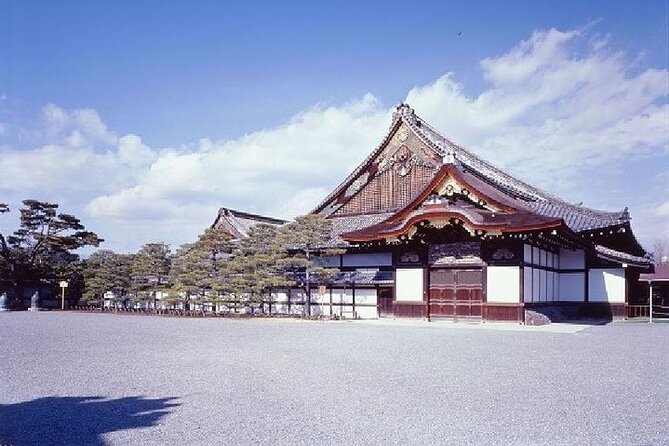
Next comes Kasuga Grand Shrine, famous for the more than 3,000 lanterns that line the interior. This stop has a very different mood than the big hall spaces. It feels more intimate and ritual-focused.
You get about 1 hour, with admission included. The tour also enters the Main Sanctuary special visit area when possible, which is a nice upgrade in terms of access and atmosphere.
If the special visit area cannot be entered due to events or operational circumstances, the tour visits the Kasuga Taisha Museum or the Todaiji Museum instead. It is still a meaningful consolation, but it is not exactly the same feel as being inside that special area.
Nara Park deer time: fun, but mind your space
You finish in Nara Park, including Deer Park, where deer roam more freely. The deer are associated with the shrine tradition, often thought of as messengers.
You typically also get a chance to interact in the usual way, but you should treat deer like wildlife, not pets. One recurring piece of practical guidance from the tour experience: deer can be aggressive if you get too close or behave like food is guaranteed.
Also, consider the walk at the end of the day. Some feedback pointed out that the final portion can involve a longer stretch from where the bus stops to where you finish, especially when you are tired.
Guide and tour vibe: why names like KC, Momo, and Yuki pop up
This kind of tour lives or dies on the guide. In feedback, the strongest praise clustered around guides who made history feel clear, kept the pace under control, and handled group needs smoothly.
Guides you might encounter include KC, Momo, Yoshito, Yuki, Etsuko, Tammy, and Keicy. People highlighted English fluency, humor, and the ability to answer questions without rushing you.
You will also appreciate the “kind but firm” time management style. When you have tight stop windows, it is not enough to be friendly. The guide has to keep everyone moving at the right moments, especially around shoe removal areas, security queues, and crowded viewpoints.
If you are sensitive to the bus environment, keep one reality in mind. One negative note mentioned health and masking concerns when sick passengers were present. That is not something the tour data guarantees you can control, so if that is a major worry for you, you might want to think about your own comfort level with shared transport.
Value for $194.85: what you get, what that price includes, and when it makes sense
At $194.85 per person, this tour is priced like a high-value convenience package. You are not just paying for a guide. You are paying for licensed English interpreting, air-conditioned transport between Kyoto and Nara and between sites, and admission fees for the stops that list them as included.
That is the biggest value lever: a full-day itinerary where the “hidden costs” are mostly handled. If you were to plan the same five UNESCO stops on your own, you would spend time on transit timing, ticketing, and figuring out which areas are closed on specific days.
Lunch is the other variable. If you choose the With Lunch option, you get a set meal. There are two lunch styles listed. Western-style is available as a set menu, and they ask you to request vegetarian needs in advance. The Indian thali option includes vegetable-based curry options and is suitable for vegetarians, served with sides like naan or roti and salad.
Diet limits are strict. The tour data says halal, gluten-free, and other meal requests are not available. If dietary needs are complex, the “No Lunch” option gives you free time near Kyoto Station so you can eat your own way.
One more practical value detail: the group max is 40 travelers. That is not a private tour, but it is small enough that the guide can usually keep momentum.
What I’d pair with this trip, and what to skip so you do not overload
If you book this, I would treat it as your “big introduction” day. You will see the major landmarks, so it is a good day to sketch out what you want to return to.
What to skip mentally is the urge to squeeze in too many extra Kyoto sights on top of this same day. You already spend the morning in Kyoto, then shift to Nara. Adding major new stops elsewhere can create a very tired, rushed experience.
After this tour, you might consider a second, slower Kyoto day focused on the sites you care about most, like gardens, smaller temples, or neighborhoods around where you stay.
Who this Kyoto and Nara day trip is best for
This is a great match if you want:
- English-guided context across Kyoto and Nara without DIY planning
- the “greatest hits” UNESCO sequence in one day
- comfortable transport and a schedule that handles the logistics for you
It may be less ideal if:
- you hate short stop times and prefer long, quiet wandering
- you struggle with walking, especially toward the end of the Nara segment
- you need specialized dietary accommodations beyond what is explicitly offered
If you are traveling for a first visit to Kansai, this format is often one of the fastest ways to get oriented.
Should you book the Kyoto and Nara day trip from Kyoto?
I’d book it if your goal is to see Nijo Castle, Kinkaku-ji, the Imperial Palace area, Todai-ji, Kasuga Shrine, and Nara Park in one packed day with a strong guide and easy logistics. The inclusion of transport and admission fees makes it feel like real value for a full-day UNESCO sprint.
I would not book it if you want a slow travel day, lots of free wandering time, or you are counting on major late-day flexibility. The schedule is designed to cover ground, not to stretch into long personal exploration.
If you do book, my advice is simple: dress for quick changes, bring layers for temple crowds, keep expectations for short visits, and if you can, try to get a guide you click with. With guides like KC, Momo, Yuki, and others mentioned in feedback, the story part is what turns these stops from photos into understanding.
FAQ
How long is the Kyoto and Nara day trip?
It runs about 10 to 11 hours.
What does the tour include for the price?
It includes a licensed English guide interpreter, admission fees listed for the stops, and transportation costs between sites. Lunch is included only if you book the with-lunch option.
Is lunch included?
Lunch is included only if you choose the With Lunch option. There are Western-style set menus and an Indian thali option, each described as a set meal type for that choice.
What are the main sights you visit?
You’ll see Nijo Castle, Kinkaku-ji, the Kyoto Imperial Palace area, Kasuga Grand Shrine, Todai-ji, and you also visit Nara Park including the deer area.
Is the tour ticket digital?
Yes, you get a mobile ticket.
Where do I meet the tour?
You meet at the JTB SUNRISE TOURS DESK KYOTO, located at AVANTI near Kyoto Station.
Where does the tour end?
For guests who selected the Kyoto Start and End option, it ends at Kyoto Station around 6:30 pm, with no drop-off service to hotels.
What happens if Kyoto Imperial Palace is closed?
If it is closed, the tour visits Kitano Tenmangu Shrine instead. If the closed day falls on the 25th, the alternate is Nishi Hongan-ji Temple.
Is there free cancellation?
Yes, you can cancel for a full refund up to 24 hours before the experience’s start time.
Fresh options around Kyoto
- Kyoto: Fushimi Inari Taisha Shrine Walking Tour with Guide★ 4.8 · 18 reviews
- A Privately Guided Photoshoot in Beautiful Kyoto by a Pro★ 5.0 · 18 reviews
- Sekka Cotton Furoshiki Class★ 5.0 · 19 reviews
- Natural Indigo Dyeing with Local Masters (Private Atelier)★ 5.0 · 19 reviews
- Kyoto: Personalized Guided Private Tour★ 4.8 · 19 reviews
- Kyoto: Quiet and Graceful Tea Ceremony★ 4.5 · 19 reviews
- Oboro | Mindful Tea Ceremony in a 100-Year-Old Kyoto Teahouse★ 5.0 · 19 reviews
- Ikebana Traditional Japanese Art of Flower Arranging★ 4.5 · 19 reviews
1-Day Tours, compared.
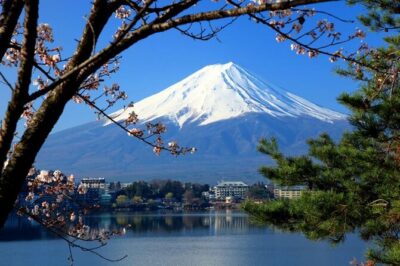
Mt Fuji and Hakone 1-Day Bus Tour Return by Bullet Train
Read our review →
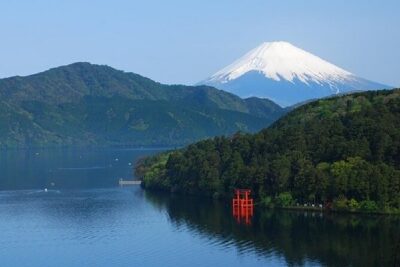
Mt Fuji & Hakone Cruise, Drum Show Bullet Train 1 Day from Tokyo
Read our review →
Peaceful Hiroshima & Miyajima UNESCO 1 Day Bus Tour
Read our review →
Fushimi Inari, Kinkakuji, Bamboo Grove 1 Day Bus Tour
Read our review →
Browse the lists this tour appears in