Reviewed · FULL-DAY
Kyoto & Uji: Full Day Sightseeing Tour from Osaka or Kyoto
Kyoto and Uji in one packed day is smart. This full-day tour strings together Kyoto’s biggest icons and Uji’s calmer tea town so you get variety without spending your whole day figuring out trains and entrances.
I love that the stops are built around the places most people actually want to see, then you get real time to look around on your own at several of them.
I also like the human touch: you travel in an air-conditioned vehicle with a guide, and the day runs on clear timing with practical meet-up details shared in advance (in at least one group, the guide used WhatsApp maps and timing info).
The one drawback to plan for is the extra temple admission fees for three major sights, plus there is no lunch included, so you will want to snack like a pro.
Key Points Before You Go
- Eight famous stops in about 9 hours means a lot of ground covered, but still enough breathing room at each location.
- Three paid temple visits are handled as add-on fees (Kinkaku-ji, Kiyomizu-dera, Byōdō-in).
- A mix of ticketed temples and free neighborhood streets keeps the day interesting even when you want a slower pace.
- Uji adds a different side of the region with river views, a rabbit-themed shrine, and tea-shopping along Byōdō-in Omotesandō.
- Smallish group size (max 45) usually feels more manageable than the giant bus tours.
Why Kyoto and Uji From Osaka or Kyoto Works
If it’s your first time in the area, this route is a very efficient way to get bearings fast. You hit Kyoto’s headline sights like Kinkaku-ji and Kiyomizu-dera, then you shift gears to Uji, which feels more local and tea-focused.
The value here is in the combination. You are not only doing temples, you are also walking the famous slopes of Sannenzaka and Ninenzaka and ending with shopping and snacks potential around Byōdō-in Omotesandō. That variety helps when you only have one day.
The timing also matters. This is about 9 hours, and with eight stops you will be moving most of the day, not just hopping off for quick selfies and leaving.
A few more Kyoto days worth comparing
- PERFECT KYOTO 1-Day Bus Tour
★ 5.0 · 13,518 reviews - Kyoto: Fushimi Inari, Kinkakuji, Bamboo Grove 1 Day Bus Tour
★ 4.8 · 4,316 reviews - Kyoto: Tea Ceremony in a Traditional Tea House in Kiyomizu
★ 4.9 · 3,519 reviews
Price Check: What You Pay vs. What You Still Budget
The tour price is $57.90 per person, which is fairly steady for a guided day trip that includes transportation and a guide. The key thing to budget is that Kinkaku-ji, Kiyomizu-dera, and Byōdō-in tickets cost extra at 1,600 yen total.
Admission fees not included can change the “feel” of the deal. If you are comparing to a DIY day, you will likely save some money by booking everything yourself, but you trade away the guide’s timing help and the smoother flow between stops.
Also note what is not included: lunch. You can absolutely handle it with convenience store snacks, a bento stop, or whatever looks easiest near the free streets and tea-shopping areas, but you should not assume a meal is built in.
How the Day Flows: Timing, Transport, and Group Style
You are on an air-conditioned vehicle with a guide, and the day is organized around short-to-medium visits. Expect roughly these time blocks:
- Kinkaku-ji about 40 minutes
- Kiyomizu-dera about 1 hour
- Sannenzaka and Ninenzaka about 1 hour
- Yasaka Koshin-do about 30 minutes
- Uji River about 20 minutes
- Uji Shrine about 20 minutes
- Byōdō-in about 30 minutes
- Byōdō-in Omotesandō about 30 minutes
That pacing is ideal for most people who want structure. It is also why comfort tips matter, because shoe choice becomes part of the plan, especially on the slopes and temple approach streets.
Group size is capped at 45 travelers. That’s not tiny, but it’s enough that you will usually be able to hear instructions and move together without feeling like a sardine train.
Kinkaku-ji and Kiyomizu-dera: The Big Kyoto Splash
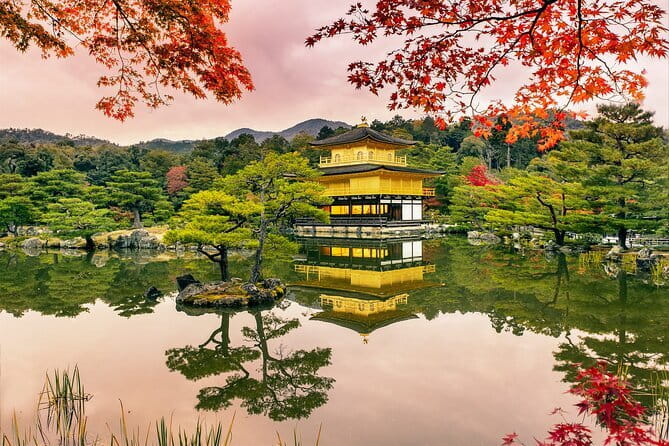
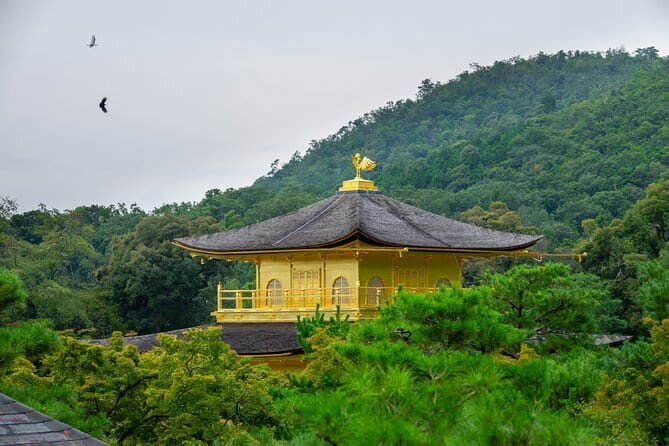
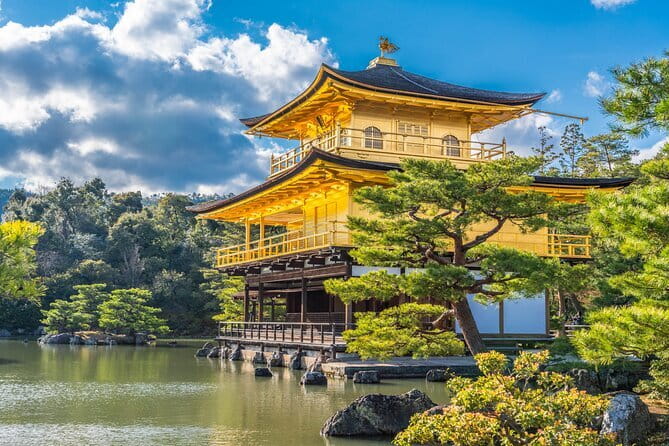
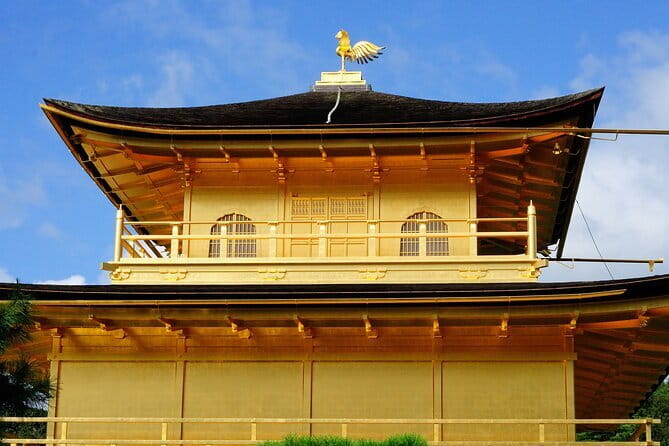
You start with Kinkaku-ji (Golden Pavilion). Even if you have seen photos, the real impact is in the contrast: a bright golden structure set against calm gardens. It’s a Zen Buddhist temple and a UNESCO World Heritage site, and this stop is your classic Kyoto “wow” moment.
You get about 40 minutes, with the ticket not included. Forty minutes is short, so I recommend you arrive ready: take a quick overview, then slow down for the best angle you like most. If you linger too long in one spot, you can feel rushed later.
Next is Kiyomizu-dera, one of Kyoto’s most famous temples and also part of a UNESCO World Heritage site listing tied to Historic Monuments of Ancient Kyoto. You have about 1 hour, again with admission not included.
This is the stop where the “short visit but structured” approach really pays off. With a guide directing the route and timing, you spend less time asking where to go and more time actually looking up, down, and around the temple complex.
Same corner of Japan, a different kind of day:
- Kyoto Geisha Walking Tour: Gion District & Hidden Gems
★ 4.7 · 3,273 reviews - Kyoto: Tea Ceremony Ju-An at Jotokuji Temple
★ 4.9 · 3,207 reviews - Kyoto: Gion Magical Night Walking Tour with Geisha Trivia
★ 4.9 · 2,393 reviews - Kyoto: 45-Minute Tea Ceremony Lesson Experience
★ 4.3 · 2,378 reviews
Sannenzaka, Ninenzaka, and Yasaka Koshin-do: Streets You Can Enjoy Without Tickets
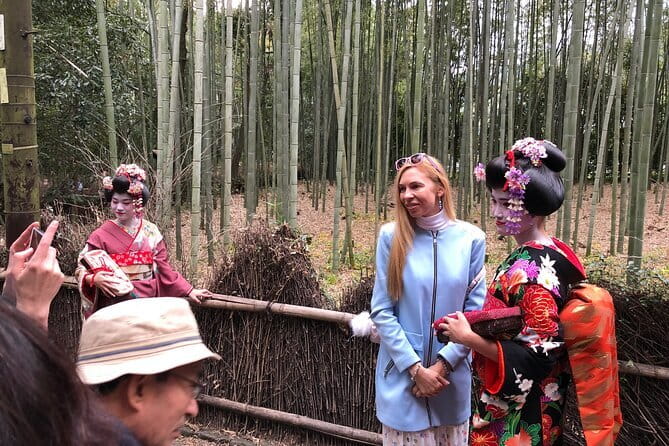
After the temple hits, the vibe softens with the famous sloped streets of Sannenzaka and Ninenzaka. These are pedestrian lanes with historic-style buildings along the way, and you get about 1 hour. Admission here is free, so it’s a great place to slow down without worrying about a ticket line.
What I like about this part of the day is that it feels like Kyoto beyond the big monument. Even if you are not shopping, the street texture matters: small views, alley angles, and the sense of walking through an old neighborhood.
On the way, you stop at Yasaka Koshin-do (officially Daikokusan Kongoji Temple Koshindo). It’s a shorter stop, about 30 minutes, and it’s free. This temple is known for the colorful “monkeys” decorations that catch your eye fast.
If you’re the type who likes details, watch for the specific styling that makes this place different from the larger temple structures. You do not need long here, but a brief stop helps break up the more intense sightseeing.
Uji River and Uji Shrine: A Quieter Side of Kyoto’s Neighbor
Then you head into Uji, which is a nice change of pace. First up is the Uji River, about 20 minutes, and it’s free. The river is special in a simple way: it originates from Lake Biwa and has been an important waterway since ancient times.
This stop is not about big buildings, it’s about atmosphere. Use the time for a slow walk and photos that include the water and the surrounding greenery. If you come in with your phone ready, you can capture that “calm but scenic” look that Kyoto often lacks when it gets crowded.
Next is Uji Shrine, also about 20 minutes and free. The theme you will notice quickly is rabbits, with a white, red-eyed bunny image shown on lanterns and ema (votive tablets).
Even if you do not care about the specific shrine theme, it’s a memorable change from temple architecture. It’s also a good place to reset your legs for the next major sight.
Byōdō-in and Byōdō-in Omotesandō: Phoenix Hall and Tea Street Time
Your final major temple stop is Byōdō-in Temple, about 30 minutes, with admission not included. Byōdō-in is a national treasure and UNESCO World Heritage site, and the star is the Phoenix Hall.
Thirty minutes is enough if you have a plan: take in the big photo moment first, then look for the smaller details around the approach. When time is tight, I always prioritize the main view and then whatever you can still enjoy without sprinting.
After the temple, you get about 30 minutes at Byōdō-in Omotesandō, and this part is free. Uji is known for green tea production, and the street is lined with shops selling tea and tea-related products.
This is where you can turn sightseeing into something you’ll actually remember later. A snack, a tea bag, or even just tea-flavored sweets can be worth it here because Uji’s identity is part of the experience, not an afterthought.
Weather and Comfort Tips (Because One Day Can Change Fast)
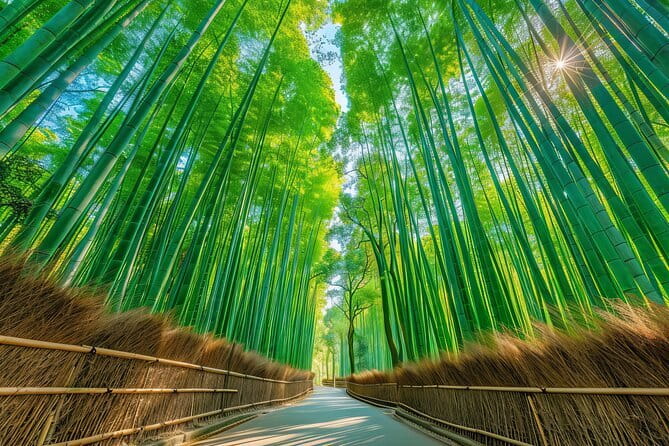
A heavy rain does not automatically ruin this tour. One group experienced heavy rain in the afternoon and still found the day workable, largely because the schedule still keeps moving and you are not stuck waiting at a single location for hours.
Still, be practical. Bring a light rain layer you can put on quickly, and wear shoes that handle wet steps on sloped streets. The combination of temple approaches and Sannenzaka and Ninenzaka slopes means you want stable footing.
Also keep small cash or a card ready for extra costs like the 1,600 yen temple admission add-on. When part of your budget is fixed like that, it takes stress out of the day.
Who This Tour Fits Best
This is a strong match if you:
- Have one day and want to see the best-known Kyoto and Uji highlights without planning a route yourself
- Prefer a guide to handle timing while you get time to wander at several stops
- Want a blend of temple sights and free street time, especially the historic slopes and Uji shopping area
It may feel like a lot if you like very slow travel, because the tour is built for moving. You will likely be on your feet for much of the day even with those scheduled time windows.
Should You Book This Kyoto and Uji Tour?
I’d book it if you want maximum payoff from limited time. The route makes sense, the transportation and guide reduce friction, and the ticket add-on is clearly defined for the three main temples. At this price point, you are buying convenience and structure, not just admission.
If you are the kind of traveler who loves unplanned detours and lingering for hours in one place, you might prefer a DIY day in Kyoto and Uji. But if you want a single, well-paced day that hits the major icons and ends with Uji tea street time, this is a very reasonable choice.
FAQ
How long is the Kyoto & Uji full-day sightseeing tour?
It’s about 9 hours, so plan a full day.
What is included in the tour price?
The tour includes an air-conditioned vehicle and a guide. It also uses a mobile ticket.
Which temple tickets are not included?
Kinkaku-ji, Kiyomizu-dera, and Byōdō-in Temple tickets are not included. The listed total extra cost for these tickets is 1,600 yen.
Is lunch included?
No, lunch is not included.
Are there any stops with free admission?
Yes. Sannenzaka and Ninenzaka, Yasaka Koshin-do, Uji River, Uji Shrine, and Byōdō-in Omotesandō are listed as free.
How large is the group?
The tour has a maximum of 45 travelers.
What is the cancellation policy?
You can cancel for a full refund if you cancel at least 24 hours before the experience starts. If you cancel less than 24 hours before, the amount paid is not refunded.
Fresh options around Kyoto
- Kyoto: Zen Meditation at a Private Temple with a Monk★ 5.0 · 25 reviews
- Kyoto: Hands-on Takoyaki and Okonomiyaki Cooking (1 Hour)★ 4.7 · 25 reviews
- Kyoto: Gion World of the Geisha Guided Walking Tour★ 4.6 · 25 reviews
- Private Kyoto Photography and Dress up Adventure (ALL PLAN)★ 5.0 · 25 reviews
- Matcha Grinding Experience and Walking Tour in Uji Kyoto★ 5.0 · 26 reviews
- Kyoto Custom Private Car Tour with Local Guide★ 4.5 · 26 reviews
- Kyoto: Arashiyama Guided Tour, Bamboo, Monkey, Zen Temple★ 5.0 · 26 reviews
- Kyoto: Traditional Mini Umbrella Making Workshop★ 5.0 · 26 reviews
Full-Day, compared.
Mount Fuji Full-Day Private Tour from Tokyo (Customizable)
Read our review →
Hiroshima / Miyajima Full-day Private Tour with Government Licensed Guide
Read our review →
Tokyo Private Full-Day Tour by Car or Van
Read our review →

5 Top Highlights of Kyoto Full Day Bike Tour (E-bike option)
Read our review →
Full Day Biking Tour Exploring the Best of Kyoto
Read our review →