
Reviewed · TEA CEREMONIES IN KYOTO
Kyoto near Fushimiinari Wagashi making&Small Group Tea Ceremony
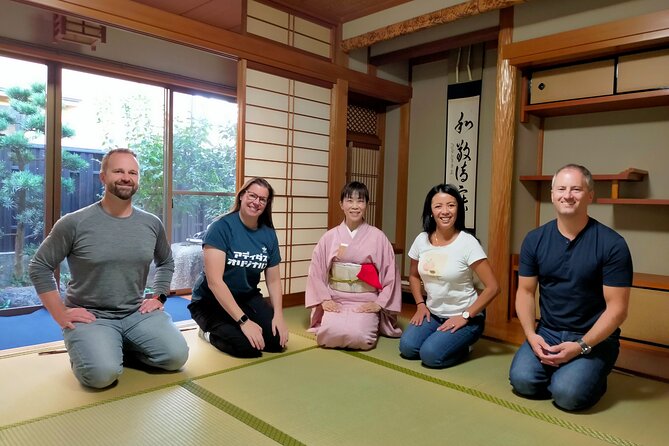
You can feel Kyoto turn quiet fast. This small-group tea ceremony in a local home is a calm way to learn the craft behind matcha and wagashi. You also get a gentle walk through a tiny garden before you sit down in an authentic-style room.
I love that the class is truly hands-on, starting in the kitchen where you make a wagashi yourself. I also like that the host and English-speaking instructor explain the why behind the steps, including background on tea ceremony and even the meaning of the hanging scroll in the room.
One thing to consider is seating and caffeine. You’ll sit on tatami unless you request chairs in advance, and the experience includes matcha, so it’s not recommended if you don’t want caffeine.
Key highlights
- Max 8 people, so questions actually get answered
- Wagashi making in the kitchen, not just watching
- Two bowls of matcha plus traditional confectionary
- A short garden walk before you enter the ceremony room
- English-speaking licensed guide interpreters, with clear explanations
- Tatami seating or chair option, if you prefer not to sit on the floor
A Kyoto Morning in Fushimi, with Tea at a Local House
This is one of those Kyoto experiences that feels less like a performance and more like you’ve been invited in. The ceremony takes place in an authentic Japanese-style room at a local house, and the group size stays small, capped at 8. That matters because tea ceremony is slow on purpose, and you do not want to feel rushed.
The meeting point is at 38-4 Fukakusa Watamorichō, Fushimi Ward, Kyoto. From there, it is convenient for combining with the nearby Fushimi area. One review specifically called out that it is about a 10-minute walk to Fushimi Inari Taisha, which is handy if you want an easy half-day plan that mixes sightseeing with something restful.
The start time is 9:45 am, and the whole experience is about 1 hour 15 minutes. I like that timing. It gets you into the quieter morning mood before Fushimi Inari gets too crowded, and you still have the rest of the day for temples, walks, and food.
More Tea Ceremonies in Kyoto
- Kyoto: Tea Ceremony in a Traditional Tea House in Kiyomizu
★ 4.9 · 3,519 reviews - Kyoto: Tea Ceremony Ju-An at Jotokuji Temple
★ 4.9 · 3,207 reviews - Kyoto: 45-Minute Tea Ceremony Lesson Experience
★ 4.3 · 2,378 reviews
From Kitchen to Ceremony Room, You Learn the Real Rhythm
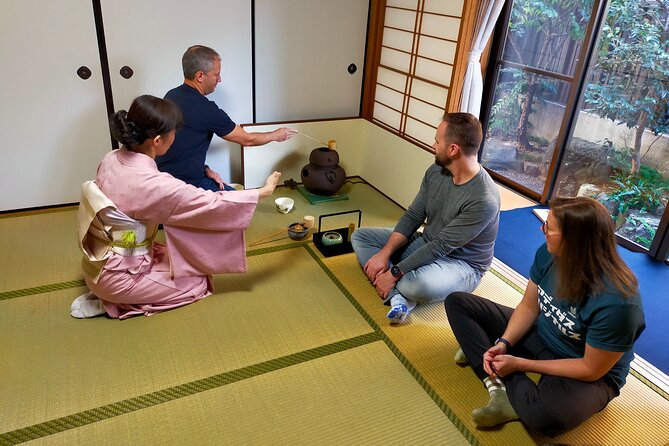
You begin by arriving at the house and getting guided to the kitchen area. The host is English-speaking, and they walk you through what you need to do first. This matters because tea ceremony can feel confusing at a glance, with lots of small gestures and etiquette rules. Here, you get explanations before you have to perform them.
Next comes the wagashi portion, then you shift into the ceremony itself. After the sweets class, you head outside to walk through a tiny garden. Then you enter the authentic-style room for the tea ceremony if the weather cooperates.
Once everyone is seated, the instructor explains:
- the history of tea ceremony
- the meaning of the hanging scroll on the wall
This is one of the smartest parts of the experience. Many tea ceremony activities stop at the steps. Here, you get context for what the room is communicating, why certain details matter, and how to watch and respond during the ritual.
Also, there is an option for how you sit. The default is tatami floor seating, but it is possible to prepare a chair instead. If you want that, you need to say so when you reserve.
Wagashi Making: One Sweet You Can Recreate Later
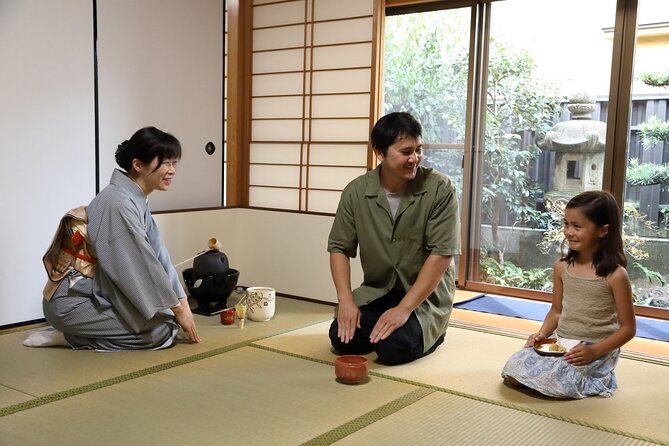
In the kitchen, you learn how to make one kind of wagashi. This is a hands-on class, meaning you are not standing around as someone else does the work. You’ll work through the process yourself, and you’ll also eat what you make during the ceremony portion.
One review mentioned it can get a little sticky while you’re making it. That’s not a problem, just reality. If you go in expecting a clean, quick craft project, you might feel surprised. If you go in thinking of it as a tactile Kyoto tradition lesson, you’ll probably find it fun and memorable.
Practical note: wear clothing you can move in. Since you’re making sweets, you’ll likely want sleeves you don’t mind getting slightly messy. And remember the footwear rule for the room: you must bring or wear socks, and bare feet are not allowed in the ceremony room.
What you gain from this wagashi part is more than a souvenir. You learn how a simple-looking sweet can be shaped to fit the season, the moment, and the presentation style of tea ceremony. Even if you never become a wagashi maker at home, you’ll leave with a better eye for what you’re seeing later in Japanese shops and festivals.
The Tea Ceremony: Matcha, Meaning, and Bowls You Actually Make
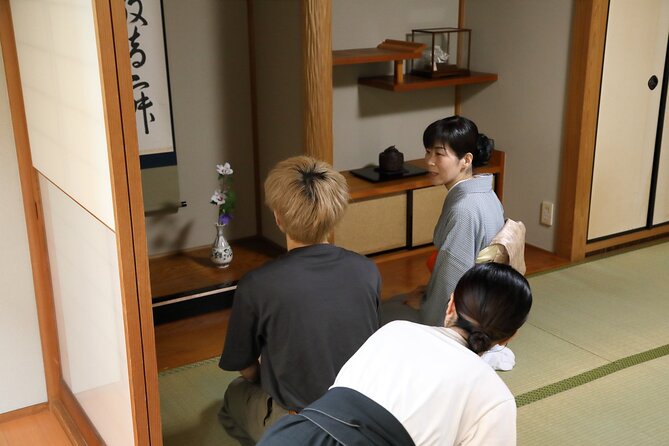
After the wagashi, you shift into matcha time. The host first explains how to attend the tea ceremony. Then the instructor leads the room portion, including the background and the meaning of the hanging scroll.
Then comes the moment many people are waiting for: you get to savor the Japanese sweets while your instructor shows you how to drink a bowl of matcha. This part helps you avoid the common mistake of treating matcha like just another drink. In tea ceremony, there’s an order, a way of holding the bowl, and an attitude that changes the experience even when the tea is simple.
You’ll also enjoy the ceremonial preparation and drinking process. After the instructor demonstrates, you get a chance to prepare it yourself. That hands-on part is key. Watching someone whisk matcha is interesting. Doing it, even with guidance, helps you understand why matcha is whisked and served in a particular way.
The package includes two bowls of matcha, plus Japanese traditional confectionaries. That means you’re not just making a sweet and tasting a sip. You’re actually participating in the full experience, with enough tea to feel like you completed the ritual.
One thing to keep in mind is caffeine. Matcha contains it, so this experience is not recommended if you do not take caffeine.
Same corner of Japan, a different kind of day:
- PERFECT KYOTO 1-Day Bus Tour
★ 5.0 · 13,518 reviews - Kyoto: Fushimi Inari, Kinkakuji, Bamboo Grove 1 Day Bus Tour
★ 4.8 · 4,316 reviews - Kyoto Geisha Walking Tour: Gion District & Hidden Gems
★ 4.7 · 3,273 reviews - Kyoto: Gion Magical Night Walking Tour with Geisha Trivia
★ 4.9 · 2,393 reviews
Your English Guide and the Small-Group Advantage
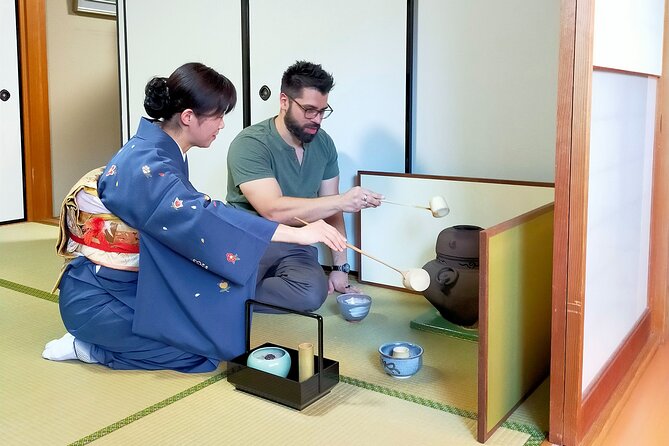
This tour uses a small-group format with a maximum of 8 travelers. That’s the difference between learning something real and hearing a quick overview while trying to see over shoulders.
The host and instructors are licensed guide interpreters. In plain terms, you get explanations you can follow. The class covers history, etiquette, and meaning in a way that does not leave you guessing what you are supposed to do next.
In at least one previous session, the hostess was named Miho, and her English skills were specifically praised. If you’re worried about language, you can feel more confident here. The structure is also supportive, because you move from making sweets to stepping into the room, with instruction at each step.
Seating Rules and Comfort Tips for a Smooth Session
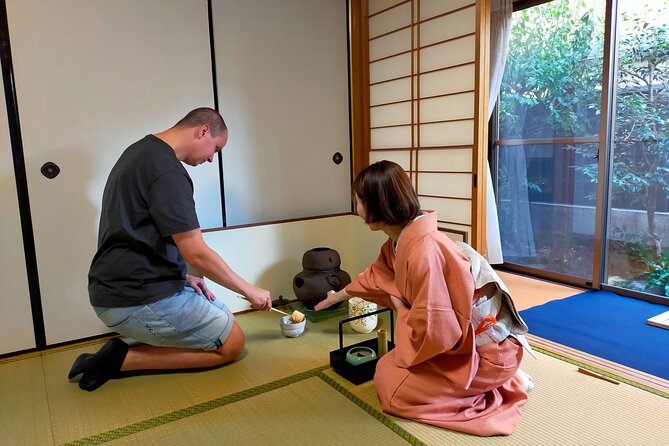
Tea ceremony is not physically hard, but it does ask you to use different muscles and patience. Plan around the seating style.
Here’s what you should know before you go:
- In the ceremony room, bare feet are not allowed
- You’ll need socks (bring them if you don’t already have them)
- The default seating is tatami floor
- If you prefer, you can request a chair when you reserve
I also suggest wearing easy shoes to get to and from the meeting spot. Even if the ceremony is indoors, you’ll likely do some walking and be taking shoes on and off.
If you have knee issues or prefer more leg support, request the chair right away. It is mentioned as possible, but it requires letting them know ahead of time.
Price and Value: What $52.26 Really Buys
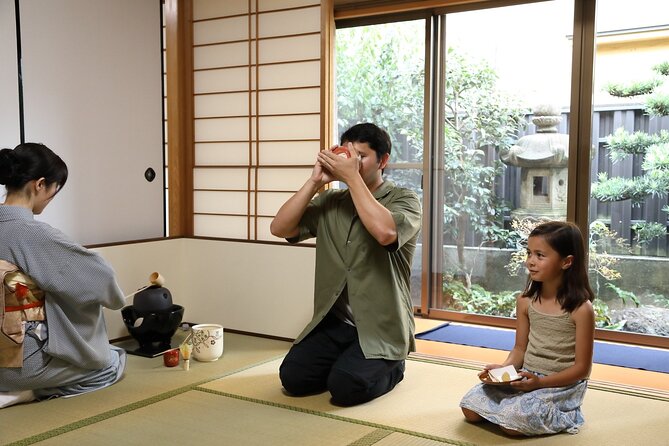
At $52.26 per person, this is not the cheapest thing you can book in Kyoto. But it also does not feel like a gimmick. You are paying for a complete, guided cultural activity that includes:
- an English-speaking instructor
- all fees and taxes
- two bowls of matcha
- the wagashi you make
- coffee or tea (served as part of the included drinks)
- traditional confectionaries
You also get something harder to price: guided attention in a room where small details matter. A matcha ceremony is not just about drinking tea. It’s about learning the “why” and “how,” then practicing it briefly yourself.
Compared to experiences where you only watch, hands-on wagashi making plus preparing matcha yourself is where the value really shows. You leave with a memory you can repeat, because you know the steps enough to explain them back home.
How to Pair It With Fushimi Inari and Your Kyoto Day
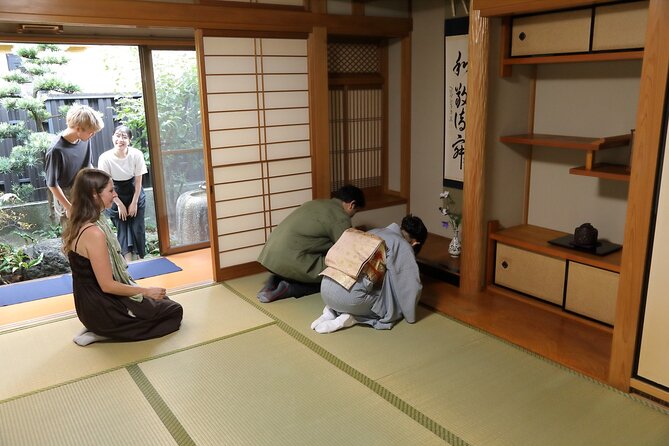
Because it starts at 9:45 am, it fits well if you want a morning plan that balances Kyoto’s iconic sights with something calmer. Fushimi Inari Taisha is nearby, and one review mentioned it is roughly a 10-minute walk. That makes it easy to do one early temple walk, then come back for tea, or do tea first and use Fushimi Inari afterward.
Also, the experience includes a short garden walk before entering the room. So even if the rest of your day is fast and crowded, you’ll have at least one slow moment built in.
If you are building a route, consider:
- Go early enough to avoid a rush feeling
- Plan your shoes and socks so you don’t spend time scrambling
- Keep your expectations realistic, tea ceremony moves at a slower pace by design
Should You Book This Tea Ceremony?
Book it if you want a Kyoto cultural experience that feels personal, practical, and calm. The biggest reasons to choose this one are the small-group size, the hands-on wagashi making, and the fact that you get to prepare and drink matcha yourself. If you like craft activities and you want something more meaningful than a quick photo stop, this works.
I’d think twice if you avoid caffeine or know matcha upsets you. Also consider the seating. If tatami floor seating is not comfortable for you, request a chair when you reserve.
If you’re visiting Kyoto and want one experience that you can talk about later, this is the kind of thing that sticks. You don’t just learn the ceremony, you learn how to explain it.
FAQ
Where is the tea ceremony held?
The meeting point is 38-4 Fukakusa Watamorichō, Fushimi Ward, Kyoto, 612-0022, Japan. The experience ends back at the meeting point.
What time does it start, and how long is it?
It starts at 9:45 am and lasts about 1 hour 15 minutes.
How many people are in the group?
The experience has a maximum of 8 travelers.
Is this a hands-on class or just watching?
It includes hands-on teaching. You’ll learn to make wagashi in the kitchen, and you’ll also get to prepare matcha yourself.
Do I have to sit on tatami?
You normally sit on the tatami floor, but it is possible to prepare a chair instead. Let them know how many chairs you want when you make your reservation.
What should I wear or bring for the room?
Bring or wear a pair of socks. Bare feet are not allowed in the room. They also recommend easy shoes that are simple to take on and off.
What’s included in the price?
Included are an English-speaking instructor, all fees and taxes, coffee and/or tea, two bowls of matcha, and Japanese traditional confectionaries.
Is it suitable for kids?
Children aged 8 to 12 can participate if they participate with at least one adult. Children aged 7 or under are not able to participate.
What if the weather is bad?
The experience requires good weather. If it’s canceled due to poor weather, you’ll be offered a different date or a full refund.
Fresh options around Kyoto
- Kyoto: Early Bird E-Bike Tour with Lunch★ 5.0 · 14 reviews
- Private Kyoto Tour: Explore the Most Iconic Sights★ 4.0 · 14 reviews
- Kyoto 1 Day Golden Route Bus Tour★ 5.0 · 15 reviews
- Private Walking Tour in Gion and Higashiyama★ 5.0 · 15 reviews
- Osaka & Nara: Private Tour with English speaking guide★ 3.9 · 15 reviews
- Early Half Day to Kyoto Highlights★ 5.0 · 15 reviews
- Kyoto Sagano Insider: Rickshaw and Walking Tour★ 5.0 · 15 reviews
- Start from Kyoto Station: Early Morning E-Bike Tour with Kyotoite★ 5.0 · 15 reviews
Tea Ceremonies in Kyoto, compared.
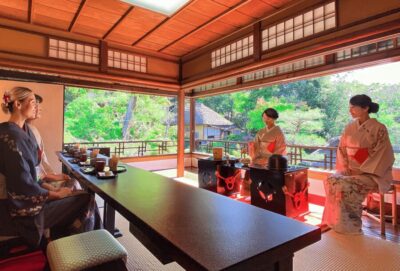
Tea Ceremony in a Traditional Tea House in Kiyomizu
Read our review →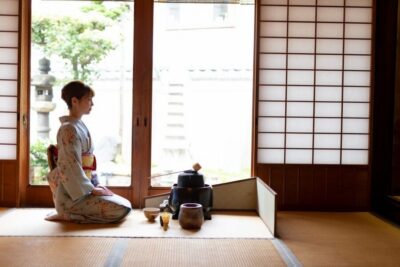
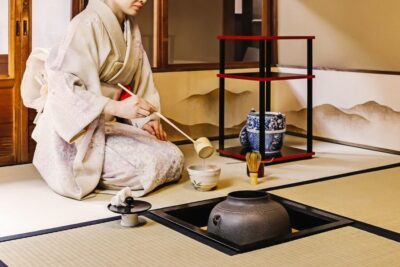
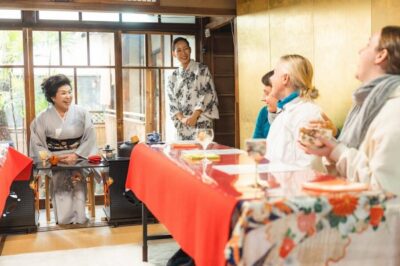
Arashiyama Bamboo Forest, Monkeys, Matcha & Temple Tour
Read our review →
Tea Museum Tickets and Matcha Grinding Experience
Read our review →
Browse the lists this tour appears in