
Reviewed · SAMURAI & NINJA EXPERIENCES
Katana Shopping with Professional Guidance in Kyoto
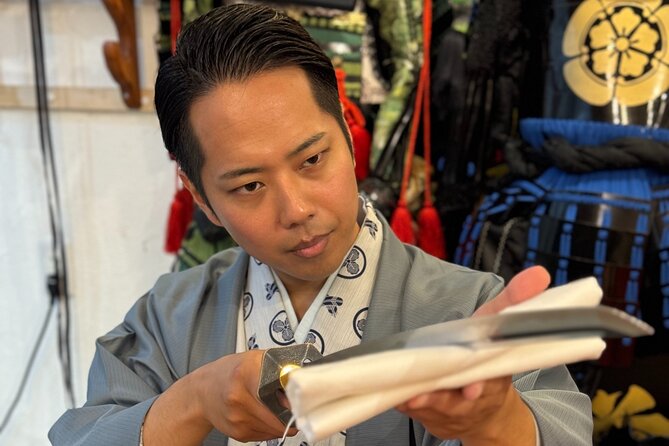
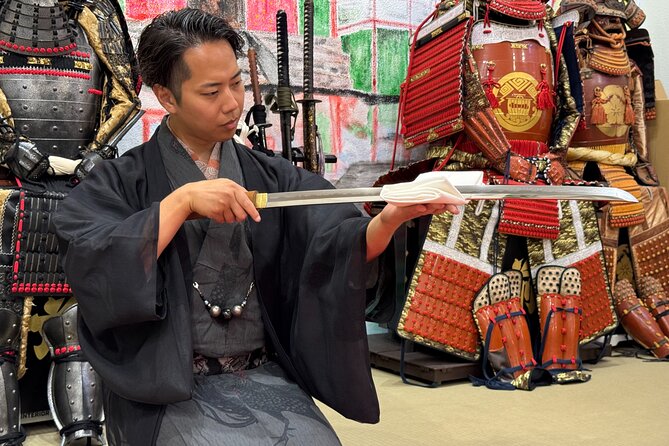
Buying a katana should feel serious. This one pairs real Kenjutsu training access with professional, on-the-ground shopping guidance in Kyoto. You are not just browsing shiny swords, you’re stepping into a dojo environment where the blade is treated as a tool with technique, care, and context.
Two things I especially like. First, the session is led by the dojo side of things, so you get practical insight instead of pure sales talk. Second, having Shogo as your translator and guide, with Yushin Sensei supporting, means you can ask the questions that matter and actually understand the answers.
One consideration: this experience is strictly for people who are seriously considering purchasing. If your main goal is meeting Shogo or casual look-only sightseeing, this is not the right fit.
Key highlights you will care about
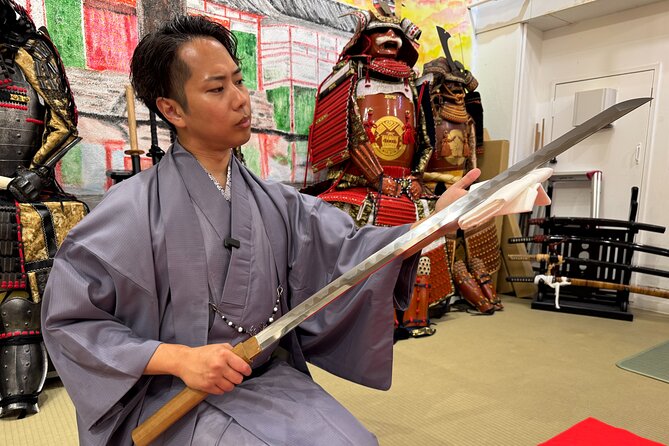
- Dojo-based katana shopping in a private Kyoto setting, not a public display room
- Shogo plus Yushin Sensei help with translation and hands-on guidance tied to martial arts practice
- Hand-selected blades chosen by a master, including examples said to be hundreds of years old
- One-hour, focused session with a small private group (up to 10 per group)
- Buyer-first approach designed for people preparing to choose and (if it makes sense) purchase
- Mobile ticket and a fixed meeting point in Nakagyo Ward for an easier start
Entering a Kyoto dojo, not a tourist showroom
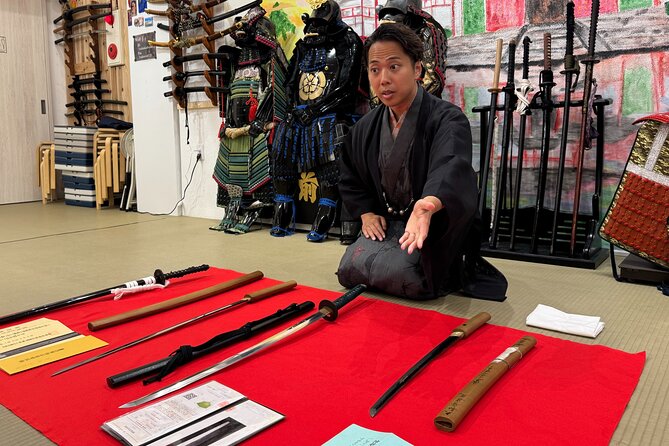
Katana shopping in Kyoto usually means two options. One is browsing storefronts with lots of inventory and even more marketing. The other is finding your way to a more serious setting, then hoping you speak enough Japanese to ask smart questions.
Here, the format starts in a different place. You visit a private dojo environment where Kenjutsu is practiced and taught. That matters because a katana is not only an object, it is connected to how it is handled, how it is respected, and how it is maintained. When you see blades inside that kind of space, the whole conversation shifts from buying to choosing, and from collecting to understanding.
I also like that the experience is framed as guided access to real martial arts expertise. In the dojo setting, the people you meet take the blade seriously. The session includes time with the dojo side led by a master who trains over 20 students in Kenjutsu, so you are getting cultural context plus practical attitudes toward the weapon.
More Samurai & Ninja Experiences in Kyoto
- Kyoto Samurai Experience
★ 5.0 · 1,294 reviews - Kyoto: Kendo and Samurai Experience with Uniform and Gear
★ 4.9 · 815 reviews - Kyoto: Samurai Sword Class by Experts in Traditional Arts
★ 4.9 · 657 reviews
Shogo, Yushin Sensei, and what the guidance is really for
The guiding team is the other big reason this experience works. Shogo, from Let’s Ask Shogo (with 1.8M+ subscribers and 10+ years of Iai background), shows up as translator and shopping guide. That is not just a helpful accessory. It changes what you can do, because you can ask direct questions about what you are seeing, and you can follow the explanation without guessing.
Yushin Sensei is also specifically mentioned as friendly, accommodating, and experienced with iaido and katana use, history, and preservation. In plain terms, this team is there to connect the blade to real practice and responsible care, not just to identify cool features.
What does that look like during the session? Expect a guided selection process where you can discuss what you want from a katana, then view blades with commentary that ties back to meaning and handling. A few people described feeling that Shogo did more than show options, he matched the right blade to their criteria and preferences, including details like how parts of the sword reflect personal tastes (for example, design choices linked to hobbies or even zodiac sign). That kind of tailoring is a clue that you are not getting a one-size-fits-all script.
One practical benefit of good translation is that you can ask maintenance and preservation questions right when you need the answers. That is exactly the kind of timing that prevents buyer regret later, because sword care is not something you want to postpone until you are already back home.
How the one-hour session is structured, and why timing matters
The session is about 1 hour, and the tour is private for your group, up to 10 people. That is a good match for katana shopping, because seriously choosing a sword takes focus. If you drag it out too long, decision-making gets messy. If you keep it too short, you miss the chance to ask the questions that determine whether a blade is right for you.
The format is also designed to reduce common friction. You have a set meeting point in Nakagyo Ward: 452-2 Matsugaechō, Kyoto, 604-8034. The activity ends back at the meeting point. That simplicity helps you plan around the rest of your Kyoto day without scrambling for directions.
In real-world terms, you should go into this session prepared to communicate what you want. Even if the team is doing the heavy lifting, the best outcomes come when you can explain your priorities. Think in categories like:
- aesthetic preferences (mountings, details)
- intended use (collecting versus martial arts interest)
- budget range
- how you want the sword to fit your personal collecting goals
You will likely get a smoother flow when you can answer those types of questions quickly, since the session is only an hour. This is also why the experience sets a “buyer-first” expectation.
Hand-selected katana blades, including very old examples
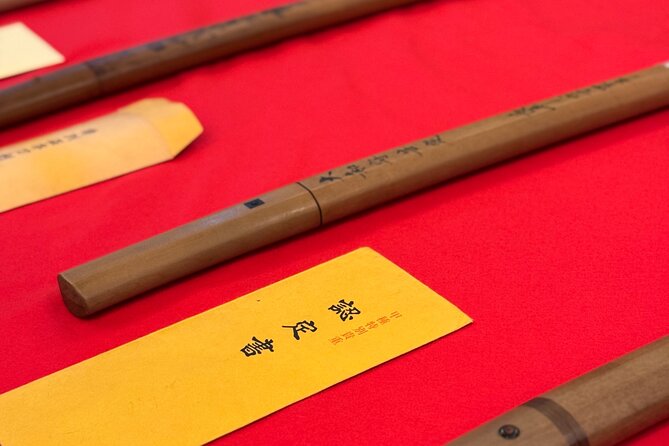
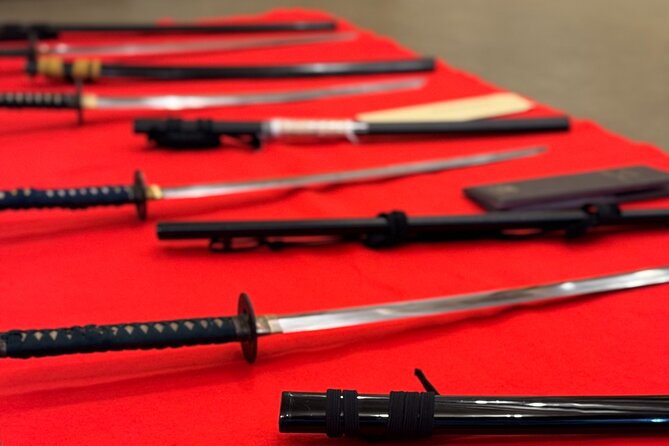
One of the strongest claims about this experience is the blade selection. You are shown katana that are hand-selected by a master, and the information specifically notes that some blades are crafted over 600 years ago. Even if you do not end up buying one of the oldest examples, the key point is that the process is not random browsing.
Hand-selection implies a more careful inventory approach, where someone with authority is choosing what to show you based on suitability. For you, that means less time looking at swords that do not fit your preferences, and more time understanding the differences that actually matter.
It also reframes what you are paying for. Yes, you are paying for the experience price, listed as $65.32 per group (up to 10). But the real value is the expert time and access, plus the fact that you are in a setting where the blade’s history and preservation are part of the conversation.
If you are a collector, you want to reduce uncertainty. If you are a martial arts person, you want context about the blade as an object tied to use and care. This experience is built for that overlap.
More samurai and ninja experiences in Kyoto:
- Skip the lines Basic Ticket at SAMURAI NINJA MUSEUM KYOTO
★ 4.5 · 632 reviews - Ninja 1-hour Hands-on Lesson by Japanese master in Kyoto -Entry
★ 5.0 · 489 reviews - Kyoto: Ninja Weapon Forging Experience
★ 4.8 · 478 reviews - Kyoto: Samurai Kenbu Traditional Sword Dancing Show
★ 4.5 · 426 reviews
No language barriers, thanks to translation and on-the-spot Q&A
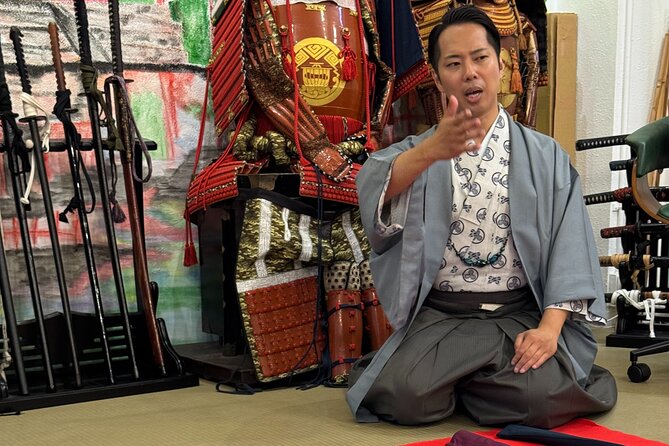
Kyoto is full of specialists, and translation can make or break a high-stakes purchase. In a dojo-based katana session, small misunderstandings can create big downstream problems, especially around value, authenticity expectations, and care.
Having Shogo as translator removes a lot of that risk. You are not relying on a phrasebook when questions turn technical. You can ask what you are seeing and get explanations in a way you can follow. That also makes it easier to compare options without feeling overwhelmed.
The team also appears to be responsive before and during the trip. One person described reaching out a month ahead, then having schedule changes, and being accommodated last minute. While your own schedule is always your responsibility, it signals that the group does not run on rigid script only.
In addition, people mention post-purchase follow-up, including updates on arrival and help during shipping-related steps. That matters if you are buying internationally, because shipping and payment authorization can be the stressful part of the process. Even without getting into specifics, the overall message is: you are not left alone after the sale.
Price and value: what $65.32 per group really buys
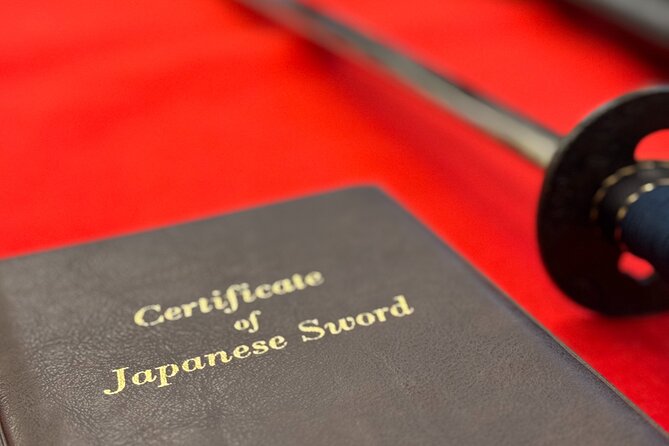
The price is $65.32 per group, up to 10, for roughly one hour. On the surface, that sounds like an affordable add-on compared to many private tours in Kyoto.
But for this experience, the price makes sense only if you view it correctly. You are not paying for a bus ride plus a generic museum visit. You are paying for expert access to a dojo environment and a guided selection conversation that is intended for buyers who take the process seriously.
For solo travelers, the per-group pricing can feel like a bargain because you get a private, guided setup. For small groups, it is a reasonable way to share the session without turning it into a chaotic shopping spree.
Also, the experience is explicitly designed for people who are serious about purchasing a Japanese katana. That requirement changes the value equation. If you are shopping casually, you might be disappointed, because the session focus will likely stay on suitability and purchase readiness, not tourism.
So my practical take: if you are genuinely considering buying, this is a good value because the guidance can prevent wasted time and bad matches. If you are undecided or just curious, that $65.32 is probably the wrong spend.
When this Kyoto katana session is the right fit
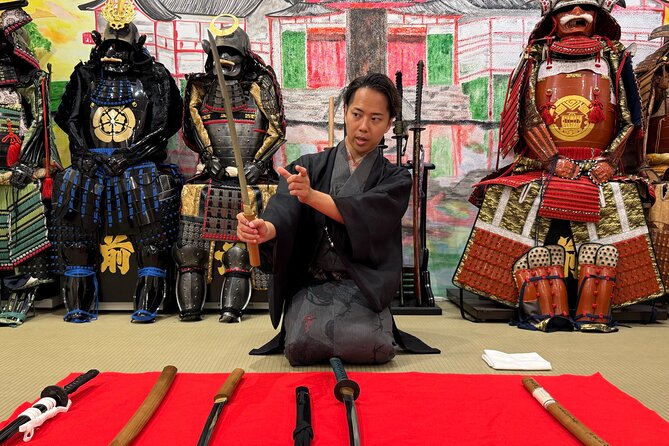
This experience is best for you if at least one of these is true:
- You want a katana shopping experience grounded in martial arts context, not just sales
- You care about authenticity, preservation, and learning how a sword should be treated
- You want translation help and structured guidance during selection
- You are okay with a serious, buyer-focused tone and don’t need a casual sightseeing experience
It is also a strong pick if you follow Japanese martial arts, Iai, iaido, or Kenjutsu, because you will likely appreciate the way the blade is discussed. The fact that the guidance is tied to practice makes it feel less like a showroom and more like a conversation between disciplines.
If you are purely a souvenir collector, or you only want to meet a YouTuber, this is a mismatch. The experience itself is clear about the intended audience. Treat it like a workshop for future owners, not like a celebrity encounter.
What to bring and how to prepare for a smooth session
The info you have does not list specific items to bring, but you can still prepare in ways that make the hour count. Here are practical moves that fit what the session is designed to do.
First, decide your budget range and what matters most. Even a rough range helps the guide narrow options quickly. Second, think about your “why.” Collecting is a reason, but what kind of collecting? Martial arts interest is another reason, but do you want a display piece or a practice object? Third, be ready to ask about preservation. When experts talk care, ask directly, then write down what you learn.
Finally, arrive mentally ready to make choices. A one-hour session is efficient by design. The best matches tend to happen when you can respond clearly to questions about what you want in your future katana.
Common questions that come up during katana selection
Even though the session is only about an hour, katana questions tend to cluster fast. With translation and dojo context, you should be able to cover the essentials.
You can expect conversation around:
- the blades you are seeing and how they compare
- the meanings tied to design features (especially the types of details people highlighted, like mountings)
- preservation and responsible care after purchase
- how the right katana fits your personal criteria
If you are nervous about being overwhelmed, that is normal. The good sign here is that people described being patient-guided and answered thoroughly. You should go in asking questions early rather than saving them for the end, since time is limited.
Should you book this Kyoto katana shopping experience?
Book it if you are serious about purchasing, and you want a guided, dojo-based experience with strong translation support. The combination of a Kenjutsu-trained setting, Shogo’s Iai background and translation, and Yushin Sensei’s experience with kata-related use and preservation is exactly what you want when buying something meaningful and expensive.
Skip it if your plan is mostly to look around. The experience is designed for people ready to discuss purchase criteria and move toward a decision. If you want a casual souvenir stop, you’ll likely feel boxed in by the focus.
If you fall in the serious-buyer category, this is one of the most practical ways to handle Kyoto katana shopping. You get structure, you get expert context, and you have the chance to walk away with a sword that matches both your taste and your understanding.
FAQ
How long is the katana shopping session in Kyoto?
It’s approximately 1 hour.
How much does this experience cost?
The price is $65.32 per group (up to 10 people).
Is this a private experience?
Yes. It’s private, so only your group participates.
Who guides the session?
Shogo provides translation and guidance, and the dojo experience is led by a master. Yushin Sensei is also part of the guided experience.
Do I need to bring a paper ticket?
No. You receive a mobile ticket.
Where do we meet in Kyoto?
The meeting point is 452-2 Matsugaechō, Nakagyo Ward, Kyoto, 604-8034, Japan.
Is this experience meant for people who want to buy a katana?
Yes. It is strictly intended for those seriously considering purchasing a Japanese katana.
When will I get confirmation after booking?
Confirmation is received within 48 hours of booking, subject to availability.
What is the cancellation policy?
You can cancel for free up to 24 hours in advance for a full refund. If you cancel less than 24 hours before the start time, the amount paid will not be refunded.
More Shopping Tours in Kyoto
- Nishiki Market Brunch Walking Tour (7 Tastings + Brunch)
★ 5.0 · 1,355 reviews - Kyoto Nishiki Market Food and Culture Walking Tour
★ 5.0 · 412 reviews - Kyoto: Nishiki Market Tea Ceremony with Koto Performance
★ 4.8 · 294 reviews - Kyoto: Nishiki Market Brunch Walking Tour-7 Tastings+Brunch
★ 4.8 · 197 reviews
Fresh options around Kyoto
- Kyoto: The Geisha Districts of Kyoto Walking Tour★ 4.9 · 14 reviews
- Kyoto Lazy Bird Walking Tour★ 5.0 · 14 reviews
- Kyoto: 1 Day:Traditional Japanese Kimono Rental Experience★ 4.9 · 14 reviews
- Kyoto Fushimiinari:Wagashi Making & Small Group Tea Ceremony★ 5.0 · 14 reviews
- Kyoto near Fushimiinari Wagashi making&Small Group Tea Ceremony★ 5.0 · 14 reviews
- Kyoto: Early Bird E-Bike Tour with Lunch★ 5.0 · 14 reviews
- Private Kyoto Tour: Explore the Most Iconic Sights★ 4.0 · 14 reviews
- Kyoto 1 Day Golden Route Bus Tour★ 5.0 · 15 reviews
Samurai & Ninja Experiences, compared.

Samurai Ninja Museum Guided tour and Experience
Read our review →
Kendo and Samurai Experience with Uniform and Gear
Read our review →
Samurai Sword Class by Experts in Traditional Arts
Read our review →
Skip the lines Basic Ticket at SAMURAI NINJA MUSEUM KYOTO
Read our review →
Samurai Sword & Archery Class from Samurai Descendant
Read our review →
Browse the lists this tour appears in