
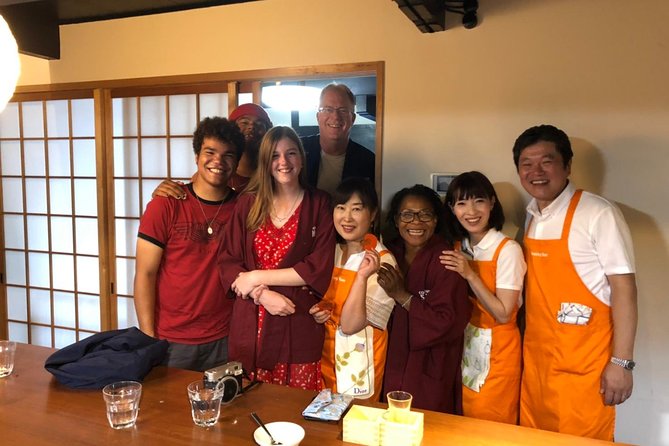
Reviewed · COOKING CLASSES
Izakaya Style Cooking Class
Kyoto smells great when you cook it. This izakaya-style class teaches you how to build Japanese flavor at home, then lets you eat the results. You’ll start with the ideas behind izakaya culture, and you’ll finish with a real dinner you made yourself.
What I like most is the practical, step-by-step teaching. I found hands-on guidance especially helpful for learning things like how to prep dashi and how seasoning works in Japanese home cooking. The instructors do real teamwork, so even a first-time cook stays on track.
One drawback to flag: if you’re offered sake, confirm what is included. One review mentioned a surprise charge for an extra glass, and the listing says food and drinks are only included if specified.
Key things you should know before you go
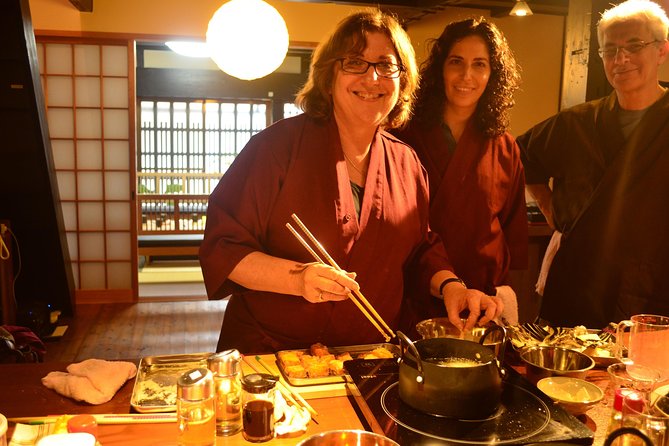
- Small group of up to 8 means you actually get help while you cook
- Dashi first so the rest of your dishes taste correctly at home
- English-speaking instructor for techniques, not just recipes
- Take-home recipes so the class helps after you return to your hotel
- Dinner included so you’re not left with an empty stomach
A Kyoto cooking class in a traditional wood-house setting
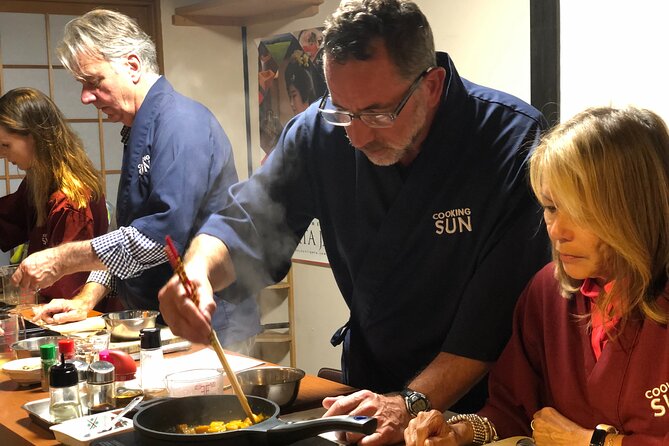
This is the kind of Kyoto experience that feels more like learning a skill than attending a show. You meet at Cooking Sun, at 679 Funayachō in Shimogyo Ward, and you cook inside a traditional wood house style studio. It sets the tone fast. You’re there to work with ingredients, knives, and sauces, not just watch.
The session runs about 3 hours, starting at 2:00 pm. That timing is nice because you still have plenty of evening time afterward for Gion walks or a casual noodle stop. And because there’s no hotel pickup, you can keep your day flexible and simple.
More Cooking Classes in Kyoto
- Ramen Cooking Class at Ramen Factory in Kyoto
★ 5.0 · 1,937 reviews - Kyoto: Ramen Cooking Class at a Ramen Factory with Souvenir
★ 4.9 · 532 reviews - Kyoto: Ramen, Gyoza, and Onigiri Cooking Class
★ 5.0 · 445 reviews
What izakaya really means, beyond sushi and teriyaki
I like that this class explains izakaya in plain terms, not just as a theme. You start with the history and origins of izakaya, and it makes the food feel less random. Historians commonly connect the rise of izakaya to the 18th century, when rice had taxes tied to sake brewing. In the Edo era, sake shop owners began serving dishes alongside bottles to promote their sake. Over time, izakaya became a casual, affordable party style spot for all ages.
Why that matters to you: izakaya food is designed for sharing and snacking. It’s comfortable food, built around sauces, dipping, and balance. When you learn the seasoning logic behind it, you can recreate that vibe at home, even if you are not planning a formal Japanese meal.
Dashi 101: learning the stock that powers Japanese flavor
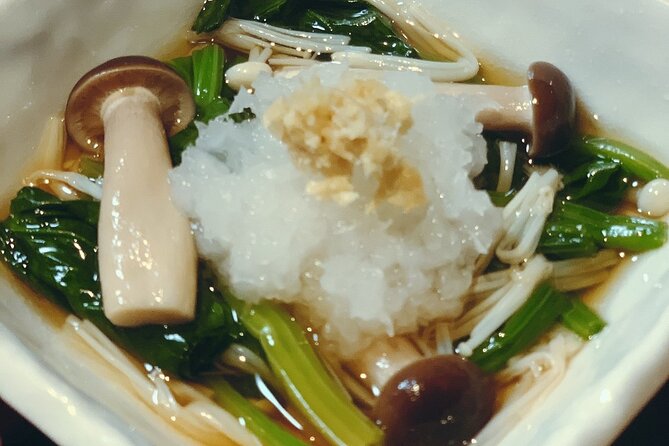
The backbone here is dashi, Japanese soup stock. You’ll learn how to prepare it before jumping into the dishes. That’s a big deal for home cooks. Many “Japanese-ish” meals go wrong because the stock base is missing or treated like an afterthought.
Dashi is more than just water plus something. It’s about extracting savory depth so the rest of the seasoning can do its job. Once you understand the idea, you can use the same approach for other soups, simmered dishes, and sauce foundations later.
And since dashi sits at the start of your lesson, you’re not guessing. You’re building the taste system from the ground up while your instructor can still correct your technique.
Japanese seasoning techniques you can actually repeat at home
After dashi, you move into the seasoning and technique side of izakaya cooking. The class covers ingredient prep and the cooking methods that make Japanese home dishes taste right. You also learn how different sauces and condiments behave, so you stop relying on bottled shortcuts.
This part is where you benefit most from cooking with an English-speaking instructor. Technique matters in Japan, from how you season to how you time cooking steps. You’re not just collecting recipes. You’re collecting cause-and-effect.
I also like that the instruction is structured and calm. Several people noted the team’s organization and attention to everyone at their station. For you, that means less time stuck waiting, and more time learning what to do next.
More izakaya and bar-hopping nights in Kyoto:
- Kyoto: Izakaya Bars Guided Walking Tour
★ 4.9 · 815 reviews - Kyoto Bar Hopping Night Tour
★ 5.0 · 613 reviews - Kyoto Local Bar Crawl in Kawaramachi Area
★ 5.0 · 378 reviews - Kyoto: Afternoon Japanese Izakaya Cooking Class
★ 4.9 · 241 reviews
The menu you might cook: izakaya favorites with seasonal twists
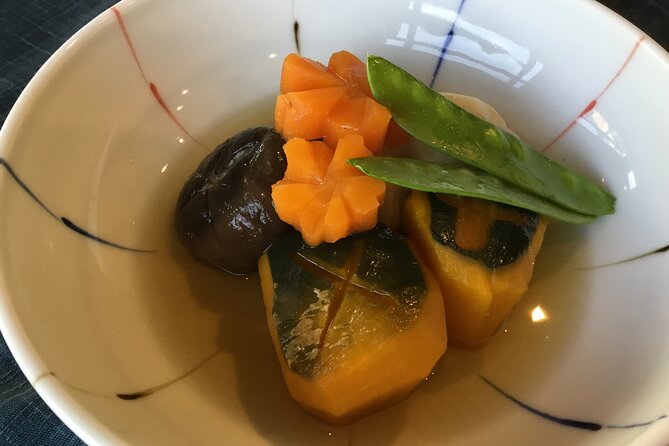
Your exact dishes can change based on seasonal ingredient availability. That’s normal in Japan, but it matters for planning. The class shares examples of typical izakaya favorites such as:
- spinach with sesame sauce
- teriyaki yellowtail
- vegetable chowder
- mushroom tempura
- rice with vegetables
Some reviews also mention other dishes like cucumber salad, pumpkin soup, pasta, and mochi dessert. So think of this as a menu range, not a fixed checklist.
The practical takeaway for you: if you have a must-have dish in mind, don’t assume the class will match it every time. Instead, go in ready to learn the techniques behind whatever seasonal menu appears.
Also, the class tends to keep things efficient. One review said they made six dishes total. If that’s close to the typical pace, you can expect an active 3 hours, with enough variety that you’ll feel like you got your money’s worth.
Hands-on knife work and cooking without feeling rushed
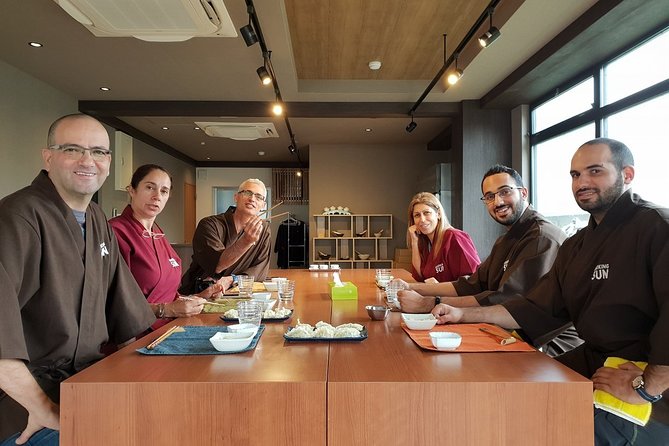
You’ll be cooking during the whole session, after an intro and demos. You grab your knife, follow along, and then cook your own versions while the instructor circulates. The class isn’t just demo, you do the work.
A few details stand out from the experience style:
- Prep is handled in a way that keeps you moving, so you spend your time cooking rather than waiting.
- Assistance seems built in, so you can handle different cooking levels in the same group.
- The teamwork of the instructors means your station doesn’t lag behind.
For beginners, that matters. You’re learning technique while your hands are still fresh, and help is right there. For experienced cooks, it still helps because you get Japanese flavor logic and sauce differences, not just a generic cooking class.
You should also come hungry. Since dinner is included and you’re making multiple dishes, the meal at the end can turn into a real feast.
Dinner you made: eating the class creations as a lesson
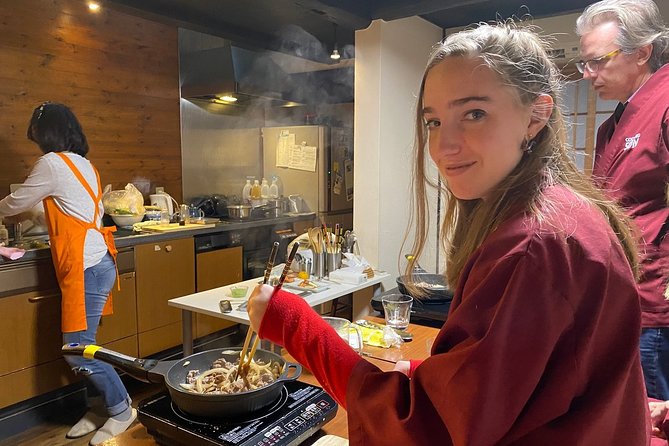
When you’re finished cooking, you sit down with the other participants and eat what you made. This is not just a reward. It helps you connect technique to taste.
I like this format because it makes feedback immediate. If your seasoning is slightly off, you’ll notice right away during tasting. Then you can take that understanding home, rather than only remembering steps later.
The class also includes an apron, and the studio is set up so you can work comfortably. Reviews mention clean, easy equipment, which you’ll appreciate once your hands are wet and busy.
Dietary needs: how to plan ahead for celiac and vegetarian requests
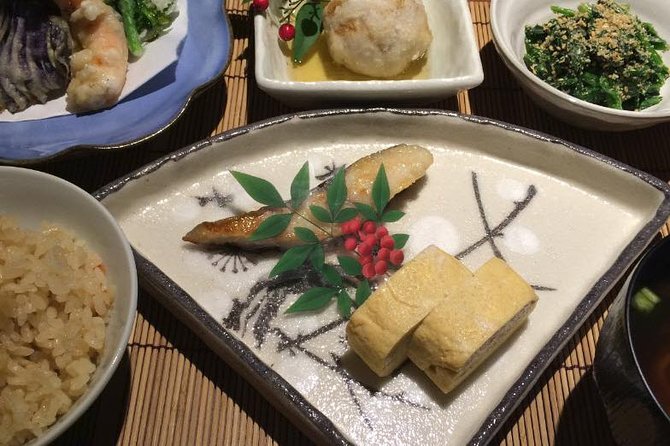
This class asks you to advise any dietary requirements at booking. That’s the key. The best way to make it smooth is to clearly state your needs early, not on the day of.
There’s support mentioned for allergies and dietary preferences. One review specifically called out accommodation for celiac, and another mentioned handling vegetarians without making it a big production. So if you have restrictions, you’re not guessing whether it can be done.
What you can do to make it easier:
- Send dietary details when you book
- Mention what you must avoid, not just what you prefer
- Plan to taste confidently at the end, knowing the class is aware of your needs
Price and value: is about $72 worth it in Kyoto?
At $71.63 per person, this class may sound specific, but the value is pretty straightforward. You get:
- an English-speaking instructor
- all ingredients for the cooking
- an apron
- dinner included
- take-home recipes
- a small group cap of 8
The big value piece is that you’re paying for technique coaching and guidance, not just ingredients. If you tried to DIY this on your own, you’d likely spend time figuring out dashi basics, seasoning steps, and sauce differences. Here, the class builds those skills quickly in a few hours.
Also, since the menu can be varied and seasonal, you’re likely to eat dishes you might not cook at home otherwise. That’s the point of izakaya cooking in the first place, casual, flavorful, and built for sharing.
The one caveat is drinks. Food is included, and drinks are only included if specified. So if sake is part of your plan, ask what is included before you order or accept it.
Who should book this izakaya cooking class
I think this tour fits best if you want more than a meal in Kyoto. You’ll enjoy it if you:
- want hands-on cooking with real instruction
- care about learning Japanese techniques like dashi and seasoning balance
- want recipes you can repeat later
- like small group experiences where you can ask questions
It’s also a good option for families, since reviews mention cooking with kids and making it understandable for different skill levels. If you’re coming as a couple, it’s also a fun shared activity, because you cook, eat, and talk about what you made.
If your goal is to “check off a cooking class” while doing minimal work, this might not be your best fit. The whole point is that you cook.
Quick practical tips before you go
Bring your usual cooking class mindset:
- Wear clothes you can get splashed with. The class is hands-on.
- Go at 2:00 pm without needing a long snack beforehand. Reviews suggest you eat a lot.
- Ask dietary questions clearly at booking.
- If you plan on alcohol, confirm what is included. Food is included, drinks are not automatically covered.
One more thing: you’ll take recipes home. Treat them like a cooking project, not a souvenir. If you revisit the dishes within a week or two, the techniques will stay fresh in your head.
Should you book Cooking Sun’s izakaya class?
I’d book it if you want a fun, structured way to learn Japanese home-style cooking that you can actually reproduce. The strongest reasons to choose it are the small group size, the hands-on teaching, the dashi focus, and the fact that you leave with recipes and dinner you made.
If you’re sensitive to surprise charges, ask about any optional drinks up front. And if you have a specific dish fantasy, remember the menu can shift with the seasons.
Overall, this looks like one of the higher value Kyoto food experiences because you’re not just eating. You’re learning the flavor system behind izakaya.
FAQ
How long is the izakaya style cooking class?
The class lasts about 3 hours.
What time does the class start?
It starts at 2:00 pm.
How many people are in each group?
The group size is limited to a maximum of 8 people per booking.
What is included in the price?
Included are dinner, all ingredients for cooking, an English-speaking cooking instructor, and an apron.
Are drinks included?
Food is included, but drinks are not included unless specified.
Is the instructor English speaking?
Yes, the cooking instructor is described as English-speaking.
Do the dishes on the menu stay the same?
The menu can vary based on seasonal ingredients.
Where does the class meet?
The start location is Cooking Sun, 679 Funayachō, Shimogyo Ward, Kyoto, 600-8466, Japan.
What if I need to change my booking or cancel?
Free cancellation is available. You can cancel up to 24 hours in advance for a full refund, and within 24 hours the amount paid is not refunded.
More Drinking Tours in Kyoto
- Kyoto Night Foodie Tour in Gion (9+ dishes + 6 Sake tastings)
★ 5.0 · 1,762 reviews - 3-Hour Kyoto Insider Sake Brewery Tour with Tastings & Pairings
★ 5.0 · 917 reviews - Arashiyama Bamboo, Temple, Monkeys, or Secret Sake Brewery
★ 4.8 · 886 reviews - Kyoto: Insider Sake Brewery Tour with Sake and Food Pairing
★ 5.0 · 704 reviews
Fresh options around Kyoto
- Kyoto: Quiet and Graceful Tea Ceremony★ 4.5 · 19 reviews
- Oboro | Mindful Tea Ceremony in a 100-Year-Old Kyoto Teahouse★ 5.0 · 19 reviews
- Ikebana Traditional Japanese Art of Flower Arranging★ 4.5 · 19 reviews
- Kyoto Satoyama Cycling with Lunch and English Guide★ 5.0 · 19 reviews
- Kyoto International Party Solo Friendly Expats and Locals★ 5.0 · 19 reviews
- Tea Ceremony Experience in Traditional Kyoto Townhouse★ 5.0 · 19 reviews
- Kyoto: Amanohashidate Ine Funaya Tour★ 4.4 · 19 reviews
- Kyoto Private Food Tours with a Local Foodie: 100% Personalized★ 4.5 · 19 reviews
Cooking Classes, compared.

Ramen Cooking Class at Ramen Factory in Kyoto
Read our review →
Ramen & Gyoza Cooking Class in Tokyo with Local Supermarket Visit
Read our review →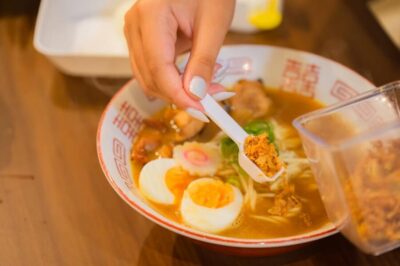
Ramen Cooking Class at a Ramen Factory with Souvenir
Read our review →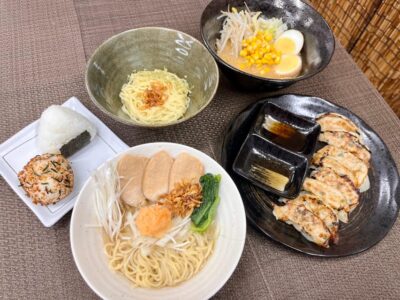
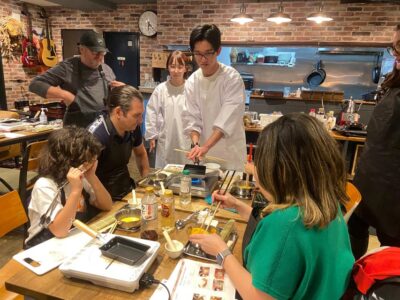
Japanese Washoku Bento Small Group Cooking Class
Read our review →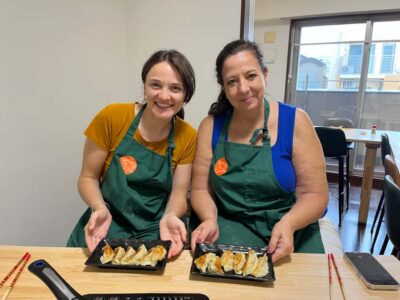
Easy Ramen Cooking Experience in Kabukicho, Shinjuku
Read our review →
Ramen and Sushi Cooking Class with Sake Pairing Set in Tokyo
Read our review →Browse the lists this tour appears in