
Reviewed · COOKING CLASSES
Kyoto: Afternoon Japanese Izakaya Cooking Class
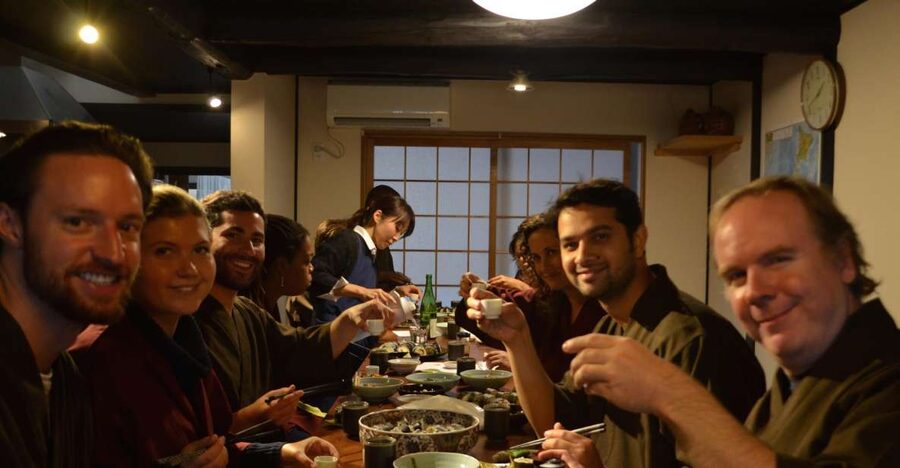
Kyoto cooking afternoons beat most walking tours. This afternoon izakaya class turns your hands on the food, so you cook 2 to 3 home dishes with your chef and then eat them on the spot. I also like that the session is designed so you can repeat what you learn later, with recipes you can use at home.
One possible drawback: this is a hands-on kitchen experience. You should be ready to stand, chop, and talk with your chef while you cook and eat, not just watch from the sidelines.
Key things to know before you go
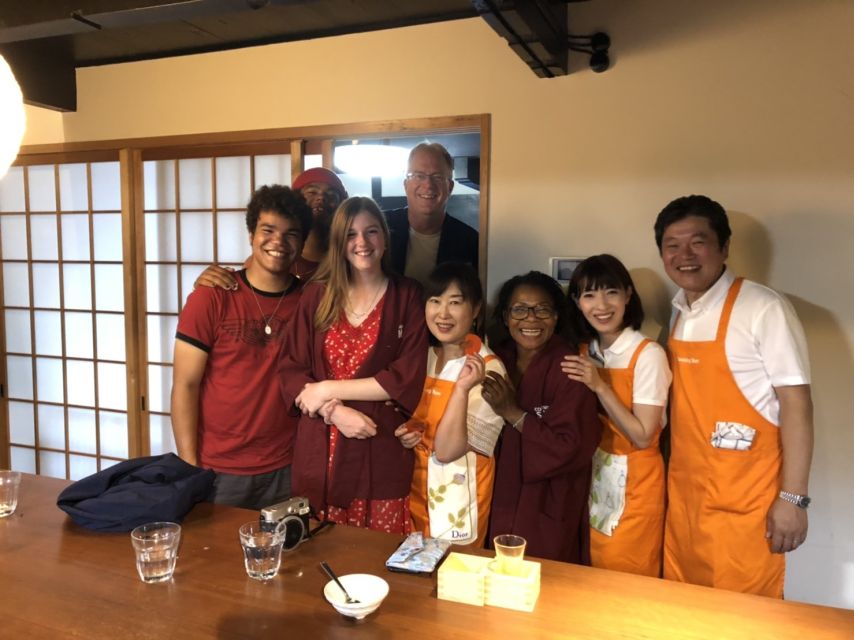
- Two-round cooking flow: cook once together, eat, then head back for more and eat again.
- Izakaya style, counter-style energy: you talk with the chef while cooking and eating.
- English instruction: the class is taught in English.
- Everything for cooking is provided: ingredients plus apron and utensils are included.
- You leave with practical recipes: step-by-step guidance helps you cook again at home.
- Clear meeting point in Shimogyo Ward: Cooking Sun, Funayacho, Shimogyo Ward, Kyoto 600-8466.
How The Izakaya Cooking Class Runs In Two Rounds
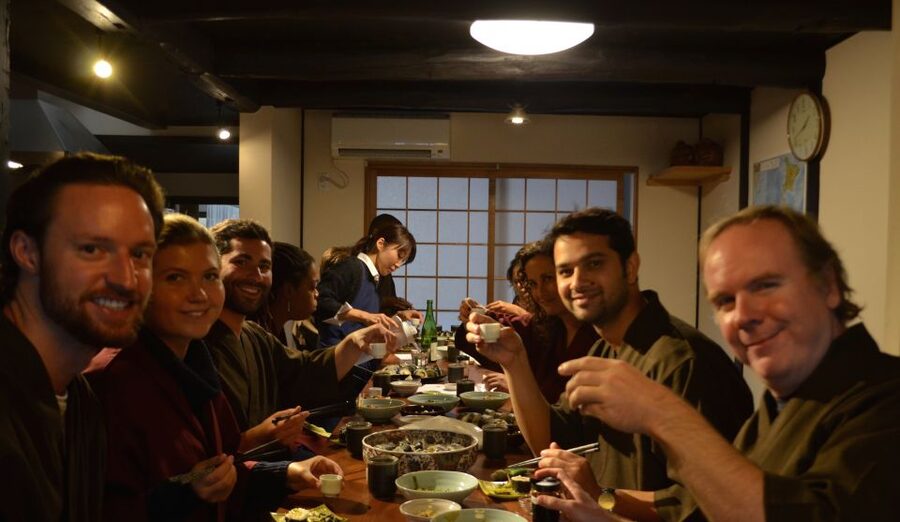
This Kyoto class is built around a simple idea: you learn by doing, then you sit down and eat what you just cooked. The course runs in two cooking parts, and that pacing is a big part of the value.
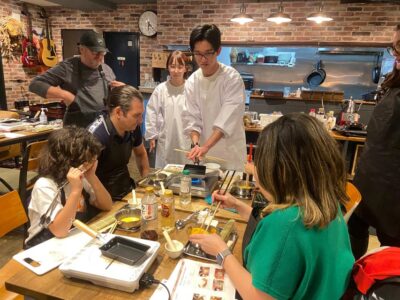
First, you cook 2 or 3 dishes together with your chef. You are not just following a cooking video, you are working through the process step by step, then enjoying the results right after. It also follows the izakaya tradition where conversation is part of the meal, so you can ask questions while you cook.
Then you head back to the kitchen for the second round and learn another set of dishes (again, you will typically cook a few at a time). After that, you eat once more. If you like lessons that end in food and not in paperwork, this format hits the mark.
More Cooking Classes in Kyoto
- Ramen Cooking Class at Ramen Factory in Kyoto
★ 5.0 · 1,937 reviews - Kyoto: Ramen Cooking Class at a Ramen Factory with Souvenir
★ 4.9 · 532 reviews - Kyoto: Ramen, Gyoza, and Onigiri Cooking Class
★ 5.0 · 445 reviews
What You’ll Cook, And Why Home Dishes Beat Food-Tour Shortcut
The class focuses on Japanese home dishes, the kind you eat at home and in everyday local restaurants. That matters because it avoids the common tourist trap of only learning a single showy item. Instead, you get a mix of flavors and techniques that help you understand Japanese cooking as a system.
The exact menu can vary by session, but the structure stays the same: you cook multiple dishes across two rounds, with ingredients provided and the chef guiding you through the fundamentals. Many sessions aim for dishes that are approachable even for non-experts, and the feedback you will see is consistent on one point: the cooking tasks are doable.
You might also see staples of Japanese home cooking in the mix, like dishes built around savory-sweet sauces, comforting simmered flavors, or basic broth techniques. Even if you have eaten Japanese food for years, there is often a big difference between eating something and understanding how the flavor is built.
If you have dietary needs, tell the local supplier when you book. That is the safest way to make sure you get something you can actually enjoy.
The English-Speaking Kitchen Team, And The Pace That Helps Beginners
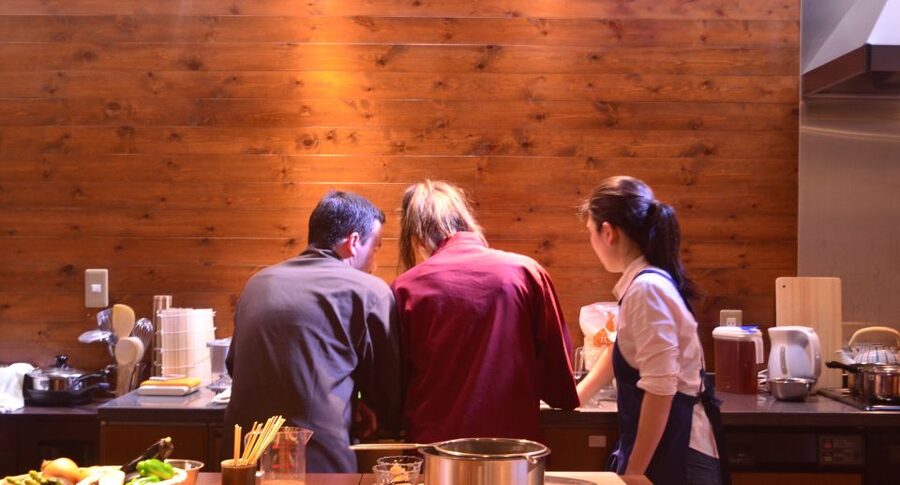
This is taught by an English instructor, which is a practical advantage in Kyoto. Food terms and kitchen steps can be tough in translation, so the ability to get clear guidance is a comfort factor, especially if you do not cook often.
I like that the class is designed around learning while working. You do not have to be a confident chopper or a fearless stove operator on day one. The format typically breaks things into manageable steps, and the chef can guide you while you are cooking, not after it is too late to fix a mistake.
If you are lucky, you may get taught by instructors with names like Yumi or Yumiko, who are associated with this style of class delivery. Either way, the key is the teaching style: friendly, hands-on, and built around making you successful, not just entertained.
The one pace-related consideration is that it is an afternoon class that moves. You will likely be busy during the cooking rounds, so it is not the best fit if you want a super slow, leisurely meal with no standing and no prep.
What’s Included, And How $67 Adds Up In Real Terms
At $67 per person for a 3-hour class, the price is easier to judge when you look at what you receive. This is not a tasting-only activity. You get cooking instruction, ingredients, apron and utensils, and you eat the dishes you helped make.
You also leave with recipe guidance you can use at home. That is where the value often becomes more than just the meal. A lot of cooking classes deliver one skill you can try later, but this one is structured to teach repeatable techniques you can actually use without guessing.
A quick way to think about value:
- You are paying for time, instruction, and ingredients.
- You are also paying for translation and step-by-step support, which is hard to replicate alone.
- And you are paying for the meal outcome, so you do not need to add another dinner plan.
If you are trying to balance your Kyoto budget, I would treat this as a trade. Instead of spending more on one restaurant meal, you spend on a structured experience that gives you both food now and know-how later.
More izakaya and bar-hopping nights in Kyoto:
- Kyoto: Izakaya Bars Guided Walking Tour
★ 4.9 · 815 reviews - Kyoto Bar Hopping Night Tour
★ 5.0 · 613 reviews - Kyoto Local Bar Crawl in Kawaramachi Area
★ 5.0 · 378 reviews - Izakaya Style Cooking Class
★ 5.0 · 219 reviews
Where To Meet At Cooking Sun (Shimogyo Ward, Kyoto)
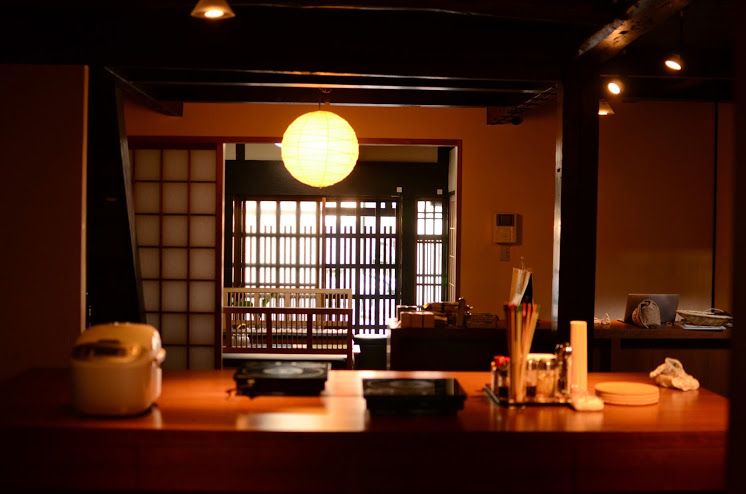
You meet at Cooking Sun, Funayacho, Shimogyo Ward, Kyoto, Kyoto 600-8466. It is a straightforward address, but I still suggest arriving a little early so you can settle in before the kitchen gets busy.
If you are navigating Kyoto by transit, give yourself extra margin for local trains, short walks, and the fact that some streets can be a bit confusing at first. The smoother your arrival, the more enjoyable the class feels once you are in the cooking flow.
Bring comfortable clothing since you will be standing and working. Closed-toe shoes are a good idea in any cooking setting.
What The Meal Feels Like (And How Izakaya Dining Changes The Mood)
Eating in an izakaya style class is different from eating a plated course at a restaurant. Here, you are tasting with context. You know what changed when the seasoning went in, and you can connect flavor to technique.
That is why the two eating moments matter. Round one is like a checkpoint. You eat, learn what works, then adjust for what comes next. Round two builds on that momentum and helps you finish the session with a better understanding of the dish logic.
You also get the social side of izakaya dining through conversation with the chef. Even if you are shy, the chef has a natural rhythm for questions because everyone is cooking the same dishes at the same time.
And yes, you will probably leave with the desire to buy at least a couple of Japanese pantry items when you return home. The class is designed to make ingredients feel less mysterious and more like building blocks.
Who This Class Is Best For (And When To Skip It)
This Kyoto afternoon class is a good match if:
- You want to learn Japanese home-style cooking, not only the headline dishes.
- You like hands-on lessons where you eat right away.
- You want an indoor activity that still feels distinctly Japanese.
- You cook little at home but want a guided path to improve.
It is also a strong option for food-focused couples and solo travelers who want something practical and social. Multiple people find it useful even when they are not experienced cooks, because the tasks are designed to be manageable.
I would skip it if you:
- Are hoping for a sightseeing-heavy afternoon. This is primarily a kitchen experience.
- Cannot handle standing and chopping for a few hours.
- Have dietary restrictions but did not plan to share them during booking.
Should You Book Kyoto Afternoon Japanese Izakaya Cooking Class?
I would book it if you want a Kyoto activity that pays you back twice, once in the food you eat and again in the skills you can use later. The price makes sense because ingredients, utensils, and apron are included, and the class is structured around two cooking rounds with eating built in.
If you are on the fence, use this quick checklist:
- Are you comfortable being active in a kitchen for about 3 hours?
- Do you want recipe guidance you can reproduce at home?
- Can you share your dietary requirements clearly when you book?
If you said yes to those, this is a smart, value-heavy way to spend an afternoon in Kyoto.
FAQ
How long is the Kyoto afternoon Japanese izakaya cooking class?
The duration is 3 hours.
What does the Kyoto izakaya cooking class cost?
The price is $67 per person.
Where do I meet for the class?
You meet at Cooking Sun, Funayacho, Shimogyo Ward, Kyoto, Kyoto 600-8466.
Do I cook the food or only watch?
You cook as part of the class. The course includes cooking multiple dishes and eating what you make.
What’s included in the price?
Included are the cooking class, ingredients, 2-3 dishes, and an apron and utensils.
Is the instructor an English speaker?
Yes, the instructor teaches in English.
Is the class wheelchair accessible?
Yes, the activity is wheelchair accessible.
What should I do if I have dietary requirements?
Let the local supplier know at the time of booking about any dietary requirements.
Is there free cancellation?
Yes. You can cancel up to 24 hours in advance for a full refund.
Is reserve now, pay later available?
Yes. You can reserve your spot and pay nothing today.
More Drinking Tours in Kyoto
- Kyoto Night Foodie Tour in Gion (9+ dishes + 6 Sake tastings)
★ 5.0 · 1,762 reviews - 3-Hour Kyoto Insider Sake Brewery Tour with Tastings & Pairings
★ 5.0 · 917 reviews - Arashiyama Bamboo, Temple, Monkeys, or Secret Sake Brewery
★ 4.8 · 886 reviews - Kyoto: Insider Sake Brewery Tour with Sake and Food Pairing
★ 5.0 · 704 reviews
Fresh options around Kyoto
- Kyoto Aquarium Admission Ticket★ 4.7 · 12 reviews
- Kyoto Gion Photoshoot – Private Session | Pro Photographer★ 5.0 · 12 reviews
- Gyoza Cooking Class in Kyoto: Traditional Japanese Dumplings★ 5.0 · 12 reviews
- Kyoto: Guided Food Tour with 12 Dishes & 3 Drinks★ 5.0 · 12 reviews
- Kyoto: Avoid the Crowds at the Hidden Gems of Arashiyama★ 4.9 · 13 reviews
- Kyoto Early Bird English Tour: Gion & Higashiyama(Private opt)★ 5.0 · 13 reviews
- Otsu-e Folk Art Workshop & Local Culture Walk Near Kyoto★ 5.0 · 13 reviews
- Kyoto, Osaka, Nara Full Day tour by Car English speaking Driver★ 3.5 · 13 reviews
Cooking Classes, compared.
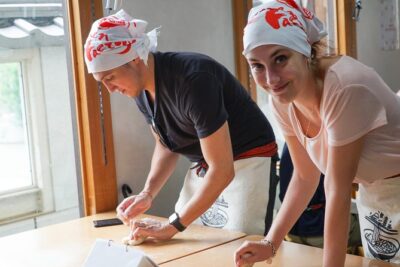
Ramen Cooking Class at Ramen Factory in Kyoto
Read our review →
Ramen & Gyoza Cooking Class in Tokyo with Local Supermarket Visit
Read our review →
Ramen Cooking Class at a Ramen Factory with Souvenir
Read our review →
Japanese Washoku Bento Small Group Cooking Class
Read our review →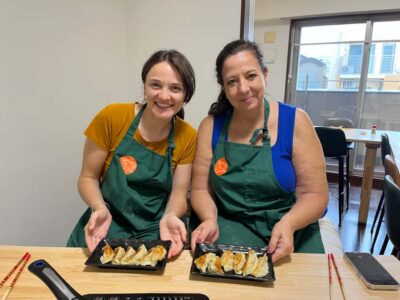
Easy Ramen Cooking Experience in Kabukicho, Shinjuku
Read our review →
Ramen and Sushi Cooking Class with Sake Pairing Set in Tokyo
Read our review →Browse the lists this tour appears in