Reviewed · KYOTO TOURS
One-Day Tour of Kyoto’s Highlights from Osaka/Kyoto
Kyoto in one day, with fewer headaches. This tour strings together UNESCO-listed shrines and temples across Kyoto, using an air-conditioned bus with Wi-Fi so you can spend your energy on the sights.
I love the tight, logical flow of stops, especially how you hit Fushimi Inari Taisha, Kiyomizu-dera, Kinkaku-ji, and Arashiyama in one day. I also like that you can add lunch for an easier schedule without doing extra planning. The main drawback is time and pace, because this is a walking tour with hills and stairs, and each stop is limited.
Key highlights you will feel on the ground
- Four Kyoto must-sees in one day, with guided stops that keep the route simple
- Air-conditioned bus plus free Wi-Fi, a big deal when Kyoto heat hits or rain rolls in
- English-speaking guide, and you may get extra value from guides like Maria, Naomi, Hama, or Ma-chan
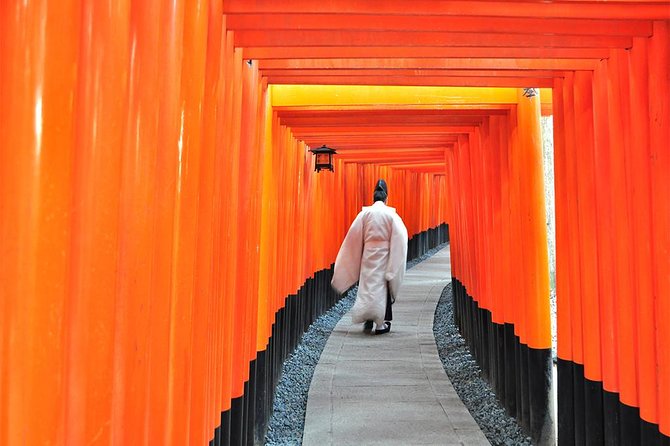
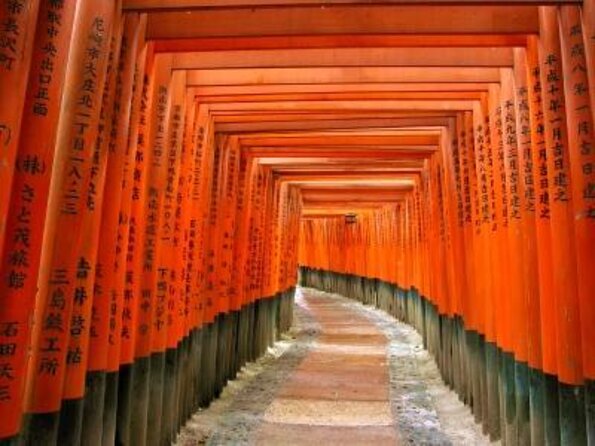
- Fushimi Inari’s torii tunnel, including its ties to agriculture, business, traffic safety, and harvest
- Kiyomizu-dera details that land, including 139 pillars and a stage built without a single nail
- Arashiyama bamboo and Togetsukyo, great for shade breaks and quick photo wins
The basic idea: Kyoto’s top sights without playing chauffeur
If you have limited time in Kansai, this one-day loop makes Kyoto feel doable. You start in Osaka or Kyoto, ride in comfort, and get taken to the city’s big icons instead of figuring out train changes and timing on the fly.
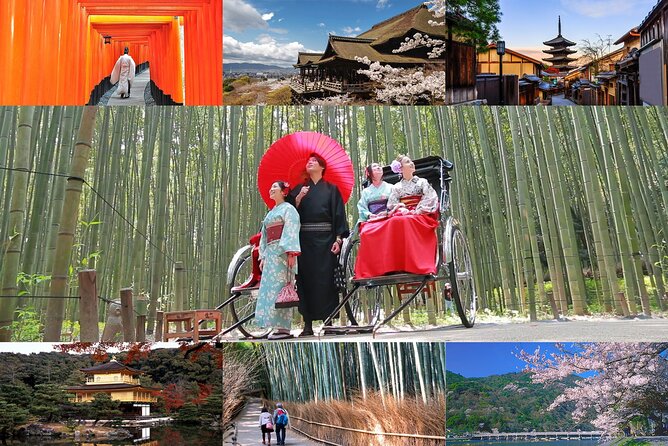
The tour is built around four stops that each give you a different Kyoto mood: shrine corridors, temple views, a gold-leaf zen moment, and bamboo-shadowed nature. It is the kind of plan that works best when you want big results fast.
A few more Kyoto days worth comparing
- PERFECT KYOTO 1-Day Bus Tour
★ 5.0 · 13,518 reviews - Kyoto: Fushimi Inari, Kinkakuji, Bamboo Grove 1 Day Bus Tour
★ 4.8 · 4,316 reviews - Kyoto: Tea Ceremony in a Traditional Tea House in Kiyomizu
★ 4.9 · 3,519 reviews
Price and value: what $66.32 really buys you
At $66.32 per person, you are mostly paying for four things: transport, guide time, and ticketing where it applies. You also get an air-conditioned coach with free Wi-Fi, which is not small value if you are visiting in summer or in changeable weather.
Ticket coverage matters here. Entrance to Kinkaku-ji and Kiyomizudera is included, while admission at Fushimi Inari Taisha and Arashiyama is free. When you add those inclusions to guided routing, the price can feel reasonable if you would otherwise spend time and money trying to DIY the same sequence.
Getting to the meeting point: Osaka vs Kyoto, and why check-in matters
This tour does not do hotel pickup. Instead, you meet at a set departure point and time, so you need to plan your morning accordingly.
If you are starting from Osaka, the meeting time is 8:50 AM at Namba, OCAT 1F (near Daiso). If you are starting from Kyoto, the meeting time is 9:05 AM at Kyoto Station, Hachijo Exit Tourist Bus Parking. Check in 10 minutes before departure, because the bus will not wait for late arrivals.
You will also want a simple “leave nothing behind” checklist: comfortable shoes, water, and a light layer. This day includes walking on hills, and the group moves as a unit.
Riding in comfort: the air-conditioned bus with free Wi-Fi
The bus is air-conditioned and includes free Wi-Fi, which helps you reset between stops. That matters because the day is long (about 10 hours), and Kyoto can swing from hot sun to sudden showers.
You should expect a full day schedule, not a slow sightseeing crawl. The upside is that the bus gives you breathing room, and you spend less time hustling between temples with bags and umbrellas.
Also, there is a maximum group size of 42 travelers. That is large enough to feel social, but not so massive that you lose control of where you are supposed to be.
Same corner of Japan, a different kind of day:
- Kyoto Geisha Walking Tour: Gion District & Hidden Gems
★ 4.7 · 3,273 reviews - Kyoto: Tea Ceremony Ju-An at Jotokuji Temple
★ 4.9 · 3,207 reviews - Kyoto: Gion Magical Night Walking Tour with Geisha Trivia
★ 4.9 · 2,393 reviews - Kyoto: 45-Minute Tea Ceremony Lesson Experience
★ 4.3 · 2,378 reviews
Stop 1: Fushimi Inari Taisha torii gates and the meaning behind the red
Your first stop is Fushimi Inari Taisha, the head shrine of over 30,000 Inari shrines across Japan. You get about 1 hour 20 minutes, and that is typically just enough time to walk the key torii gate corridors without rushing the full length of every side path.
This place is famous for its thousands of vermilion torii gates, and your guide should help you connect the visuals to meaning. Inari is associated with agriculture, business, traffic safety, and a bountiful harvest, so the shrine feels more than decorative once you know what people are praying for.
What to watch for: the gates can create “tunnel walking” vibes, so comfortable footwear is essential. Also, it gets busy, so you will get better photos when you slow down slightly at turns and let the biggest flows pass.
Stop 2: Kiyomizu-dera, the nail-free stage, and the city views
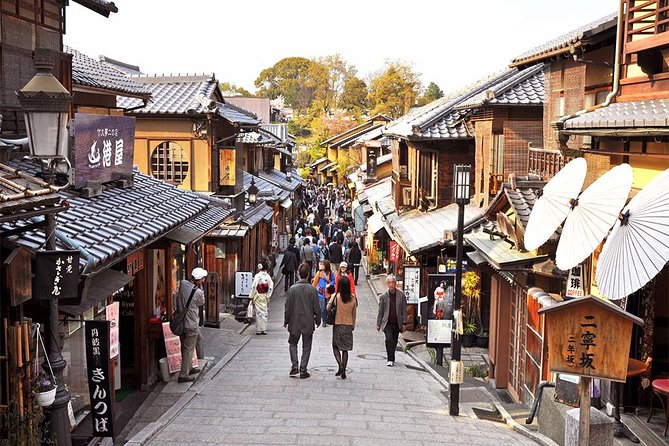
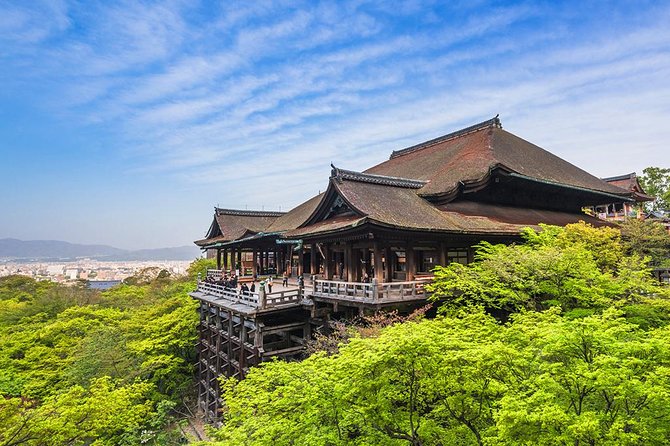
Next is Kiyomizu-dera, one of Japan’s best-known temples. You get about 1 hour 40 minutes, and admission is included.
The standout feature is the main viewing stage, which juts out from the hillside. Construction details add to the awe here: the temple is known for its stage built with 139 pillars and not a single nail, and that detail helps you understand why people still stop to stare upward.
You will also get city views from the viewing platform. Even if you are not a “lookouts” person, the view connects the temple to the living city around it, which makes the stop feel less like a photo stop and more like a Kyoto moment.
A practical note: this area involves stairs and uneven walking. If you are traveling with mobility limits, plan extra time and take breaks before you feel rushed.
Stop 3: Kinkaku-ji Golden Pavilion and the garden pause
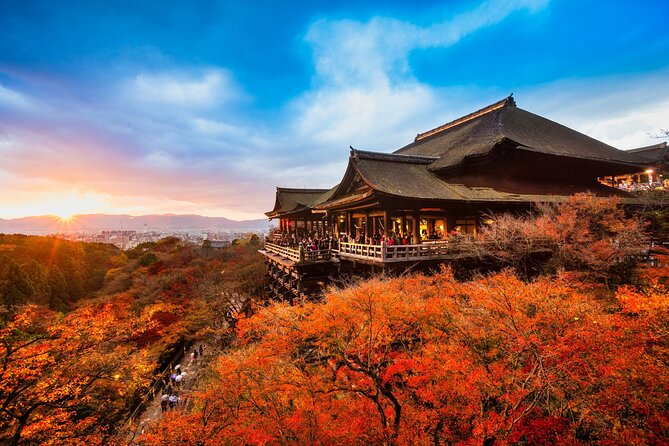
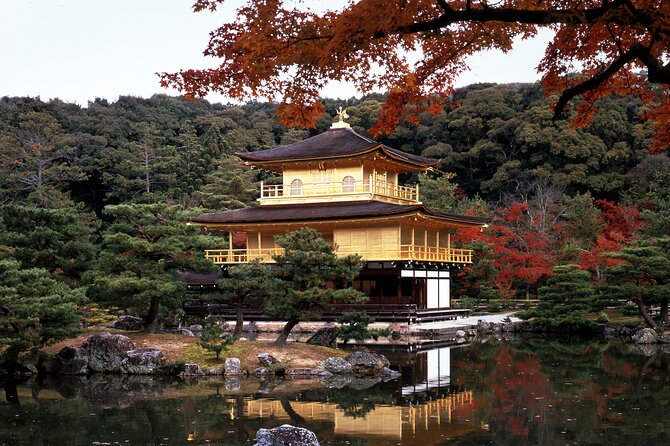
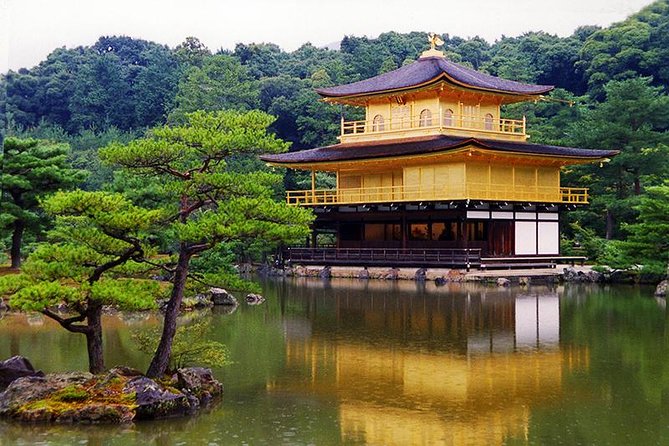
Kinkaku-ji is the Golden Pavilion, a Zen temple on the UNESCO list. You have 45 minutes, and admission is included.
This one is famous for a gold-leaf-covered pavilion and peaceful gardens. The time is short by design, because the tour is trying to keep the overall day efficient. The good news is that the key visuals are easy to appreciate without needing hours of wandering.
A fact that helps you enjoy the place more: Kinkaku-ji was once the villa of the Ashikaga Shogun. Once you know it has court-era roots, the elegance and symmetry start to make sense.
If you want the best experience, do a quick “first lap” for the big views, then slow down for one garden-focused moment. That way you leave with both the postcard image and a calmer feeling.
Stop 4: Arashiyama bamboo forest paths and Togetsukyo bridge
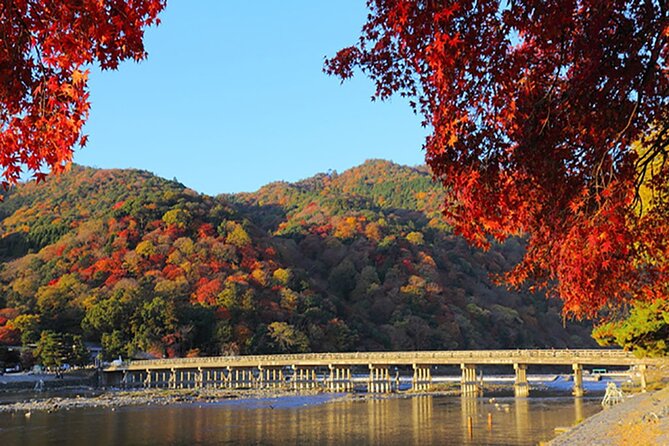
Your final sightseeing stop is Arashiyama, centered on the Sagano Bamboo Forest area. You have about 1 hour 20 minutes, and admission is free.
The bamboo paths are a nice contrast to shrine crowds and temple stairs. The shade under the stalks can feel like a reset, and it is one of those Kyoto scenes that changes mood when light shifts between leaves.
You will also see Togetsukyo, the moon-crossing bridge. Even if your main goal is photos, it helps to know that bridge framing is part of why this scene is so recognizable.
Tip for your timing: do not sprint to the first bamboo stretch. Let the group settle, and you will often get cleaner sightlines and fewer blocked shots.
Lunch on a schedule: what to choose and what to plan for
There is a lunch break during the tour. You can select a lunch-included option, or you can bring your own.
Here is what you need to know about food limits: halal and vegan meals are unavailable. Vegetarian requests are handled differently, and you need to contact the tour operator at least 3 days before the tour if you want a vegetarian option.
If you are choosing the lunch-included option, my advice is simple: go in with modest expectations and focus on convenience. The real value is that lunch helps keep you from burning time on searching and decision-making between major stops.
If you skip lunch, bring something easy to eat outdoors or in a sheltered spot. This day is long, and hunger can make the walking feel harder.
Walking, hills, and photos: how to make the day feel easier
This tour requires walking. You should expect hills and stairs, and that is where the experience can swing from fun to tough depending on your fitness.
Some visitors have noted that strollers can be tricky due to slopes and paths. Folding strollers are allowed, but they will be stored with luggage on the bus, so you will still face the terrain when you are moving between stops.
My practical approach for a smoother day:
- Wear shoes you trust for stairs and uneven surfaces
- Carry water, especially if you are visiting in warm weather
- Plan on slow minutes even if the group moves quickly, because hills add fatigue fast
This is also a photo-heavy day. Guides often help with pacing and pointing out where the light and angles work best, which can save you time standing in the wrong spot.
Guides and English: why this tour can feel world-class or uneven
The tour includes an English-speaking guide, and a big chunk of the satisfaction comes down to how that guide explains each site. Several guide names have come up strongly, including Kenjisan, Milo, Maria, Naomi, Hama, Tet or Ted, Alice, Ma-chan, and Maiki.
That matters because the sights can feel like a checklist unless you understand what you are looking at. When the guide connects architecture, symbolism, and timing, you feel like you gained context, not just steps on a map.
One real caution from the experience pattern: English quality can vary by guide. If clear narration is your top priority, I recommend you arrive with a couple of quick references so you can follow along even if details move fast.
Timing and crowds: the upside of a tight route
Each stop has a set time window, roughly 1.5 to almost 2 hours for the big entries, and shorter windows for the Golden Pavilion. That structure is why the tour can fit four major sites in a single day without total chaos.
The flip side is that you will not see everything at each location. If your idea of Kyoto is deep, slow, and off-the-main-path, you may feel a bit “rushed.” But if your goal is a hit list day where you still get to enjoy each stop, the pace often feels like a smart trade.
Crowds are part of the deal at these icons. You will still have memorable moments, especially when you pause for views at Kiyomizu-dera and when the bamboo gives you a shaded breather in Arashiyama.
Mobile ticket, no hotel pickup, and back-to-start convenience
The tour uses a mobile ticket, which cuts down on paper hassle. You are picked up and dropped off at your starting point, and there is no hotel pickup, so you are in charge of your morning transport to the meeting area.
This back-to-start design can be great if you are staying near Osaka or Kyoto transit hubs. It also reduces uncertainty because your end point is the same place where you met the group.
Should you book this one-day Kyoto Highlights tour?
Book it if you want the fastest path to Kyoto’s most famous sights, and you prefer a planned day with guided context and an air-conditioned bus. It is especially worth it if you are juggling heat, rain risk, or limited time and you want UNESCO temples and shrines without navigating all the logistics yourself.
Skip it or think twice if you need a slow pace, you are easily worn down by stairs, or you have very specific dietary needs like vegan or halal. Lunch can help the schedule, but vegan and halal meals are not available, and vegetarian requests need advance coordination.
If you are trying to choose between “guide plus comfort” and “DIY with lots of travel time,” this is the guide plus comfort option. For a first Kyoto day, it is hard to beat the value of seeing Fushimi Inari, Kiyomizu-dera, Kinkaku-ji, and Arashiyama in one smooth loop.
FAQ
What temples and sites are included on this one-day Kyoto highlights tour?
You visit Fushimi Inari Taisha, Kiyomizu-dera, Kinkaku-ji, and Arashiyama (including the bamboo forest area). The tour ends with drop-off back at the starting point.
How long is the tour?
The duration is about 10 hours.
Is the bus air-conditioned, and is Wi-Fi included?
Yes. The tour includes an air-conditioned bus with free Wi-Fi onboard.
Is lunch included?
Lunch is available as an upgrade option. If you choose the lunch-included option, lunch is included in the tour.
Are entrance tickets included?
Entrance tickets are included for Kinkaku-ji and Kiyomizudera. Fushimi Inari Taisha and Arashiyama list free admission ticket details in the schedule.
Where do we meet if we start from Osaka?
You meet at Namba, OCAT 1F (near Daiso) at 8:50 AM.
Where do we meet if we start from Kyoto?
You meet at Kyoto Station, Hachijo Exit Tourist Bus Parking at 9:05 AM.
Does the tour offer halal or vegan meals?
Halal and vegan meals are unavailable on this tour. You can book an option without lunch and bring your own if that works better for you.
Is the tour stroller-friendly?
Folding strollers are allowed, and they will be stored with the luggage on the bus. The tour still requires walking, so slopes and stairs are part of the day.
Fresh options around Kyoto
- Kyoto: Quiet and Graceful Tea Ceremony★ 4.5 · 19 reviews
- Oboro | Mindful Tea Ceremony in a 100-Year-Old Kyoto Teahouse★ 5.0 · 19 reviews
- Ikebana Traditional Japanese Art of Flower Arranging★ 4.5 · 19 reviews
- Kyoto Satoyama Cycling with Lunch and English Guide★ 5.0 · 19 reviews
- Kyoto International Party Solo Friendly Expats and Locals★ 5.0 · 19 reviews
- Tea Ceremony Experience in Traditional Kyoto Townhouse★ 5.0 · 19 reviews
- Kyoto: Amanohashidate Ine Funaya Tour★ 4.4 · 19 reviews
- Kyoto Private Food Tours with a Local Foodie: 100% Personalized★ 4.5 · 19 reviews
Kyoto Tours, compared.
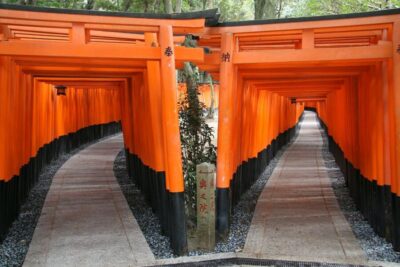
Fushimi Inari, Kinkakuji, Bamboo Grove 1 Day Bus Tour
Read our review →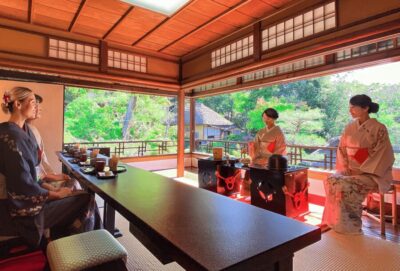
Tea Ceremony in a Traditional Tea House in Kiyomizu
Read our review →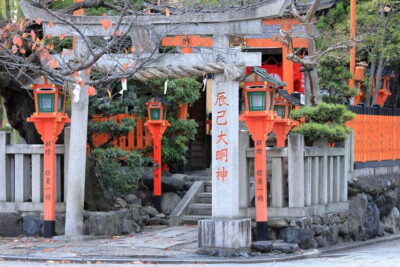
Kyoto Geisha Walking Tour: Gion District & Hidden Gems
Read our review →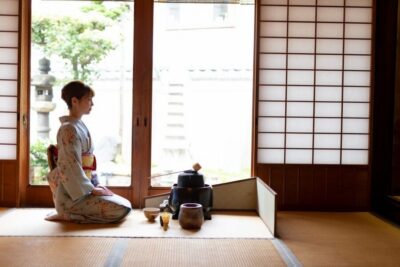
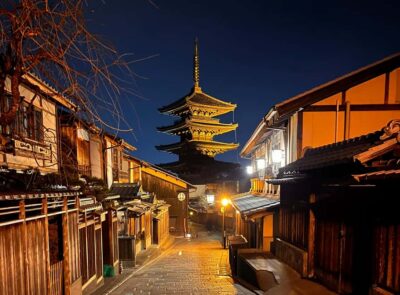
Gion Magical Night Walking Tour with Geisha Trivia
Read our review →