
Reviewed · CYCLING TOURS
Kyoto Satoyama Cycling with Lunch and English Guide
Rural Kyoto feels close on an e-bike. This Kyoto Satoyama ride in Sonobe strings together shrine prayers, castle-ruin sights, and real country food, all with an English local guide. It also lets you add extras like a kimono photo or koto play at no extra cost.
I especially like the way the e-bike makes the countryside roads feel easy, even when the day includes several stops. I also like the lunch focus, because you either get hands-on soba-making and a soba set meal, or a house-style meal using local produce.
One thing to plan for: the tour needs good weather. If conditions are poor, you may be offered a different date or a refund, so check the forecast and keep your schedule flexible.
Key highlights you’ll feel on the ride
- Sonobe countryside by e-bike: quiet roads, birds and rivers kind of scenery, and a pace that stays fun.
- Two course styles: Course A is hands-on soba, Course B is a traditional house lunch with local produce.
- Shrines with meaning: Ikimi Tenmangu Shrine for learning, plus a farming-focused shrine with a thatched-roof hall.
- Local guidance from Maki and her team: born and raised in town, with clear explanations at each stop.
- Optional add-ons included: kimono photo, playing koto, and even Mt. Komugi (the birthplace of Mario) if you choose it.
Sonobe’s “another Kyoto” feeling, without the long commute
This tour is based in Sonobe, Kyoto Prefecture, and you reach it from Kyoto City by train in about 30 minutes. That matters because you get out of the crowded city rhythm fast, without losing the convenience of being near a major hub.
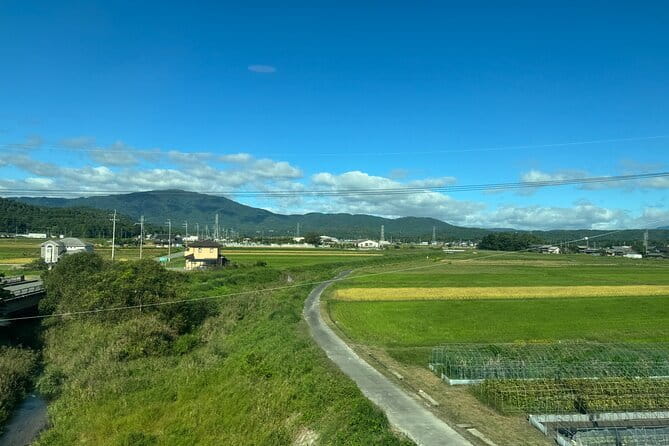
Once you’re in Sonobe, the day is built around countryside tempo: open views, farm road vibes, and the kind of stillness that makes a short ride feel like a break. Several stops are free to enter, and the tour keeps moving at a human pace, with cycling segments of roughly 10 to 20 minutes between points.
The overall timing is about 4 to 5 hours, including the cycling travel time. That’s a comfortable half-day length, especially if you want Kyoto sights but also want fresh air and local life.
If you’re the type who likes planning around moments, not just destinations, this route is satisfying. You’ll shift from shrine grounds to castle remnants to a countryside food experience, all within a single arc of the day.
More Bike Tours in Kyoto
- Hidden Kyoto E-Biking tour
★ 5.0 · 1,843 reviews - Bike Tour Exploring North Kyoto plus Lunch
★ 5.0 · 1,087 reviews - Arashiyama Bamboo Forest & Hidden Gems Bike Tour (Early Bird)
★ 5.0 · 613 reviews
Course A or Course B: choose your kind of lunch story
Your biggest decision is how you want lunch to happen.
Course A: hands-on soba, then you eat what you make
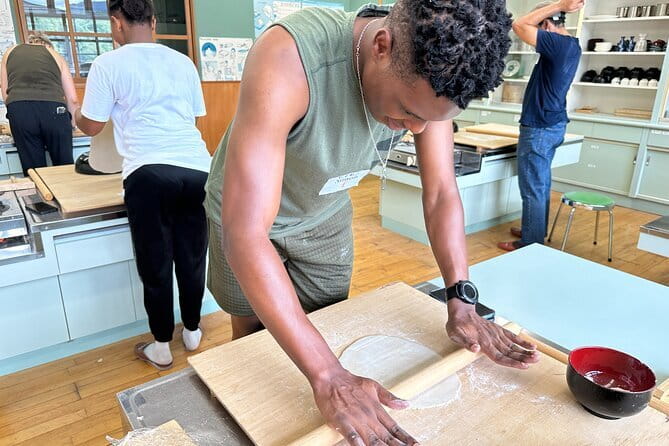
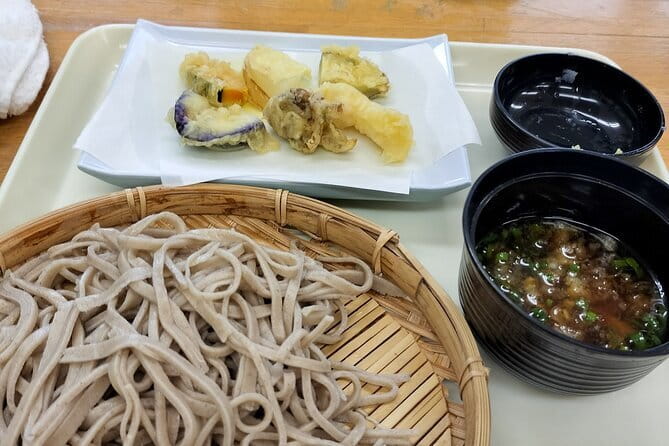
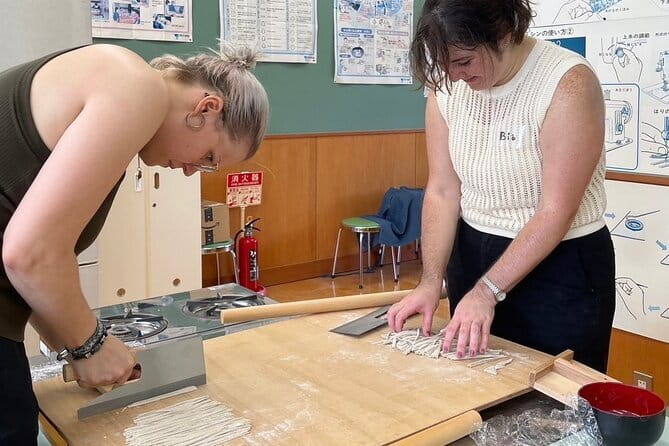
Course A includes making soba noodles with buckwheat flour harvested locally. You also get freshly boiled soba, plus items like tempura and rice balls as part of the food setup. This is the course to pick if you enjoy doing something with your hands and want the full local food process, not just tasting.
That former elementary school setting is also part of the charm. Using a closed school space for the workshop makes the whole experience feel practical and community-shaped, rather than staged. You’ll get to see how a local staple turns into a meal, and then you’ll get to enjoy it right away.
Course B: local produce at a traditional Japanese house restaurant
Course B swaps the soba workshop for a meal featuring local produce at a restaurant in a traditional Japanese house. This option is great if you want the countryside ride plus a more relaxed lunch format, with less time at the workshop.
I like that both courses keep lunch tied to the region. You are not just stopping for something convenient. You’re eating within the Sonobe food rhythm, which is the point of choosing this kind of half-day tour in the first place.
Same corner of Japan, a different kind of day:
- PERFECT KYOTO 1-Day Bus Tour
★ 5.0 · 13,518 reviews - Kyoto: Fushimi Inari, Kinkakuji, Bamboo Grove 1 Day Bus Tour
★ 4.8 · 4,316 reviews - Kyoto: Tea Ceremony in a Traditional Tea House in Kiyomizu
★ 4.9 · 3,519 reviews - Kyoto Geisha Walking Tour: Gion District & Hidden Gems
★ 4.7 · 3,273 reviews
Vegan and allergy-friendly options
If you need vegan, vegetarian, or allergy-friendly meals, you can request them. You’ll want to share needs at booking so the team can plan the right menu. In practice, this is one of the easiest ways to keep your day smooth, since you’re not left scrambling after you arrive.
Shrine stops that actually teach you something
This tour includes shrine visits that go beyond photo ops. Each place has a specific theme, so the day feels like a story rather than a checklist.
Ikimi Tenmangu Shrine: learning and exam prayers
You start at Ikimi Tenmangu Shrine, described as the oldest Tenmangu Shrine in Japan. It enshrines Sugawara no Michizane, the deity associated with learning. That’s why many people come to pray for success in exams.
The practical takeaway: if you know nothing about Tenmangu shrines, you’ll leave knowing what the shrine represents and why people visit it. The stop is short, about 10 minutes, but it’s memorable because you get the meaning right away.
The ruins of Sonobe Castle: a school’s main gate
Next up are the ruins of Sonobe Castle, known for being the last castle built in Japan. Today, it’s used as the main gate of Sonobe High School, so you’re looking at history that is still part of daily life.
You’ll have time to see what remains, including the main gate, castle walls, turrets, and a guardhouse. The stop is around 20 minutes, with entry listed as free. This works well in a cycling tour because it gives you a quick historical anchor without turning the day into museum time.
Make Shrine: agriculture roots and a thatched roof hall
The route also includes Make Shrine, which enshrines the god of agriculture from the Tanba region. This is tied to how the area supported food supply in Kyoto.
One standout detail is the thatched roof on the main hall. That kind of architecture makes a shrine feel grounded in place, not just ornamental. The stop is about 30 minutes, and it’s also a good moment to slow down, listen, and absorb rural atmosphere.
The cycling rhythm: easy pacing with an English guide on your side
Even if you’re comfortable on a bike, rural roads can be tiring. This is why the e-bike setup is a key value here. It helps you keep energy for the stops and the food experience, rather than spending the day fighting hills or traffic.
Between points, the ride segments are roughly 10 to 20 minutes. That means you’ll be moving often enough to feel like you’re touring, but you won’t end up in a long stretch where everyone is exhausted.
I also like that the tour is designed around group management. It’s a private tour, meaning it’s only your group. That usually translates into fewer pacing surprises, and you’re less likely to get lost in the shuffle.
A small but real comfort note from the experience: the guides provide safety equipment and, in cooler weather, disposable hand warmers and neck warmers. That can make a big difference if the day starts chilly.
Lunch at the right kind of guest house vibe
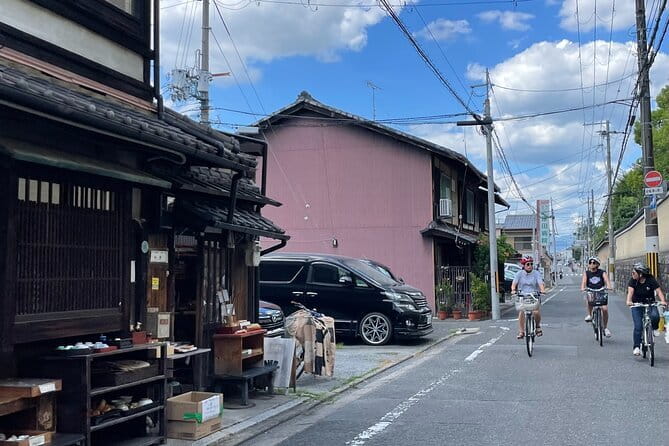
Lunch is not an afterthought here. It’s built into the day as a highlight.
For Course A, lunch includes soba you helped make, plus tempura and rice balls. You get that satisfying loop: you do the work, you see the flour turn into noodles, and then you eat it while it’s fresh. That simple flow makes the meal feel personal, not generic.
For Course B, lunch focuses on local produce at a traditional Japanese house restaurant. From what I’ve learned about how this kind of stop works, the best part is the setting. You’re eating somewhere that feels like it belongs to the town, not like it was picked just for convenience.
In at least one account, the lunch setting had a frog theme at a guest house. It’s the kind of detail that signals the experience is playful and welcoming, not overly formal. Small touches like that help you relax and enjoy the day.
Extras that can turn it into a full Sonobe story
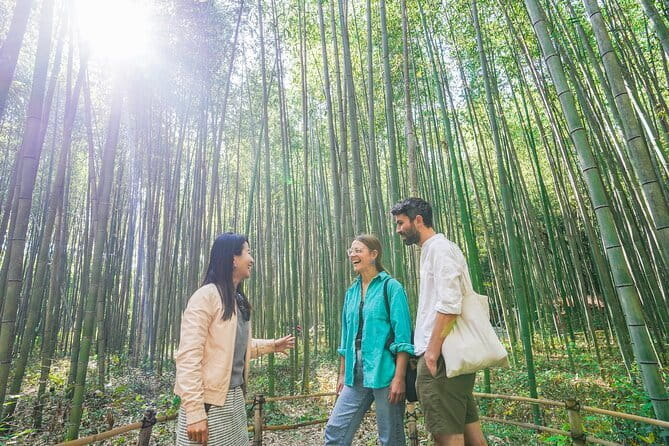
The tour includes options to add experiences for free. At the start, you can choose two or three extra experiences, depending on what fits your time and interests.
Common add-ons include:
- Castle visit
- Shinto shrines (worship)
- Drinking spring water from a small mountain
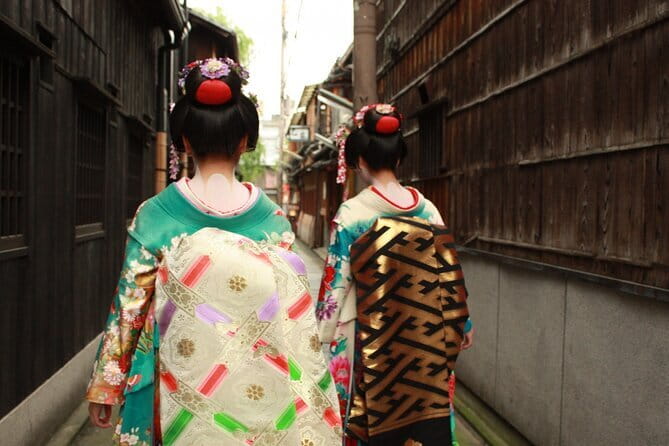
- Kimono photo
- Playing the koto
- Mario Mountain Exploration (Mt. Komugi is noted as the birthplace of Mario)
The Mario option is interesting because it adds pop-culture energy to a rural day. If you add it, the tour may run past 2 PM depending on your schedule, so plan your later evening accordingly.
This is also where kimono and koto fit nicely. A cycling day can become repetitive if it’s only roads and buildings. These add-ons give you a hands-on cultural moment, and they’re included, which makes the value more obvious.
English guidance from Maki, with local context that sticks
What makes this tour feel local is the guide team. The experiences share that guides are friendly and English-speaking, and at least one guide named Maki is highlighted for energy, clarity, and local knowledge.
When the guide is born and raised in the town, the information tends to sound lived-in, not memorized. You get context about why shrines are important, what farming symbolism means at a shrine, and how the local food culture connects to the region.
It also helps that explanations happen at each stop. Clear instructions keep everyone comfortable, especially during transitions between shrine grounds, the school-based workshop space, and the cycling segments.
If you prefer tours where you can ask questions and get real answers, this is a good fit.
Price and value: what $78.83 gets you in real terms
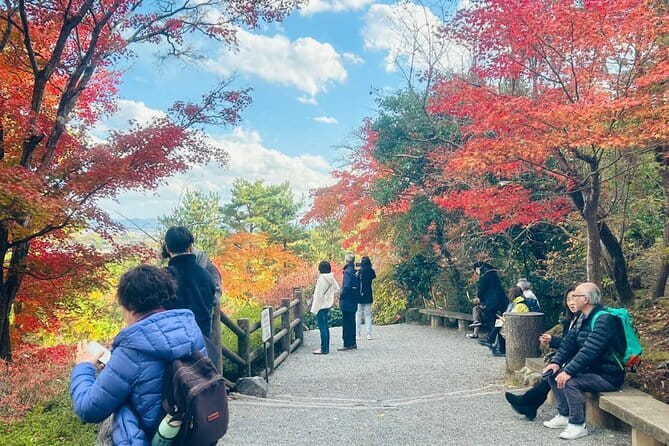
The published price is $78.83 per person, and it corresponds to a 15,000 yen participation fee.
At first glance, that can sound like a lot for a half-day. But here’s what you’re really paying for: an e-bike cycling experience, English guidance, multiple included stops, and lunch that is either hands-on soba plus meal components or a traditional-house meal built around local produce.
Because the tour is private for your group, you’re also paying for a lower friction experience. You’re not sharing your guide time with random strangers, and you get better pacing and smoother logistics.
One more value point is that several extras are included without extra cost, like kimono photos and koto. If you plan to do at least one of those anyway, it’s easier to see the tour as a bundle, not a basic ride.
Who this tour is best for
This works especially well if you want a rural Kyoto day but don’t want to commit to a full-day bus tour. You get structure, translation support, and food that feels tied to Sonobe rather than imported.
It also fits families and groups, including school groups. One example involved a larger group with teenagers and kids, and it shows the tour can handle different ages without turning stressful.
Pick this tour if:
- you like food experiences that teach you something real
- you want to see Sonobe without renting a car
- you want a calm pace with English support
- you’re curious about shrines and local agriculture themes
If you’re someone who wants a high-intensity workout, this may feel more relaxed than a training ride. But if your goal is sightseeing with ease, the e-bike approach is the point.
Practical tips so your day runs smoothly
- Wear comfortable shoes for shrine walking and workshop areas. Even with e-bikes, you’ll be on your feet for parts of the stops.
- Bring a light layer. The tour depends on weather, and rural mornings can feel different than Kyoto City.
- Decide early if you want the kimono photo or koto. Adding extras can extend time, especially with the Mt. Komugi option.
- If you have dietary needs, request them up front so lunch matches what you can eat.
Should you book Kyoto Satoyama Cycling with Lunch and English Guide?
I’d book this if you want rural Kyoto that actually feels like rural Kyoto. The combination of e-bike riding, meaningful shrine stops, and lunch that connects to local ingredients is a strong value.
You should skip or reconsider if you’re traveling on a schedule that can’t flex, because the tour requires good weather and the day can shift if conditions are poor. Also, if you hate the idea of choosing between soba-making and house-style lunch, you might find the decision step annoying. But once you choose your course, the rest of the day flows logically.
If Sonobe is new to you, this tour is one of the more efficient ways to see it in a single half-day, with English guidance and optional culture extras that are included.
FAQ
What time does the tour start, and how long does it last?
The tour starts at 10:00 am and lasts about 4 to 5 hours. The total duration includes the travel time by bicycle between stops.
What are the two lunch options, Course A and Course B?
Course A includes hands-on soba noodle-making and a soba set meal. Course B includes local produce at a restaurant in a traditional Japanese house.
Can the tour provide vegan, vegetarian, or allergy-friendly meals?
Yes. Vegan, vegetarian, and allergy-friendly meals are available upon request, so you should share dietary needs when booking.
Is this tour private?
Yes. It is a private tour/activity, meaning only your group participates.
What free add-on experiences can I choose during the tour?
You can choose two or three extra experiences included in the tour price, such as a castle visit, Shinto shrines (worship), drinking spring water, a kimono photo, playing the koto, and Mario Mountain exploration (Mt. Komugi).
What happens if the weather is bad?
The experience requires good weather. If it is canceled due to poor weather, the reservation holders are notified by 5:00 PM the day before, and you can either travel by car or reschedule, or cancel for a full refund.
More Cycling Tours in Kyoto
- 5 Top Highlights of Kyoto Full Day Bike Tour (E-bike option)
★ 5.0 · 511 reviews - Full Day Biking Tour Exploring the Best of Kyoto
★ 5.0 · 498 reviews - E-Bike Tours of the highlights of Kyoto!!!
★ 5.0 · 291 reviews - Afternoon Kyoto Bike Tour: Bamboo Forest, Monkeys & Hidden Spots
★ 5.0 · 283 reviews
Fresh options around Kyoto
- Kyoto: Quiet and Graceful Tea Ceremony★ 4.5 · 19 reviews
- Oboro | Mindful Tea Ceremony in a 100-Year-Old Kyoto Teahouse★ 5.0 · 19 reviews
- Ikebana Traditional Japanese Art of Flower Arranging★ 4.5 · 19 reviews
- Kyoto International Party Solo Friendly Expats and Locals★ 5.0 · 19 reviews
- Tea Ceremony Experience in Traditional Kyoto Townhouse★ 5.0 · 19 reviews
- Kyoto: Amanohashidate Ine Funaya Tour★ 4.4 · 19 reviews
- Kyoto Private Food Tours with a Local Foodie: 100% Personalized★ 4.5 · 19 reviews
- Kyoto Private Car Tour with Japanese Navigator (+Nara) T5★ 4.7 · 19 reviews
Cycling Tours, compared.


3h Tokyo E-Bike Tour: Hidden Gems, and Local Life with guide
Read our review →
Arashiyama Bamboo Forest & Hidden Gems Bike Tour (Early Bird)
Read our review →
Hiroshima in a Nutshell: Morning Bike Adventure
Read our review →Browse the lists this tour appears in