
Reviewed · CYCLING TOURS
Hiroshima 3hr Peace Cycling Tour with Local Guide
Pedaling through history feels personal. This Hiroshima 3-hour Peace Cycling Tour pairs e-bike ease with a small-group ride through the places tied to August 6, 1945 and the city that grew after. You cover a lot of ground without turning your day into a sprint, and the guide keeps the focus on why each spot matters.
I especially like the way the tour uses local perspective instead of just facts. Stops include major memorial landmarks plus a few lesser-known remnants, and entrance fees are handled for you so you can concentrate on listening and looking.
One possible drawback: you still need to be comfortable riding a bicycle, even if it is electric. The tour also has clear height rules for adult e-bikes, so check the requirements before you go.
Key things that make this Hiroshima ride worth your morning
- Up to 10 people means you get room to ask questions and the pace stays human
- Electric bicycles make the route manageable, even in summer heat
- Entrance fees included so you do not have to fumble for tickets mid-tour
- Family-linked storytelling is a big part of the experience, with guides like Shin, Moe, and Kana sharing personal context
- A tight 3-hour window leaves you time to explore Hiroshima on your own later
- Rain plan exists, including an alternate Peace-focused route or a walking option
Why an e-bike Peace Tour is the smart way to see Hiroshima fast
Hiroshima is the kind of city where you want time to look closely, not just rush past. This 3-hour format hits the strongest Peace-area sites and several in-between points, then lets you keep the rest of your day free for food, shopping, or museums at your own tempo.
I like that the cycling portion feels practical. The bike is not just for fun or fitness, it is your transport tool, letting you move from Peace Park outward to bridges, rivers, shrines, and castle grounds without burning hours on trains and walking.
The other smart choice is how the guide connects war events to post-war rebuilding. You get the memorial sites, yes, but also the pre-war and recovery threads that help the city make sense as something living, not only something remembered.
More Bike Tours in Hiroshima
- Hiroshima in a Nutshell: Morning Bike Adventure
★ 5.0 · 524 reviews - Hiroshima 2hr Peace Cycling Tour with Local Guide
★ 5.0 · 321 reviews - Hiroshima: Peace Cycling Tour with Local Guide
★ 4.8 · 286 reviews
Meeting at Hiroshima Peace Memorial Park Rest House, then setting expectations
Your ride starts at the Hiroshima Peace Memorial Park Rest House. It is a short hop from the core Peace Park area, and the tour begins with greetings, route overview, and safety steps, including temperature checks as part of the day’s procedures.
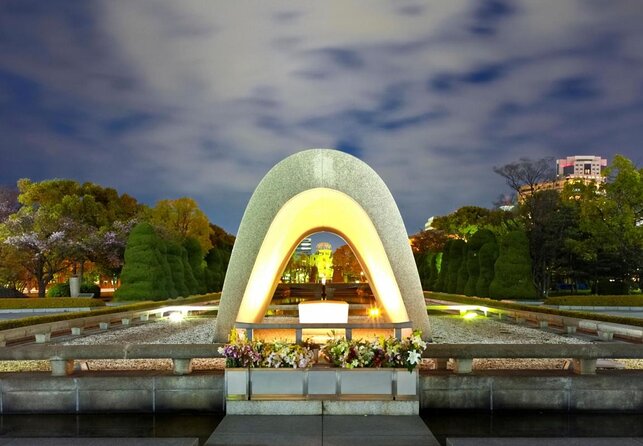
A small-group setup matters here. With a max of 10 people, the guide can adjust the rhythm if someone is less confident on a bike, including children. The route is designed as a gentle cycle between stops, and the tour description is clear that they will adjust pace when needed.
Tip: plan to arrive early enough to feel relaxed. If you are late without prior notice, the tour can be canceled, and that is not the kind of surprise you want on a meaningful day.
Stop-by-stop: from Hiroshima Peace Memorial Park to Hiroshima Castle’s pre-war context
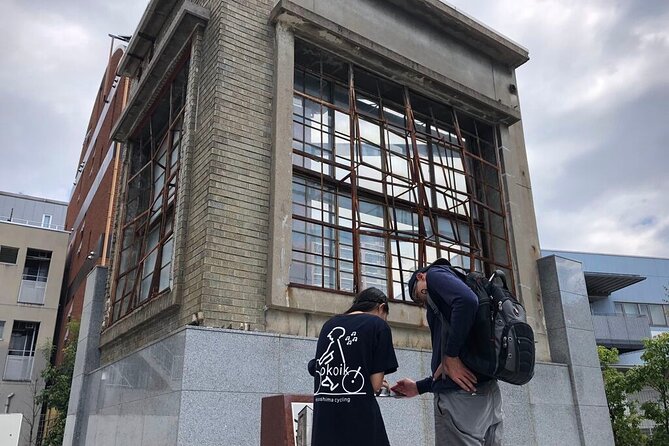
The first stop is Hiroshima Peace Memorial Park. You get a quick orientation, then you begin your walk through the bigger story of August 6 and what followed. This sets the tone for the rest of the tour, because you are not just collecting photos, you are building a timeline.
Then you move to Hiroshima Castle for about 20 minutes. This is not a random detour. Your guide explains Hiroshima Castle as the location of a military fort that was the first to report about the atomic bomb. That detail helps you see the city’s wartime position before the blast hit, and why so many later rebuilding choices mattered.
The next stop is Hiroshimagokoku Shrine, including the shrine gate that withstood the atomic bomb. About 15 minutes here is usually enough time to notice small details, like the guardian dog statue and the gate itself. Even if you are not a history buff, it hits a rare mix of endurance and symbolism, especially after Peace Park.
A quick breather follows at Chuo Koen-mae (Chuo Park) for around 20 minutes. This green space is your reset between heavy locations. It matters more than it sounds. You can stand, breathe, and let the previous stop land in your brain before continuing.
Aioi Bridge and Atomic Bomb Dome: the places you cannot really understand from a photo
Next is Aioi Bridge for about 10 minutes. The bridge was a target of the bomb, and the river and bridge remain. That staying power is one of the most unsettling parts, because it means the city did not only survive, it also carried forward a physical marker of the event.
Then comes the Atomic Bomb Dome for about 15 minutes. This is the world-famous structure that many people come to see, but seeing it through a guided route changes how it hits you. Your guide shares stories of local memory and what people experienced afterward, which makes the building feel less like an icon and more like evidence.
If you are sensitive to emotional content, pace yourself here. The guide tends to keep the group moving, but you still control how long you pause at each angle. I found it helps to take one slow circuit around your own viewpoint, then listen again as you stand in place.
Same corner of Japan, a different kind of day:
- Peaceful Hiroshima & Miyajima UNESCO 1 Day Bus Tour
★ 5.0 · 5,309 reviews - Hiroshima: Hiroshima and Miyajima UNESCO Sites 1-Day Tour
★ 4.9 · 2,330 reviews - Hiroshima / Miyajima Full-day Private Tour with Government Licensed Guide
★ 5.0 · 1,298 reviews - Hiroshima Historical Walking Tour – Why A-Bomb was Dropped
★ 4.8 · 893 reviews
Riverside Hiroshima: Motoyasu River, Peace Bridge, and international trees at Higashisenda Park
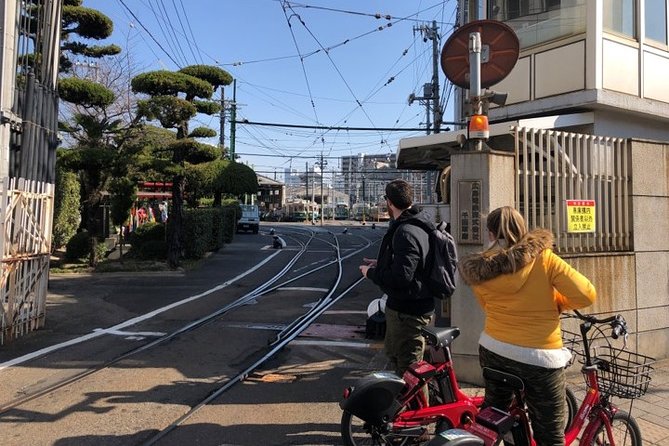
From the Dome area, you head toward the suburbs and catch Motoyasu River and the Peace Bridge. The ride segment is short, about 15 minutes, but the message is big. You see how the Peace area connects into everyday Hiroshima life through water, paths, and neighborhoods.
Next up is Higashisenda Park for around 20 minutes. This park is about 1 km from the blast center and is filled with trees sent from countries around the world. It is a moving reminder that the story did not stay local. If you like concrete details, your guide’s explanation of the site helps you interpret what the trees mean beyond their beauty.
You end this stretch with a few minutes that work like punctuation marks, quick but important. The tour uses time this way on purpose, so you do not lose focus before the more somber remnants later.
Red Cross remnants, surviving rail, and the edges of the blast radius
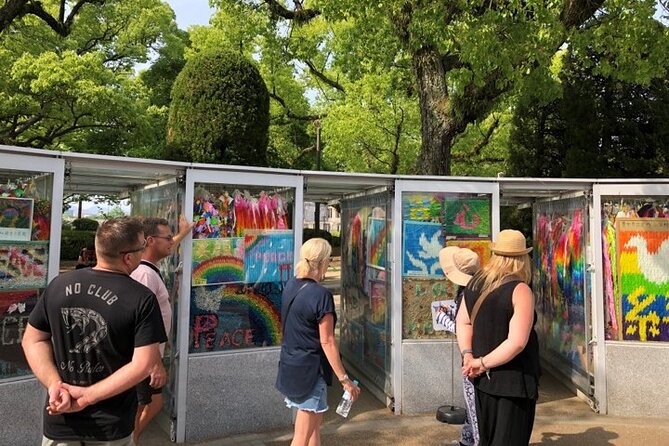
The next stop is the Atomic Bomb Window Frame Monument at the Hiroshima Red Cross Hospital site. Expect around 20 minutes here, about 1.5 km from the blast center. This is where the tour shifts from memorial symbols to more literal remnants.
The window frame idea is powerful because it is not abstract. It gives you a way to picture force and impact with something you can actually stand beside, instead of only reading about it.
After that, you go to Hiroshima Railway for about 10 minutes, located roughly 2 to 2.5 km from the blast center. Your guide explains that two trains survived and still run today. That fact lands oddly well. It is not trivia, it is the point: life and infrastructure continued, even when the world should have stopped.
Then it is onward to Miyuki Bridge and Kobayashi River for about 10 minutes. Your guide points out a display connected to the picture of the reality at the blast boundary, showing the difference between then and now. This is the kind of stop that feels small on paper, but it often becomes one of your strongest impressions because it reframes distance.
Surviving Weeping Willow Tree and Peace Boulevard on the ride back
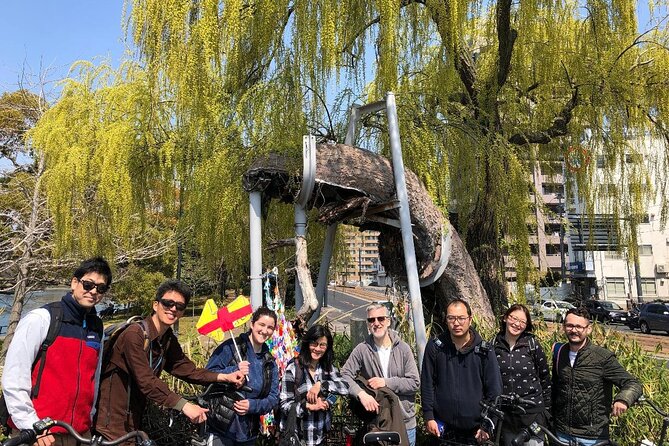
Near the end, you visit Hiroshima’s Surviving Weeping Willow Tree area, also referred to in the schedule as a stop near the Hiroshima City Children’s Culture and Science Museum. This is billed as a highlight, and the tour explains that the tree continued to grow despite rumors about how long natural growth would last. In other words, the living proof of recovery is right there in front of you, not in a brochure.
Finally, you pass along Peace Boulevard on the way back toward Peace Memorial Park. This portion is shorter, about 10 minutes, and it is meant to show the city as it is now. You see monuments and meaningful trees alongside a thriving present-day Hiroshima.
You return to Hiroshima Peace Memorial Park to end the ride around 13:00. The tour design gives you closure while keeping the rest of your day open, which is helpful if you plan to pair this with a museum or a long lunch.
Local guide impact: why the stories change the whole tone
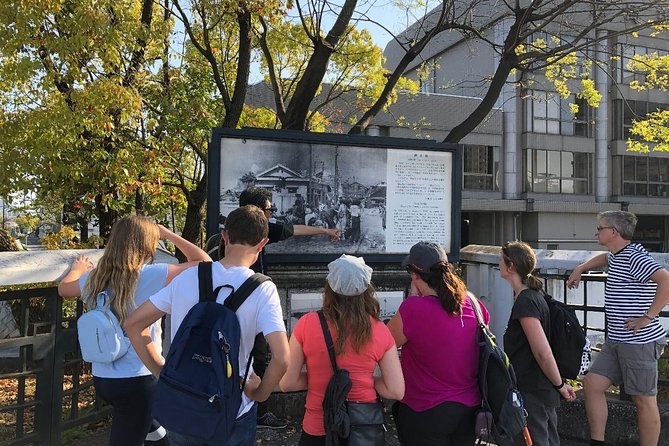
The biggest reason this tour rates so high is the guide experience. Many groups leave talking about how personal the stories felt, and the guides often connect history to family memory.
In recent rides, I’ve seen guides such as Shin, Moe, Thomas, Toma, and Kana credited for fluent English and for sharing detailed personal connections to Hiroshima, including stories tied to survivors in their families. That kind of context makes the facts stick. You remember the dates, but you also remember what it did to real people and how the city learned to live after.
One practical plus: good guides tend to be excellent at storytelling pacing. The tour stays on schedule, but it never feels rushed. The cycling gives you small transitions between thoughts, which helps you stay receptive instead of overloaded.
Bikes, timing, and small practical choices that matter
This tour runs for about three hours, and the itinerary is built around short stops that add up. You are not stuck in one location for long stretches, so the day stays balanced.
You use electric bikes. The tour includes insurance for bicycle accidents in the price, which is reassuring for a place where bikes can be part of daily life. There is also a clear adult bicycle requirement: electric bikes require height 145 cm or more.
If you are traveling with kids, children’s bicycles are available, with details that depend on age and height. For children under 15, children can use both children’s bicycles and adult bicycles at a child rate if they fit the height range (110 cm to 145 cm). There are also limits tied to weight and height for the child seats on electric bikes, so it is worth double-checking before your day.
Luggage is another practical note. There is no place to leave luggage at the Rest House. Coin lockers are available at the International Conference Center Hiroshima and at the Hiroshima Peace Memorial Museum, which is about a 6-minute walk from the Rest House.
Also, free Wi-Fi is not provided on the tour, but Hiroshima free Wi-Fi is available around the city. If you rely on your phone for maps, plan ahead and download anything you need.
What happens if it rains: the Peace route adjustment
This experience requires good weather. If rain changes plans, you can usually choose between a change to a Rainy Day Limited Peace Route or a refund.
The rainy route still focuses on core Peace sites, with a schedule that includes Peace Memorial Park, Atomic Bomb Dome, the hypocenter area, Former Bank of Japan, Fukuromachi Elementary School, and Main street. It is scheduled to end earlier, around 13:00 on the rainy day set.
There is also a rainy-day walking tour option. It covers the hypocenter area and a small radius around it. If you do not want the change, you can ask for a refund.
Price and value: is $85.89 a fair deal for this Hiroshima focus?
At $85.89 per person for about three hours, the value comes from three things.
First, you get a guide for the full time with the stop coverage you would otherwise struggle to stitch together by yourself, especially at multiple memorial-adjacent sites. Second, entrance fees are included, which removes a common headache on organized cultural routes. Third, the electric bikes reduce friction. You feel the city and the spaces more, because you are not worn out by transport after only one or two stops.
If you only wanted Atomic Bomb Dome and Peace Park, you could piece together a simpler self-guided plan. But this tour’s strength is that it expands the story, adds Hiroshima Castle and shrine elements, and then brings you back with recovery landmarks along the way.
In short, you are paying for guidance plus efficiency, not just a bicycle ride.
Who should book this Peace Cycling Tour, and who should skip it
This is ideal if you want a structured but human experience. You will like it if you appreciate a small-group pace, and if you value local guidance that connects historical facts with lived memory.
You should consider it especially if you are short on time in Hiroshima. Three hours can feel like too little for a heavy subject, but this route makes smart use of time, and then gives you breathing room later.
Skip it if you cannot comfortably ride a bike in a guided group, or if you do not meet the height requirements for the electric bicycle. Also, if weather is rough on your travel dates and you are trying to stick to a tight schedule, have a Plan B in mind for alternate rainy options.
Should you book the Hiroshima 3-hour Peace Cycling Tour?
I think you should book it if you want the Peace area with context, and you want to experience Hiroshima in motion, not only in rooms. The combination of small group size, electric bikes, and personal local storytelling makes the tour feel more like a conversation than a checklist.
It is not an easy afternoon. It is thoughtful and emotionally heavy at key stops. But the payoff is real. You leave with more than names and monuments, you leave with a clearer sense of how Hiroshima’s past is physically present and how the city rebuilt itself around that truth.
FAQ
Where is the meeting point for the Hiroshima cycling tour?
The tour meets at the Hiroshima Peace Memorial Park Rest House, located at 1-11 Hiroshima Peace Memorial Park Rest House, Naka Ward, Nakajimachō, Hiroshima 730-0811.
How long does the tour take?
The cycling tour lasts about 3 hours.
How many people are in the group?
The tour is a shared group limited to a maximum of 10 travelers.
Are entrance fees included?
Yes. Entrance fees are included, so you do not need to worry about paying on the spot.
Do I get an e-bike, and are there height requirements?
The tour uses electric bikes for adults. The adult bicycle (electric) requirement is a height of 145 cm or more.
What if I travel with children?
Children’s bicycles (cross bike type) are available, and children under age 15 can use both children’s bicycles and adult bicycles at a child rate if they fall within the stated height range. There are also limits for child seats on electric bikes tied to weight and height.
Is Wi-Fi available during the tour?
No free Wi-Fi is provided on the tour. Hiroshima free Wi-Fi is available throughout the city.
What should I do with luggage?
There is no luggage storage at the Rest House. Coin lockers are available at the International Conference Center Hiroshima and the Hiroshima Peace Memorial Museum, about a 6-minute walk from the Rest House.
More Cycling Tours in Hiroshima
- Hiroshima and Miyajima by Bike and Boat
★ 5.0 · 172 reviews - Hiroshima: Best of Hiroshima Guided Bike Tour
★ 4.9 · 89 reviews - Hiroshima Country Cycling: Explore Rural Life 1 HR from City
★ 5.0 · 22 reviews - Hiroshima: City and Miyajima Bike and Boat Tour
★ 5.0 · 20 reviews
Fresh options around Hiroshima
- Hiroshima and Miyajima Full Day Private Tour★ 4.5 · 19 reviews
- 4 Hour Miyajima PRIVATE Tour★ 5.0 · 19 reviews
- Hiroshima Private Walking Tour with a Local★ 4.5 · 19 reviews
- Hiroshima Scenic Cycling Guided Tour★ 5.0 · 19 reviews
- Miyajima Guided Tour and Fresh Oyster Farm Tour★ 5.0 · 20 reviews
- Hiroshima: Atomic Bomb Dome and Peace Memorial Museum 3 hours★ 5.0 · 20 reviews
- Hiroshima: Tour of Atomic Bomb Dome & Peace Memorial Museum★ 5.0 · 20 reviews
- Hiroshima: City and Miyajima Bike and Boat Tour★ 5.0 · 20 reviews
Cycling Tours, compared.
3h Tokyo E-Bike Tour: Hidden Gems, and Local Life with guide
Read our review →
Arashiyama Bamboo Forest & Hidden Gems Bike Tour (Early Bird)
Read our review →
Hiroshima in a Nutshell: Morning Bike Adventure
Read our review →Browse the lists this tour appears in