
Reviewed · HISTORICAL TOURS
Hike Japan Heritage Hakone Hachiri with certified mountain guide
Edo-era walking, with a real mountain guide. This Hakone Hachiri hike takes you along the Old Tokaido Highway ideas, from Hakone-Yumoto toward Lake Ashi, then over to the Mishima side with breaks that feel like checkpoints of a journey. You cover about 8 km at a steady pace, with local bus transfers when the route makes life easier.
I especially like the certified mountain guide setup, plus the fact you learn the story of the route as you walk, not after the hike. I also like the mix of sights, from Lake Ashi’s iconic views to the Hakone Checkpoint stop that explains why this area mattered for travel in the Edo period. A possible drawback: you’ll still need moderate fitness, and you’re relying on weather for the best Mt Fuji views.
If clouds roll in, the day can still be worthwhile for the walking and local details, but you may not get the big Mt Fuji moments you hoped for. That’s the trade: this tour is built around outdoor movement and perspective shifts on the mountain route.
Key highlights to know before you go
- Certified mountain guide with wilderness first aid keeps the hike grounded and well paced.
- Small group, up to 6 people means you’re not just “on a schedule,” you get real explanations and attention.
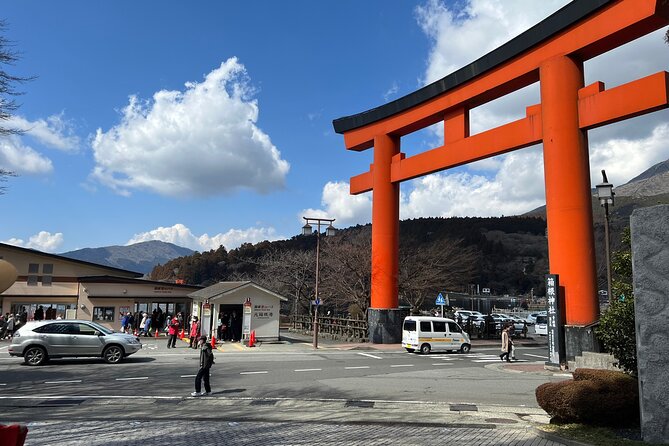
- Lake Ashi stops for views of Heiwa no Torii, the Hakone Shrine Torii gate, and Mt Fuji if weather cooperates.
- Cedar avenue plus the Hakone Checkpoint gives context for how travel worked during the Edo period.
- Bus skip for a temporarily closed section helps the day keep moving without forcing detours.
- Ending in Mishima adds shrine time at Mishima Taisha and a walk by Genbe River.
Walking Hakone Hachiri, the old Tokaido route made practical
Hakone Hachiri is one of those days where you feel like you’re moving through a travel corridor from the Edo period, but without making it overly complicated. The route follows the logic of the Old Tokaido Highway travelers, including the steep Hakone mountain slope that made this area challenging and important. You’re not just collecting views, you’re learning why people moved through here the way they did.
What makes this tour work is the guide team. The operator runs with a National Certified Pro Guide who also has wilderness first aid training, so pacing and safety feel deliberate rather than casual. In the reviews I read, the guides are especially strong at turning history into something you can picture while walking, and at helping the group get the right photos.
Another big plus is the format. You do a real hike segment, then you use local buses and short transfers to connect the dots between areas, instead of fighting the whole route alone. The day is about 7 hours, starts at 9:00 am in Hakone-Yumoto, and finishes at Mishima Station so you can continue your trip easily.
The main consideration is weather. You’re told it needs good conditions, mainly because a lot of the “wow” factor is Mt Fuji angles and clear sight lines. If the day is gray, you can still enjoy the walk and the cultural stops, but you should go in expecting that some views might be partially blocked.
A few more Hakone days worth comparing
- Hike Hakone Hachiri
★ 5.0 · 48 reviews - Fushimi Inari Hidden Hiking Tour (Private Option Available)
★ 5.0 · 1,750 reviews - Kyoto: 3-Hour Fushimi Inari Shrine Hidden Hiking Tour
★ 4.9 · 270 reviews
Hakone-Yumoto to the tea house and trailhead craft village
The tour begins at Hakone-Yumoto Station, where you meet your small group and the guide takes you forward. You take a shared taxi to reach the trailhead, then you start hiking right away. In total, the first walking portion is about an hour before you reach the woodcraft village area tied to the Amazake Tea House stop.
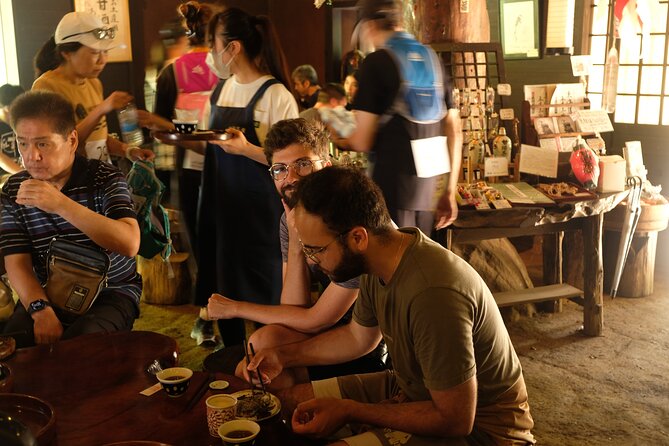
That woodcraft village moment is more than a quick photo stop. It sets the tone for Hakone as a practical place, where travelers would have expected to see local skills and everyday village life along the route. The Amazake Tea House name also matters here. You can browse and enjoy the idea of a traditional refreshment stop, and you might pick up snacks or amasake if you want, since they are not included in the tour price.
One practical tip: start your day with comfortable shoes and a water plan. The tour is not described as an extreme climb, but you are hiking roughly 8 km total over the day, plus walking around each site. Moderate fitness is enough for many people, but if your legs tire easily on uneven ground, take it slow at the beginning.
This segment also tends to be where you get your “flow.” The guide helps the group stay together and keeps the pacing realistic for a mixed group. With a group capped at 6, you’re less likely to feel rushed or left behind on the transitions.
Lake Ashi and the Heiwa no Torii view, plus the Torii at Hakone Shrine
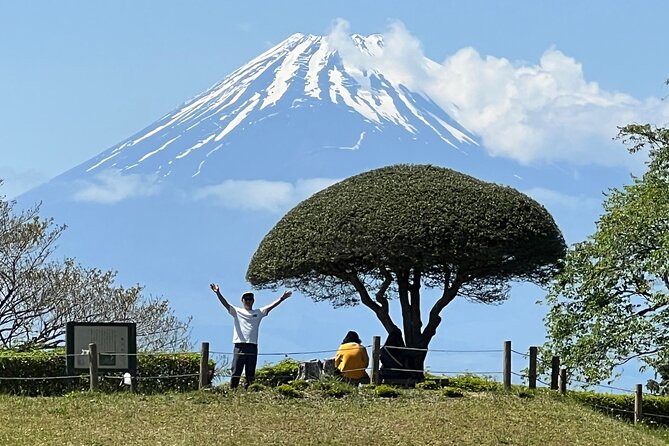
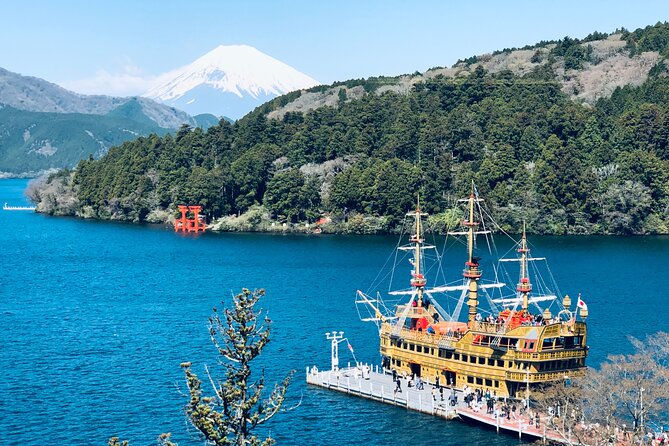
As the hike connects to the Lake Ashi area, the day shifts from mountain walking into classic Hakone scenery. When you reach Lake Ashi, you walk along the shoreline and look toward the famous spots, including Heiwa no Torii. If visibility is good, Mt Fuji can appear in the background, and that’s when the lake stop becomes the centerpiece of the tour.
You’ll also be in position to see the Torii gate of Hakone Shrine from the water side perspective. Even if Mt Fuji is only partly visible or absent, the shoreline walking still gives you a sense of scale. Lake Ashi is a dramatic “pause” in the itinerary, a place where the route feels like a chapter break rather than nonstop motion.
The shoreline time is paired with another on-route experience that matters: the guide helps you read the scenery. In Edo-era terms, travelers didn’t just pass through Hakone. They planned for where sight lines opened up, where travel became slower, and where they could reset mentally before continuing.
Admission for this part is listed as free, so you’re not paying extra to access the viewpoints. Still, you’ll want to budget time for photos and small pauses, because when Mt Fuji appears, it does not show up on a timer.
Cedar Trees of Hakone Old Road and the Hakone Checkpoint explained
After Lake Ashi, the walk continues toward the cedar avenue area on the old road. Cedar trees matter here because they change the feel of the route. You’re no longer in a wide-open lake view moment, you’re in a more shaded, enclosed travel corridor, which is exactly the kind of contrast Edo travelers would have noticed.
Then you reach the Hakone Checkpoint, described as similar to an immigration department in modern terms. This is one of the stops that makes the guide worth it. Instead of treating the checkpoint like a landmark you quickly pass, you get the explanation for why checkpoints existed, what they did for movement and order, and why Hakone’s geography made it a natural chokepoint.
You’ll spend about 30 minutes here, and that’s a sweet spot. Long enough to get the story, short enough to keep the day from dragging. The checkpoint also helps you understand the bus portion later. When certain sections are temporarily closed, the guide’s job is to keep you on the meaningful path rather than getting stuck in a frustrating detour.
Practical note: cedar avenues can make the air feel cooler, but they can also mean the ground is damp if it rained earlier. Wear shoes that handle traction, and keep an eye on your footing. It’s not a technical climb, but sloppy footing is how a “good day” turns into an annoying one.
Same corner of Japan, a different kind of day:
- Hakone 6 hour Private Tour with Government-Licensed Guide
★ 5.0 · 218 reviews - Custom Private Tour in Hakone with a Certified Local Guide
★ 5.0 · 91 reviews - Hakone 8 hour Private Tour with Government-Licensed Guide
★ 5.0 · 63 reviews
Lunch near the checkpoint, then the bus skip into the Shizuoka side
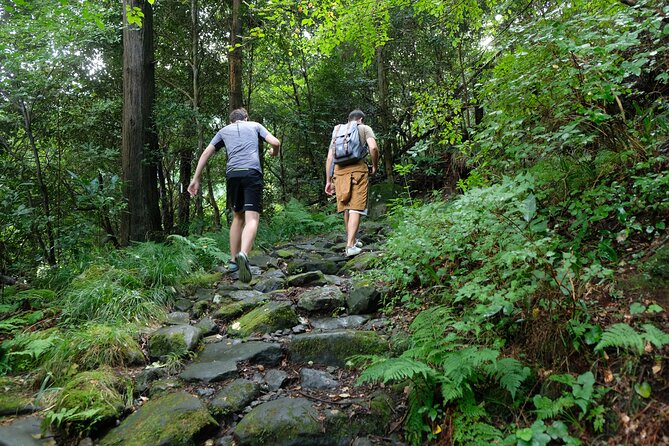
Once the checkpoint time is done, the tour moves into the lunch window. Lunch is listed as not included, around 2,000 yen for the group. You’ll eat at a local Japanese restaurant near the checkpoint area, and then you continue by bus.
This is one of the smarter parts of the itinerary. The day is not just hiking for the sake of hiking. It’s designed to keep the overall experience coherent, even when parts of the trail are not accessible. The route includes a bus segment to skip a temporarily closed section, so you don’t lose half your day fighting closures.
When you ride, you’re still traveling through the same geography travelers dealt with, just with modern logistics. You’ll be taken to the next walking portion on the Shizuoka side, and that’s where you transition into the heritage path toward Mishima.
One thing I like about this approach is that it protects your energy for the final walking pieces. If you hike too hard early, later stops like the ruins and rivers get less fun. Here, the guide builds small breathing room into the plan.
If you’re picky about timing, remember the tour ends in Mishima. That means the bus and walking portions are there to set you up for shrine and river time without making you scramble for transportation afterward.
Yamanaka Castle Ruins, possible Mt Fuji angles, then Mishima Taisha
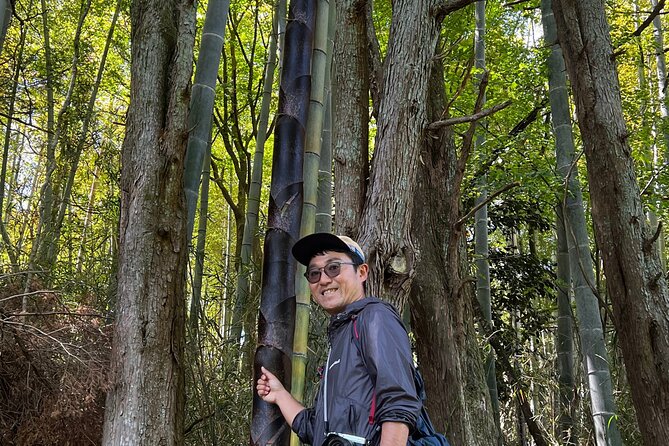
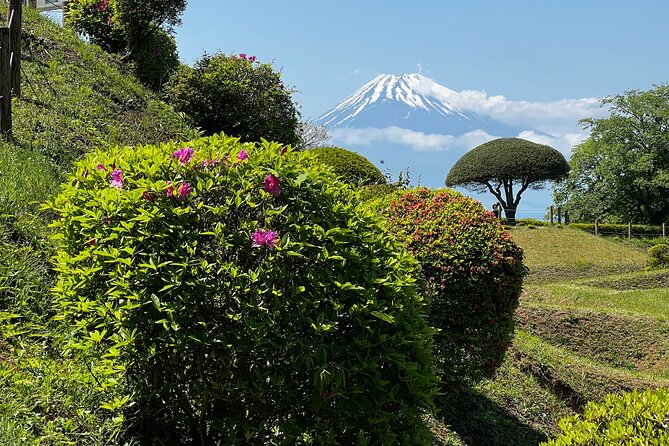
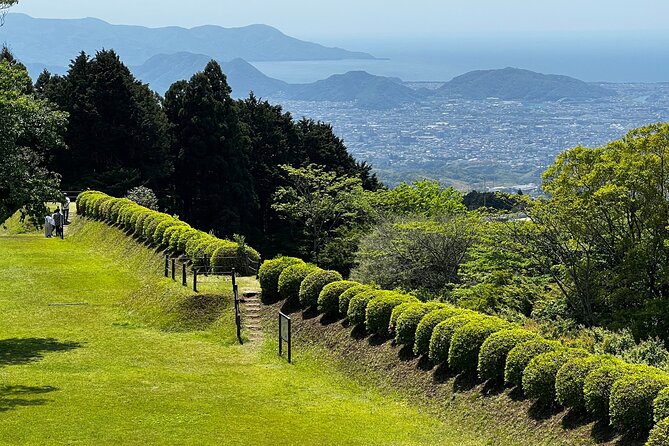
From the Shizuoka-side trailhead area, you head to Yamanaka Castle Ruins along the Hachiri heritage path. This stop is about an hour, and it’s one of those “look out and take it in” moments where the guide can help you see how the terrain shaped old life.
Mt Fuji visibility is mentioned again, weather permitting. That matters because it gives you a second chance at the big view, not just one. If the earlier Lake Ashi sight line was blocked, this is the later moment where conditions might improve.
The ruins themselves are a good fit for a guided day. Without context, ruins can feel vague. With an explanation, you start to connect why people chose elevated areas, what routes might have felt like from here, and how defensive geography and travel geography overlap in Hakone and beyond.
At the end of the day, you arrive in Mishima. You visit Mishima Taisha, described as the biggest shrine in Mishima, and then you also spend time at Genba River. This works well as a closing chapter. After hours of movement and steep-route context, the shrine and river bring you back to a calmer cultural rhythm.
You end at Mishima Station, which is convenient. You can continue to Odawara by Shinkansen in about 15 minutes or to Tokyo in about 45 minutes, with fares listed in the tour details. If you’re planning onward travel, that finish point makes the day feel less like a dead end.
Price and value: what you’re paying for and what you still need to cover
At $158.52 per person, this is not a “cheap bus tour” style day. It’s priced like a small-group guided experience with real time in the field. You’re also paying for the guide qualifications: a certified mountain guide setup with wilderness first aid, plus the interpretation work that turns the route into a story you can follow.
Included elements in the tour details are focused on that guidance side, plus a mobile ticket and group discount structure. The small group size, up to 6 travelers, is part of why the cost makes sense. You’re not sharing your guide with a crowd.
What you should plan to pay separately:
- Lunch around 2,000 yen (not included)
- Transportation fees between sites and to trailhead around 2,000 yen by shared taxi or buses
- Amasake and snacks along the way (not included)
- If you plan to return via Shinkansen from Mishima to Odawara, budget around 2,500 yen (Odawara listed), or more for Tokyo
When I think about value, I look at how much “work” the guide is doing. Here, the guide handles the route flow, the timing of the bus skip, the checkpoint interpretation, and the on-your-feet pace control. For a first-time visitor, that reduces guesswork. For a returning visitor, it upgrades what you already know by adding the route’s logic and historical role.
If you’re traveling solo, group size still matters because you’re more likely to get direct attention and better photo help. If you’re traveling with family, the reviews include positive notes about photo support, and that’s exactly the kind of small thing that can make a guided day feel worth it.
Who this Hakone Hachiri hike is best for
This tour fits best if you want a guided walk with context, not just a sightseeing checklist. The itinerary mixes scenery with history stops, and the guide’s job is to explain what you’re seeing along the Old Tokaido Highway concept.
You’ll likely enjoy it if:
- You can handle moderate physical fitness for several hours of walking, plus transitions
- You like the idea of Mt Fuji angles and want multiple chances to see it
- You want a small-group day that feels like a real journey from Hakone-Yumoto to Mishima
- You value practical safety and pacing from a mountain guide with wilderness first aid
You might want to consider another option if:
- You’re very sensitive to weather changes, since the tour requires good weather for best results
- You want a fully seated day, since you’ll be hiking on quiet trails and walking between stops
- You have limited mobility for uneven terrain, since “cobble stone path” and trail ground are part of the experience
Weather reality check: how to plan for Mt Fuji and rain
The tour explicitly requires good weather. That matters because the best payoff is Mt Fuji seen from different angles, with Lake Ashi being one of the key view points.
If the day is partly cloudy, don’t assume the tour becomes a waste. The route is still full of guided history stops, cedar avenue walking, and viewpoints that can feel calm even when the sky is gray. One review highlights that the experience stayed rewarding even when rain and clouds hit for part of the day, which lines up with what this route offers beyond Mt Fuji.
My practical advice: dress in layers, bring a small rain layer, and treat the day like mountain weather. Hakone can shift quickly, and your comfort will shape how much you enjoy the historical walking segments.
Should you book Hakone Hachiri with Coconuts Hike Japan?
I’d book it if you want a day that mixes old-route travel storytelling with real walking, and you want that guided support from a mountain professional. The best part is how the day is structured, hike plus bus plus meaningful stops like the Hakone Checkpoint and Mishima Taisha, all tied to the journey theme.
Skip this one if you only care about Mt Fuji photos and you’re not willing to risk cloudy conditions. Since the day is designed around outdoor movement, you’ll get more value if you’re flexible and you enjoy walking through Hakone’s mix of village, cedar, and lake settings.
If you do book, go in with the mindset of a traveler from the Edo period, slow down for the checkpoint explanation, and let the lake stop be your reset. It’s the kind of tour where the “how” of getting there matters almost as much as the “what” you see.
FAQ
What is the duration and walking distance on this Hakone Hachiri tour?
The tour runs for about 7 hours and includes hiking around 8 km in total.
Where does the tour start and end?
It starts at Hakone-Yumoto Station and ends at Mishima Station.
Is lunch included?
No. Lunch is not included, and it’s listed as around 2,000 yen for your group.
What is included in the tour price?
The tour includes a national certified pro guide with wilderness first aid certification. It also uses a mobile ticket, and the details mention group discounts.
What transportation is used during the day?
You move between sites either on foot or by local bus. The itinerary also includes a shared taxi to reach the trailhead early in the day.
How big is the group?
The tour maximum is 6 travelers.
What happens if the weather is poor?
The experience requires good weather. If it’s canceled due to poor weather, you’ll be offered a different date or a full refund.
Fresh options around Hakone
- Private Hakone Half-day Car Tour with Hotel Pickup – Local Guide★ 5.0 · 48 reviews
- Hike Hakone Hachiri★ 5.0 · 48 reviews
- Hakone 8 hour Private Tour with Government-Licensed Guide★ 5.0 · 63 reviews
- Private Tour – Hakone Day Trip! A Tour to Explore All Must-Sees!★ 5.0 · 58 reviews
- Custom Private Tour in Hakone with a Certified Local Guide★ 5.0 · 91 reviews
- Hakone 6 hour Private Tour with Government-Licensed Guide★ 5.0 · 218 reviews
Historical Tours, compared.
World Heritage Shirakawa-go and Experience Tours from Kanazawa
Read our review →
Imperial Palace and Shogun Historical Walking Tour
Read our review →
World Heritage Kyoto & Nara Uji Authentic Matcha Experience
Read our review →
Kyoto Gion: 2-Hour Geisha Culture & History Walking Tour
Read our review →
World Heritage Shirakawa-go Morning Guided Tour
Read our review →
Hiroshima Historical Walking Tour – Why A-Bomb was Dropped
Read our review →
Hiroshima Peace (Heiwa) Walking Tour at World Heritage Sites
Read our review →Browse the lists this tour appears in