

Reviewed · HISTORICAL TOURS
Hike Japan Heritage Hakone Hachiri (Half Day)
Cobbled old roads, quiet forest, and a warm drink. This Hakone Hachiri hike follows part of the old Tokaido highway between Hakone-Yumoto and Lake Ashi, mixing cobbles with shaded forest paths and keeping the day relaxed by skipping the steepest section via bus. You end with a look across Lake Ashi, where Mt Fuji may show up if the weather plays along.
I love how the trail gives you that rare mix of best-preserved cobbled road plus more primitive forest. I also love the cultural angle, where you stop at Hatajuku, sip amasake at a teahouse with a 400-year past, and finish at a Hakone checkpoint so the area makes sense beyond the scenery.
One thing to consider: this is weather-dependent and the ground is mixed, so you’ll want good shoes and a steady pace for the hike surfaces, not just a casual stroll. If Mt Fuji is hidden, you’ll still have the lake view, but the photo moment is never guaranteed.
Key highlights you will actually feel on the trail
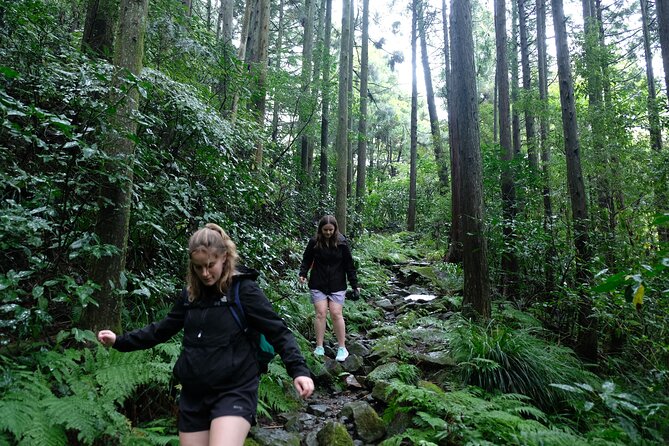
- Small group size (max 6) keeps the pace human and makes it easier to enjoy the quiet parts of the route
- Cobbled Hachiri section plus forest trails gives you variety without turning it into a full-day ordeal
- A 400-year teahouse stop for amasake adds a real taste break, not just a marketing stop
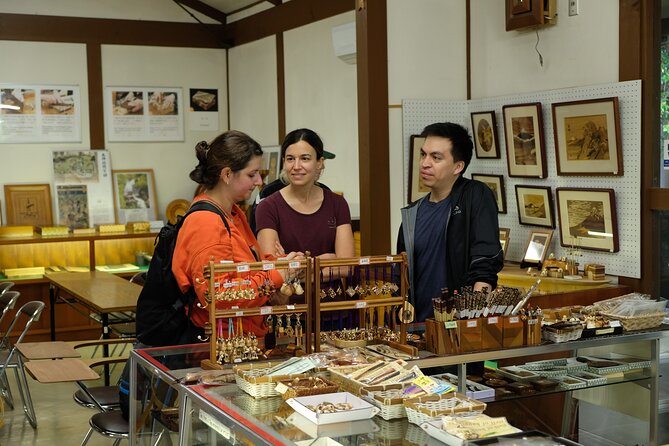
- Hatajuku wood-crafting village lets you connect the walk to Hakone’s craft traditions
- Lake Ashi viewing window gives a chance at Mt Fuji across the water if conditions cooperate
- Certified National Mountain Guide means safer movement on uneven ground and clear history tied to the route
Entering the Hakone Hachiri route, where the old road still shows
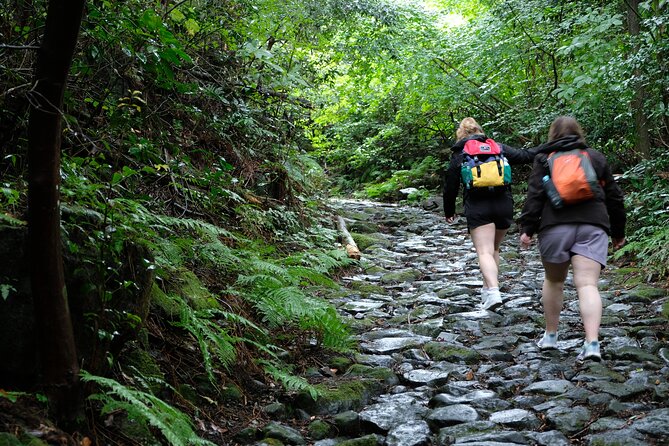
Hakone’s famous for views and onsen, but this hike gives you something else: walking on a living piece of travel history. The route uses part of the old Tokaido highway, with some sections on cobbled paths and some on forest trails. That cobbled-to-forest mix matters because it slows you down in the best way, forcing your eyes to notice the details instead of racing to the next viewpoint.
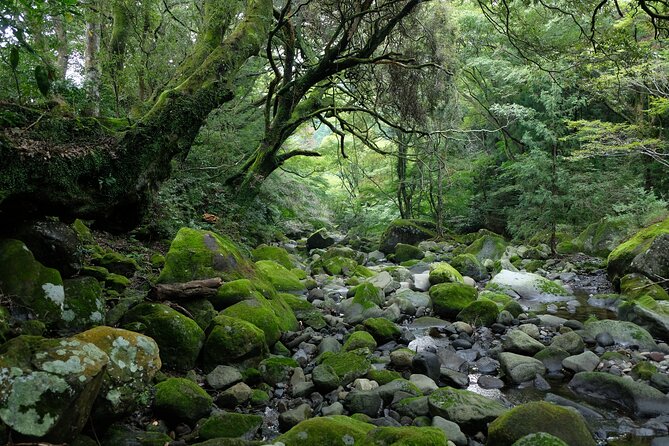
The Hachiri portion is described as more off-the-beaten-track than most paths in the area, and that changes the experience. You typically spend time where the forest feels like it is mostly yours, which makes the hike feel calmer and more “regional” than “touristy.” If you like walking through places that feel worked-in by time, this route fits.
You also get a built-in rhythm: you do enough hiking to feel you earned the scenery, but the day is designed to prevent the steepest slog. That makes it a strong choice when you want a nature and history combo without committing to a big mountain day.
A few more Hakone days worth comparing
- Hike Hakone Hachiri
★ 5.0 · 48 reviews - Hike Japan Heritage Hakone Hachiri with certified mountain guide
★ 5.0 · 46 reviews - Traverse Outer Rim of Hakone Caldera and Enjoy Onsen Hiking Tour
★ 5.0 · 30 reviews
Starting at Hakone-Yumoto at 9:00, then skipping the steep bit wisely
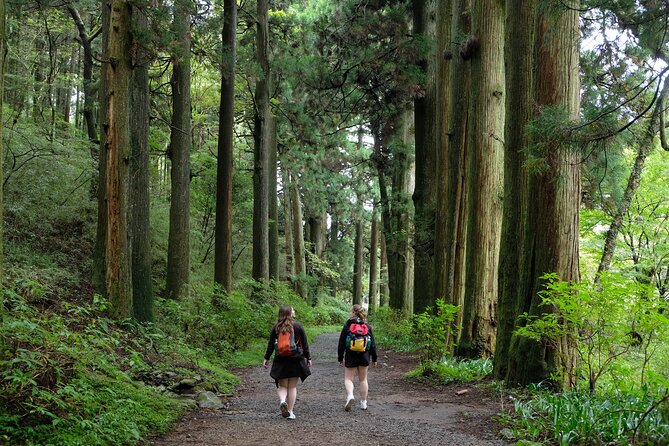
The tour starts at Hakone-Yumoto Station at 9:00 am. You are with a guide the whole time, and the group is capped at 6 travelers, so you will not get shuffled into a fast-moving crowd.
Getting to the actual trail area involves a shared taxi to the trailhead, with a suggested total of 2000 yen to split among the group. After you hike for a bit and reach the point where the steepest section would slow things down, you take a bus to reach the teahouse area, with the bus fee kept under 400 yen. This is one of the smartest parts of the plan, because it protects your energy for the nicer, more scenic walking.
Your total time on the trail is about 4 hours (approx.), with the last stop finishing in the Lake Ashi area. Depending on how quickly you settle in at the viewpoints, you should be able to catch onward transport around 1:00 pm, which is great if you still want to explore Hakone later that day.
Hatajuku wood-crafting village: tradition before you head deeper
After about an hour of hiking, you reach Hatajuku, a wood crafting village tied to Hakone. This stop is not just a photo break, it is an orientation point, because it connects the walk to the human side of the region. You get to understand traditional craft art in Hakone, and that cultural context makes the later checkpoints and the old highway feel more meaningful.
A practical note: this is where the route slows down in a good way. You are not yet at the teahouse, so you are still in active hiking mode, but the village break gives your legs a mental reset. Then you head off by bus to skip the steepest section to reach the teahouse.
Admissions for the stops are listed as free, so your time at Hatajuku is essentially about the experience and interpretation from the guide.
Amasake at a 400-year teahouse: a warm pause in the middle
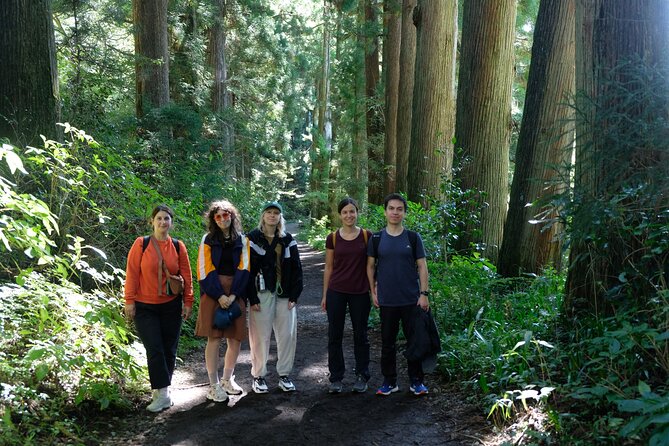
The next key moment is Hakone Amazake Tea House, with a stop around 30 minutes. You get an amasake drink, which is part of the charm here because it turns the hike into a lived rhythm: walk, pause, sip, continue. The teahouse also has a history of about 400 years, which adds weight to what could otherwise be a simple refresh break.
This is one of those stops that benefits from having a guide. Even if you already know what amasake is, the point is how it fits into the route and why that kind of refreshment historically mattered for travelers on this corridor. You are not just eating, you are learning how people sustained themselves on long routes.
After the tea house, you continue onward toward Lake Ashi. The hike keeps a steady feel, with forest trails and older-road segments that let you keep moving without feeling rushed.
Same corner of Japan, a different kind of day:
- Hakone 6 hour Private Tour with Government-Licensed Guide
★ 5.0 · 218 reviews - Custom Private Tour in Hakone with a Certified Local Guide
★ 5.0 · 91 reviews - Hakone 8 hour Private Tour with Government-Licensed Guide
★ 5.0 · 63 reviews - Private Tour – Hakone Day Trip! A Tour to Explore All Must-Sees!
★ 5.0 · 58 reviews
The Hakone checkpoint: why the area mattered beyond the view
Your final scheduled stop is the Hakone checkpoint, with about 30 minutes. This is the “let’s understand what we are looking at” moment, where the guide helps you grasp the significance of Hakone in Japan’s history.
This part works well because it is placed after you have already walked the old-road feel and tasted the local tradition. You have context now, so when the guide ties Hakone’s importance back to the travel corridor, it lands better.
One detail from guides in this area helps set expectations: you may get clear English and a focus on how the route connects to the Edo era story of travel between Tokyo and Kyoto. When the explanation connects what you just walked to the broader historical picture, the checkpoint stop stops feeling like a nameplate.
Lake Ashi, forest-bathing vibes, and your Mt Fuji odds
You end the hike at Lake Ashinoko (Lake Ashi area). Expect about 1 hour here. This is a slower finish by design, because you want a chance to take in the wide water view after time on the trail.
The big “maybe” is Mt Fuji across the lake. Your odds depend on weather, but the tour is clearly set up for that possibility, so you can linger long enough to catch the best light or visibility. Even when Fuji is not visible, Lake Ashi still delivers what you came for: open space after trees, calm views after walking.
Because the tour finishes around the early afternoon, you will also be well-placed to continue your day. The plan notes that you can catch a bus or a ferry, with a pirate ship option mentioned for onward travel.
Price and value: what $114.95 covers, and what it does not
At $114.95 per person, this hike looks pricier than a DIY walk, but you are paying for more than steps on a trail. You get a Certified National Mountain Guide, and the guided interpretation is a big part of the value. You also get the framework that makes the hike smarter: bus skipping the steepest section, planned stops, and a half-day pacing that fits most Hakone itineraries.
Admissions for the key stops are listed as free, so you are not stacking additional entry fees on top of the guide cost. The main extra costs are transportation-related, not “attraction” related: a shared taxi to the trailhead (about 2000 yen split) and a bus fee to the teahouse (less than 400 yen).
If you’re traveling with someone who might not want to manage route decisions, steepness, and timing, the guide cost becomes easier to justify. You spend more time enjoying, less time figuring.
Who this is perfect for, and who should choose something else
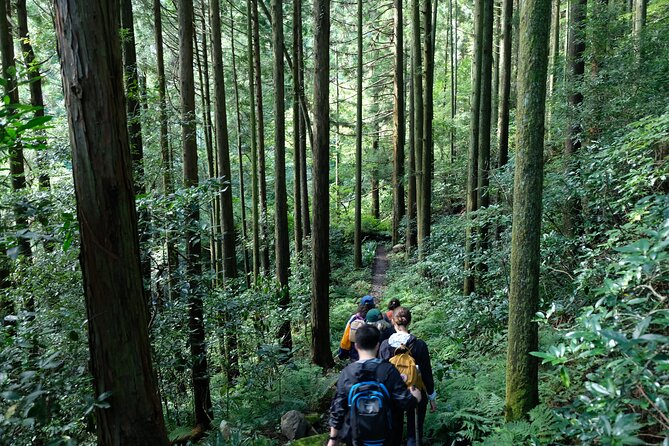
This fits travelers with moderate physical fitness who want a guided hike that is active but not punishing. The route mixes cobbles and forest trails, so you should feel comfortable walking on uneven surfaces. If you have knee issues or dislike cobbled ground, you might find the footwork part more challenging than the time length suggests.
It also works well if you care about connecting places to context. The checkpoint stop and the way Hatajuku and the teahouse are positioned turn Hakone from a scenery stop into a story you can walk through.
If you only want a short view-circuit and zero hiking, this may not be your best match. You will be moving for a few hours, and the best parts are the walking segments, not just the endpoints.
Practical tips so your half day feels smooth
Start with footwear. Even though this is a half-day, you are on cobbled paths and forest trails, so choose shoes with solid grip and enough support for uneven ground. Bring layers too, because forest sections can feel cooler than open areas around the lake.
Plan around weather for Mt Fuji. The lake view is the goal either way, but the Fuji moment depends on what the day gives you. If the skies are clear, you will have your best shot during that Lake Ashi viewing window.
If you are thinking about timing your whole Hakone day, aim to treat this as your anchor activity. Since it finishes around early afternoon, you can then move to your next stop with the bus or ferry options mentioned.
Also keep an eye on what the tour includes in your day. You do not just show up for a hike, you also get the tea house break and the checkpoint explanation, and those are part of why the day feels “full” at four hours.
Should you book the Hakone Hachiri half-day hike?
Book it if you want Hakone to feel authentic and grounded in place, not just a series of cable cars and quick photos. I think it is especially worth it when you value guided history tied directly to what you walk, and when you like the idea of cobbled old-road sections mixed with calm forest time.
Skip it if you dislike moderate hiking, cannot comfortably handle mixed terrain, or only want an easy viewpoint day. And if Mt Fuji is your only goal, go in with the right attitude, because visibility is never guaranteed.
If your schedule can handle a 9:00 am start and you are excited by the idea of walking part of the old Tokaido corridor, this half-day is a smart, high-value way to experience Hakone.
FAQ
How long is the Hakone Hachiri hike?
The hike lasts about 4 hours (approx.). You will spend time at several stops before finishing in the Lake Ashi area.
Where do I meet the guide, and where does the tour end?
You meet at Hakone-Yumoto Station at 9:00 am and finish at Motohakone in the Hakone area. From there, you can take a bus or ferry to continue your trip.
Is the hike very strenuous?
The tour is described as suitable for travelers with moderate physical fitness. The route includes cobbled paths and forest trails, so comfortable shoes help.
Do I need to pay anything besides the tour price?
Transportation to the trailhead requires a shared taxi (2000 yen split among the group). You also pay a bus fee to the teahouse (less than 400 yen). Admissions for the stops are listed as free.
Is Mt Fuji included in the experience?
You can see Mt Fuji across Lake Ashi if weather permits. It is not guaranteed, but the tour is timed so you have a chance to look during the Lake Ashi stop.
What is included in the tour?
The tour includes a Certified National Mountain Guide. It also includes free admission at the scheduled stops.
How big is the group?
This experience has a maximum of 6 travelers, which helps keep the pace manageable.
What happens if weather is bad?
The experience requires good weather. If it is canceled due to poor weather, you will be offered a different date or a full refund.
More Historical Tours in Hakone
- World Heritage Shirakawa-go and Experience Tours from Kanazawa
★ 5.0 · 4,049 reviews - Tokyo: Imperial Palace and Shogun Historical Walking Tour
★ 5.0 · 2,251 reviews - World Heritage Kyoto & Nara Uji Authentic Matcha Experience
★ 5.0 · 1,573 reviews - Kyoto Gion: 2-Hour Geisha Culture & History Walking Tour
★ 5.0 · 1,186 reviews
Fresh options around Hakone
- Odawara Castle and Town Guided Discovery Tour★ 5.0 · 15 reviews
- Forest Bathing in Temple and Enjoy onsen with healing power★ 5.0 · 17 reviews
- Hakone Hachiri: Old Tokaido Highway Hiking Tour★ 4.9 · 22 reviews
- Hakone: Day Tour to View Mt Fuji & Wooden Culture Experience★ 5.0 · 23 reviews
- Kowakien Yunessun Hot Springs Entry Ticket★ 4.2 · 23 reviews
- Odawara: Guided Ninja & Samurai Tour of Odawara Castle★ 5.0 · 25 reviews
- Odawara: Odawara Castle Tenshukaku Entrance Ticket★ 4.2 · 30 reviews
- Traverse Outer Rim of Hakone Caldera and Enjoy Onsen Hiking Tour★ 5.0 · 30 reviews
Historical Tours, compared.
World Heritage Shirakawa-go and Experience Tours from Kanazawa
Read our review →
Imperial Palace and Shogun Historical Walking Tour
Read our review →
World Heritage Kyoto & Nara Uji Authentic Matcha Experience
Read our review →
Kyoto Gion: 2-Hour Geisha Culture & History Walking Tour
Read our review →
World Heritage Shirakawa-go Morning Guided Tour
Read our review →
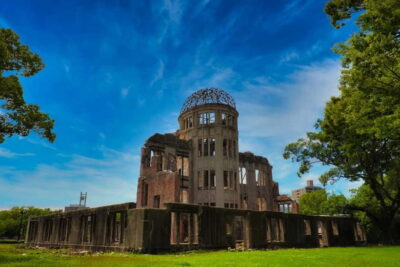
Hiroshima Historical Walking Tour – Why A-Bomb was Dropped
Read our review →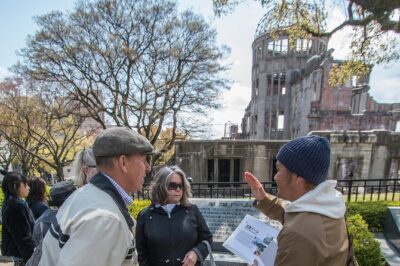
Hiroshima Peace (Heiwa) Walking Tour at World Heritage Sites
Read our review →Browse the lists this tour appears in