
Reviewed · MORNING
Tokyo: Sumo Morning Practice Viewing Tour
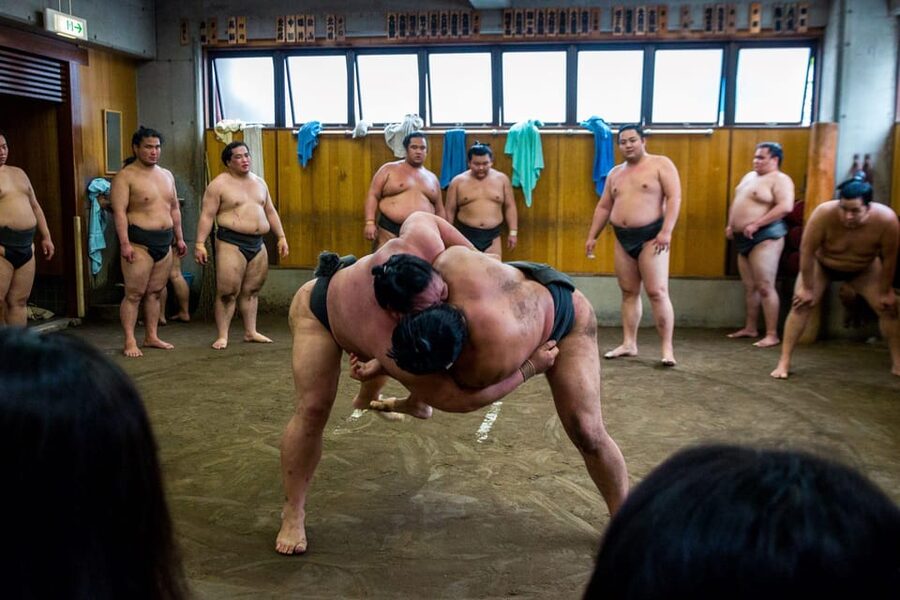
Sumo starts before Tokyo wakes. This tour gives you rare access to a working sumo stable in Ryogoku, where you watch training up close and learn the meaning behind the rituals. You stay quiet, you sit tight, and you see why this sport is treated like a daily craft, not a spectacle.
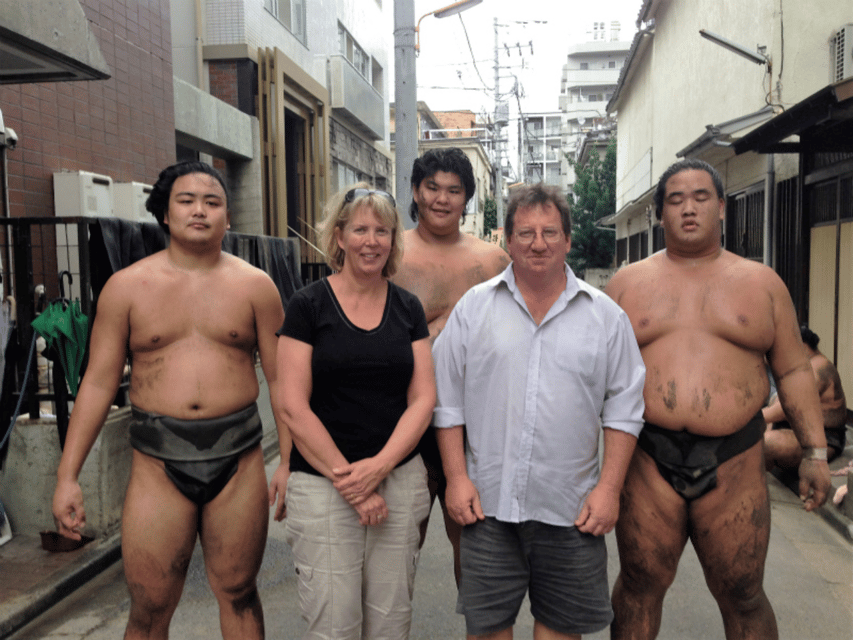
Two things I really like: the chance to stand so close to the action during morning practice, and the way a real guide explains what you are seeing, including tournament stakes and stable life. On some days, you can also get photos with wrestlers, which adds a memorable bookend to the training session.
One thing to consider: the experience asks a lot of patience and stillness. You are expected to sit and stay respectful during practice, with no flash and no movement, so it is not ideal if you hate long quiet periods.
Key highlights at a glance
- Real stable access: you enter a place that is generally not open to the public
- Ryogoku location: the heart of Tokyo sumo culture, near the arena and sumo meal spots
- Up-close training: see drills and bouts at close range, not from across an arena
- English guide commentary: licensed guidance that turns noise into understanding
- Wrestler photos, sometimes: photo opportunities depend on the day’s schedule
- Strict etiquette: modest clothing, silence, phone on silent, no recording
Ryogoku Morning Sumo: Why This Area and Time Matter
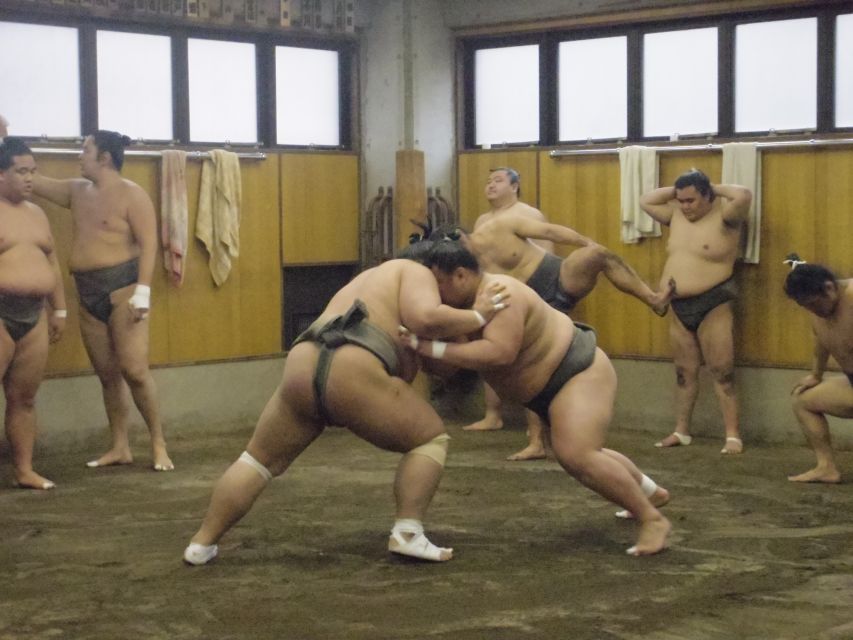
Ryogoku is the sumo center of Tokyo, the place where the sport has its own geography and rhythm. This tour is timed for the morning training window, when the stable’s day starts and the wrestlers practice drills meant to sharpen speed, balance, and grip. If you only watch sumo in a ring once or twice, you might miss how much of the sport is preparation, repetition, and discipline.
What makes the timing special is that you are not arriving for a staged show. You are showing up while the wrestlers live inside their training routine. That changes everything. You see how young rikishi work together, how they reset quickly, and how every session connects to tournament life, including the fact that official sumo tournaments happen six times a year.
More sumo experiences in Tokyo:
- Tokyo: Sumo Show Experience with Chicken Hot Pot and a Photo
★ 4.8 · 6,678 reviews - Tokyo: Sumo Show and Dining Experience
★ 4.8 · 2,742 reviews - the SUMO show
★ 5.0 · 1,960 reviews
Meeting the Day: How You Get From Tokyo Street Life to the Stable
You meet at a location that can vary by option, then your group heads to the stable by train or short transit. The guided portion includes getting you to the stable smoothly and setting expectations before you enter. In many cases, guides like Yoko, Yuko, Oku San, Noriko, and Kaz are mentioned for being clear, organized, and genuinely excited to share how sumo works.
The practical takeaway for you: plan to arrive a few minutes early. Even when the experience is well run, you do not want to lose time figuring out the exact meeting spot. Several experiences highlight how getting there early helps with the viewing setup, which matters because you will be sitting for the entire training period.
Entering a Working Sumo Stable: Rules You Actually Need to Know
This is a working place, not a museum. When you enter, you are taking part in the stable’s workplace rules. That is why the tour has strict boundaries, and why following them makes the visit better for everyone.
Here is what you need to respect:
- Modest clothing only
- No standing up or moving around during practice
- Phone on silent
- No flash photography
- No video recording
- No hats or sunglasses
- No food or drinks inside the stable area
Also, there is a clear boundary: once you leave the stable, there is no re-entry. You should go in with the mindset that this is a focused session, not a casual wander.
If you need your comfort to be spontaneous, this might feel strict. But that same strictness is what keeps the atmosphere real.
The 15-Minute Walk Through Sumo Context: What the Guide Does Before Practice
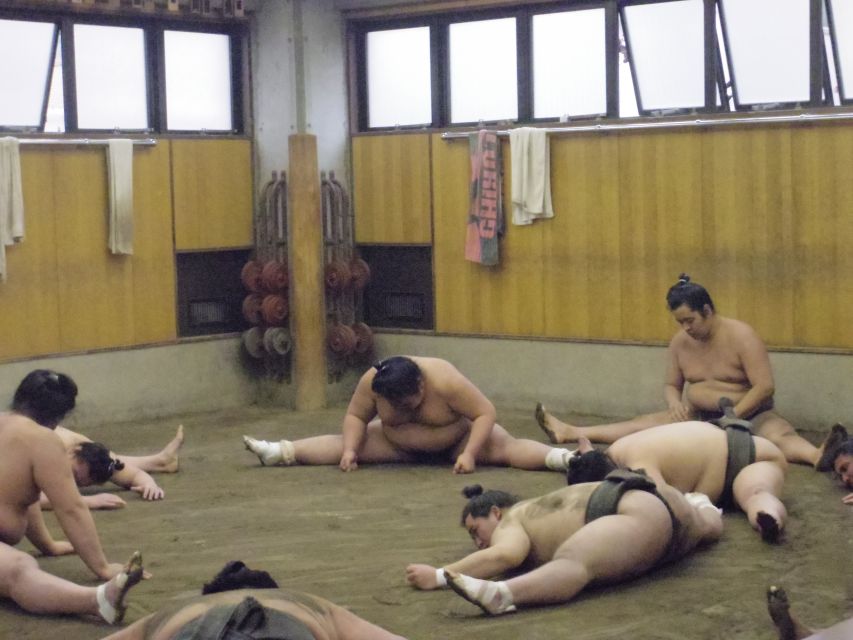
Before the training starts, you head to the stable and get explanations that make the rest of the morning click. This is where the tour becomes more than watching two people collide. You get short, targeted context on Sumo as a traditional Japanese sport tied to Shinto beliefs, plus the basic match goal: forcing your opponent out of the ring or making any body part touch the ground.
Guides often add details on stable life and tournament training, and they may use English notes or cards to help you follow drills without interrupting the quiet. People mention guides passing written explanations during the session, including pointing out who is training and what you are likely seeing.
For you, the benefit is simple: you will recognize patterns instead of only seeing motion. When a drill looks repetitive, you will understand why it matters.
A few more Tokyo days worth comparing
- Mt Fuji and Hakone 1-Day Bus Tour Return by Bullet Train
★ 5.0 · 26,383 reviews - 1-Day Tokyo Bus Tour
★ 5.0 · 14,250 reviews - Tokyo: TOKYO SKYTREE® Admission ticket
★ 4.5 · 11,192 reviews - Tokyo: teamLab Planets TOKYO Digital Art Museum Entry Ticket
★ 4.6 · 9,779 reviews
Watching Morning Training Up Close: What You See in the 60 to 90 Minutes
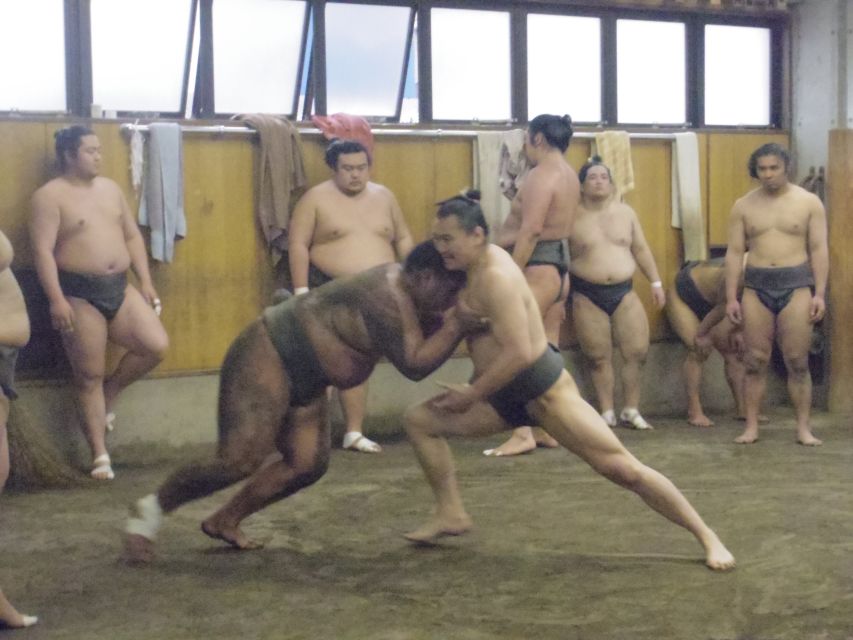
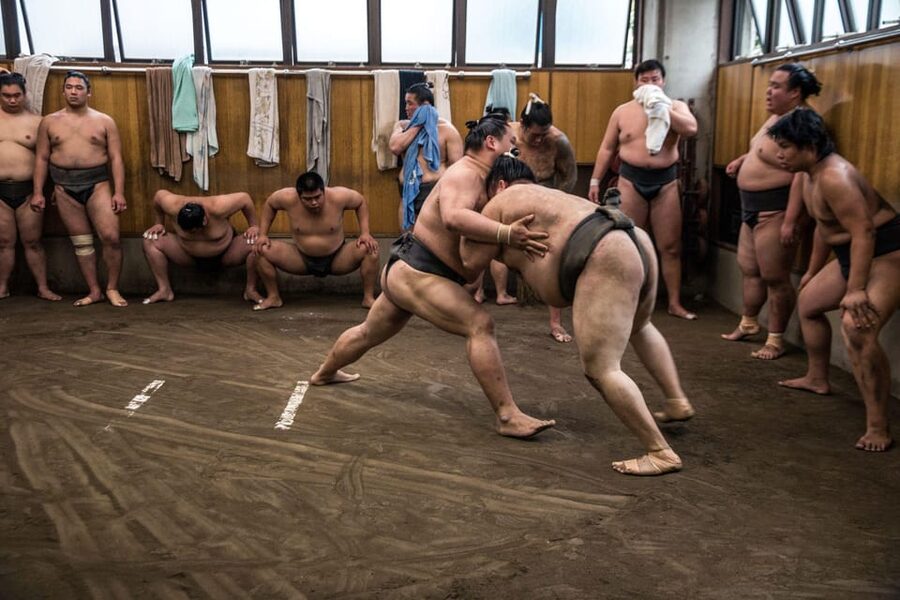
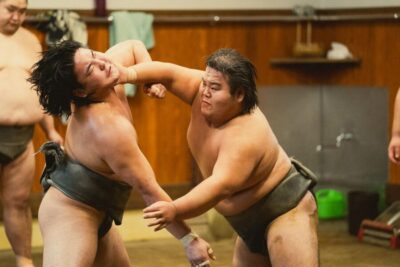
The heart of the tour is watching training until the end, typically around 09:00 to 10:00, with the exact timing depending on the day. Expect a continuous stretch where the wrestlers drill technique and test themselves against each other.
Because you are allowed into the real training space, the action has weight. In an arena, you watch from a distance, and your brain fills in the blanks. Here, you can see how they control distance, how they reset, and how quickly they move when the match goes live.
A few things that often surprise people:
- Matches can end fast, because small errors are expensive
- The warmup and drilling work is part of the performance, not separate from it
- The training feels intense, not laid back
Also, you are not hearing commentary during the actual practice the way you would at a public event. Silence is part of the etiquette. It is harder at first, but it also helps you focus on what the wrestlers are doing.
If you like sports that have rules beyond the visible action, sumo fits well. You end up noticing footwork, grip, posture, and timing. And you see young wrestlers trying to earn momentum toward higher ranks.
When the Stable Master or Coach Chimes In: Q&A and Real Personality
Some tours include a Q&A moment with the stable side. People mention being able to ask questions and even speak with the stable master or coach after training. On certain days, you might also see notable wrestlers presiding over or working with the rikishi.
You do not always know who will be in the room on your specific morning, but you can count on the fact that the stable staff are welcoming within the boundaries of the day’s schedule. Several guides are praised for managing the timing and keeping the group organized so questions do not turn into chaos.
For you, this part is valuable because it connects technique to culture. You are not just learning the rules of sumo, you are learning how stables teach, correct, and motivate.
Photos with Wrestlers: How to Get a Great Moment Without Breaking Etiquette
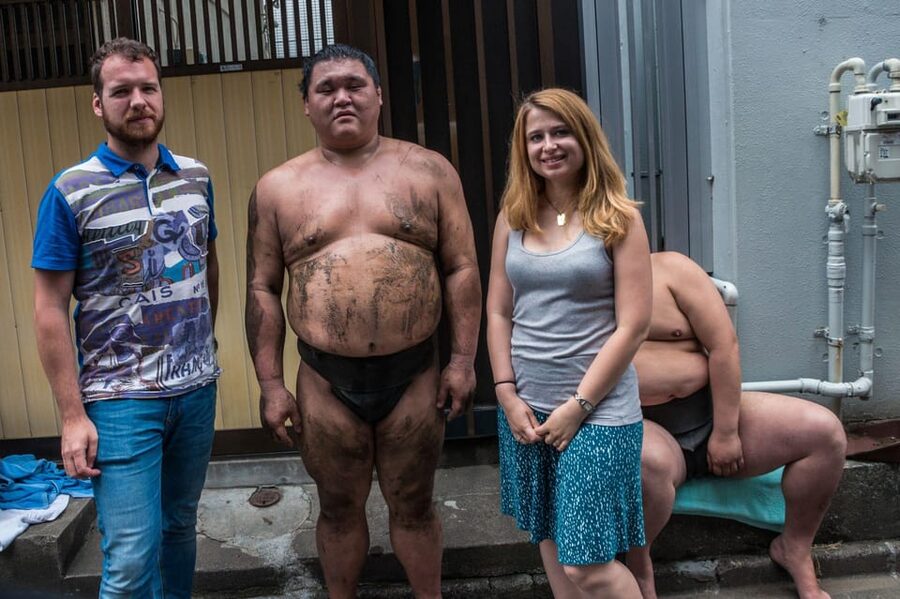
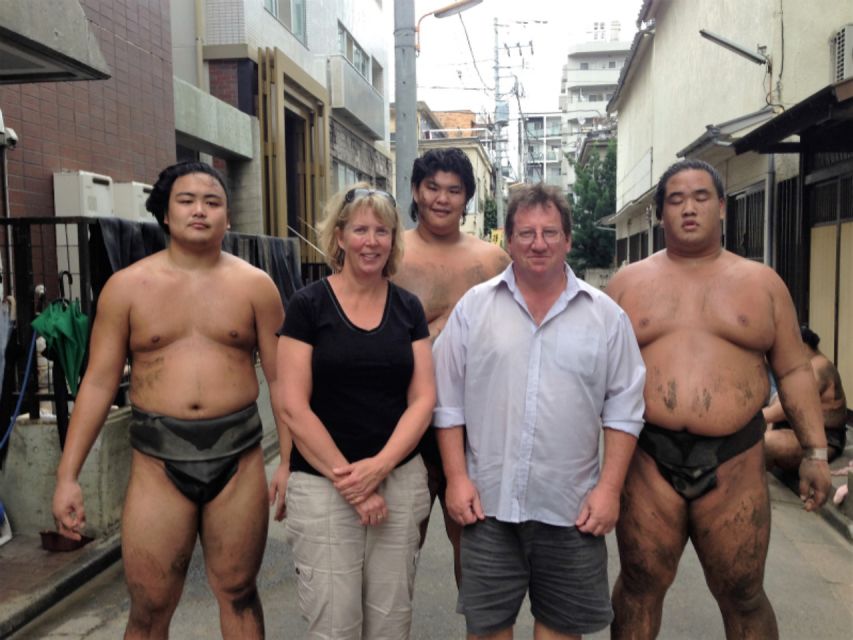
Photo opportunities can happen, but they are not guaranteed. When photos are available, follow the lead of your guide and stable staff. Do not crowd, do not interrupt the wrestlers, and keep it quick.
One practical tip: treat the photo as a bonus, not the goal. The real value is the training session itself. If you walk in expecting a full set of celebrity shots, you may be disappointed. But if you treat it like a respectful extra, it feels meaningful.
When photos do happen, they land well emotionally because you have already seen the effort. Seeing someone work for hours, then getting a quick photo after, gives the image a lot more weight than a staged moment.
What to Wear and Bring: A Simple Packing Plan for Quiet Discipline
The tour has strong outfit rules. You will be asked to dress modestly, and hats and sunglasses are not allowed. That alone means you should plan to keep your outfit simple and comfortable for sitting.
For your kit, think minimal and calm:
- Modest clothes you can sit in comfortably
- A small bag that you can keep out of the way
- Phone ready for a silent mode, and no flash
You should also be mentally prepared for stillness. People mention that the session can feel long if you get restless. If you are the kind of person who fidgets, practice quiet breathing at the start. You will thank yourself during the later part of training.
And if you are visiting with kids, check the age requirement. This tour is not suitable for children under 11.
Logistics and Timing: Making the Rest of Your Tokyo Day Work
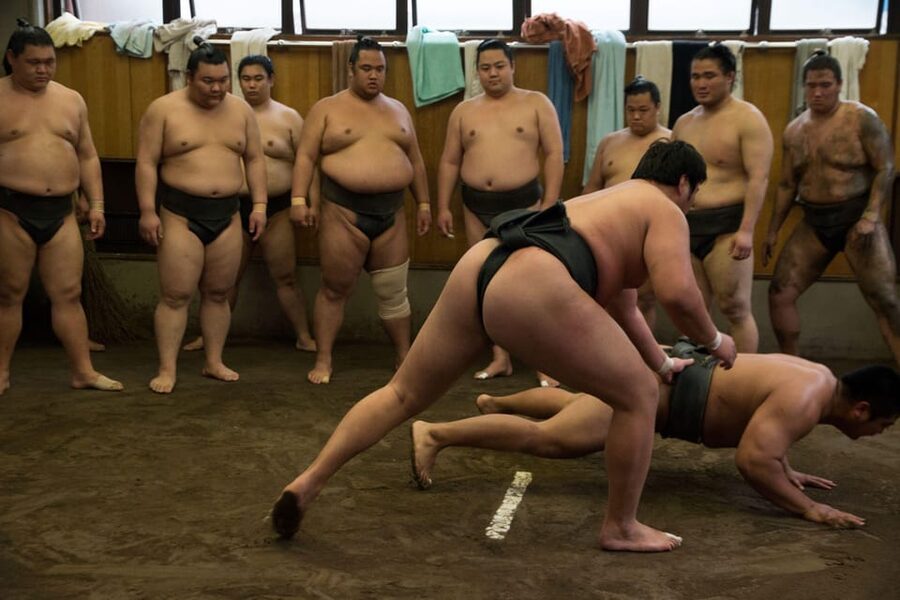
This experience lasts about 90 minutes to 2 hours. You need to be ready to stay until the end, around that 09:00 to 10:00 window. If you have a hard appointment right after, you risk stress because practice timing can run a bit longer or shorter than you expect.
Another real-world detail: the ending location may differ from the meeting place, depending on the schedule. So do not plan something that requires you to immediately return to the exact same spot.
The bright side is what comes after. Ryogoku is packed with sumo food options, and once the tour ends, you can easily access places to eat. In other words, this is a morning activity that naturally pairs with a relaxed lunch and some strolling around the sumo town area.
Price and Value: Is $81 Worth It for a 90-Minute Experience?
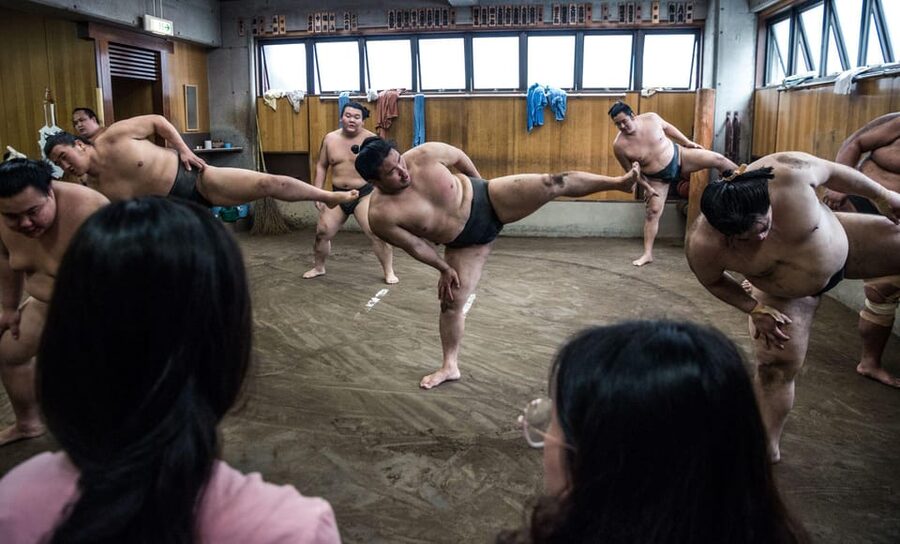
At $81 per person, this is not a cheap add-on. But it is also not just a ticket to watch a show. You are paying for three things that are genuinely hard to replicate:
1) Entry into a real stable that is generally not open to the public
2) A licensed English guide who explains what you are seeing
3) The chance to watch training up close, often with photos available on the day
The value only makes sense if you care about the difference between sumo as performance and sumo as daily work. If your goal is photos only, there are other options. But if you want to understand why sumo looks the way it does, this is one of the best cost-to-wow ratios in Tokyo.
I also like that the tour can help you feel prepared if you later catch a tournament. Once you understand the training logic, the arena experience feels less confusing and more satisfying.
Who This Sumo Tour Fits Best, and Who Might Want a Different Plan
This tour fits best if you:
- Love Japanese culture and want something more than a generic museum stop
- Enjoy sports enough to watch practice, not only competition
- Can handle quiet rules and long sitting
It is not a great match if you:
- Need to stand up or move around often during a session
- Want a loud, interactive, commentary-heavy format
- Have mobility impairments, since it is not suitable for people with mobility impairments
Also, the experience can feel intense and structured. That is a plus for people who like discipline. It can feel repetitive if you come expecting constant action.
Names You Might Hear: The Human Side of This Experience
A lot of the warmth comes from the guides. People specifically highlight guides like Yuko, Yoko, Oku San, Noriko, Kaz, Taku, Miwako, Mako, Nobu, and Tad for being organized, funny, and genuinely invested in sharing stable culture.
What they tend to have in common is pacing. They keep the group together on the way to the stable, explain the do and don’t rules clearly, and manage the quiet so the wrestlers can train. That kind of care matters because you are visiting a workplace.
Should You Book This Tokyo Sumo Morning Practice Tour?
Book it if you want the real thing: a functioning stable, close viewing, and an English guide who helps you understand the rules and the daily rhythm. The price feels fair when you compare it to the effort and access involved, and it is one of those Tokyo experiences that makes the rest of your sumo day feel smarter.
Skip it or reconsider if strict etiquette and sitting still for the full practice period will annoy you. Also, if you are planning around mobility needs or you are traveling with a child under 11, this one is not your best option.
If you are flexible, respectful, and curious, this is a morning you will remember long after the photos fade.
FAQ
How long is the Tokyo sumo morning practice viewing tour?
The tour runs about 90 minutes to 2 hours, and you must stay until the end of the practice (typically around 09:00 to 10:00).
Where do we meet?
The meeting point may vary depending on which option you booked.
Is the tour guided in English?
Yes, the tour includes a live English-speaking guide.
Can I record video during the practice?
No. Video recording is not allowed.
Are flash photos allowed?
No. Flash photography is not allowed.
Are hats, sunglasses, food, or drinks allowed?
No hats or sunglasses are allowed, and no food or drinks are allowed during the experience.
What should I wear?
Wear modest clothing only.
Do I need to stay for the whole practice?
Yes. Once you leave the stable, there is no re-entry, so plan to stay until the end.
Is the tour suitable for children?
It is not suitable for children under 11 years old.
Is the tour accessible for people with mobility impairments?
No. The tour is not suitable for people with mobility impairments.
Fresh options around Tokyo
- Tokyo: Nagano Snow Monkeys and Zenkoji Tour with Temples★ 4.9 · 19 reviews
- Yokohama Port: Private Customizable Tour with Transfer★ 5.0 · 19 reviews
- Explore Unique Tokyo Streets / Learn with a Pro Photographer★ 5.0 · 19 reviews
- Sushi Making with Interactive Samurai Experience at JIN-ASAKUSA★ 5.0 · 19 reviews
- DAIKOKU excursion by car DRIFT automobile encounter★ 4.5 · 19 reviews
- Official Street Go Kart Tour Akihabara 2nd★ 5.0 · 19 reviews
- Cosplay Experience with Professional Makeup and Photo Shoot!★ 5.0 · 19 reviews
- Japanese Traditional Sweets making★ 4.1 · 19 reviews
Morning, compared.
Kyoto Early Morning Tour with English-Speaking Guide
Read our review →Early Morning Tour with English-Speaking Guide
Read our review →
World Heritage Shirakawa-go Morning Guided Tour
Read our review →
Nara Early Morning Tour (Kyoto or Osaka Departure Available)
Read our review →
Hiroshima in a Nutshell: Morning Bike Adventure
Read our review →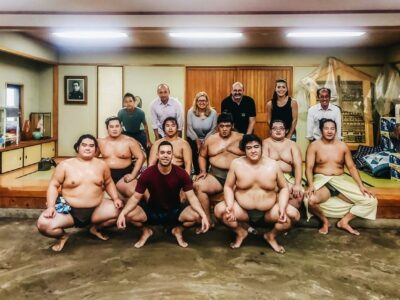
Browse the lists this tour appears in