Reviewed · TICKETS
Tokyo: Hop-On Hop-Off Sightseeing Bus Ticket
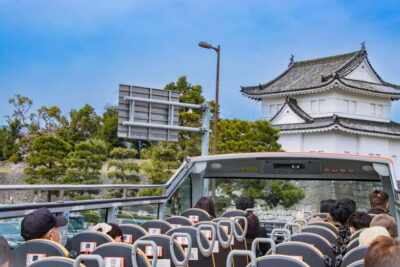
Tokyo can feel like sensory overload. This hop-on hop-off bus ticket turns the city into a simple loop, with unlimited routes and open-top views. I like that the commentary is timed to the stops, and I also love the audio guide on your own smartphone so you can move at your pace.
One thing to watch: the bus is open-air with no air-conditioning, so hot weather and rain seasons can test your comfort (and standing while moving is not allowed). You’ll also want to plan for traffic delays and longer gaps between buses on busy days.
Key points I’d plan around
- Unlimited access to all routes means you can mix and match Skytree, Tower, Tsukiji, Shinjuku, Shibuya, and more
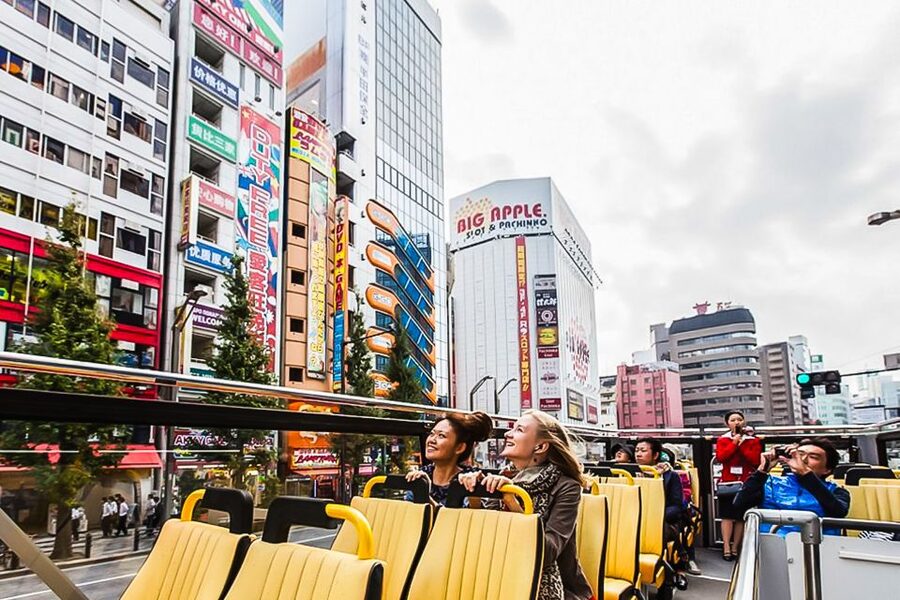
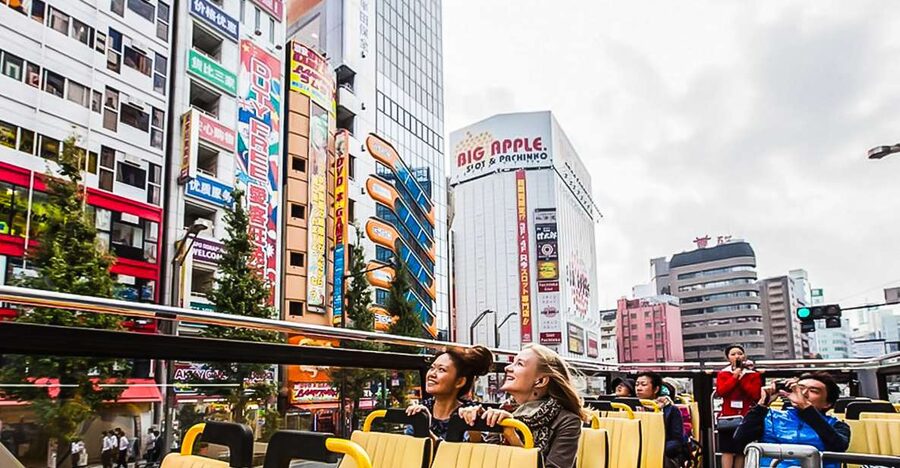
- Open-top panoramic riding gives great sightlines over central Tokyo as you travel
- Two audio options: vehicle-mounted on some buses, or your own-phone system with 10 languages
- Second-floor seating only helps keep things organized, but it changes where you’ll want to wait
- Hop off and back on anytime works best when you time your reconnections and avoid rushing
What the ticket really gives you in Tokyo
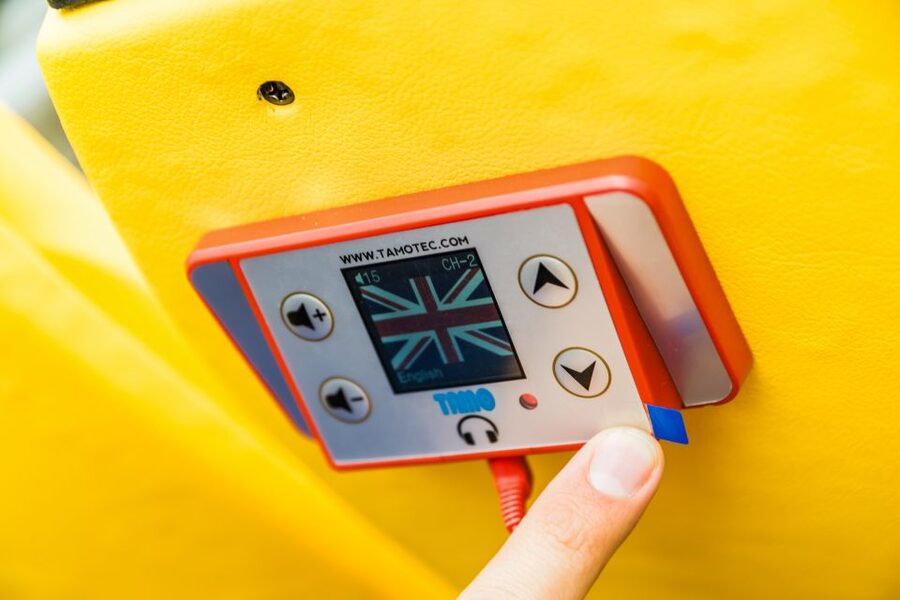
This is a classic hop-on hop-off setup, but Tokyo changes the game a bit because distances are big and neighborhoods can feel worlds apart. With this ticket, you get access to the main sightseeing loops, and you can hop off when you want to explore, then hop back on later. That flexibility is the main value: you are not locked into one rigid guided route.
The other big practical win is the ride itself. The bus is open-air and built for panoramic viewing, so you’re not stuck watching a window frame while you move between areas. In a city where you want quick orientation, that “from above street level” perspective helps you understand how places connect.
You also get multilingual commentary. There’s a vehicle-mounted option that may not be available on every bus, and there’s also the bring-your-own-device system. If you plan ahead with your own phone and earphones, you can listen in 10 languages, including English, French, German, Spanish, Thai, Vietnamese, and Indonesian.
A few more Tokyo days worth comparing
- Mt Fuji and Hakone 1-Day Bus Tour Return by Bullet Train
★ 5.0 · 26,383 reviews - 1-Day Tokyo Bus Tour
★ 5.0 · 14,250 reviews - Tokyo: TOKYO SKYTREE® Admission ticket
★ 4.5 · 11,192 reviews
Where to board, and how QR codes save time
Your meeting point is straightforward: in front of the Mitsubishi Building. From there, you can board and start riding.
What makes this easier than some hop-on hop-off systems is that you can also board from bus stops using a QR code. Your voucher includes the QR code, and you can use it at stops around Tokyo. So if you decide you want to start from a different neighborhood, you are not forced to backtrack to the original start point.
Just remember: it is not a reservation system. If there are no free seats, you will need to board the next bus. That’s why it helps to travel with some breathing room, especially at peak hours.
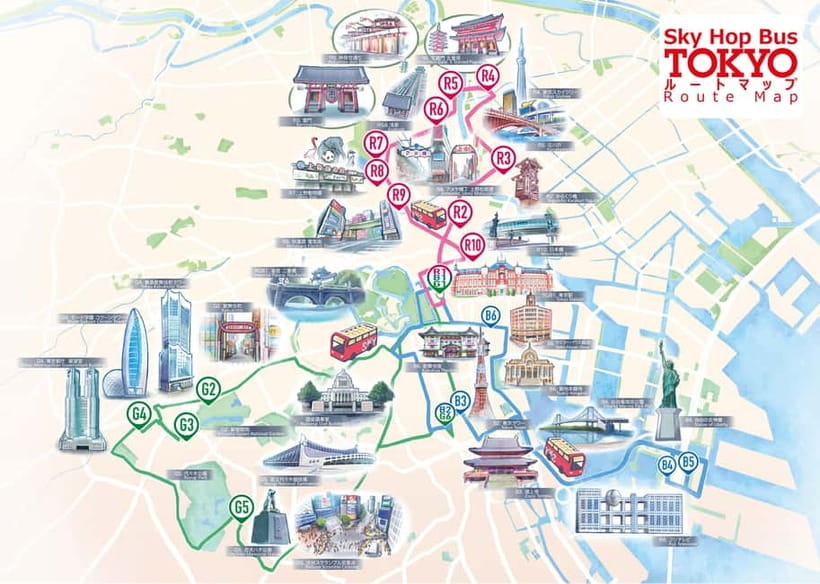
Route 1: Tokyo Skytree, Asakusa, Ueno, Akihabara (the East loop)

If you want the “old meets new” feeling of Tokyo, Route 1 is usually the best place to start. It ties together iconic tourist zones with neighborhoods that feel lively even when you’re not doing the big-ticket sights.
Here’s the flow, stop by stop, and what each one is good for:
Marunouchi Mitsubishi Building (start/end)
This is a central anchor point. It’s a good place to begin because it gives you a base in the business district, then you travel outward and back.
Kodemmacho Station
This is more of a connector stop. You might use it as a quick hop if you want to get into the surrounding central Tokyo lanes without waiting for a later stop.
Ryogoku Edo-Tokyo Museum
This area is a strong choice if you like Edo-era Tokyo themes. Even if you do not go inside, the location helps you connect the city’s past storytelling with the modern neighborhoods around it.
TOKYO SKYTREE station
This is the headline. Skytree is a “Tokyo landmark” kind of stop, ideal if you want skyline views or you just want to tick a major sight off your list.
Asakusa Hanakawado, Asakusa Tawaramachi
Asakusa is one of Tokyo’s most memorable districts for classic atmosphere. I’d use these stops to wander around at your own pace, especially if you plan to mix shopping streets with temple-area sightseeing.
Ueno Matsuzakaya
Ueno is a great area for museum vibes and shopping without needing to change trains. This stop can also work as a mid-loop reset, because you can decide what you want next while you’re already in the zone.
Akihabara (Suehirocho)
If you like electronics, anime, and casual pop-culture browsing, this is the stop. Even if you do not buy anything, it’s useful for understanding Tokyo’s youth-and-tech edge.
Shin-Nihombashi Station
This rounds out the loop with a practical central return point.
Quick Route 1 takeaway: If this is your first or second day, it’s the loop that balances sightseeing icons with “just walk and explore” neighborhoods.
Route 2: Tokyo Tower, Zojo-ji, Tsukiji, Ginza (the classic center loop)
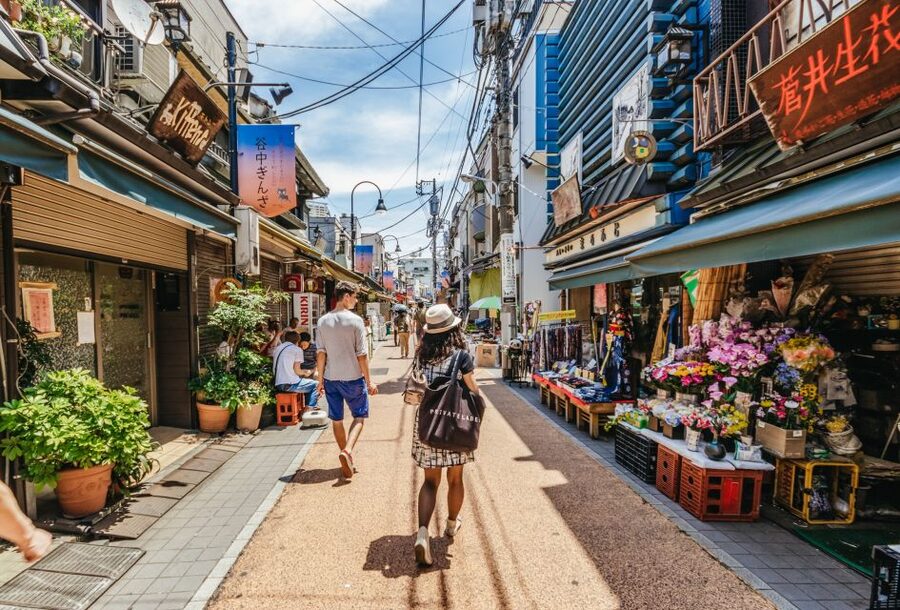
Route 2 is where Tokyo starts feeling extra photogenic. You get a mix of skyline landmarks, temple-area ambiance, and the shopping and food pull of the waterfront side.
Marunouchi Mitsubishi Building (start/end)
Again, it’s the anchor that makes hopping convenient.
Tokyo Tower
This is the big skyline icon stop. It’s also where you can easily find nearby photo angles and take in the urban geometry from different streets.
Tokyo Prince Hotel / Zojo-ji Temple
This pairing matters. You’re not just getting a view, you’re also getting a temple-area stop. I like this kind of contrast because it turns your “landmark day” into a “different Tokyo moods in one loop” day.
Tokyo Teleport Station
This is a functional stop. You might use it if you want access to nearby areas, but it’s usually not the main reason people choose the route.
Tsukiji Ginza
This is one of the best choices for food-focused exploration. It’s a strong hop-off point when you want to snack and wander, then decide whether you want a longer stop or just a quick taste.
Back to Marunouchi
You end where you started, which keeps the planning simple.
Quick Route 2 takeaway: If you want Tokyo Tower plus an easy path into a food and shopping neighborhood, Route 2 is your workhorse.
Same corner of Japan, a different kind of day:
- Tokyo: teamLab Planets TOKYO Digital Art Museum Entry Ticket
★ 4.6 · 9,779 reviews - Mt Fuji & Hakone Cruise, Drum Show Bullet Train 1 Day from Tokyo
★ 4.0 · 7,413 reviews - Tokyo: Sumo Show Experience with Chicken Hot Pot and a Photo
★ 4.8 · 6,678 reviews - Tokyo: Shinjuku Food Tour (13 Dishes at 4 Local Eateries)
★ 5.0 · 6,603 reviews
Route 3: Shinjuku and Shibuya, with Harajuku and Meiji Jingu nearby
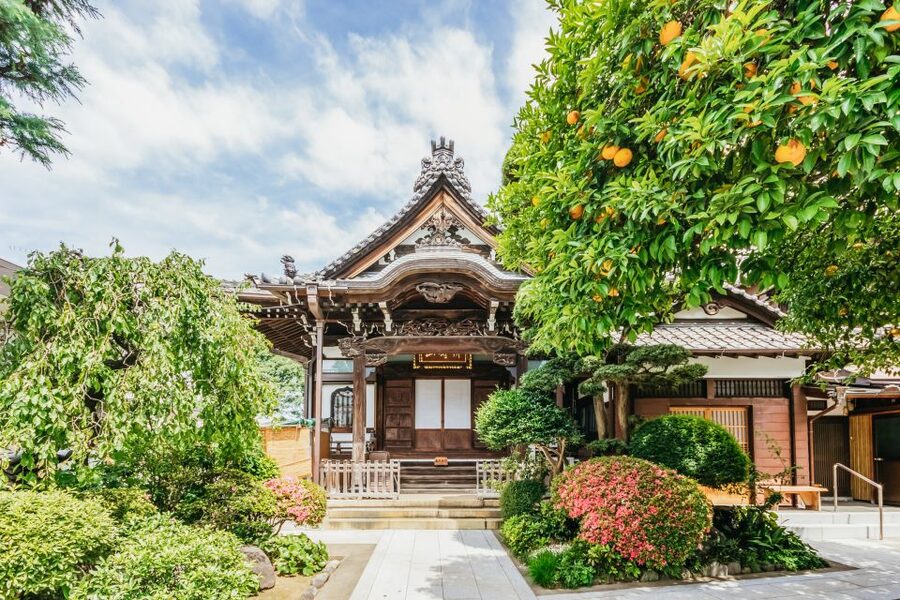
Route 3 is the “big city energy” loop. It’s built around major hubs, and it also brushes up against the zones that people associate with youth fashion and shrine visits.
Marunouchi Mitsubishi Building (start/end)
Same hub, same reason: easy reconnection.
Shinjuku-gyoemmae Station
This is a gateway into Shinjuku’s dense central area. It’s handy if you want to break up the city into smaller chunks once you get oriented.
Shinjuku Station South Exit / Hotel Century Southern Tower
Shinjuku Station is a subway and train world of its own. If you plan to use public transit after your bus loop, this stop can be a practical place to jump on and off based on where you want to go next.
Shinjuku Mitsui Building (Nishi-Shinjuku)
This stop leans into the modern business-tower Tokyo look. It’s useful if you want wide streets, big buildings, and city views without a long detour.
Shibuya City Hall / Harajuku / Meiji Jingu Shrine
This area pairing covers multiple moods: Shibuya’s youth-and-style reputation, Harajuku’s street-level energy, and Meiji Jingu’s shrine-side calm. Since these are different vibes, I’d plan your hop-off based on what you want that hour, not what you picked on paper earlier.
Quick Route 3 takeaway: Choose this loop if you want the highest concentration of “I recognize that neighborhood” moments in one day.
How to plan your timing so hop-on hop-off stays fun
The whole system depends on timing. The good news is that you can hop off and back on at your convenience. The tricky part is the gap between buses on busy days and the reality of Tokyo traffic.
Traffic congestion can delay buses, so if you’re trying to catch something time-sensitive, build a buffer. Also, you might find that some stops get crowded. If you get on but later decide to hop off a lot, you can end up waiting longer for the next bus.
A smart approach is to do this as an orientation tool. If you only have one day, consider doing one or two loops and using hop-offs as “quick samples.” If you have two days, you can do one loop on day one just to map the city, then return to the places you care about on day two. That turns the bus into planning support, not just transport.
Another small but important comfort detail: passenger seats are on the second floor only, while the first floor is for storage. Standing while the bus is in motion is prohibited, so you’ll want to be deliberate about when you move around.
Audio guide on your phone: the real upgrade
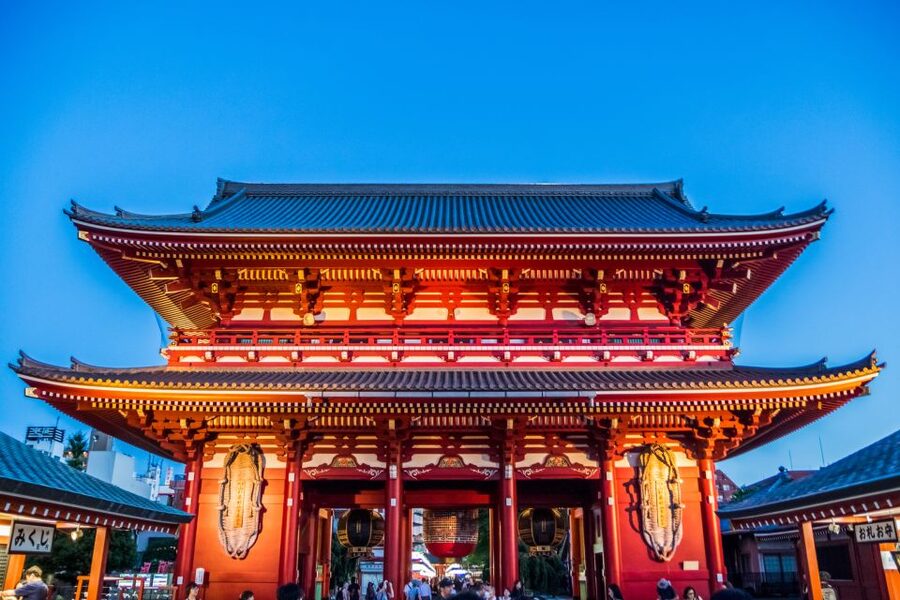
Tokyo is full of signs, but not all of them tell the story you want. The audio guide does that work. With the personal device system, you bring your own smartphone or tablet and use the audio through your device, with earphones.
The system supports 10 languages, including English and a spread of European and Asian languages. If you prefer to control volume and pacing yourself, this is the better option than relying on whatever audio is working on the bus that day.
One practical caution: data charges may apply and are your responsibility. So if you want this to feel effortless, make sure your phone plan and downloads are sorted before you start listening.
There’s also the vehicle-mounted audio guide option, but it might not be available on every bus. If you see a bus without the vehicle-mounted system, you’ll still be fine as long as you have your device setup ready.
Open-air comfort, rain rules, and how to stay sane on long rides
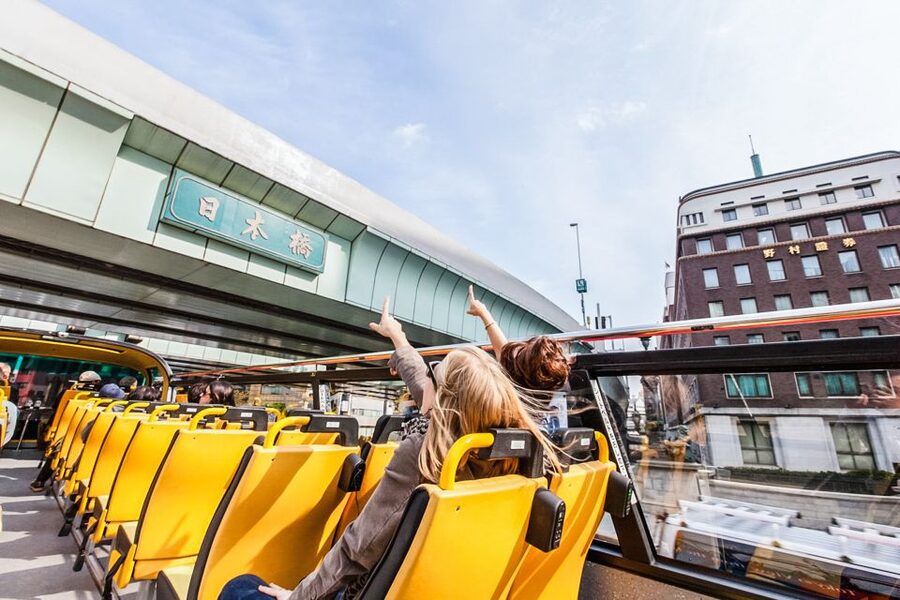
The bus is open-air, and there is no air-conditioning. That means summer heat can be brutal, and winter can feel sharp once you’re outside. Bring a light layer if you’re riding in cooler months, and plan for sun protection if you’re riding in peak daytime hours.
Rain is handled with raincoats being distributed if needed. Umbrellas are prohibited on board, so plan to use the provided poncho or bring gear that stays out of other passengers’ space. If weather is severe, like typhoons or thunderstorms, the tour may not operate.
In hot weather, I’ve seen crews handle comfort with quick cooling measures. You might find staff offering frozen towels when it gets really warm, which is a nice human touch on a day when you feel cooked.
Also, because the bus is open-top, wind gusts can be a thing. Hold on to bags and personal items, and if you’re wearing anything light, keep it secured. It sounds simple, but it makes a difference when you’re taking photos.
Value check: is $30 worth it, or should you buy train tickets?
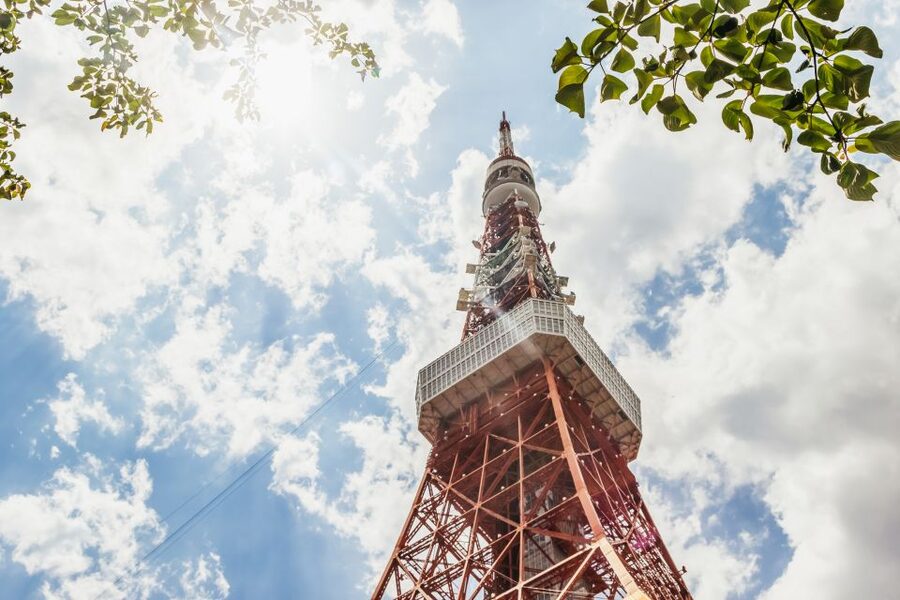
At about $30 per person for 1 to 2 days, this bus pass is not the cheapest way to get around. But it can be good value if you treat it like a structured planning tool and not just a ride.
Here’s how I judge the value:
- If you are short on time, you get a fast overview of multiple areas without figuring out routes minute by minute.
- If you want to hop around and return later, unlimited access to all routes helps you avoid “I missed my chance” regret.
- If you like skyline and city panorama views, the open-top format adds something a train window cannot.
Where it may not feel worth it is when you only want to do one small area. In that case, using trains might be smarter. Also, if buses are crowded and intervals are long, your day can slow down, and that can undercut the convenience.
My practical rule: if you want orientation and you plan to use more than one loop, this ticket earns its keep.
Should you book this hop-on hop-off bus in Tokyo?
Book it if you want a simple way to see the big Tokyo highlights, especially if it’s your first trip or you want to reduce planning stress. Route 1 is great for Skytree, Asakusa, Ueno, and Akihabara. Route 2 is strong for Tokyo Tower, Zojo-ji, and Tsukiji Ginza. Route 3 is perfect for Shinjuku and Shibuya, with access toward Harajuku and Meiji Jingu.
Skip it or reconsider if you are only going to stay in one neighborhood, or if open-air riding will be miserable for your travel dates. If you’re sensitive to heat, rain, and wind, plan your day around those conditions, and keep your expectations realistic.
If you do book, the biggest “win” is your strategy: start early when you can, use the bus for orientation first, then spend your energy walking where you actually want to linger.
FAQ
What’s included with the Tokyo hop-on hop-off bus ticket?
Your ticket includes hop-on hop-off access and an audio guide. It can be provided through a vehicle-mounted system on some buses, and it can also be accessed via a personal device audio system. A free shuttle service is included, but hotel transfers are not.
How long is the bus ticket valid?
The duration is listed as 1 to 2 days. You’ll want to check availability for the specific starting times.
Do I need to bring a smartphone and earphones for the audio guide?
If you use the bring-your-own-device audio system, yes. You should bring your own smartphone or tablet and earphones. The data charges are your responsibility.
Where do I meet the bus?
The meeting point is in front of the Mitsubishi Building. You can also board from any bus stop in Tokyo that uses the QR code included with your voucher.
Is the bus air-conditioned?
No. The bus is open-air and there is no air-conditioning.
What happens in the rain?
Raincoats are distributed if needed, but umbrellas on board are prohibited. If weather is severe, such as typhoons or thunderstorms, the tour may not operate.
Fresh options around Tokyo
- Tokyo: Nagano Snow Monkeys and Zenkoji Tour with Temples★ 4.9 · 19 reviews
- Yokohama Port: Private Customizable Tour with Transfer★ 5.0 · 19 reviews
- Explore Unique Tokyo Streets / Learn with a Pro Photographer★ 5.0 · 19 reviews
- Sushi Making with Interactive Samurai Experience at JIN-ASAKUSA★ 5.0 · 19 reviews
- DAIKOKU excursion by car DRIFT automobile encounter★ 4.5 · 19 reviews
- Official Street Go Kart Tour Akihabara 2nd★ 5.0 · 19 reviews
- Cosplay Experience with Professional Makeup and Photo Shoot!★ 5.0 · 19 reviews
- Tokyo: Name Seal & Pouch or Tote Bag Making Experience★ 4.5 · 19 reviews
Tickets, compared.
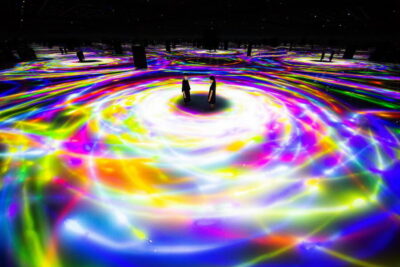
teamLab Planets TOKYO Digital Art Museum Entry Ticket
Read our review →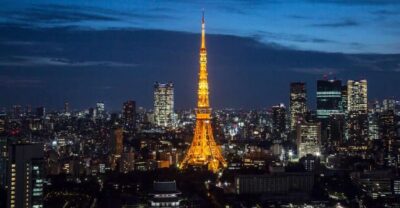
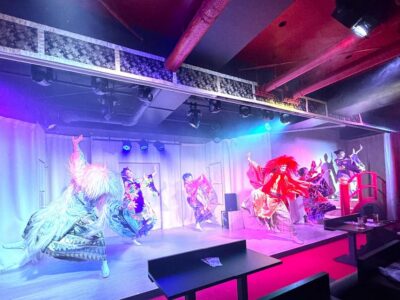
Japanese Dance Cabaret Theater Asakusa-Kaguwa Ticket
Read our review →