Reviewed · OSAKA TOURS
90 min Shared Handmade Udon Experience
Foot-kneaded udon changes how you think about noodles. This 90-minute Osaka class has you making Sanuki-style udon in a Michelin-listed restaurant setting, then eating what you make with a chef-cooked broth.
I love the hands-on method, especially learning how the dough feels when it is kneaded with your feet for that firm yet soft texture, smoother than what you buy at the store. I also like that you get a recipe for making udon at home, not just a one-off meal.
One thing to consider is that it is not recommended for anyone with a wheat allergy, and the shared format means you may be paired with other participants. Minimum participation is two people, so solo plans need a quick message first.
Key Highlights Worth Planning For
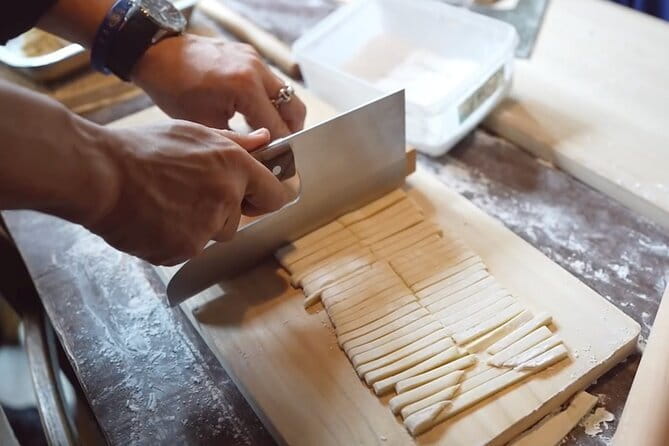
- Sanuki udon foot-kneading teaches a texture you cannot fake from plain store noodles
- Chef-cooked noodles right after class, so your work turns into dinner immediately
- Broth built from kombu, shiitake mushrooms, and katsuobushi, made with additive-free ingredients
- Microscopic details, big payoff, you get guidance plus a written recipe to repeat later
- Small, cozy restaurant feel, with hosts like Keiko and Nozomi making the room welcoming
- Hot or cold tasting, plus optional sake or beer if you want to slow down and enjoy
A Michelin-Listed Osaka Kitchen Where Udon Becomes a Skill
If you like food that is both simple and technical, this Osaka udon-making class hits the sweet spot. The experience centers on Sanuki udon, a style known for kneading dough in a way that builds a chewy, satisfying bite. Instead of leaving with a souvenir, you leave with real know-how, plus a recipe to use back home.
What makes it especially interesting is the setting. The restaurant has been listed in the Michelin guide from 2018 to 2023, and the vibe is not formal. One review described a small, cozy place with cohesive decor and a clean bathroom, the kind of environment where you can focus on learning without feeling rushed.
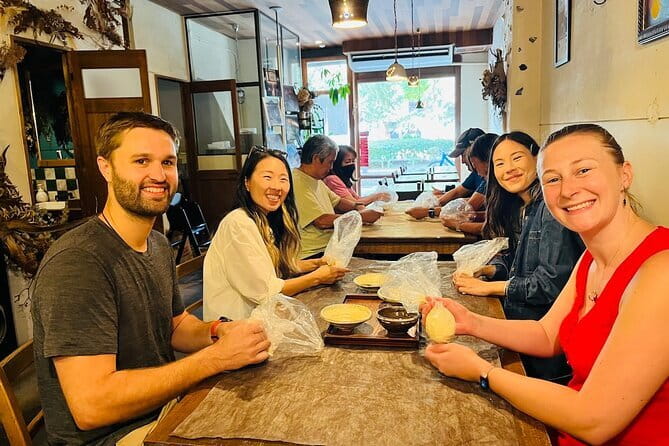
The class is also shared, and that is part of the fun. You might meet new people, and the restaurant will keep things moving since regular service continues after your time slot.
A few more Osaka days worth comparing
- Osaka Go Karting Tour with Funny Costume
★ 5.0 · 2,658 reviews - Osaka Castle: Museum and Tower Entry Ticket
★ 4.5 · 2,380 reviews - Osaka: Shinsekai Food Tour with 13-15 Dishes at 5 Eateries
★ 4.8 · 2,204 reviews
Cost Breakdown and Why It Feels Fair
At $52.85 per person for about 90 minutes, this is not a “cheap snack class,” but it also does not feel overpriced for what you actually get. Your fee covers the handmade udon lesson, a tasting of the udon you make (hot or cold), and a recipe you can recreate later.
You also get free photos taken by the instructor. That sounds minor until you realize many cooking classes do not include any documentation beyond your own phone. Here, someone is actually photographing your experience during class, which is great if you want memories without planning ahead.
Two items are extra, and it is smart to plan for that. Drinks (like sake or beer) are not included, and side dishes such as tempura or extra udon cost extra. If you want a full meal vibe, you can budget for one or two add-ons.
Your 90-Minute Timeline, Step by Step
Even without a long itinerary, the session has a clear flow. You arrive for your scheduled start time at the meeting point: UDONZIN美糸1-chōme-16-17 Shinmachi, Nishi Ward, Osaka. Then you jump into the lesson right away, because your class time is designed to fit between regular restaurant service.
Here is what you can expect during the class:
1) Warm welcome, then udon basics
The hosts explain the history and cultural context of udon, and they also set you up for the hands-on part. Reviews specifically highlight instructors like Keiko and Nozomi for being warm, inviting, and clear with instructions. That matters, because foot-kneading is not something everyone has done before.
If you are the type who likes understanding why a food tastes the way it does, you will appreciate the context. It makes the technique feel less random and more intentional.
Same corner of Japan, a different kind of day:
- Osaka Food Tour: 13 Dishes at 5 Local Eateries
★ 5.0 · 2,149 reviews - Hungry Osaka Street Food Tour:15 Tastings & 3 Drinks with a Local
★ 5.0 · 1,727 reviews - Osaka: teamLab Botanical Garden Entry Ticket
★ 4.5 · 1,710 reviews - Osaka: Tea Ceremony Experience
★ 4.9 · 1,426 reviews
2) Hands-on dough work using the Sanuki method
This is the core activity: you learn Sanuki udon making, with dough kneaded using your feet. The goal is that signature texture, firm and soft, with a smoother, better chew than typical store-bought udon.
Wear clothes you do not mind getting messy. This is not optional. Once you know the method, you might feel silly at first, then instantly more confident as your feet learn the rhythm.
Practical note for your comfort: show up in something you can move in, and plan on a quick reset after.
3) Chef cooks your noodles and serves them with special broth
You do the dough work, but the chef cooks the noodles for you and brings out the finished bowl. The broth is described as additive-free and made from kombu, shiitake mushrooms, and katsuobushi (bonito stock).
This is where the class pays off. Kneading teaches technique, but tasting shows you the result. Having the chef cook also removes the biggest variables you might struggle with at home, like timing and broth consistency.
4) Eat right away, hot or cold tasting
You will taste your udon immediately after the hands-on portion, with options for hot or cold. That makes the experience flexible. If you are visiting in warmer weather, cold udon can feel lighter. If you want cozy comfort, hot udon is the obvious choice.
And yes, you will be able to enjoy the udon you helped create, in the same session. That immediate payoff is a big reason this class tends to stick in people’s memory.
The Broth Lesson You Actually Remember
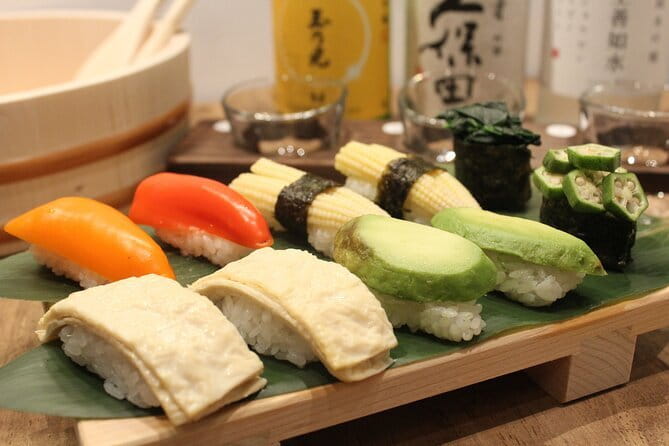
Lots of cooking classes teach you a single technique. This one also gives you a clear idea of what drives flavor.
Your noodles arrive in special broth made from all-natural, additive-free ingredients using kombu, shiitake, and katsuobushi. If you are the kind of eater who likes to understand what you are tasting, this is useful. Those three ingredients work together in a way that tastes deep but not harsh.
Here is the practical value: once you have tasted broth built on that trio, your home cooking gets easier to troubleshoot. If your at-home version tastes flat, you can think about whether your umami base is missing something. If it tastes uneven, you can examine steeping and balance.
You might not have to replicate restaurant-level broth on your first try. But having a recipe plus the taste memory makes repetition far more likely.
Drinks, Side Dishes, and How to Make It a Real Meal

You can make udon while sipping Japanese sake or beer if you want. Drinks are not included in the class fee, so you are choosing to add that atmosphere at your own pace.
If you want something extra beyond the udon itself, you can order side dishes like tempura or extra udon. Those are not included, so do not expect them to arrive automatically.
My advice: treat this class as a meal plus a lesson. If you add a drink, pick one that fits your mood, then keep your energy for the foot-kneading part. If you add tempura, it can round things out when you want crunch after chewy noodles.
How the Recipe and Photos Turn This Into a Souvenir That Lasts
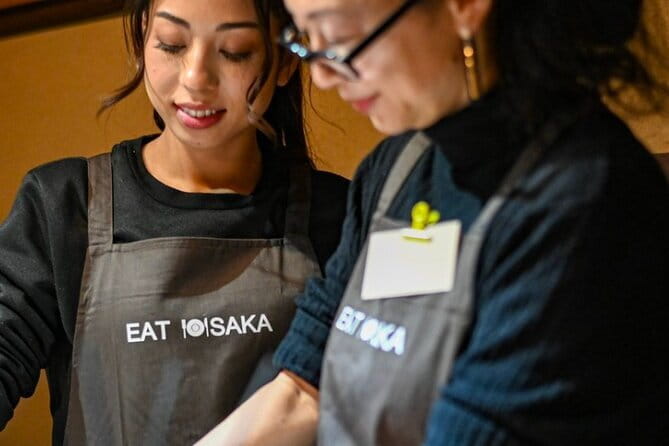
The most underrated part is what you take home. You get a recipe for making udon at home, which means the class can stay useful after your Osaka days are over.
This matters because cooking classes often fail at the same thing: you do the steps once, then forget the details when you get back to your kitchen. Having a written recipe lowers that risk. Even if you tweak it later, you have a starting point that is faithful to what you learned.
Then there are the photos. The instructor takes photos during the class and provides free photos. That is perfect for groups, families, and anyone who wants proof they actually did the thing and not just watched it happen.
Who This Is Best For in Osaka
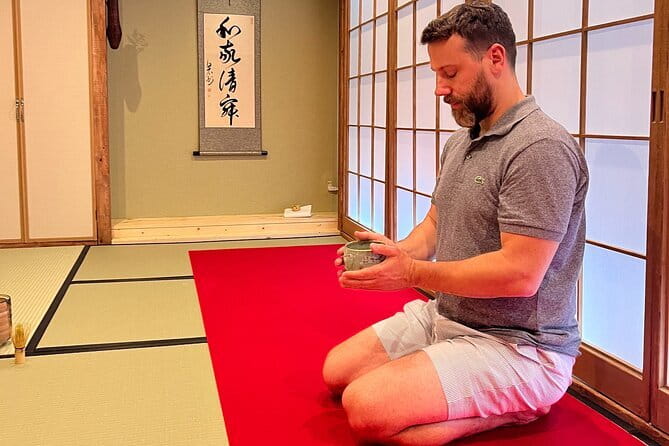
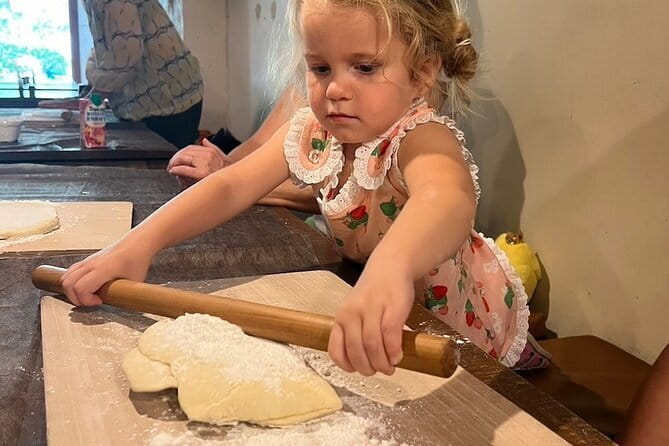
This is designed for beginners. You do not need cooking experience, and it is fun for kids and adults. One review specifically mentioned a family activity with kids ages 10 and 4, with the instructor creating a welcoming experience.
Kids can participate if they are age 2 and above. The fee for children is ¥5000, which is worth keeping in mind if you are traveling with little ones and want to do something hands-on but not overly long.
For groups, it fits well because the atmosphere is small and the instruction is personal enough to keep you moving. One review described a class of 11 friends across families with kids, and the hosts guided them through the process in a cozy restaurant environment.
Two practical notes for planning:
- The maximum group size is 20, so it stays intimate.
- Vegetarian option is available if you let the team know your dietary restrictions in advance.
Practical Tips So You Enjoy the Mess (Without Stress)
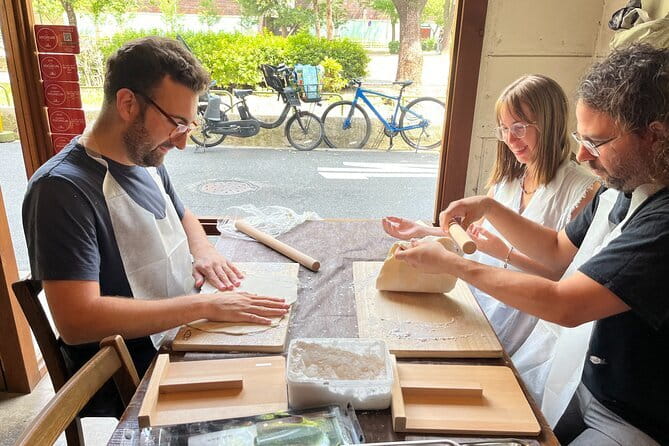
This class is hands-on, so small choices make a big difference.
Wear clothes you do not mind getting messy. You will be working with dough, and that means flour and stickiness are part of the deal. Avoid anything you would hate to wash right away.
Arrive on time. The restaurant resumes regular customers after your class, so delays can affect how smoothly everything runs. That is also how you get the most out of the instruction, without feeling like you are catching up.
If you have dietary needs, communicate early. Vegetarian is welcome, and the broth and sides can matter. Also, if you have a wheat allergy, this is not recommended.
Should You Book This Osaka Udon-Making Class?
I would book it if you want more than a tasting. This class teaches an actual method, Sanuki udon foot-kneading, then connects it to real results through the chef-cooked broth and immediate hot or cold tasting. The restaurant’s Michelin guide history adds confidence, and the free recipe plus instructor photos make the experience more lasting than a quick food stop.
Skip it if wheat allergy is a concern, or if you dislike hands-on activities that can get messy. Also, if you are traveling solo, plan ahead since the experience has a minimum of two participants, and you may need to contact them to find a suitable session.
If you are in Osaka and want an authentic, local-feeling food activity with real technique and a good chance of laughing a little while you knead dough, this one is a strong yes.
FAQ
How long is the udon-making experience?
It lasts about 1 hour 30 minutes.
What is included in the price?
The price includes the handmade udon lesson, udon tasting (hot or cold), a recipe for making udon at home, free photos taken by the instructor, and local taxes.
What is not included?
Alcoholic beverages are not included. Side dishes like tempura or extra udon can be ordered but are not included in the fee.
Is vegetarian food available?
Yes, a vegetarian option is available. Let the team know in advance about your dietary restrictions.
Can I join if I have a wheat allergy?
This activity is not recommended for travelers with a wheat allergy.
Can I attend alone?
Classes require a minimum of two participants. If you wish to join alone, contact in advance to see if there is a suitable session.
What should I wear?
Wear clothes you do not mind getting messy.
Where does the class start?
The meeting point is UDONZIN美糸1-chōme-16-17 Shinmachi, Nishi Ward, Osaka, 550-0013, Japan. The tour ends back at the meeting point.
Fresh options around Osaka
- Osaka Winery Tour with Wine Tasting & Vineyard Walk★ 4.9 · 12 reviews
- Osaka: Early Morning Osaka Castle Guided Tour, Avoid Crowds★ 4.9 · 12 reviews
- Kyoto Day Trip from Osaka Port – Private Shore Excursion★ 5.0 · 13 reviews
- Osaka Private Pop Culture Tour: Historic Tenma to Dotonbori★ 4.5 · 13 reviews
- Osaka Castle Admission Ticket★ 4.0 · 13 reviews
- Hidden Osaka Foodie Tour: Nishinari Backstreets & Local Dining★ 5.0 · 13 reviews
- Discover Real Osaka: A Cultural Walk with Food & Drink★ 5.0 · 13 reviews
- Nara private tour (Shore excursion available from Osaka or Kobe port)★ 5.0 · 13 reviews
Osaka Tours, compared.


Shinsekai Food Tour with 13-15 Dishes at 5 Eateries
Read our review →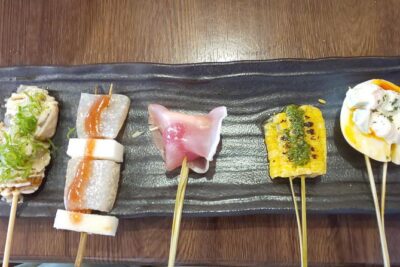
Osaka Food Tour: 13 Dishes at 5 Local Eateries
Read our review →
Hungry Osaka Street Food Tour:15 Tastings & 3 Drinks with a Local
Read our review →