
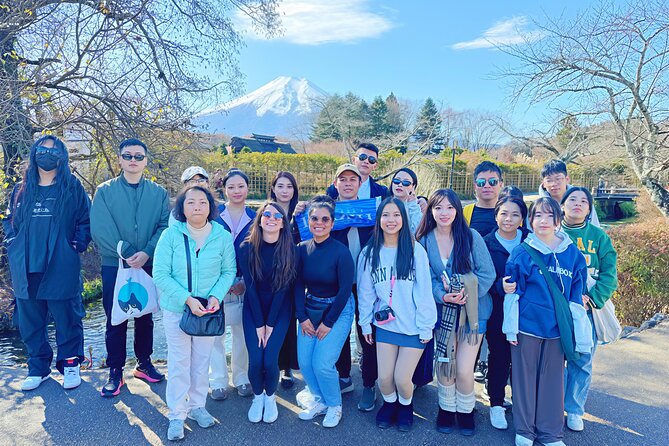
Reviewed · MT FUJI TOURS
Tokyo: Instagram-Worthy Mt Fuji & Lake Kawaguchiko Day Trip
Fuji photography is the whole point here. This Tokyo day trip strings together photo-first stops around Mount Fuji, with a low-stress pickup from Tokyo Station that helps you skip the planning grind. The main tradeoff is pace: it is a 10-hour day with limited time at each viewpoint, so if you want long, slow cultural explanations, you may feel it is more “shoot and move” than classroom time.
I love how the itinerary mixes the big iconic views with smaller, very specific scene makers, like Arakurayama Sengen Park’s famous pagoda angle and the Lawson Kawaguchiko Station Fuji photo spot. You also get seasonal flexibility, including swaps for cherry blossom traffic limits and autumn maples, so the day matches your travel dates instead of forcing one fixed plan.
Possible drawback to keep in mind: your experience can hinge on guide style and the weather. Some people get lots of explanation and clear photo guidance, while other days can feel more rushed, and Mount Fuji is famously shy when clouds roll in.
Key Highlights That Make This Tour Worth Your Time
- Tokyo Station pickup makes it easier to start strong and not lose time wrangling trains
- A photography-focused route hits multiple Mount Fuji viewpoints in one day, including the pagoda scene
- Oshino Hakkai’s eight springs adds a calmer, reflective break from the roadside photo rush
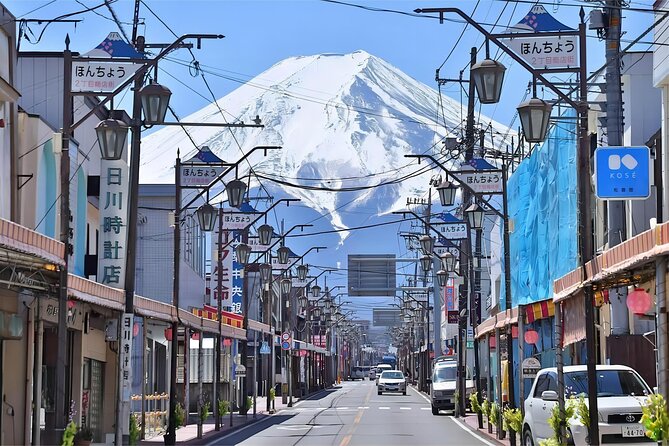
- Lawson Kawaguchiko Station gives you a very famous “convenience store with Fuji” shot setup
- Seasonal swaps: Hikawa Clock Shop can be skipped in cherry blossom peak traffic, and Oishi Park can be replaced by Maple Corridor in late October
- Small group size (max 21) helps the day feel organized, even when the timetable is tight
A Fuji Day Trip That Starts at Tokyo Station
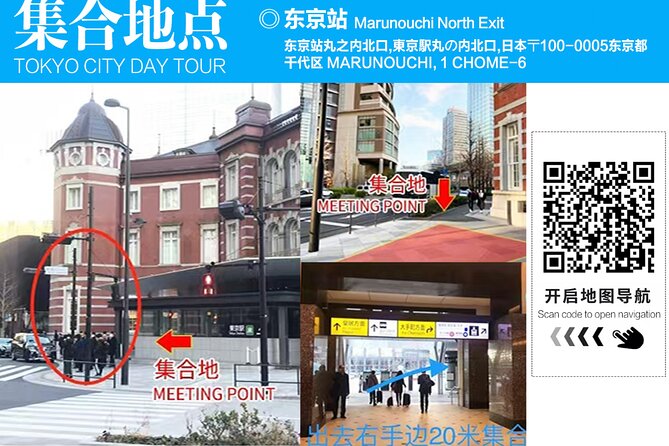
If you want Mount Fuji without turning your day into a logistics puzzle, this is the right format. The tour starts at Tokyo Station (Marunouchi area) at 8:00 am, which is a huge win for first-time visitors. From there, you ride to the Fuji region with a driver and guide, and you are not stuck translating bus transfers or figuring out which stop is closest to the best view.
The day runs about 10 hours total, including travel time, and it ends back at the meeting point. That “round-trip” structure matters. It keeps you from spending your last energy hunting for your next ride, especially after a long, camera-heavy day.
More Mt Fuji tours from Tokyo:
- Mt Fuji and Hakone 1-Day Bus Tour Return by Bullet Train
★ 5.0 · 26,383 reviews - Mt Fuji & Hakone Cruise, Drum Show Bullet Train 1 Day from Tokyo
★ 4.0 · 7,413 reviews - Tokyo Mt Fuji 5th St & Hakone Cruise Bus Tour w/Bullet Train
★ 4.4 · 5,024 reviews
Price and Value: What $161 Covers (and What It Does Not)
At $161 for a day trip, you are paying for a few concrete things:
- Transportation and parking (included)
- A driver and guide service (included)
- A schedule that bundles multiple Mount Fuji areas efficiently
What you are not automatically paying for are admission tickets. Even when some stops are free or have a listed free duration, you should still assume you may encounter small fees along the way. In other words, this price is more about time-savings and access, not “everything is pre-paid.”
Is it good value? Usually yes, because the alternative is cobbling together trains, buses, and timed entries across the Fuji region. If your goal is to see several hallmark spots in one day, this format saves real effort. If your goal is museum-level depth at each stop, you might find the price feels more “transport with photo stops” than “full cultural immersion.”
Stop 1: Arakurayama Sengen Park and the Chureito Pagoda Photo Angle
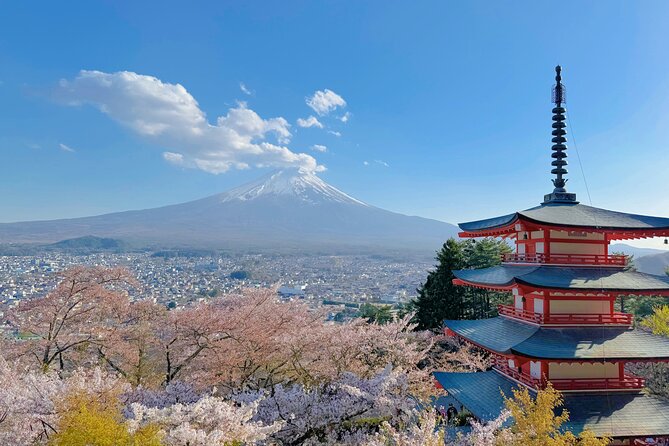
This is where the day often becomes real. Arakurayama Sengen Park is famous for views of Mount Fuji with the Chureito Pagoda in the frame. It is the kind of scene that makes people zoom in on their camera settings without even thinking about it.
Expect a bit of walking. One review-style detail that matters: some guests mentioned a fairly steep stair climb, even around 400 steps to reach the shrine area. You do not need to be an athlete, but you should wear shoes you can trust on stairs. If you have knee issues, go slow and take breaks.
Timing helps here. During mid-April (cherry blossom season) and November (autumn foliage), the park really shines. Even outside peak seasons, the viewpoint still works because the composition is the star. This stop is also where the group “sets the tone” for the entire day, since many other shots later in the region feel like variations on the same theme: Fuji with a story in the foreground.
What to watch for: if the weather is hazy or Fuji is partially blocked, you might still get partial views. Multiple angles at the park can help you land something satisfying.
Stop 2: Why the Hikawa Clock Shop Can Be Skipped in Peak Cherry Blossom Traffic
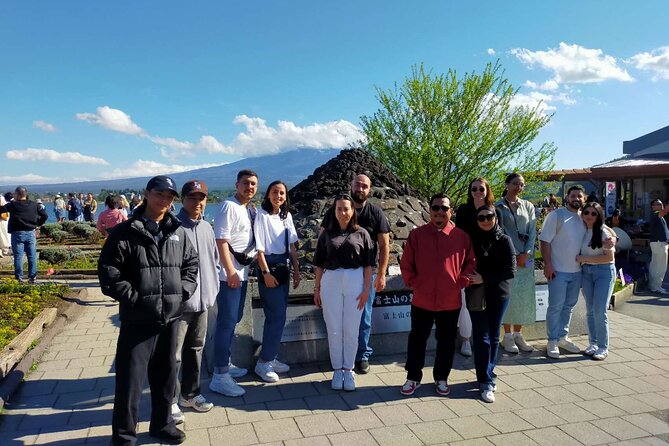
Here is a practical detail I really like about this tour: it actively adjusts the itinerary. In cherry blossom season, April 1 to April 18, the tour can skip Hikawa Clock Shop to avoid congestion and use that time where the views matter most.
So what does that mean for you? You lose one quick stop, usually about 20 minutes, but you gain more time at Arakurayama Sengen Park. In a day where Mount Fuji conditions and crowd levels can change fast, that swap is smart. It is also a reminder that the Fuji region can get heavily traffic-affected during peak periods, and the schedule is built to respond instead of forcing a “perfect in theory” route.
If you are traveling in early April, this is the kind of decision you want your guide to make. It reduces the chance that you spend your only Fuji-time stuck in the bus.
A few more Tokyo days worth comparing
- 1-Day Tokyo Bus Tour
★ 5.0 · 14,250 reviews - Tokyo: TOKYO SKYTREE® Admission ticket
★ 4.5 · 11,192 reviews - Tokyo: teamLab Planets TOKYO Digital Art Museum Entry Ticket
★ 4.6 · 9,779 reviews - Tokyo: Sumo Show Experience with Chicken Hot Pot and a Photo
★ 4.8 · 6,678 reviews
Stop 3: Oshino Hakkai’s Eight Springs and the Calm Break in the Day
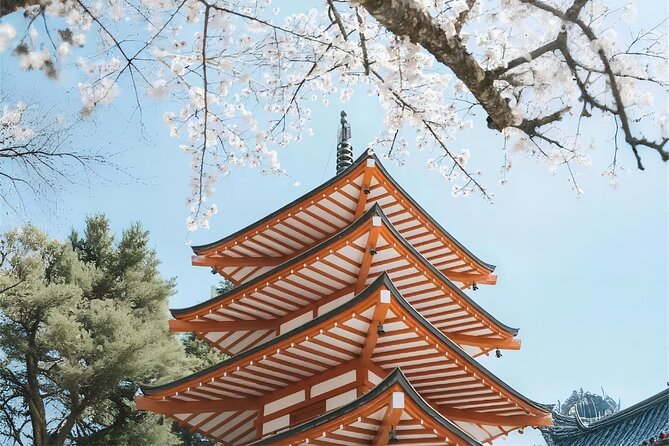
After the park, the pacing shifts. Oshino Hakkai is a natural monument made of eight clear springs, formed by melting snow from Mount Fuji. This is not about one Instagram frame. It is about the quiet, clear water and the sense that the landscape connects back to the mountain in a very direct way.
You usually get about 1 hour 20 minutes here, and the stop is listed as free. That makes it a great “value add” portion of the itinerary. It also balances the day, because you can cool down mentally after the bus, after the stairs, and after the rapid photo rounds.
What I like about Oshino Hakkai as a tour stop is that it gives you variety. You move from pagoda-and-Fuji composition to something more natural and reflective. When clouds hide the mountain, the springs can still feel beautiful because the water does not need Fuji to do its job.
Practical note: wear footwear you can handle on wet or uneven ground. People slow down here to watch the water and take pictures, so it is easy to spend time standing in place.
Stop 4: Lawson Kawaguchiko Station, the Convenience Store Fuji Photo Spot
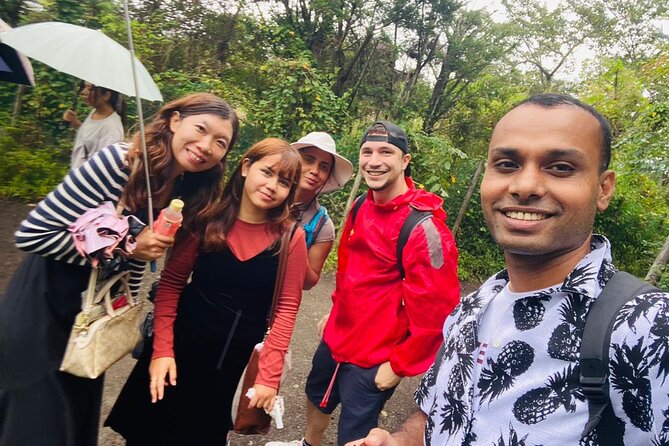
This is one of those wonderfully Japan moments: a place you would not think of for a postcard, yet it is well known for Mount Fuji views. The tour stops at LAWSON Kawaguchiko Station, right near the station area.
You get around 20 minutes. That sounds short, but it is enough time to walk a few angles, frame the shot, and move with the group before the bus timing tightens again.
Why this stop is worth it: it is a different style of photo. Instead of a pagoda silhouette or a lake shoreline, you get a more everyday scene that still includes Fuji. It also scratches the “we are in Japan right now” itch, because convenience stores here are not just practical, they are cultural.
Tip for your camera: plan before you arrive. Decide where you want Fuji to land in the frame, then use your phone or camera settings quickly so you are not still fiddling when the line of sight changes.
Stop 5: Lake Kawaguchiko and the Ohashi Bridge Finish
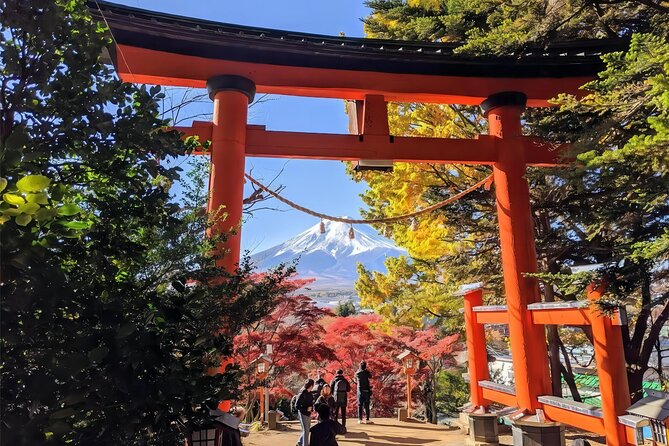
The tour moves toward Lake Kawaguchi and includes Lake Kawaguchi Ohashi Bridge. You typically get about 50 minutes at this stage, and this segment is listed as free.
Depending on the season, the “real finish” area changes. In most of the year, the tour finishes at Oishi Park, known for flower fields. That matters for anyone who wants color in the background, not just a gray day with a distant mountain.
If you are hoping for photos that feel airy and bright, Oishi Park is often the better match. You get variety in flower colors such as lavender, begonia, cosmos, and Japanese blood grass, which can turn a single Fuji day into a whole set of different images.
Also, the lake area is where you can feel the mood shift. It is less stair-climb energy and more open-space viewing. If you need to sit for a moment, this is usually where you can.
Stop 6: Maple Corridor Instead of Oishi Park in Late October to Mid-November
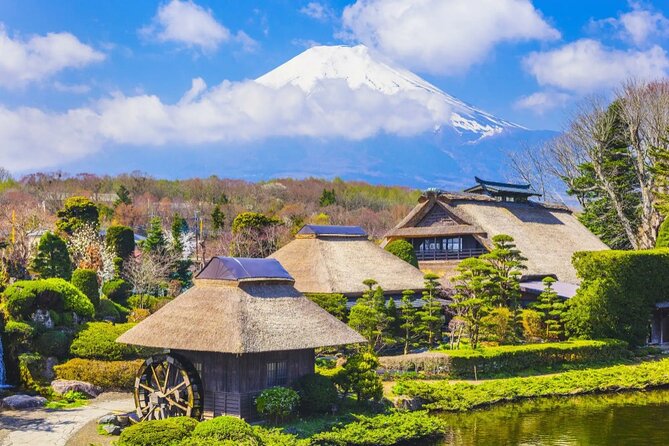
If you travel from roughly October 30 to November 20, expect a seasonal swap. In that window, the tour visits the Maple Corridor instead of Oishi Park to showcase autumn color.
During this period, you get the chance to see snow-capped Mount Fuji paired with fiery red maple leaves. That combination is the main draw. The tour also notes a seasonal period from around October 20 to November 20 for this autumn option.
Why I think this is a good design: it keeps the “best of the season” idea intact. Oishi Park’s flowers might not be as dramatic in deep fall, while the Maple Corridor can look incredible for color and contrast. If you only have one chance to see Fuji during autumn, this substitution makes your day more seasonal, not less.
Practical note: autumn can also mean cooler air and changing light. Bring a layer for the bridge and corridor sections so you do not end up rushing because you are cold.
Timing, Weather, and Getting the Fuji Shot Without Stress
Mount Fuji has a mind of its own. That is not a reason to cancel your trip, it is a reason to plan smart. This tour helps because it includes multiple viewpoints, so you are not relying on one perfect moment from one location.
You should still expect “real life” conditions. Clouds can roll in and out. In summer, you may not always get the same snow-capped look. The big lesson is to treat the day as a collection of tries, not a guarantee.
The other timing reality is that you are on a tight schedule. You will be moving. That is why the review feedback pattern makes sense: people who love the photo rush tend to rate it highly. People who wanted more narrative history or slower explanations sometimes feel it is more like transportation with short photo stops.
My advice: decide what you want most, and show up for that.
- If you want the best angles and clean compositions, you will love the structure.
- If you want lots of deep cultural talk, ask questions during stops and be ready for short answers.
Also, your comfort matters. A day that includes stairs and lake walks is easier if you pack for it. Wear grippy shoes and consider bringing water and a small snack. The schedule even includes time at a well-known convenience store spot, which is handy when you get hungry between viewpoints.
Group Size, Guide Style, and What to Expect From the Human Part
The group size tops out at 21 travelers, which usually makes it easier to keep track of everyone and still move efficiently between locations. It is big enough to feel social, small enough that you are not lost in a crowd.
Guide experience seems to matter a lot here. Reviews highlighted guides named Hikari and Sakura for humor, patience, and clear photo guidance. Another guide name that came up was Bruce, and one negative note pointed to a quicker, less explanatory approach and a pace that felt rushed.
Here is how to use that information. Do not assume your day will be exactly like someone else’s. Instead, treat the guide as a resource. If you want more context, ask directly at the right time, before the group starts moving. Guides often answer well when questions are specific, like which angle is best right now, or what to look for at Oshino Hakkai’s springs.
Who Should Book This Tour, and Who Might Prefer a Different Plan
This tour is best for people who:
- Want a one-day Mount Fuji hit list without planning routes
- Care about getting photos from several proven viewpoints
- Prefer a guided schedule over figuring out transport on your own
- Travel with limited time in Tokyo but want out-of-town scenery
It might feel wrong for people who:
- Want long stays at one site instead of multiple short ones
- Expect extensive, slow museum-style history explanations
- Need a very quiet pace with lots of downtime between stops
There is also a note that the tour is not recommended for travelers requiring constant mental health supervision. If that applies to you, you will likely feel better choosing a private or fully flexible option where pacing can be adjusted more easily.
Should You Book This Tokyo to Mount Fuji Photography Day Trip?
Book it if you want the most efficient path to Mount Fuji scenery, with a guide doing the driving and timing, and a route that hits the big iconic frames plus a couple of surprising photo stops. The Tokyo Station pickup, the photography-first viewpoint selection, and the seasonal adjustments are the reasons this works.
Skip it or consider another style if your ideal day is relaxed, story-heavy, and unhurried. This is a schedule-focused day. You will take photos, you will walk, you will move on.
If you are flexible and camera-minded, you will likely have a satisfying day even when Fuji is partially hidden. And when Fuji does show up clearly, the park pagoda and lake views can make the day feel like it flew by.
FAQ
What time does the tour start, and where does it end?
The tour starts at 8:00 am and meets at Tokyo Station (1 Chome-9 Marunouchi). It ends back at the same meeting point.
How long is the day trip?
The total duration is about 10 hours, and that includes travel time.
Is the ticket mobile?
Yes, this experience uses a mobile ticket.
What are the main stops during the day?
The day includes Arakurayama Sengen Park, Oshino Hakkai, LAWSON Kawaguchiko Station, and Lake Kawaguchi Ohashi Bridge, with additional scenery depending on season.
Is admission included?
Admission tickets are not listed as included overall. Some stops are listed as free or with specific ticket notes, so you may still need to pay small fees depending on what you encounter.
Does the tour include dinner?
No. Dinner is not included.
What changes happen during cherry blossom season?
From about April 1 to April 18, the tour may skip Hikawa Clock Shop due to traffic regulations to maximize time at Arakurayama Sengen Park.
What happens in late October to November?
From about October 30 to November 20, the tour visits the Maple Corridor instead of Oishi Park to focus on autumn colors.
How big is the group?
The tour has a maximum of 21 travelers.
Fresh options around Tokyo
- Tokyo: Nikko Kegon Falls Lake Chuzenji Toshogu Temple & More★ 4.9 · 12 reviews
- Tokyo: Samurai History Walking Tour★ 5.0 · 12 reviews
- Harajuku: Kawaii Fashion and Pop-Culture Tour★ 4.7 · 12 reviews
- Tokyo: Mt. Fuji & Lake Kawaguchi Instagram Full Day Trip★ 4.1 · 12 reviews
- Shibuya Tokyo: Modern Kintsugi Workshop in Shibuya★ 5.0 · 12 reviews
- Tokyo: GTR Guided Daikoku Experience at Night★ 5.0 · 12 reviews
- Tokyo: Daikoku JDM Car Culture Tour★ 4.6 · 12 reviews
- Mt Fuji Private Day Trip from Tokyo with English speaking driver★ 5.0 · 13 reviews
Mt Fuji Tours, compared.
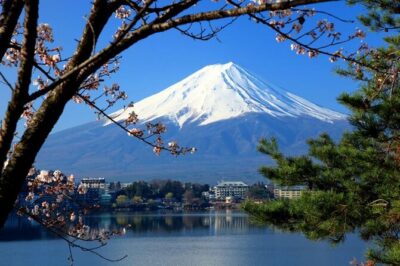
Mt Fuji and Hakone 1-Day Bus Tour Return by Bullet Train
Read our review →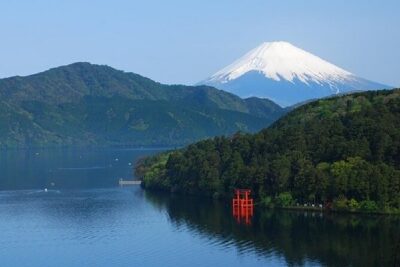
Mt Fuji & Hakone Cruise, Drum Show Bullet Train 1 Day from Tokyo
Read our review →
Tokyo Mt Fuji 5th St & Hakone Cruise Bus Tour w/Bullet Train
Read our review →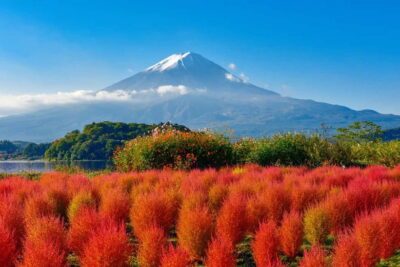
Mt. Fuji Tour, Hakone Ropeway, Owakudani, Lake Ashi
Read our review →
Mt.Fuji,Kawaguchiko Oishi Park,Arakurayama Sengen Park
Read our review →
Mt. Fuji 5th Station & Hakone Cruise 1-Day Bus Tour
Read our review →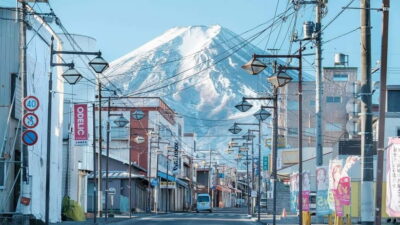
Mt Fuji Top 5 Spots Day Tour: Arakurayama Park,Oshino Hakkai
Read our review →Browse the lists this tour appears in