
Reviewed · CITY TOURS
Tokyo City Attractive One Day Tour
Tokyo feels big, this tour stitches it together. I like two things right away: the private guide feel and the round-trip hotel transfers that keep you from burning time on trains. The possible drawback is simple: Skytree and Tokyo Tower entry fees are not included, and crowd timing can affect how smooth the day feels.
This is built for a one-day hit of Tokyo, with an approximately 9-hour route planned around major cultural and modern landmarks. You can customize the order since it’s private, and you’ll ride in an air-conditioned vehicle while your guide handles routing between neighborhoods.
You’ll move from old-school temple streets to big-city icons, then end with youth culture. Expect stops like Sensoji in Asakusa, Skytree and Tokyo Tower viewpoints, Tsukiji Outer Market food street energy, Shinjuku Gyoen’s calm, Meiji Jingu’s forest quiet, and the Shibuya and Harajuku area that people go to for neon chaos and fashion-watching.
Key Points Before You Go
- Private group up to 5 so you can actually ask questions and adjust the day
- Hotel pickup and drop-off mean less station-hunting, more sightseeing time
- Most stops are free to enter, which helps your budget stay sane
- A focused mix of Tokyo styles: temple traditions, food markets, gardens, shrines, and modern towers
- Air-conditioned transport makes cross-town days comfortable
- Skytree and Tokyo Tower cost extra, so plan money for entrances early
Price and Logistics: What You’re Really Paying For
At $500 per group (up to 5 people), this tour can work out well if you’re traveling as a small group. The value isn’t just the sightseeing list. It’s the combination of private pacing plus round-trip hotel transfers plus an air-conditioned vehicle that handles the in-between travel.
If you’re going solo or as a couple, it can feel pricier, because the price is per group. But if you’re tired of figuring out which station is closest and how to stitch five neighborhoods into one day, the private transport and pickup can feel like the real bargain.
Two more budget notes to keep you comfortable:
- Lunch and dinner are not included.
- Skytree and Tokyo Tower entrance fees are not included (listed as $12 USD for Skytree and $7 USD for Tokyo Tower). Everything else on the route is marked free entry in the plan.
Also, the tour uses a mobile ticket, and it runs about 9 hours. In real life, that kind of time is enough to see a lot, but it’s still tight if you add extra stops on your own.
A few more Tokyo days worth comparing
- Mt Fuji and Hakone 1-Day Bus Tour Return by Bullet Train
★ 5.0 · 26,383 reviews - 1-Day Tokyo Bus Tour
★ 5.0 · 14,250 reviews - Tokyo: TOKYO SKYTREE® Admission ticket
★ 4.5 · 11,192 reviews
Where You Start: Tokyo Station Hotel and a Smooth Kickoff
The meeting point is the Tokyo Station Hotel in Marunouchi, and the tour ends back there. That matters more than it sounds, because Tokyo can swallow time. Starting near a major hub means your guide can route efficiently, and you are less likely to lose the first hour to train confusion.
On the ride day, you’ll have your comfort layer too: an air-conditioned vehicle. Even in seasons when Tokyo can get hot or steamy, this kind of transport makes the day feel like one continuous outing, not a series of sprints.
Stop 1: Sensoji in Asakusa, Old Tokyo With a Shopping Street
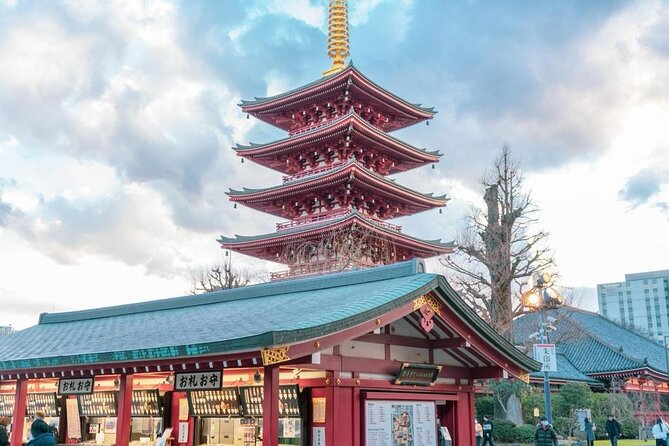
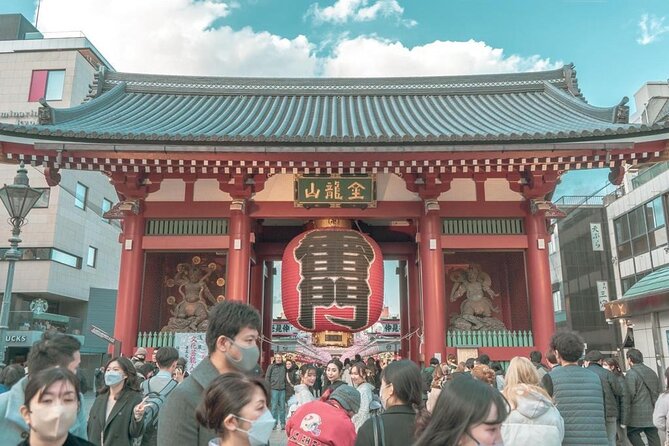
You kick things off at Sensoji (Asakusa Kannon Temple), one of Tokyo’s most popular and colorful temples. The temple is tied to a legend from 628, when brothers fished a statue of Kannon from the Sumida River, and it kept returning to them. A temple was built nearby, and Sensoji was completed in 645, which makes it Tokyo’s oldest temple in the plan’s wording.
What makes this stop work on a short schedule is the blend:
- The temple grounds give you the religious and historical anchor.
- The shopping street leading up to it, Nakamise, adds texture fast. It runs more than 200 meters from the outer gate toward the Hozomon.
If you want souvenirs, snacks, or just a classic “Tokyo street at temple time” vibe, this is a strong first stop. The main consideration is crowd flow. Sensoji is popular, so if you hate shoulder-to-shoulder walking, you’ll want your timing to be flexible and follow your guide’s pace.
Stop 2: Tokyo Skytree and Solamachi, Big Views Plus Modern Fun
Next is Tokyo Skytree, a broadcast tower that’s listed as the world’s highest free-standing broadcast tower at 634 meters. It has two observation decks at 350 meters and 450 meters.
Even if you only care about the views, this area is more than just the tower. Skytree sits within Skytree Town, including Solamachi, a shopping and food complex with hundreds of options in the plan. There are also specific features mentioned that can help you tailor this stop:
- A craft-focused retail area called Sumida Machidokoro
- An exhibition space for robot tech at Chiba Institute of Technology
- Sumida Aquarium with a penguin colony
- The Postal Museum
Two practical things to know:
- Skytree entrance is not included, so you’ll need to budget the $12 USD fee.
- The route may involve lines. One piece of booking feedback specifically said Skytree lines can be long and that it helps to choose an advanced time slot online if that option is available.
For value, this stop makes sense because it combines a skyline icon with a whole neighborhood of things to do without changing location.
Same corner of Japan, a different kind of day:
- Tokyo: teamLab Planets TOKYO Digital Art Museum Entry Ticket
★ 4.6 · 9,779 reviews - Mt Fuji & Hakone Cruise, Drum Show Bullet Train 1 Day from Tokyo
★ 4.0 · 7,413 reviews - Tokyo: Sumo Show Experience with Chicken Hot Pot and a Photo
★ 4.8 · 6,678 reviews - Tokyo: Shinjuku Food Tour (13 Dishes at 4 Local Eateries)
★ 5.0 · 6,603 reviews
Stop 3: Tokyo Tower, the Classic Symbol Still in Use
After Skytree, you head to Tokyo Tower, standing 333 meters tall. It’s described as the world’s tallest self-supported steel tower and also noted as 3 meters taller than its Eiffel Tower model. It’s presented in the plan as a post-war symbol of Japan’s rebound as a major economic power, and it was Japan’s tallest structure from 1958 until Skytree overtook it in 2012.
Here’s why Tokyo Tower still earns its place on a one-day route:
- It’s iconic in a different way than Skytree. Skytree feels futuristic and massive; Tokyo Tower feels like a classic landmark.
- It’s not just a view. It also works as a broadcast antenna, which adds a modern function to the postcard image.
Like Skytree, Tokyo Tower entrance is not included (listed as $7 USD). If the lines at Skytree stretched your day, this is where your pacing and ticket timing matter most. Your best move is to treat entrances as your optional “upgrade” part of the day, not something you automatically do at the exact moment you arrive.
Stop 4: Tsukiji Outer Market, Food Street Energy Without the Wholesale Headache
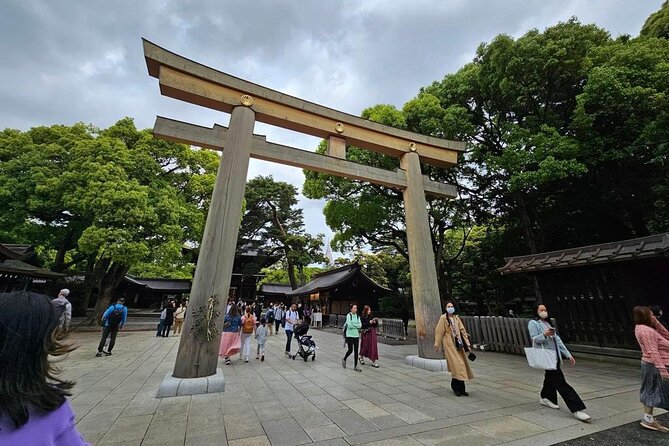
Then it’s time for Tsukiji Fish Market, Outer Market, described as Japan’s “Food Town.” This stop is great if you want Tokyo flavor in a walkable area, with tons happening at street level.
The key context: Tsukiji originally catered more to professionals. That’s why many wholesale items used to be too big for small households. In the Outer Market now, some shops have shifted toward visitor-friendly retail, including smaller ready-to-eat meals and smaller portions.
For your experience, that translates into choices:
- You can do quick bites instead of committing to a full meal.
- You can sample multiple things instead of waiting for one big plate.
This is a good stop for first-time visitors because it gives you food culture fast. The main drawback is sensory intensity. It can be busy, and the smell and noise mix can feel intense if you’re sensitive. If you want a calmer version, move with your guide’s timing and focus on a shortlist of what you want to try.
Stop 5: Shinjuku Gyoen National Garden, a Calm Reset in the Middle of the City
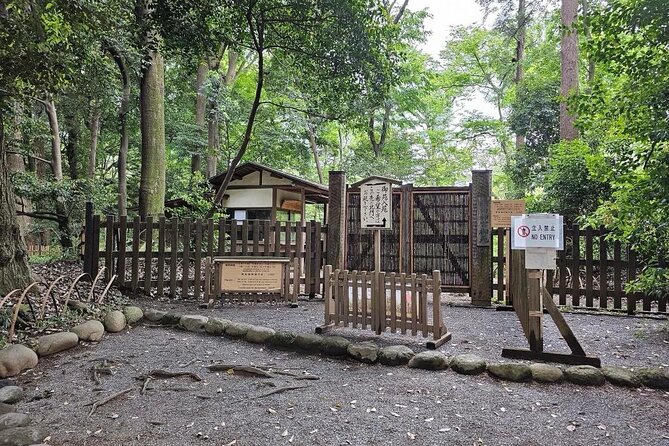
Next comes the break: Shinjuku Gyoen National Garden, one of Tokyo’s largest and most popular parks. It’s located within walking distance of Shinjuku Station, which makes it surprisingly easy to reach in a tight itinerary.
What you’ll get here is a change of tempo:
- Spacious lawns
- Meandering walking paths
- Tranquil scenery that gives your brain a breather after the city’s noise
If you’re going in spring, the plan specifically calls out cherry blossom season as a peak time. Even if you’re not visiting then, this garden stop is valuable because it prevents the day from becoming pure concrete sightseeing.
The one consideration is weather. Parks are great until you hit heavy rain or extreme heat. If the forecast looks messy, your guide will probably adjust pacing, but it’s still worth keeping expectations flexible.
Stop 6: Meiji Jingu Shrine, Forest Quiet and Modern Japan’s Roots
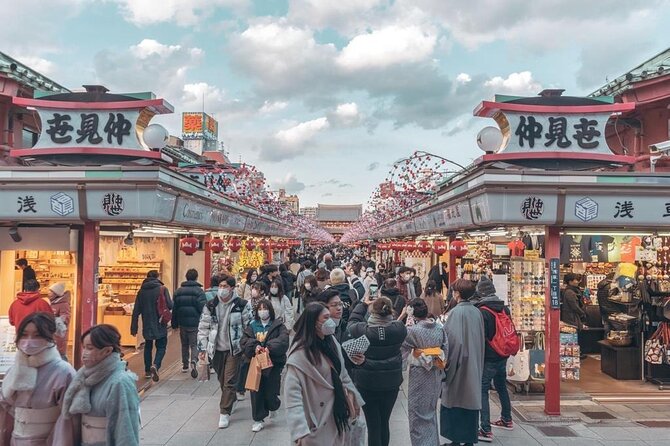
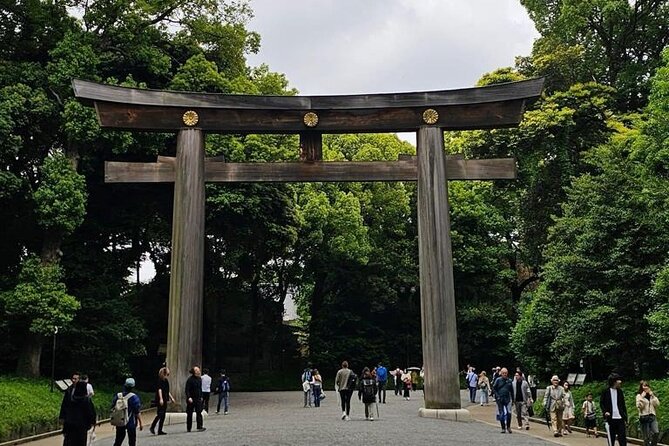
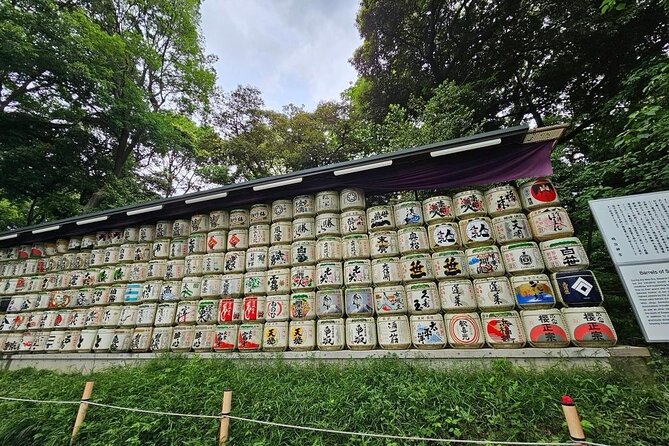
Then you shift from garden calm into a shrine setting: Meiji Jingu Shrine. The plan says the shrine was completed and dedicated in 1920, for Emperor Meiji and Empress Shoken. It was destroyed during the war and rebuilt afterward.
The story here is about modern Japan. Emperor Meiji is described as the first emperor of modern Japan, born in 1852 and ascending in 1867 during the Meiji Restoration when Japan’s feudal era ended and the emperor was restored to power. That modernization angle gives the shrine context beyond just a pretty place to stop.
Why this stop works on a one-day tour:
- It’s free entry, so it fits the budget without adding another ticket layer.
- It changes the mood. Shrines here tend to feel like a pocket of quiet, which helps your energy for the late-day chaos in Shibuya and Harajuku.
If you like stories tied to architecture and place names, this one tends to click.
Stop 7: Shibuya Scramble, Neon Crosswalk Math and Controlled Chaos
Now for Tokyo’s famous energy: Shibuya scramble. The plan describes 10 lanes of traffic and five major crosswalks meeting along a modern canyon of neon-colored buildings.
This is not a place you linger and read plaques. It’s a place you stand, watch, and let Tokyo’s movement sink in. The plan also notes Shibuya Crossing as a stage for New Year’s Eve countdown celebrations and Halloween events, which explains why the area feels like a nonstop media set.
If you want great photos, the best strategy is to treat the crossing as a moment, then walk slightly away from the densest part so you can breathe. Your guide’s role here is useful: they can help you time your crossing and keep you from wandering back and forth in the wrong direction.
Stop 8: Hachiko, the Story Behind the Statue Everyone Knows
Right near Shibuya Station, you stop at Hachiko. This is the dog story that’s now global, and the plan includes enough timeline to make it more than a random landmark.
Hachiko is described as being born in Odate, Akita Prefecture in November 1923, adopted by university professor Hidesaburo Ueno, and then returning to Shibuya Station every day waiting for his master after Ueno’s death in 1925. Hachiko died in 1935.
Why this matters on the tour:
- It’s short. You can capture the photo and move on without losing your whole day.
- It gives emotional context to the place. The statue becomes more meaningful when you know what the person and dog represented.
Stop 9: Harajuku Station and Takeshita Street, Youth Culture in High Gear
Last stop is Harajuku Station and the walk toward Takeshita Street. This is the youth-culture zone people associate with wild fashion and weekend energy.
The plan highlights two details that help you understand what you’ll see:
- Harajuku is especially active on weekends and holidays, with high school students and large groups.
- The entrance to Takeshita Street sits at the top of a hill, so you’ll feel like you’re walking into a scene rather than entering a flat street.
Takeshita Street itself is described as lined with clothing shops, cafes, dessert shops, and strange memorabilia. There are also specific store names mentioned, including Paris Kids.
This stop is a good final chapter because it’s visual and fast. It’s also where you can buy small souvenirs that feel current rather than purely traditional.
If crowds feel like a lot, that’s okay. You can do quick browsing, pick one or two items, then let your guide shepherd you back to the vehicle.
Value Check: Free Entries, Extra Tickets, and How to Keep the Day Smooth
The tour is designed around a budget-friendly structure. Most stops are marked with free admission in the plan:
- Sensoji
- Shinjuku Gyoen
- Meiji Jingu
- Shibuya crossing
- Hachiko
- Harajuku street time
Your paid extras are mainly:
- Tokyo Skytree entrance (listed as $12 USD)
- Tokyo Tower entrance (listed as $7 USD)
That mix can make the total cost feel manageable compared to other Tokyo “big hits” tours where nearly everything costs something.
Timing is the real swing factor, and it’s worth planning mentally for two things:
- Skytree can involve long lines, and buying or selecting a time slot ahead can help. One booking feedback note specifically warned about lines at Skytree and suggested advanced time slot planning online.
- One booking feedback note also mentioned that the day felt like it had the right parts but not necessarily the best order, especially when cherry blossoms were at peak time. Since this is a private tour and you can customize the itinerary, ask your guide to shape the order around your priorities and the time of day you prefer.
One more practical detail from booking feedback: the company says the driver for this tour acts as the guide. If you were expecting a separate specialist guide on top of a driver, you should clarify expectations earlier rather than assuming the setup.
Who This Private One-Day Tokyo Tour Fits Best
I’d aim this tour at you if:
- You’re short on time and want major Tokyo landmarks without planning four train transfers
- You like the idea of a guided route that covers both old and new Tokyo
- You’re traveling as a small group (up to 5) and want private pacing
I’d reconsider it if:
- You hate crowds and expect to slow-walk every stop for a long time
- You want a “slow travel” day where one neighborhood is the entire focus
- You plan to skip the paid tower entrances entirely, because the tour’s value is partly in the convenience and flow between these set pieces
The good news is that it’s private, so you can adjust what matters most to you. That flexibility is part of why it works for first-timers.
Should You Book This Tokyo City Attractive One Day Tour?
If you want a fast, organized way to see Tokyo icons plus real culture stops in one day, this is a strong option. The big win is the pairing of hotel transfers and private pacing, plus a route that mixes classic temples, shrine quiet, food street energy, and modern skyline landmarks.
I’d book it if your priorities include Asakusa, Skytree and/or Tokyo Tower, Tsukiji Outer Market, and the Shibuya and Harajuku area, and if you’re okay paying modest extra entrance fees for the towers. If you care a lot about cherry blossom timing or you want to avoid line stress, ask for the best order and timing before you lock in.
FAQ
How long is the Tokyo City Attractive One Day Tour?
The tour is listed as approximately 9 hours.
What is the group size for this private tour?
It is private and priced per group, up to 5 people.
Where does the tour start and end?
The meeting point is Tokyo Station Hotel, and the activity ends back at the meeting point.
What does the tour include?
It includes an air-conditioned vehicle, private transportation, and hotel transfers. You also get a mobile ticket.
What is not included in the price?
Lunch and dinner are not included. Entrance fees for Tokyo Skytree and Tokyo Tower are also not included.
Which entrances are listed as free?
In the plan, stops like Sensoji, Tsukiji Outer Market, Shinjuku Gyoen, Meiji Jingu, Shibuya scramble square, and Hachiko are listed with free admission.
Can I customize the itinerary?
Yes, the itinerary can be customized because it is a private tour.
Is there a cancellation window for a full refund?
Yes. Cancellation is free up to 24 hours in advance for a full refund.
Are service animals allowed?
Service animals are allowed, and the plan notes that most people can participate.
Fresh options around Tokyo
- Tokyo: Nikko Kegon Falls Lake Chuzenji Toshogu Temple & More★ 4.9 · 12 reviews
- Tokyo: Samurai History Walking Tour★ 5.0 · 12 reviews
- Harajuku: Kawaii Fashion and Pop-Culture Tour★ 4.7 · 12 reviews
- Tokyo: Mt. Fuji & Lake Kawaguchi Instagram Full Day Trip★ 4.1 · 12 reviews
- Shibuya Tokyo: Modern Kintsugi Workshop in Shibuya★ 5.0 · 12 reviews
- Tokyo: GTR Guided Daikoku Experience at Night★ 5.0 · 12 reviews
- Tokyo: Daikoku JDM Car Culture Tour★ 4.6 · 12 reviews
- Mt Fuji Private Day Trip from Tokyo with English speaking driver★ 5.0 · 13 reviews
City Tours, compared.
Private City Highlights Tour with Local Guide
Read our review →
Asakusa, Skytree & Akhihabara Go-Kart City Experience
Read our review →
Hiroshima City 4hr Private Walking Tour with Licensed Guide
Read our review →

Private Haneda Airport (HND) to Central Tokyo City Transfer
Read our review →
3-hour Guided E-Bike Tour of the City’s Hidden Gems
Read our review →
Shibuya City: Daikoku PA GT-R R35, R34, R33 or R32 Tour
Read our review →Browse the lists this tour appears in