
Reviewed · SAMURAI & NINJA EXPERIENCES
Samurai Training Tokyo Asakusa
Asakusa turns sword practice into a photo story. This short, private samurai lesson in Tokyo mixes real instruction with dress-up fun, and you end with your training captured in photo and video footage plus a certificate.
I especially like how it’s built for families and kids, with the instructor adjusting the pace so you can actually follow along. I also like the keepsakes: you are not just taking home memories in your camera roll, you leave with official-looking recognition and your images on digital media.
One thing to plan for is logistics: there is no hotel pickup or drop-off, and the exact training location can shift based on how many people are in your booking.
Key Points That Make This Class Worth Your Time
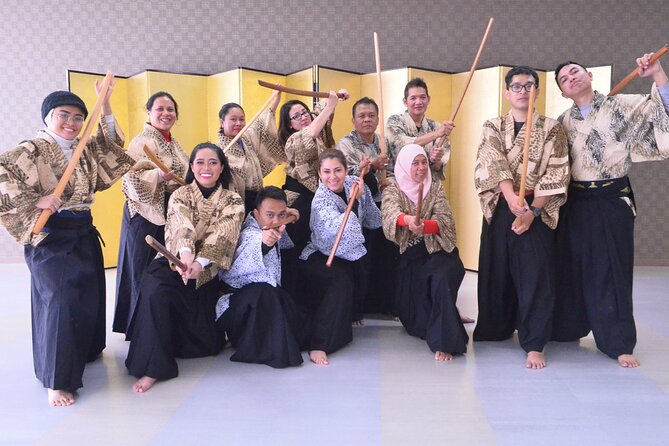
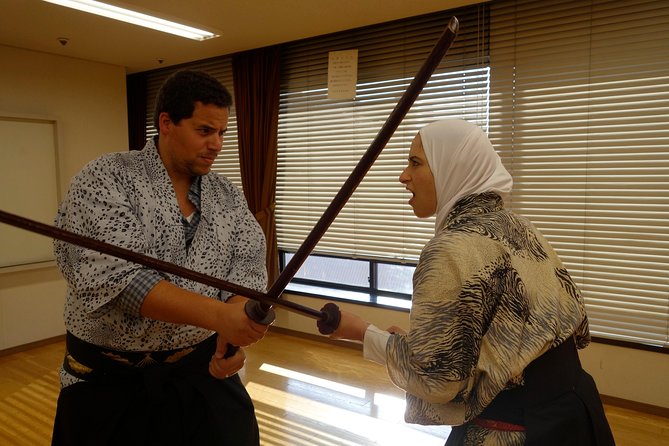
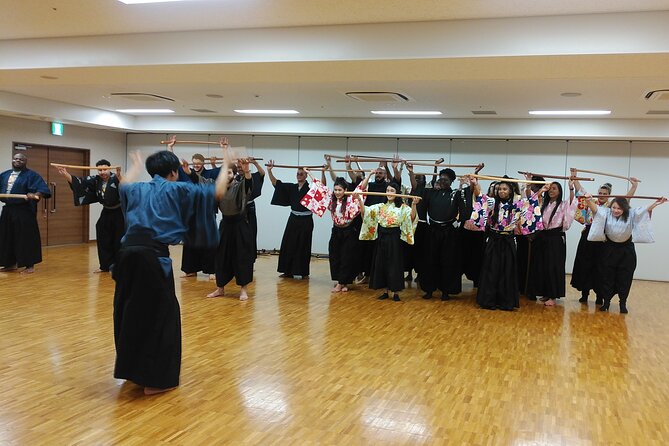
- Private instruction in a small group (max 10 people) so you get attention instead of fading into the back row
- A structured katana lesson that includes Battou, Nattou, and kata, not just posing with a sword
- Costume rental plus a photo moment early on so you feel like a samurai from minute one
- A staged sword-fighting practice with video recording during the session
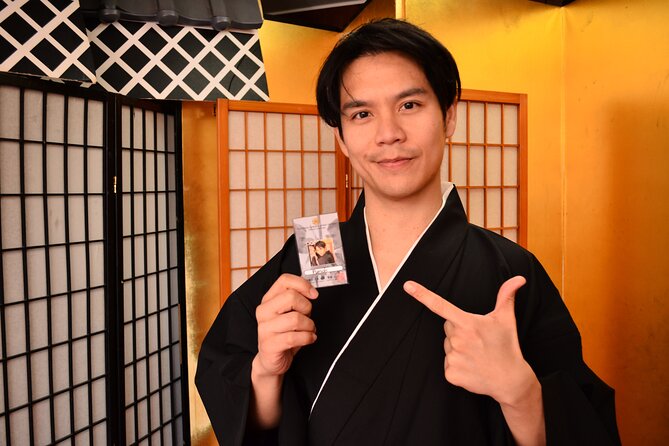
- A certificate of recognition with your photo data after you change back into your clothes
Asakusa Meeting Point: Getting Started Without Stress
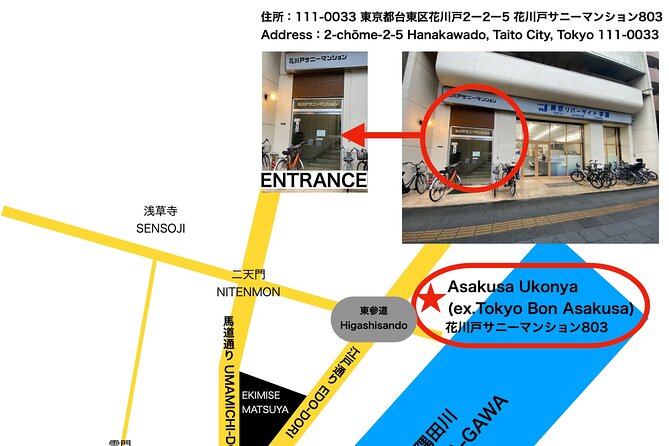
Your experience starts in Hanakawado (Taito City), near the address listed for 花川戸サニーマンション2-chōme-2-5, Hanakawado, Taito City, Tokyo 111-0033. The good news is that it is near public transportation, so you can treat this as a focused stop between other Asakusa sights.
Here is the practical twist: the meeting place and experience location can vary depending on the number of participants. You will get contact at least 2 days before your reserved date, so don’t assume the same exact spot every time. I recommend you check that message right away and save it on your phone. If you are walking from a nearby station, give yourself a little extra buffer, because once you are inside the flow of the class, the session is short.
Because there is no hotel pickup, you will want to choose the rest of your day around this. If you are doing temple-hopping that morning, keep this on the earlier side so timing is not tight.
More Samurai & Ninja Experiences in Tokyo
- Tokyo: Samurai Restaurant Show Ticket with 2 Drinks
★ 4.5 · 1,307 reviews - Tokyo: Samurai Ninja Museum Guided tour and Experience
★ 4.6 · 1,010 reviews - Tokyo: Samurai Sword & Archery Class from Samurai Descendant
★ 5.0 · 603 reviews
One Hour, Private Focus: What the Session Really Feels Like
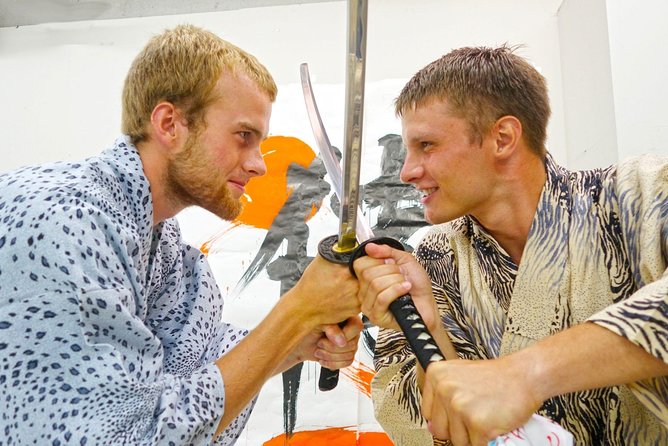
This is listed as about 1 hour. In practice, that is long enough to dress up, learn a few core movements, practice with a partner in a controlled drill, and still finish with photo and video.
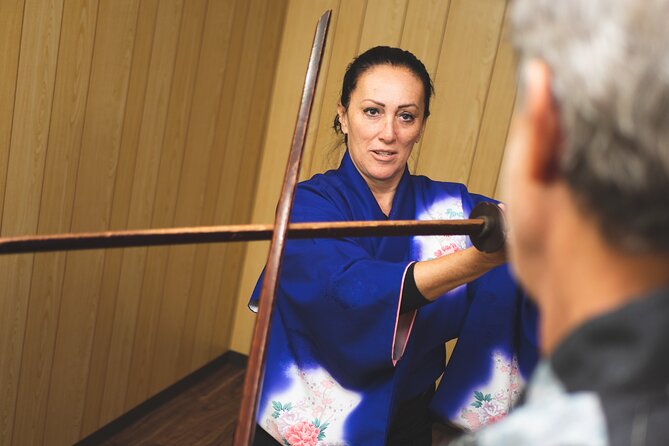
The class is designed as a private experience, meaning only your group participates. That matters a lot, especially if you are traveling with kids. In a short training session, you do not want a crowd dynamic. You want someone to watch how you hold the sword and correct you fast.
The session also fits well into busy itineraries. This is not a full dojo day. It is a compact samurai skills introduction, with just enough movement to feel like you worked, not just like you got a costume tour.
Suiting Up Like a Samurai: Costumes, Sword Belting, and First Photos
Step one is simple: gather together, then change into the costume. You get rental costume, and you start building the vibe right away. Even if you are coming in thinking you will just learn sword basics, this dress-up part helps you relax into the experience.
After the costume change, you belt the sword and take a picture. This is one of those small moments that actually helps the rest of the training. When you physically learn where the sword sits and how it feels at your waist, the later movements like drawing and sheathing make more sense.
Then you begin with greetings. That might sound formal for a one-hour activity, but it sets a tone. It tells you this is not only about motion. It is also about posture, respect, and controlled timing, which is the difference between waving a prop and practicing a skill.
Battou, Nattou, and Kata: How the Katana Lesson Is Built
The core instruction sequence is pretty clearly laid out:
- Practice Battou (pull out katana)
- Practice Nattou (pull back katana)
- Practice kata
- Sword fighting practice with staged movements
If you have never handled a sword before, this is the right kind of training. You get a safe, structured path: draw, retract, then kata patterns, then a partner drill that looks like battle choreography but is organized for beginners.
The lesson is supervised by Ukon Takafuji, Iemoto of the world-renowned Kenbu Ukon-ryu (Tachibana samurai kenbu school). That credential matters because it signals lineage and discipline, not just a fun activity with costumes.
From my perspective as a travel reviewer, this matters for value. People pay for two things: the photos, sure, but also the sense that someone is teaching you something real. This plan is set up so you learn the basics in the time you have.
Also note the physical side: you need a moderate physical fitness level. It is not extreme, but you are standing, moving, and doing repeated motions. If you have mobility limitations, it might still work, but plan to go at a careful pace with the instructor’s guidance.
More samurai and ninja experiences in Tokyo:
- Best Samurai Experience in Tokyo
★ 5.0 · 458 reviews - Ninja Experience (Family Friendly) at Samurai Ninja Museum TOKYO
★ 5.0 · 441 reviews - Tokyo: Samurai Entertainment Night Show in Kanda Shrine
★ 4.6 · 417 reviews - Tokyo Sword Experience – includes Museum Ticket/Ninja Experience
★ 5.0 · 314 reviews
Staged Samurai Battle and Video Recording: The Fun Part With Structure
After kata, you do sword-fighting practice, described as moves like a samurai battle. You also get video recording during the session.
This is where the private format pays off again. In a bigger group, your partner drill time can feel rushed. In a smaller booking, the instructor and assistant can pair people thoughtfully and guide you through the choreography so you are not just trying to guess what comes next.
If you are traveling with a friend, you might find the partner practice turns into a highlight, because you can actually see your own improvement in the video. Some participants also get the session filmed using smartphones if you allow it, and you still receive the official digital footage afterward. That is a great setup if you want one set of professional-quality memories plus casual personal angles.
After You Change: Certificate of Recognition and Digital Keepsakes
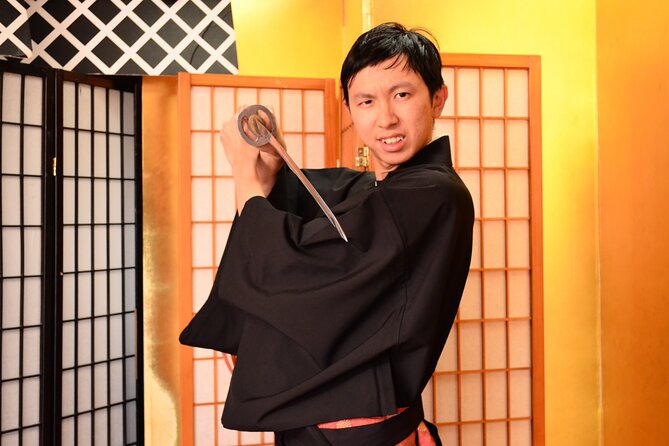
The ending is part training, part souvenir ceremony.
You will practice greetings to close, then you change clothes. After that, you receive:
- A certificate of recognition with your photo
- Certificate with photo data on SD card (plus a photo of your face)
That SD card detail is important. Many experience providers give you photos later, but this one is built to deliver a complete set of training memories plus a physical-style credential. In plain terms, it is harder to lose, easier to share, and easier to show people back home.
A few notes from real-world experience patterns you will likely appreciate:
- The photo and video package is included, not a paid add-on.
- You are not expected to manage the filming while also learning the motions.
- The certificate makes the whole thing feel official, which helps if you are buying this for a kid or someone who loves collecting Japan experiences.
Cost and Value: Is $85.89 Fair for Tokyo?
At $85.89 per person, this is a straightforward price for what you get: instructor-led training, rental costume, and professional photo and video footage, plus a certificate and photo data.
For value, the big question is whether the class feels like “real teaching” or “just a photo moment.” Based on the structure, it is both. You dress up, you learn a repeatable set of movements, you practice staged combat motions, and you get recorded. If you want only quick entertainment, it might feel like more than you need. If you want a memorable experience that includes actual skill practice and then high-quality keepsakes, the price makes sense.
Time is part of the value too. One hour is short enough that you are not sacrificing a whole morning to a single activity.
Who Should Book This Samurai Training in Asakusa?
This is a strong match if you:
- Travel with children (minimum age is 6, and kids must be accompanied by an adult)
- Want something fun that still feels like learning
- Prefer a private setting with your own group
- Want official keepsakes you can take home and revisit
It can also work for couples and solo travelers. The instruction includes greetings, drawing and sheathing practice, and a partner drill, but you still get individualized attention. If you enjoy doing one Japan-focused activity that is active and photo-friendly, this fits well.
Who might find it too light? If you are expecting a hard-core dojo session with long repetitions, this is not positioned that way. It is structured, beginner-friendly, and short. You will leave feeling like you tried samurai basics, not like you trained for hours like a martial arts student.
My Booking Checklist Before You Go
Here is how to set yourself up for an easy, no-mystery experience.
- Book early: the average booking window is 48 days in advance, which tells me dates can fill up.
- Double-check the message 2 days before: meeting and training spots can vary by group size.
- Plan your route since there is no hotel pickup. Use public transport and arrive a bit early.
- Bring your energy: expect light-to-moderate physical movement.
- Decide how you want photos: they handle most of it, but if you want phone video captured too, it helps to be open to their guidance.
One more practical tip: since you change into a costume, wear something easy for quick changing and keep your valuables secure.
Should You Book Samurai Training Tokyo Asakusa?
I think you should book this if you want a short, family-friendly samurai experience that combines costume fun with structured katana practice, and you care about professional photos and video you can keep. The private format and the guided set of movements make it feel like an actual class, not just a photo op.
Skip it or consider your expectations if you are looking for a long, intense training session. This is about a one-hour introduction, plus memorable keepsakes and recognition.
If your day includes Asakusa anyway, this is the kind of activity that gives you a clear story to tell later: I learned the basic draws, I did the staged drills, and I came home with an official certificate and digital photo memories.
FAQ
How long is the Samurai Training Tokyo Asakusa class?
It runs for about 1 hour (approx.).
Is this a private experience?
Yes. It is a private tour or activity, so only your group participates.
What age is the minimum, and do children need an adult?
The minimum age is 6. Children must be accompanied by an adult.
What is included in the price?
Included are a local instructor, rental costume, and picture and video footage.
Is hotel pickup or drop-off included?
No, hotel pickup and drop-off are not included.
Where do we meet for the training?
The listed start point is 花川戸サニーマンション2-chōme-2-5 Hanakawado, Taito City, Tokyo 111-0033, Japan. The exact meeting and training location may vary by group size, and you will be contacted at least 2 days before.
What do we receive at the end?
You receive a certificate of recognition with your photo. You also receive photo data on an SD card and a photo of your face.
Can I get a refund if I cancel?
Yes. You can cancel up to 6 days in advance for a full refund, with partial refunds possible for cancellations 2 to 6 days before, and no refund if you cancel less than 2 days before the experience starts.
Fresh options around Tokyo
- Tokyo: Nikko Kegon Falls Lake Chuzenji Toshogu Temple & More★ 4.9 · 12 reviews
- Tokyo: Samurai History Walking Tour★ 5.0 · 12 reviews
- Harajuku: Kawaii Fashion and Pop-Culture Tour★ 4.7 · 12 reviews
- Tokyo: Mt. Fuji & Lake Kawaguchi Instagram Full Day Trip★ 4.1 · 12 reviews
- Shibuya Tokyo: Modern Kintsugi Workshop in Shibuya★ 5.0 · 12 reviews
- Tokyo: GTR Guided Daikoku Experience at Night★ 5.0 · 12 reviews
- Tokyo: Daikoku JDM Car Culture Tour★ 4.6 · 12 reviews
- Mt Fuji Private Day Trip from Tokyo with English speaking driver★ 5.0 · 13 reviews
Samurai & Ninja Experiences, compared.
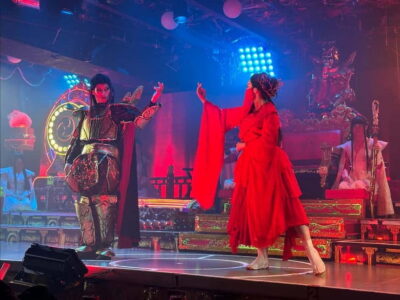
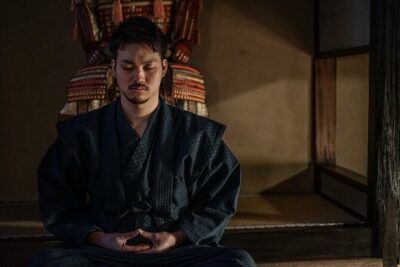
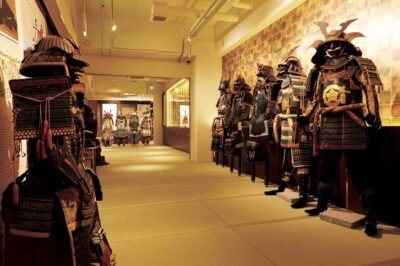
Samurai Ninja Museum Guided tour and Experience
Read our review →
Kendo and Samurai Experience with Uniform and Gear
Read our review →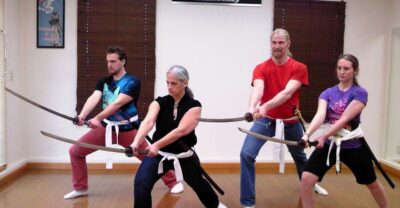
Samurai Sword Class by Experts in Traditional Arts
Read our review →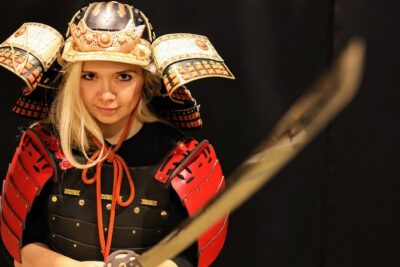
Skip the lines Basic Ticket at SAMURAI NINJA MUSEUM KYOTO
Read our review →
Samurai Sword & Archery Class from Samurai Descendant
Read our review →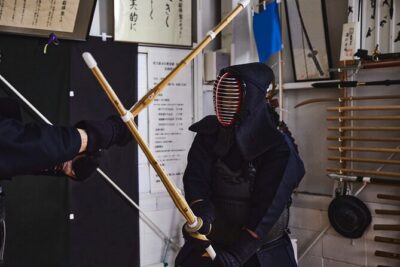
Browse the lists this tour appears in