
Reviewed · FOOD & DRINK
Osaka Walking Tour to Local Gems, Food & Culture
Osaka has a split personality, and this walk reads both sides. I like the small group cap (12 people), and I really appreciate the licensed guide who connects street scenes to what Osaka is about. The only real drawback is you will be on your feet, so plan on comfortable shoes and a steady pace.
You start in Shinsaibashi, then wind through the canal-side lights of Dotonbori, a 1600s temple near the action, and the market streets where locals shop. It is a smart way to get oriented fast, because the stops cover the city’s mood swings, not just the postcard highlights.
Key Highlights I’d Prioritize
- Shinsaibashi to Namba in 2.5 hours: a well-timed route that does not feel like a long slog
- Licensed guides: expect clear explanations and good, practical context as you walk
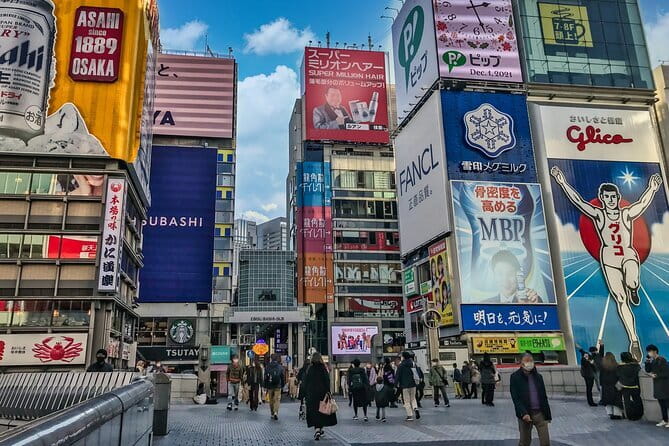
- Street-level Osaka culture: Amemura style, otaku corners in Nipponbashi, and the chef-gear vibe on Dōguya-suji
- Kuromon Market stop: perfect for snack planning and browsing what Osaka cooks and buys
- Small group pacing: easier questions, better flow, less getting separated
- Free entries at multiple stops: you do not pay extra just to enjoy the scenery and streets
Starting in Shinsaibashi, ending in Namba
This tour is built for people who want orientation, not just stamps on a checklist. You meet at Apple 心斎橋 in Nishishinsaibashi, a spot that is easy to reach by public transit, which matters on a first day in Osaka. Then you finish over in the Namba area at Namba Grand Kagetsu, so the walk naturally carries you toward where you will likely want to eat or keep exploring after.
I like how the route is set up to walk from one recognizable neighborhood mood to the next. You are not hopping around the city with long transfers. You are just moving, slowly enough to notice details, quickly enough that you still have energy left for the rest of your day.
Also, the tour uses a mobile ticket, which is handy. Less fumbling, more time watching how Osaka moves.
More Food Tours in Osaka
- Osaka: Shinsekai Food Tour with 13-15 Dishes at 5 Eateries
★ 4.8 · 2,204 reviews - Osaka Food Tour: 13 Dishes at 5 Local Eateries
★ 5.0 · 2,149 reviews - Hungry Osaka Street Food Tour:15 Tastings & 3 Drinks with a Local
★ 5.0 · 1,727 reviews
Horie Park: a green pause before the shopping districts
The first stop is Horie Park, an urban oasis where you get actual breathing room. The park’s value is not just that it is green. It gives your eyes a reset before you hit heavier sights later, and it helps you transition from train-and-street mode to walking mode.
You get lush greenery, serene paths, and well-kept gardens, so even if the rest of your day is about shopping and neon, this part gives you a calmer pace. It is also a good chance to settle your legs early. Two hours of standing in shoes that start out comfy usually stays manageable. Two hours in shoes that already hurt gets messy fast.
One consideration: if you are the type who only wants food or shopping and could skip a park entirely, this stop might feel slightly slower. The trade-off is that it makes the rest of the walk more enjoyable.
Amemura (America-mura): Osaka’s street style and subcultures
Next comes Amemura, short for America-mura, and this is where you see Osaka’s taste for reinvention. It is known for an eclectic mix of shops, cafes, and places where different styles overlap. If you’ve ever wondered how Osaka stays young and creative beyond its older temple lanes, this is one of the easiest ways to spot it on foot.
What I like here is that Amemura is not treated like a museum district. You get a feel for what people wear, what they browse, and what kind of street energy is happening right now. It also sets you up for the next segments, because later you will see other sides of Osaka that feel totally different, like canal entertainment lights and the otaku-heavy streets around Nipponbashi.
A small caution: Amemura is a shopping district. If you are not into browsing stores, you may want to ask your guide for quick context so you still walk away with something useful, not just window-shopping.
Namba Hatch: where concerts and live events fit in
Namba Hatch shows up as a change of rhythm. Instead of looking at a temple or a market, you are in the world of live events, performances, and music culture. The venue has a capacity of about 1,200 people, and even if you do not catch a show, seeing how event life anchors this part of Namba helps explain why the area feels geared toward crowds and nights out.
This stop is short, but it acts like a bridge between the commercial areas. It tells you Osaka is not only about food and shopping, it is also about what happens after dark.
If you prefer quieter sightseeing, keep in mind that Namba overall is more active than the park. That is not a problem, it is just the personality shift you will notice.
More Walking Tours in Osaka
- Osaka: Hotspots & Hidden Gems Walking Tour Private or Group
★ 4.9 · 1,300 reviews - Osaka Local Foodie Walking Tour in Dotonbori and Shinsekai
★ 5.0 · 985 reviews - Osaka Bar Hopping Night Walking Tour in Namba (3 bars, 6 tastes)
★ 5.0 · 958 reviews - Osaka: Deep Backstreets Walking Tour with Dinner Option
★ 4.9 · 902 reviews
Dotonbori canal lights and Hozen-ji’s temple hush
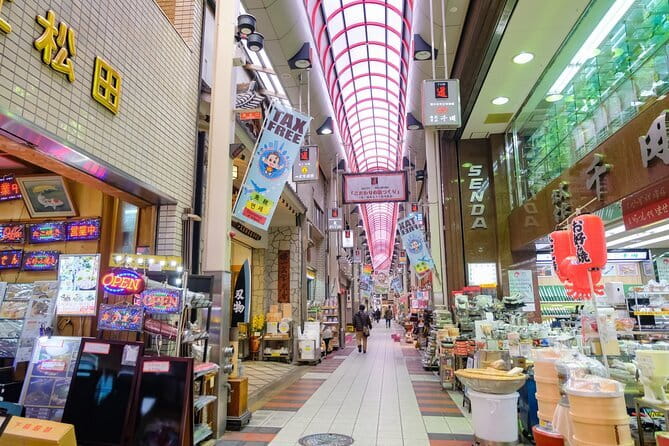
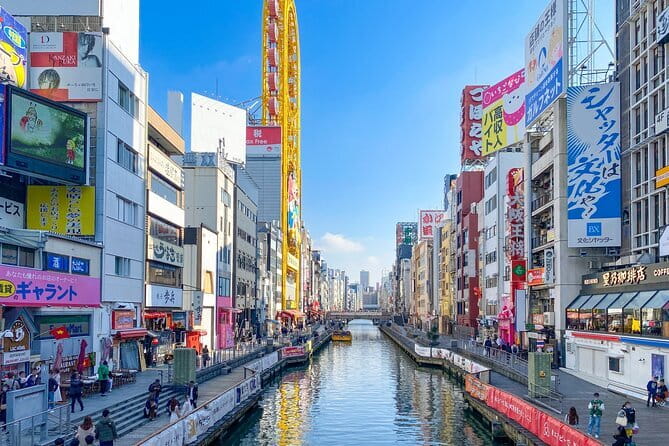
Dotonbori is next, and it is famous for a reason. You are along the canal, surrounded by neon lights and that high-energy entertainment atmosphere. The key is that Dotonbori is more than a photo stop. Your guide helps you read the district, so it feels like a real slice of Osaka, not just a set of landmarks.
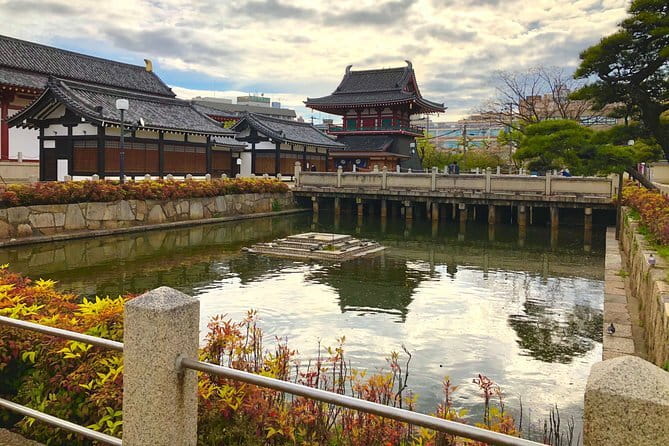
Right after, you reach Hozen-ji Temple, near the Dotonbori area. This is one of the most interesting contrast moments of the whole walk. The temple was founded in 1637, and it is known for a distinctive moss-covered statue of Fudō Myōō, a fierce deity believed to be a protector. Seeing it this close to the loud canal scene makes the city feel layered, not separated into categories of old vs. modern.
I also like the pacing here. The short walk from temple calm back toward market energy helps you understand Osaka’s rhythm. You do not wait until the evening for atmosphere. You get it right away, in the way these neighborhoods share space.
Potential drawback: this section can be visually intense. If you are prone to getting overwhelmed in crowds or by lots of signage, give your eyes a break. The guide can help you slow down at the right points.
Kuromon Market: plan your food strategy even without included snacks
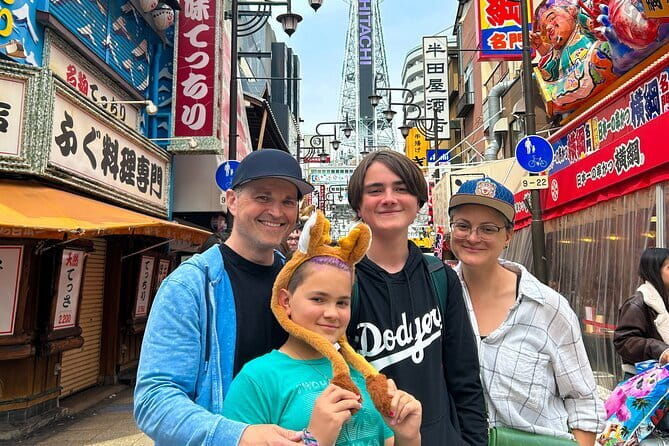
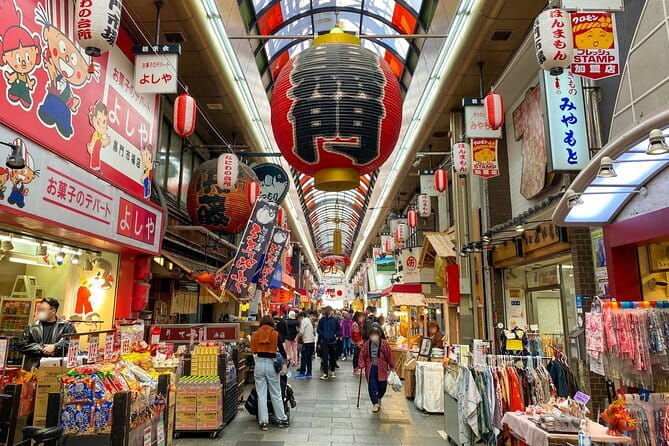
Then you hit Kuromon Ichiba Market, one of Osaka’s go-to places for fresh seafood, produce, and local delicacies. The market experience here is mainly about browsing and learning what locals gravitate toward. Even though snacks are not included, this is still a practical stop because it helps you understand what to order later when you are hungry.
I like Kuromon Market on a walking tour because you can use it as a scouting mission. You get a sense of ingredients, pricing style, and what kinds of stalls dominate. When your next meal arrives, you will feel more confident and less like you are pointing at the first thing with lights.
One thing to consider: if you dislike markets, this stop might not be your favorite. But even then, it is still a strong cultural viewpoint. Markets are where everyday Osaka shows up.
Nipponbashi and otaku culture you can actually walk through

After the market, you shift into Nipponbashi, a lively area centered on electronics, anime, and otaku culture. This is the side of Osaka that feels like a parallel universe to the temple and the canal. The fact that it is connected by walking makes it easy to experience both, instead of choosing one theme and missing the other.
You only spend about 10 minutes here, so it is not a long shopping spree stop. Think of it like a guided taste. Your guide’s explanations matter a lot, because without context you could easily treat it like any other electronics area.
If you are a fan of Japanese pop culture, this is a great place to spot stores and signage that you would otherwise pass by without understanding why it matters. It also gives your day a fun ending arc before you head toward kitchenware street.
Dōguya-suji (Kitchenware Street): the chef knife street feeling
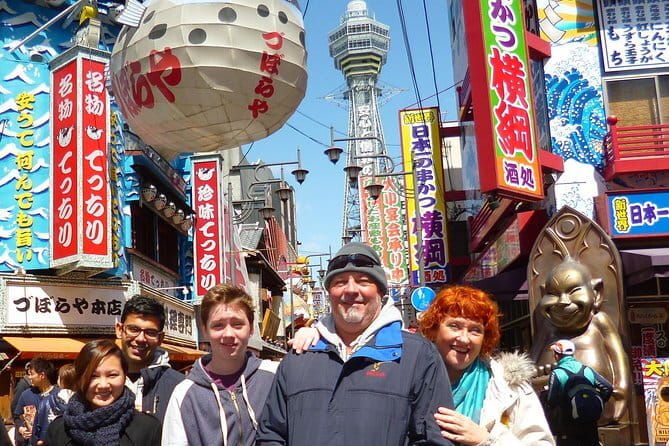
Finally, you reach Dōguya-suji, also called Kitchenware Street. This street is known for tools, kitchenware, and home goods, with many shops that cater to serious cooks and everyday kitchen needs. What makes it special is the reputation it carries in Osaka, including the idea that many chefs go here to buy their knives.
Even if you are not shopping for knives, you still get value from the focus. It explains a cultural detail that Osaka people often take for granted: craft and practicality show up in everyday life. When you see the variety and seriousness of the wares, it makes the city’s food culture feel more grounded.
This stop pairs nicely with Kuromon Market. You can think, even without buying anything, about where the ingredients come from and where the tools that handle them are sold.
If you do want to buy something, keep in mind this is a walking tour time window. You will likely want to browse first, decide quickly, and avoid losing the group.
Why the licensed guide changes everything
The biggest reason this tour tends to earn such high marks is how your licensed guide turns a walk into a story you can use. People describe guides like Jay, Calvin, Matt, and EJ as funny, punctual, and able to answer questions in a way that feels personal. That matters because Osaka can look like one long street of things to buy and things to photograph.
A good guide helps you make sense of:
- why certain neighborhoods cluster the way they do
- what cultural signals you should notice on the street
- how to spot what is truly local versus what is mostly aimed at visitors
You also benefit from the small group setup, with a maximum of 12 travelers. That usually means you can ask questions and not feel rushed. It also helps keep pace under control, which is important when you have multiple stops that are each short but meaningful.
One practical note from past experiences: guides have helped groups pause along the way, especially when heat or weather is a factor. That is not guaranteed for every day, but it tells you the leadership style tends to be attentive.
Value for $25: what you get, what you do not
At $25 per person for about 2 hours 30 minutes, this is priced like a focused neighborhood introduction, not a luxury day tour. For your money, you are paying for a licensed guide and the walk connects several key areas without adding extra admission costs. The stops listed include free entries for places like Horie Park and others along the route.
What you should know: snacks are not included. You are not paying for a tasting menu here. Instead, you get the context and the browsing that helps you plan your own food moments.
So the value equation looks like this:
- If you want guided orientation plus cultural explanations, this price is a bargain.
- If you only want food samples handed to you, you might feel underfed, unless you plan your meals around the market stop.
Pace, shoes, and who this walk suits best
This is a walking tour with multiple short stops. That format is great for first-time Osaka visitors and for people who want to see several districts without committing to a whole day. It is also a nice length if you are traveling with teens, since it mixes history, markets, and pop-culture streets instead of dragging through one theme too long.
I recommend it especially if:
- you like learning why places look the way they do
- you enjoy markets and shopping streets, even if you do not buy much
- you want an Osaka overview that includes temple culture and modern lifestyle side by side
I would be more cautious if:
- you dislike walking and standing for stretches
- you want long stays in one place, like a full afternoon market deep dive
- you expect a snack included food tour instead of a culture and food-planning walk
Should you book this Osaka walking tour?
I think you should book it if you want a smart first pass through Osaka’s major neighborhoods and the in-between culture that makes the city feel like Osaka. The mix of Shinsaibashi, Dotonbori, Hozen-ji, Kuromon Market, Nipponbashi, and Dōguya-suji gives you both atmosphere and practical direction, and the small group makes it easier to ask questions.
Skip it only if you hate walking, or if your dream Osaka day is mostly eating with no time spent on history and browsing.
FAQ
How long is the Osaka walking tour?
It lasts about 2 hours 30 minutes.
How much does the tour cost?
The price is $25.00 per person.
Where does the tour start?
The meeting point is Apple 心斎橋 in Osaka, Chuo Ward, Nishishinsaibashi.
Where does the tour end?
The tour ends at Namba Grand Kagetsu in the Namba area (Nanbasennichimae, Chuo Ward).
Is a licensed guide included?
Yes, a licensed guide is included.
Are snacks included during the tour?
No, snacks are not included.
Does the tour use a mobile ticket?
Yes, you receive a mobile ticket.
What is the maximum group size?
The group is limited to a maximum of 12 travelers.
Are there morning and afternoon tour options?
Yes, morning or afternoon tours are available for flexibility.
What is the cancellation policy?
You can cancel for a full refund up to 24 hours before the experience start time (local time). If you cancel less than 24 hours before, you will not get a refund.
Fresh options around Osaka
- Osaka Winery Tour with Wine Tasting & Vineyard Walk★ 4.9 · 12 reviews
- Osaka: Early Morning Osaka Castle Guided Tour, Avoid Crowds★ 4.9 · 12 reviews
- Kyoto Day Trip from Osaka Port – Private Shore Excursion★ 5.0 · 13 reviews
- Osaka Private Pop Culture Tour: Historic Tenma to Dotonbori★ 4.5 · 13 reviews
- Osaka Castle Admission Ticket★ 4.0 · 13 reviews
- Hidden Osaka Foodie Tour: Nishinari Backstreets & Local Dining★ 5.0 · 13 reviews
- Discover Real Osaka: A Cultural Walk with Food & Drink★ 5.0 · 13 reviews
- Nara private tour (Shore excursion available from Osaka or Kobe port)★ 5.0 · 13 reviews
Food & Drink, compared.
Shinjuku Food Tour (13 Dishes at 4 Local Eateries)
Read our review →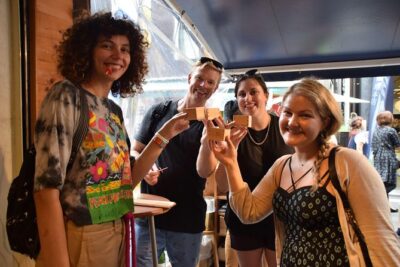
Tokyo Tsukiji Fish Market Food and Culture Walking Tour
Read our review →
Shinsekai Food Tour with 13-15 Dishes at 5 Eateries
Read our review →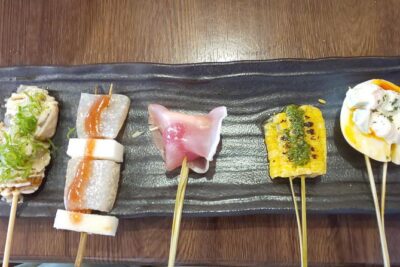
Osaka Food Tour: 13 Dishes at 5 Local Eateries
Read our review →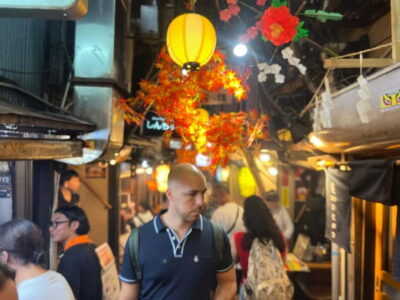
Shinjuku Food Tour (15 Dishes and 4 Eateries)
Read our review →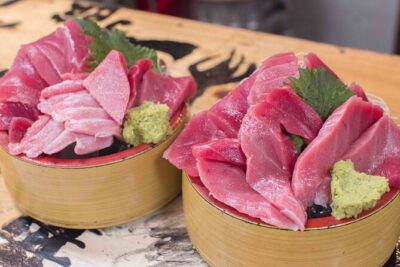
Best of Shinjuku: Izakaya Food Tour (4 Stops, 14+ Tastings)
Read our review →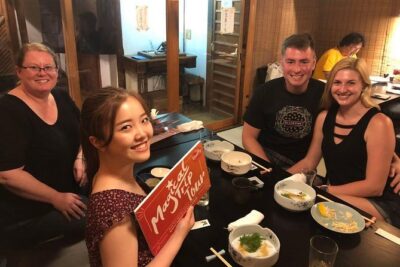
Kyoto Night Foodie Tour in Gion (9+ dishes + 6 Sake tastings)
Read our review →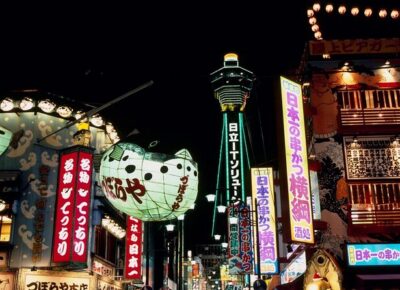
Hungry Osaka Street Food Tour:15 Tastings & 3 Drinks with a Local
Read our review →Browse the lists this tour appears in