
Reviewed · FOOD & DRINK
Osaka Dotonbori Daytime Food Tour
Dotonbori is loud, so you need a plan. This 3-hour daytime tour is built to get you quickly oriented in Osaka’s food lanes, with photo stops around Dotonbori and Namba, and tastings at local spots that won’t eat up your day with lines. I really like the way the walk mixes street food and neighborhood context, so you understand what you are eating and where you are standing. The one thing to consider is that food and specific places can change with season and restaurant schedules, so come with curiosity, not a fixed checklist.
What I liked most, and what it means for your trip
Two parts I especially value are the guide-led focus on avoiding overly-touristy ordering traps, and the small-group feel (max 10) that makes it easier to ask questions. I also like that the tour includes 4 food stops, plus 1 drink and a traditional Japanese dessert, so you are not constantly deciding how hungry to be or whether the next purchase is worth it. The biggest drawback for some people is simple pacing: it’s a daytime walking tour, and the only “lift” you get is from the guide, not from hotel pickup.
Who this tour fits best
If it’s your first time in Osaka, you want a smarter start than wandering and guessing, this works well. It also suits solo travelers and families, and it’s set up to be family-friendly, with a note that kids must be with an adult. If you plan to eat around Dotonbori anyway, you’ll likely appreciate the structure, especially because the meeting point and route are designed to keep you in the right streets without wasting time in the wrong lines.
More Food Tours in Osaka
- Osaka: Shinsekai Food Tour with 13-15 Dishes at 5 Eateries
★ 4.8 · 2,204 reviews - Osaka Food Tour: 13 Dishes at 5 Local Eateries
★ 5.0 · 2,149 reviews - Hungry Osaka Street Food Tour:15 Tastings & 3 Drinks with a Local
★ 5.0 · 1,727 reviews
Key highlights worth planning around
- Small group (up to 10), which keeps the tour relaxed and question-friendly
- 4 food stops plus 1 drink and dessert, so your meal is handled in the set route
- Photo time around Dotonbori and Namba, not just a food grab-and-go
- Avoiding tourist traps and long queues, with a guide who knows where to go
- Hozenji Yokocho and Kuromon Market stops, adding both alley charm and market energy
- Diet-friendly options, with vegetarian, vegan, pescetarian, shellfish-free, and pork-meat-free support
Starting at Starbucks by Tsutaya Ebisubashi, then walking into Dotonbori
The tour starts at 11:00 am at Starbucks Coffee – Tsutaya Ebisubashi in the Dotonbori area, and it ends in the Sennichimae area. That timing matters. Late morning is a sweet spot: you get daytime energy, but you still beat some of the worst crush you can hit later in the day.
The meeting point is easy to locate, and you are near public transportation. Since hotel pickup is not included, you are doing a normal local transit plan, then meeting your guide in a spot that is already used by commuters and visitors.
Also, there is a mobile ticket. That means you spend less time wrangling papers and more time walking. For a 3-hour experience, that small friction matters.
Dotombori Glico Sign: the quick story stop that sets the tone
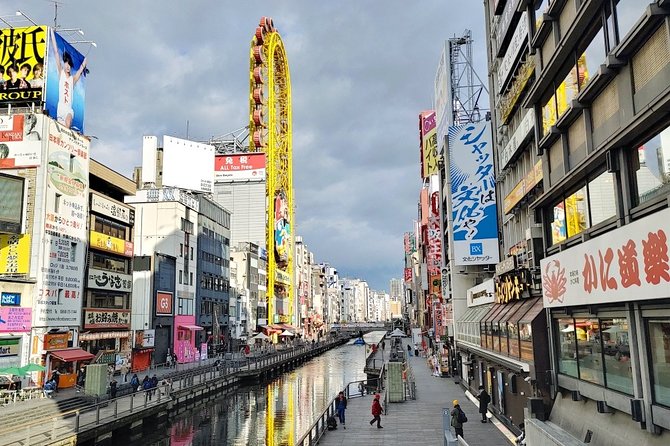
Your first stop is the Dotombori Glico Sign, the famous Glico Man landmark. The tour uses that as a launchpad into Osaka street culture, including a story about a Filipino sprinter named Fortunato Catalon who inspired a nation and a company. Even if you are just there for food, that kind of context helps you read the neighborhood instead of treating it like a neon backdrop.
This is also a practical orientation moment. You learn how to navigate the Dotonbori energy so you do not just get swept along by the lights.
If you like photos, this is a good place to start. Several guides on this tour have been praised for taking people around with a “see and understand” mindset, not just a “follow me” pace.
Same corner of Japan, a different kind of day:
- Osaka Go Karting Tour with Funny Costume
★ 5.0 · 2,658 reviews - Osaka Castle: Museum and Tower Entry Ticket
★ 4.5 · 2,380 reviews - Osaka: teamLab Botanical Garden Entry Ticket
★ 4.5 · 1,710 reviews - Osaka: Tea Ceremony Experience
★ 4.9 · 1,426 reviews
Dotonbori lights and Namba street energy, with fewer detours
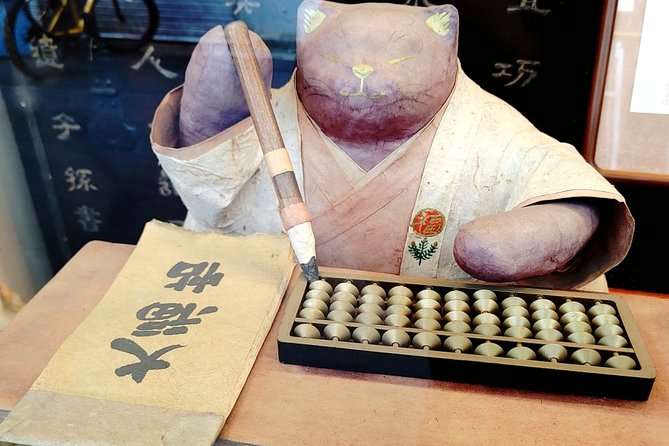
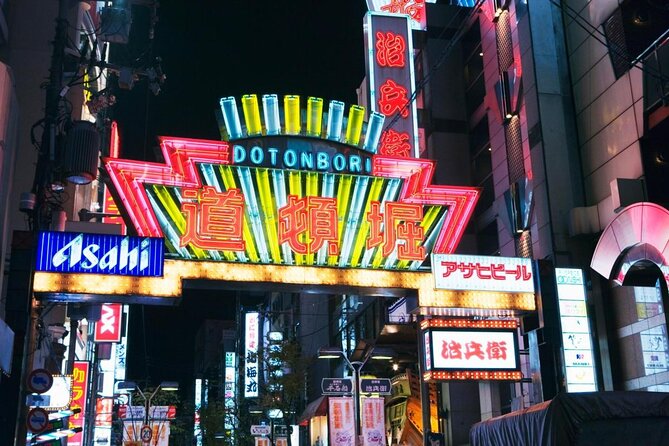
After the Glico sign, you move through Dotonbori itself, then on toward Minami (Namba). Dotonbori and Namba are the Osaka places people recognize from videos. That also means they are where you can get pulled into the most commercial choices and the longest waits.
The tour’s whole pitch here is simple: you get the lights and sounds, plus you get a guide who steers you toward places that make sense for a tasting tour. One reason this gets such strong feedback is that guests often describe the experience as feeling like an insider route, with the kind of side stories that turn a crowded street into something you understand.
You also get time to take photos while you are walking. That matters in Osaka because the views are mostly street-level, signs, alleys, and storefront life. A food tour that ignores photos can leave you with great food but empty camera rolls. This one tries to fix that.
Hozenji Yokocho: narrow alleys and that wow moment
Hozenji Yokocho is one of the stops, and I like this choice for two reasons. First, it’s a contrast from the main Dotonbori glow. Second, it’s the kind of alley space where a guide’s explanation turns a quick stop into a memory.
A review specifically points out that this part includes narrow alleyways and a special Buddha statue. That’s exactly the kind of detail you would usually miss if you were walking on your own with a hunger clock ticking.
If you are the type who likes small side streets, this is where the tour often feels most “Osaka” in a human, not theme-park way.
Sennichimae Doguyasuji Shotengai: market and shop energy between tastings
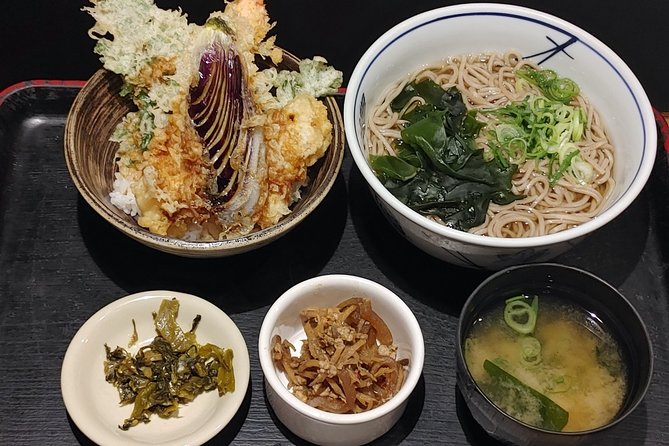
Another scheduled stop is Sennichimae Doguyasuji Shotengai. The point of including a shopping arcade during a food tour is balance. You get food, then you get the local commercial life that surrounds food.
Practically, it also helps timing. Tastings work best when the group is not constantly crossing the city. This keeps you in one neighborhood rhythm, which is important when you only have about 3 hours.
You’ll likely appreciate this stop most if you want more than “eat X, walk to Y.” You want the context of how food culture sits inside everyday shopping.
Kuromon Market: where you see food culture up close
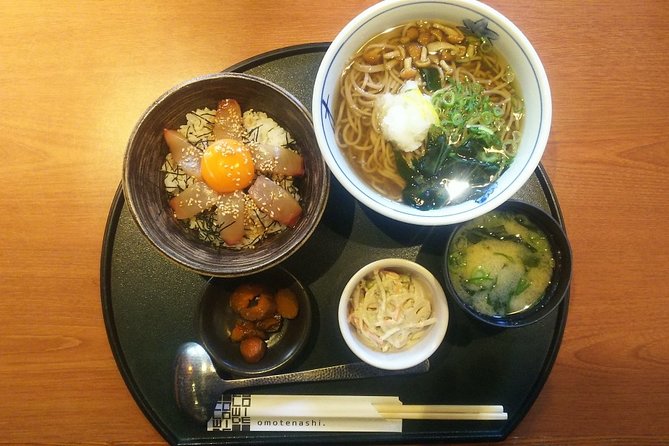
The route includes Kuromon Market, which is a classic spot for food browsing and eating. On this tour, it is not framed as a standalone market detour where you try to figure out what to order. Instead, it functions as one of your major tasting points, with the guide handling the ordering and timing.
One reason guided market stops can feel better than self-guided is that you do not have to make every decision under pressure. You can focus on what you taste and how it fits into the tour plan.
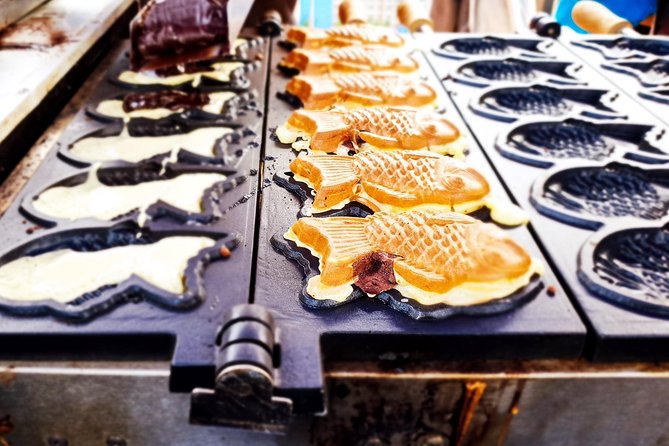
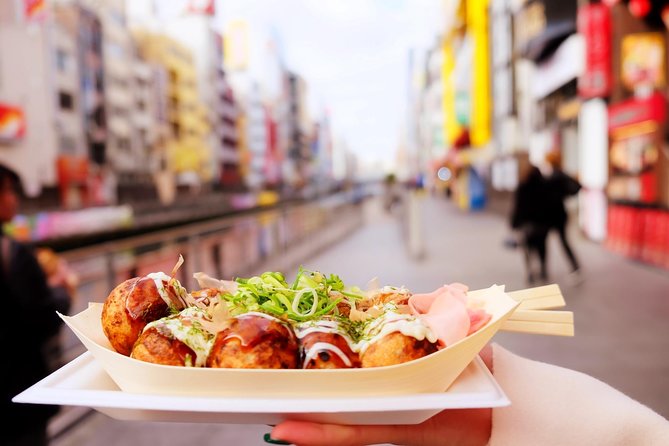
Also, this is one of the stops where you may spot crowd favorites. A review mentions takoyaki as a highlight, and that matches the kind of street-food energy Kuromon is known for in general. Since food substitutions can happen with season and restaurant availability, your exact items might shift, but the spirit stays consistent: local snacks you can recognize, eaten in a way that feels local rather than performative.
Misono Building: a late-stop change of pace
The itinerary also includes Misono Building. There’s not much description attached to this stop in the provided details, but I like that it signals variety. A 3-hour tour that stays only on one street can feel repetitive. Adding a named stop like this gives the route shape, so you walk different textures of Osaka instead of circling the same neon lanes.
Use this as your “keep your eyes up” moment. Even when you are full, watch the small details. Osaka street food culture is as much about the setting and the rhythm as it is about the bite.
What’s actually included in the 4 food stops
Here’s what you are guaranteed in the package:
- Try local dishes at 4 food stops
- 1 drink
- Traditional Japanese dessert
- Local English-speaking guide
That structure is the real value. For $209 per person, you are paying for coordination, timing, and local routing. You are also paying for the “avoid the wrong place” skill, which is hard to replicate if you are solo and trying to research in advance.
Dietary support is clearly included too. The tour is friendly to vegetarian, vegan, pescetarian, shellfish free, and pork-meat free needs. If you have allergies or strong dietary limits, you should still confirm specifics with the operator, but it’s a good sign that the tour is built to handle different eating styles rather than forcing you to sit things out.
Food changes by season and availability. In other words, treat this as a guided sampling route, not a museum exhibit with fixed items. That also keeps the tour flexible and allows the guide to pick places that are actually serving well that day.
Guides and the “why” behind what you eat
The strongest praise across the feedback is not just about taste, it’s about explanation. People describe the guides as people who connect food with Osaka culture and history stories, and who take you to spots a tourist would not naturally find.
Names mentioned in reviews include Ron, Russ, Chiyoe, Natsumi, Mickey, and Kevin. That variety matters because it suggests a consistent approach across different guides: side stories, practical local advice, and a tour tone that feels personal.
One review highlights a guide sharing a story about baseball fans throwing a KFC statue into a river. Another praises Chiyoe for making the tour feel personal, including shrines and that alley moment with the Buddha statue. These are the kinds of details that make the tour feel like more than a checklist.
Another useful point: you can ask your guide for more dining recommendations after the tour. That is smart value, because Osaka restaurants are not always obvious if you only have a short time window.
Practical timing and pacing: why 3 hours feels right
A 3-hour street food tour is long enough to actually eat, but short enough that you still have energy for the rest of your day. You get orientation in Dotonbori and Namba, then you work through multiple stops without the fatigue of a half-day transit-heavy plan.
The route also starts and ends in different areas. It ends around Sennichimae, which can be great if you want to keep exploring after you eat. Just be ready that you will not finish back at the exact same starting point.
Moderate physical fitness is recommended. You should assume you will walk through alleys and market areas. It’s not described as an endurance hike, but it is not just sitting either.
Price and value, based on what’s included
At $209 per person, this tour is not a budget snack crawl. But it has enough structure to justify the price if you value time and guidance.
What you are buying:
- 4 food stops (not just 2 bites)
- 1 drink
- traditional Japanese dessert
- an English-speaking local guide
- route planning to avoid tourist traps and long lines
- photo time and city orientation across Dotonbori and Namba
If you tried to recreate this on your own, the hidden costs would be time, mis-orders, and standing in lines because you picked the wrong place. A guide reduces that friction, especially in a zone like Dotonbori where the most famous spots can also be the most overcrowded.
Also, the group size is max 10. Small group tours often cost more, so the cap is part of the value here.
Should you book this Osaka Dotonbori daytime food tour?
Book it if:
- it’s your first day (or one of your first days) in Osaka and you want to get your bearings fast
- you want street food, but you also want help avoiding the worst lines and most commercial traps
- you appreciate a guide who adds context while you eat, not just a guide who points and disappears
- you want a planned meal with 4 tastings plus dessert
Skip it if:
- you are hoping for a fully fixed menu with no changes, since food and spots can vary by season and availability
- you do not want to walk for about 3 hours through busy streets and market areas
- you are expecting hotel pickup, since that’s not included
If your goal is a smart, guided day in Osaka’s most food-loud neighborhoods, this is a strong match. The combination of tastings, photo-friendly walking, and the “ask me where to eat next” attitude is exactly what makes it feel like value, not just food consumption.
FAQ
How long is the Osaka Dotonbori Daytime Food Tour?
The tour lasts about 3 hours.
How much does the tour cost?
The price is $209.00 per person.
Where does the tour start and where does it end?
It starts at Starbucks Coffee – Tsutaya Ebisubashi in the Dotonbori area and ends in the Sennichimae area.
Is hotel pickup included?
No, hotel pick up is not included, but it can be arranged for an additional charge.
What is included in the tastings?
You get 4 food stops, 1 drink, a traditional Japanese dessert, and a local English-speaking guide.
What is the meeting time?
The tour starts at 11:00 am.
Can children join, and is there any documentation needed?
Yes, it is family-friendly, but children must be accompanied by an adult. For kids 10 and above, a copy of passport information is required.
What dietary needs can be accommodated?
The tour is friendly to vegetarian, vegan, pescetarian, shellfish-free, and pork-meat-free diets.
What is the minimum drinking age?
The minimum drinking age is 21.
What if the weather is bad?
The tour requires good weather. If it is canceled due to poor weather, you will be offered a different date or a full refund.
Fresh options around Osaka
- Osaka Winery Tour with Wine Tasting & Vineyard Walk★ 4.9 · 12 reviews
- Osaka: Early Morning Osaka Castle Guided Tour, Avoid Crowds★ 4.9 · 12 reviews
- Kyoto Day Trip from Osaka Port – Private Shore Excursion★ 5.0 · 13 reviews
- Osaka Private Pop Culture Tour: Historic Tenma to Dotonbori★ 4.5 · 13 reviews
- Osaka Castle Admission Ticket★ 4.0 · 13 reviews
- Hidden Osaka Foodie Tour: Nishinari Backstreets & Local Dining★ 5.0 · 13 reviews
- Discover Real Osaka: A Cultural Walk with Food & Drink★ 5.0 · 13 reviews
- Nara private tour (Shore excursion available from Osaka or Kobe port)★ 5.0 · 13 reviews
Food & Drink, compared.
Shinjuku Food Tour (13 Dishes at 4 Local Eateries)
Read our review →
Tokyo Tsukiji Fish Market Food and Culture Walking Tour
Read our review →
Shinsekai Food Tour with 13-15 Dishes at 5 Eateries
Read our review →
Osaka Food Tour: 13 Dishes at 5 Local Eateries
Read our review →
Shinjuku Food Tour (15 Dishes and 4 Eateries)
Read our review →
Best of Shinjuku: Izakaya Food Tour (4 Stops, 14+ Tastings)
Read our review →
Kyoto Night Foodie Tour in Gion (9+ dishes + 6 Sake tastings)
Read our review →
Hungry Osaka Street Food Tour:15 Tastings & 3 Drinks with a Local
Read our review →Browse the lists this tour appears in