
Reviewed · FOOD & DRINK
Osaka: 2-Hour Nightlife District Walking & Local Food Culture
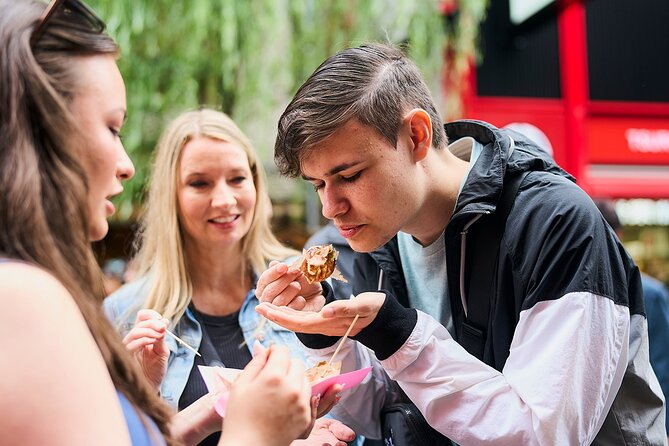
Osaka at night comes with snacks. This 2-hour nightlife walk strings together street food stops in Namba and a guided run through Kuromon’s seafood scene, plus classic sights like the Dotonbori Glico Sign. I love how the tour sets you up to try local favorites like takoyaki and gyoza, and I also like the small-group feel that keeps things personal. One drawback, food from vendors is not included, so you will want to budget extra for what you actually eat.
I also like the balance of chaos and calm. You get loud, neon-energy streets first, then a short breather at Hozenji Yokocho, where the mood turns quiet and even a little magical.
If you hate walking or you are hoping for a sit-down meal, this probably will not feel like the right fit. It is a walk-and-sample experience, not a restaurant tour.
Key things to know before you go
- Two hours, four major stops that cover Namba’s food streets without dragging
- Street food help for picking items like takoyaki and gyoza, plus plenty of seafood options
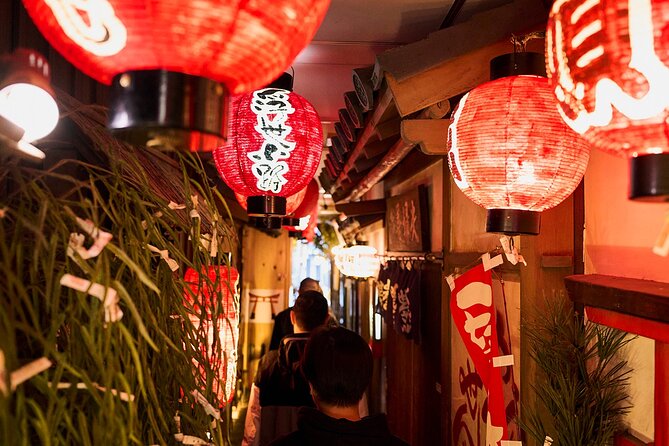
- Hozenji Yokocho pause with the Fudo Myo-o statue and a wish ritual
- Sennichimae Doguyasuji for kitchen-tool culture you will not see on a quick photo loop
- Kuromon Market focus on Osaka’s Kitchen, from fresh seafood to wagyu and sushi
Why this 2-hour Osaka night walk actually makes sense
Osaka is made for night wandering, but it can be hard to know where to start. This tour gives you a simple route that stays in the Namba area and moves at a comfortable walking pace for about two hours.
The best part is how it links food with place. You are not just chasing snacks, you are learning the city’s logic: neon streets for the mood, temple alleyways for the pause, kitchen-tool streets for the craft, and a market for the payoff.
It is also a good first-night plan. If you are new to Osaka, this kind of loop helps you understand where people go after dark and which streets feel built for eating.
More Drinking Tours in Osaka
- Osaka Bar Hopping Night Walking Tour in Namba (3 bars, 6 tastes)
★ 5.0 · 958 reviews - Osaka: Namba Pub Bar Crawl with a Local Guide
★ 4.9 · 424 reviews - Osaka: Izakaya Bars Guided Walking Tour
★ 4.9 · 385 reviews
Meeting at Don Quijote and how the small-group pace helps
You meet at Don Quijote Dotonbori Midosuji, in Nishishinsaibashi, and the tour ends back around the same spot. That is convenient, because you are not left figuring out transit after you finish eating and wandering.
This is a small-group experience, with a maximum of 15 travelers. In a place like Namba, that matters. You can move as a group without losing everyone to crowds, and your guide can actually answer questions about what you are seeing and what you should try.
You will also have an English-speaking guide. That is a practical upgrade for food walks, because street stalls can be quick, loud, and intimidating if you do not know what to look for.
Finally, the tour uses a mobile ticket, which is a small detail but makes your check-in smoother on a phone.
Stop 1: Dotonbori Glico Sign and the start of the Osaka night mood
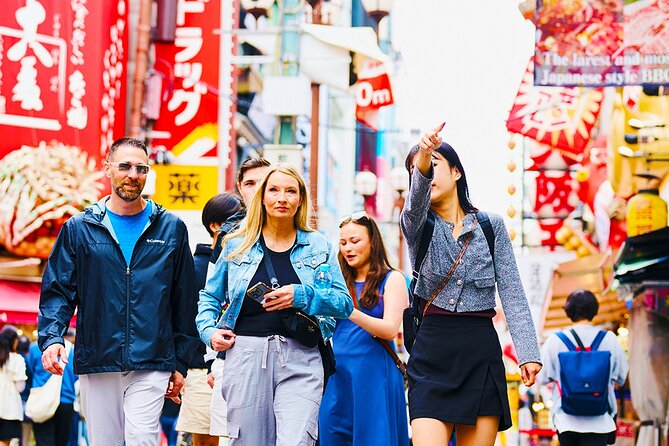
Your first stop is the Dotonbori Glico Sign area. This is one of those instantly recognizable Osaka scenes, and it sets the energy for the rest of the evening.
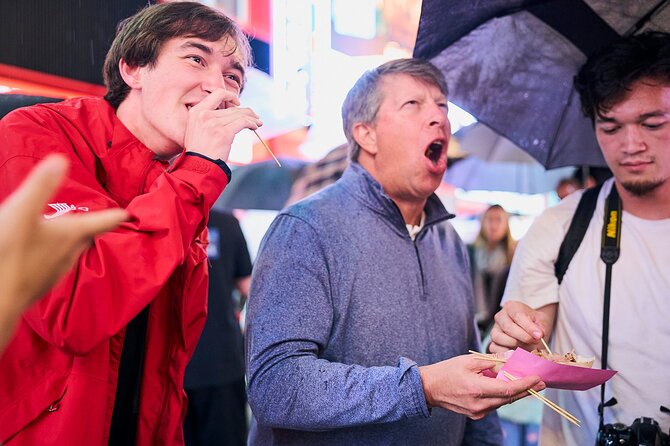
You will spend about 30 minutes here, including time to sample street foods. The tour is specifically built around trying local favorites you might not have picked on your own, including takoyaki and gyoza. If you want an Osaka “starter pack” without overthinking, this is where you get it.
What I like about starting here is the sensory clarity. You can feel the city’s rhythm right away, and your guide can point out things you might miss, like which stalls are better for the kind of flavors you are after.
If you are picky about seafood or you do not love certain textures, tell your guide early. This tour is meant to be adaptable to your tastes, and that matters most at the first food stop.
Stop 2: Hozenji Yokocho and the Fudo Myo-o water wish
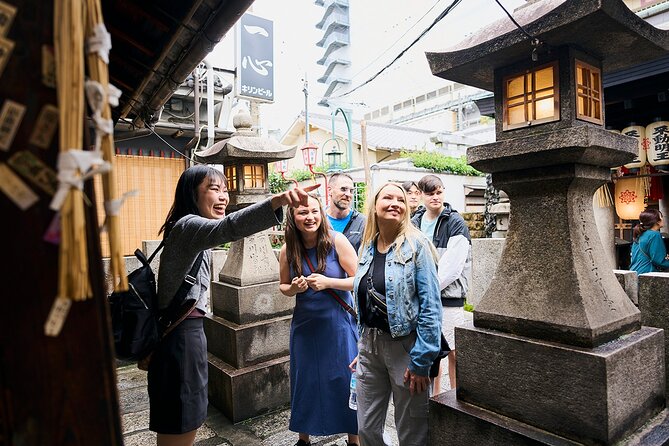
After Dotonbori’s energy, you head to Hozenji Yokocho, with Hozenji Temple as the key highlight. You get about 20 minutes here, and it works like a reset button.
Hozenji Temple is known for a moss-covered statue of Fudo Myo-o. The tradition is that visitors splash water on the statue while making a wish. It is a short ritual, but it adds a sense of meaning that you rarely get on pure street-food walks.
What makes this stop valuable is contrast. In Osaka, you can switch from neon alleyways to a calmer, atmospheric pocket fast. You are not just eating, you are getting a feel for how the city can be loud and still have quiet corners within a short walk.
A practical consideration: it is a temple area, so keep your voice down and watch your footing. If you are carrying snacks in a bag, make sure nothing spills during the alley walk.
More Food Tours in Osaka
- Osaka: Shinsekai Food Tour with 13-15 Dishes at 5 Eateries
★ 4.8 · 2,204 reviews - Osaka Food Tour: 13 Dishes at 5 Local Eateries
★ 5.0 · 2,149 reviews - Hungry Osaka Street Food Tour:15 Tastings & 3 Drinks with a Local
★ 5.0 · 1,727 reviews - Hungry Osaka Street Food Tour: 15 Dishes & 3 Drinks
★ 4.9 · 694 reviews
Stop 3: Sennichimae Doguyasuji, a street built for kitchen tools
Next up is Sennichimae Doguyasuji Shopping Street, with about 20 minutes on this stop. This is one of the most “Osaka-specific” parts of the route because it is not about souvenirs or fashion.
Doguyasuji is known for kitchen tools used by professionals. You see the kind of items that signal Osaka’s cooking culture: practical tools, specialty equipment, and serious attention to the craft behind good food.
Why it matters for a food tour: it explains the city you are eating in. When you understand that people here care about tools and technique, takoyaki, gyoza, and market bites start to feel connected to something deeper than a snack stop.
If you enjoy browsing and you like functional things, you might find this street more interesting than expected. If you are only in hunt-and-go mode, you may want to focus on what you can use at home, like small gadgets or cooking essentials that fit in luggage.
Either way, this stop gives your feet a change of pace. You are walking among kitchen culture instead of only food counters.
Stop 4: Kuromon Market, Osaka’s Kitchen for seafood bites
You finish at Kuromon Market, often called Osaka’s Kitchen. You get about 30 minutes here, and it is the big payoff stop for food.
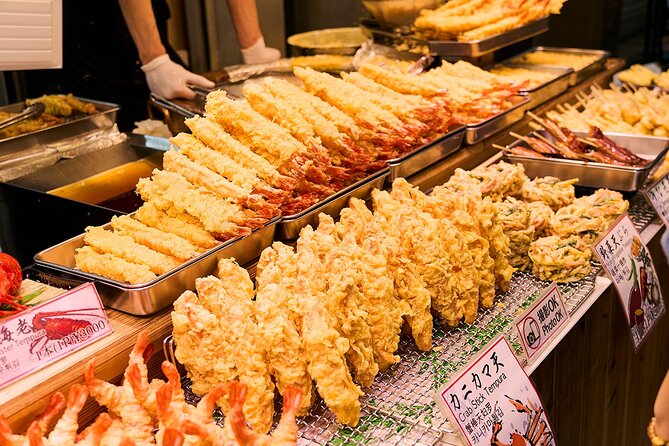
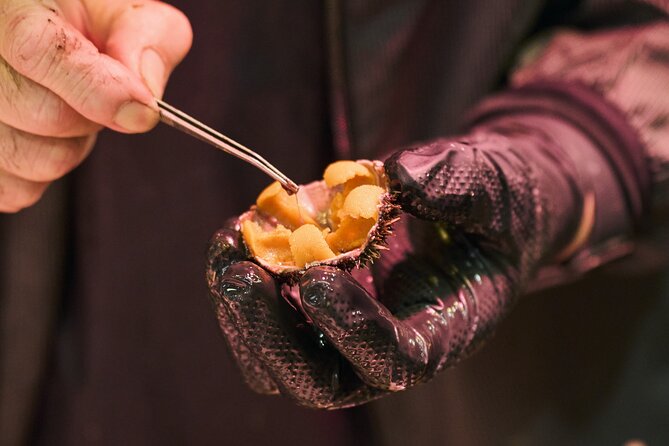
Kuromon Market is packed with fresh seafood, wagyu beef, fruits, sushi, and more. One highlight is watching skill in action, like vendors working quickly and serving you hot, ready-to-eat items.
This is also where the guide helps you make smart choices. If you do not want to guess what is best, your guide can guide you toward tastings that match your comfort level and curiosity. You can also use this stop to try a mix: something seafood-forward, something savory, and something sweet or refreshing if the day calls for it.
A reality check: the tour does not include meals, and it does not include dining-in at restaurants. Food from street vendors is not included in the tour cost. So plan to spend extra here, based on what you want to sample.
If you have allergies or strong dislikes, mention them before you reach Kuromon. Market sampling can be fast, and stalls can overlap flavors. Your guide can help you avoid the worst surprises.
Also, markets can get busy. Bring patience. The reward is worth it, especially when you want an authentic Osaka food snapshot in one concentrated place.
Price and value: $31.84 for the guide and route, plus snack money
At $31.84 per person for about two hours, the main value is not the sites, it is the guided route plus the local food navigation. You pay for someone to bring you to the right streets, help you choose from a lot of options, and explain what you are seeing.
The stops list free admission for the sightseeing portions, which helps. But the tour cost does not include meals or drinks from street vendors. That means your total out-of-pocket can rise depending on how many bites you want to try.
A good budgeting approach is simple:
- Plan for a few snack purchases, not one big meal
- Leave extra cash for Kuromon, since it is the most food-dense stop
- If you are adventurous, you will naturally spend more, so decide your comfort level early
In return, you get structure. Instead of wandering Namba and hoping you find good food, you follow a tight loop with specific stops for street bites and a market experience.
What makes the guides matter on a food walk
This kind of tour lives or dies on the guide’s pace and choices. The feedback you see around guides like Kaz, Nako, and Sayaka is consistent: they stay friendly, they keep things moving, and they help people find both classic and slightly off-the-beaten spots.
That matters because food walking is not only about eating. It is also about timing, crowd sense, and knowing where the best options are right now.
You also get chances to tailor things. One of the praised elements is flexibility to adjust to tastes, with examples like sake being mentioned as an option in some cases. Even if you do not plan to drink, that adaptability is useful if you want more savory bites, less spicy food, or fewer seafood picks.
Who should book this Osaka nightlife district food walk
I think this tour is ideal if you want:
- A first trip to the Namba area and you want fast orientation
- A street-food focus with guidance on what to try, including takoyaki and gyoza
- A mix of food streets and a brief cultural stop at Hozenji Yokocho
- A small-group vibe so you are not swallowed by the crowd
It might be less ideal if you are:
- Not comfortable walking for about two hours in a lively nightlife area
- Expecting all food to be included in the price
- Looking for a sit-down restaurant experience
If you like markets and street snacks, this lands in a sweet spot. You get the city’s eating pulse without needing to plan every stall yourself.
Should you book this Osaka night food walk?
Yes, if you want a smart, time-friendly way to experience Namba after dark. You get a clear route through Dotonbori’s iconic scene, a temple alley stop at Hozenji Yokocho, the kitchen-tool culture of Doguyasuji, and the concentrated food energy of Kuromon Market.
Book it with the right expectations: bring your appetite, expect to pay for what you eat, and use your guide to steer you toward bites you would not easily pick on your own.
If you are short on time in Osaka and want a guided street-food and market snapshot in about two hours, this is a solid value.
FAQ
How long is the Osaka nightlife district walking and food tour?
The tour lasts about 2 hours.
How much does the tour cost?
It costs $31.84 per person.
Is the tour guided, and is there English available?
Yes. The tour includes an English-speaking guided tour.
What kinds of food will I try?
You will try street foods such as takoyaki and gyoza, and you will also explore a seafood market area where you can sample local foods on site.
Are meals included in the tour price?
No. Meals, food, and drinks from street vendors are not included in the tour cost, and the tour does not stop for dining-in.
How big is the group?
The tour has a maximum of 15 travelers.
Where do I meet the guide?
You meet at Don Quijote Dotonbori Midosuji in Nishishinsaibashi, Osaka, and the tour ends back at the meeting point.
Can I get a full refund if I cancel?
Yes. You can cancel up to 24 hours in advance for a full refund.
When you say free admission at the stops, does that mean I do not pay for entry?
The tour listing shows admission tickets as free for the stops included, but you should still plan to pay for any street food you choose to buy.
More Izakaya Nights in Osaka
- Osaka: Guided Pub Crawl
★ 4.4 · 331 reviews - Osaka Pub Crawl and Nightlife Tour
★ 5.0 · 293 reviews - Osaka Local Bar Crawl in Dotombori & Uranamba Area
★ 5.0 · 199 reviews - 3Hour Osaka Pub Crawl Bar Hopping Nightlife Guided Tour in Namba
★ 5.0 · 122 reviews
More Walking Tours in Osaka
- Osaka: Hotspots & Hidden Gems Walking Tour Private or Group
★ 4.9 · 1,300 reviews - Osaka Local Foodie Walking Tour in Dotonbori and Shinsekai
★ 5.0 · 985 reviews - Osaka: Deep Backstreets Walking Tour with Dinner Option
★ 4.9 · 902 reviews - Ultimate Osaka Walking Tour: Castle, Dotonbori & Hidden Gems
★ 5.0 · 862 reviews
Fresh options around Osaka
- Osaka Winery Tour with Wine Tasting & Vineyard Walk★ 4.9 · 12 reviews
- Osaka: Early Morning Osaka Castle Guided Tour, Avoid Crowds★ 4.9 · 12 reviews
- Kyoto Day Trip from Osaka Port – Private Shore Excursion★ 5.0 · 13 reviews
- Osaka Private Pop Culture Tour: Historic Tenma to Dotonbori★ 4.5 · 13 reviews
- Osaka Castle Admission Ticket★ 4.0 · 13 reviews
- Hidden Osaka Foodie Tour: Nishinari Backstreets & Local Dining★ 5.0 · 13 reviews
- Discover Real Osaka: A Cultural Walk with Food & Drink★ 5.0 · 13 reviews
- Nara private tour (Shore excursion available from Osaka or Kobe port)★ 5.0 · 13 reviews
Food & Drink, compared.
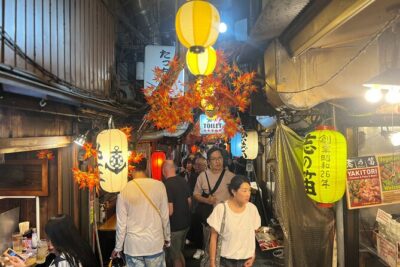
Shinjuku Food Tour (13 Dishes at 4 Local Eateries)
Read our review →
Tokyo Tsukiji Fish Market Food and Culture Walking Tour
Read our review →
Shinsekai Food Tour with 13-15 Dishes at 5 Eateries
Read our review →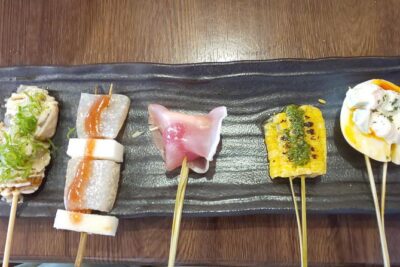
Osaka Food Tour: 13 Dishes at 5 Local Eateries
Read our review →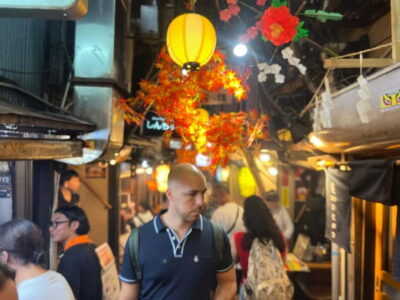
Shinjuku Food Tour (15 Dishes and 4 Eateries)
Read our review →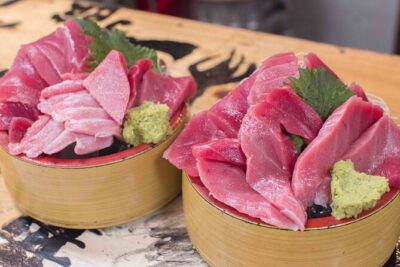
Best of Shinjuku: Izakaya Food Tour (4 Stops, 14+ Tastings)
Read our review →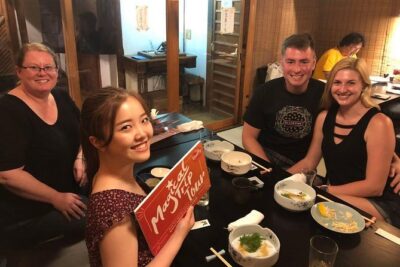
Kyoto Night Foodie Tour in Gion (9+ dishes + 6 Sake tastings)
Read our review →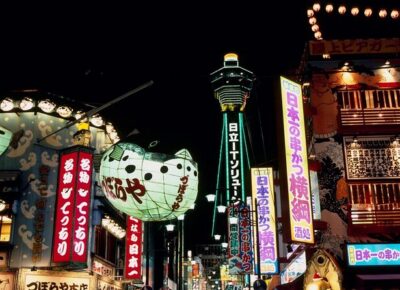
Hungry Osaka Street Food Tour:15 Tastings & 3 Drinks with a Local
Read our review →Browse the lists this tour appears in