Reviewed · FULL-DAY
Kyoto Full-Day Private Tour (Osaka departure) with Government-Licensed Guide
Kyoto in one day, without the stress. This private tour from Osaka pairs you with a government-licensed guide and lets you build a plan from a big menu of Kyoto stops. You get the structure to see real highlights like Fushimi Inari, Gion, and temple neighborhoods without spending your day figuring out train transfers.
Two things I really like: the custom itinerary option and the fact that you’re guided by a licensed local who can explain what you’re actually looking at. It also tends to work well if your time is tight, because you’re not relying on guesswork for route order.
One consideration before you book: this is a walking-heavy day, and it moves fast. Also, temple and shrine admission fees and your lunch are not included, so you’ll want to budget and plan snacks.
Key things to know before you go
- Government-licensed English guide: You get local context, not just directions.
- Pick from 35 Kyoto options: Choose the stops that match your interests, rather than being stuck with a fixed route.
- Walking plan for 8 hours: Great for first-timers, but plan for sore feet.
- Osaka meeting points and pickup on foot: The tour starts with a meet-up in designated Osaka areas.
- Most admission fees are not included: Bring cash or card for entrances and food.
- Private group experience: Only your group joins, so you can move at a pace that fits your day.
Price and Logistics: what you are really paying for
At $201.46 per person for about 8 hours, this is not a budget bus tour. You’re paying for one thing that matters in Kyoto, time and translation: a licensed guide who can manage the day so you see more of the places you care about.
Here is what drives the value:
- You’re not buying entrances. Many stops have admission fees that are not included. That means your guide time is the core purchase.
- You get flexibility. The tour is customizable, and the stop list includes shrines, temples, historic districts, and imperial-related sites.
- You get help navigating. Kyoto is made for walking, but it is also made for wrong turns. A guide helps you avoid wasted time.
Logistics are straightforward, but you should go in prepared:
- It’s a walking tour. Pickup is on foot, not a vehicle from door to door.
- You meet in designated Osaka areas, and there’s also an option for pick-up.
- There’s a mobile ticket and it’s a private activity, so you’re not sharing the day with strangers.
If your ideal day is quick “drive-by photo stops,” this won’t feel like that. If your ideal day is “I actually understand what I’m seeing,” it’s a strong match.
A few more Osaka days worth comparing
- Osaka Go Karting Tour with Funny Costume
★ 5.0 · 2,658 reviews - Osaka Castle: Museum and Tower Entry Ticket
★ 4.5 · 2,380 reviews - Osaka: Shinsekai Food Tour with 13-15 Dishes at 5 Eateries
★ 4.8 · 2,204 reviews
The licensed guide effect (why it changes Kyoto)
Kyoto is visual, but it is also layered. If you walk in without context, you get scenery. With a guide, you get meaning.
Across guide experiences from past groups, a pattern shows up:
- Guides often manage timing tightly and keep everyone moving, especially for places like Gion where backtracking can burn time fast.
- Many guides focus on practical navigation, including how to use trains to get from one area to the next efficiently.
- The best guides also tailor the plan to your group’s stamina. For example, some groups specifically praised guides for accommodating kids or for adjusting when people fell behind.
You’ll also benefit from the way licensed guides explain “why this matters.” The sites on this day are not random. They map onto Kyoto’s big themes: shrine worship, Zen temple gardens, imperial history, and the neighborhoods where culture still shows up in everyday streets.
Building your custom Kyoto day from a 35-stop menu
You can choose from 35 points of interest to create a custom itinerary. The exact order can vary based on your interests and the day’s pace, but the menu includes major anchors across Kyoto, plus smaller temples you might not find easily on your own.
When I think about choosing, I suggest you do it in blocks:
- Pick one shrine or gateway highlight (Fushimi Inari is the obvious one here).
- Pick one imperial or castle-style historical stop (Nijo Castle or Kyoto Imperial Palace).
- Pick one old-streets or market area (Nishiki Market, Gion, Pontocho, Higashiyama).
- Pick one Zen temple zone (Ginkakuji, Nanzenji Suirokaku, Kinkakuji, Ryoanji area options, and more).
- If you want scenery and gardens, add Arashiyama (Tenryu-ji, bamboo walk area, Togetsukyo Bridge, Okochi Sanso Garden).
This approach keeps your day cohesive. It also makes the walking easier to mentally track.
Fushimi Inari and early shrine energy
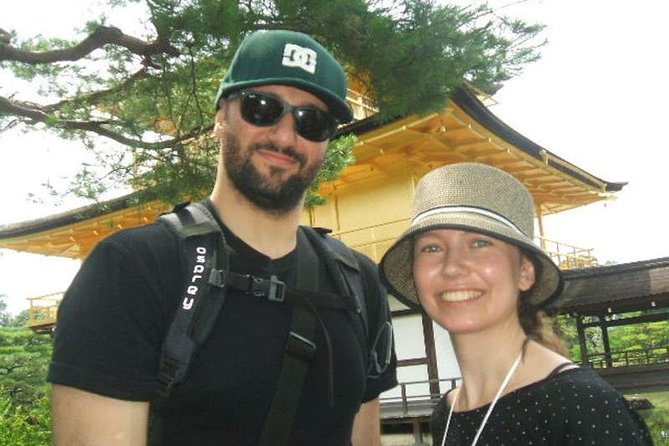
Stop 1: Fushimi Inari-taisha Shrine
This is the start button for a Kyoto day. Fushimi Inari is famous for a reason: thousands of torii gates create a walking corridor that feels almost unreal. A guided stop helps because you’ll learn what you’re seeing, not just that it looks photogenic. The tour notes that this segment is a short visit, with the admission listed as free.
Quick drawback: if you hate crowds or long lines, you’ll want to treat this as a “arrive with focus” stop. The gates draw people, even on shorter visits.
Same corner of Japan, a different kind of day:
- Osaka Food Tour: 13 Dishes at 5 Local Eateries
★ 5.0 · 2,149 reviews - Hungry Osaka Street Food Tour:15 Tastings & 3 Drinks with a Local
★ 5.0 · 1,727 reviews - Osaka: teamLab Botanical Garden Entry Ticket
★ 4.5 · 1,710 reviews - Osaka: Tea Ceremony Experience
★ 4.9 · 1,426 reviews
Kiyomizu-dera and the Higashiyama classic circuit
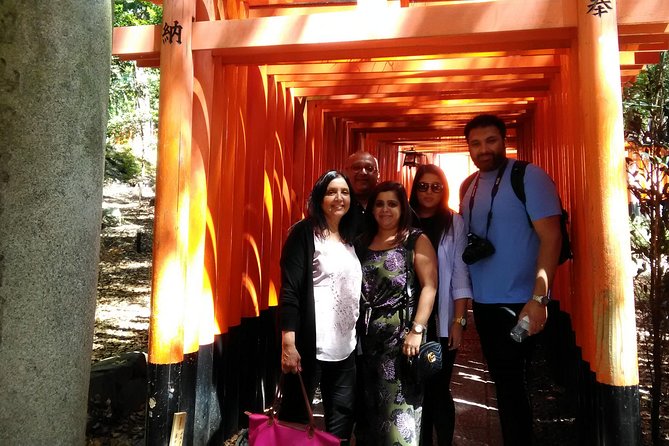
Stop 2: Kiyomizu-dera Temple
Kiyomizu-dera is one of Kyoto’s best-known temples, and the tour plans a guided look around the grounds. Admission is not included. With a guide, you’re better positioned to notice the details people miss when they rush.
Stop 8: Higashiyama Ward
This is where old Kyoto still feels like old Kyoto. The plan includes a chance to walk in the historic district around the lower slopes of the eastern mountains. Admission is free, so it’s a good place to spend time soaking up street rhythm.
Stop 34: Kennin-ji Temple
Kennin-ji sits close to the busier streets of Hanamikoji and Shijo. That contrast is useful. You get a temple space without giving up the convenience of the downtown grid. The tour lists this as a short stop, with admission not included.
Practical note: Kiyomizu-dera plus Higashiyama and Kennin-ji can create a very “Kyoto postcard” loop. That’s great if you want first-timer highlights, and it can feel repetitive if you are already spending several days in central Kyoto.
Nijo Castle for power, design, and UNESCO-level drama
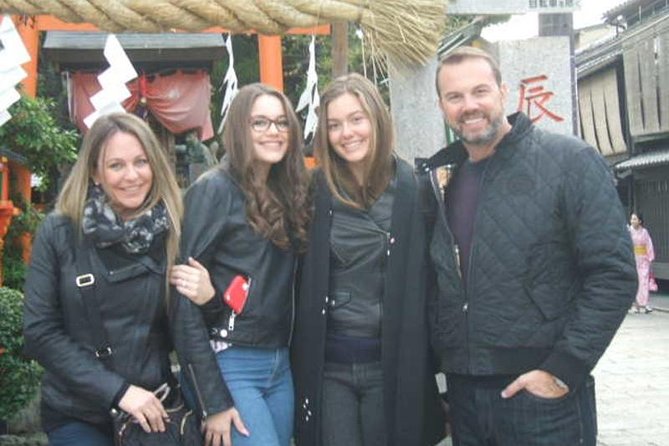
Stop 3: Nijo Castle
This UNESCO World Heritage site was built in 1603 as the Kyoto residence of Tokugawa Ieyasu, and it connects Kyoto directly to the Edo Period power structure. It is a smart counterpoint to the more spiritual feel of shrines and Zen temples.
Admission is not included, and this is another “short stop” style segment. If you love castles and defensive architecture, ask your guide whether you can add a bit more time here, based on your group’s pace.
Gion and Pontocho: where Kyoto still performs quietly
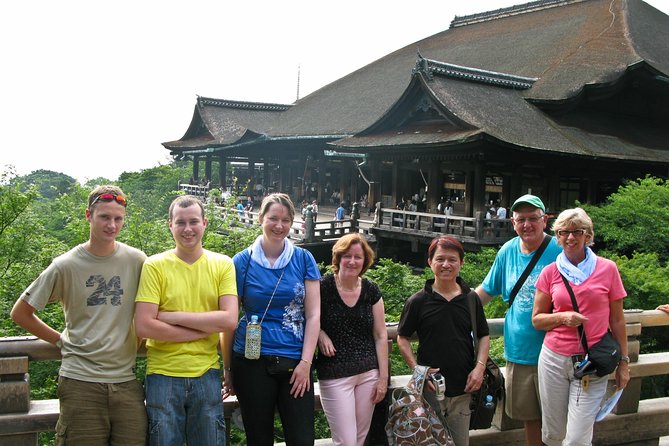
Stop 4: Gion
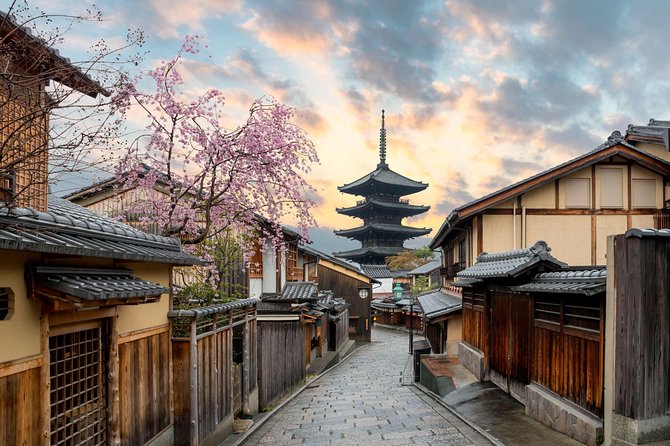
Gion’s narrow alleyways can overwhelm first-timers. The value here is that your guide helps you move through the district without wandering randomly, and you get context about geisha culture while you walk.
Stop 7: Pontocho
Pontocho is one block west of the Kamogawa River, a compact dining alley that looks good at any hour. The tour lists admission as free, so this is often a low-friction add-on if you still have energy.
If you want photos, you’ll like these two stops. If you want quiet contemplation, you might find the downtown evenings a bit too lively, depending on timing.
Nishiki Market for Kyoto food logic, not just shopping
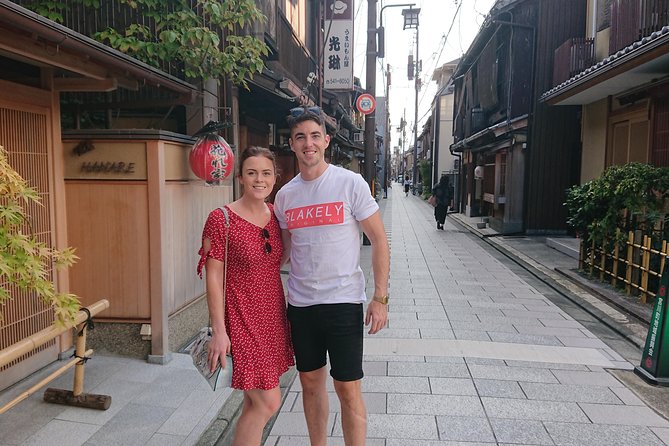
Stop 5: Nishiki Market Shopping District
Nishiki is narrow and about five blocks long, packed with more than one hundred shops and restaurants. It’s known as Kyoto’s Kitchen, and the tour treats it as a quick, guided cultural stop.
The smart way to use Nishiki during an 8-hour day:
- Go in hungry enough to taste one or two things.
- Don’t plan on browsing every stall if you’re also hitting temples later.
Admission is listed as free, which makes it a cost-friendly part of your day.
Kyoto Imperial Palace: state history in a calm setting
Stop 6: Kyoto Imperial Palace
The imperial palace complex used to be the residence of Japan’s Imperial Family until 1868, when the emperor and capital moved to Tokyo. The tour includes a short stop, and admission is not included.
Why it’s valuable: it adds an official, political layer to a day that otherwise leans religious or neighborhood-based. It also gives you a bit of breathing room compared to street shopping areas.
The Zen temple chain: Ginkakuji, Nanzen-ji, Tofuku-ji, Toji, Kinkakuji
Kyoto’s Zen sites are visual in different ways. Some are about simplicity and stone. Some are about scale and garden composition. This tour includes several key options.
Stop 9: Ginkakuji Temple (Silver Pavilion)
Built as a retirement villa modeled after earlier styles, Ginkakuji is a classic Higashiyama-area Zen stop. Admission is not included.
Stop 10: Nanzenji Suirokaku
Nanzenji is described as a major Zen temple with spacious grounds at the base of Higashiyama. Suirokaku is part of the visit. Admission not included.
Stop 11: Tofuku-ji Temple
Tofukuji is known for autumn colors, though it’s still famous year-round for its Zen atmosphere and temple scale. Admission not included.
Stop 12: Toji
Toji is a major temple whose name means East Temple. Founded around the early Heian Period after the capital moved to Kyoto. Admission is listed as free.
Stop 13: Kinkakuji Temple (Golden Pavilion)
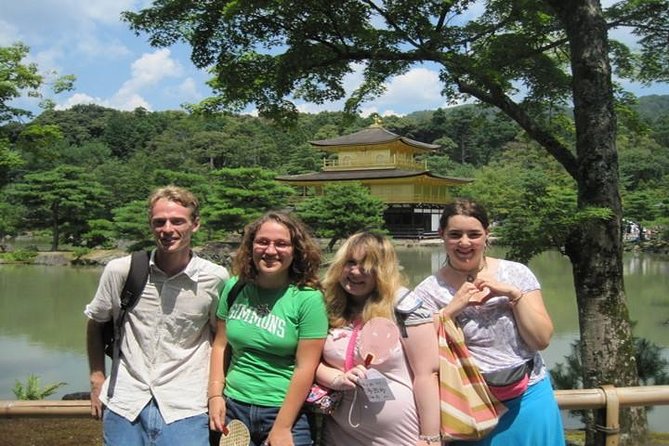
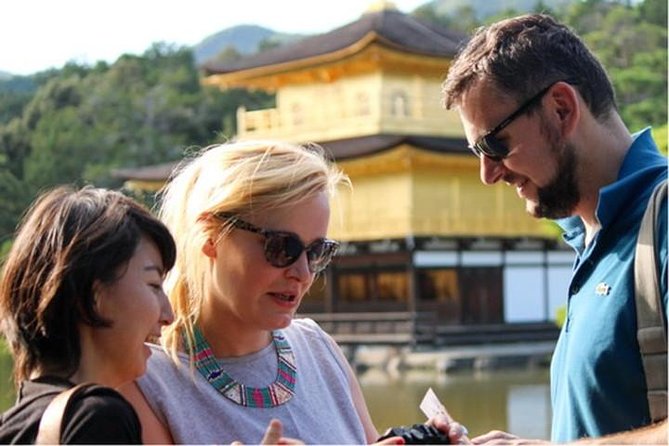
Kinkakuji’s top floors are covered in gold leaf. Admission is not included. This is one of the fastest “wow” factors in Kyoto, especially if you’ve been leaning more contemplative elsewhere.
Stop 14: Ninna-ji Temple
Another UNESCO-listed temple. It’s the head temple of the Omuro School of Shingon Buddhism, founded in 888. Admission not included.
Stop 15: Shugakuin Imperial Villa
A 17th-century imperial villa managed by the Imperial Household Agency. It includes Upper, Middle, and Lower Villa areas in its description. Admission not included.
These stops make a strong Zen history thread. The drawback is timing: the tour often allocates very short windows (listed as about 10 minutes per stop). If your favorite travel style is slow garden watching, you may want to choose only one or two temple-heavy stops from this cluster for your custom mix.
Northern mountain atmosphere: quiet stops with legend and mossy scenes
If you like Kyoto when it feels less like a theme park, these additions can help.
Stop 16: Kibune River
A forested valley town that developed around Kifune Shrine. The tour includes a legend involving a goddess journey from Osaka. Admission not included.
Stop 17: Kurama-dera
Kurama is a rural northern area known for Kurama-dera and a hot spring, with admission not included.
Stop 18: Ryoan-ji Temple
Famous for Japan’s most well-known rock garden. Admission not included. This is the kind of stop where context matters, because the whole point is in the layout and perception.
Stop 19: Arashiyama
Arashiyama is a western Kyoto district known for scenic tradition going back to the Heian Period. Admission not included.
Stop 20: Katsura Imperial Villa
A top-tier example of Japanese architecture and garden design, completed in 1645 as a residence. Admission not included.
Stop 21: Daikaku-ji Temple
Part of the Saga area, originally built as a detached palace for Emperor Saga. Admission not included.
Stop 22: Tenryu-ji Temple
Tenryu-ji is described as the most important Arashiyama temple and a world heritage site. Admission not included.
Arashiyama is a big draw. If you want a calmer feel, choose when you go and how many Arashiyama stops you pack into your day. Too many can turn the afternoon into a sprint.
Arashiyama bamboo, Togetsukyo Bridge, and Okochi Sanso Gardens
This is where Kyoto feels most cinematic.
The plan includes:
- Togetsukyo Bridge as the iconic Arashiyama landmark, with its Heian Period origins and later reconstruction noted.
- A walk through bamboo grove paths for gentle swaying and breeze movement.
- Stop 24: Okochi Sanso Garden, the former villa of actor Okochi Denjiro.
- Stop 25: Tenryu-ji Temple and Stop 26: Daikaku-ji Temple listed again as part of the broader Arashiyama zone.
- Stops 27 to 31: smaller hillside temple options in the west mountains area, including Jojakkoji, Nisonin, Gio-ji, Adashino Nenbutsu-ji, and Otagi Nenbutsu-ji.
- Stop 30: Adashino Nembetsu-ji Temple and Stop 31: Otagi Nenbutsu-ji Temple are especially distinctive if you like unusual temple themes. Otagi Nenbutsu-ji is known for 1200 stone statues of rakan with different facial expressions.
Why this part of the day works: it mixes big icons with quieter, character-filled temple spaces. Why it can be tricky: it’s a lot of moving between different areas within western Kyoto. Your guide’s route decisions matter a lot here.
The Saga-by-slow contrast: Adashino and Otagi’s statue gardens
If you pick one “different Kyoto” option from the western mountain side, consider:
- Jojakkoji: a mountainside temple with maple trees and moss along paths and stairs.
- Nisonin: similar hillside temple feel, with larger imposing buildings and an atmosphere shaped by overhanging trees.
- Gio-ji: described as even more tucked into forest, known for a moss garden punctuated by maple.
- Adashino Nenbutsu-ji: at the end of the Saga-Toriimoto preserved street, tied to legendary statue placement for souls.
- Otagi Nenbutsu-ji: the famous 1200 rakan stone statues.
These aren’t as famous globally as Fushimi Inari or Kinkakuji, which is a plus. But they still require decent walking stamina.
Uji and the Phoenix Hall: Byodoin Temple as the far-side payoff
Stop 35: Byodoin Temple
Byodoin Temple in Uji is known for its Phoenix Hall, listed as a National Treasure and a UNESCO World Heritage Site. The tour notes extra travel time because it’s located in Uji city in Kyoto prefecture.
This is the stop I would treat as optional based on your priorities. If you love iconic architecture and you’re okay spending time getting there, it’s a big payoff. If your day is already packed with temples and districts, Byodoin can stretch your schedule.
How the day usually paces: short stops, smart transitions
Even though the tour can offer a long menu, many segments are listed as around 10 minutes each. That tells you what the experience is designed to do:
- You see a lot of major sites in one day.
- You rely on your guide to explain the essentials fast.
- You use your time for photos and “first look” understanding, then decide later if you want to return on your own for deeper time.
Some guides are praised for being organized and for keeping groups on track. Others have been flexible when schedules ran tight. One guide story also highlights how they helped groups connect through trains and met them at cruise terminals in Osaka. That kind of on-the-ground competence is where private tours score points.
So go in with the right expectation: this is not a slow temple marathon. It is a high-efficiency Kyoto sampler guided by a local expert.
What to eat and how to carry energy for 8 hours
The tour doesn’t include lunch, so you will be buying food on your own. The best strategy is simple:
- Plan snacks you can eat fast between sights.
- Use Nishiki Market for a small tasting meal or quick bites.
- Keep water handy during walking-heavy sections.
One review tip stands out for me: bring a snack because there is a lot of walking. That matches the tour structure. If you think you will skip snacks, you might start feeling it before the afternoon.
Who this tour suits best
This Kyoto private tour is a good fit if:
- You are short on time and want the biggest “Kyoto hits” in one day.
- You want English guidance and local explanations, not just a list of stops.
- You prefer walking through neighborhoods like Gion and Higashiyama rather than driving past them.
- Your group can handle a full day of movement, even if individual stops are short.
It may be less ideal if:
- You want hours inside each temple with zero rushing.
- You hate crowds at major sites like Fushimi Inari and Arashiyama.
- Your group has very limited walking tolerance.
Should you book this Kyoto full-day private tour from Osaka?
I’d book it if you want a guided Kyoto day where you get real context and a workable route from Osaka, and you’re okay paying for guide time rather than bargain transport. The licensed-guide approach matters a lot in Kyoto, especially for first-timers who don’t want to waste half a day figuring out how to get from one temple cluster to the next.
I would skip or modify if you’re sensitive to heavy walking or you want a relaxed, linger-style itinerary. In that case, choose fewer stops from the menu so your guide can give you deeper time where it counts.
If you do book, plan around three priorities: pick your top shrine, top Zen or temple experience, and one neighborhood for food and streets. Then let your guide handle the rest so you spend the day looking up, not down at maps.
FAQ
How long is the Kyoto full-day private tour from Osaka?
It is approximately 8 hours.
Does the tour include pickup in Osaka?
Pickup is offered, and there is a meet-up within designated Osaka areas. The tour is described as a walking tour, with pickup on foot.
Is this a private tour?
Yes. Only your group participates.
What sites can we visit in Kyoto?
You can choose from 35 points of interest. The plan includes stops such as Fushimi Inari-taisha Shrine, Nijo Castle, Gion, Nishiki Market, and multiple Zen temples and districts including Higashiyama and Arashiyama.
Are temple or shrine admission fees included?
No. Transportation and entrance fees are not included.
Is lunch included?
No. Lunch is not included, and you will cover personal expenses.
What is the guide like?
You get a licensed local English-speaking guide.
Is the itinerary fixed?
The tour is customizable, with the option to choose 3 to 4 Kyoto sites from a larger menu.
Can I use a mobile ticket?
Yes, a mobile ticket is included.
What if I need to cancel?
You can cancel for a full refund if you cancel at least 24 hours in advance.
Fresh options around Osaka
- Osaka Winery Tour with Wine Tasting & Vineyard Walk★ 4.9 · 12 reviews
- Osaka: Early Morning Osaka Castle Guided Tour, Avoid Crowds★ 4.9 · 12 reviews
- Kyoto Day Trip from Osaka Port – Private Shore Excursion★ 5.0 · 13 reviews
- Osaka Private Pop Culture Tour: Historic Tenma to Dotonbori★ 4.5 · 13 reviews
- Osaka Castle Admission Ticket★ 4.0 · 13 reviews
- Hidden Osaka Foodie Tour: Nishinari Backstreets & Local Dining★ 5.0 · 13 reviews
- Discover Real Osaka: A Cultural Walk with Food & Drink★ 5.0 · 13 reviews
- Nara private tour (Shore excursion available from Osaka or Kobe port)★ 5.0 · 13 reviews
Full-Day, compared.
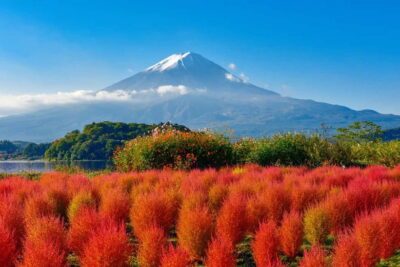
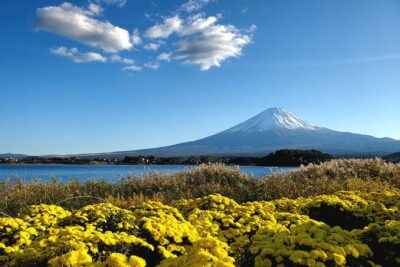
Mount Fuji Full-Day Private Tour from Tokyo (Customizable)
Read our review →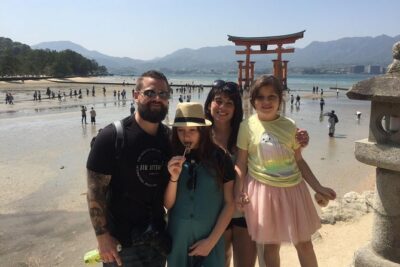
Hiroshima / Miyajima Full-day Private Tour with Government Licensed Guide
Read our review →
Tokyo Private Full-Day Tour by Car or Van
Read our review →

5 Top Highlights of Kyoto Full Day Bike Tour (E-bike option)
Read our review →
Full Day Biking Tour Exploring the Best of Kyoto
Read our review →