
Reviewed · ARASHIYAMA & BAMBOO TOURS
Kyoto Arashiyama & Sagano Bamboo Private Tour with Government-Licensed Guide
Arashiyama can feel like a zoo, or it can feel calm. With a government-licensed private guide, you get a focused walk through Arashiyama and Sagano, with clear crowd-avoid guidance and history that actually makes the sights click. I like that you can ask questions face to face, and that you’re not stuck standing around wondering what you’re looking at. The one drawback to keep in mind is the walking, plus many entries and activities cost extra since admission fees are not included.
For six hours, you’re basically building your own best-of day in western Kyoto. One person in your group sets the pace, and the guide helps you choose which temples and gardens are worth your time based on your interests and the day’s energy. If you want bamboo, temples, and scenery without turning your vacation into a navigation project, this is a strong match.
Key highlights worth planning around
- Government-licensed guide in English, so questions about temples, gardens, and Kyoto culture are easy
- Private walking pace for your group, including time for breaks and snacks
- Arashiyama bamboo and Togetsukyo Bridge, iconic sights with smart routes around the busiest moments
- Imperial villas (Shugakuin and Katsura), where access rules shape what you see and how you photograph
- Hillside temples in Sagano, like Jojakko-ji, Nisonin, and Gioji, built for quiet views
- Optional mountain-side detours, such as Kurama-dera and Kibune, if you want a slower, greener vibe
Setting up your Arashiyama and Sagano day without stress
This tour is built for people who want the right amount of structure. You meet your guide in Kyoto, and the pickup and drop-off are on foot, not in a private vehicle. That matters because you’re not paying for car time, you’re paying for an expert guide to get you moving efficiently and understanding what you’re seeing.
The day is designed around walking, with site stops that are often around 20 minutes each, and a few places that naturally take longer because they require a guided entry (like the imperial villa experiences). You’ll also have flexibility to pick 3 to 4 sites from the available list, which is key if you want your day to fit your interests instead of someone else’s.
More Arashiyama tours:
- Kyoto: Fushimi Inari, Kinkakuji, Bamboo Grove 1 Day Bus Tour
★ 4.8 · 4,316 reviews - Osaka/Kyoto:Kinkakuji,Arashiyama,FushimiInariShrine,NaraPark
★ 4.1 · 1,596 reviews - Kyoto/Osaka: Nara, Fushimi Inari Taisha, Arashiyama Bus Tour
★ 4.7 · 1,275 reviews
Arashiyama first: Togetsukyo Bridge, bamboo paths, and how to time the vibe
Most people start in Arashiyama because that’s where the recognizable Kyoto moments stack up quickly. You get the heart of it fast: Togetsukyo Bridge and the bamboo area are close enough that a private guide can shape your route around foot traffic.
Togetsukyo Bridge (the Moon Crossing Bridge)
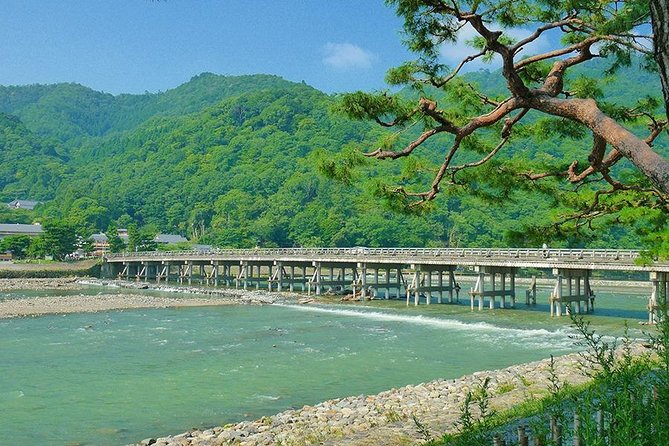
Togetsukyo is Arashiyama’s signature landmark, with roots in the Heian period and a reconstruction done in the 1930s. It looks best when the background mountains and river park line up with the angle you’re standing at. One practical tip your guide can help with is where to position yourself so you’re not only photographing a crowd.
Admission here is free, and you’ll also have the riverside park nearby, including cherry trees that pop in spring.
Bamboo Forest Street: the “sway effect”
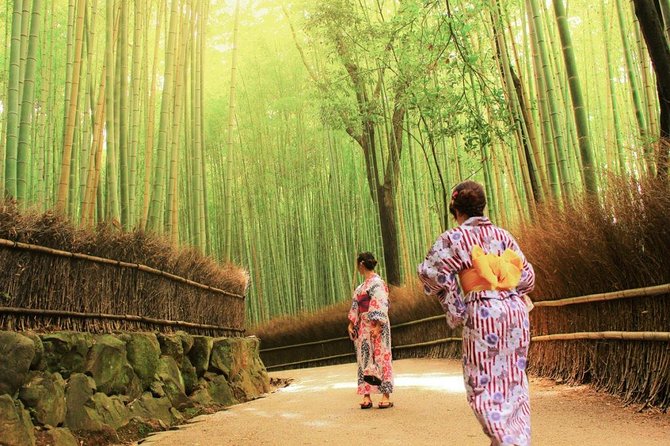
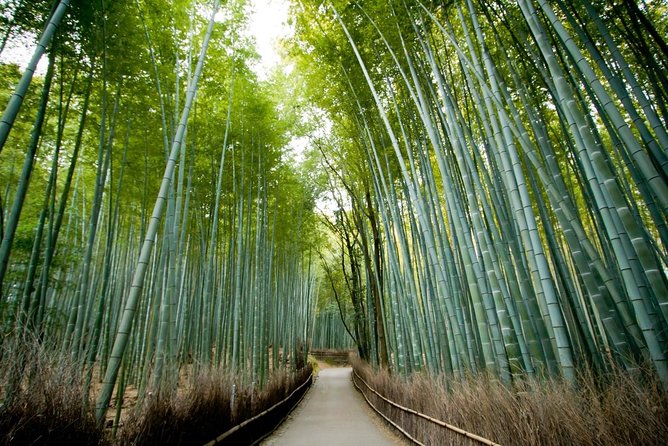
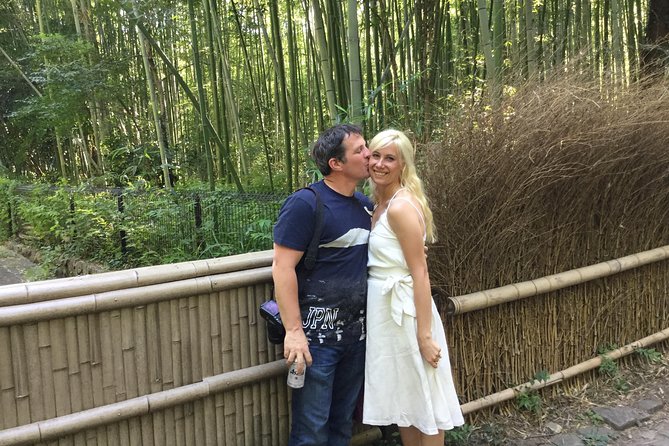
Yes, the bamboo forest is famous. What makes it worth your time is how it moves. When there’s even a light breeze, the tall stalks sway, and the paths through the grove feel different every minute. Bamboo has been used for products like baskets and mats for centuries, and it’s one of those details your guide can connect to everyday life.
Also, it’s a section where you’ll appreciate a guide’s timing choices. On busy days, you want to avoid getting stuck in the longest photo bottlenecks for the least rewarding angles.
A few more Kyoto days worth comparing
- PERFECT KYOTO 1-Day Bus Tour
★ 5.0 · 13,518 reviews - Kyoto: Tea Ceremony in a Traditional Tea House in Kiyomizu
★ 4.9 · 3,519 reviews - Kyoto Geisha Walking Tour: Gion District & Hidden Gems
★ 4.7 · 3,273 reviews - Kyoto: Tea Ceremony Ju-An at Jotokuji Temple
★ 4.9 · 3,207 reviews
Imperial villas in Shugakuin and Katsura: beautiful, but rules change what you do
If you want Kyoto that feels less like a photo factory and more like garden design, imperial villas are your ticket. This program can include Shugakuin Imperial Villa and Katsura Imperial Villa, but the experience is shaped by access rules and guided entry requirements.
Shugakuin Imperial Villa: Emperor Gomizuno’s garden world
Shugakuin was built in the 1600s by Emperor Gomizuno and is managed by Japan’s Imperial Household Agency. The villa is organized into multiple areas, with gardens and buildings in a traditional imperial style. Its name links back to an older temple built on the site in the 10th century, so you get a sense of layers rather than one single era.
One nice detail is that the surrounding farmlands were acquired by the Imperial Household Agency and leased out to local farmers. That helps the area feel lived in, not staged.
Admission is not included, so you’ll want to plan on separate fees if you choose this stop. Your guide can help you understand what to prioritize once you’re there.
Katsura Imperial Villa: a guided garden circuit and tight photo rules
Katsura is one of Japan’s most famous examples of architecture and garden design. The current form was completed in 1645, and it’s tied to the Katsura family within the imperial circle.
Here’s the key point: visiting Katsura requires joining a tour. The tour follows a circular walking trail around the central pond. You can view palace buildings only from the outside, and photography is allowed only from designated spots. English tours are available.
If you dislike rigid rules, tell your guide upfront. If you like garden design and want to see why Japanese landscape composition is taken so seriously, Katsura can be worth every yen and every careful photo limit.
Sagano’s temple calm: Tenryu-ji, Daikaku-ji, Jojakko-ji, Nisonin, Gioji
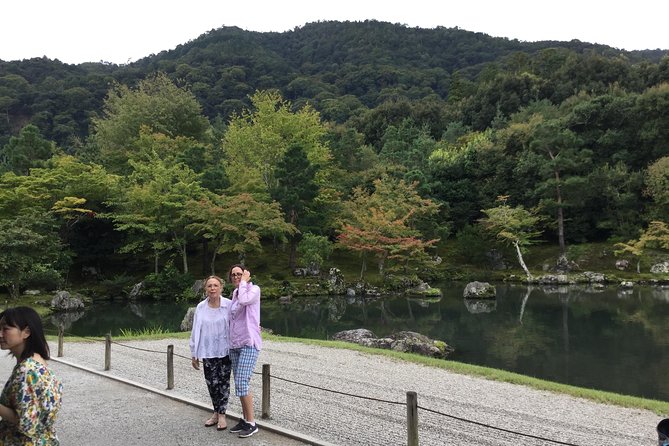
Sagano temples tend to feel more spacious and more vertical, built into hillsides with views over Kyoto. That’s great for escaping the loudest crowds in the most tourist-heavy pockets.
Tenryu-ji: one of Kyoto’s top Zen temple experiences
Tenryu-ji is a major Zen temple in Arashiyama, founded in 1339 and listed among Kyoto’s five great Zen temples. It’s also part of UNESCO World Heritage.
What you’ll actually feel on the ground is the pacing. You get temple buildings plus garden paths that invite slow walking. If you want a place where your guide can explain what you’re seeing without turning it into a lecture, Tenryu-ji is a good pick.
Daikaku-ji: an imperial palace turned into a Shingon temple
Daikaku-ji began in the early 800s as Emperor Saga’s detached palace. Later, it was converted into a temple, and it became one of the higher-ranked Shingon Buddhist sites.
This is a place where history is more than trivia. It hosted peace talks in the 12th century that helped reunite the Northern and Southern Imperial courts after a long civil war. The grounds also include a large pond and a pagoda, which gives you open space to reset after busy bamboo areas.
Jojakko-ji: hillside steps, maple, and quiet sightlines
Jojakko-ji is founded in 1596 and sits on a hillside with small, understated buildings and gates. It’s the kind of place where maple trees and moss show up right beside the paths and stairs. From certain spots, you can look out over Kyoto, which is one reason guides often choose it when someone wants views without a huge climb.
Nisonin: Tendai temple with a view and overhanging trees
Nisonin is another hillside temple in the same quiet mood. It belongs to the Tendai sect and has overhanging trees along the approach, which makes it feel shaded and subdued. Views from the upper grounds are part of the payoff.
Gioji: moss garden with thatched roofs
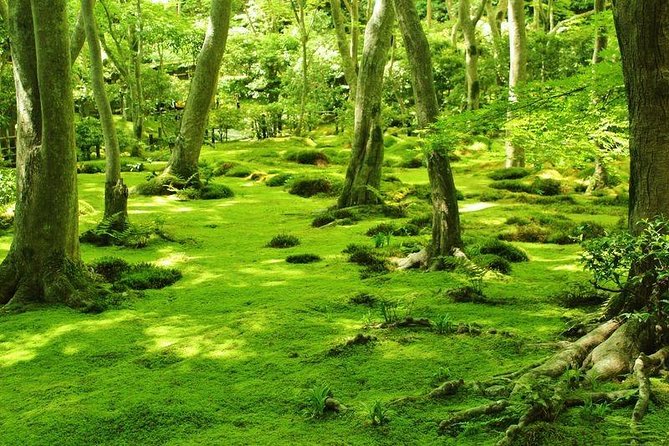
Gioji is known for its moss garden, plus tall maple trees that add contrast when seasons shift. The entrance gate and the small main hall have thatched roofs, and the main hall features a round window that frames the garden.
This stop often works well for travelers who want one “slow” temple where the setting does half the talking.
Okochi Sanso, Adashino, and Otagi: villas and statue temples in the Saga woods
This part of the day leans more unusual than the standard headline checklist. It’s also where you can feel the personal touch of a private guide, because you’ll choose what type of beauty you want.
Okochi Sanso Garden: actor Okochi Denjiro’s villa
Okochi Sanso was the former villa of actor Okochi Denjiro. The complex includes several gardens, tea houses, and gates, plus living quarters. The big limitation: buildings can only be viewed from the outside.
So if you’re the kind of person who loves garden composition and walking through viewpoints, it can still feel rewarding, even with the visual restriction.
Adashino Nenbutsu-ji: hundreds of stone statues, plus a bamboo path
Adashino Nenbutsu-ji is at the end of the Saga-Toriimoto Preserved Street. It was founded in the early 800s, connected to Kobo Daishi placing stone statues for souls of the dead. Today, the grounds are covered with hundreds of those stone statues, each tied to a memorial feel rather than a sightseeing feel.
At the back, there’s a short path through a bamboo forest, which adds a softer, more natural contrast after so many statues.
Otagi Nenbutsu-ji: 1,200 rakan faces and expressions
A short walk north brings you to Otagi Nenbutsu-ji, famous for 1,200 stone statues of rakan, with different facial expressions. These statues were created relatively recently, in the 1980s and early 1990s, which gives this stop a “modern tradition” feeling.
It can also be unexpectedly fun. You start noticing expressions and storytelling in a way that feels personal, not ceremonial-from-a-distance.
Optional mountain-side side quests: Kurama-dera and Kibune valley
If you want a day that breaks away from the Arashiyama and Sagano hotspots, ask your guide about mountain-side options from the available list. These can slow the pace, and they bring a different Kyoto mood.
Kurama-dera and Kurama Onsen: temple plus one of the easiest hot spring escapes
Kurama is a rural mountain town less than an hour from the city center. It’s known for Kurama-dera and the onsen options, especially Kurama Onsen at the upper end of town.
Guests can use baths for free. Daytrippers pay 2,500 yen for access to all baths, or 1,000 yen for just the outdoor bath (rotemburo). There’s an approachable 10-minute walk from the train station, either along the only road or along a nature trail by the river.
This is a great choice if you want your Kyoto day to end in something restorative. It also helps if your group is okay swapping some “classic photo stops” for a calmer, greener experience.
Kibune valley and Kifune Shrine: water prayers and omikuji you dip
Kibune is a forested valley town built around Kifune Shrine. The legend is romantic and specific: a goddess traveled by boat from Osaka to the mountain north of Kyoto, and the shrine was built at the point where her journey ended.
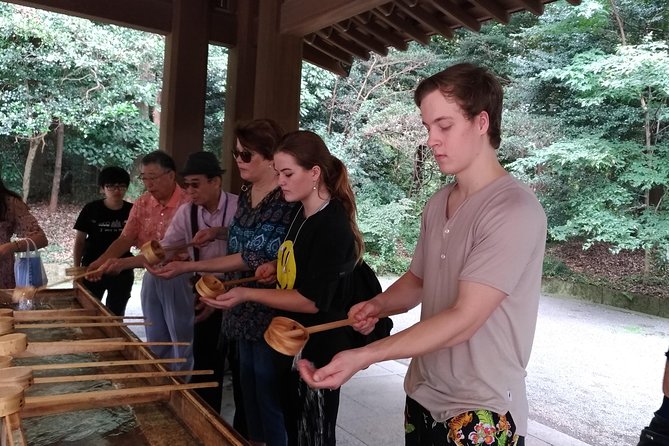
Kifune Shrine is dedicated to the god of water and rain. You can get a special fortune written on paper slips (omikuji). The fun part is how you reveal the message, by dipping the slips into water.
If you have time and your legs are feeling good, Okunomiya is about a kilometer further up the valley. It includes a large rock called the boat stone, said to be where the goddess’s boat is buried.
Price and what $157.82 per person really buys you
At about $157.82 per person for around 6 hours, you’re not paying for a bus and a checklist. You’re paying for a private, government-licensed local guide to handle the planning and the commentary while you walk.
That’s a good value when:
- You care about understanding what you’re seeing, not only getting photos.
- You want help avoiding crowds and choosing where to spend time.
- You have kids, older relatives, or anyone who needs pacing and breaks.
What’s not included is also important for budgeting. Lunch is on your own, and entrance fees are on you too. Transportation fees for you and your guide are not included, and there’s no private vehicle.
Also note the tour is private for your group only. That often makes the per-person cost feel more reasonable if you’re traveling as a couple or small family and want the flexibility to ask questions and move at a comfortable speed.
Comfort tips that make a real difference on this kind of walk
This area includes temple steps, hillside paths, and lots of outside walking. Even if each stop is short, the total day adds up.
Bring:
- Comfortable shoes with traction, especially if rain makes stone and steps slick.
- Water and a small snack plan, because lunch is not included.
- A light layer, Kyoto can shift quickly even when the forecast looks tame.
One more practical tip: many guides in this program are used to adjusting routes for energy levels and timing. If you tell them early that you need a slower pace, or that you want more time for photos, you’ll usually get a better day for it.
In past tours, guides like Ken, Tomo, Satoko, Kiyoshi, Kazuo, Bell, Shoji, Ted, and Kazz have been praised for things like crowd management, flexible pacing, and sharing simple, take-home context such as a one-page history sheet. That’s the kind of small support that makes the day feel smoother, especially when your brain is tired from travel.
Should you book the Kyoto Arashiyama and Sagano private tour?
I think this is worth booking if you want an easier, guided way to experience western Kyoto. It’s especially good for first-timers who don’t want to figure out every temple name, garden rule, and best timing moment on their own.
I would skip it or adjust your expectations if:
- You hate walking, or you want a mostly seated experience.
- You’re expecting everything to be fully included, because entrance fees and lunch are not included.
- You want the classic big-ticket attractions only, with minimal planning, since this tour works best when you choose 3 to 4 places that match your mood.
If your goal is a day that feels thoughtfully planned, with bamboo and temples done at a human pace, this private guide format is a strong pick.
FAQ
What is the duration of the Kyoto Arashiyama and Sagano private tour?
It’s listed as about 6 hours.
Is pickup included, and how does it work?
Pickup is offered, and the pick up/drop off for this tour is on foot, meaning you meet and finish at locations you access by walking rather than by a private vehicle.
Are entrance fees included for temples and gardens?
No. Entrance fees are not included for you.
Does the tour include lunch?
Lunch is not included. You’ll plan lunch for yourself.
Do I have to book a private tour just for my group?
Yes. The tour is private, so only your group participates.
What can the tour include, since it’s customizable?
You choose 3 to 4 sites from the available What to expect list, such as Togetsukyo Bridge, bamboo forest paths, Shugakuin Imperial Villa, Katsura Imperial Villa, Kurama-dera, Yoshiminedera, Daikaku-ji, Okochi Sanso, Tenryu-ji, Jojakko-ji, Nisonin, Gioji, Adashino Nenbutsu-ji, Otagi Nenbutsu-ji, and Kibune/Kifune Shrine-related stops.
What happens if weather is bad?
This experience requires good weather. If it’s canceled due to poor weather, you’ll be offered a different date or a full refund.
Fresh options around Kyoto
- Kyoto Aquarium Admission Ticket★ 4.7 · 12 reviews
- Kyoto Gion Photoshoot – Private Session | Pro Photographer★ 5.0 · 12 reviews
- Gyoza Cooking Class in Kyoto: Traditional Japanese Dumplings★ 5.0 · 12 reviews
- Kyoto: Guided Food Tour with 12 Dishes & 3 Drinks★ 5.0 · 12 reviews
- Kyoto: Avoid the Crowds at the Hidden Gems of Arashiyama★ 4.9 · 13 reviews
- Kyoto Early Bird English Tour: Gion & Higashiyama(Private opt)★ 5.0 · 13 reviews
- Otsu-e Folk Art Workshop & Local Culture Walk Near Kyoto★ 5.0 · 13 reviews
- Kyoto, Osaka, Nara Full Day tour by Car English speaking Driver★ 3.5 · 13 reviews
Arashiyama & Bamboo Tours, compared.
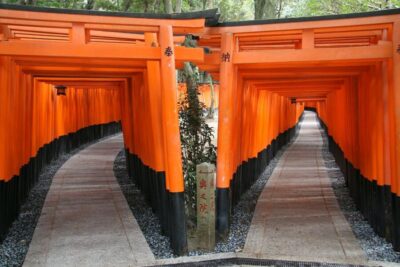
Fushimi Inari, Kinkakuji, Bamboo Grove 1 Day Bus Tour
Read our review →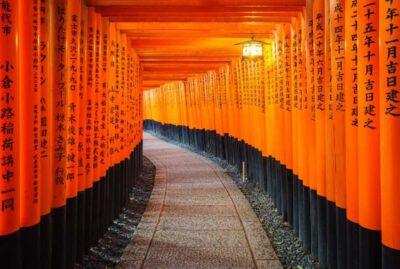
Osaka/Kyoto:Kinkakuji,Arashiyama,FushimiInariShrine,NaraPark
Read our review →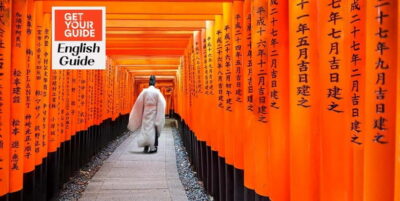
Kyoto/Osaka: Nara, Fushimi Inari Taisha, Arashiyama Bus Tour
Read our review →
Kyoto Arashiyama Walking Tour: Bamboo, Monkeys, Gardens & Secrets
Read our review →
Arashiyama Bamboo, Temple, Monkeys, or Secret Sake Brewery
Read our review →
Arashiyama Bamboo Forest, Monkeys, Matcha & Temple Tour
Read our review →
Osaka/Kyoto: Arashiyama, Nara & Fushimi Inari Shrine w/Lunch
Read our review →
Nijo, Kinkaku-ji, Arashiyama, Kiyomizu & Fushimi Inari
Read our review →Browse the lists this tour appears in