
Reviewed · 1-DAY TOURS
From Kyoto/Osaka: Kyoto Top Highlights 1-Day Guided Bus Tour
Kyoto in one day feels intense. This guided bus tour is a fast, high-impact way to hit the biggest Kyoto sights, including Fushimi Inari and UNESCO-listed Kiyomizudera, with an English-speaking guide keeping the day organized and meaningful. I also like that Kiyomizudera and Kinkaku-ji entry tickets are included, so you are not hunting for lines and paper tickets mid-day.
One thing to consider: this is a packed route with lots of walking and time tight enough that you will need good priorities, especially on busy days.
Key things that make this tour work
- Fushimi Inari torii gates with a real walking block, not just a quick photo stop
- Kiyomizudera UNESCO time plus the stage story (built without nails, supported by 139 pillars)
- Kinkaku-ji Golden Pavilion tickets included, so you can focus on the gardens
- Arashiyama plus Sagano Bamboo Forest for classic Kyoto nature vibes and river views
- Air-conditioned coach with free Wi-Fi to reset between landmarks
- Guides named Maki, Maria, Ma-chan, Masa, and others get praised for clear guidance and helpful photo moments
Kyoto Highlights by Coach: the smart one-day hit list from Osaka
If you only have a day in Kyoto, this kind of organized loop is exactly what you want. The big value here is timing. Kyoto landmarks are spread out, and getting around on your own can eat your day with transfers, waits, and figuring out where to be next. This tour strings together four top sights in a logical order, using an air-conditioned coach so you can recover between stops.
The highlight lineup is the reason people choose it. You start at Fushimi Inari Taisha and its famous thousands of vermillion torii gates, then move to Kiyomizudera for that hillside stage and wide Kyoto views. After that comes Kinkaku-ji, the Golden Pavilion and its carefully maintained gardens, and you finish in Arashiyama for the Sagano Bamboo Forest and a Katsura river atmosphere.
One more practical detail: the day order changes after April 1st. From April 1st onwards, the route becomes Fushimi Inari Taisha, Arashiyama, Kinkaku-ji, then Kiyomizudera. You still get the same key sights, just with a different flow.
This is not a slow cultural stroll. It is a “see the classics with context” day. If you like walking, good photo stops, and a guide who explains what you are actually looking at, you will love it.
A few more Osaka days worth comparing
- Osaka Go Karting Tour with Funny Costume
★ 5.0 · 2,658 reviews - Osaka Castle: Museum and Tower Entry Ticket
★ 4.5 · 2,380 reviews - Osaka: Shinsekai Food Tour with 13-15 Dishes at 5 Eateries
★ 4.8 · 2,204 reviews
Price and value for $51: what you actually get
At about $51 per person, the real question is not the number, it is what that number buys you in Kyoto. Here is where this tour pulls its weight.
You get an English-speaking guide, which matters more than people think. Fushimi Inari, Kiyomizudera, and Kinkaku-ji are not random attractions. Each has a distinct purpose, history, and visual “rules,” like where to stand for the best stage view or what to notice in the gardens. Multiple guides on this tour, including Maki and Maria in recent comments, are praised for clear explanations and for keeping people moving without losing the meaning.
You also get included admission for Kiyomizudera and Kinkaku-ji. Even if you like ticket lines less than I do, skipping that step mid-day is practical. And for a one-day tour, every saved minute protects your walking time.
Finally, the coach adds comfort value. You are in transit between major districts. With air-conditioning and free Wi-Fi, you can cool down, recharge your phone, and regroup before the next stop. Reviews also mention phone-charging access on the bus, so you are not stuck watching your battery disappear.
The main “cost” is the day itself. It is 9 hours total, so you are paying with stamina and attention. But for many people, that trade is exactly the point of a highlights tour.
Meeting at Kyoto Station, OCAT, or Hearton Hotel Nishiumeda
The tour starts with one of three pickup options. Depending on what you booked, you meet at:
- Kyoto Station (Hachijo Exit Tourist Bus Parking)
- Hearton Hotel Nishiumeda in Osaka
- Osaka City Air Terminal, also called OCAT
This setup is convenient if you are staying in either Osaka or around the main Kyoto transit hub. It also means you can choose the easiest starting point without needing a hotel pickup.
A small but important practical tip: give yourself extra buffer to find the exact bus area. One recent comment highlighted that meeting-point clarity can be confusing if you land on the wrong side of a station. In other words, check your confirmation details closely and be ready a few minutes early.
Once you are aboard, the day runs on a coach schedule with built-in breaks for sightseeing stops and photo time. You do not have to plan the route yourself, which is the whole reason these tours exist in the first place.
Fushimi Inari Taisha: thousands of torii gates and how to work the crowds

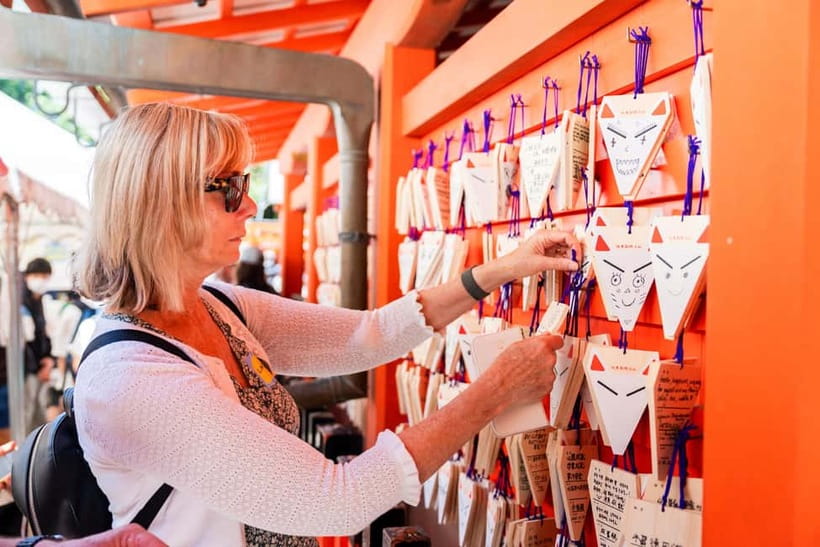
Fushimi Inari is the tour moment most people picture when they say Kyoto. The shrine is dedicated to the guardian deity of agriculture, and that agricultural spirit shows up in the place’s long tradition and the sheer scale of what you see.
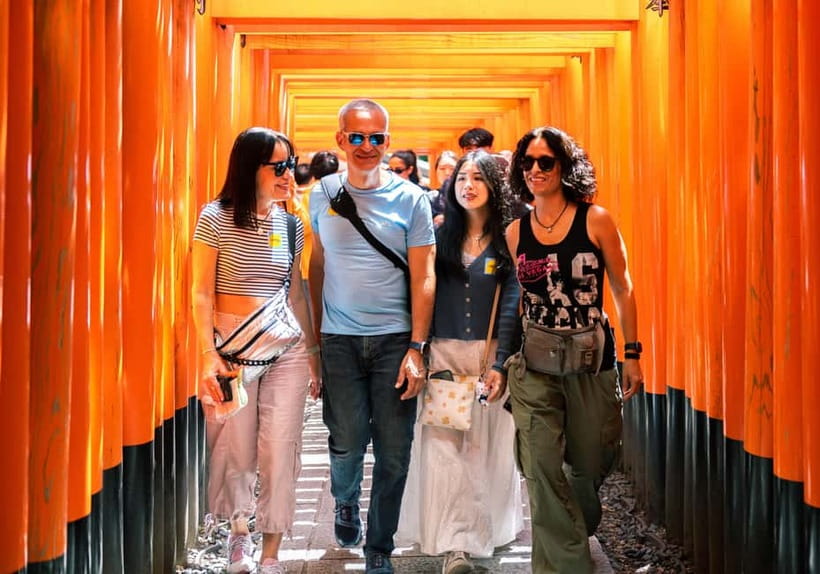
On this tour, you get about 80 minutes for Fushimi Inari, including walking time and a visit plus photo stop. That is the sweet spot for doing more than the immediate entrance area. You can enjoy the tunnel-like feeling of the vermillion torii gates without turning it into a frantic sprint.
Here is how to make your time feel longer. Treat the gates like a path, not a checklist. Start by getting oriented at the entrance so you know which direction you want to head first. Then pick one or two viewpoints to aim for instead of trying to photograph every torii.
Crowds are part of the experience. It is one of Kyoto’s most photographed sites, so you will see lines and congestion at peak times. The good news is that even when people are around, the gate path keeps unfolding, so the experience does not freeze into one crowded snapshot.
What I like about this stop in a guided format is the explanation. A strong guide will connect what you see to the shrine’s meaning, not just point at gates. Recent guides like Ma-chan and Maki are praised for stories that help Fushimi Inari feel more than Instagram scenery.
Wear shoes that can handle uneven stones and a lot of walking, because this is not a sit-down stop.
Same corner of Japan, a different kind of day:
- Osaka Food Tour: 13 Dishes at 5 Local Eateries
★ 5.0 · 2,149 reviews - Hungry Osaka Street Food Tour:15 Tastings & 3 Drinks with a Local
★ 5.0 · 1,727 reviews - Osaka: teamLab Botanical Garden Entry Ticket
★ 4.5 · 1,710 reviews - Osaka: Tea Ceremony Experience
★ 4.9 · 1,426 reviews
Kiyomizudera UNESCO views: the stage, Otowa streams, and timing

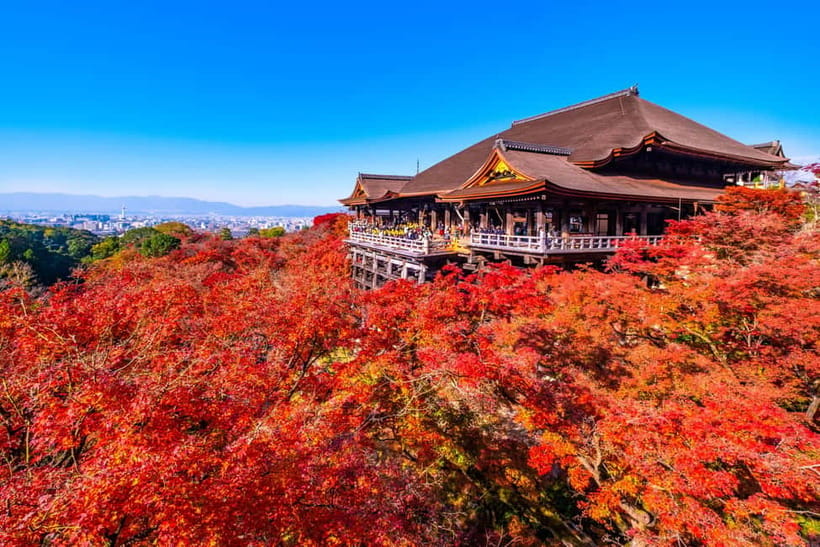
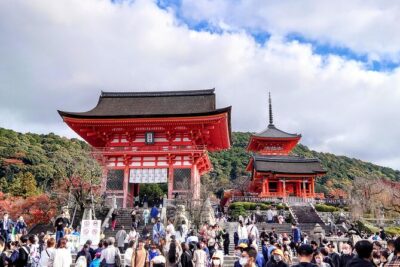
Kiyomizudera is one of those places where the architecture does the talking. The temple is famous for its dramatic wooden stage that extends over the hillside, and the details are impressive: it was built without using a single nail and is supported by 139 pillars.
There is also a cultural line tied to that stage. The proverb about jumping off the stage means taking a risk, and the building’s bold design makes that meaning feel real instead of abstract. You are not just looking at a temple, you are watching a structure built to create a moment.
On this tour, you get about 100 minutes at Kiyomizudera including photo stop and sightseeing time, plus entry is included. The time matters because Kiyomizudera has multiple layers of “take in the view” moments, and you will want a few minutes to slow down and look out over Kyoto.
Don’t miss the Otowa Waterfall area either. Drinking from one of the three streams is said to bring success, love, and longevity. Even if you do not take that literally, it is a fun Kyoto detail, and it gives you a concrete reason to go where the crowds gather.
Timing caution: this stop can feel like peak performance during busy hours. You can handle it, but you need patience. If you want quiet moments, you may need to step aside from the highest-traffic views for a minute and let the flow pass.
If you are thinking about seasonal vibes, the tour info notes cherry blossoms in spring and autumn foliage as big draws here. That helps you plan emotionally, even on a packed day.
Kinkaku-ji Golden Pavilion: ticketed entry and the garden stroll
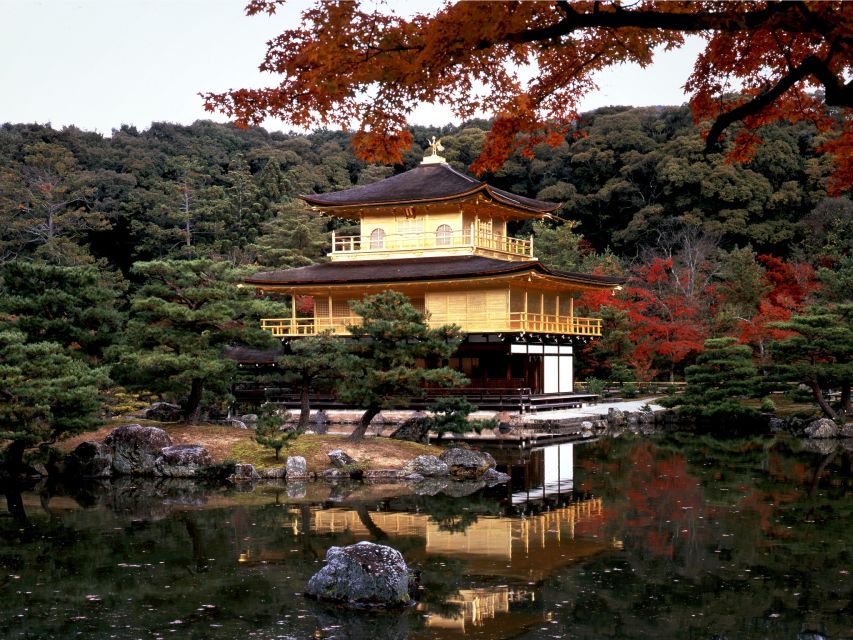
Kinkaku-ji, the Golden Pavilion, is the visual payoff for Kyoto’s classic temple aesthetic. The gold-leaf-covered exterior glimmers in sunlight, and you can feel why this site became a symbol. Even when the gardens are crowded, the pavilion itself keeps pulling your eyes back.
This tour gives you about 45 minutes at Kinkaku-ji, including photo time, visit, sightseeing, and a walking block. That is enough for a decent circuit, especially if you focus on the pavilion from a couple angles and then spend time on the garden design around it.
The gardens are part of what makes Kinkaku-ji more than a shiny building. The tour info points out that the original Japanese design has been preserved since the Ashikaga shogunate. So as you walk, you are not only admiring flowers, you are looking at a long-guarded layout.
Since Kinkaku-ji entry tickets are included, you do not lose time figuring out ticket counters or payment steps. In a one-day schedule, that matters.
One drawback: 45 minutes goes fast if you get stuck in slow-moving foot traffic in the busiest areas. If you want to linger, have a plan. Decide first where you want your pavilion shots, then treat the garden as your second act instead of trying to do everything.
Arashiyama and Sagano Bamboo Forest: river views plus mosquito reality
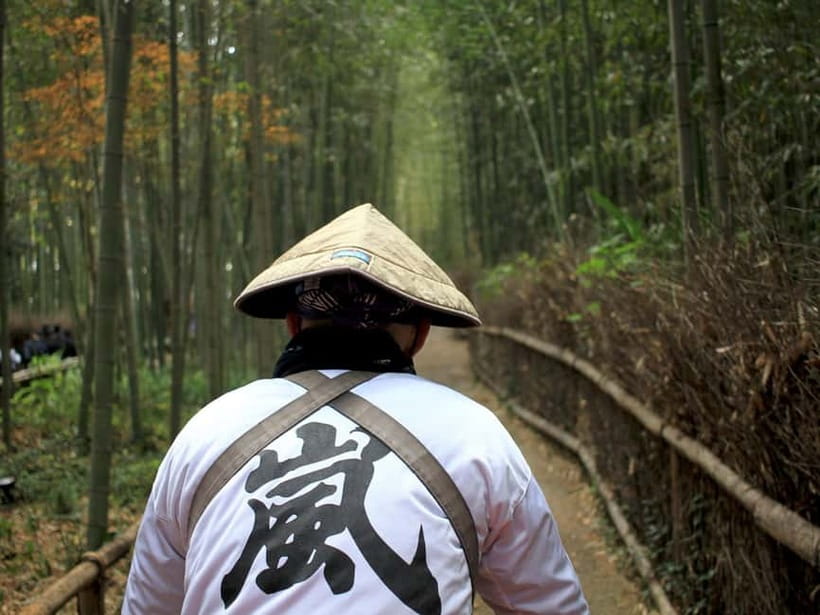
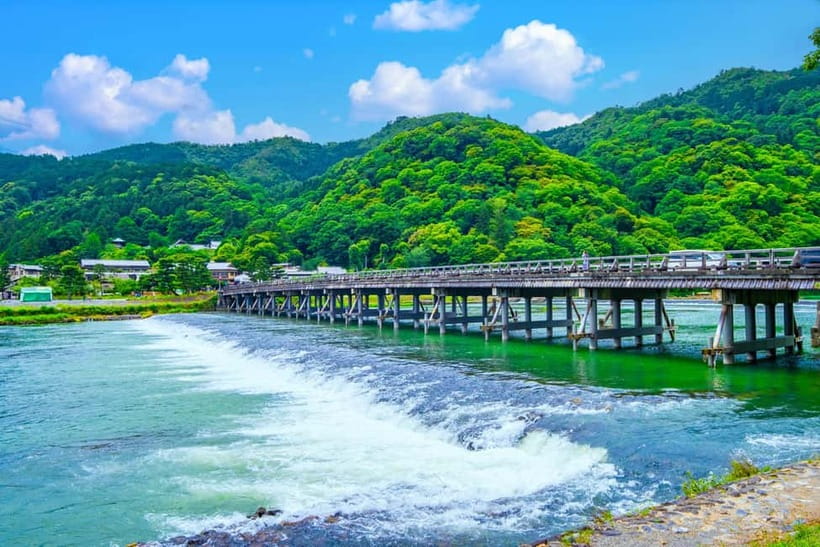
Arashiyama is a switch in mood. After temple architecture and shrine paths, you get Kyoto’s nature side. This area has been popular since the Heian Period, and it shows in how often people come back for seasons, river walks, and that calm, green feel.
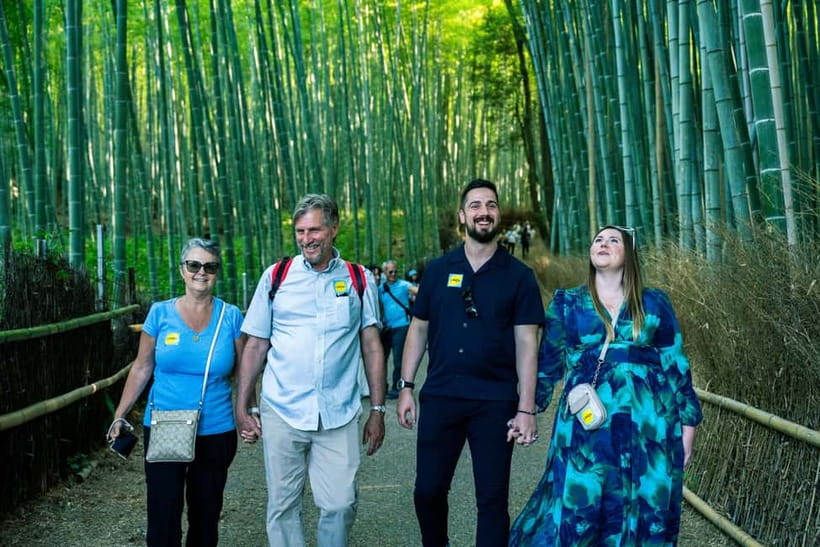
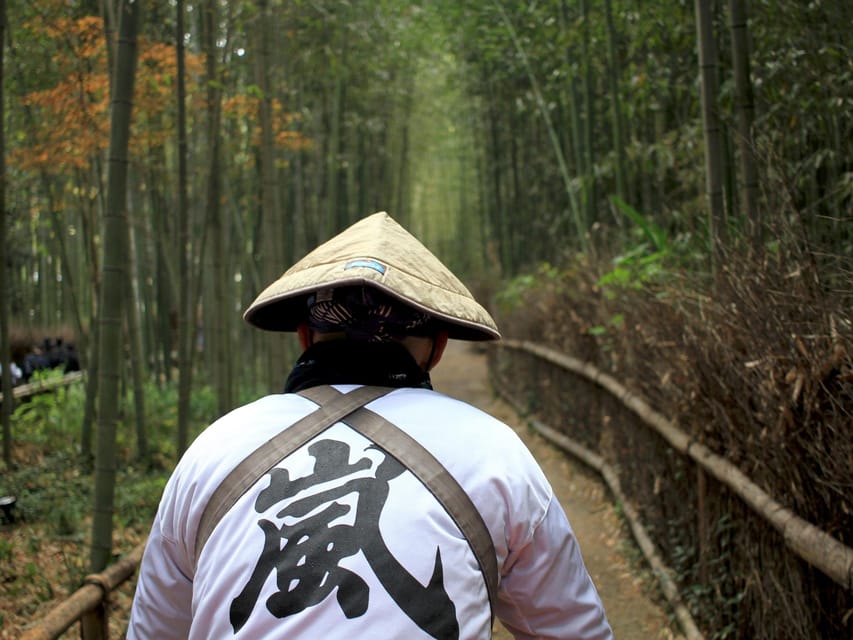
Your Arashiyama stop is about 80 minutes, including free time, shopping, and walking time. The headliner is Sagano Bamboo Forest, where you can listen for the distinct rustle of bamboo leaves as you walk. It is a sensory experience, and it changes your brain from city mode to quiet mode.
Then there is the Katsura river option. The tour notes that you can enjoy sunset as you wander along the river, or you can grab a snack and souvenirs on your way back to the bus.
One practical note from real-world experience: the bamboo forest can be mosquito-heavy. Bring bug spray if you have it, or at least treat this as a place where you should protect yourself. In hot, humid months, your best defense is being prepared.
Also, remember that you are finishing a long day. Arashiyama is great, but it is still part of the same route. Keep your energy for the bamboo walk and one river moment, then you will feel satisfied instead of rushed.
Lunch options and dietary limits (halal and vegan not available)
Food can make or break a long day. This tour offers a traditional Japanese set lunch if you select the lunch option.
That is not just a convenience perk. A guided tour with included lunch often protects you from the mid-day scramble of finding something open, something affordable, and something that matches your pace. Several recent comments also praised the lunch, including the fact that it is traditional and in at least one case tied to tofu.
Important dietary reality check: halal and vegan lunches are not available. If you need either of those, you should plan the without-lunch option and bring your own food. The tour also says vegetarian requests may be possible, but you need to contact the provider at least 3 days before the tour.
Practical tip for everyone: even if you choose lunch, bring water and a snack for walking time. The tour info explicitly encourages snacks and water, and it is easy to get caught off-guard by heat and crowds.
If you are the type who likes roaming freely at each stop, skipping the lunch option can give you more flexibility. Just be sure you have a plan for what to eat during the day.
Your guide on the mic: why English narration changes the whole day
A highlights tour can turn into a set of locations if the guide is just calling names and moving the bus along. What makes this one consistently better is the guidance quality.
In recent experiences, guides like Maki and Maria are praised for making the sights click by explaining what you are looking at and why it matters. Other names that show up in praise include Ma-chan, Masa, Yuki, Jewell, Josh, and Hama. The pattern is similar. The guide gives context at each stop and helps the group stay on track.
I also like the practical side. Some guides are described as helping with photos, so you are not stuck asking strangers to take your picture in peak crowd conditions. If you are traveling as a couple or solo, that photo support is a quiet value.
English level can vary by guide, so if English is your top priority, it is worth noting that one comment suggested clearer or stronger English. Still, the tour includes English-speaking guides and many guides seem to handle explanations well, with some also able to speak Japanese.
Bottom line: a good guide transforms “seeing Kyoto” into “understanding Kyoto.” In a one-day schedule, that is the difference between checkmarks and memories.
Comfort on a long day: bus time, walking breaks, and what to pack
This day runs 9 hours total. That number surprises people who assume it will feel like a half-day. In practice, it feels like a full itinerary because you spend time on the coach plus dedicated blocks of sightseeing. The good part is that you also get recovery time.
Between stops, you ride in an air-conditioned coach with free Wi-Fi. Reviews also mention phone charging, so you can keep your map apps and camera going. It is not just comfort, it is stamina management.
Walking is the other reality. You are on your feet through gates, temple grounds, and bamboo paths. Even with timed blocks, you will want solid shoes.
Pack like you are doing a full day hike:
- Comfortable walking shoes
- Camera
- Water
- Snacks
- Comfortable clothes
Also consider heat and bugs, especially in summer. One comment specifically warned that the day can be very hot and humid, and even noted that it may not be ideal for very young children because of heat and distance. If you know you struggle in hot weather, bring a hat, consider a towel, and pace yourself.
Finally, stroller and luggage rules are strict enough to matter. Pets are not allowed. Oversize luggage is not allowed. Smoking in the vehicle is not allowed. Only foldable strollers are allowed, stored under the bus.
Should you book this Kyoto Top Highlights 1-Day Guided Bus Tour?
Book it if you want a high-value Kyoto highlights day and you like structure. This is a strong choice for first-timers, short-timers, and anyone who wants UNESCO-listed Kiyomizudera, the Fushimi Inari torii gates, Kinkaku-ji, and Arashiyama Bamboo Forest without spending your day wrestling with transit.
Skip it or plan carefully if you need long, slow time at each site. This route is efficient, but it is not built for leisurely lingering. Also, it is not suitable for wheelchair users, and if you know you will struggle with heat, crowds, and lots of walking, this may feel too intense.
If you can handle a full-day pace, I think this tour gives you a rare thing in Kyoto: a sense of the big moments with less logistical stress and more context than you could realistically manage on your own in a single day.
FAQ
How long is the Kyoto Top Highlights 1-Day Guided Bus Tour?
The tour duration is listed as 9 hours (570 minutes).
How much does it cost?
The price is listed as $51 per person.
What is included in the price?
The tour includes an English-speaking guide, an air-conditioned bus with free Wi-Fi, Kinkaku-ji Temple entry tickets, and Kiyomizudera entry tickets. A traditional Japanese set lunch is included only if you select the lunch option.
Where do I meet the bus?
Meeting points may vary by option booked, with listed starting locations including Kyoto Station (Hachijo Exit Tourist Bus Parking), Hearton Hotel Nishiumeda, and Osaka City Air Terminal (OCAT). Drop-off locations include the same areas.
Is lunch available, and are halal or vegan options offered?
A traditional Japanese set lunch is available if you select the lunch option. Halal and vegan lunches are not available. Vegetarian requests may be possible if you contact the provider at least 3 days before the tour.
What should I bring, and what is not allowed?
Bring comfortable shoes, a camera, snacks, water, and comfortable clothes. Pets are not allowed, oversize luggage is not allowed, and smoking is not allowed in the vehicle. Only foldable strollers are allowed.
Is this tour cancellable?
Yes. Free cancellation is available up to 2 days in advance for a full refund.
Is the tour suitable for wheelchair users?
No. The tour is listed as not suitable for wheelchair users.
Fresh options around Osaka
- Osaka Winery Tour with Wine Tasting & Vineyard Walk★ 4.9 · 12 reviews
- Osaka: Early Morning Osaka Castle Guided Tour, Avoid Crowds★ 4.9 · 12 reviews
- Kyoto Day Trip from Osaka Port – Private Shore Excursion★ 5.0 · 13 reviews
- Osaka Private Pop Culture Tour: Historic Tenma to Dotonbori★ 4.5 · 13 reviews
- Osaka Castle Admission Ticket★ 4.0 · 13 reviews
- Hidden Osaka Foodie Tour: Nishinari Backstreets & Local Dining★ 5.0 · 13 reviews
- Discover Real Osaka: A Cultural Walk with Food & Drink★ 5.0 · 13 reviews
- Nara private tour (Shore excursion available from Osaka or Kobe port)★ 5.0 · 13 reviews
1-Day Tours, compared.
Mt Fuji and Hakone 1-Day Bus Tour Return by Bullet Train
Read our review →
Mt Fuji & Hakone Cruise, Drum Show Bullet Train 1 Day from Tokyo
Read our review →
Peaceful Hiroshima & Miyajima UNESCO 1 Day Bus Tour
Read our review →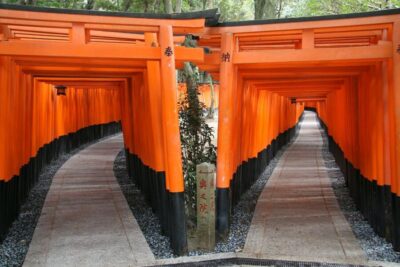
Fushimi Inari, Kinkakuji, Bamboo Grove 1 Day Bus Tour
Read our review →
Browse the lists this tour appears in