
Reviewed · SAMURAI & NINJA EXPERIENCES
Kyoto: Samurai Sword Class by Experts in Traditional Arts
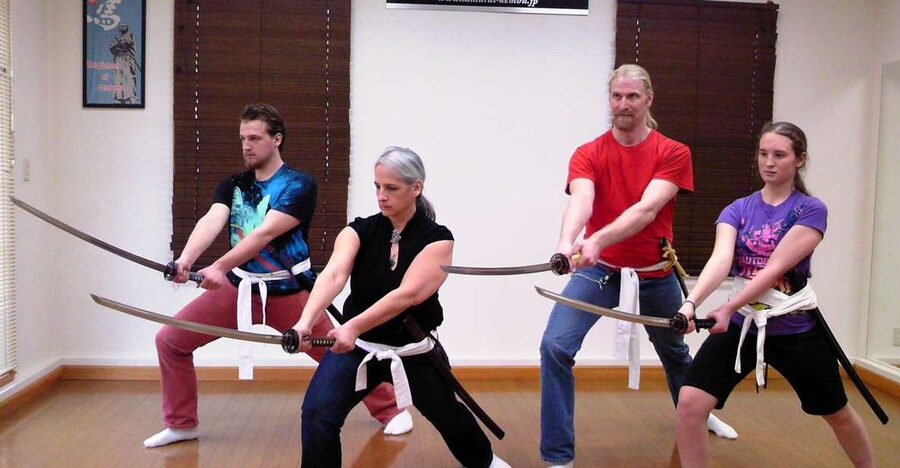
Sword lessons in Kyoto feel oddly calm. This Kyoto class teaches Kenbu fundamentals the old-school way: respectful bowing, a safe draw-and-sheath routine, and stylized striking you can actually repeat. You also get a costume photo moment and a completion certificate, so it feels like more than a demo.
I love how structured the session is, starting with a short film and then moving into hands-on practice with a real instructor. I also love the small group format, which means you are not just watching from the back. One potential drawback: there is no waiting room, so you need to show up right for your time slot and come ready to change into costume clothes.
The class is designed for movement, not spectatorship. If you arrive in the wrong outfit, or with large bags, it can throw off your timing. Still, if you want a practical, memorable slice of samurai performance culture without needing prior martial arts experience, this is a strong pick.
Key things you will notice fast
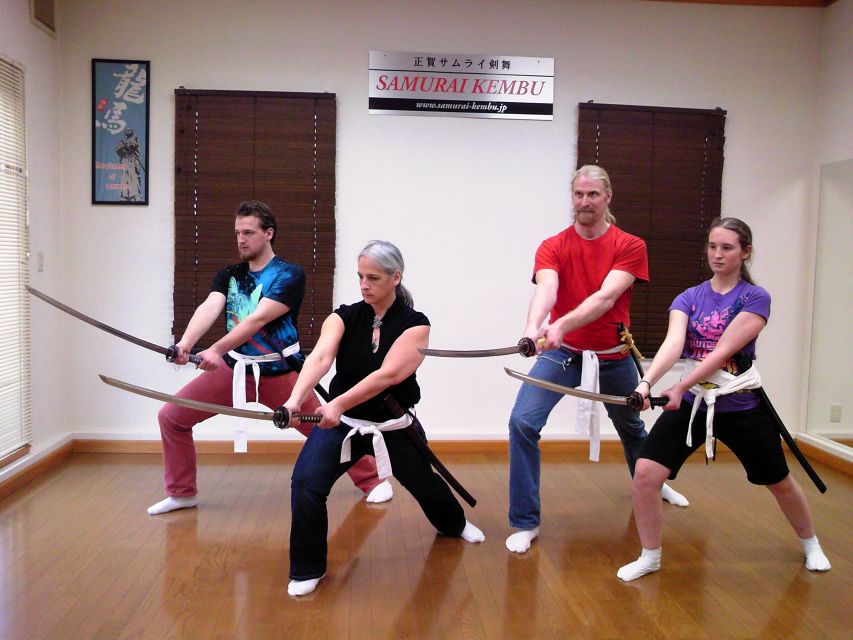
- Small group limit of 10 helps you get corrections instead of vague tips.
- 4-minute film to 90-minute practice flow makes the choreography easier to follow.
- Bowing and respect drills are treated as part of the technique, not a formality.
- Costume photo session gives you something you can take home immediately.
- Optional sword dance performance (10 or 30 minutes) helps you see the moves as an art.
- Included items like a tenugui towel and a completion certificate make the price feel more grounded.
Finding Samurai Kembu Theater in Higashiyama
You meet at Samurai Kembu Theater, Kyoto dojo, in the Higashiyama area: 35-7 Sanchome (Higashi-iru, Sanjo-hanamikoji), Higashiyama-ku, B1F Gozan Building, Kyoto 605-0005.
This matters because the building is not a big, easy-for-everyone type of landmark. You are going into a dojo space, and you should plan to arrive with a clear sense of where you are going. With no waiting room, being even a bit late can feel stressful, not romantic.
Also, plan to travel light. Large luggage and travel bags are not a thing here, so bring only what you need for a short, active class.
More Samurai & Ninja Experiences in Kyoto
- Kyoto Samurai Experience
★ 5.0 · 1,294 reviews - Kyoto: Kendo and Samurai Experience with Uniform and Gear
★ 4.9 · 815 reviews - Skip the lines Basic Ticket at SAMURAI NINJA MUSEUM KYOTO
★ 4.5 · 632 reviews
The class rhythm: film, costume up, then bow to the sword
The session runs about 90 minutes to 2 hours. In practice, it moves in a clean sequence so your brain gets a framework before you handle the sword.
First, you watch a short basics film that runs about 4 minutes. That quick primer is useful because it gives names and ideas before your body starts memorizing motions. Then you suit up. You will take hold of your samurai sword and begin the etiquette portion, starting with how to bow as part of training.
From there, the lesson shifts into technique steps you can repeat:
- how to position yourself
- how to draw the sword and return it to its protective scabbard
- how to strike using stylized, choreographed movement patterns
I like this structure because it prevents the common experience of feeling like you are just mimicking arm swings. You are learning a sequence with meaning, and that is the difference between a fun photo moment and a real skill you can carry home.
Bowing like a warrior, then practicing the draw and sheath
One of the standout parts is that the instructor does not treat bowing as a quick goodbye. You learn how to bow before training begins, and you also practice showing respect to the instructor and, later, to your opponent in a respectful way with the sword.
That etiquette piece is more than politeness. It is a practical focus tool. When you are doing sword work, your safety depends on discipline, and bowing is a simple way to set that tone quickly.
Then you move into the draw and re-sheath routine. You will learn the motion of drawing the sword, then returning it to the scabbard correctly. That matters because it teaches control, not speed. In most beginner experiences, people want to go fast. Here, the goal is clean movement and safe handling.
For coaching style, instructors often get called out for being patient and clear, with guides such as Hoga sensei and Kazu Sensei showing up in people’s feedback for steady guidance that is sometimes even funny. If you worry you will look silly, you should know the class is built for beginners, and the tone is usually supportive.
Kenbu technique: what you are really learning with each strike
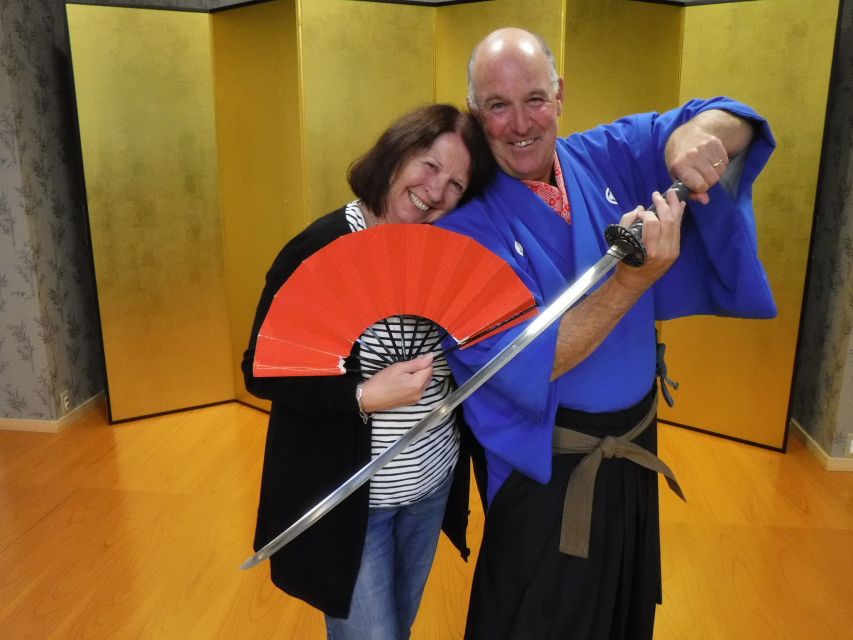
The class focuses on Kenbu, a stylized sword dance discipline that comes from samurai performance traditions. The point is not to teach you real battlefield combat. Instead, you learn choreographed movements that look dramatic and teach body control.
As you practice, you will learn how stylized movements are built:
- the way you shift your stance for stability
- how your arms coordinate with your body, not just your wrist
- how the strike connects to the sequence that came before it
The “strike” part can feel surprisingly satisfying because it is not random. You get taught a set of motions and then rehearse them with instruction and adjustment. Multiple participants highlight that the training is challenging enough to feel rewarding, without being so intense that it turns into a workout you regret.
And yes, this is physical. You will be standing, moving, bowing, and repeating steps. The best results come when you come prepared to move freely.
More samurai and ninja experiences in Kyoto:
- Ninja 1-hour Hands-on Lesson by Japanese master in Kyoto -Entry
★ 5.0 · 489 reviews - Kyoto: Ninja Weapon Forging Experience
★ 4.8 · 478 reviews - Kyoto: Samurai Kenbu Traditional Sword Dancing Show
★ 4.5 · 426 reviews - Samurai Training with Modern day Musashi in Kyoto
★ 5.0 · 256 reviews
Safety and boundaries you should take seriously
Even though this is theatrical sword dance work, rules are real. Sharp objects or weapons you bring yourself are not allowed. You are also asked to follow instructor instructions for safety reasons.
It is also smart to skip anything that slows you down, like arriving tired, distracted, or under the influence of alcohol. The dojo is run like a training space, not a casual attraction.
Costume changes and the photo shoot that makes it feel special
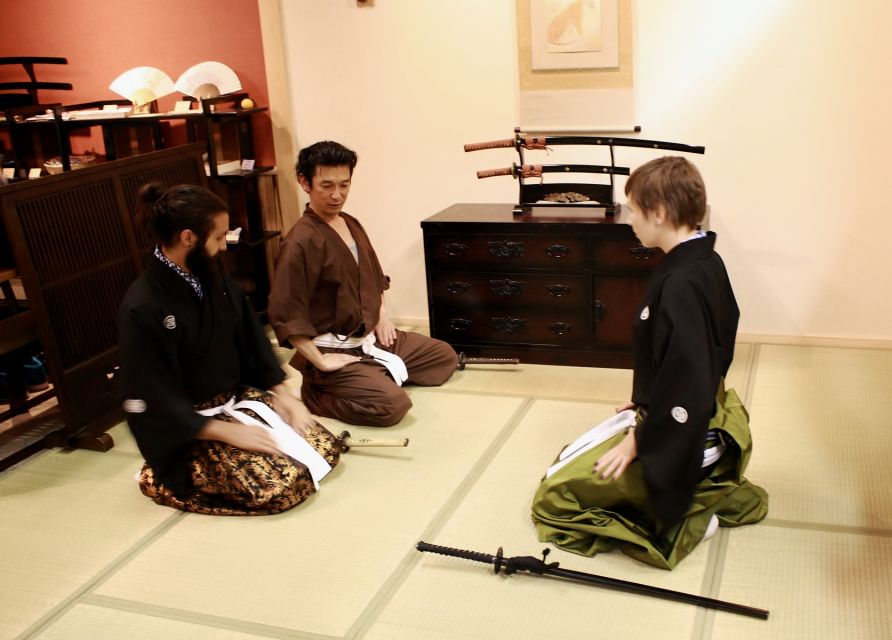
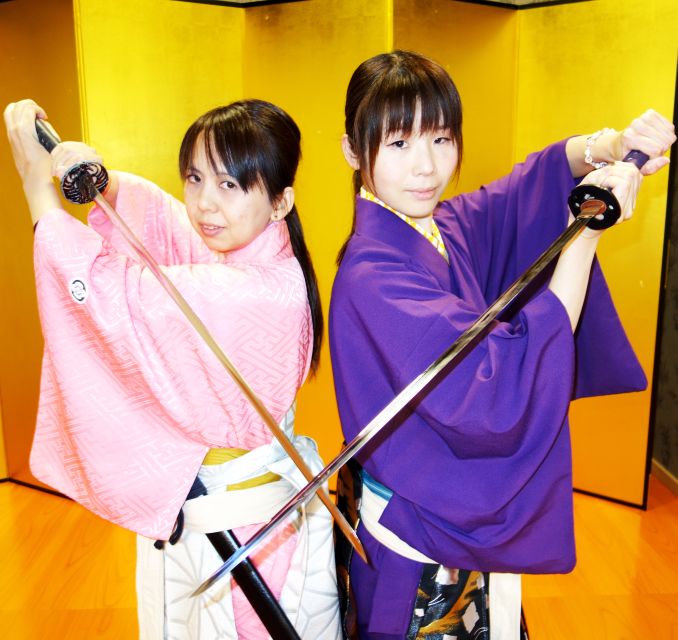
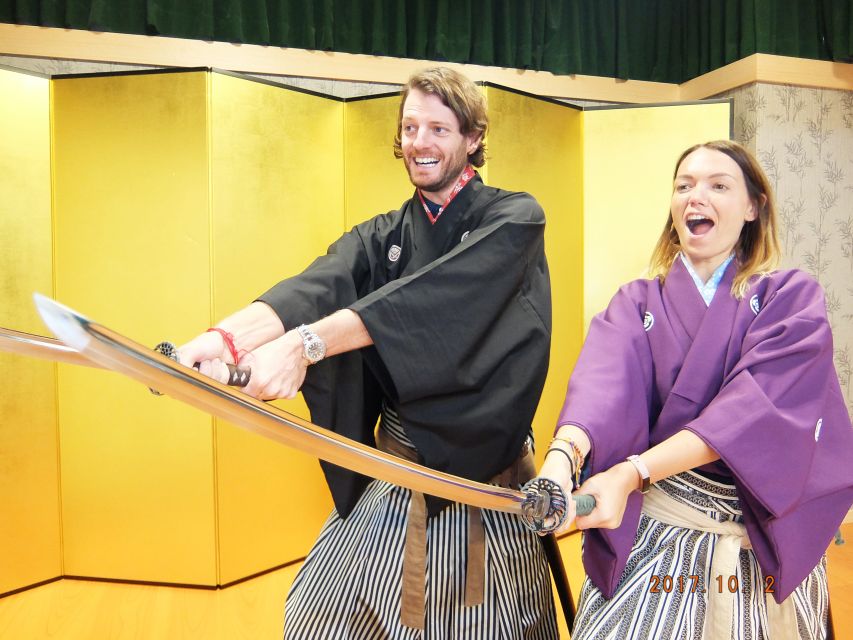
A big part of the appeal is suit-up. You get traditional samurai-style costume options, and then you do a photo session in your outfit. Many people specifically call out that they get more than a quick couple of snaps, describing it as a full photo-video style session handled by the staff.
Included in the experience is a photo shoot, and you receive a completion certificate at the end. Some participants also mention costume-related keepsakes, such as scarves and socks, though what you are guaranteed to receive from the provided details includes a tenugui towel.
If you care about photos, here is the practical tip: wear something easy to change in and out of. You are required to wear clothes suited for exercise and moving around, and a single hoodie or tights is not suitable for costume changes. That rule exists because costume dressing often needs room for layers and proper fit, and the staff need time to get you into the outfit smoothly.
Also note: there is no observation-only option. You are expected to participate during the class flow, including costume and training segments.
How the short show after class changes your understanding
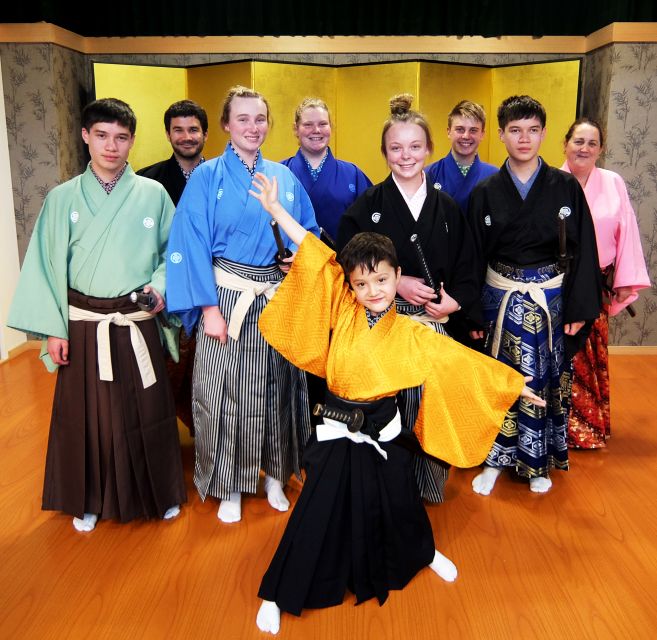
After you finish the hands-on portion, you can watch a performance with commentary. Depending on the option you choose, it is either 10 minutes or 30 minutes.
This part is valuable because you finally see the movements in context. When you are training, it can be hard to imagine how the choreography reads as art. The performance gives you that missing perspective. With a sword dance instructor providing commentary, you are not just watching something pretty, you are learning what techniques mean and how they are passed down.
People also mention that the end demonstration by masters is especially beautiful to watch. The key for you is that the show is not just an add-on. It is the moment where the lesson clicks.
Price and value: $64 for 90 minutes, plus more than a demo
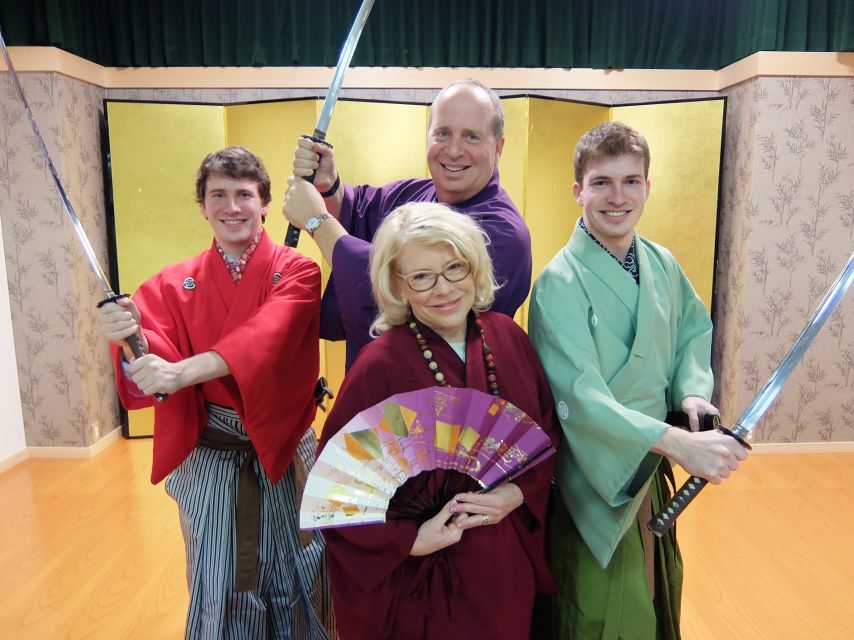
At $64 per person, this class sits in the “pay for an experience that includes training time” category, not the “pay for a show ticket” category.
What makes it feel like solid value:
- You get real instruction in English, with an instructor available in English and Japanese.
- The group is capped at 10 participants, so you are not lost in a crowd.
- You handle the sword and practice the choreography, including bowing and draw-and-sheath steps.
- You get a structured film intro, a costume photo session, a tenugui towel, and a completion certificate.
What could affect value for you:
- Food and drinks are not included, so you need to plan around that. If this is your only activity before lunch or dinner, eat first and keep snacks for later.
- There is no hotel pickup or drop-off, so your transport cost depends on where you stay in Kyoto.
Still, when you total it up, you are buying time with a trained instructor, a costume moment, and a take-home keepsake.
Who should book this, and who might want to skip
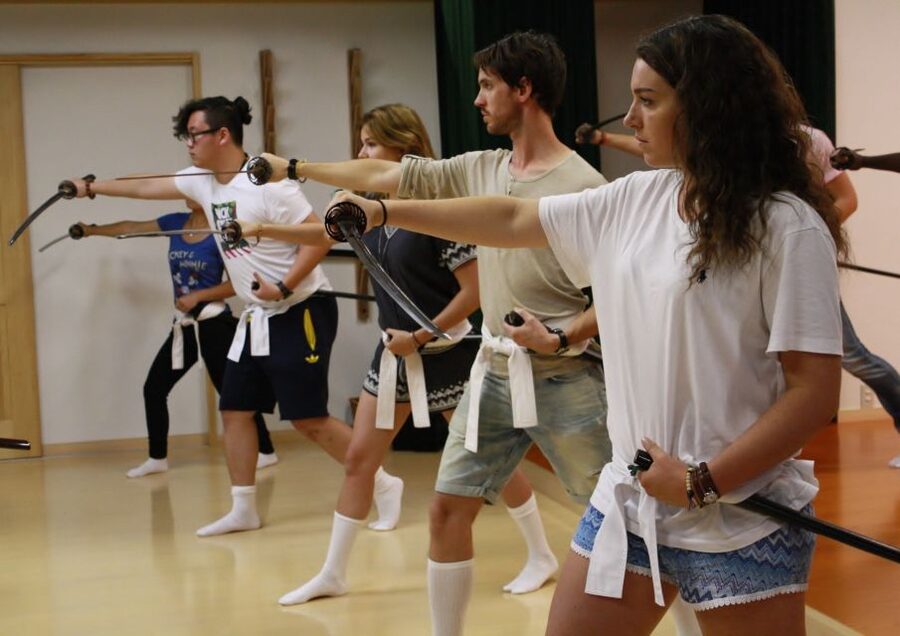
This is a good fit if you want hands-on Japanese culture in a short window. It also works well if you like performance arts and body movement. A number of participants note the class is fun even if you are not sure you care about swords, because the focus is Kenbu as discipline and art, not action movie fighting.
It is especially suitable for:
- adults who want a beginner-friendly introduction to sword dance technique
- families where kids are old enough to follow directions and join adult-paced training
- visitors who value guided cultural context, not just a selfie opportunity
Age considerations matter. Children under 4 years are not suitable. For ages 5 to 10, it is desirable that the child attends a martial arts class or has learning experience, because the lessons are conducted with adult participants.
Also, if you want quiet museum-style observation only, this is not that. There is no observation-only format.
Practical tips so you enjoy it, not just survive it
A few planning details can make the difference between a smooth class and a scramble:
- Dress for movement. The lesson involves standing, bowing, and repeating steps.
- Avoid wearing an outfit that is hard for costume changes, like a single hoodie or tights.
- Travel light. Large luggage and bags are not accommodated.
- Bring the right mindset. This is respectful training. You will follow the instructor’s safety and movement instructions.
- Arrive for your appointment time. There is no waiting room.
If you want great photos, come ready to participate fully. The costume and photo session work best when you are not rushing through costume changes.
Should you book Samurai Sword Class in Kyoto?
I think you should book this if you want a structured, beginner-friendly taste of samurai-era performance culture with real hands-on coaching. The mix of bowing discipline, draw-and-sheath practice, and Kenbu choreography feels like learning something, not just dressing up.
Skip it if you need a low-activity, sit-and-watch experience, or if you dislike the idea of moving for nearly two hours in a dojo setting. Also, if your wardrobe and luggage planning is messy, read the costume-change and luggage rules carefully first.
If you are in Kyoto and want one memorable activity that combines technique, theater, and a keepsake, this class is a strong choice.
FAQ
How long is the Kyoto samurai sword class?
The duration is listed as 90 minutes to 2 hours, depending on availability and your selected option.
What does the class cost?
The price is $64 per person.
Is it a small group?
Yes. The group is limited to 10 participants.
Is there an English-speaking instructor?
Yes. The activity includes an English-speaking instructor, and the instructor is listed as English and Japanese.
What is included with the experience?
Included items are an English-speaking instructor, a photo shoot, a tenugui towel, and a completion certificate.
Where is the meeting point?
You meet at Samurai Kembu Theater (Kyoto dojo), 35-7 Sanchome (Higashi-iru, Sanjo-hanamikoji), Higashiyama-ku, B1F Gozan Building, Kyoto 605-0005.
What is not allowed during the class?
Pets, weapons or sharp objects, smoking, luggage or large bags, food, alcohol and drugs, and explosive substances are not allowed.
Fresh options around Kyoto
- Kyoto: Quiet and Graceful Tea Ceremony★ 4.5 · 19 reviews
- Oboro | Mindful Tea Ceremony in a 100-Year-Old Kyoto Teahouse★ 5.0 · 19 reviews
- Ikebana Traditional Japanese Art of Flower Arranging★ 4.5 · 19 reviews
- Kyoto Satoyama Cycling with Lunch and English Guide★ 5.0 · 19 reviews
- Kyoto International Party Solo Friendly Expats and Locals★ 5.0 · 19 reviews
- Tea Ceremony Experience in Traditional Kyoto Townhouse★ 5.0 · 19 reviews
- Kyoto: Amanohashidate Ine Funaya Tour★ 4.4 · 19 reviews
- Kyoto Private Food Tours with a Local Foodie: 100% Personalized★ 4.5 · 19 reviews
Samurai & Ninja Experiences, compared.
Samurai Ninja Museum Guided tour and Experience
Read our review →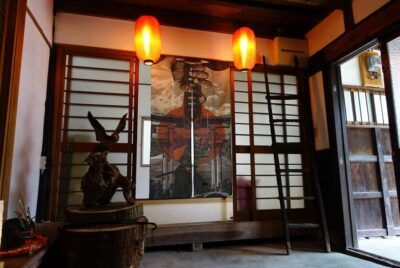
Kendo and Samurai Experience with Uniform and Gear
Read our review →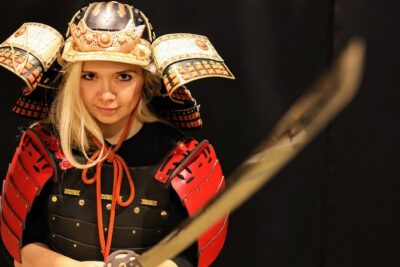
Skip the lines Basic Ticket at SAMURAI NINJA MUSEUM KYOTO
Read our review →
Samurai Sword & Archery Class from Samurai Descendant
Read our review →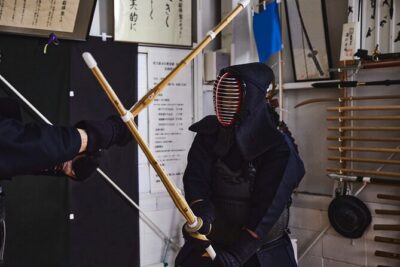
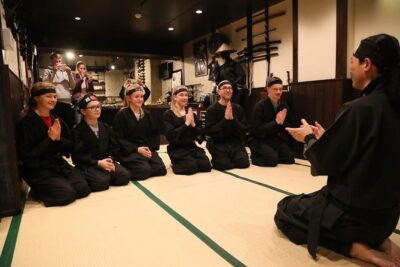
Ninja 1-hour Hands-on Lesson by Japanese master in Kyoto -Entry
Read our review →Browse the lists this tour appears in