
Reviewed · SAMURAI & NINJA EXPERIENCES
Kyoto: Samurai Kenbu Traditional Sword Dancing Show
Samurai Kenbu turns a sword lesson into theater art. I like how the Kenbu dances explain the samurai mindset, not just the moves. The show mixes graceful performance with plain talk about responsibility and technique.
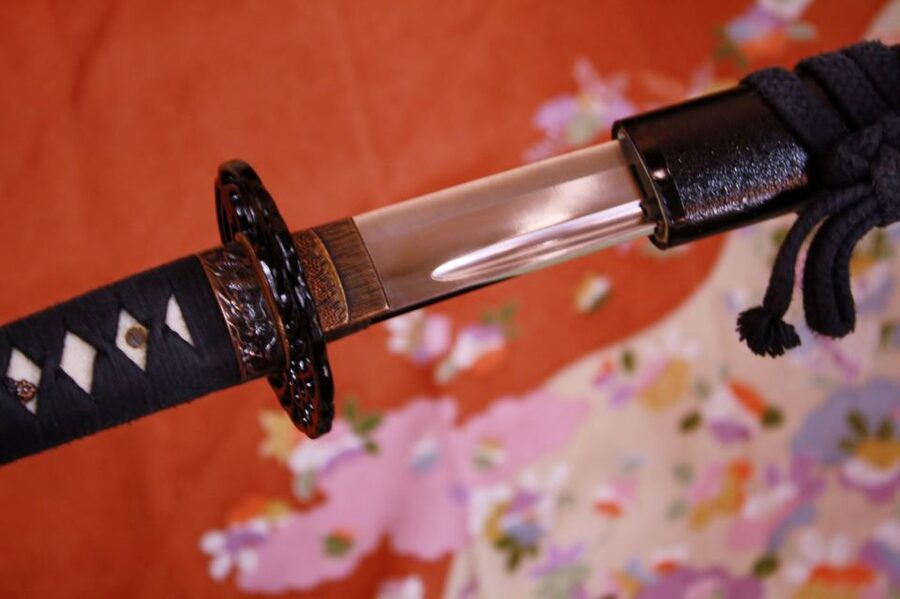
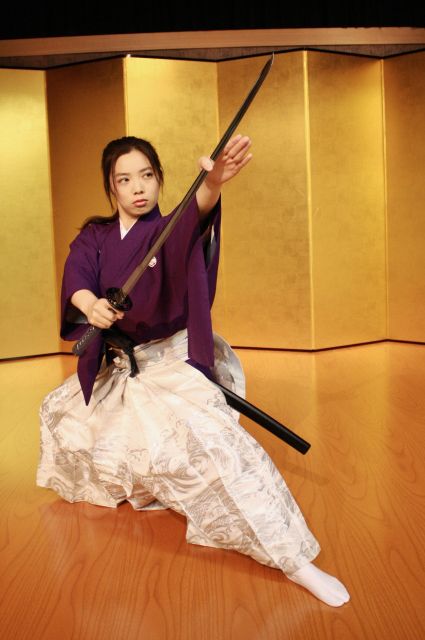
My second favorite part is the hands-on moment. You get a short sword lesson where you can hold a katana, practice a careful draw, and try basic swings with an instructor’s commands.
One thing to consider up front: if you’re expecting nonstop swordfighting action, this is more dance and story than a full combat demo, and the sword practice is brief.
Key highlights worth showing up for
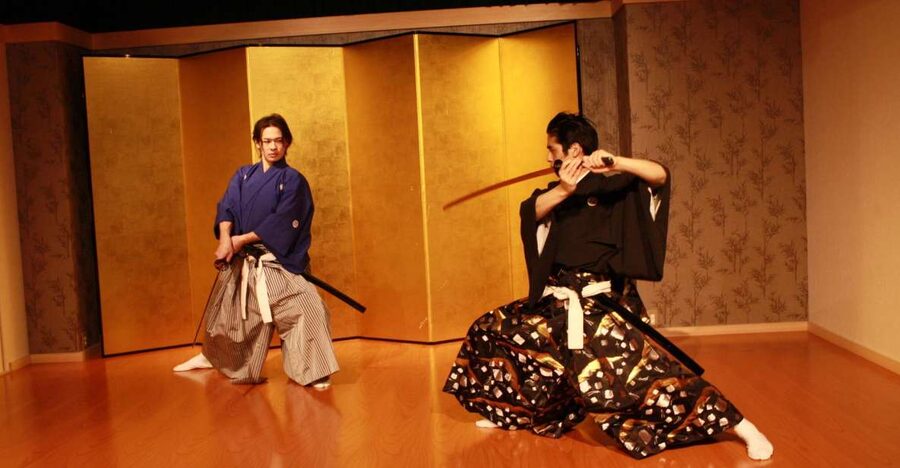
- Shoes-off theater atmosphere that feels like you’re entering a real performance space in Kyoto
- English narration plus story context tied to Kenbu history and technique
- Traditional and new-style Kenbu presented side by side, so you see both roots and evolution
- Samurai responsibility talk, including what it means to carry a sword
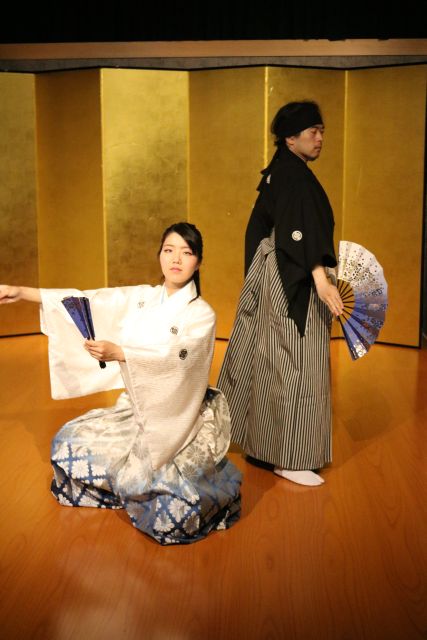
- Folding fan moments alongside sword work, since it was part of a samurai toolkit
- Photo time after the show, with extra chances to capture the performers and your own practice moment
Finding Samurai Kenbu Theater fast, and settling in
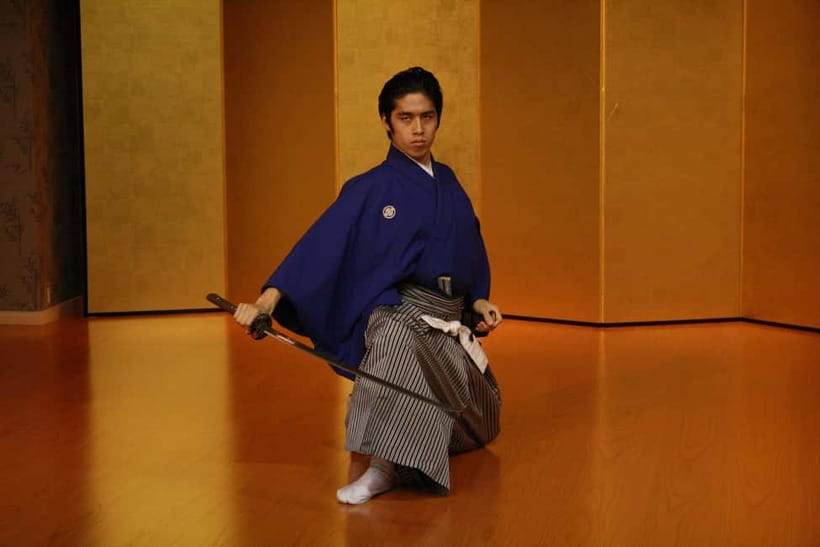
The Samurai Kenbu Theater is an easy target in central Kyoto. You’re about a 4-minute walk from Subway Sanjo Keihan Station, or roughly 5 minutes from Sanjo Station on the Keihan Main Line. In real terms, this means you can fit the show into a normal sightseeing day without stress.
Build in time because they ask you to arrive about 5 to 15 minutes early. The room setup is simple, and there is no waiting room. That matters if your train or street navigation runs late, or if you’re the type who likes to browse nearby before entering.
Inside, you’ll follow the local custom and take off your shoes before settling in. If you’re traveling with compact gear, plan to keep it small since there is no room for large luggage or travel bags. Also note there’s guidance to avoid the show if you’re under the influence of alcohol, which keeps the space respectful and focused.
If you’re worried about accessibility, this show is listed as wheelchair accessible. That’s a big plus for anyone who wants cultural programming without having to hunt for an alternate venue.
More Samurai & Ninja Experiences in Kyoto
- Kyoto Samurai Experience
★ 5.0 · 1,294 reviews - Kyoto: Kendo and Samurai Experience with Uniform and Gear
★ 4.9 · 815 reviews - Kyoto: Samurai Sword Class by Experts in Traditional Arts
★ 4.9 · 657 reviews
The Kenbu show: history told through sword dance
The core experience is a staged set of Kenbu performances. You’ll start with an introduction that covers Kenbu history and techniques, explained in English and Japanese. Then the performers move through multiple demonstrations, each paired with a short history lesson on samurai culture spanning the 12th to 19th centuries.
What I like here is the structure. You’re not just watching “cool sword stuff.” You’re getting story pieces that connect movement to meaning. One moment is graceful and controlled, and the next is more intense, so you can feel how the same weapon can symbolize discipline, readiness, and art.
During the demonstrations, each performer swings the sword through complex movements to represent scenes. The choreography is tied to poems recited by samurai before heading to battle. You don’t need to know classical Japanese to understand the point, because the performance keeps translating emotion into motion.
You’ll also see traditional style and new-style Kenbu. That contrast helps you understand Kenbu as a living tradition rather than a museum exhibit. It’s one of the best reasons to go even if you think you already know “samurai stuff.”
What the samurai stories are really teaching you
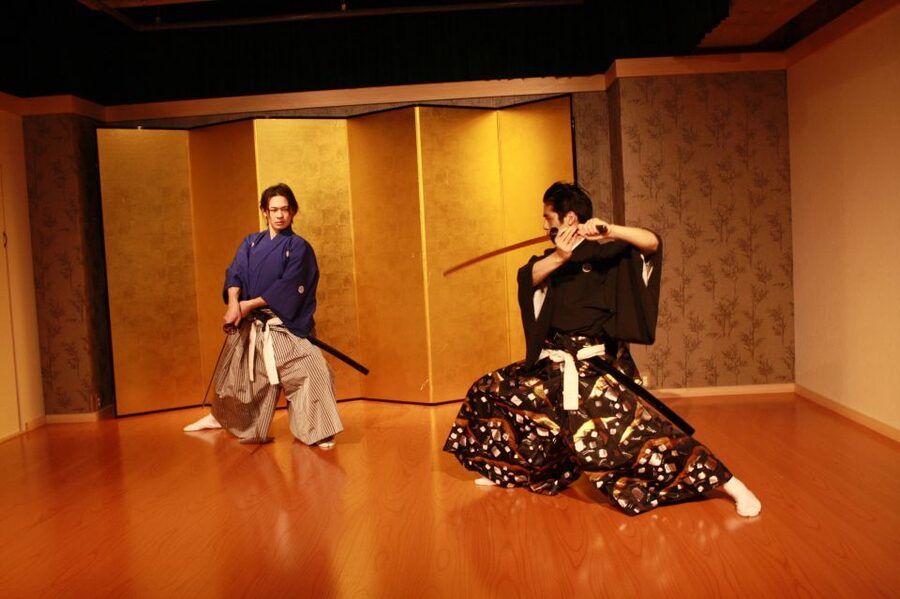
A lot of sword entertainment turns into spectacle. This show does something different. It focuses on responsibility, especially what it means to carry a samurai sword. That idea shows up again and again in the way they describe posture, timing, and movement control.
The show uses traditional tales played out on stage with English narration. In practical terms, that means you can follow along even if you’re not fluent. And if your Japanese is basic, don’t worry. The performance still works like a story you can watch from moment to moment.
You may notice some light humor mixed into the storytelling, which helps the mood. It’s not a heavy lecture hall vibe. It’s closer to a cultural performance where the artists want you to understand, not just to sit quietly.
Sword technique and the folding fan scenes
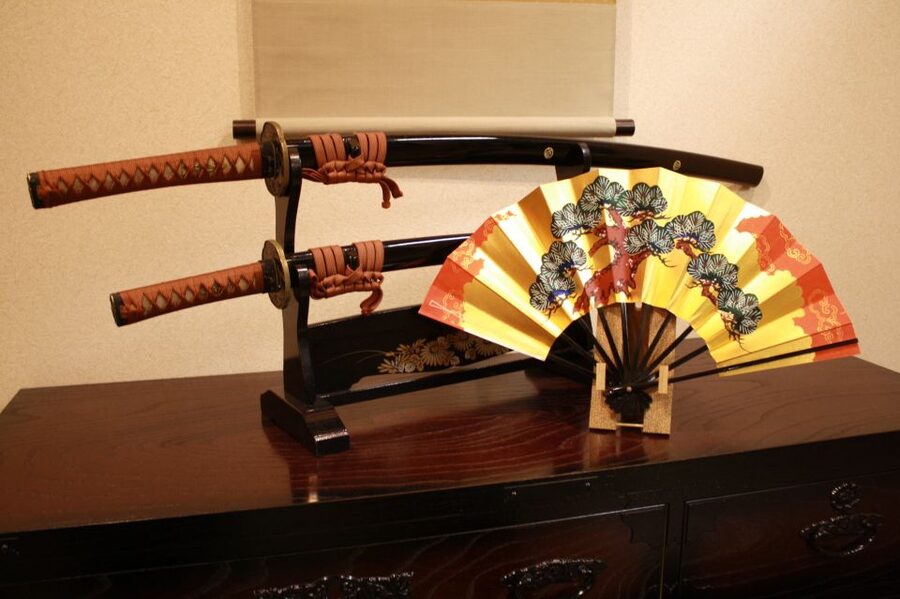
Kenbu isn’t only swordwork. Part of what makes it feel distinct is that it borrows from a wider samurai performance world. You’ll see techniques using a folding fan, too, which adds another layer to what the dancers can do.
That matters because it gives you context. The samurai image is often reduced to a single weapon. In reality, the role and training connected to movement, timing, and presentation. The fan scenes help you see that the samurai toolkit included tools for rhythm, control, and presence.
The sword segments themselves are structured like demonstrations. You’ll see how the dancers hold the katana, how they control the arc, and how they shift their stance to keep balance. Watch the footwork even if you can’t count the details. The “why” is the stability. The “how” is the restraint.
If you’re the type who loves learning by watching, you’ll enjoy the way the show breaks the choreography into understandable blocks. It’s not simplified into something childish. It’s presented in a way that gives you a handle on technique without requiring prior training.
More samurai and ninja experiences in Kyoto:
- Skip the lines Basic Ticket at SAMURAI NINJA MUSEUM KYOTO
★ 4.5 · 632 reviews - Ninja 1-hour Hands-on Lesson by Japanese master in Kyoto -Entry
★ 5.0 · 489 reviews - Kyoto: Ninja Weapon Forging Experience
★ 4.8 · 478 reviews - Samurai Training with Modern day Musashi in Kyoto
★ 5.0 · 256 reviews
The mini lesson: draw, grip, and gentle-to-firm swings
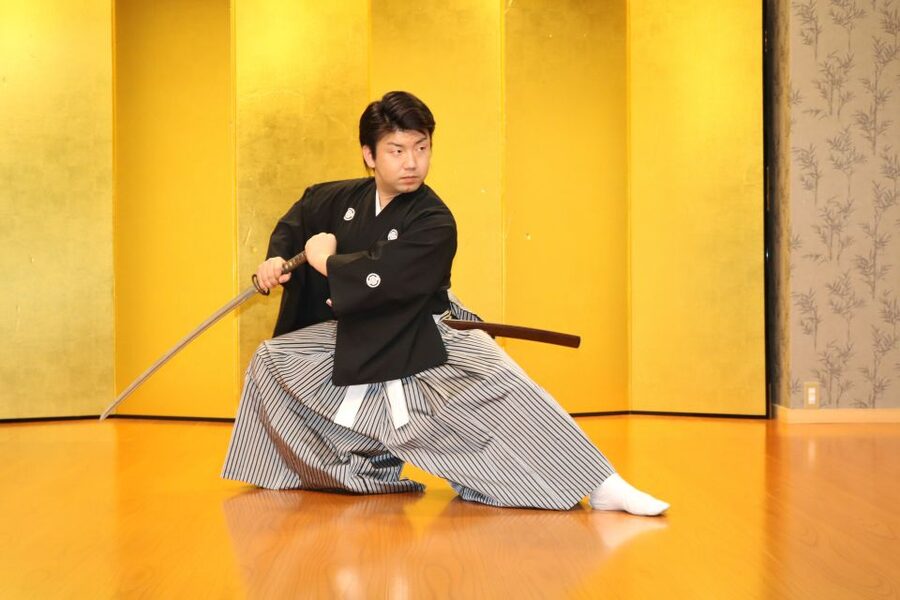
After the show, you get the interactive part. Performers return, and you’ll take part in a short sword lesson that’s designed for beginners. The goal is not to train you into a fighter. It’s to let you feel what the movements involve.
Here’s what to expect during the lesson. You’ll pick up a sword and slowly pull it out of the scabbard. Then you’ll grasp the blade and follow the instructor’s commands. The first swings are gentle, then you gradually move toward more forceful practice if there’s time.
This is the moment that turns “watching history” into “understanding it.” When you lift a katana yourself, you immediately notice how much effort and balance it takes to swing cleanly. Even with a short session, you can feel why control was everything.
If there’s time, you may also get the chance to learn how to use a fan. That’s a nice bonus because it connects the earlier stage demonstrations to your own body. Even a small try helps you connect the dots between dance, tool use, and disciplined movement.
Safety is part of the experience. The instructor’s commands keep the group synchronized, and the structure keeps your practice within beginner range. So yes, it’s fun, but it’s also set up to be responsible.
Photos and the end-of-show photo moment
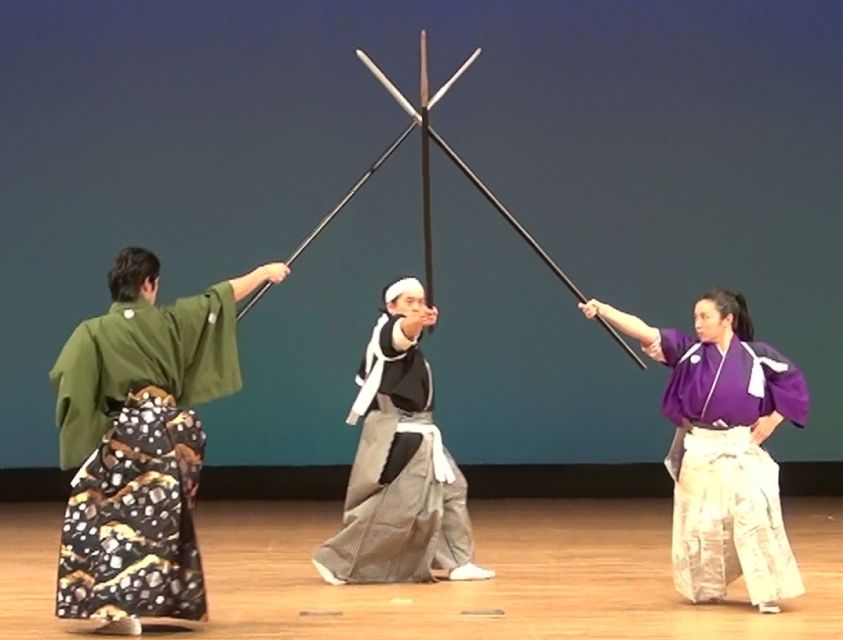
There’s a clear rule: please refrain from taking photos or videos during the show. They want the room focused on the performance. It also makes the final atmosphere better because everyone can watch without screens popping up.
The good news is you get time after. When the performers return, it’s a cue that the photo moment is on. You can capture the heroic look of the samurai theme at the end, and you’ll likely get help positioning too.
In plain terms, I’d treat it like this: watch carefully during the performance, then switch to camera mode at the right moment. If you try to sneak pictures, you’ll get the pressure of feeling rushed and you might miss parts of the lesson.
Price and value: is $32 worth one hour in Kyoto?
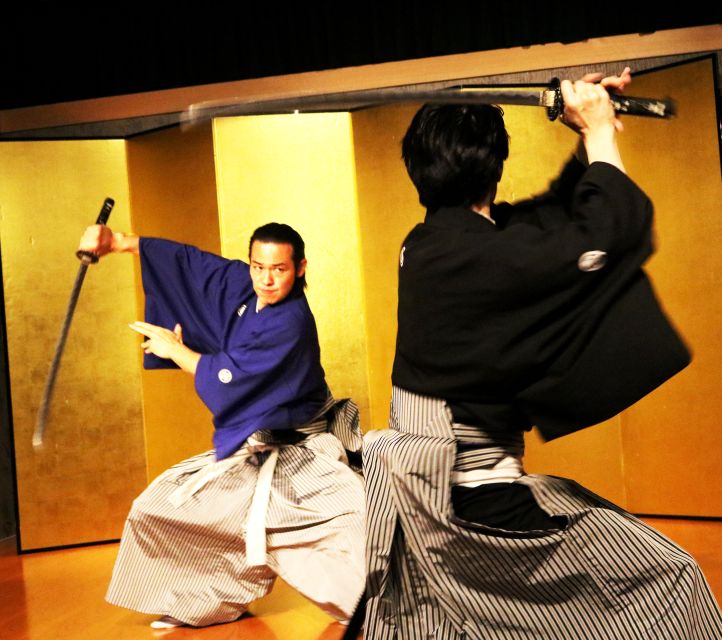
At $32 per person for about 1 hour, this is priced like a short, high-impact cultural class plus a stage show. For Kyoto, that can be a smart use of time if you want something different from shrine photos and temple gates.
Here’s why I think it’s good value. First, you’re paying for the full package: theater entry, the Kenbu show, and the short sword lesson. That “watch plus do” structure usually costs more when you separate activities.
Second, the storytelling is in English. For many visitors, comprehension is the difference between a fun show and a memorable one. English narration makes the history and technique feel usable, not like you’re just guessing.
Third, the photo time adds a real souvenir payoff. Some activities feel done once the curtain closes. Here, the final moment lets you take part in the story, not just observe it.
The tradeoff is time. You only have an hour total, so it’s not a multi-hour training session. If you’re serious about kendo or swordsmanship practice, you’ll still want a longer course later. But for most visitors, this gives a meaningful taste.
Who this experience suits best
This show fits best if you want cultural context without a long commitment. If you like history, stage storytelling, or Japanese performance art, you’ll probably enjoy it.
It’s also great for people who like interaction but not risk. You get hands-on katana practice in a controlled setting. You’re not doing anything dangerous or advanced. You’re learning how it feels to draw, grip, and swing.
Family friendly can be a strong match too. The pacing is built from short story segments and demonstrations. That helps keep attention more naturally than a lecture.
If you’re traveling solo, it works because the format supports small group interaction at the end. If you’re in a larger group, it also still works well, since the lesson is structured and guided by instructor cues.
A practical game plan before you go
To get the best experience, I’d do three things.
First, show up a little early and take your time getting settled. Shoes off, finding your seat, and putting away a small bag takes a few minutes, and there’s no waiting room if you’re late.
Second, treat the first part like a performance, not a movie. Watch how the performers hold the sword and shift their stance. If you follow the narration, you’ll also start catching the intent behind each movement.
Third, during the lesson, focus on control. The fun is in repeating what the instructor cues. If you try to go too fast, you’ll feel the weight and balance limitations quickly.
And one small tip: keep your camera ready for after the show. If you wait until you’re called, you won’t be hunting for a phone or scrambling with straps while everyone is moving on.
Should you book Samurai Kenbu in Kyoto?
I’d book this if you want a one-hour Kyoto activity that combines story, technique, and a real hands-on moment. The show is well organized, the narration is built for English speakers, and the mini lesson is genuinely memorable because you hold and draw a katana yourself.
I’d skip it or adjust expectations if you mainly want high-energy sword combat. This is performance art with samurai context, and the sword practice is short by design.
If you’re on the fence, here’s my simple test: do you enjoy learning through watching and doing? If yes, this is a smart pick for your Kyoto day.
FAQ
How long is the Kyoto Samurai Kenbu Traditional Sword Dancing Show?
The duration is listed as 1 hour.
Where do I meet for the show?
Meet at the Samurai Kembu Theater, Kyoto. It is about 4 minutes’ walk from Subway Sanjo Keihan Station and about 5 minutes’ walk from Sanjo Station on the Keihan Main Line.
Is hotel pickup or drop-off included?
No. Hotel pickup and drop-off are not included.
What languages is the instruction or narration offered in?
The instructor provides English and Japanese.
Are photos or videos allowed during the performance?
Please refrain from taking photos or videos during the show. A photo moment is included after the show.
What’s included in the price?
Included are Samurai Kenbu Theater entry, the Kenbu show, and a short sword lesson.
Is the venue wheelchair accessible?
Yes, the activity is listed as wheelchair accessible.
Is there room for large luggage or travel bags?
No. There is no room for large luggage or travel bags.
Can I cancel and get a refund?
Free cancellation is available up to 24 hours in advance for a full refund.
Fresh options around Kyoto
- Kyoto: Quiet and Graceful Tea Ceremony★ 4.5 · 19 reviews
- Oboro | Mindful Tea Ceremony in a 100-Year-Old Kyoto Teahouse★ 5.0 · 19 reviews
- Ikebana Traditional Japanese Art of Flower Arranging★ 4.5 · 19 reviews
- Kyoto Satoyama Cycling with Lunch and English Guide★ 5.0 · 19 reviews
- Kyoto International Party Solo Friendly Expats and Locals★ 5.0 · 19 reviews
- Tea Ceremony Experience in Traditional Kyoto Townhouse★ 5.0 · 19 reviews
- Kyoto: Amanohashidate Ine Funaya Tour★ 4.4 · 19 reviews
- Kyoto Private Food Tours with a Local Foodie: 100% Personalized★ 4.5 · 19 reviews
Samurai & Ninja Experiences, compared.
Samurai Ninja Museum Guided tour and Experience
Read our review →
Kendo and Samurai Experience with Uniform and Gear
Read our review →
Samurai Sword Class by Experts in Traditional Arts
Read our review →
Skip the lines Basic Ticket at SAMURAI NINJA MUSEUM KYOTO
Read our review →
Samurai Sword & Archery Class from Samurai Descendant
Read our review →
Browse the lists this tour appears in