
Reviewed · MARKETS
Kyoto: Enjoy Sushi & Market Tour! Best for Family & Couple!
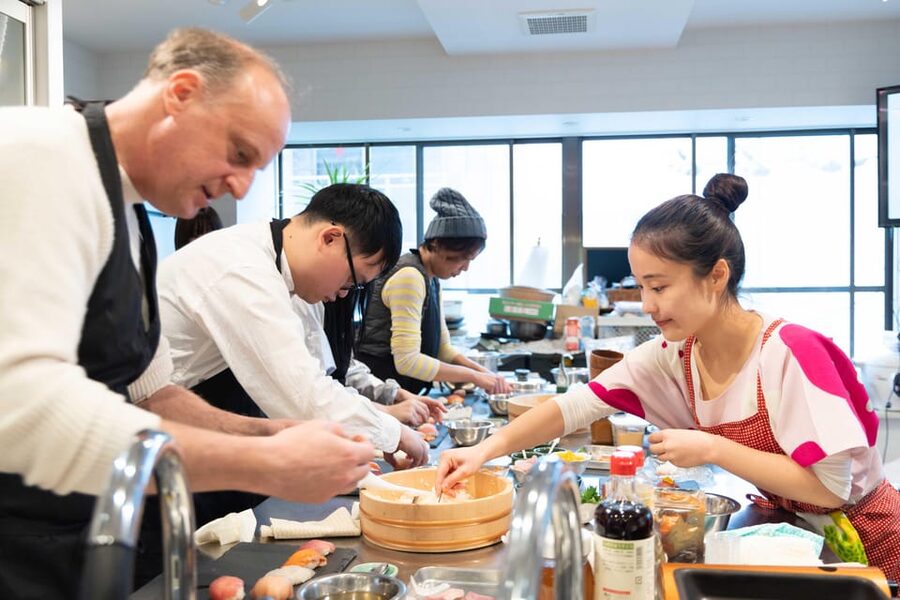
Sushi becomes real when your hands do the work. In this Kyoto class you go from Nishiki Market fish cutting to crafting multiple sushi styles and tasting miso soup with a local expert. I love how close the shopping-and-cooking part stays to what you see in Kyoto, and I love that you get skills you can actually repeat at home. One possible drawback: the pace and group interaction can feel uneven if you are hoping for extra back-and-forth with the instructor.
This is built for couples and families because it stays friendly, small, and practical. The group is limited to 10, the teaching language is English and Japanese, and the meeting spot is easy to reach from your sightseeing loop around Gion and Kiyomizu-dera. Guide E, for example, is described as supportive and flexible, and the overall setup is described as professional and well run.
Key Points That Make This Tour Worth Your Time
- Nishiki Market fish cutting: see salmon cutting and watch vendors prep fish for sushi
- Three sushi styles, not just one: you make nigiri plus temari and temaki
- Miso soup training that includes tasting and comparison
- You eat what you make, with dessert and coffee included
- Seasonal sightseeing tips from a Kyoto tourism expert
- Optional local drinks like sake and beer for an added charge
Why This Kyoto Sushi Class Feels Different From a Typical Workshop
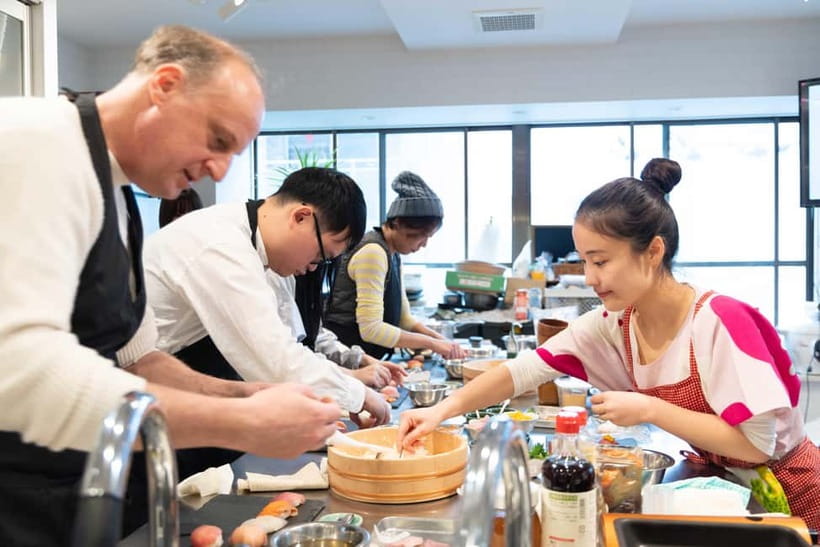
Most cooking classes are either hands-on with no context, or scenic with a token lesson at the end. This one does both, and that is the main reason it works. You start by seeing ingredients being selected and prepared at Nishiki Market, then you turn around and use what you learned to build sushi yourself.
I also like the way the class focuses on fundamentals with room for creativity. You learn the vinegar rice technique and then shape three different sushi formats: nigiri, temari, and temaki. Those styles push your knife-free and hand skill in different ways, so the session feels varied, not repetitive.
Finally, it is designed to be social without being chaotic. You create, you eat, you chat with other participants, and you get guidance throughout. For families, that matters. For couples, it means you get a shared activity that is not just standing in lines.
Meeting at Salon Roll, Then Quickly Getting Into the Kyoto Rhythm
You meet in the city center in front of the hair salon Salon Roll, on the first floor. The location is described as about 10 minutes from Kyoto Station and around 5 minutes from Shijo Station, which is a big deal for a 2-hour experience. In practical terms, it is easier to squeeze in between temple time and dinner plans without feeling like you need a whole transportation plan.
From there, it is convenient for the Kyoto highlights you are likely already aiming for, especially the Gion area and Kiyomizu-dera. That makes this class a smart “connector” activity. You can pair it with a morning or afternoon of sightseeing and still get something memorable that you cannot DIY from a menu.
More Market Tours in Kyoto
- Nishiki Market Brunch Walking Tour (7 Tastings + Brunch)
★ 5.0 · 1,355 reviews - Kimono Tea Ceremony at Kyoto Maikoya, NISHIKI
★ 5.0 · 911 reviews - Kyoto Nishiki Market Food and Culture Walking Tour
★ 5.0 · 412 reviews
Nishiki Market, Seeing Fish Cutting Up Close
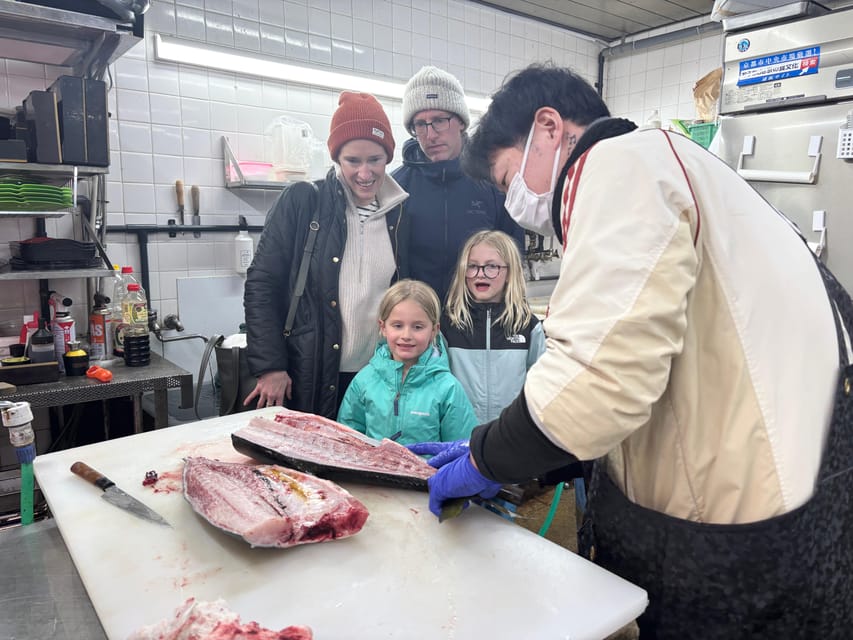
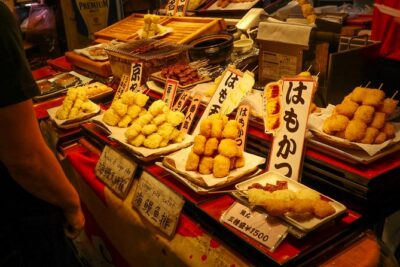
The market stop is one of the most praised parts because it gives you a front-row seat to how sushi ingredients start their journey. You head to Nishiki Market together to select fresh fish, and you watch skilled vendors prepare it.
The standout detail from the experience is the fish cutting. You can see salmon being cut, and you also get to witness the work style of vendors who do this all day. That is useful, even if you are not a sushi nerd. When you later shape sushi at your station, it helps to understand what you are looking for in texture and cut.
If you care about markets, you will appreciate that the visit is not just sightseeing. It directly supports the cooking portion. The class connects ingredients selection to technique, so you understand why vinegar rice, seasoning, and fish handling matter together.
One consideration: a market segment can be time-sensitive. You are in a tight 2-hour window, so you get the experience without wandering endlessly. If you want long browsing time to buy souvenirs, plan separate market time on another day.
Vinegar Rice Basics, Then Making Nigiri, Temari, and Temaki
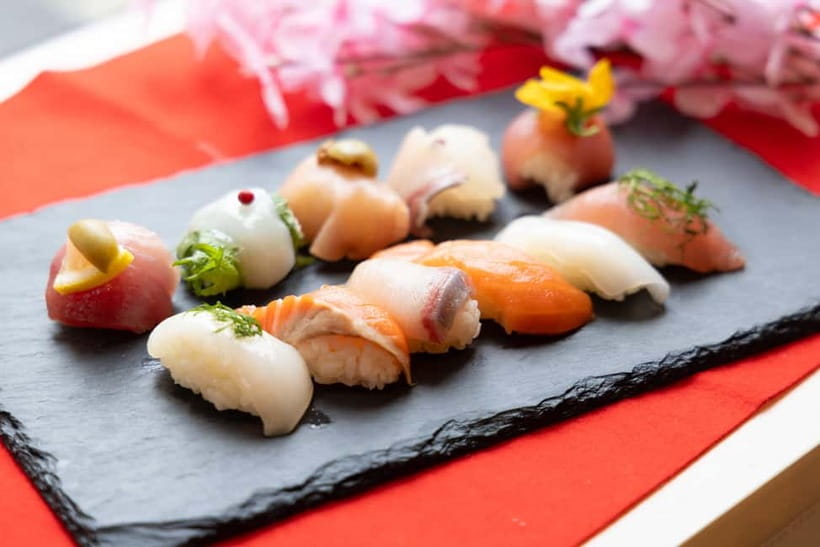
The core skill here is making vinegar rice and using it to form sushi. This is the part that pays off the longest, because you are not just learning what to do once in a class. You are learning the method so you can recreate it at home for a party or a weekend meal.
You also learn sushi preparation for three styles:
- Nigiri: hand-shaped rice paired with fish
- Temari: rounded, ball-like sushi shaped by hand
- Temaki: hand-formed cones filled and assembled
These differences matter because each one tests a different technique. Nigiri asks for consistent pressure and balance. Temari asks for shape control without overhandling. Temaki is the most forgiving in a fun way, because it encourages you to build with your hands and adjust filling.
What I like is that the class frames this as creativity with structure. You harness your own creativity to make visually strong sushi while still following technique. In real life, that is how you avoid sushi disasters like overly wet rice or messy shapes that do not hold together.
You will also hear and practice guidance throughout. The hands-on teaching is repeatedly highlighted as kind and effective, and guide E is described as helping participants learn the right techniques while still being flexible with flavors. That balance is ideal if you like to experiment but also want reliable results.
Dashi, Tasting Comparisons, and Miso Soup You Can Repeat
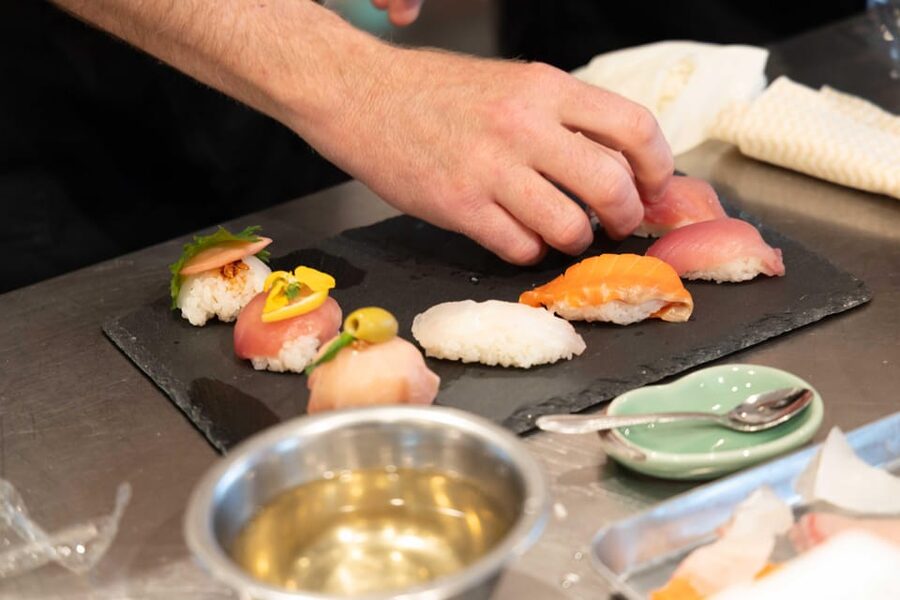
After rice and sushi shaping, you move into a second skill set: dashi and miso soup. This part includes tasting and comparison, which is a great touch. It turns miso soup from a background flavor into something you can recognize and adjust.
Even if you are new to Japanese cooking, you will understand the logic quickly. Dashi is the base, and the tasting component helps you notice how changes affect the final bowl. Then you make miso soup so you are not only consuming it, you are building it.
In Kyoto, miso soup often feels like the quiet supporting actor. In a class like this, it becomes a lesson in balance. The goal is not complicated cooking math. It is learning how a simple bowl can taste different depending on the broth base and how it is combined.
This is also where the experience broadens beyond sushi. If you are going with a group where not everyone is obsessed with fish, miso soup keeps everyone involved. You get a second win in the same 2-hour session.
More Sushi Making Classes in Kyoto
- Sushi Making in Kyoto! Same-day bookings welcome!
★ 5.0 · 713 reviews - The Original Small-Group Sushi Making Class in Kyoto
★ 5.0 · 436 reviews - Kyoto: Small-Group Authentic Sushi Making Workshop
★ 5.0 · 137 reviews - Sushi – Authentic Japanese Cooking Class – the best souvenir from Kyoto!
★ 5.0 · 93 reviews
The Best Part Is Eating: Sushi, Miso Soup, Dessert, and Coffee
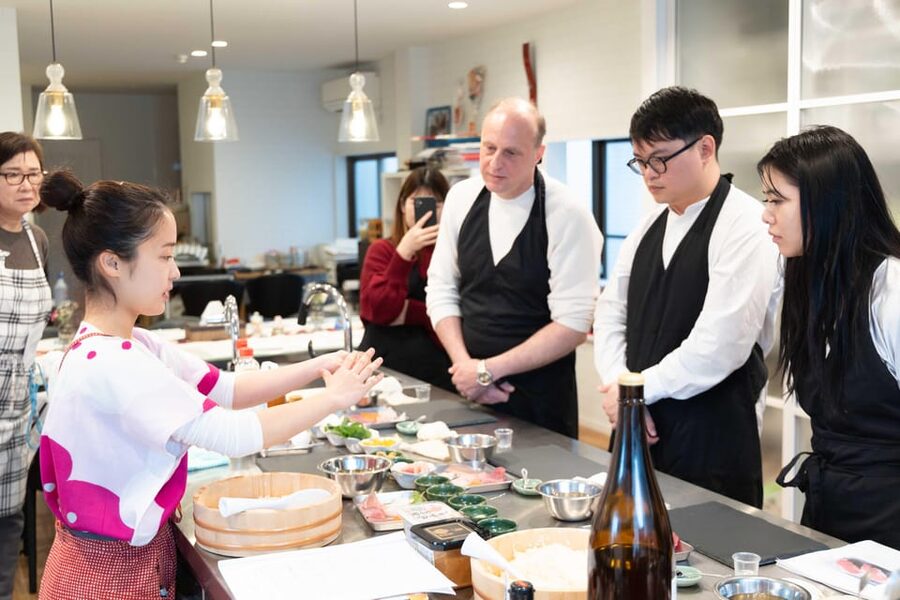
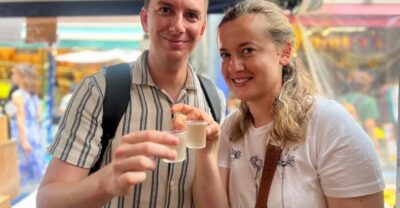
Once you finish cooking, you eat a meal that includes the sushi and miso soup you made, plus dessert and coffee. That matters more than you might think. Many cooking classes teach you something and then rush you out. Here, the shared meal is part of the experience, and it gives your hands-on work a satisfying ending.
Dessert is specifically described as homemade matcha dessert, and that is a detail worth remembering. If you like matcha, this is where you get a clear Kyoto flavor note. In the same way, green tea shows up alongside other drink options, so you get a sense of how Japanese meals naturally move between savory and comforting sweet.
You can also add local drinks for an extra charge, including sake and beer. That is a nice option if your group is celebrating or if you want to make it more of an evening activity. If you prefer to keep it simple, you still get dessert and coffee included, so you are not required to add anything.
Seasonal Sightseeing Tips From a Kyoto Tourism Expert
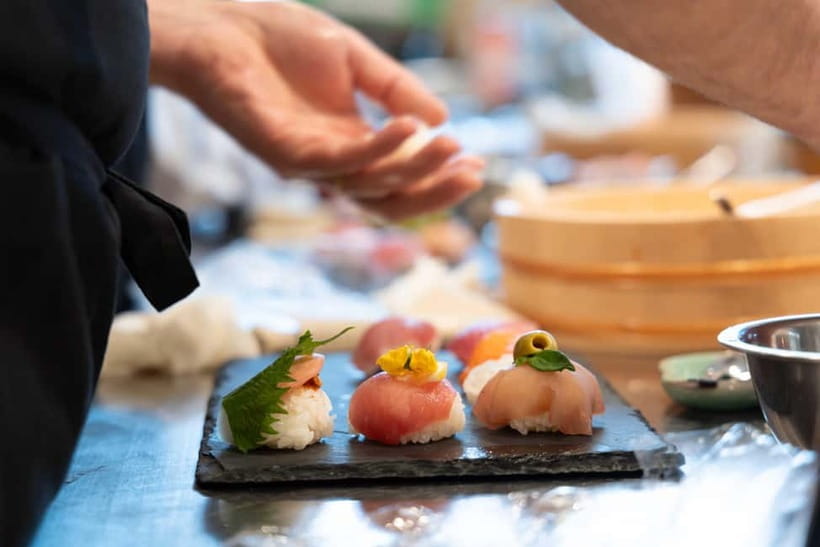
A smart bonus included in this experience is time with a Kyoto tourism expert who shares recommendations for seasonal sightseeing. This is not just generic advice. In a short class, even a few well-chosen suggestions can save you hours of planning.
Because the tips are seasonal, they can help you choose the right temple or neighborhood timing, or decide when to go for what you care about. I especially like advice like this when I am in Kyoto for a short trip, since Kyoto can feel like you need weeks to do it properly.
If you have never been to Kyoto before, treat these tips as a starting map. You can build your own plan around them, instead of trying to guess the best order from scratch.
Price and Value: Is $77 Per Person Worth It?
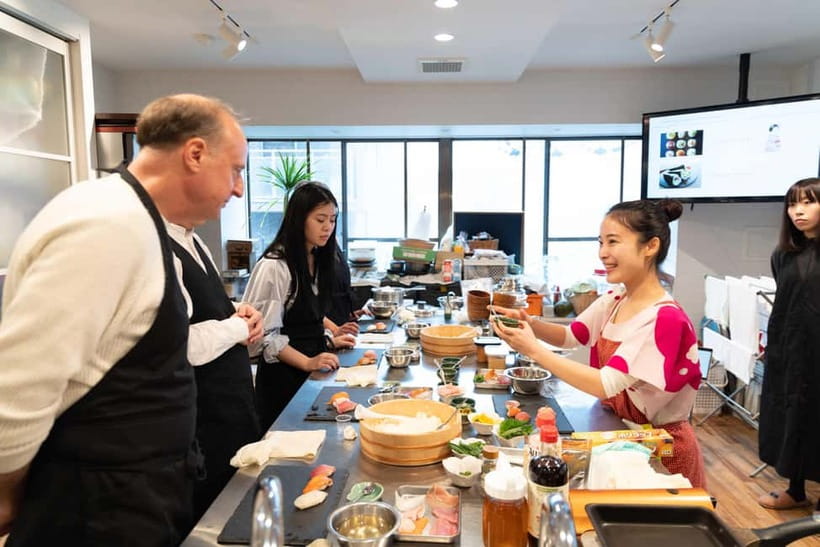
At $77 per person for a 2-hour experience, this is not a cheap snack-style activity. But the value is in how much you get packed into that time.
You are paying for:
- A small group setting limited to 10 participants
- Instruction in English and Japanese
- Market access with fish selection and cutting observation
- Cooking instruction for vinegar rice, sushi (nigiri, temari, temaki), and miso soup
- The meal you make, plus dessert and coffee
- Seasonal sightseeing guidance
If you try to DIY this, you would need multiple pieces: a market guide, ingredients planning, equipment or workspace, and someone to teach you how to shape sushi well. This experience bundles those pieces into one focused session.
That said, one review raised a concern that the instructor engagement was not as strong as expected and that the price felt steep for the experience level. That is a fair consideration. If you are the type who needs constant conversation or very interactive coaching, you should choose the class with that in mind and go ready to participate.
Who Should Book This Kyoto Tour, and Who Might Want to Skip It
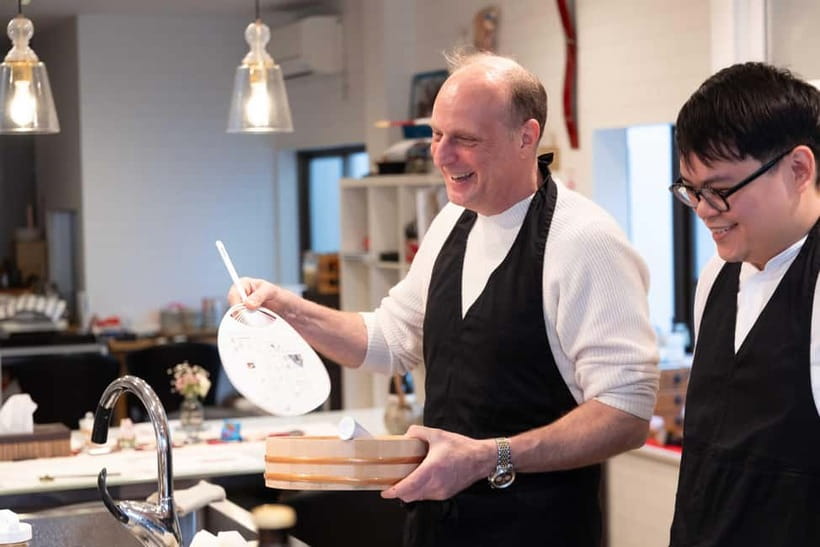
This experience is a strong fit if you want:
- A hands-on Kyoto activity that feels authentic and not staged
- A meal included, based on what you cook
- A blend of market culture and cooking skills
- A family-friendly outing that still feels special as a couple date
It also suits people who want home skills. The sushi-building and miso soup lessons are the parts that will stick, because you can recreate them after you return.
If you are already a confident sushi chef or you want a long market stroll for shopping, the 2-hour time limit may feel short. In that case, you might prefer a longer market and cooking day instead of a compact class.
Should You Book This Kyoto Sushi and Market Tour?
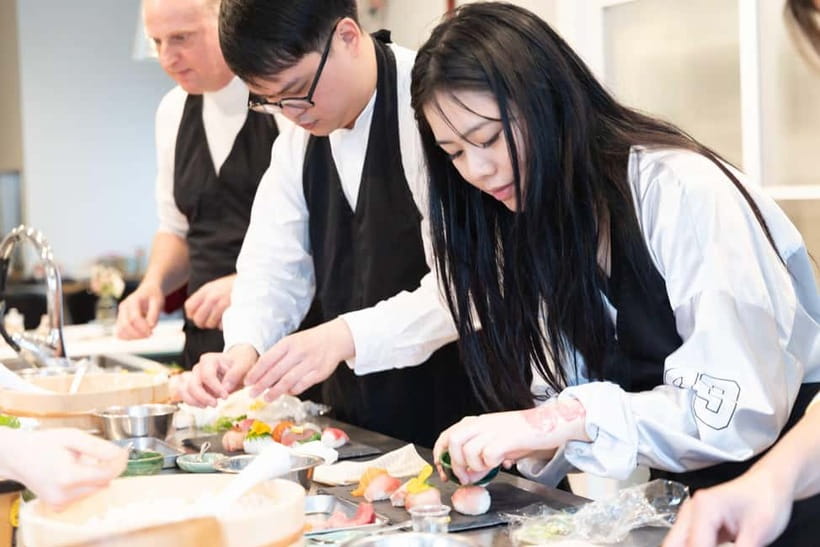
Book it if you want a short, high-impact Kyoto experience with market-to-table energy. You get real sushi practice, miso soup training with tasting, and a sit-down meal with dessert and coffee. The small group size and bilingual instruction make it easier to ask questions and learn without getting lost in a crowd.
Skip or reconsider if price feels like a stretch for you, or if you need a very chatty, constantly interactive instructor style. If that is you, make sure you arrive ready to jump in, taste, and ask questions so the class meets your expectations.
FAQ
What is the duration of the Kyoto sushi and market tour?
The experience lasts 2 hours.
Where is the meeting point?
You meet in front of a building with a hair salon called Salon Roll on the first floor.
How much does the tour cost?
The price is $77 per person.
What will I learn to make during the class?
You will learn how to make vinegar rice, and you will prepare sushi including nigiri, temari, and temaki. You will also learn how to make dashi and then make miso soup.
Do you stop at Nishiki Market?
Yes. You visit Nishiki Market together to select fresh fish and watch skilled vendors prepare it, including fish cutting.
What is included in the meal?
After cooking, you enjoy sushi, miso soup, dessert, and coffee.
Are alcoholic drinks included?
Sake and beer are available for an extra charge, but they are not required. Dessert and coffee are included.
What group size should I expect?
It is a small group limited to 10 participants.
What is the cancellation and payment approach?
Free cancellation is available up to 24 hours in advance for a full refund, and you can reserve now and pay later.
More Shopping Tours in Kyoto
- Kyoto: Nishiki Market Tour with a Local Foodie & Tastings
★ 4.5 · 67 reviews - Nishiki Market Lunch Tour
★ 5.0 · 47 reviews - Nishiki Market Food Tour with Cooking Class
★ 4.9 · 42 reviews - Kyoto Nishiki Market Tour
★ 5.0 · 32 reviews
More Markets in Kyoto
- Kyoto: Nishiki Market Tea Ceremony with Koto Performance
★ 4.8 · 294 reviews - Kyoto: Nishiki Market Brunch Walking Tour-7 Tastings+Brunch
★ 4.8 · 197 reviews - Kyoto: Local Food Tasting Tour at the Nishiki Market
★ 4.7 · 135 reviews - Kyoto: Nishiki Market and Depachika Food Tour with a Local
★ 4.7 · 76 reviews
Fresh options around Kyoto
- Tea Ceremony Experience in Traditional Kyoto Townhouse★ 5.0 · 19 reviews
- Kyoto International Party Solo Friendly Expats and Locals★ 5.0 · 19 reviews
- Kyoto: Amanohashidate Ine Funaya Tour★ 4.4 · 19 reviews
- Kyoto Private Food Tours with a Local Foodie: 100% Personalized★ 4.5 · 19 reviews
- Kyoto Private Car Tour with Japanese Navigator (+Nara) T5★ 4.7 · 19 reviews
- Kyoto Half Day Highlights Tour★ 5.0 · 19 reviews
- Kyoto 6h Private Tour Fushimi Inari, Kiyomizu, Gion & Hidden Gems★ 5.0 · 19 reviews
- Kyoto: Ninja Experience Cafe Kyoto Gion★ 4.9 · 20 reviews
Markets, compared.
Tokyo Tsukiji Fish Market Food and Culture Walking Tour
Read our review →
Nishiki Market Brunch Walking Tour (7 Tastings + Brunch)
Read our review →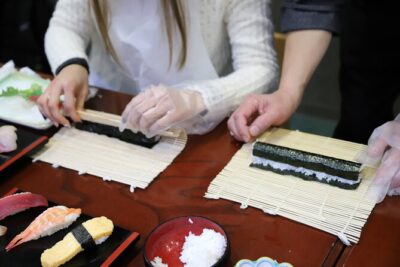
Tsukiji Fish Market Guided Tour and Sushi Making with Pro Chef
Read our review →Tsukiji Fish Market Food and Culture Walking Tour
Read our review →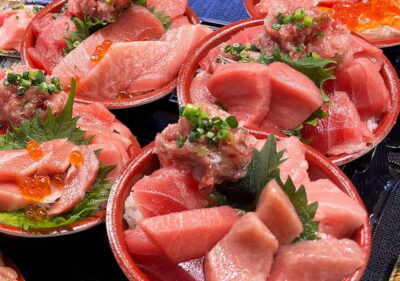
Tsukiji Fish Market: Street Food & Culture Walking Tour
Read our review →
Tsukiji Fish Market Small-Group Food Walking Tour
Read our review →Browse the lists this tour appears in