Reviewed · GUIDED
Nikko Private Tour from Tokyo with Licensed Guide and Vehicle
Nikko feels like a different planet when you skip the logistics. This private 10-hour outing from Tokyo pairs a licensed local English-speaking guide with a private vehicle, so you can build a Nikko day around what you actually want to see. I like that you get custom flexibility instead of being locked into a rigid bus schedule.
I also like the easy start: pickup can happen from within Tokyo’s 23 wards, which saves you from transit puzzle-solving before you even reach the mountains. One consideration: if your dates fall in the long maintenance window, the ropeway tied to the Akechidaira Observation Area is shut from January 16, 2026 to August 31, 2027.
Key things I’d bank on for a Nikko private day from Tokyo
- 3 to 4 chosen stops, not a rushed checklist, so you spend time rather than sprint
- Private vehicle from Tokyo’s 23 wards, which is the real value if you hate transit transfers
- Licensed guide in English, and they focus on making the sites click, not just translating signs
- Nature plus sacred sites, with options for waterfalls, Lake Chuzenji, and the temple core
- Ropeway closure reminder, important if you were planning Akechidaira Plateau
- Up to 4 people per group, so the price can make sense when you share it
Why this Tokyo to Nikko setup works better than trains and buses
Nikko is one of those places where the scenery and the shrines feed each other. You start in a world of lacquer and stone carvings, then you end up looking down mountain valleys or standing by waterfalls. The tricky part is getting there without losing most of your day to travel and timing.
This tour is built around the “start smooth, sightsee hard” idea. You get a private vehicle, and pickup is available from anywhere in Tokyo’s 23 wards. For a first-time Nikko day, that matters. It means you can sleep in a little, avoid station friction, and arrive with enough energy to actually enjoy the sites instead of just collecting photos.
The other quiet win is pace. Because it’s private, you do not have to wait for a group that moves like a slow wave. Your guide can adjust timing around weather and how long you want at key places. Recent guide-led experiences you’ll see reflected in real departures include things like taking in Kegon Falls even when upper elevations had heavy cloud cover.
A few more Tokyo days worth comparing
- Mt Fuji and Hakone 1-Day Bus Tour Return by Bullet Train
★ 5.0 · 26,383 reviews - 1-Day Tokyo Bus Tour
★ 5.0 · 14,250 reviews - Tokyo: TOKYO SKYTREE® Admission ticket
★ 4.5 · 11,192 reviews
Planning your own Nikko mix: how 3 to 4 stops changes the day
The big promise here is customization. Rather than trying to cram everything into one day, you choose about 3 to 4 sites from the available highlights. That changes everything about how you feel at the end of the day.
If you’re into sacred architecture, you’ll likely want to anchor your day with Toshogu plus at least one other temple or shrine stop. If you’re more nature-focused, you can make waterfalls and viewpoints the core, with the bridge and temple area as a meaningful add-on.
A smart strategy is to group stops that are geographically sensible. For example:
- Temple core: Nikko Tosho-gu, plus one of Rinno-ji, Taiyuin, or Futarasan Shrine
- Lakes and waterfalls loop: Kegon Falls and Lake Chuzenji, then add a scenic road viewpoint like Irohazaka
- Short nature breaks: Shinkyo Bridge, Kanmangafuchi Abyss, Kirifuri Waterfall, or a botanical garden stop
Also note what’s not included. Entrance fees, lunch, and personal expenses are extra. So even on a private day, you should budget for tickets where they apply.
Nikko Tosho-gu: Tokugawa Ieyasu and the reason people say it’s the real deal
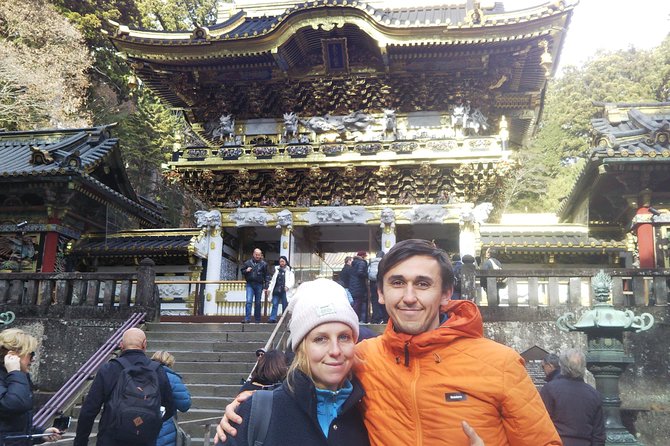
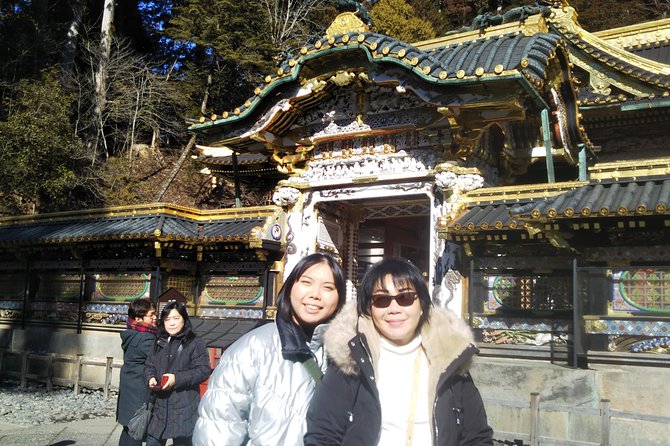
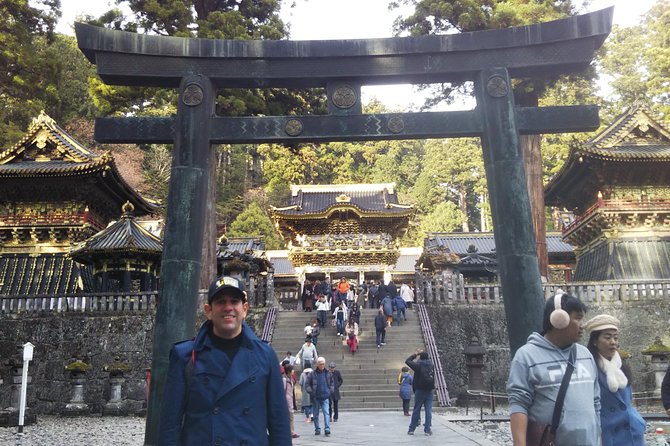
Most Nikko days start (and often end) with Nikko Tosho-gu. This is the final resting place of Tokugawa Ieyasu, founder of the Tokugawa shogunate, plus nearby shrines and temple grounds that expand the story beyond one grave.
What you’ll feel here is scale and symbolism. The carvings, the layout, and the sense that every surface has a job to do can be overwhelming if you show up cold. That’s where a guide matters. A good English-speaking guide helps you notice what you’re looking at, instead of just reading captions at high speed.
Expect around 30 minutes for this stop. Entrance fees are not included, so bring that cost in mind. If you want a balanced day, Tosho-gu is a great anchor because it sets context for the surrounding spiritual sites that follow.
A practical tip: this area is also where you’re likely to spot local snack culture. One guide-led experience notes Nikko pudding as a fun treat to pair with the temple visit. Even if you skip it, plan for a quick browse of nearby food stalls before you jump back into the route.
Kegon Falls and Lake Chuzenji: the mountain air payoff
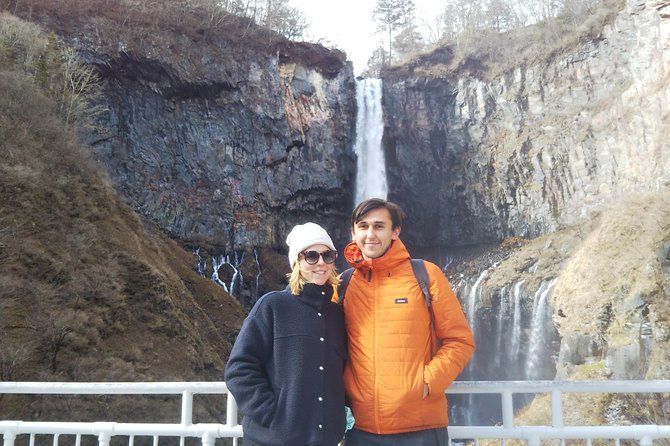
If you do only one “nature star” stop, Kegon Falls is a strong contender. Water from Lake Chuzenji drops about 97 meters straight down to the rocks below, and there’s a special lift to help you get to the viewing area.
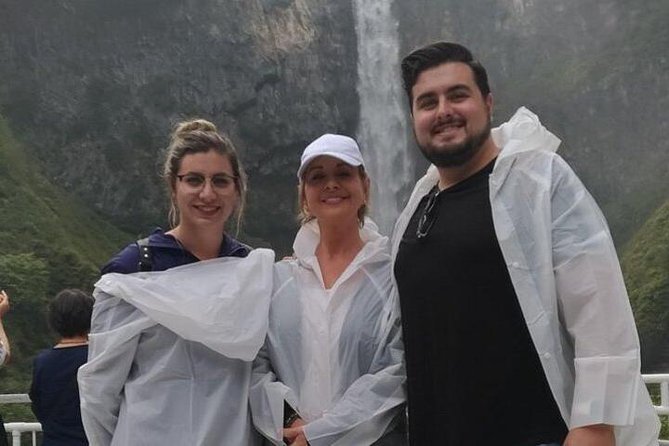
Even when the day turns gray, Kegon can still hit hard. In one guide-led experience, Kegon was breathtaking despite dense cloud cover at higher elevations. That’s the thing about Nikko. The mood changes fast, and nature keeps doing its job anyway.
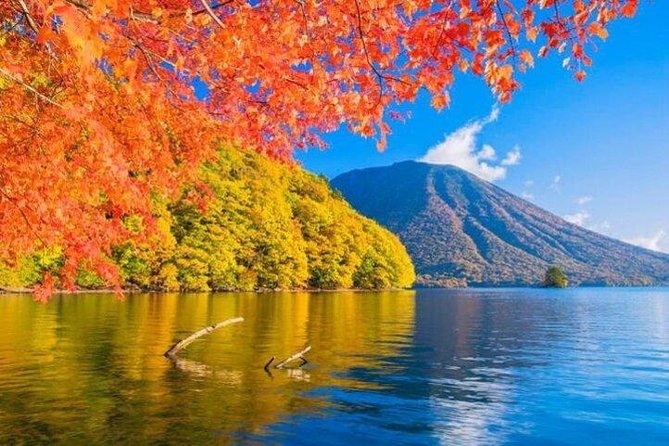
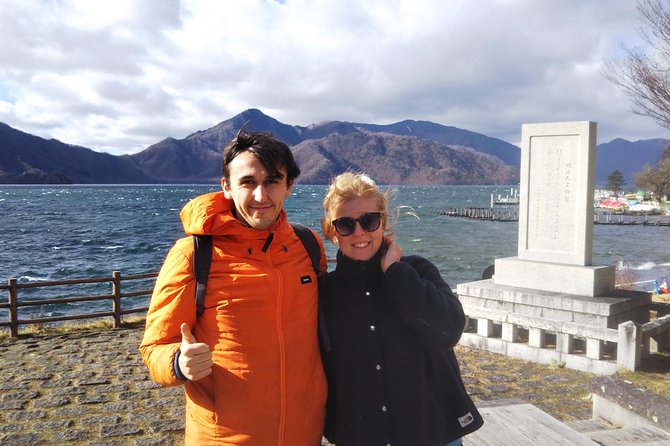
Lake Chuzenji is the other half of this pairing. It’s the largest lake in Tochigi, framed by nature around 25 kilometers of shoreline area. The region also has an older resort story from the late 19th to early 20th centuries, when it was popular with foreign visitors. If you like connecting places to their past, it’s a nice contrast to the shrine world.
Plan roughly 9 minutes for Lake Chuzenji in the core route, plus a short window for the viewpoint near Kegon. Admission is not required for Lake Chuzenji here, and Kegon is listed as a quick stop. Translation: you should dress for cool mountain weather because you might not get long breaks to warm up later.
Same corner of Japan, a different kind of day:
- Tokyo: teamLab Planets TOKYO Digital Art Museum Entry Ticket
★ 4.6 · 9,779 reviews - Mt Fuji & Hakone Cruise, Drum Show Bullet Train 1 Day from Tokyo
★ 4.0 · 7,413 reviews - Tokyo: Sumo Show Experience with Chicken Hot Pot and a Photo
★ 4.8 · 6,678 reviews - Tokyo: Shinjuku Food Tour (13 Dishes at 4 Local Eateries)
★ 5.0 · 6,603 reviews
Irohazaka Route and Senjogahara: winding roads, anime fame, and myth
Two quick stops can add a lot of texture to the drive. The Irohazaka Slope is a pair of winding roads connecting lower elevations near Nikko to higher mountain areas. It’s also been featured in the Initial D anime series, which gives it a fun pop-culture hook if you recognize the style.
Then comes Senjogahara Field, where the name ties to a mythical battlefield. The story says the gods of Mount Nantai and Mount Akagi fought over neighboring lakes. It’s the kind of local myth that helps the landscape feel more alive, even if you only have a few minutes there.
These are short, around a few minutes each. That means they’re best as “breathing spaces” between longer sightseeing stops. If you’re the type who hates rushing but still wants variety, these quick scenic moments can be perfect because you’re moving, taking in views, and not losing your whole day to one big ticketed site.
A very real on-the-ground note from a guide-led experience: police sometimes check for winter tires around the Irohazaka entrance in colder conditions. In that case, the driver had prepared winter tires and the group was not stopped. If you’re traveling in shoulder seasons or winter, dress in layers and ask your guide what conditions typically look like around your travel dates.
Rinno-ji Taiyuin and Rinno-ji: where Iemitsu’s mausoleum feels like a whole world
Once you’ve seen Tosho-gu, Taiyuin is the next level of Tokugawa power expressed through architecture. Taiyuin is the mausoleum of Iemitsu, third Tokugawa shogun and grandson of Ieyasu. The complex resembles Toshogu in layout, but with its own flavor.
Expect about 30 minutes here. Entrance fees are not included. If you care about design details, this stop is worth slowing down for, because the structure and patterning are part of the meaning, not just decoration.
Right after that, you can visit Rinno-ji Temple, Nikko’s most important temple. Rinnoji traces back to the 8th century, founded by Shodo Shonin, the monk credited with introducing Buddhism to Nikko. This temple stop includes the Sanbutsudo main building, which is a key part of how the site functions.
Another 30 minutes is typical. Entrance fees are listed as not included. If you’re comparing holy sites across Japan, Rinno-ji helps you see Nikko as more than one famous shrine area.
Futarasan Shrine and Shinkyo Bridge: the older spine of Nikko
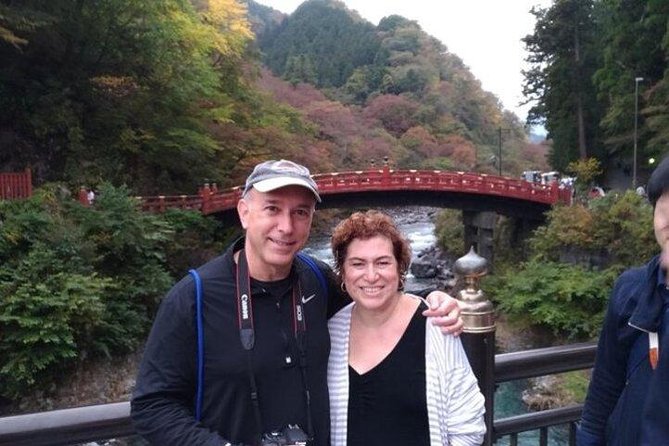
Nikko’s spiritual world has layers, and Futarasan Shrine is one of the older ones. It stands next to Toshogu in central Nikko, and it was founded in 782 by Shodo Shonin. That older founding date gives you a sense of continuity, even as the more famous ornate structures became the headline.
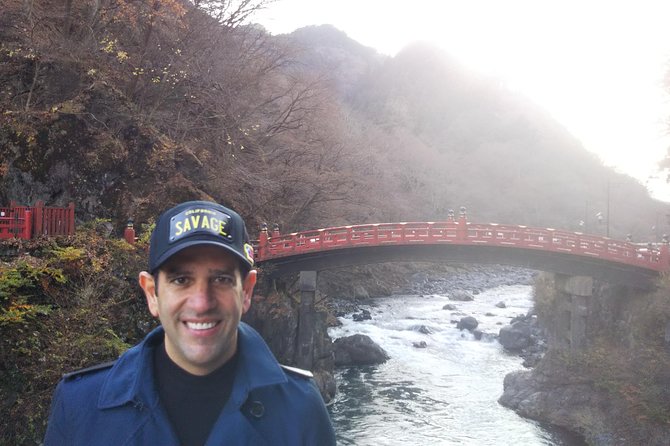
The tour also commonly includes Shinkyo Bridge, the sacred bridge at the entrance to Nikko’s shrine and temple areas. It technically belongs to Futarasan Shrine. The bridge is ranked as one of Japan’s three finest bridges, which is a big claim, but it’s easy to see why it gained status.
This is usually a quick stop, about 30 minutes. Admission is listed as free for Shinkyo Bridge. If you want a low-effort, high-reward moment in the day, this is it, especially for photos without needing to fight for a long time.
Tamozawa Imperial Villa and Kanmangafuchi Abyss: history in one hand, nature in the other
If you’re the type who likes adding a variety of eras, Tamozawa Imperial Villa Memorial Park is a strong “break from shrine intensity” option. Tamozawa Imperial Villa blends traditional Edo and early Meiji Period architecture, and the villa itself was erected in Nikko in 1899. The park is listed with 106 rooms, so it’s not just a small building you glance at.
Expect around 30 minutes. Entrance fees are not included. This is also a good choice if your group has mixed interests, because architecture and greenery can both feel satisfying here.
Then there’s Kanmangafuchi Abyss, a gorge near central Nikko formed by an eruption of Mount Nantai. It’s only a few hundred meters long and can be enjoyed from a riverside walking trail. The listed stop time is about 30 minutes, and it’s one of the easiest places to slow down and simply watch the water and rocks.
Kanmangafuchi is listed as free to enjoy, which makes it a budget-friendly add-on compared with temple tickets. If you want one stop that doesn’t require a ticket and still feels meaningful, this is a solid pick.
Nikko Botanical Garden and Kanaya Hotel History House: a calmer side of Nikko
Not every Nikko day needs to be all shrines and big viewpoints. Two options can add calm and local depth.
Nikko Botanical Garden is owned and maintained by the University of Tokyo, described as a branch of the university’s main research garden. If you like plants or you just want a breather after temple areas, this can be a refreshing shift. The stop time is about 30 minutes, and admission is listed as not included here, so plan on that cost if you choose it.
Kanya Hotel History House is another interesting change of pace. It’s a historical building that served as the predecessor of the celebrated Kanaya Hotel. If you enjoy travel history, this is an easy way to add an “older traveler Nikko” angle to your day, especially if you already heard about early foreign resort culture at Lake Chuzenji.
Kirifuri Waterfall and Akechidaira Plateau: when the road turns scenic
Kirifuri Waterfall is listed as a 75 meter high, two-tiered waterfall near Kirifuri Highlands, a few kilometers northeast of the temple and shrine area. This stop is about 30 minutes and admission is not included.
A lot depends on the weather. Waterfalls can be spectacular in mist, and they can feel dramatically different in clear air. If you’ve got a nature-heavy day, Kirifuri is a great “second waterfall” to choose after Kegon.
For sweeping views, Akechidaira Observation Area can be a big goal. It’s near the top of Irohazaka Slope, and the viewpoint is described as having sweeping views over the winding road and dramatic mountain views. The catch is the ropeway: it is closed for maintenance from January 16, 2026 to August 31, 2027.
So if your trip lands within that window, adjust expectations. You might still enjoy the Irohazaka area itself, but you cannot count on the ropeway option during closure dates. Ask your guide to plan around it, since these stops are picked during your customization.
Price and value: $1,418.77 per group, what you are paying for
This tour costs $1,418.77 per group for up to 4 people. That sounds steep at first glance, but it’s a private vehicle plus a licensed local English-speaking guide, and it includes Tokyo pickup within 23 wards.
The value math gets better when you share. If you have a full group of 4, you’re effectively paying about $355 per person before any entrance fees and lunch. If you’re traveling as a couple, your per-person cost doubles, but you still get a day that’s timed and paced around you.
You are paying for three things that add up in Japan:
- Time saved by avoiding multiple transit connections
- Personal pacing so you do not feel pressured to see everything
- Site interpretation so the carvings, myths, and temple layouts make sense fast
One more point: entrance fees and lunch are not included. That’s normal for private guide tours, but it affects total cost. Budget for tickets at the major temples you choose, plus a meal break you actually want.
Small logistics that matter: comfort, car seats, and language expectations
This is a private tour/activity, so only your group participates. That’s a big deal if you want to move at your own rhythm.
Car seating is the big practical detail to check. There are only a limited number of car seats and booster seats available, rear-facing car seats are not available, and you must contact the provider directly if you need them. If you’re traveling with kids, plan ahead early.
Service animals are allowed, and the tour notes it’s near public transportation. That’s useful as a backup, though the point of this tour is that you’re using the private vehicle.
About language: the tour includes a licensed local English-speaking guide. One important consideration is that the driver is for transport and is not required to speak English, since the guide fulfills the language role. If you want extended conversation with the driver as well, that might not happen. If your English needs are high, tell your guide at the start and ask how they plan to handle the flow of information.
Should you book this Nikko private tour?
I’d book this if you want a stress-light, first-class day in Nikko with time for both temples and nature, and you value a guide who can explain what you’re seeing without making the day feel like a museum sprint. It’s especially worth it when you can share the group cost up to 4 people, because the private vehicle and pickup become easier to justify.
I’d think twice if your dates fall during the Akechidaira ropeway maintenance window, or if you’re trying to see far more than 3 to 4 chosen sites. The customization is the strength, but it also means you should pick your priorities carefully before you go.
If you want the best outcome, do this: decide your “must-see” anchor first (Tosho-gu, Kegon Falls, or the temple core), then ask your guide to build the other stops around it. You’ll end up with a Nikko day that feels planned, not scrambled.
FAQ
How long is the Nikko private tour from Tokyo?
The duration is about 10 hours.
How many people can be in the group?
The tour price is per group, for up to 4 people.
Where does pickup happen?
Pickup is offered from anywhere in Tokyo’s 23 wards.
Is the guide an English-speaking guide?
Yes, the tour includes a licensed local English-speaking guide.
What sites will we visit?
You can customize the day with a private vehicle to choose about 3 to 4 sites from the listed options.
Are entrance fees included?
No. Entrance fees are not included.
Is lunch included?
No. Lunch is not included.
Does the tour include a mobile ticket?
Yes, the tour uses a mobile ticket.
Can I cancel and get a full refund?
Yes. You can cancel up to 24 hours in advance for a full refund.
Is the Akechidaira ropeway running during 2026 and 2027?
No. The ropeway is closed for maintenance from January 16, 2026 until August 31, 2027.
Fresh options around Tokyo
- Tokyo: Nikko Kegon Falls Lake Chuzenji Toshogu Temple & More★ 4.9 · 12 reviews
- Tokyo: Samurai History Walking Tour★ 5.0 · 12 reviews
- Harajuku: Kawaii Fashion and Pop-Culture Tour★ 4.7 · 12 reviews
- Tokyo: Mt. Fuji & Lake Kawaguchi Instagram Full Day Trip★ 4.1 · 12 reviews
- Shibuya Tokyo: Modern Kintsugi Workshop in Shibuya★ 5.0 · 12 reviews
- Tokyo: GTR Guided Daikoku Experience at Night★ 5.0 · 12 reviews
- Tokyo: Daikoku JDM Car Culture Tour★ 4.6 · 12 reviews
- Mt Fuji Private Day Trip from Tokyo with English speaking driver★ 5.0 · 13 reviews
Guided, compared.
Tokyo 6hr Private Tour with Government-Licensed Guide
Read our review →
Shinjuku Local Bar and Izakaya Guided Walking Tour
Read our review →
Private City Highlights Tour with Local Guide
Read our review →
Kyoto Early Morning Tour with English-Speaking Guide
Read our review →
Tokyo 4hr Private Tour with Government-Licensed Guide
Read our review →
Kyoto 6hr Private Tour with Government-Licensed Guide
Read our review →