
Reviewed · SUMO EXPERIENCES
Experience the Sumo World in Tokyo
Sumo feels different in person. This half-day Tokyo tour gives you a rare look inside a real sumo training stable, then lets you join in, snap photos, and eat with the wrestlers. It starts early and runs with a small group, built for people who want more than match-day hype.
I love the up-close practice viewing from comfy chairs, close enough to see what the wrestlers actually do every morning. I also love the interactive part, where you can try pushing and get photos at the end, plus the lunch that fuels the athletes.
The main drawback is timing. You meet at 7:45 AM at Ueno Station, and the day moves fast, so being late can mean missing training.
Key Things to Know Before You Go
- Rare access to a sumo training stable that is not open like a normal attraction
- Front-row viewing from chairs, so you can watch without standing for hours
- Hands-on interaction near the ring, with help from the guides
- Lunch included, including vegetarian options if you request ahead of time
- Small group size with a max of 26 people
- Practical route to the stable via trains, starting from Ueno Station
What Makes This Tokyo Sumo Tour Feel Special
This is one of those Tokyo experiences that changes how you see the sport. Instead of treating sumo like a show you watch from far away, you get a window into daily routine: warmups, intense practice, and the rhythm of training life. You also learn the meaning behind the customs, not just the basics.
The tour also has a human side that I really appreciate. In the stable, the atmosphere is welcoming, and the wrestlers are friendly enough that kids and first-timers still feel included. I’ve also seen how the guides handle translation and context, so you are not just watching random actions. You get help following what is happening and why it matters.
Two details make the experience work well for most people. First, you sit comfortably near the practice area, so you can actually focus on technique and effort. Second, photography is allowed at the end, so you get a clear moment to capture the experience without disrupting the training flow.
More sumo experiences in Tokyo:
- Tokyo: Sumo Show Experience with Chicken Hot Pot and a Photo
★ 4.8 · 6,678 reviews - Tokyo: Sumo Show and Dining Experience
★ 4.8 · 2,742 reviews - the SUMO show
★ 5.0 · 1,960 reviews
Ueno Station 7:45 AM Start, Then the Train Route
The day begins at 7:45 AM at Ueno Station, at 7 Chome-1, Taito City. It is easy to find, and the early start is part of what makes this tour different, you are catching practice while the city is still in morning mode.
From there, you ride the trains as a group. The schedule includes quick station stops that keep everyone together:
- A short stop at Ueno Station JR Information (about 5 minutes)
- Train to Matsudo Station (about 19 minutes), then a brief stop
- Train to Kunugiyama Station (about 15 minutes), then a brief stop
- Arrival at 朝日山部屋 (Asahiyama beya) for the main training visit
Why this train segment matters: it turns a “bus ride to a destination” into a real Tokyo morning commute. You get time to orient yourself, and the guides use the transit to share sumo history and key terms. More than once, I’d expect you to hear practical explanations while you are already moving, which makes the stable visit click faster.
朝日山部屋 (Asahiyama Beya): Front-Row Chairs for Real Practice
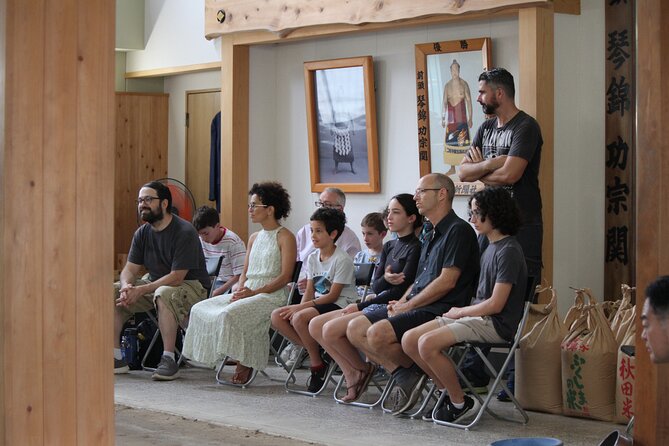
The most important part of the tour happens at 朝日山部屋 (Asahiyama beya). This segment is about 2 hours, and admission is included here.
You are seated on chairs with a front-row view of the training. That sounds small on paper, but it is a big deal in real life. Chairs mean you can stay focused on the wrestlers, the pacing of each drill, and how serious the training looks up close. It is also easier for families and older travelers, because you can watch without turning the experience into a long standing test.
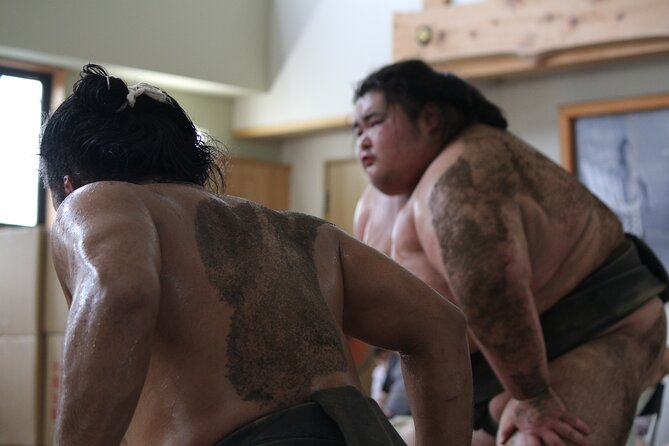
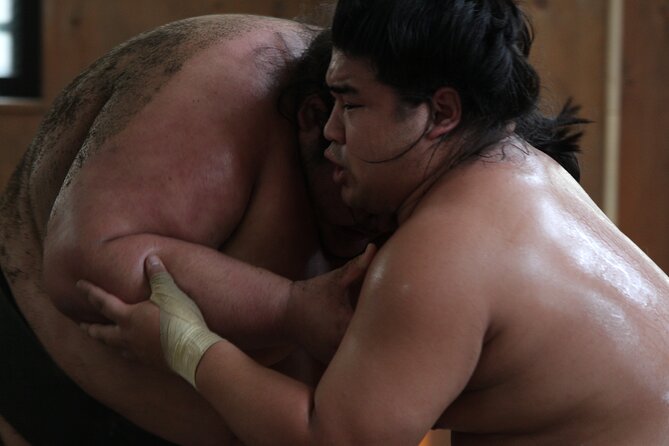
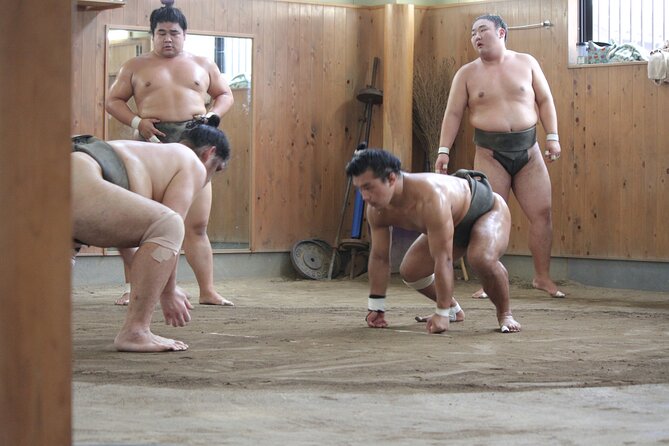
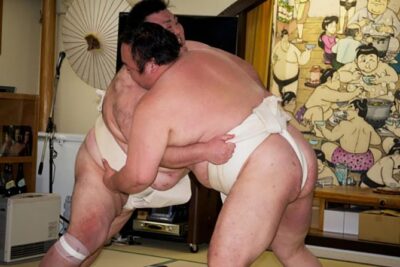
The training itself is intense. You can see the physicality and discipline right away, not filtered through TV angles. And because you are close, you notice details you usually miss, like how wrestlers reset, reposition, and read each other before contact.
Photography is allowed at the end of the practice session. That is a smart setup. It protects the flow of training, and then you get the photo moment when everyone is ready to be in the picture.
Try Sumo Up Close, With Guided Help and Photos
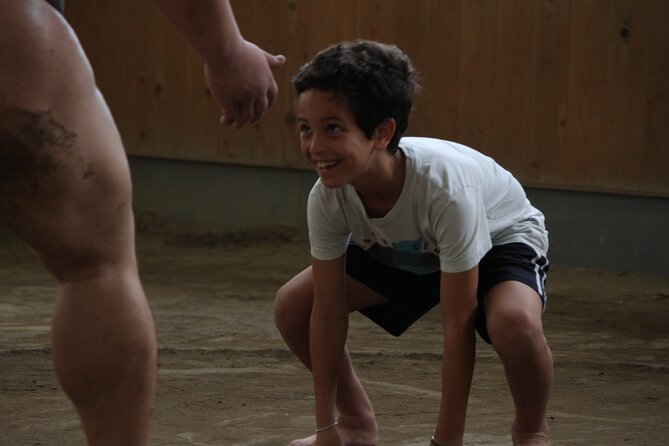
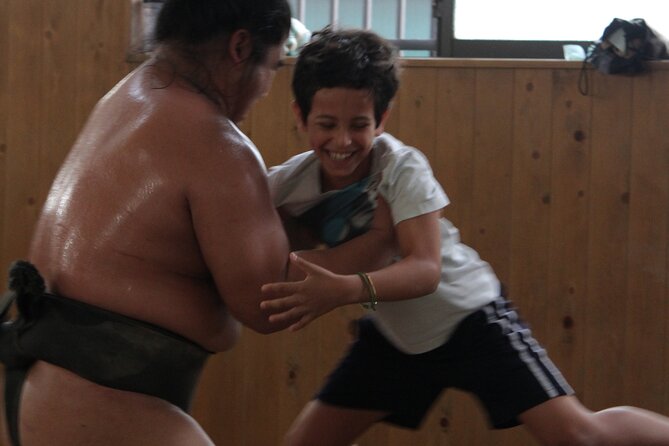
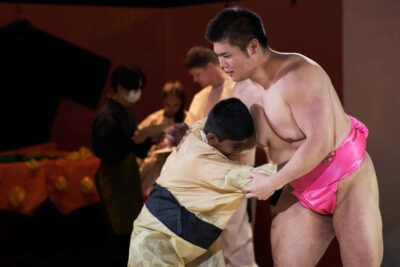
One of the most praised parts is the interactive moment. After watching practice, you get a chance to try sumo wrestling firsthand, including pushing attempts against the wrestlers. The guides help you do it safely and in a way that makes sense for your group.
This part is not about pretending you are a rikishi. It is about understanding the power imbalance. More than one person comes away with the same lesson: these athletes are strong in a way that is hard to imagine until you try. I also like that the interaction is playful. The wrestlers are friendly, and the guides keep things organized so it is fun for kids and adults alike.
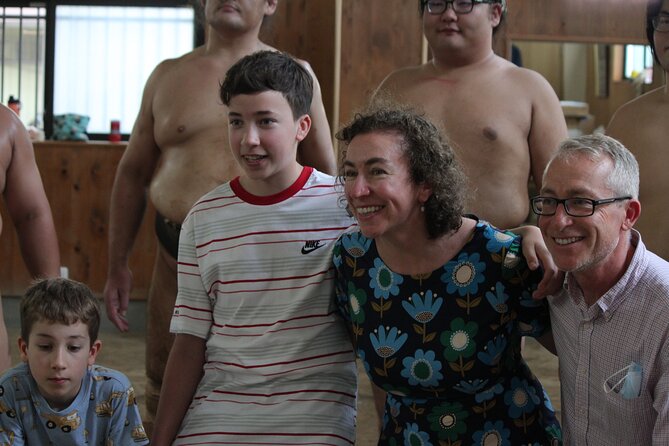
You can also get photos after the training. That timing helps. Everyone is already gathered, the wrestlers are done training, and the photo moment feels respectful rather than rushed.
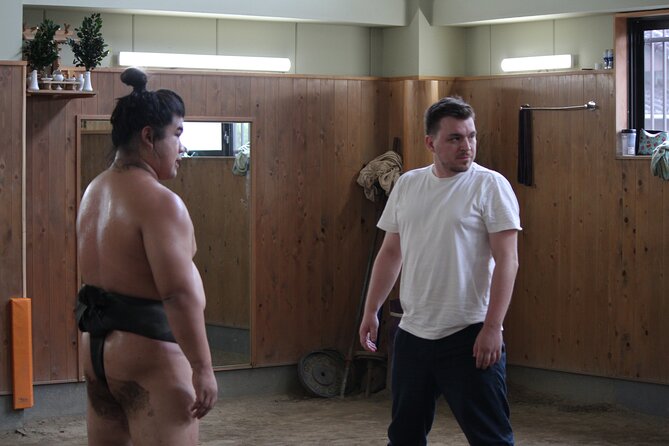
Also note this: the guides don’t just stand back. In many cases, they translate and explain what the stable master and wrestlers are doing, so you understand the meaning behind the actions, not just the visuals.
A few more Tokyo days worth comparing
- Mt Fuji and Hakone 1-Day Bus Tour Return by Bullet Train
★ 5.0 · 26,383 reviews - 1-Day Tokyo Bus Tour
★ 5.0 · 14,250 reviews - Tokyo: TOKYO SKYTREE® Admission ticket
★ 4.5 · 11,192 reviews - Tokyo: teamLab Planets TOKYO Digital Art Museum Entry Ticket
★ 4.6 · 9,779 reviews
Chanko Nabe Lunch With Vegetarian Options
After training, you share a meal with the wrestlers. The food is a core part of sumo culture, because chanko nabe is designed to provide energy for athletes.
Vegetarian lunch is available. You must notify the operator at least 3 days in advance to get the vegetarian service. If you have dietary needs, this is your cue to plan early, not last-minute.
What you might expect from the lunch based on past experiences:
- Chanko nabe served as a warm stew
- Variations that include broth with vegetables and chicken
- A light but satisfying style meal that works well after morning training
If you are a food person, this is one of the better “included meals” you’ll get in Tokyo. It is not just a generic lunch voucher. It is tied to the daily life you just watched, so it completes the story.
Price and Value: What You’re Paying For (and What Isn’t Included)
The price is $105.71 per person, for about 4 hours total. The tour includes:
- Access to the sumo training stable
- A comfortable chair seating setup during practice
- The chance for interactive participation (try pushing)
- Lunch included, with vegetarian options if requested ahead
- Photography allowed at the end of the session
What is not included is the round trip on JR trains, estimated at ¥1060 (about $7). Budget that extra amount. It is normal, but it does affect value if you are already paying for multiple day tours.
When this tour feels worth it is when you care about authentic access. You are not going to a public arena. You are stepping into a training environment that most people never see, and you are doing it with a guide who explains the culture and helps you participate. That is what you are really buying, the combination of rare access plus context plus interaction.
One more small-value detail: the group is capped at 26. Smaller groups tend to feel less chaotic, especially when you are waiting for photo time or the guide needs to translate and guide movement.
How to Make the Morning Go Smoothly
This experience runs on a tight morning rhythm. Here’s how to set yourself up for success without stressing.
First, be at Ueno Station early enough to handle real-life Tokyo station complexity. The meeting point is specific (Ueno Station, 7 Chome-1), so give yourself cushion time. If you show up late, you risk missing part of practice, and the day is not built to wait around.
Second, double-check your communication method. One traveler reported that the operator used WhatsApp for updates, and not receiving those messages caused major stress and delayed arrival. That is not something you want to gamble on. Before the tour day, make sure you can receive the operator’s messages in whatever channel they use, and keep your phone charged.
Third, bring the right mindset. This is not a museum tour. You are entering an active training situation. You’ll need to follow the guide’s instructions, stay aware of where you stand, and be flexible when schedules adjust due to weather or transport timing. The tour notes that minor changes can happen, which is common for outdoor-to-train-to-stable movement.
Who This Tour Fits Best in Tokyo
This tour is best for people who want something real and close to the sport. If you love Japanese culture and sports history, you’ll get more out of the experience because the guides explain customs and terms while you are traveling and at the stable.
It also fits families well. The tour format includes chairs for viewing, a guided interaction that is not too complicated, and a meal afterward that keeps the experience comfortable. If your kids are curious and want to meet athletes and try the playful pushing interaction, this tour tends to land well.
You might want to skip it if:
- You hate early mornings and want a slower start
- You prefer to watch only, with no hands-on participation
- Your communication setup makes you hard to reach on a phone messaging app
Should You Book Sumo World in Tokyo?
I think you should book this tour if your priority is a real training-stable experience plus context plus interaction. It is one of the few Tokyo activities where you can see how serious training looks, then try a tiny version of the physical challenge, and finish with a cultural meal that connects directly to the athletes’ routine.
If your priority is convenience over authenticity, or if you are likely to arrive late, you might find the early schedule stressful. In that case, you could consider a different sumo option that starts later and does not depend on train timing as much.
My practical advice: book it if you can commit to the early 7:45 AM Ueno Station start and you are comfortable following guide directions in a busy morning. For most people, that is exactly what makes it memorable.
FAQ
How long is the Sumo World tour in Tokyo?
The tour duration is about 4 hours.
Where do I meet the guide, and what time does it start?
Meet at Ueno Station at 7:45 AM. The meeting point is listed as Ueno Station, 7 Chome-1, Taito City, Tokyo 110-0005, Japan.
What’s included in the price?
The price includes the sumo wrestling experience, viewing the practice from chairs, photography at the end of the session, and lunch. Vegetarian lunch is available if you request it at least 3 days in advance.
Is the JR train cost included?
No. Round-trip JR train cost is not included and is estimated at ¥1060 (about $7).
Can I get a vegetarian lunch?
Yes. Vegetarian service is available, but you must notify the operator at least 3 days before the tour.
How big is the group?
The tour has a maximum group size of 26 travelers.
What is the cancellation policy?
You can cancel for a full refund up to 24 hours before the experience starts. If you cancel less than 24 hours before, the amount paid is not refunded.
Fresh options around Tokyo
- Tokyo: Nagano Snow Monkeys and Zenkoji Tour with Temples★ 4.9 · 19 reviews
- Yokohama Port: Private Customizable Tour with Transfer★ 5.0 · 19 reviews
- Explore Unique Tokyo Streets / Learn with a Pro Photographer★ 5.0 · 19 reviews
- Sushi Making with Interactive Samurai Experience at JIN-ASAKUSA★ 5.0 · 19 reviews
- DAIKOKU excursion by car DRIFT automobile encounter★ 4.5 · 19 reviews
- Official Street Go Kart Tour Akihabara 2nd★ 5.0 · 19 reviews
- Cosplay Experience with Professional Makeup and Photo Shoot!★ 5.0 · 19 reviews
- Tokyo: Name Seal & Pouch or Tote Bag Making Experience★ 4.5 · 19 reviews
Sumo Experiences, compared.
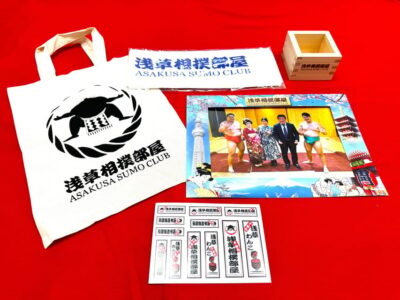
Sumo Show Experience with Chicken Hot Pot and a Photo
Read our review →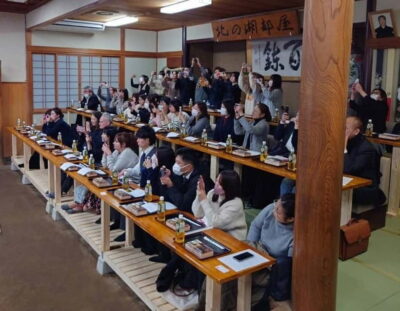
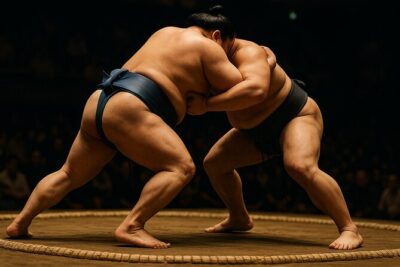
Tokyo Shinjuku Sumo Show & Experience with Photo
Read our review →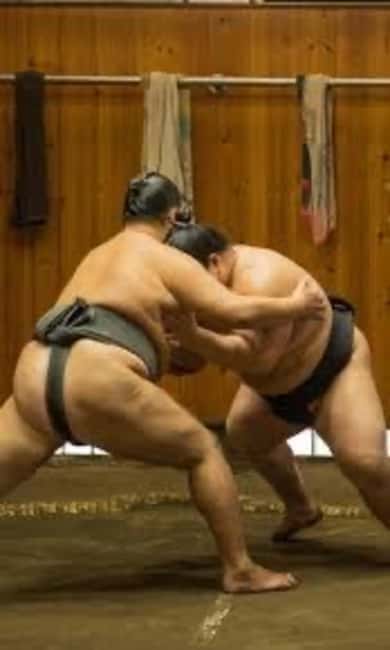
Sumo Show & Experience w/ Optional Kimono & Hot Pot
Read our review →
Authentic Sumo Experience in Tokyo: Enter the Sanctuary
Read our review →Browse the lists this tour appears in