
Reviewed · HALF-DAY
Takayama Half-Day Private Tour with Government Licensed Guide
Takayama clicks when you have a local lens. This private half-day with a government-licensed English guide helps you pick 2-3 stops and understand what you are looking at, from Edo-era streets to the story behind Takayama’s festival floats. I love the freedom to steer the pace toward Sanmachi Suji and the Miyagawa Morning Market, and I love how the guide connects the dots between temples, shrines, and the town’s governing past. The main drawback is it is a walking tour, so comfy shoes are non-negotiable, and some paid attractions are not included in the ticket price.
You get about 4 hours (approx.) with a guide who meets you on foot within a designated area in Takayama. Pickup is offered, but you should expect a walk-based itinerary, and the tour is only for your group, not a big mixed crowd.
Key takeaways before you go

- You choose 2-3 sites from a menu, so you are not stuck “doing everything.”
- Festival floats make sense instead of feeling like random wooden art.
- Old town plus everyday Takayama includes Sanmachi Suji and a morning market.
- A mix of free and ticketed stops helps you plan your extra costs.
- Short, focused museum hits fit into a half-day without dragging.
- Your guide can fine-tune the day based on what you care about most.
Why a government-licensed guide matters in Takayama
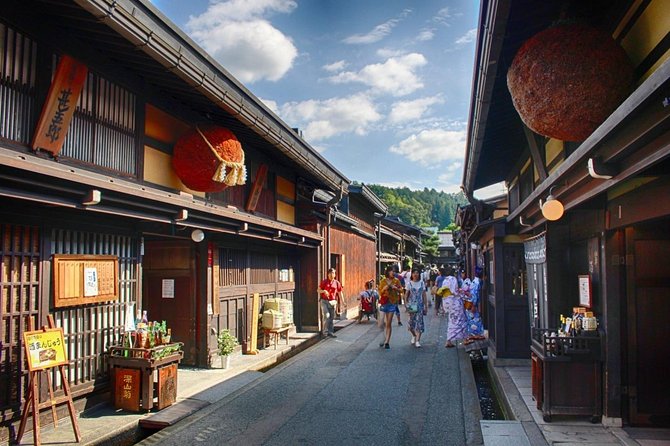
Takayama is small enough that you can walk a lot of it on your own. But the surprise is how much meaning you miss without someone to translate the town into “why this matters.” That is where a government-licensed English-speaking guide earns their keep.
On a private format, you also get fewer awkward pauses. Instead of waiting for a group to catch up, the guide can slow down at the exact doorway, sign, or layout feature that makes old Takayama tick. In the same way, your questions can shape the day. If you are into the Takayama Festival, you can lean harder into the float halls and the related shrine area. If you are more into daily life and food, you can spend more time at the Asaichi and old-street lanes.
One more practical point: because it is designed for your group only, your route tends to feel like a conversation, not a checklist. That is a real value for first-time visitors who do not want to waste half a day asking, “Where do we go next?”
A few more Takayama days worth comparing
- Kanazawa: World Heritage Shirakawa-go Morning Guided Tour
★ 4.9 · 988 reviews - Kanazawa: World Heritage Shirakawa-go & Two Local Experience
★ 4.9 · 274 reviews - Kanazawa/Takayama: Shirakawago & Takayama Private Day Tour
★ 4.8 · 172 reviews
Price and what you really get for about $122.23 per person
At $122.23 per person for roughly 4 hours, this is not a “cheap and cheerful” group tour price. You are paying for three things that usually cost extra when you book them separately: a licensed local guide, private pacing, and the flexibility to select 2-3 stops rather than follow a fixed route.
Entrance fees are mixed. Some stops in the list are free, and others are ticketed and not included. The tour price covers your guide and the scheduled meeting and walking portion, not the paid admissions. So the best way to judge value is to think about which paid stops you want. If you pick the float exhibition hall or a museum that charges admission, you are adding cost on top.
Also, pickup is offered, and there is a mobile ticket. That means less hassle arriving. You will still be walking, but you should be able to start the day smoothly.
Walking logistics: how to make 4 hours feel easy
This is a walking tour, and the stops are short by design. Many segments are about 10 to 30 minutes. That is good news if you like variety, because you get multiple viewpoints without getting stuck in one location too long.
But it is still walking time. Even if each stop is brief, you will move between old streets, temple areas, and museum buildings. If you are visiting in summer or on a rainy day, bring a small towel, water, and something light for weather.
One thing I like about the format is the “on foot” meeting style. You do not have to figure out a complex vehicle pickup. You just meet within a designated area, then the guide leads you through central Takayama’s key sights.
Sanmachi Suji: Edo-style merchant streets in 15 minutes
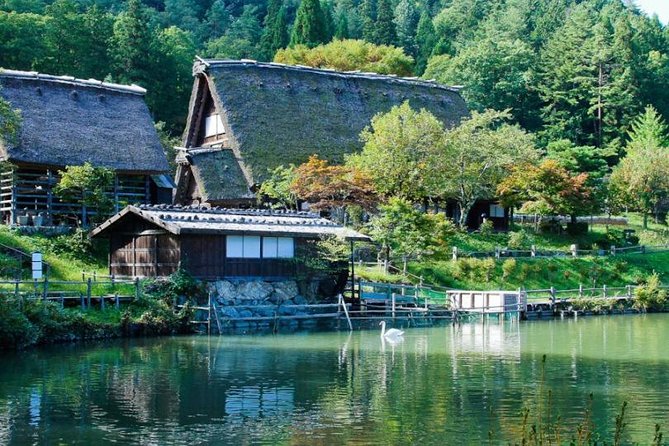
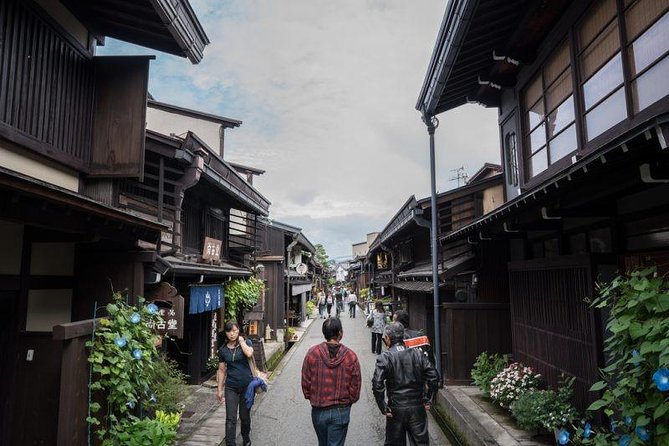
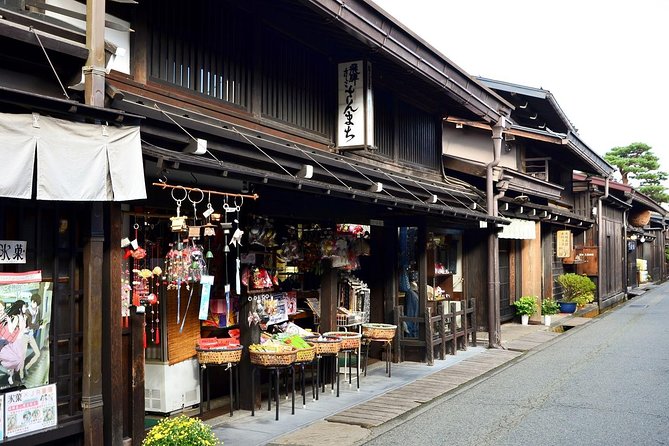
Sanmachi Suji is the classic Takayama old-town street scene. Expect historic houses and shops tied to the Edo period (1603 to 1868). The vibe here is old Japan, but it is also practical: this is where you can browse local specialties and get oriented fast.
What I like is that you can see the street layout quickly, then decide how long you actually want to linger. On a private tour, that matters. If you want photos and snacks, you can stay longer. If you want to keep momentum for temples and floats, you can move on without feeling guilty.
The tour lists this as a free stop with about 15 minutes. That makes it easy to keep early energy without spending money. It is also a good “setup stop,” because you get your bearings before you head into the more museum-like parts of town.
Same corner of Japan, a different kind of day:
- Departing from Takayama [Regular sightseeing bus] World Heritage Sites Shirakawago and Gokayama Ainokura
★ 4.5 · 137 reviews - 1-Day Takayama Tour: Explore Scenic Takayama and Shirakawago
★ 5.0 · 113 reviews - From Takayama: Guided Day Trip to Takayama and Shirakawa-go
★ 4.9 · 113 reviews - Private Afternoon Cycling Tour in Hida-Furukawa
★ 5.0 · 109 reviews
Hida Folk Village: free open-air houses and the region behind Takayama
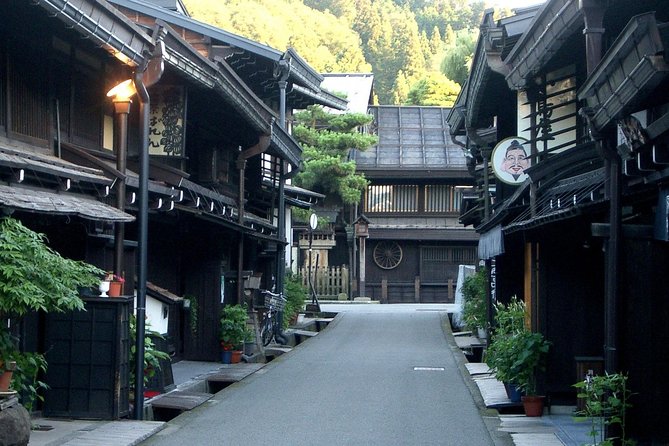
Next up is Hida no Sato, an open-air museum showing more than 30 traditional houses from the Hida region around Takayama. This is one of those places where you can look at architecture and feel the geography even without leaving the city.
The benefit of doing this with a guide is context. A row of old houses becomes a story about the mountainous region of Gifu Prefecture, where building styles and community life developed around local needs. You are not just sightseeing structures. You are connecting them to where the region comes from.
This stop is listed as free and about 15 minutes. That short time is enough to notice key differences in house shape and setting, but it is not meant for an all-day museum deep session. If you are the kind of person who wants to read every sign, you might wish you had more time. Still, for a half-day tour, it gives a strong “regional backdrop” and keeps the itinerary moving.
Takayama Jinya: the Tokugawa government office you can actually picture
Takayama Jinya (the local government office) is one of the most interesting “quiet” stops in the town. The reason is simple: it explains why Takayama matters historically. The region was under direct control of the Tokugawa Shogunate in 1692 due to valuable timber resources, and the Jinya served as the administrative hub.
Your guide can help you visualize how power worked at the local level. You get a sense of how a mountain town functioned inside a national system, not as a disconnected village.
This stop is about 15 minutes, and admission is not included. So if you want Jinya as part of your day, budget for the ticket. The upside is that it is short, so the extra cost is not going to steal time from the rest of your highlights.
Matsuri no Mori and the float replicas: festival culture with structure
Hida Takayama Art and Festa Forest includes Matsuri no Mori (Festival Forest Museum). This is where Takayama’s festival culture stops being abstract and becomes something you can understand.
A big draw here is the presence of full-sized replica floats (yatai). Instead of only hearing that the Takayama Festival is famous, you can see how the floats are built and what makes them impressive. If your interests are in craftsmanship, materials, and design, this is a strong pick.
The stop is listed as about 15 minutes, with admission not included. That means you should choose it intentionally. If you care about festival history and the visual details of yatai, add it. If your focus is more on old streets and morning food, you could skip it and put time into the free market or walking course.
Takayama Festival Floats Exhibition Hall (Yatai Kaikan): the best use of your “festival time”
If you want one paid stop that often makes people feel like they learned something, this is it. The Takayama Festival Floats Exhibition Hall explains the Takayama Festival, held in spring (April 14 and 15) and autumn (October 9 and 10), and it is ranked as one of Japan’s three most beautiful festivals.
The guide’s role matters again. These float halls can feel like a nice photo stop if you do not know the context. With a guide, you get the story of what you are seeing, and why the festival is such a big deal to local identity.
This stop is listed for about 30 minutes, admission not included. That longer time compared to some other options helps. If you skip paid museum time elsewhere, you can justify spending more time here and still finish the half-day without rushing.
Higashiyama Walking Course: Teramachi temples and a hill view
Higashiyama Yūhodō is a temple-town walking course through Teramachi (the city’s temple area), plus the rural “suburbs” feel, and Shiroyama Park on a wooded hill. Even if you are not a serious hiker, this is a pleasant way to break up museum time with fresh air.
This stop is listed as about 30 minutes and free. That makes it a great “balance” choice in your 2-3 sites. If you go heavy on ticketed attractions, this is a good free counterweight.
The drawback is that it is still walking on a course that can feel uphill depending on where you start and how you move through the hill area. If you dislike slopes, tell your guide early and they can adjust pacing.
Hida-Takayama Miyagawa Morning Market: taste Takayama’s rhythm
The morning market stop is the one that makes Takayama feel like a living town instead of a theme park. The Miyagawa Market runs along the Miyagawa River in the old town, and there is also a Jinya-mae Market in the wider area.
The tour info points out that these markets run daily around 7:00, or 8:00 in winter, and typically until noon. That schedule matters. If you are a late sleeper, you might miss the good moment. If you show up on time, you get the best energy.
This stop is listed as about 30 minutes and free. That makes it a high-value option because you get daily-life atmosphere without adding admission fees. Your guide can also point out what to try and how to choose without getting overwhelmed by the variety of small things.
If you care about local food, this is where you can align your half-day with your tastes. Some guides help visitors find great places for Hida beef later in the day, but lunch is not included in the tour, so you will pay for any meal you order.
Hida Kokubun-ji Temple: the 1820 pagoda and a calm detour
Hida Kokubunji Temple is close to JR Takayama Station and features a famous three-storied pagoda constructed in 1820. This is a classic “look up” stop. The best photos come from slowing down and taking in the vertical lines.
This stop is listed for about 30 minutes and is free. That generous time slot helps because temple viewing is not only about one angle. You can notice the pagoda, then also take in surrounding details at a walking pace that feels unhurried.
The drawback is subtle: if you picked too many paid indoor stops, this temple may feel like a contrast break rather than a highlight. If you enjoy quiet places and architecture, it becomes a perfect reset.
Sakurayama Hachimangu Shrine: festival venue logic you can feel
Sakurayama Hachimangu Shrine is the venue for the Takayama Festival in autumn. Next to it is the Takayama Festival Floats Exhibition Hall area (Yatai Kaikan), tying shrine and festival together spatially.
With a guide, you can understand why the shrine is not just a shrine. It is part of a larger ritual map. You begin to see how Takayama’s festival travels through town.
This stop is about 20 minutes and free. It is also a good pairing with the floats hall because they are close. If your 2-3 site plan includes the exhibition hall, adding the shrine keeps the context intact.
Kusakabe Folk Museum: a Meiji residence with Edo-style bones
Kusakabe Folk Museum is a historic private residence built during the Meiji period in Edo architectural style. The contrast is the point. You see how older forms persisted while the country modernized.
This stop is listed at about 10 minutes, with admission not included. That short visit can work if you like architecture and interiors but do not want a long museum session. If you are hoping for a deep reading of exhibits, you might wish you had longer.
Yoshijima Heritage House: sake history you can spot at a glance
Yoshijima Heritage House dates to Meiji 41 (1908) and it has been a sake brewery in old times. The sign of the shop, called a sakabayashi, hangs under the roof, made of Japanese cedar leaves.
This is one of those places where one object tells you a lot. The sakabayashi sign gives you a fast clue that you are looking at commercial history, not just a preserved home.
The tour lists about 10 minutes and admission not included. It is short and focused. If you are into food history or local craftsmanship, this is a great “add-on” to balance festival and market stops.
Showakan and Retro Museum: 1950s and Showa culture for a quick laugh and photo
Takayama Showa-kan Museum reconstructs retro streets of the 1950s. It includes features like Midget Alley and even a barbershop. Hida Takayama Retro Museum also leans into Showa nostalgia with set-style scenes connected to Showa movies, plus items you can see, snap photos of, and play with, like magazines, posters, toys, and retro games, including showa retro pachinko.
These two stops are listed as about 10 minutes each and admission not included. They are not for everyone. But if you like Japanese pop culture eras, they give your day a playful side that breaks up the heavier historical sites.
One consideration: because they are short, they can feel like a quick taste rather than a full exploration. If you are deeply into retro design, you might want to skip the other short stops and allocate your 2-3 picks to these.
How to choose your 2-3 stops without regretting anything
Since the tour is built around choosing 2-3 sites, the best plan is to pick a theme, then add one “people-life” element. Here are a few practical combos based on how the stops feel.
If you want classic Takayama and context:
- Sanmachi Suji
- Takayama Jinya
- Takayama Festival Floats Exhibition Hall
If you want morning vibes and festival learning:
- Hida-Takayama Miyagawa Morning Market
- Matsuri no Mori (Festival Forest Museum)
- Sakurayama Hachimangu Shrine (or Higashiyama Walking Course if you want outdoors)
If you want architecture and region:
- Hida no Sato
- Higashiyama Walking Course
- Kusakabe Folk Museum or Yoshijima Heritage House
If you want a lighter day with nostalgia:
- Sanmachi Suji
- Showakan
- Hida Takayama Retro Museum
A small but smart tip: if one of your choices is ticketed, pair it with at least one free stop (Sanmachi Suji, the walking course, Kokubun-ji, or the market). It helps your day stay balanced and reduces decision stress.
Should you book this Takayama half-day private tour?
I’d book it if you want Takayama highlights without the stress of planning each turn. It is a strong fit for first-time visitors, families who want a guided route that can flex, and anyone who cares about how festivals, shrines, and old-town streets connect.
I would think twice if you dislike walking, hate paying additional admission fees, or want a full museum day. This tour is short by design. It is built to show you the most important pieces fast, then let you decide what to extend later.
If you do book, tell your guide what you care about most at the start. Also, wear shoes you can walk in for real. Takayama rewards slow looking, and your comfort level will decide whether that happens or not.
Fresh options around Takayama
- Takayama: Private Night Walking Tour with Dinner★ 4.5 · 13 reviews
- Ninja experience in Takayama – Special Course★ 4.9 · 13 reviews
- Takayama Rice Ball and Miso Soup Making at a buddhist temple★ 5.0 · 13 reviews
- Takayama Full-Day Private Tour with Government Licensed Guide★ 4.5 · 13 reviews
- Shirakawago&HidaTakayama&GujoHachiman 1 Day Tour from Nagoya★ 4.5 · 14 reviews
- Sake Tasting: Educational Tour of Six Takayama Breweries★ 5.0 · 14 reviews
- Takayama Half Day Tour (Private Guide)★ 5.0 · 15 reviews
- Takayama: Mochi-Making Experience at a Buddhist Temple★ 4.8 · 15 reviews
Half-Day, compared.
Kyoto Arashiyama Bamboo forest & Garden Half-Day Walking Tour
Read our review →
Miyajima Half-day Trip Historical Walking Tour
Read our review →

Naha, Okinawa: Kerama Islands Half-Day Whale Watching Tour
Read our review →
Himeji Half-Day Private Tour with Government-Licensed Guide
Read our review →


Miyajima Half-day Private Tour with Government Licensed Guide
Read our review →Browse the lists this tour appears in