
Reviewed · HIROSHIMA TOURS
Hiroshima Peace Memorial Park: A Guided Tour
Hiroshima hits you fast. A guided stroll through Hiroshima Peace Memorial Park makes sense of the sites without rushing, starting at the Atomic Bomb Dome and moving room by room through what happened on August 6, 1945. With an English guide, and a small group capped at 10, the story stays human instead of turning into a checklist.
I especially like Shera Alvi’s approach: he’s attentive with directions up front, and he gives you just enough historical framing so each stop lands. I also like the easy pacing, with short guided visits that leave breathing room for reflection instead of forcing you to sprint from one memorial to the next.
One consideration: the park involves steady walking and the subject matter is heavy. If you have heart problems, or you are traveling with kids under 6, this may not be the right fit, even with wheelchair access.
Key highlights that make this tour work
- Atomic Bomb Dome first, with context: a focused guided stop so you understand what you’re looking at before you wander.
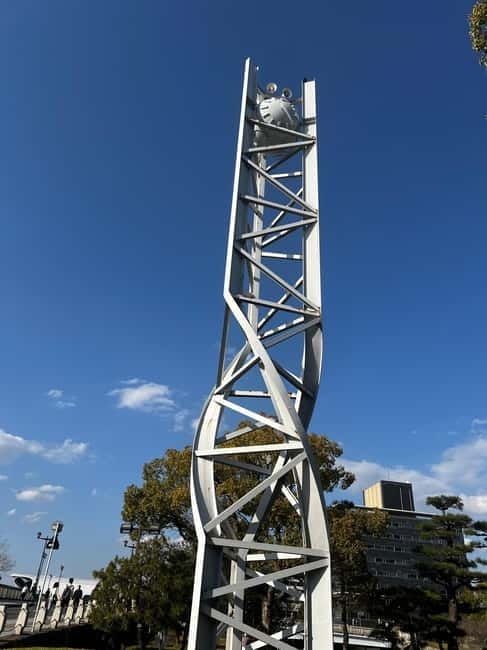
- Clock Tower of Peace and Bell of Peace included: you get the “day-of” atmosphere, not just the big landmark.
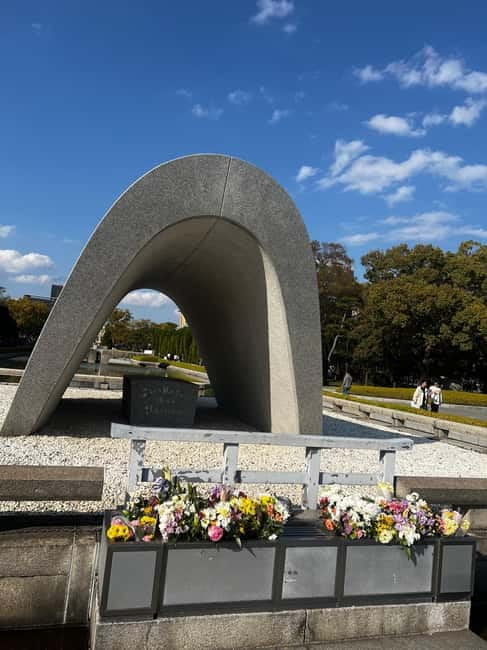
- Multiple cenotaphs and memorials: the tour touches Korean atomic bomb victims and Hiroshima’s own memorial sites.
- Children’s Peace Monument and the Peace Flame: you see how remembrance connects to a nuclear-free message.
- Shera asks questions and adjusts to your group: the best moments are the ones where the guide checks in with you.
- Small group experience: with a max of 10 people, it stays personal enough to ask follow-ups.
Entering Hiroshima Peace Memorial Park with the right mindset
Hiroshima Peace Memorial Park can feel like it’s all one monument, but your guide helps you separate what each place is saying. The tour starts at the Atomic Bomb Dome, then moves through a sequence of landmarks and memorial spaces that each highlight a different angle of loss, survival, and remembrance.
This is not a “fun facts” kind of outing. It is a respectful, thoughtful walking route where the emotional weight stays in view. The upside is that you are not left alone to interpret everything on your own. In a small group, you can also take in pauses without having 50 people crowding your thinking.
The guide’s job is to keep your bearings. I like when a tour gives you a quick orientation first, because it changes the experience from staring at stone to reading a message. Shera Alvi’s style, described by past guests, leans practical and attentive, with an intro that sets the tone and helps you move confidently to each next stop.
A few more Hiroshima days worth comparing
- Peaceful Hiroshima & Miyajima UNESCO 1 Day Bus Tour
★ 5.0 · 5,309 reviews - Hiroshima: Hiroshima and Miyajima UNESCO Sites 1-Day Tour
★ 4.9 · 2,330 reviews - Hiroshima / Miyajima Full-day Private Tour with Government Licensed Guide
★ 5.0 · 1,298 reviews
The route: what each stop adds to the story
The tour moves in a clear order, and the timing is designed to keep you from feeling overloaded. Most stops are around 10 minutes, with a couple longer moments for major areas like the Dome and the main memorial hall.
Atomic Bomb Dome, your starting anchor
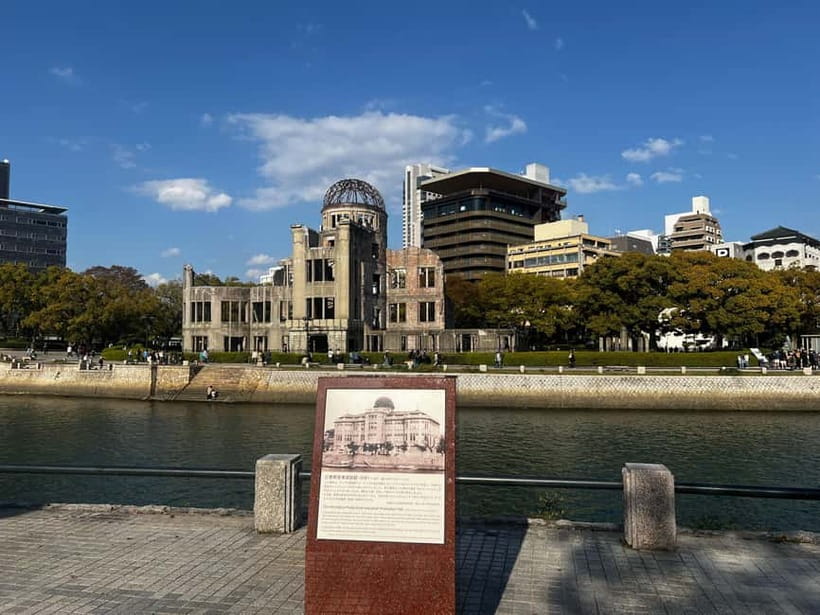
You begin at the Atomic Bomb Dome, with a guided visit of about 20 minutes. Starting here matters. It gives you the reference point for everything that follows, and it helps you understand why this specific structure became such a powerful symbol.
You’ll be looking at a landmark that people all over the world recognize. The guide’s added context is what makes it stick. Instead of treating the Dome as a postcard, you learn what it represents and why it remains standing as a reminder.
Clock Tower of Peace and Bell of Peace, the day-of feeling
Next come the Clock Tower of Peace and the Bell of Peace, each with a short guided stop. These are the kinds of places you might miss if you wandered on your own because they are easy to treat as background.
The guide helps you notice what they’re for. I like that the tour includes smaller, specific references rather than jumping straight from one major memorial to the next. When you connect the clock-and-bell symbolism to what the day meant, it gives your understanding more texture.
Same corner of Japan, a different kind of day:
- Hiroshima Historical Walking Tour – Why A-Bomb was Dropped
★ 4.8 · 893 reviews - Hiroshima Peace (Heiwa) Walking Tour at World Heritage Sites
★ 5.0 · 872 reviews - Hiroshima in a Nutshell: Morning Bike Adventure
★ 5.0 · 524 reviews - Hiroshima City 4hr Private Walking Tour with Licensed Guide
★ 5.0 · 437 reviews
Korean Atomic Bomb Victims Cenotaph, widening the remembrance
Then the tour includes the Korean Atomic Bomb Victims Cenotaph. Hiroshima’s story is often told in one national frame, so including this stop is important. Even in a short visit, it sends a clear message that the bombing’s impact reached beyond one group.
You don’t need a long lecture here. The point is to make sure you see it, acknowledge it, and understand that remembrance is shared and shared again through memorial spaces.
Children’s Peace Monument, where loss becomes personal
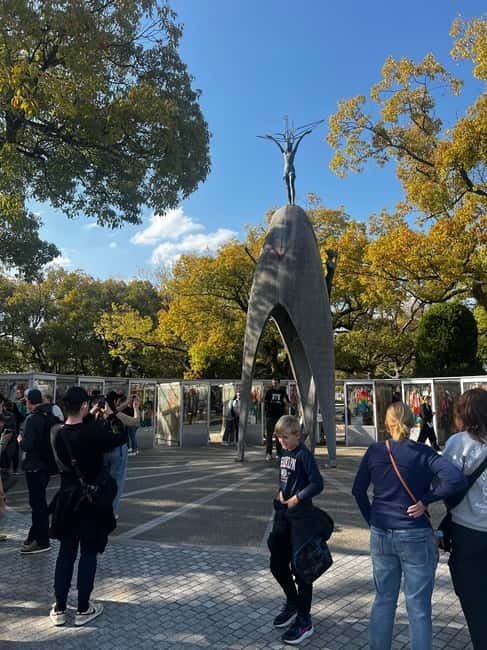
The Children’s Peace Monument is next, another guided segment of around 10 minutes. This is one of the most affecting parts of the park, because it shifts the focus from the scale of disaster to the vulnerability of youth.
The guide’s narration helps you read the monument as more than symbolism. It’s dedicated to young victims, and you come away thinking about how war steals futures. If you’re sensitive to heavy subjects, plan a few quiet minutes after this stop so it can land.
Peace Memorial Museum time: learning without drowning
After the earlier landmarks, the tour moves into the Hiroshima Peace Memorial Museum area for a shorter guided visit of about 10 minutes. That time is not meant to replace the museum if you want a deeper, self-paced study. It is meant to point you toward what to notice and what themes to look for.
I like this approach because most people have limited time. A guided hit gives you a roadmap, so when you return later, or when you look at the exhibits again, you remember what the guide told you to watch for.
The museum segment also fits the tour’s overall rhythm: it’s heavy, but it stays structured. You get context for August 6, 1945 and the aftermath, then you continue toward the memorials where you reflect.
Cenotaphs, Peace Flame, and the memorial halls that look like vows
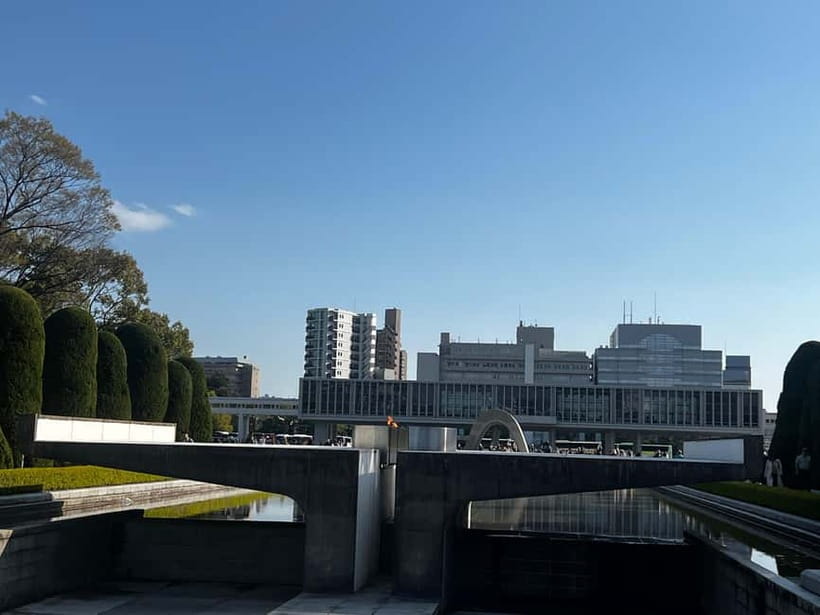
You’ll also stop at the cenotaph area for the A-bomb Victims and pause at the Peace Flame, which stands for a nuclear-free world. The tour includes moments that feel intentionally solemn. This is where the guide helps you slow down and understand what the space is asking you to do.
Hiroshima National Peace Memorial Hall and what you’ll see there
The longer stop, about 20 minutes, is at the Hiroshima National Peace Memorial Hall. This is where the tour expands beyond the single landmark focus and into a broader memorial setting.
In this part of the experience, you’ll encounter key memorial elements such as the Peace Flame and additional remembrance areas connected to different victim groups. Your guided time here is especially valuable if you do not know what you are looking at. I’ve found that in major memorial buildings, the difference between “seeing” and “getting it” is a good guide and a clear explanation.
Memorial Tower of Mobilized Students
The tour also includes the Memorial Tower to the Mobilized Students. That matters because it highlights how young people were affected not only directly in the blast, but also through the war’s broader machinery.
This is one of those details that you might not intentionally search for, even if you are interested. Having it on the route means your memory of the park is more complete than a simple photo loop.
Hiroshima Victims Memorial Cenotaph, another reflective pause
After the hall, there’s another guided cenotaph stop for Hiroshima Victims. These pauses can feel repetitive if you rush them, but when you treat each one as a different message, they start to read together.
The guide helps you keep those differences in your mind, so you leave with a clearer sense of who is remembered and how.
Ending at Gates of Peace: what the tour leaves you with
The tour wraps up at the Gates of Peace after additional stops like the Prayer Fountain and the Gates itself. The final layout gives you a sense of closure, but it does not feel like a clean “end.” More like, the tour hands you back to the outside world with the memorial’s questions still on your mind.
The last stops are often where reflection feels easiest, because your brain has already received the major facts and images. By the time you reach the prayer and gateway spaces, you are more ready to absorb the meaning.
The overall flow also helps: start at the Dome, move through the museum, then end with hope-oriented memorial elements like the Peace Flame. That order is effective. It keeps the story from flattening into one single moment of tragedy.
Pricing and value: is $19 fair for what you get?
At $19 per person for about two hours, the value is strong if you care about context. The park is full of powerful imagery, but much of it is also easy to misread when you go alone. A guided route helps you understand what each site is meant to communicate and how they fit into the broader August 6 story.
The small group size matters for value too. With up to 10 participants, the guide can work with questions and keep the group from turning into a slow, silent shuffle. Based on how Shera Alvi is described by previous guests, the experience stays interactive rather than purely lecture-style.
If you already know Hiroshima history extremely well and you prefer total independence, you might not need a guide. But for most people, especially first-timers, the guided structure is what makes the time feel well spent.
How the guide style changes the experience
I like tours where the guide helps you move intelligently, not just quickly. In this one, Shera Alvi is described as attentive with meeting the group and giving clear directions to start. That matters because the park area can feel confusing when you arrive with jet lag or without a plan.
Once you start walking, the guide’s approach sounds like it balances facts and space to absorb them. Several guests noted an appropriate amount of information, and an easy pace that gives you time to process. One guest even described the guide as a strong presence in the space, taking people to places they would not naturally reach on their own.
There’s also a social element. Past guests highlighted that Shera engages with the group and asks questions. That kind of check-in can turn a memorial visit into a meaningful conversation, which is exactly the point of travel: you learn more when you share what you’re thinking.
Practical tips that keep the tour comfortable
This tour is built around walking through the park, so comfort matters more than people expect. Wear shoes you trust. You’ll want to move easily between sites that have different surfaces and paths.
Bring:
- Comfortable shoes
- A camera
- Water
Photography is allowed, so you can take pictures of most viewpoints and memorial areas. Just remember that these are remembrance spaces, so keep your behavior respectful and your movements thoughtful.
Food is not allowed during the tour. That’s a small constraint, but it also keeps the experience focused on the memorial sites rather than turning into a picnic stop.
Who this tour is best for
This is a good fit if you want a structured, English guided walk that covers the major stops in a realistic time window. It suits first-timers who want context and a thoughtful pace, especially if you do not want to spend your entire day trying to interpret everything yourself.
It also works well for people who like small-group interaction. With a max of 10 participants, it feels less like a crowd and more like a shared walk.
It may not be a good fit if you need a totally lighthearted atmosphere. This park is emotionally demanding. And if you have heart problems, the walking and pacing may be too much, even with wheelchair access.
Should you book the Hiroshima Peace Memorial Park guided tour?
Book it if you want to understand what you’re seeing, not just photograph it. At $19 and about two hours, the guided structure is a practical way to cover the Atomic Bomb Dome, the Peace Memorial Museum area, the cenotaphs, the Children’s Peace Monument, and the Peace Flame without wasting time guessing where to go next.
Skip it or reconsider if you are looking for a casual sightseeing stroll. This experience asks for patience, respect, and emotional stamina. Also consider your health and mobility needs carefully, since the tour includes walking through the park.
If you do decide to go, you’ll get the best results by keeping your pace slow, listening closely during the guided segments, and allowing yourself quiet moments at the memorials. That combination is what turns a route through Hiroshima into something you carry with you long after the gates.
FAQ
How long is the Hiroshima Peace Memorial Park guided tour?
The tour runs for about 2 hours.
Where do I meet the guide for the tour?
You meet at the Atomic Bomb Dome. The provided coordinates are 34.395483, 132.453592.
Is the tour wheelchair accessible?
Yes, the tour is wheelchair accessible.
Can I take photos during the tour?
Yes. Photography is allowed throughout the experience.
Is food allowed during the tour?
No, food is not allowed.
Is this tour suitable for young children or people with health concerns?
It is not suitable for children under 6 years old and people with heart problems.
Fresh options around Hiroshima
- History of Hiroshima: Small Group Night Walking Tour★ 4.8 · 17 reviews
- Okunoshima Rabbit Island Cycling Tour with Local Guide★ 4.5 · 17 reviews
- Shore Excursion from Hiroshima Port : Private Tour in Hiroshima★ 5.0 · 17 reviews
- Mitaki Peace Tour Beyond Central Hiroshima★ 5.0 · 18 reviews
- Hiroshima and Miyajima Full Day Private Tour★ 4.5 · 19 reviews
- 4 Hour Miyajima PRIVATE Tour★ 5.0 · 19 reviews
- Hiroshima Private Walking Tour with a Local★ 4.5 · 19 reviews
- Hiroshima Scenic Cycling Guided Tour★ 5.0 · 19 reviews
Hiroshima Tours, compared.
Peaceful Hiroshima & Miyajima UNESCO 1 Day Bus Tour
Read our review →
Hiroshima and Miyajima UNESCO Sites 1-Day Tour
Read our review →
Hiroshima / Miyajima Full-day Private Tour with Government Licensed Guide
Read our review →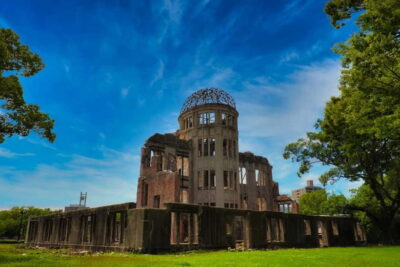
Hiroshima Historical Walking Tour – Why A-Bomb was Dropped
Read our review →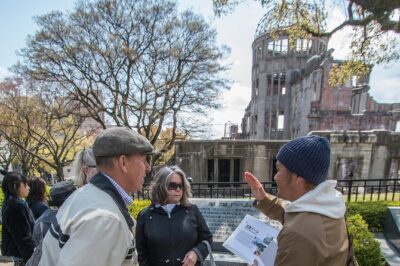
Hiroshima Peace (Heiwa) Walking Tour at World Heritage Sites
Read our review →
Hiroshima in a Nutshell: Morning Bike Adventure
Read our review →
Hiroshima City 4hr Private Walking Tour with Licensed Guide
Read our review →
Browse the lists this tour appears in