
Reviewed · SAMURAI & NINJA EXPERIENCES
Samurai Training with Modern day Musashi in Kyoto
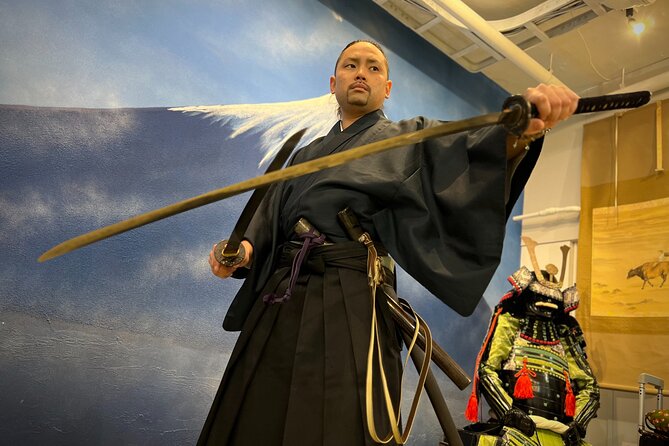
Kyoto teaches you sword discipline fast. This Samurai Training with Modern day Musashi is hands-on, in a real dojo, with instruction from Sensei Yushin and helpers like Jordan.
I especially love the small-group feel and the way the lesson stays practical, not like a staged show. One thing to plan around: mat cutting with a real katana is not currently offered, so don’t book expecting a slicing demo.
You’ll start by getting dressed in training gear and then work through core sword movements step-by-step. I also like how the session blends technique with samurai culture and etiquette, so you understand what you are doing, not just how to move. Expect a serious training atmosphere, but it is still welcoming, interactive, and made for real people.
Key highlights
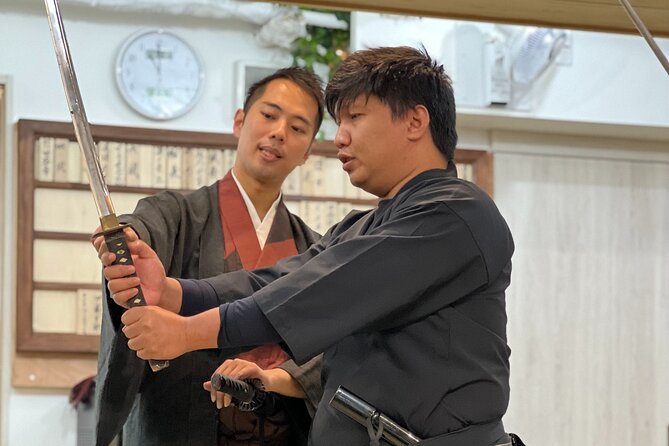
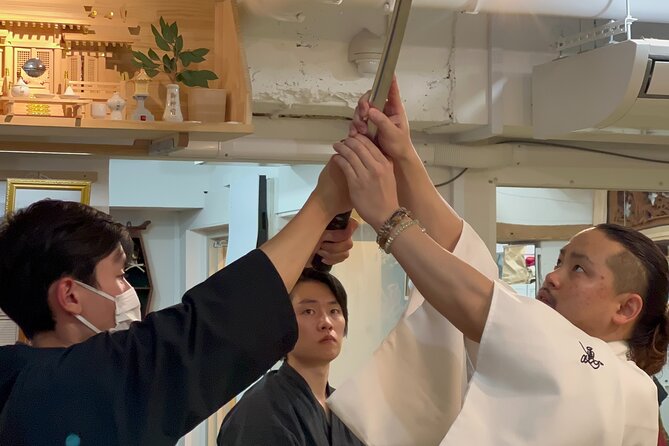
- Train in an actual dojo setting with a traditional feel, including a Shinto shrine in the space
- Small class sizes (usually 6 participants, with a max of 9) for more hands-on correction
- Dress the part in dōgi, obi, and hakama so you learn the training mindset
- Practice core katana skills like drawing, sheathing, and safe wielding
- Learn a katana kata form with focused coaching
- Watch a memorable two-katana performance by the master
Why this Kyoto dojo training feels real
Kyoto is full of performances. This one is different because you do the training first, in the same room where the dojo community practices. The environment feels like an active martial arts school, not a quick stop designed for photos and exits.
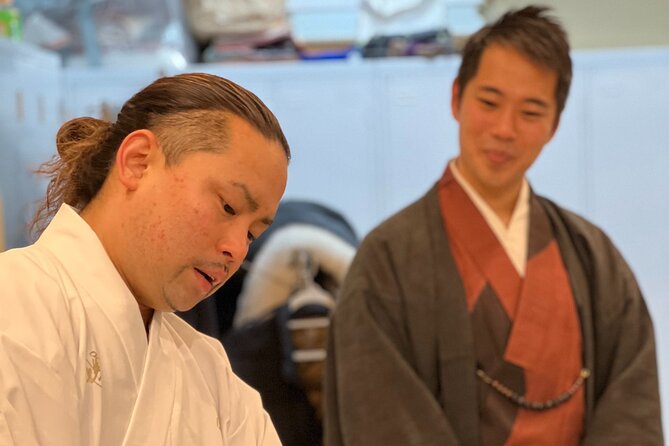
What you get is a structured experience that teaches you how sword work is meant to be handled: controlled, deliberate, and mindful. Sensei Yushin (the head of the dojo) and his team keep things organized, then adjust your form as you move through the basics. In class, you are not just watching a professional do the hard parts, you are learning the same foundations that make the advanced stuff possible.
The program is also built around authenticity and safety at the same time. Reviews and the class structure point to a clear safety-first approach, including using training-ready swords rather than going straight to high-impact cutting. That matters because you leave understanding both the art and the discipline behind it.
If you want a “samurai experience” that is mostly storytelling, you might find this more physical than expected. But if you want real technique and real etiquette, the dojo approach is the point.
More Samurai & Ninja Experiences in Kyoto
- Kyoto Samurai Experience
★ 5.0 · 1,294 reviews - Kyoto: Kendo and Samurai Experience with Uniform and Gear
★ 4.9 · 815 reviews - Kyoto: Samurai Sword Class by Experts in Traditional Arts
★ 4.9 · 657 reviews
Finding the meeting point and settling into the training hall
You meet at 452-4 Matsugaechō, Nakagyo Ward, Kyoto 604-8034. The class ends back at the same meeting point, so you do not need to plan a second stop afterward.
One practical detail that helps: it is near public transportation. Kyoto is busy, and you will be glad you can reach the area without a long taxi plan. Also, the training space is described as being in a central Kyoto complex, with the dojo itself located on a lower level, so give yourself extra time to orient when you arrive.
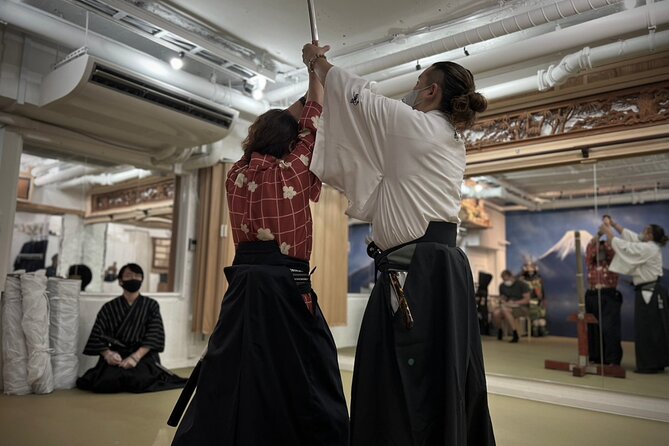
When you step into the dojo, you can feel that it is a working training space. Some classes show visible community elements like student name displays on the wall, which reinforces that you are not just passing through a set. That traditional atmosphere supports the main goal of the experience, which is learning the culture and movements in the right context.
You are likely to spend about 1.5 to 2 hours total, with the exact timing influenced by the number of participants. In other words, your schedule is pretty flexible once you are there, but the overall time investment is consistent.
Dressing for the lesson: dōgi, obi, and hakama
One of the best parts is that you get dressed for training. You start by putting on dōgi, obi, and hakama, which immediately changes how you carry yourself. That costume is not only for fun. It helps you learn how samurai-style practice fits together, including posture, movement range, and the feel of the uniform during sword work.
It is also a quick cultural entry point. While you dress, you are already being oriented to the mindset of the dojo. You will likely get explanations along the way about what these pieces represent and why form and etiquette matter in sword arts.
This is especially good if you are traveling with kids or teens, or if you want something that feels memorable even before the sword starts. The experience is interactive, and many people cite the traditional dress as a major highlight because it makes the training feel tangible.
Just know that you should be ready to move. Even though you are not doing intense athletic sparring, the lesson involves physical positions and controlled practice, so plan for moderate physical effort.
Sword basics that actually matter: draw, sheath, and grip
The core of your hands-on training focuses on practical sword handling. You learn how to draw, sheath, and wield a katana in a way that emphasizes safety and control. This is where the small group size really pays off, because you have a better chance of getting personal corrections rather than generic instruction.
A lot of sword experiences stop at a single move and call it a day. Here, the session builds skill in a logical order. You start with the basics of handling and readiness, then progress into the motion patterns that make a kata feel coherent. The goal is to help you understand your body placement and timing, not just copy an outline from a distance.
You will also get instruction about sword use and samurai culture, so you can connect the movements to their purpose. That cultural piece shows up in what you learn about the sword’s role and the traditions around training. It is not treated like trivia. It is used to explain why the dojo does things the way it does.
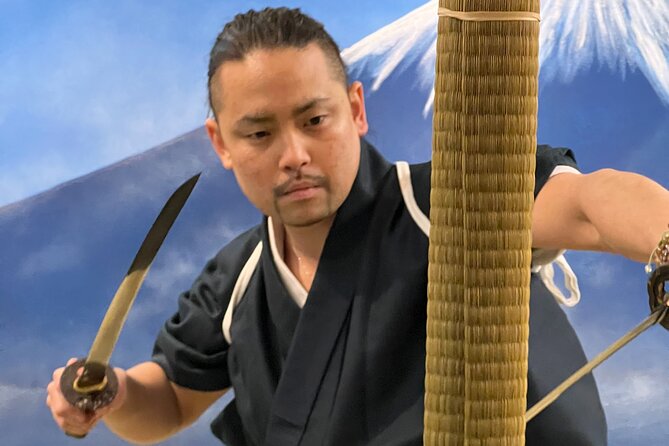
One important planning note for expectations: the experience description says mat cutting with a real katana is not currently offered. You may still see demonstrations with a katana, but if your mental picture includes cutting targets, adjust your expectations. The value here is the kata and the skill-building, not the spectacle of throwing your arm at a board.
More samurai and ninja experiences in Kyoto:
- Skip the lines Basic Ticket at SAMURAI NINJA MUSEUM KYOTO
★ 4.5 · 632 reviews - Ninja 1-hour Hands-on Lesson by Japanese master in Kyoto -Entry
★ 5.0 · 489 reviews - Kyoto: Ninja Weapon Forging Experience
★ 4.8 · 478 reviews - Kyoto: Samurai Kenbu Traditional Sword Dancing Show
★ 4.5 · 426 reviews
Learning a true katana kata form, then watching the master’s performances
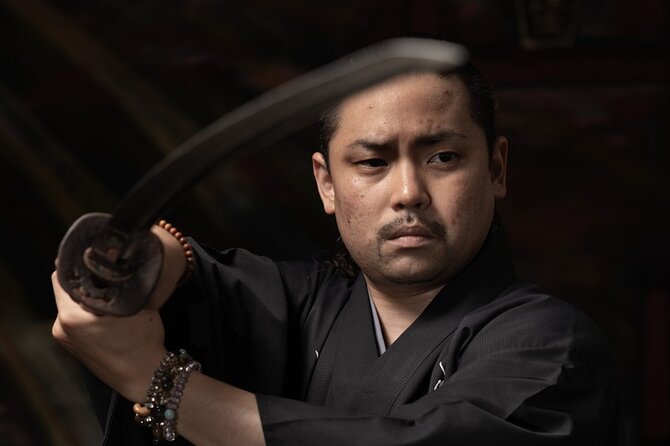
Your training culminates in learning an actual katana kata (form). A kata is not random choreography. It is a structured sequence that trains timing, distance, and the kind of disciplined movement the art depends on.
During your kata lesson, instructors spend time correcting form. People consistently highlight that they took time to fix details rather than rushing everyone through. That is what turns this into more than a “try-it-once” souvenir activity. You get the chance to experience the difference between looking correct and moving correctly.
You can also expect a traditional training rhythm: instruction, practice, then observation. At some point, you watch the master’s katana performances, which in this experience includes a two-katana performance. That part is often described as something you will not see anywhere else in the same way, because it comes directly from the dojo practice mindset rather than a tourist-friendly script.
If you are worried about learning as a beginner, take comfort in the structure. The session is designed for visitors, with instruction and a clear path from basics to a kata. English is available through the instructors, and you should be able to ask questions while you are training.
Also, the session is set up to be a real dojo experience with room for photos and video. Some participants mention being able to record during the kata learning. If you want memory keepsakes, bring your phone and keep it ready, but still follow any guidance the dojo gives on when and where it is OK to film.
At the end, you return to the meeting point. You leave with something more useful than a souvenir shirt: you leave with a basic understanding of how disciplined sword practice is organized.
Price, group size, and value for $132.65
The price is $132.65 per person for about 1 hour 45 minutes (around 1.5 to 2 hours). That is not cheap, but it can be good value when you compare it to experiences that are mostly entertainment.
Here is what helps justify the cost. You get:
- Small-group training (usually 6, with a maximum of 9) so you are not just one face in a crowd
- Dedicated instruction from Sensei Yushin and team, with form corrections
- Real dojo setting, which changes the tone from show to practice
- Hands-on skill building like draw and sheath basics, plus a kata form
- Demonstrations, including a two-katana performance
If what you want is the “wow” of sword cutting targets, this may not fully match that expectation right now because mat cutting is not offered with a real katana. But if your goal is learning the basics in a serious training environment, this price feels more fair. You are paying for time, coaching, and access to dojo culture.
If you are deciding last minute, note that the experience has been selling well recently, so booking ahead is smart. The tour uses a mobile ticket, which saves time on arrival.
Should you book this samurai class in Kyoto
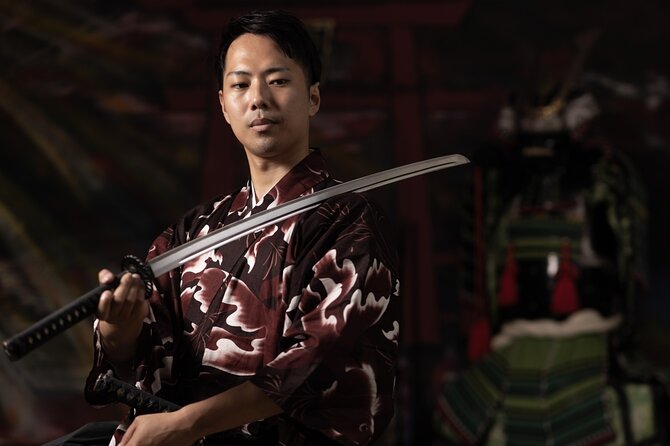
I think you should book if you want a Kyoto activity that feels like a real martial arts school day, not a quick performance stop. This works especially well for first-timers who want structure, safety-minded instruction, and a kata you can understand after it is taught.
It is also a strong family option if your group includes teens and you want them to learn something hands-on and culturally grounded. The dojo atmosphere feels welcoming, and the training is interactive, not a lecture.
I would hesitate if your main goal is mat cutting with a real katana right now. The experience as described does not include that, so your highlight might be the kata training and the master’s demonstrations instead.
If that trade-off sounds OK, you are likely to have a memorable, genuinely Kyoto moment. You will leave with training discipline, cultural context, and a clearer sense of how samurai sword arts are practiced.
FAQ
How long is the Samurai Training experience?
It runs about 1 hour 45 minutes (approximately 1.5 to 2 hours, depending on the number of participants).
Where is the meeting point in Kyoto?
You meet at 452-4 Matsugaechō, Nakagyo Ward, Kyoto 604-8034, Japan. The activity ends back at the same meeting point.
What is the age requirement?
You must be 12 years or older to participate.
How many people are in the class?
The experience says a maximum of 9 travelers. It also notes small groups of only 6 participants per class, with the possibility of more if there are only a small number of parties.
Do I get dressed in samurai training gear?
Yes. The training starts with getting dressed in dōgi, obi, and hakama.
Is mat cutting with a real katana included?
No. The experience note says that mat cutting with a real katana is not currently offered.
Is it near public transportation?
Yes, it is listed as near public transportation.
What is the cancellation policy?
You get free cancellation. You can cancel up to 24 hours in advance for a full refund. If you cancel less than 24 hours before the start time, there is no refund.
Fresh options around Kyoto
- Kyoto: Quiet and Graceful Tea Ceremony★ 4.5 · 19 reviews
- Oboro | Mindful Tea Ceremony in a 100-Year-Old Kyoto Teahouse★ 5.0 · 19 reviews
- Ikebana Traditional Japanese Art of Flower Arranging★ 4.5 · 19 reviews
- Kyoto Satoyama Cycling with Lunch and English Guide★ 5.0 · 19 reviews
- Kyoto International Party Solo Friendly Expats and Locals★ 5.0 · 19 reviews
- Tea Ceremony Experience in Traditional Kyoto Townhouse★ 5.0 · 19 reviews
- Kyoto: Amanohashidate Ine Funaya Tour★ 4.4 · 19 reviews
- Kyoto Private Food Tours with a Local Foodie: 100% Personalized★ 4.5 · 19 reviews
Samurai & Ninja Experiences, compared.

Samurai Ninja Museum Guided tour and Experience
Read our review →
Kendo and Samurai Experience with Uniform and Gear
Read our review →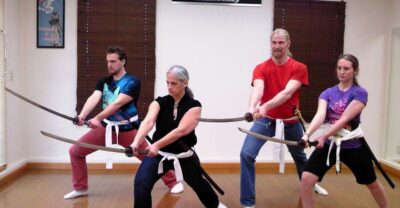
Samurai Sword Class by Experts in Traditional Arts
Read our review →
Skip the lines Basic Ticket at SAMURAI NINJA MUSEUM KYOTO
Read our review →
Samurai Sword & Archery Class from Samurai Descendant
Read our review →
Browse the lists this tour appears in