
Reviewed · SAMURAI & NINJA EXPERIENCES
Tokyo: Samurai Sword Academy in the Hometown of Last Samurai
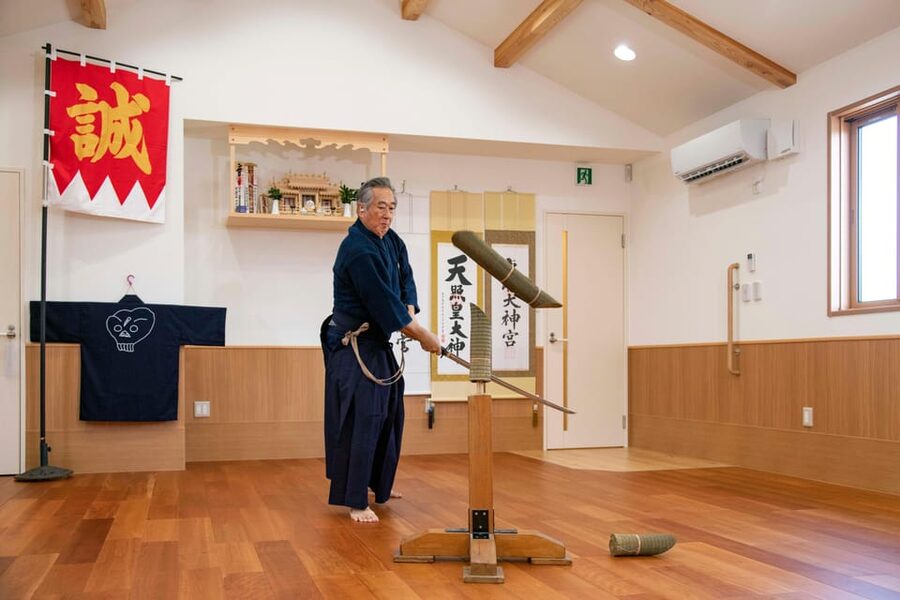
Samurai training in Tokyo’s less touristy corner. I love that this class connects you to Tennen Rishin-ryu swordsmanship through the actual Hino Dojo, led by Masao Inoue, a descendant tied to the Shinsengumi. I also love the hands-on pace, starting with a wooden sword and building toward real sword handling, in a small group. One drawback to consider: this experience is not suitable if you have back problems, mobility issues, vertigo, or recent surgery, because you do need to stand, move, and train carefully.
If your idea of a great day in Japan includes real practice, not just posing for photos, this fits. You get a dojo atmosphere that feels serious, plus instructors who mix focus with patience, and you learn why foot placement and posture matter. The full session is 2 hours, with English and Japanese support, so you can plan your Tokyo day without it taking over your schedule.
Key things to know before you go
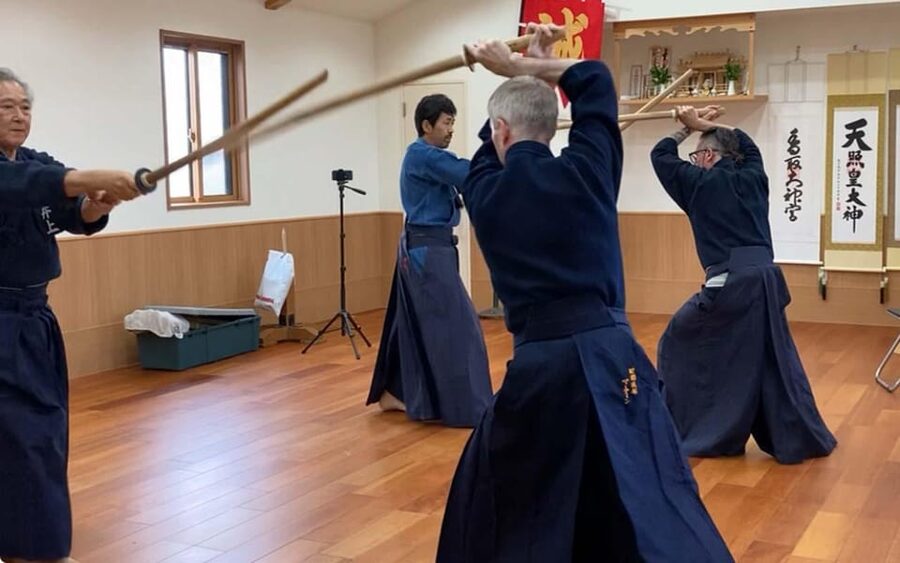
- It is taught by Shinsengumi-connected leadership: Masao Inoue leads the program, tying the instruction to the lineage of Tennen Rishin-ryu in Hino.
- You learn at the actual dojo setting: The training hall and feel of the place matter here, not just a performance space.
- You start with basics and progress step-by-step: Expect staged instruction with wooden tools before handling the Japanese sword.
- You practice real techniques, including stances and kata work: The goal is correct movement, not speed.
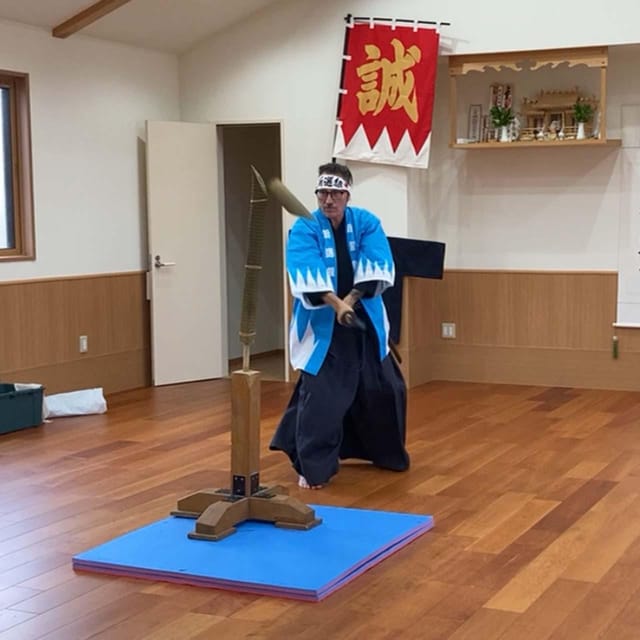
- You wear a practice uniform and Shinsengumi-style outfit: You are provided dogi and hakama, plus the dandara baori.
- Small group size keeps it personal: The class is limited to 4 participants.
Hino City: where the Shinsengumi story gets real
Tokyo gets all the headlines, but the magic of this experience happens in Hino, on Honshu. This is the hometown link for the Shinsengumi, and it matters. When you train in the place connected to Edo-period fighters, the swords feel less like a costume and more like a tool with purpose.
You also get a more local rhythm than the big-city attractions. The meeting point is on the second floor of the Inoue Genzaburo Museum, a short walk from Hino Station on the JR Chuo Line. It is a simple arrival, and the neighborhood feel helps you transition from sightseeing mode to practice mode.
More Samurai & Ninja Experiences in Tokyo
- Tokyo: Samurai Restaurant Show Ticket with 2 Drinks
★ 4.5 · 1,307 reviews - Tokyo: Samurai Ninja Museum Guided tour and Experience
★ 4.6 · 1,010 reviews - Tokyo: Samurai Sword & Archery Class from Samurai Descendant
★ 5.0 · 603 reviews
The dojo welcome: Masao Inoue and Tennen Rishin-ryu roots
The program centers on Tennen Rishin-ryu, a style with origins in the Edo period that is still practiced today. In this dojo setting, you are not just learning moves, you are learning how the style thinks about movement, control, and respect.
Masao Inoue, the chairman of the Tennen Rishin-ryu Hino Dojo, leads the experience. He is a descendant of the Shinsengumi executive Genzaburo Inoue, which adds weight to the instruction. You can feel that lineage in how the session is framed: as training carried forward, not a one-off demo.
One of the most praised aspects of the day is the atmosphere of the training hall itself. The space is set up for practice, with instructors who act like teachers, not performers. That tone changes everything. You move more carefully. You pay closer attention. You stop treating the sword like a prop.
Your two-hour progression: from stance to cutting
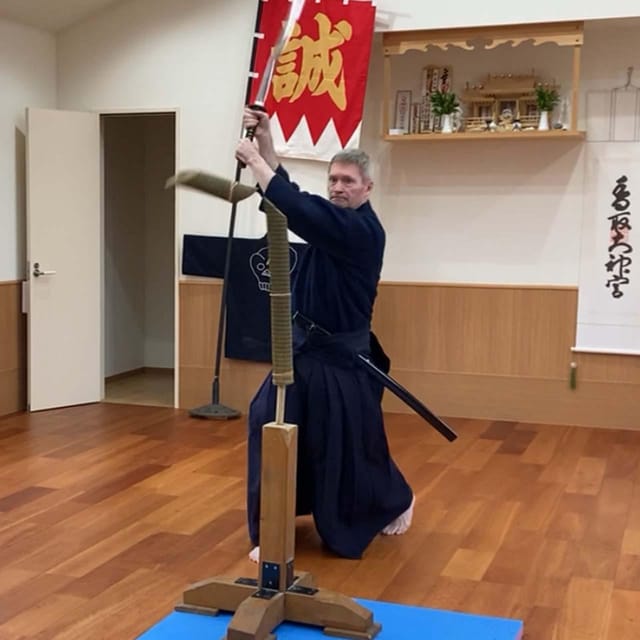
This class runs for 2 hours, and the structure is built around learning in safe steps. The flow usually goes like this.
First, you focus on posture and foot placement. Instructors emphasize the why behind the movement, like how proper foot positioning helps prevent injury. This is not filler talk. Good footwork is what lets you control your balance when the sword comes up and when it stops.
Next comes sword handling training. You start with wooden sword work, then progress to handling a Japanese sword as you demonstrate control. You also practice kata-like forms and dueling-style work in a guided way. The aim is accuracy and calm, not showy swings.
Finally, you reach the part most people came for: cutting practice. Many sessions culminate with cutting tatami mats. In at least one case, a bamboo target is mentioned as part of the cutting challenge, which gives you a sense of what it feels like when the technique lands. The common theme is that it is still guided and controlled, with instruction stepping in when needed.
What you will likely remember most is the pacing. Instead of being thrown into advanced technique, you learn enough basics to make the later parts make sense. You get the satisfying moment of handling a real sword, without skipping the groundwork.
Handling a Japanese sword without turning it into a stunt
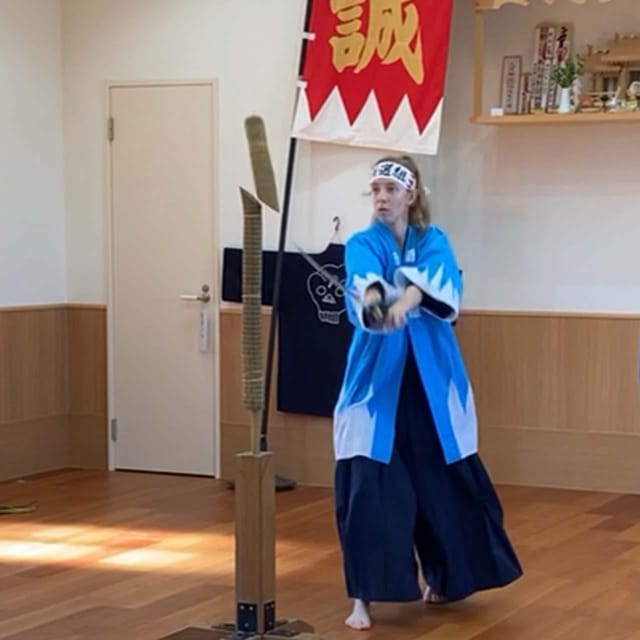
This is one of the best reasons to book this specific dojo class. The training philosophy is serious about safety, while still staying friendly. You get patient coaching on how to hold, move, and stop correctly.
You are also given the right gear so you practice in a way that matches the style. You will wear dogi and hakama (practice uniform) and the dandara baori, which visually connects you to the Shinsengumi. That clothing is more than a costume. It helps you feel squared away for the training, and it makes you more aware of posture and movement.
The small group size, limited to 4 participants, helps a lot. In a larger class, correction can be slow. Here, instructors can watch what you are doing and adjust details like stance, timing, and distance.
Also, they teach the techniques you need to use the sword with control. The goal is not to turn your arm into a hammer. You learn movement that starts from your body, then travels into the sword.
More samurai and ninja experiences in Tokyo:
- Best Samurai Experience in Tokyo
★ 5.0 · 458 reviews - Ninja Experience (Family Friendly) at Samurai Ninja Museum TOKYO
★ 5.0 · 441 reviews - Tokyo: Samurai Entertainment Night Show in Kanda Shrine
★ 4.6 · 417 reviews - Tokyo Sword Experience – includes Museum Ticket/Ninja Experience
★ 5.0 · 314 reviews
Price and value for a Tokyo-area samurai sword class
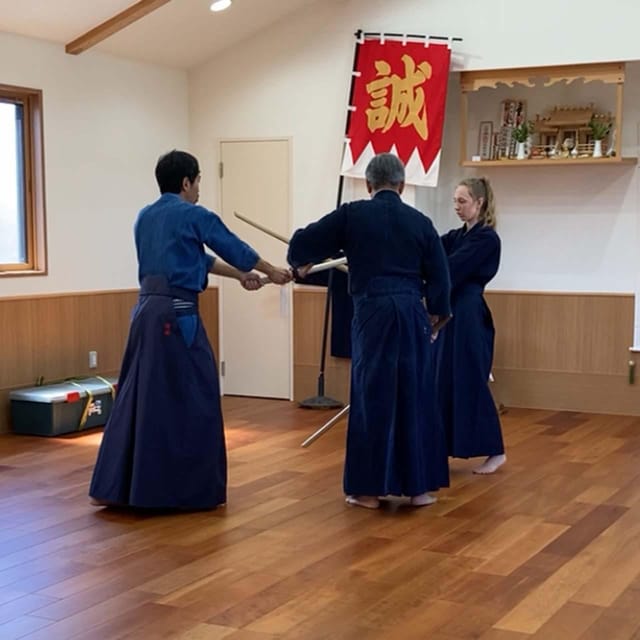
At $116 per person for about 2 hours, this is not a bargain bargain. But it is also not an overpriced tourist show. The value comes from what is included and what the session actually does.
You get instruction from the master and instructor, plus practice gear and tools. Included items are a wooden sword, a Japanese sword, dogi and hakama, and the dandara baori. You are also taught in English and Japanese, which makes the class workable even if you are starting from zero.
If you have done other hands-on activities in Japan that were mostly about watching, this feels different. You are actively training. And because it is limited to 4 people, the cost supports more attention per person.
So, if you care about doing something real, and you want to walk away understanding the style and feeling the difference between a wooden practice sword and a Japanese blade, the price starts to make sense.
Getting to the Inoue Genzaburo Museum meeting point
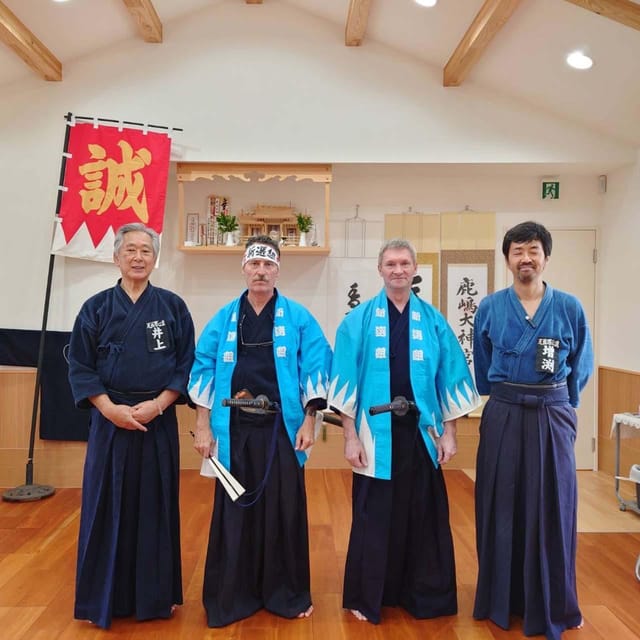
Getting there is straightforward. Meet on the second floor of the Inoue Genzaburo Museum, about a 5-minute walk from Hino Station on the JR Chuo Line.
The practical takeaway: plan your route so you arrive a bit early. This kind of training class benefits from showing up calm and ready. You will want a few minutes to get oriented and settle in before the session begins.
Also, keep your day moving-friendly. After 2 hours of sword practice, you might feel a little sore, especially in the legs and core, since footwork and stance are part of the lesson plan.
Who this experience suits, and who should skip it
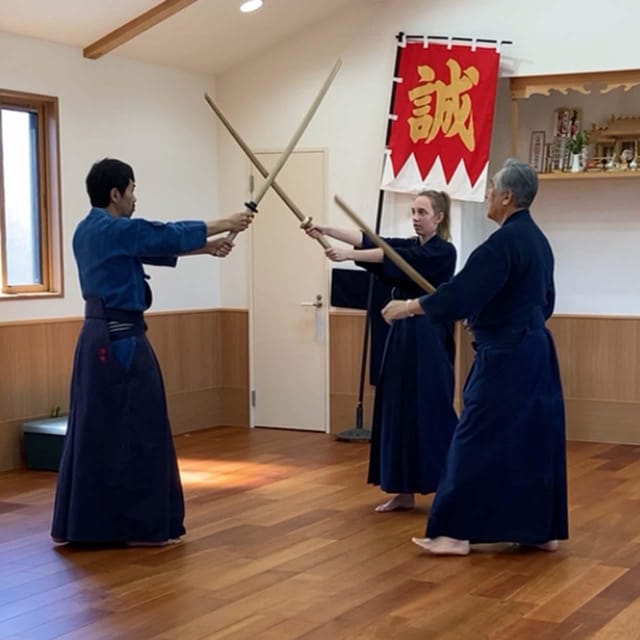
This is a hands-on kenjutsu class, so your body needs to be able to participate safely.
It is not suitable for children under 18, people over 75, pregnant women, people with back problems, people with mobility impairments, wheelchair users, people with vertigo, people with heart problems, people with a cold, people with altitude sickness, people with recent surgeries, or people with low level of fitness.
If any of those apply, you would be better off choosing a different kind of samurai experience.
Who it fits well: adult history lovers who want a real dojo setting, people who like structured learning, and anyone who wants the chance to handle a Japanese sword in a guided, respectful environment. If you are the type who reads about the Shinsengumi and then wants to feel the practice side of that culture, this class will click fast.
The small details that make the day memorable
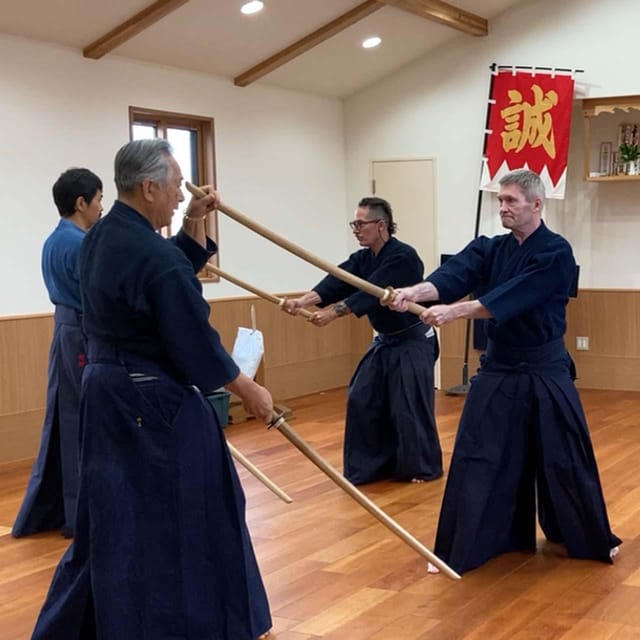
A few things consistently show up as the reasons people remember this class.
- Serious training with friendly teaching: instructors are focused, but they also stay approachable and supportive.
- Step-by-step coaching: the session is staged, so you get a sense of progress.
- Technique over brute force: you learn how movement and foot placement affect control.
- Historical connection beyond the sword: the setting in Hino makes the Shinsengumi story feel less abstract.
- A thoughtful extra at the end: you may receive a Shinsengumi map with key historical spots, and you can also get a final surprise that keeps the experience feeling special.
That last point matters. A dojo day should leave you with something usable, not just photos. A map helps you keep exploring Hino after the training ends.
Final call: should you book this Samurai Sword Academy class?
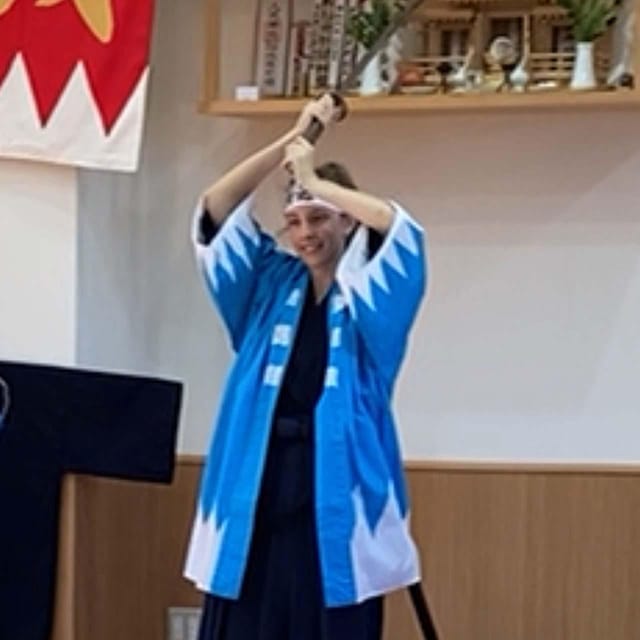
Book it if you want a real dojo experience tied to Tennen Rishin-ryu and the Shinsengumi legacy, and you care about learning basics that actually make later sword handling feel safe and controlled. The small group size, the lineage connection through Masao Inoue, and the step-by-step progression toward cutting tatami mats combine into a day that feels authentic rather than theatrical.
Skip it if you cannot do standing, movement, and careful training. Also skip it if you are hoping for a casual photo opportunity. This is structured practice with rules, respect, and real correction.
If you are already in Tokyo and want one unforgettable hands-on day, this is one of the most convincing samurai-focused experiences worth your time, especially when you want to go beyond the surface and learn how the training is supposed to feel.
Fresh options around Tokyo
- Tokyo: Asakusa & Tokyo’s Oldest Temple Senso-ji Walking Tour★ 4.6 · 21 reviews
- Experience Award-Winning Spa Treatments in Downtown Tokyo★ 5.0 · 21 reviews
- Bar Hopping Tour with a local Guide in Shinjuku★ 5.0 · 21 reviews
- Ramen and Gyoza Cooking Class in Tokyo★ 5.0 · 21 reviews
- Sailor Moon Tour in Azabujuban, Tokyo★ 5.0 · 21 reviews
- 2 Hours Mochi &Nerikiri Making & Matcha Class in Bunkyo★ 5.0 · 21 reviews
- Tokyo Walking Tour : Sumo, Sushi, Tea, Temples and Tokyo Tower★ 5.0 · 21 reviews
- Asakusa: TOKYO SKYTREE Exploration after History Tour★ 5.0 · 21 reviews
Samurai & Ninja Experiences, compared.
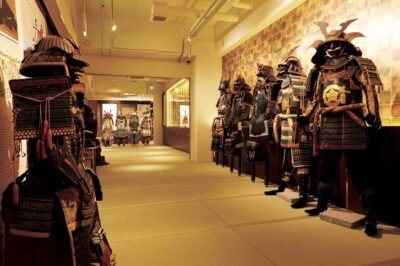
Samurai Ninja Museum Guided tour and Experience
Read our review →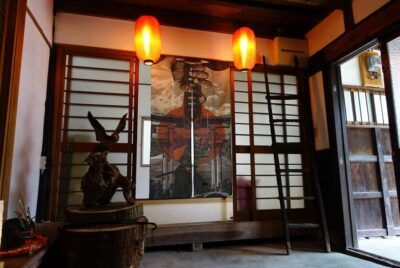
Kendo and Samurai Experience with Uniform and Gear
Read our review →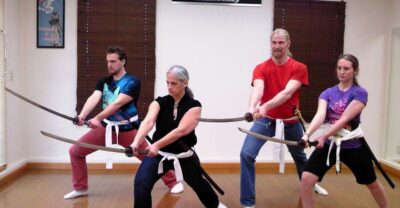
Samurai Sword Class by Experts in Traditional Arts
Read our review →
Skip the lines Basic Ticket at SAMURAI NINJA MUSEUM KYOTO
Read our review →
Samurai Sword & Archery Class from Samurai Descendant
Read our review →
Browse the lists this tour appears in