
Reviewed · SAMURAI & NINJA EXPERIENCES
Tokyo: Samurai Adventure! Authentic Sword Experience
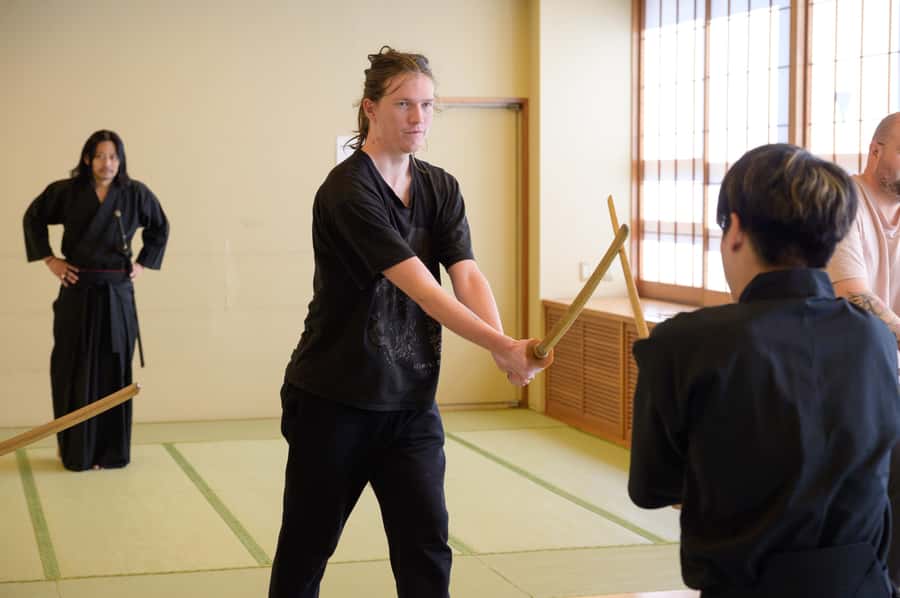
Samurai training in Tokyo gets surprisingly hands-on. You will watch Dai and Kume teach, then practice safe sword techniques with wooden swords in a class built for beginners. I like how it feels theatrical yet practical, because you get real movement drills, not just sitting and watching. One thing to consider: this is physical, so if you have back issues, vertigo, or other medical limitations, it is not a fit.
I especially like the instructor energy. The lessons are friendly, detailed, and geared to your level, so even first-timers can follow along. Photo time also adds real value, because you leave with a keepsake from the setting, not just a memory. A possible drawback is that you might be tempted to do too much with the group, but they do encourage breaks, so listen to your body.
Key Highlights You Will Feel Immediately
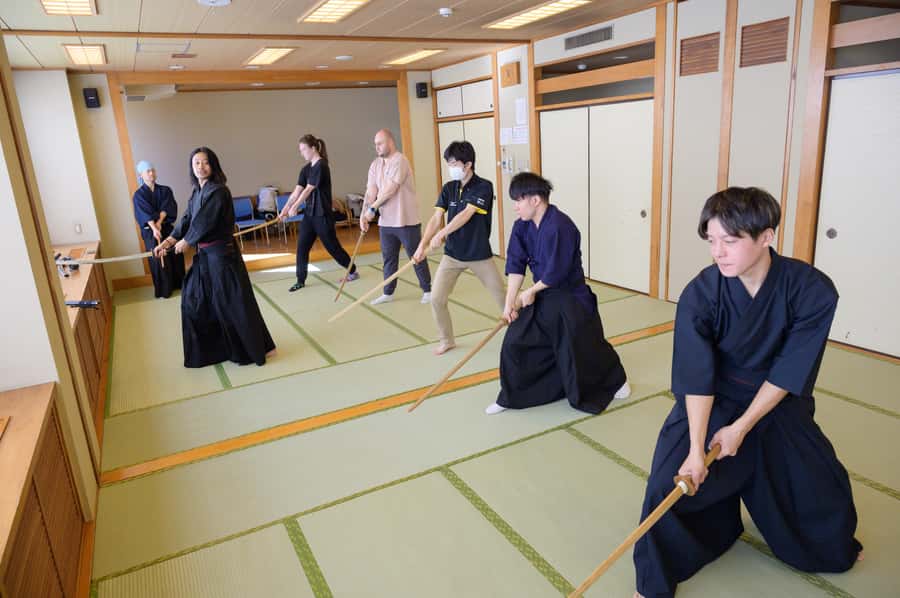
Actor-led training that focuses on safe movements with practice swords
Hands-on basics: stance, grip, and controlled swings
Two formats to match your style, public class or private coaching
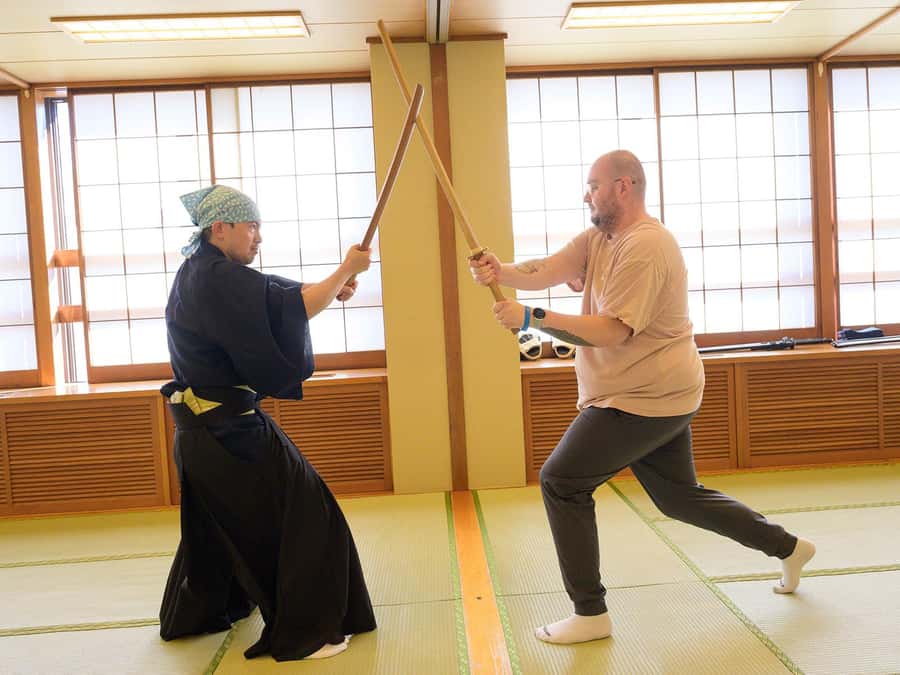
Paired practice moment that looks like an action scene
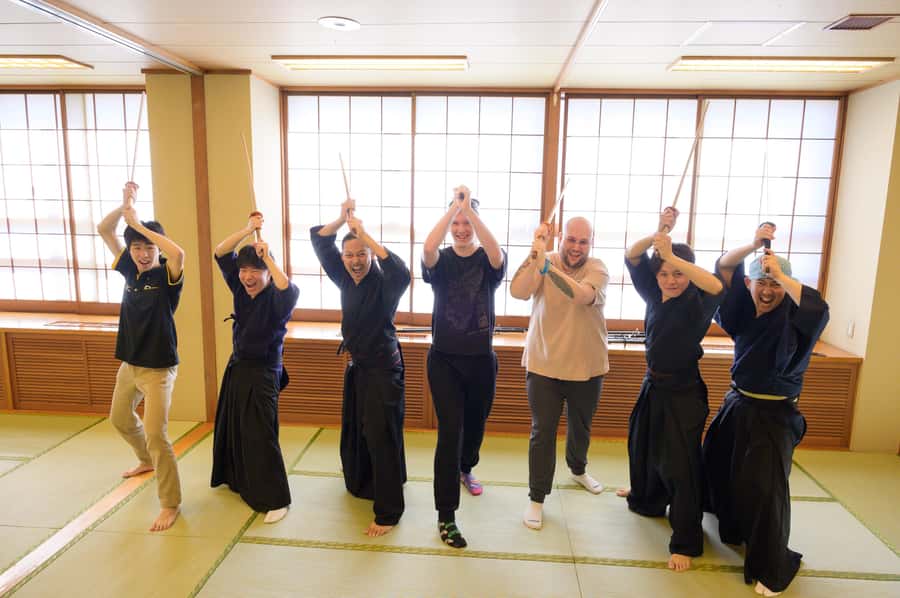
Photo session with the samurai, plus optional costume
Super close meeting point near Tokyo Station, Ginza, and Tsukiji
Samurai Training in Tokyo, Right Off the Main Map
This workshop is one of those rare Tokyo activities where you do not just watch the story, you help perform it. It starts with live training demonstrations in a studio setting, then you move into the hands-on part where you learn how samurai movement mechanics work in real time. The instructors are action actors, and they teach you the movements safely, using wooden practice swords.
The vibe is part performance, part lesson. You will see technique from the front, then you will repeat parts of it step by step. I like that it is not pretending to be a full martial arts school. It is built to be approachable, with clear guidance so you are not lost.
You can also choose your class style. If you want a social, more theatrical atmosphere, the public course is the way to go. If you want a more tailored approach and faster corrections, the private course is often the better match.
More Samurai & Ninja Experiences in Tokyo
- Tokyo: Samurai Restaurant Show Ticket with 2 Drinks
★ 4.5 · 1,307 reviews - Tokyo: Samurai Ninja Museum Guided tour and Experience
★ 4.6 · 1,010 reviews - Tokyo: Samurai Sword & Archery Class from Samurai Descendant
★ 5.0 · 603 reviews
Price and What You Actually Get at $24
At $24 per person, this feels like strong value for Tokyo. You are paying for a guided experience that includes instruction, equipment, and a photo moment. A lot of experiences in big cities offer one or two of those, but this one gives you several.
Your included basics:
- Introduction to samurai history (with culture context)
- Live training demonstrations
- Hands-on swordsmanship practice
- Wooden practice swords provided
- Photo session with the samurai
That combination matters because you are not just trying poses. You are learning safe movement patterns you can understand as you do them. Plus, you get the practical gear side handled for you, so you do not need to bring anything special beyond your clothes and shoes.
If you are doing a fast Tokyo itinerary, this is also an efficient use of time. The meeting point is easy to reach from major areas, and the activity ends back at the start, which helps keep your day from turning into a logistics puzzle.
Where to Meet: Samurai Experience Photo Studio ICHI
Your starting point is registered on Google Maps as Samurai Experience Photo Studio ICHI. Plan to search that exact name so you do not waste time wandering around the wrong building.
From there, the flow usually goes like this. You arrive, you get settled for the experience, and there is a short walk to the dojo area for training. The meeting point experience matters because it sets expectations: this is both a studio-style moment and a training moment.
Also, the activity ends back at the meeting point. That is helpful if you are pairing this with a day around Tokyo Station, Ginza, or Tsukiji, since you do not need to plan a complicated second transfer.
Public Course vs Private Course, Which Fits Your Day
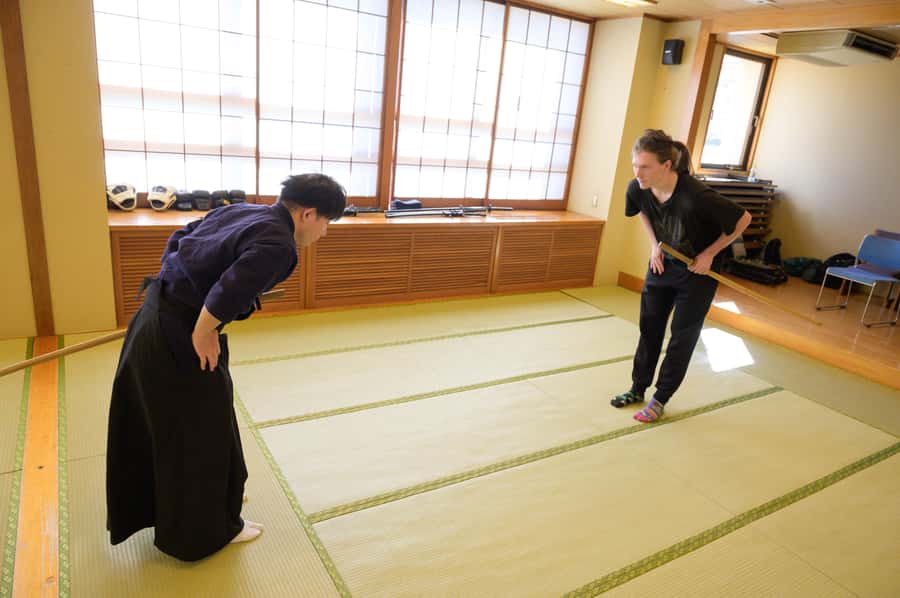
This experience gives you two ways to participate, and your choice affects the feel of the session.
More samurai and ninja experiences in Tokyo:
- Best Samurai Experience in Tokyo
★ 5.0 · 458 reviews - Ninja Experience (Family Friendly) at Samurai Ninja Museum TOKYO
★ 5.0 · 441 reviews - Tokyo: Samurai Entertainment Night Show in Kanda Shrine
★ 4.6 · 417 reviews - Tokyo Sword Experience – includes Museum Ticket/Ninja Experience
★ 5.0 · 314 reviews
Public course: watch, join, and practice with the group
In the public course, you join a class where Japanese students and aspiring actors are learning samurai action. You will start by observing, then you will practice alongside them. This can be a fun option if you like an energetic classroom vibe and you do not mind sharing space.
What you gain here is a sense of immersion in training culture. You see how the routines build over time, and you get chances to copy the movements without feeling like you are the only beginner.
Private course: tailored coaching and culture intro
In the private course, you begin with a brief introduction to samurai history and culture. Then the instructor, Dai as the lead master, with assistance from Kume, tailors the lesson to your level and goals. Private lessons are popular with martial arts practitioners and people who want deeper context.
This is also the best choice if you want more corrections or you are the type who learns faster one-on-one. You will still do the same safe movement training using practice swords, but you will likely spend less time guessing and more time refining.
Warm-Ups and the Basics of Stance, Grip, and Swing
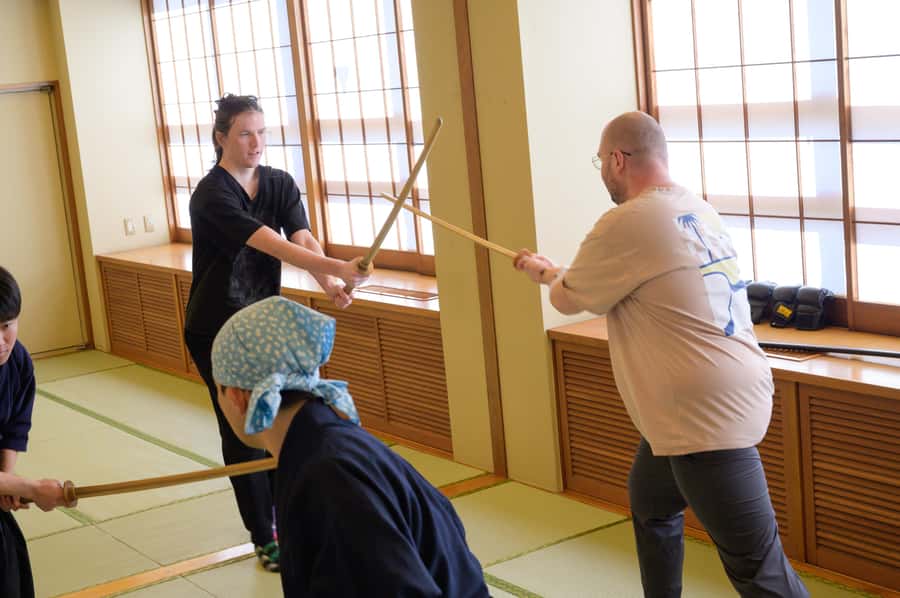
The workshop begins with warm-up exercises, then transitions into the core mechanics. This is where the experience earns its keep. You are not thrown directly into complicated sequences. Instead, you build from simple actions toward smoother movement.
You will learn essentials like:
- Proper grip and how to hold the sword safely
- Stance fundamentals
- How to swing with control
- Defensive movement basics
Even if you have never handled anything sword-like, you can follow because the instructors demonstrate clearly and then help you repeat. The goal is safe learning, not showboating.
I also like that the training is paced. You gradually draw into the world of the samurai through practice drills. That structure helps you feel progress even in a short session.
Practice With Wooden Swords, Then a Pairing Scene
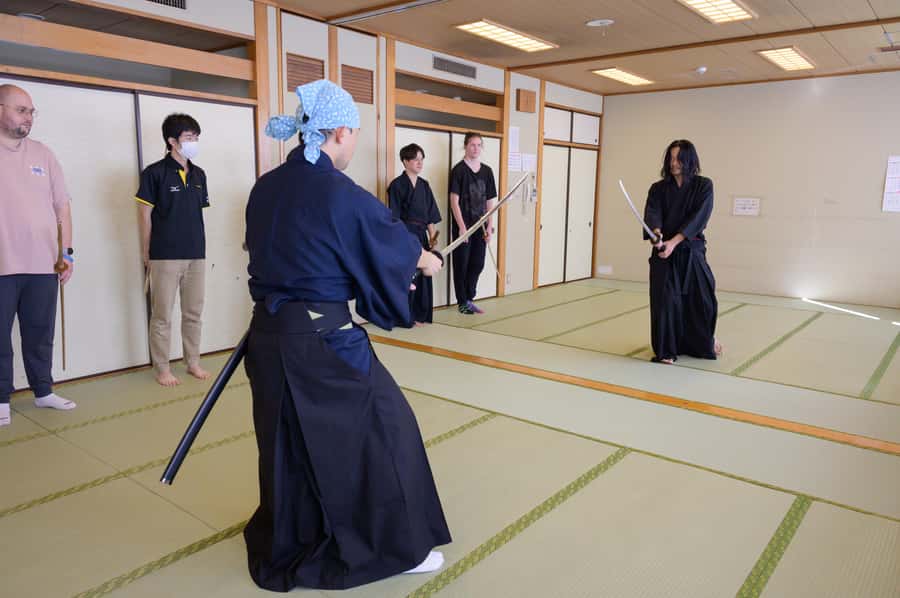
Once you have the basics, the workshop steps into the fun part. You will practice in pairs with a professional samurai. This is the action-movie moment, but it is built around safe training, not real combat.
Here is what you can expect from this pairing segment:
- Controlled strikes and defensive moves with wooden practice swords
- Guidance on timing and spacing
- A feel for how the movements connect when two people respond to each other
You also get to watch a powerful demonstration by the samurai. Watching matters because it gives you a clear visual reference for what your drills are aiming toward. Then, when you practice again, you can compare your form to the example you just saw.
This combination, demonstration plus practice, keeps the experience from being random. You will understand what you are doing, not just perform motions.
Photo Session With the Samurai, Plus Optional Costume
At the end, you get a photo session with the samurai. This is included, and it is one of the best reasons to do the experience even if you are unsure you will love the training.
The photo moment turns training into a souvenir. Instead of a generic picture in Tokyo, you get a scene tied to the workshop itself. Optional costume is available too, and that can add a lot to the visual payoff if you want the full effect.
One practical tip: if you plan to take photos, wear clothes you feel comfortable moving in. The session includes physical drills, and the costume choice can affect how you move. If you are unsure, closed-toe shoes and comfortable layers help you stay ready.
How Safe and Serious Is This, Really?
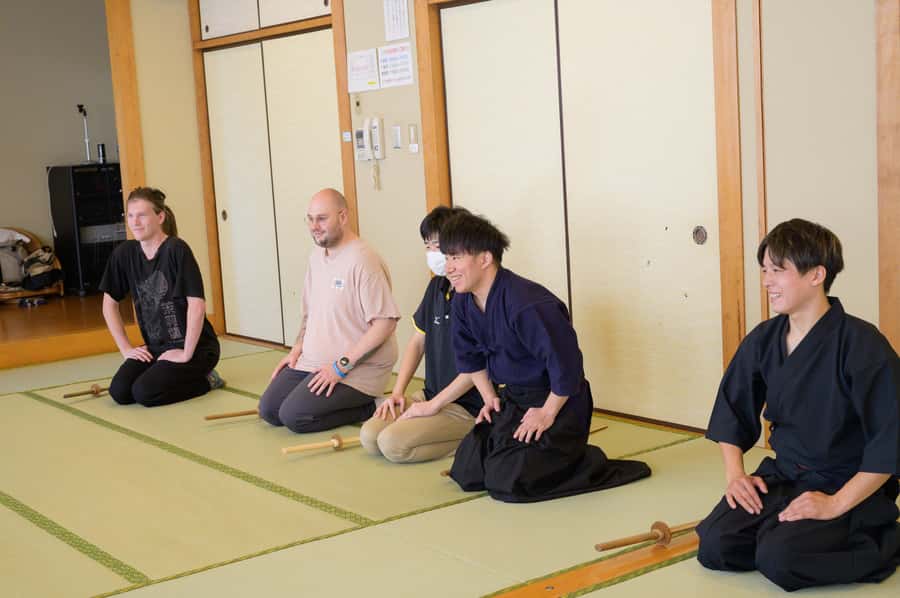
This is a safe, beginner-friendly experience, with a clear boundary: you will not engage in actual sword fighting during the lesson. The teaching uses movements and practice swords, so you learn the mechanics without going into real sparring.
That said, it is still physical. You will be practicing strikes and defensive moves, and you will need stable footing and controlled motion. Your body will do more work than it looks like from the outside.
The experience is also not presented as a medical or therapeutic activity. It is a movement lesson, so you should think about your comfort before you go. If you have vertigo, back problems, or pre-existing medical conditions, this is listed as not suitable.
Also, rules are straightforward. You are not allowed smoking, drones, or alcohol and drugs. High-heeled shoes are also not allowed, which makes sense because you need secure footing.
Instructor Energy: Why Dai and Kume Make It Work
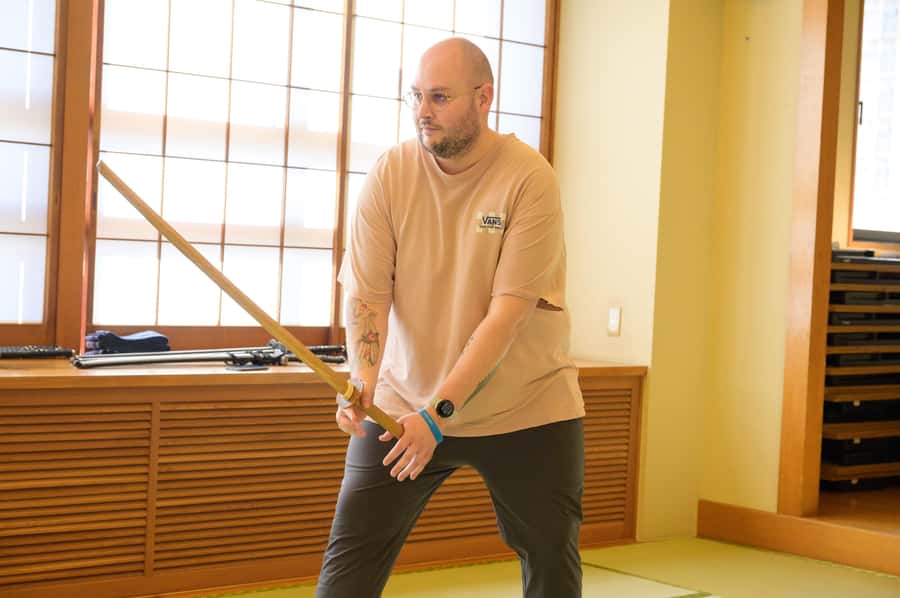
The most praised part of this experience is the coaching style. The instructors, Dai and Kume, are repeatedly described as kind, helpful, and detailed. That combination matters because beginner-friendly sword training depends on clarity and correction.
Instructors do more than explain. They demonstrate, they fix issues, and they create a relaxed atmosphere where you feel safe learning. A lot of people also comment on the fun side, which tells me the lesson avoids the stiff, lecture-only feel that can make physical activities awkward.
Another detail that comes up is generosity and encouragement. If something breaks for a friend, the team can jump in to help. That kind of response makes the experience feel cared for, not rushed.
If you worry about being clumsy, this is a good sign. Detailed guidance reduces frustration. And when you feel supported, you are more likely to enjoy the paired practice and the demo.
Timing and What to Bring for a Smooth Session
Arrive 15 minutes early. That is not wasted time. It gives you buffer to settle in, change if you choose costume, and get oriented before training starts.
What to bring:
- Comfortable clothes
- Closed-toe shoes suitable for physical activity
What to avoid:
- High heels
- Anything unsafe for movement
Language support is available in Japanese and English. So if you are nervous about not understanding, you are not on your own. The lesson structure is also designed to work visually and physically, not just by explanation.
Also note that the experience is not a meal event. Meals and beverages are not included, so plan to eat before or after based on your Tokyo route.
Who Should Book This Samurai Adventure?
This is a good fit if you want a hands-on cultural experience that still stays safe and beginner-friendly. You should especially consider it if you:
- Want something more active than a museum stop
- Like learning through repetition, not just watching
- Enjoy short, memorable experiences that add variety to a Tokyo itinerary
- Appreciate authentic-feeling performance culture, with clear instruction
It is also a strong choice for groups across age levels. The experience reads as welcoming and playful, with training that can work for different body types as long as you are medically able.
If you are a martial arts practitioner, the private course may appeal because the lesson is tailored to your level and goals.
Should You Book Samurai Adventure: ICHI?
I think this is worth booking if you want to leave with a story you can physically remember. You get safe practice, clear instruction, and a photo keepsake, all at a price that makes it hard to overthink.
Book it if:
- You are comfortable doing light-to-moderate physical activity
- You want beginner sword basics with wooden training tools
- You like the idea of actor-led instruction from Dai and Kume
- You want a Tokyo activity with a built-in souvenir photo moment
Skip it if:
- You have vertigo, back problems, pregnancy, or other pre-existing medical conditions listed as not suitable
- You are looking for a purely historical lecture with no hands-on movement
If you meet the basic physical requirements, this is the kind of Tokyo experience that actually turns into a memory, not just another photo in your camera roll.
FAQ
What is the price for this Tokyo samurai experience?
It is listed at $24 per person.
Where do I meet for the workshop?
Your meeting point is Samurai Experience Photo Studio ICHI. It is registered on Google Maps, and the activity ends back at the meeting point.
Is the class only for experienced martial artists?
No. The instructors teach beginners too. You learn the movements safely using practice wooden swords.
Do I actually fight with real swords?
No. During the lesson, you do not engage in actual sword fighting. You practice safe movements and basic strikes and defensive moves with wooden practice swords.
What is the difference between the public and private course?
In the public course, you join a class where Japanese students are learning samurai action, observe first, then practice alongside them. In the private course, you receive a brief history and culture introduction and the instructor tailors the lesson to your level and goals.
What language is offered during the workshop?
The languages listed are Japanese and English.
What should I wear and bring?
Wear comfortable clothes and closed-toe shoes suitable for physical activity. Arrive 15 minutes early for a timely start.
Is this experience suitable for everyone with medical concerns?
No. It is listed as not suitable for pregnant women, people with back problems, wheelchair users, people with vertigo, and people with pre-existing medical conditions.
Are meals included?
No. Meals and beverages are not included.
Fresh options around Tokyo
- Tokyo: Samurai History Walking Tour★ 5.0 · 12 reviews
- Tokyo: Nikko Kegon Falls Lake Chuzenji Toshogu Temple & More★ 4.9 · 12 reviews
- Harajuku: Kawaii Fashion and Pop-Culture Tour★ 4.7 · 12 reviews
- Tokyo: Mt. Fuji & Lake Kawaguchi Instagram Full Day Trip★ 4.1 · 12 reviews
- Shibuya Tokyo: Modern Kintsugi Workshop in Shibuya★ 5.0 · 12 reviews
- Tokyo: GTR Guided Daikoku Experience at Night★ 5.0 · 12 reviews
- Tokyo: Daikoku JDM Car Culture Tour★ 4.6 · 12 reviews
- Mt Fuji Private Day Trip from Tokyo with English speaking driver★ 5.0 · 13 reviews
Samurai & Ninja Experiences, compared.
Samurai Ninja Museum Guided tour and Experience
Read our review →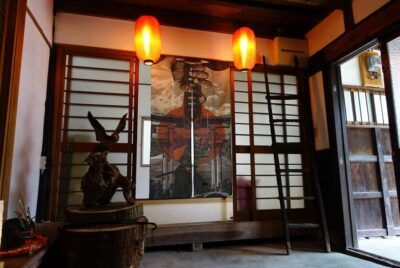
Kendo and Samurai Experience with Uniform and Gear
Read our review →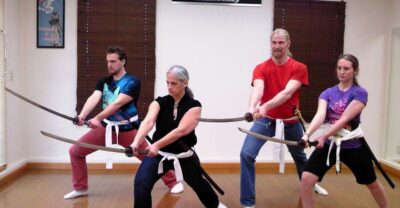
Samurai Sword Class by Experts in Traditional Arts
Read our review →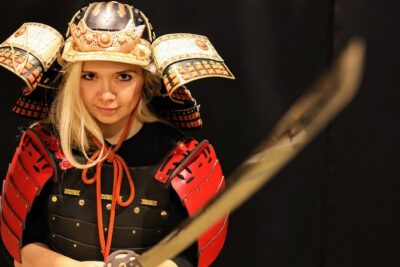
Skip the lines Basic Ticket at SAMURAI NINJA MUSEUM KYOTO
Read our review →
Samurai Sword & Archery Class from Samurai Descendant
Read our review →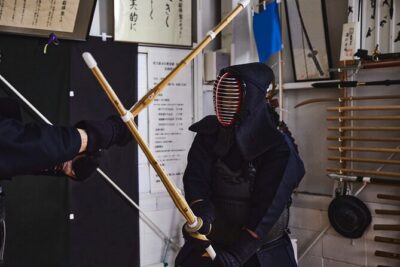
Browse the lists this tour appears in