Reviewed · GUIDED
Tokyo: Open Top Panoramic Sightseeing Bus with Audio Guide
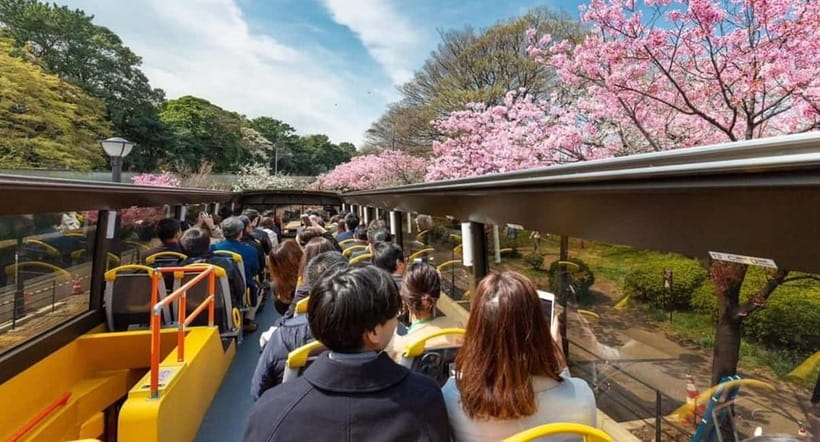
Tokyo hits different from a bus seat. In just 70 minutes, you get an open-top overview of the city’s biggest icons, with a GPS-enabled audio guide that helps you connect the dots as you pass by. If you’re short on time or you want an easy first-day plan, this is a friendly way to get your bearings fast.
I really like the built-in structure, especially the way the GPS audio moves with the route and you hear landmark info without hunting for speakers or apps. I also like that the tour is flexible enough to suit two different routes, Bay Course and City Course, depending on what you want to see. The main drawback to plan around is simple: open-top comfort can be a problem in bad weather and in hot or cold conditions, since the roof may close when it rains.
Fast Facts to Know Before You Go
- GPS audio guide delivered automatically, with information that changes by where the bus is traveling
- Two route options with different landmark mixes, Bay Course and City Course
- Headphones are optional (100 yen if you need them), and the jack uses a standard 3.5 mm mini plug
- Open-top views depend on weather, and it may be closed if it rains
- No selfie sticks, umbrellas, food, or smoking on board
- A real-value ride at about $11 for a full circuit of major areas
Open-Top Bus Tokyo: Why This Works When Time Is Tight
Tokyo is big, and it can be overwhelming on day one. This bus tour is designed for the moments when you want a clear picture without spending half your trip figuring out transit. You sit back, the streets roll by, and you get landmark context through the GPS audio guide as the bus passes key neighborhoods.
Two things make it especially practical. First, you get a lot of Tokyo in one shot, including a mix of classic sights and modern districts. Second, the audio is built for easy use, so you can focus on looking out the window while the narration handles the details for you.
Just keep expectations realistic. This is not a walking tour where you stop for long photo walks at every location. The value is in seeing the city efficiently, then letting you decide what’s worth exploring more later on your own.
A few more Tokyo days worth comparing
- Mt Fuji and Hakone 1-Day Bus Tour Return by Bullet Train
★ 5.0 · 26,383 reviews - 1-Day Tokyo Bus Tour
★ 5.0 · 14,250 reviews - Tokyo: TOKYO SKYTREE® Admission ticket
★ 4.5 · 11,192 reviews
GPS Audio Guide: Automatic, Multi-Language, and Route-Smart
The audio guide system uses GPS tracking, so the narration is tied to the bus’s location. In other words, it’s not just a fixed script that plays no matter where you are. The system can deliver sightseeing information in multiple languages, and it automatically serves the right language set based on current location.
The tour notes the guide is available in Japanese, English, Chinese, French, Korean, Vietnamese, and Thai. You also have a choice if you prefer. The audio is controlled by the system, and headphones are optional. If you don’t bring a pair, headphones can be purchased for 100 yen, and the jack supports 3.5 mm mini plugs only.
One small thing from real-world feedback: some riders felt the audio includes music between segments that can be louder than the voice. If you’re the type who hates background music, you may want to bring your own headphones so you can manage what you hear. Also, when there’s live Japanese commentary, it can sometimes compete with the audio, which makes volume balancing important.
Bay Course (70 Minutes): Tokyo Bay, Rainbow Bridge, and Odaiba Views
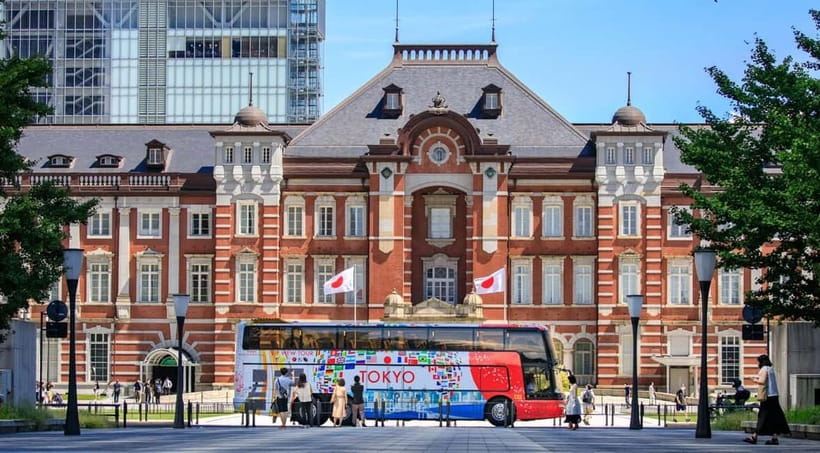
The Bay Course is the one I’d pick if you want water views and photogenic “big-city” structure. This route travels through both sea and city scenery, and it strings together places that feel modern, dramatic, and very Tokyo.
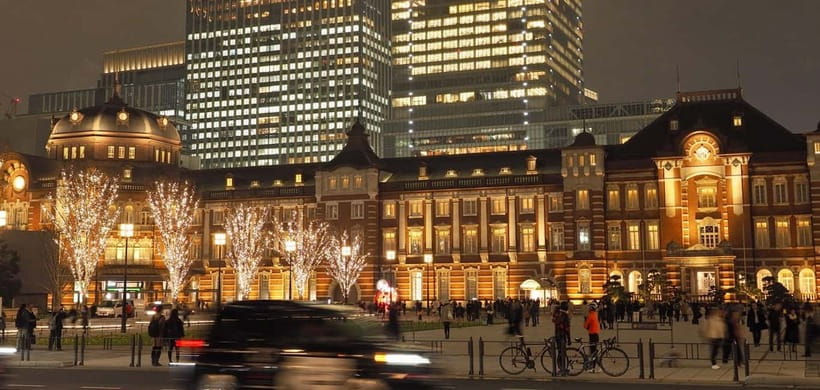
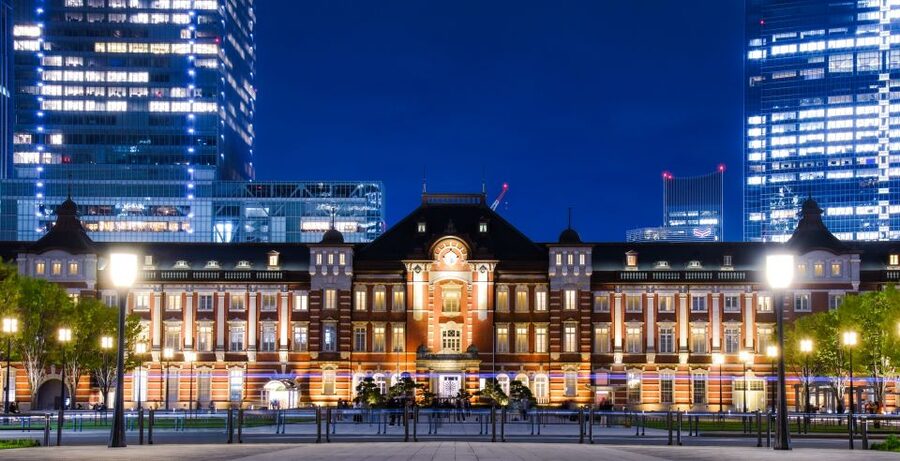
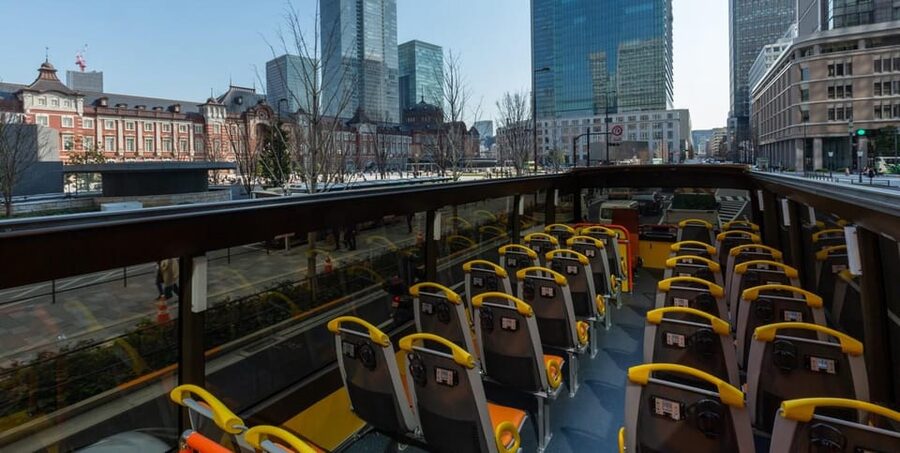
You start near Tokyo Station Red Brick Station Building and then move through Marunouchi, an area that looks polished and business-focused from the bus. From there, the route includes a cultural stop with Zojoji Temple, which is a reminder that Tokyo’s skyline isn’t only glass and steel. Next comes one of Tokyo’s best-known photo subjects, Tokyo Tower. On an open-top bus, it’s the kind of moment where the sightline feels instant and bigger-than-life.
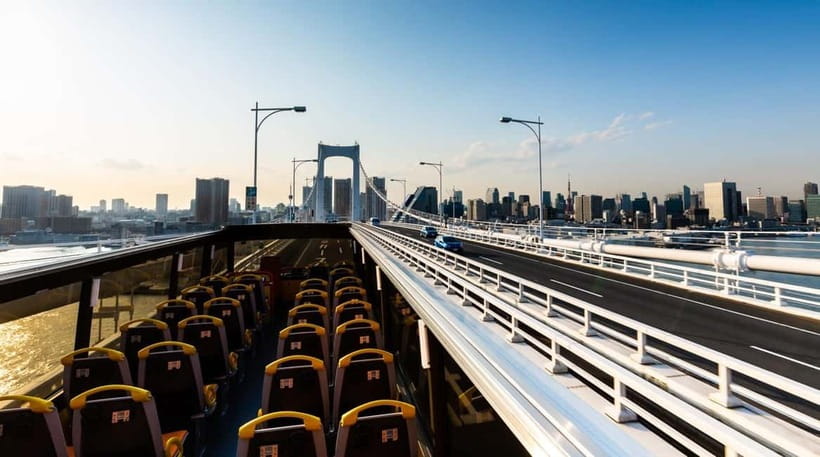
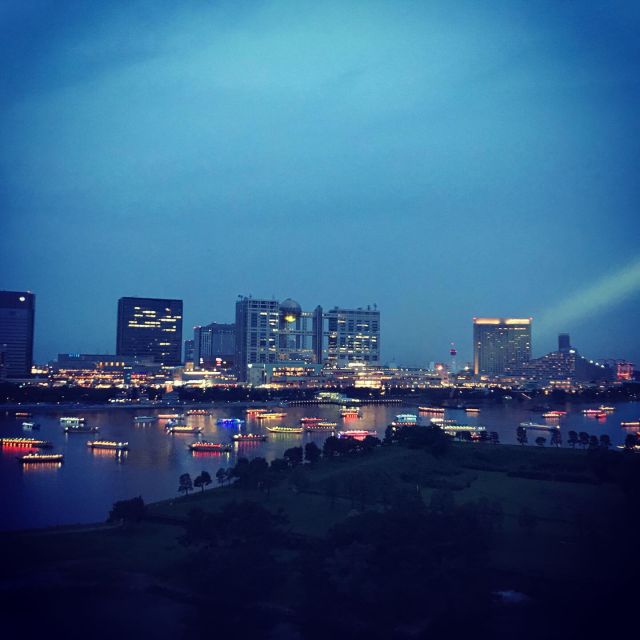
Then the tour leans hard into the iconic water-and-bridge feeling. You ride toward Shibaura Rainbow Bridge (1st Level) and later see it again from Rainbow Bridge (2nd Level). The bridge drive is often the highlight because the bus gives you a broad view across the bay rather than a narrow viewpoint. You also pass the Fuji TV Building, which is a distinctive landmark you can spot quickly even if you don’t know its background.
The route continues into Odaiba Seaside Park, with Statue of Liberty also included in the mix. That stop is one of those “only-in-Tokyo” moments. Even if you’ve seen images before, it tends to look different in person because it’s framed by bay views and the surrounding skyline.
Finally, you head through Shiodome and end at Ginza. Ginza is a strong way to finish because it feels central and lively, and it’s easy to keep exploring after the bus ride if that’s your plan.
Bay Course drawback to consider: if it’s cold, windy, or rainy, the open-top experience can become less fun. Some riders specifically mentioned the weather can make you feel too cold or too hot. If you’re doing the Bay Course for views, it’s worth checking conditions before you commit.
City Course (70 Minutes): Imperial Area, Roppongi Skyline, and Ginza Finish
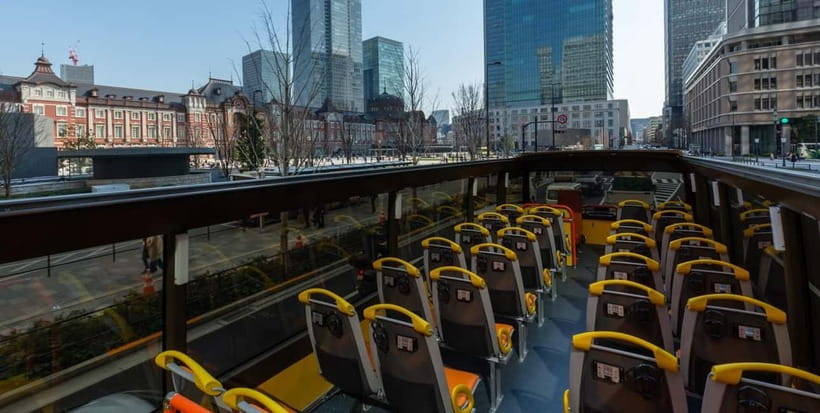
If your goal is a more “city center to nightlife to shopping” feel, the City Course makes sense. You’ll still pass Tokyo Station Red Brick and Marunouchi, but after that the route shifts into a different mix of neighborhoods.
The route includes Chidorigafuchi, an area that many people connect with seasonal scenery and the feeling of the Imperial Palace surroundings. Next you pass Akasaka State Guest House, which gives you a sense of the political and formal side of Tokyo, even if you’re viewing it from the road.
Then it moves into Meiji Jingu Gaien. This is a place where Tokyo mixes big-city pace with a more open, park-adjacent vibe, and from the bus it works well as a visual breather. After that, the tour goes into modern urban energy with Tokyo Midtown and Roppongi. Roppongi is where you start to feel the skyscraper rhythm more strongly, and it’s a great match for the open-top format because you get wide angles across buildings.
You see Tokyo Tower again on this route, then the tour reaches Hibiya and finishes in Ginza. Hibiya gives you a commercial and transportation-linked feel, and Ginza is a convenient ending point because it’s easy to extend the day with food, shopping, or simply walking around afterward.
City Course drawback to consider: it’s still a sightseeing circuit, so you won’t get long time on foot at each location. If you want deep time at one site, I’d use the bus as your map and then plan a second stop elsewhere.
Same corner of Japan, a different kind of day:
- Tokyo: teamLab Planets TOKYO Digital Art Museum Entry Ticket
★ 4.6 · 9,779 reviews - Mt Fuji & Hakone Cruise, Drum Show Bullet Train 1 Day from Tokyo
★ 4.0 · 7,413 reviews - Tokyo: Sumo Show Experience with Chicken Hot Pot and a Photo
★ 4.8 · 6,678 reviews - Tokyo: Shinjuku Food Tour (13 Dishes at 4 Local Eateries)
★ 5.0 · 6,603 reviews
Open-Top Reality Check: Comfort, Rain, and Rules You Can’t Ignore
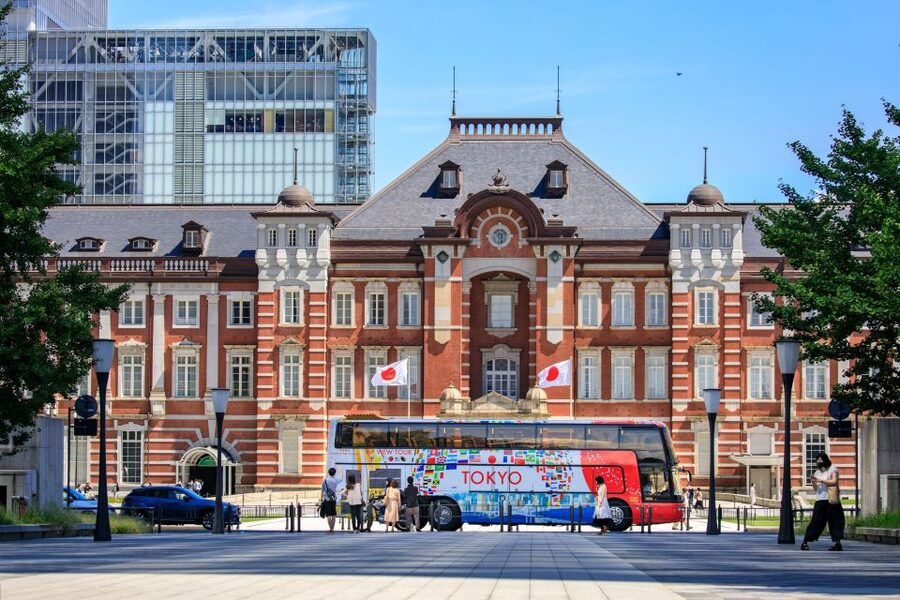
This is an open-top experience, but it’s still Tokyo weather, so flexibility matters. The tour runs rain or shine, with cancellations only in extreme situations like typhoons. If it rains, you may find the open-top roof closed, which changes the whole feel of the ride. Even partial roof closure can reduce that classic “free air” sightseeing moment.
Comfort is also real-world dependent. Some riders noted tight knee space, and that you’re at the mercy of temperature. In hot weather, open-top can feel like you’re sitting in the sun. In cold weather, wind can cut through quickly.
There are also clear behavior rules. You cannot bring smoking, selfie sticks, umbrellas, or food onto the vehicle. If you want photos, keep it simple and avoid accessories that slow down boarding or block others.
One more practical tip: if audio is a big part of why you booked, pay attention to your listening setup. Many people have a headphone routine already. If you don’t, grabbing headphones on arrival is an option, but make sure your plug matches the 3.5 mm mini standard.
Meeting at Tokyo VIP Lounge, Near Tokyo Station Yaesu
The meeting point is Tokyo VIP Lounge on the 2nd and 3rd floors of the building, with a Family Mart on the ground floor. It’s about a 5-minute walk from Tokyo Station’s Yaesu North Exit.
Plan your timing like a pro. You’ll want to check in 20 to 40 minutes before departure so boarding goes smoothly. The meeting facility is a paid space, but bus customers can use the facilities for free starting 40 minutes before their departure. Outside that window, you may need to pay for use.
A couple of practical notes from real experience patterns: the meeting area is a shared space with other general users. That means you should be prepared for a bit of crowd flow. One rider also described the greeting as not very warm and noted they were unsure where to wait since seating was available but not offered to bus guests. In short, if you don’t see a clear setup right away, just stay calm and follow staff directions.
Also, if you’re expecting something ultra-fancy just because of the “VIP” label, don’t. The name can feel a little bigger than what’s inside. What matters most is that once you locate the right floor, the process typically becomes easy: you check in, then you’re guided a short walk to the bus.
Value for $11: What You Really Get in 70 Minutes
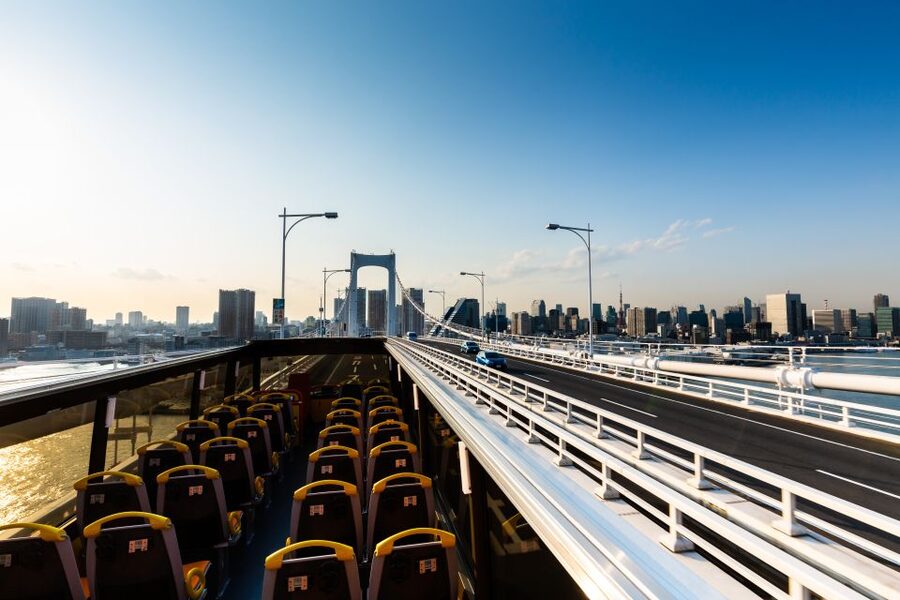
For about $11 per person and a 70-minute ride, this is priced like a “high coverage” sightseeing option. You’re not paying for a private guide or long stops. You’re paying to see a lot quickly, from a fun viewing setup, with audio that helps you understand what you’re looking at.
The best value is for:
- First-time visitors who want a quick map of Tokyo
- People who prefer low-effort planning, just show up and go
- Travelers who want either Bay Course water views or a city center to Ginza storyline
If you’re hoping for a detailed, slow-paced experience with extended walking and museum-level context, you may end up wanting more. Think of the bus as your overview, then build day two around the places that grab you.
And yes, there’s one more “value math” detail. The optional headphones cost 100 yen if you need them. If you already have headphones ready, you keep costs simple.
Should You Book This Open-Top Panoramic Bus in Tokyo?
I think this is a smart booking for a very specific kind of traveler. If you want an efficient first look at Tokyo, you like views from higher-speed movement, and you’re happy to treat it as an intro rather than a deep dive at every stop, this fits well.
I’d book it when:
- You have limited time and want a big sampling of Tokyo in 70 minutes
- You want to compare Bay Course versus City Course to match your interests
- You’d rather rely on a GPS audio guide than juggle maps constantly
I might skip it (or plan carefully) if:
- Weather is unpredictable for your day, since open-top comfort can change fast
- You’re very sensitive to sound mixing, especially if live Japanese commentary might compete with the audio
- You need lots of onboard legroom, since knee space can feel tight for some
FAQ
How long is the Tokyo open-top bus tour?
It runs for 70 minutes with the audio guide.
Do I need headphones for the audio guide?
Headphones are not included. You can get them for 100 yen if you need them, and the jack supports 3.5 mm mini plugs.
Are there different route options?
Yes. There’s a Bay Course and a City Course, each listed as 70 minutes with audio.
Where do I meet the tour?
Meet at Tokyo VIP Lounge, on the 2nd and 3rd floors of the building, about a 5-minute walk from Tokyo Station’s Yaesu North Exit.
When should I arrive at the meeting point?
Check in 20 to 40 minutes before the scheduled departure time.
What happens if it rains?
The tour operates rain or shine, with cancellations only in extreme weather such as typhoons. If it rains, the open top may be closed.
What items are not allowed on the bus?
You cannot smoke, use selfie sticks, bring food into the vehicle, or bring umbrellas.
Fresh options around Tokyo
- Private Harajuku Omotesando Architecture Tour★ 4.9 · 18 reviews
- Tokyo Shopping Street Hopping Private Tour with Government Licensed Guide★ 5.0 · 18 reviews
- Tokyo: Private Mount Fuji and Hakone Day Trip with Guide★ 4.5 · 18 reviews
- Small-Group Osaka-Style Okonomiyaki Cooking Class★ 5.0 · 18 reviews
- Hakone Private One Day Tour From Tokyo: Mt Fuji, Lake Ashi, Hakone National Park★ 5.0 · 18 reviews
- PERFECT 1 Day Tokyo Highlights Tour with a Private Car★ 5.0 · 19 reviews
- Shinto Shrine Tour: Explore Japanese Culture in Tokyo★ 5.0 · 18 reviews
- Night E-Scooter Ride to Tokyo Tower – No License Needed★ 4.9 · 19 reviews
Guided, compared.
Tokyo 6hr Private Tour with Government-Licensed Guide
Read our review →
Shinjuku Local Bar and Izakaya Guided Walking Tour
Read our review →
Private City Highlights Tour with Local Guide
Read our review →
Kyoto Early Morning Tour with English-Speaking Guide
Read our review →
Tokyo 4hr Private Tour with Government-Licensed Guide
Read our review →
Kyoto 6hr Private Tour with Government-Licensed Guide
Read our review →