
Reviewed · SAMURAI & NINJA EXPERIENCES
SAMURAI EXPERIENCE in Tokyo(Harajuku)【SAMURAI’ve】
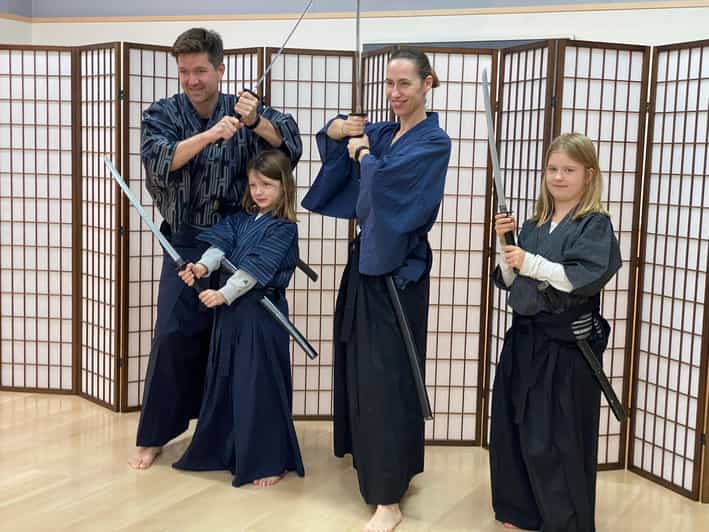
Tokyo’s Harajuku version of samurai school is practical. In about 1 hour, you learn samurai etiquette (reigi sahou), put on a kitsuke kimono, and try stylized sword moves like you’d see in stage scenes. The whole thing is guided by an instructor active in video and stage productions, which shows in how clean and organized the class feels.
I love that it is hands-on, not just watching. You actually try sword-fighting forms, including Tachimawari, and you finish with fun photo time holding a sword in your kimono. My one caution: this is not a walk-in show. Comfortable clothing helps a lot, and it is not suitable for kids under 5 or for wheelchair users.
Key takeaways before you go
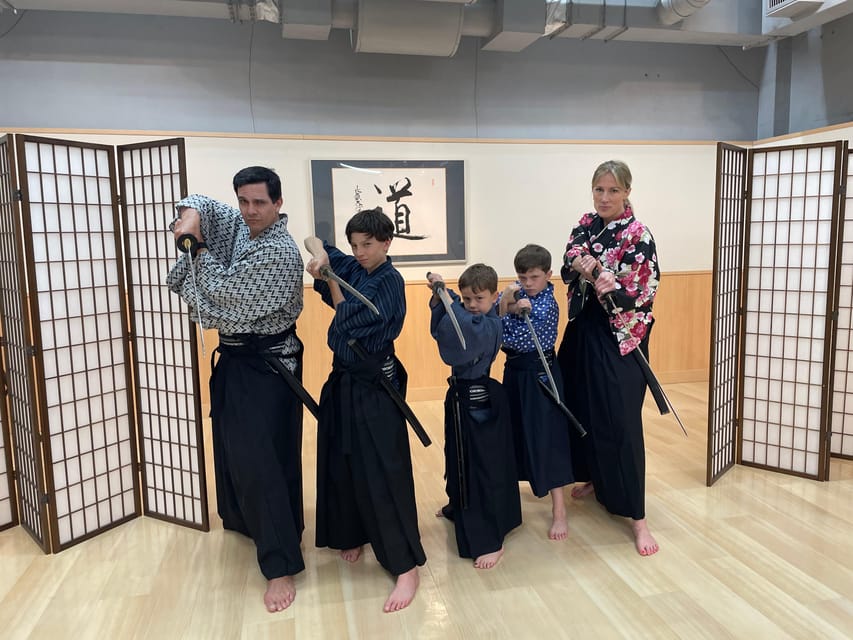
- Kitsuke kimono lesson: You learn how to wear the outfit, not just admire it.
- Reigi sahou etiquette: Manners are treated like part of the technique.
- Small group (up to 10): You get more individual attention than big group demos.
- Tachimawari practice: Stylized movements that feel cinematic, but you learn the basics.
- English, Japanese, and Chinese support: You can follow along even if your Japanese is rusty.
- Photo shoot included: You leave with proof, not just memories.
Meeting the dojo at the red door in Harajuku
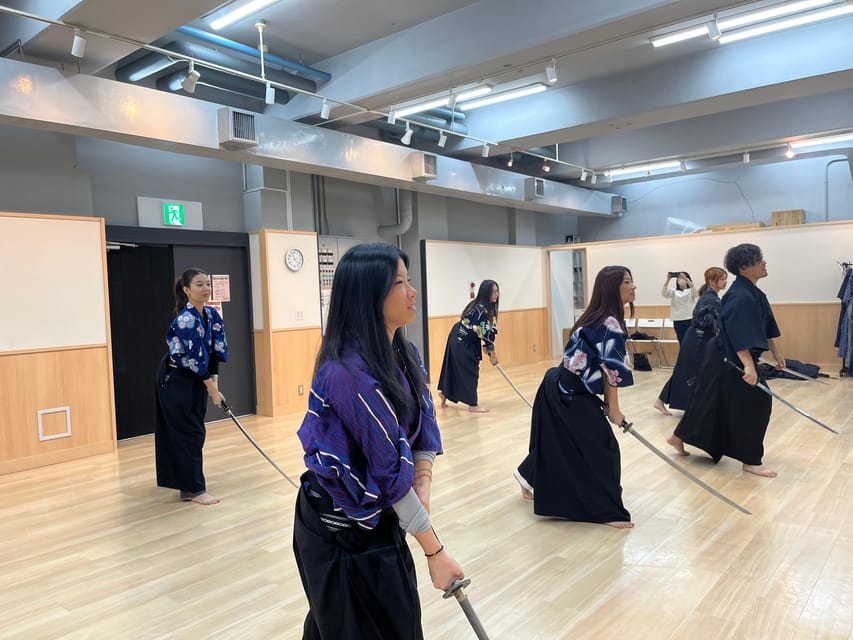
This activity is set up like a real practice space, not a theme-park performance. Your key clue is the meeting point: enter through the red door, then go to the second floor basement. It is about a 5-minute walk from Kitasandou Station and roughly an 8-minute walk from Harajuku Station, so it is easy to tack onto a day of neighborhood exploring.
The location matters because it changes the vibe. You are walking into a dojo environment, with an instructor leading a class. That helps you focus on learning, and it also keeps the experience respectful, not chaotic.
One practical note: transport is on you. The workshop includes everything related to instruction and gear, but not getting there. If you are using transit, I suggest giving yourself a few extra minutes to find the stairwell and basement entrance without stress.
More Samurai & Ninja Experiences in Tokyo
- Tokyo: Samurai Restaurant Show Ticket with 2 Drinks
★ 4.5 · 1,307 reviews - Tokyo: Samurai Ninja Museum Guided tour and Experience
★ 4.6 · 1,010 reviews - Tokyo: Samurai Sword & Archery Class from Samurai Descendant
★ 5.0 · 603 reviews
The 1-hour flow: how the class moves from manners to sword moves
The schedule is tight by design. In a 1-hour session, you cover four main phases: kimono, etiquette, sword basics, then Tachimawari and photos. That pacing is a big part of why the class works for beginners. You never sit too long without doing something.
Here is what the flow tends to look like, in plain terms:
First, you meet your instructor at the dojo. Then you start with the kimono. The “kitsuke” portion is practical, meaning you are not left to wrestle the outfit on your own. A lot of people think kimono is mostly for looks. In this class, you learn the basics so you can stand and move in a samurai-like posture.
Next comes reigi sahou, the etiquette side. Think of it as the behavior layer of technique. When you practice sword forms, your stance, timing, and controlled movement matter. Etiquette is not just polite gestures. It shapes how you hold yourself while you perform.
After that, you move into basic sword fighting motions. You get new moves you can share later. Finally, you put those moves to the test in Tachimawari, which are stylized movements used in sword-fighting scenes. This part is where the experience turns fun and cinematic, without becoming unsafe or random.
You finish with photos, holding your sword in kimono. That last step is smart. It turns learning into a souvenir you can actually use, and it is a great way to calm down after you have been focused on technique.
Putting on a kitsuke kimono, and why it matters
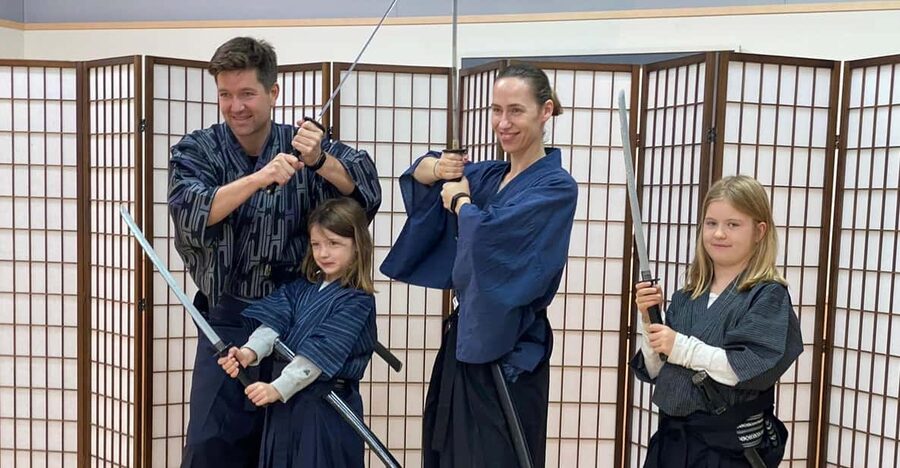
Wearing a kimono in a dojo workshop is not just a costume moment. It changes how you stand and move, and that affects everything you do with a sword.
What you should expect:
- You learn how to put on the kitsuke kimono correctly.
- You get a posture reminder so your movements look right while you practice.
- You get changed into the samurai look before you start the more physical parts.
For you, this is a value point because the kimono is included. At many experiences, the outfit is something you rent or struggle with while an instructor moves on. Here, you get instruction, so the photos at the end look better and you feel more confident while practicing.
Also, comfortable clothing still matters. You do not want to arrive in stiff, restrictive clothes that make changing stressful. But you can keep your day simple by wearing layers you can manage quickly.
Reigi sahou etiquette: the soft power behind the sharp moves
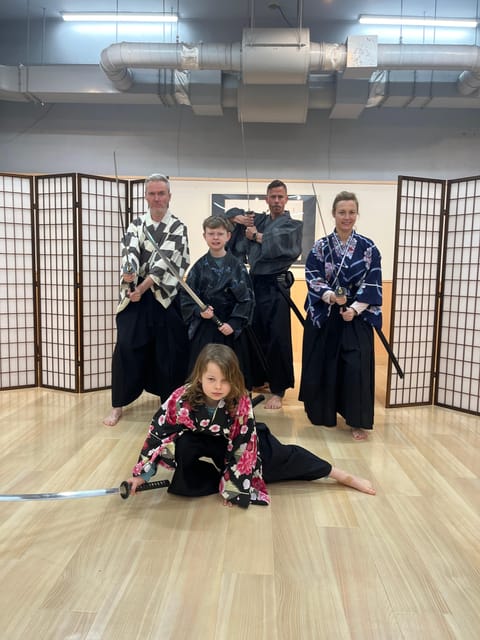
Samurai etiquette might sound like extra talking. In this class, it is not. Reigi sahou is introduced as the way samurai act, and you learn what manners to use as part of the practice.
Here is why this matters to real-life learners like you:
- Sword technique is about control. Etiquette trains that control.
- You learn how to hold yourself while you bow, pose, and move.
- It keeps the class grounded in respect, which is a better mood for learning than a chaotic performance.
Even if you know nothing about Japanese manners, you will not be left guessing. The instructor guides the cues you need, and it becomes part of the routine you repeat during sword practice.
If you care about authenticity, this is a meaningful part of the experience. A lot of “sword shows” skip etiquette entirely. This one treats behavior as part of the craft.
More samurai and ninja experiences in Tokyo:
- Best Samurai Experience in Tokyo
★ 5.0 · 458 reviews - Ninja Experience (Family Friendly) at Samurai Ninja Museum TOKYO
★ 5.0 · 441 reviews - Tokyo: Samurai Entertainment Night Show in Kanda Shrine
★ 4.6 · 417 reviews - Tokyo Sword Experience – includes Museum Ticket/Ninja Experience
★ 5.0 · 314 reviews
Basic samurai sword fighting moves, taught with beginner sanity
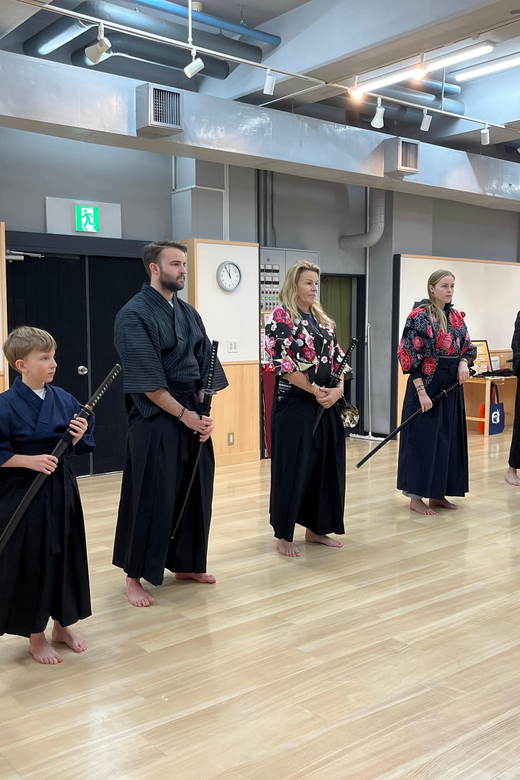
You start the sword portion with basic moves. That sounds generic, but the real question is whether beginners can follow along. The class is built for people who are new to this, and the small group size helps.
With a group limited to 10 participants, you are more likely to get corrections. That matters when you are learning stance and timing. Sword practice is not just about arm strength. It is about foot placement and body alignment, and those details are hard to get right without feedback.
You also learn moves that you can share with friends and family back home. That hint is important. The goal is not to turn you into a martial artist. It is to give you a set of movements that are understandable, safe, and repeatable enough to show later.
One consideration: you should plan to use comfortable clothing and follow the instructor’s guidance closely. Even stylized movements can feel surprising at first. If you rush or go too hard, it can throw off your form. Keep it controlled and you will do better.
Tachimawari: the stylized test that feels like stage work
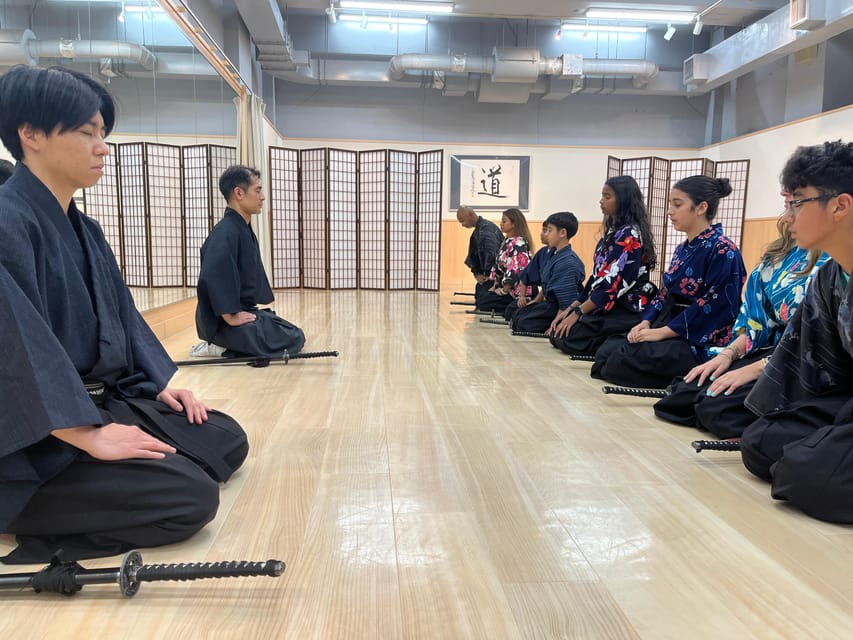
Now for the part most people are picturing: Tachimawari. These are stylized movements used in sword-fighting scenes, and in class they function like a “put it together” exercise.
What makes it valuable:
- You practice the new moves in a more connected way.
- You experience the thrill of sword fighting firsthand, without needing years of training.
- You get to perform something that looks like performance, but is still structured training.
This is where the instructor’s background in video and stage productions likely helps. You can feel it when movements look staged, but are explained clearly enough for novices to copy.
If you are bringing someone who is nervous about physical activity, this is a good middle ground. It is not a full-contact sparring situation. It is choreographed style, taught by an instructor, and paced inside a 1-hour block.
Photoshoot time: holding the sword in your kimono
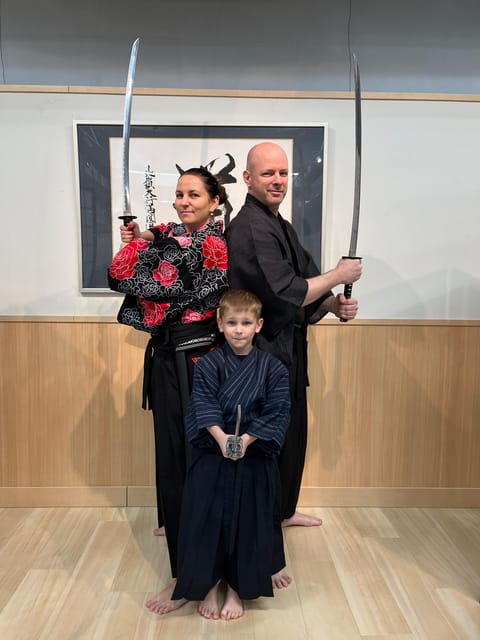
You end by taking pictures while holding a sword and wearing the authentic Samurai kimono. This is not an optional afterthought. It is part of the experience and included in the price.
For you, photo time has two benefits:
- It forces a quick “focus and finish” moment, so you feel like you completed the class, not just started it.
- You get wearable, shareable results that match the effort you put in.
If you want your photos to look good, do what you did in training. Stand with the etiquette cues you learned. Keep your posture tall. It is the simplest way to make your picture look more authentic.
Price and value: what $70 buys in Harajuku
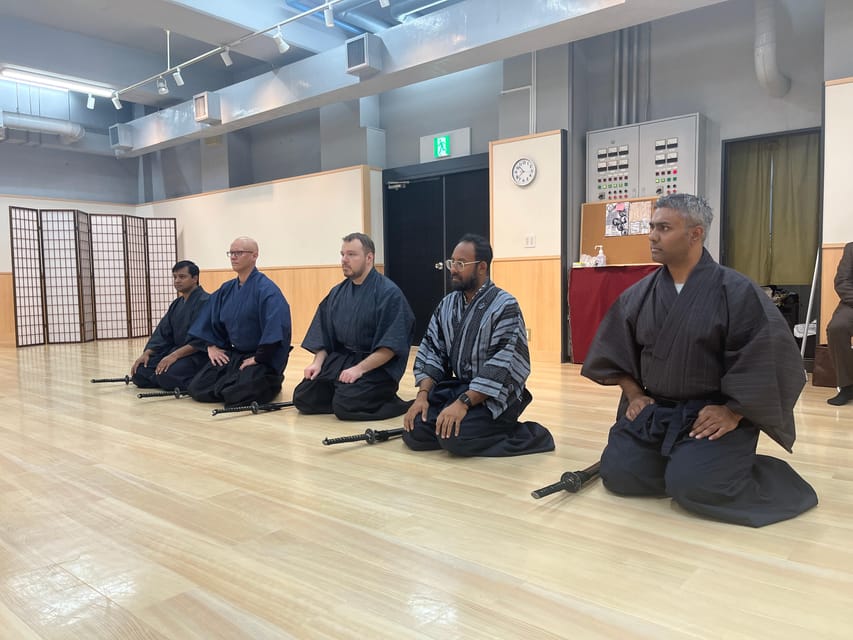
At $70 per person for a 1-hour workshop, you are paying for instruction, kimono use, a structured etiquette lesson, sword-fighting practice, and a photoshoot. It is not just “try a sword.” You are getting guided learning plus a complete end result.
Here is the honest value math:
- If you only wanted a photo, you might find cheaper costume options.
- If you only wanted a museum-style explanation, you might pay less elsewhere.
- But this mixes hands-on training with guided cultural etiquette and included photos, all in one compact package.
Also, small group size matters for value. Up to 10 participants means you are not swallowed by the room. And the instructor includes English, Japanese, and Chinese support, which saves you the frustration of not understanding instructions mid-class.
So, the price feels fair if you want a “do it yourself” experience that leaves you with both a skill attempt and photos you can actually use.
Who this suits best (and who should skip)
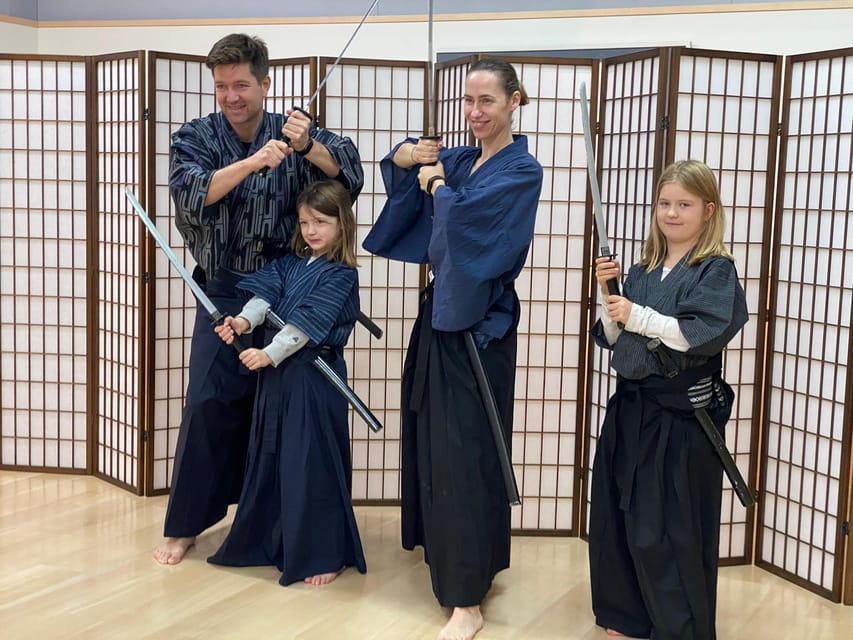
This is ideal if you want something active but approachable. You do not need prior martial arts experience. You do need comfort with following directions and staying engaged for the full hour.
You should strongly consider it if:
- You like hands-on learning more than watching
- You want a memorable Harajuku activity that feels special, not generic
- You enjoy learning about manners and culture alongside movement
- You want a skill you can show later
It is not suitable if:
- You are bringing a child under 5
- You need wheelchair accessibility
- You are hoping for a passive experience with minimal movement
One more gentle tip: you can join regardless of age and gender as long as you have the samurai spirit. That wording is playful, but the real idea is that the class is open, as long as you fit the practical safety limits.
Quick practical tips so your class goes smoothly
A few small moves can make your hour easier and more fun:
- Wear comfortable clothes that you can move in.
- Arrive with time to find the red door and basement level without rushing.
- Bring a calm mindset. Etiquette cues matter, and the instructor will guide you.
- Listen first, then copy. Sword moves look simple until you match timing and stance.
Also, you can skip the ticket line, which is helpful in a busy area like Harajuku. Less friction means more time to settle in before class.
Should you book SAMURAI’ve in Harajuku?
I think you should book it if you want a short, high-energy experience with real instruction. The combination of kitsuke kimono, reigi sahou, and sword practice in one hour is a good structure for beginners who still want something authentic-feeling.
Book it especially if you care about:
- Doing the learning yourself
- Getting photos that match what you trained
- Having an instructor who can explain in multiple languages
I would skip it if you want a purely observational experience, if your mobility needs are beyond what the class supports, or if you dislike doing hands-on practice at all.
If you are in Harajuku with an hour and you want more than another photo on a street corner, this is a smart use of time.
FAQ
How long is the SAMURAI experience in Tokyo?
The experience lasts 1 hour.
How much does the activity cost?
It is priced at $70 per person.
What is included in the price?
You get an instructor, a Samurai kimono to wear, an etiquette lesson on samurai manners, a samurai sword fighting experience, and a photoshoot.
What languages are available during the class?
The instructor offers English, Japanese, and Chinese.
Where do I meet the group in Harajuku?
Enter through the red door and go to the second floor basement. It is about a 5-minute walk from Kitasandou Station and an 8-minute walk from Harajyuku Station.
What should I wear or bring?
Wear comfortable clothes. The experience does not list any other required items.
Is it suitable for kids?
Anybody can join regardless of age and gender as long as they have the samurai spirit, but it is not suitable for children under 5 years old.
How large is the group?
It is a small group limited to 10 participants.
Can I pay later or cancel if plans change?
Yes. You can reserve now and pay later (pay nothing today), and you can cancel up to 24 hours in advance for a full refund.
If you want, tell me your travel dates and whether you are going as a couple, family, or solo, and I’ll suggest the best timing in a typical Harajuku day around this 1-hour slot.
More Anime & Pop Culture Tours in Tokyo
- Official Street Go-Kart Tour – Akihabara
★ 5.0 · 1,578 reviews - Tokyo Go Kart: Asakusa, Skytree, and Akihabara **IDP MUST**
★ 5.0 · 988 reviews - Tokyo Studio Ghibli Museum and Ghibli Film Appreciation Tour
★ 4.5 · 421 reviews - Akihabara Anime & Game Adventure Walking Tour (Group or Private)
★ 5.0 · 404 reviews
Fresh options around Tokyo
- Tokyo: Mt. Fuji, Owakudani, Hakone Shrine, & Open-Air Museum★ 4.7 · 25 reviews
- Private Tour: Tokyo’s Oldest Sake Brewery and Riverside Walk★ 5.0 · 25 reviews
- Mt Fuji Private Day Tour from Tokyo with English Speaking Driver★ 4.5 · 25 reviews
- [Self-Drive] Tokyo & Daikoku Custom Car Driving Tour★ 4.9 · 25 reviews
- Tokyo: Legoland Discovery Center Admission Ticket★ 4.5 · 25 reviews
- Tokyo Spectacular View Day-Cruise in 90 Minutes★ 5.0 · 25 reviews
- Daruma Workshop by Making your Own Japanese Souvenir in Shinjuku★ 5.0 · 25 reviews
- Samurai Training in Tokyo: Swords, Bushido & Mental Discipline★ 5.0 · 25 reviews
Samurai & Ninja Experiences, compared.
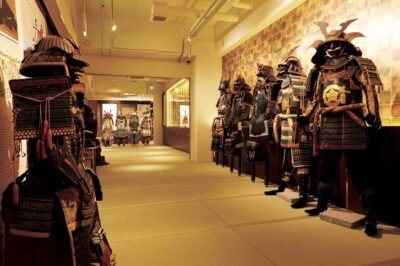
Samurai Ninja Museum Guided tour and Experience
Read our review →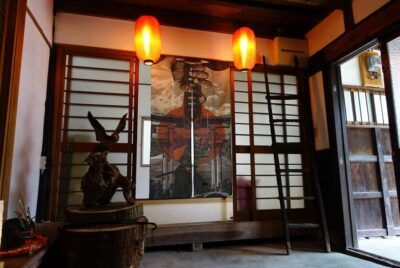
Kendo and Samurai Experience with Uniform and Gear
Read our review →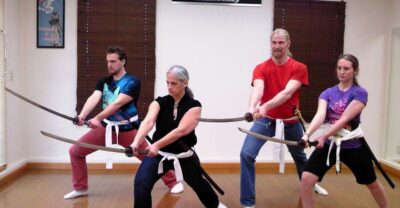
Samurai Sword Class by Experts in Traditional Arts
Read our review →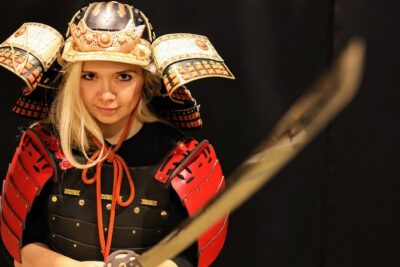
Skip the lines Basic Ticket at SAMURAI NINJA MUSEUM KYOTO
Read our review →
Samurai Sword & Archery Class from Samurai Descendant
Read our review →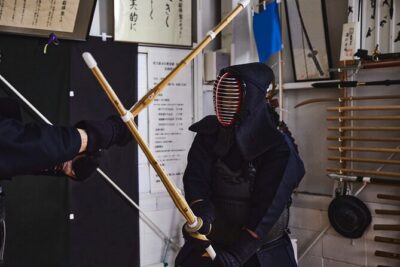
Browse the lists this tour appears in