
Reviewed · CYCLING TOURS
Tsuwano Cycling Tour with Local Guide
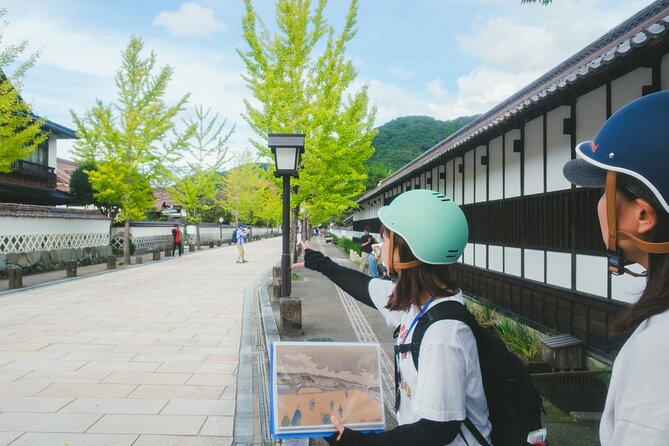
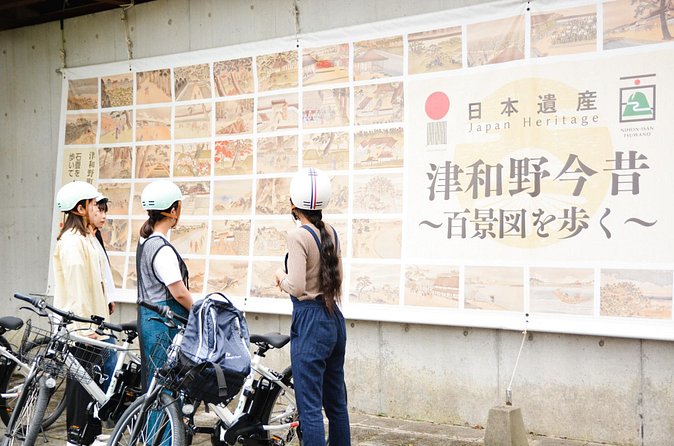
Tsuwano feels like a time machine. This 3 hour electric bike cycling tour in Shimane Prefecture uses the famous Hyakkeizu One Hundred Sceneries of Tsuwano as your map, so you move through town while seeing Edo period scenes talk to today’s streets and shrines. The ride is guided, capped at 6 people, and it circles back to the start point.
What I love most is how the guide frames Tsuwano’s Hyakkeizu paintings as real places you can stand in, not just museum art. I also really like the way each stop is a small story unit, from the main street feel of Tonomachi Street to the quiet meditation moment at the Narutaki waterfall spot.
One consideration: this tour requires good weather. If the weather is poor, it can be changed or refunded, so it is smart to keep an extra day in your schedule when you can.
Key things that make this ride worth your time
- Hyakkeizu in the real world, using Edo era scenes to guide where you look and what you notice
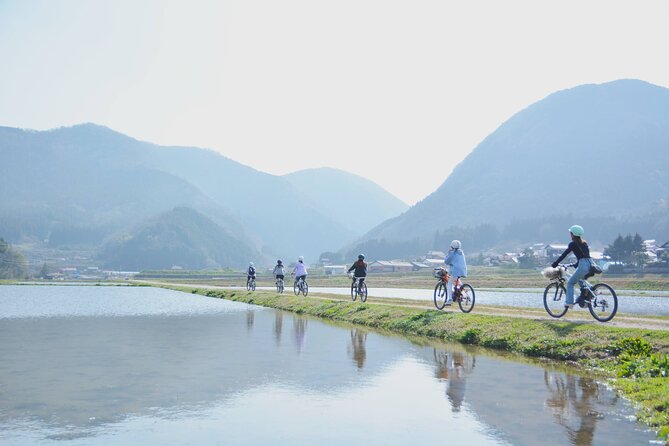
- Electric bike comfort, which makes the pace feel relaxed even when you are not a strong cyclist
- Small group size (max 6), so the guide can answer questions and slow down for details
- Free access at each stop, since admission tickets are listed as free for the locations on the route
- A mix of town and quiet nature, from shrine courtyards to a hidden waterfall meditation spot
- Yabusame connections at Washibara Hachiman, explained through stone lantern and horse track details
Tsuwano’s Hyakkeizu map, and why it’s more than decoration
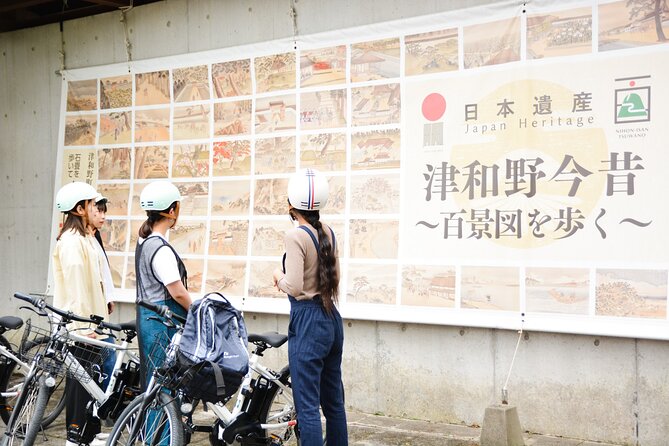
Tsuwano is a small rural town in Shimane Prefecture, and it has done a good job holding onto older atmospheres. The big reason this tour works so well is the Hyakkeizu, One Hundred Sceneries of Tsuwano from the late Edo period. The project was created about 160 years ago and is designated as Japan’s National Heritage, with 100 paintings tied to the Tsuwano feudal domain.
In plain terms, you are not “just seeing shrines.” You’re learning how old maps and artworks are built from specific views, paths, and sacred corners. That changes how you walk (or ride) through town, because you start scanning for match ups between the paintings and what is still around today.
Where you start near Tsuwano Station, and how the electric bike changes the day
You meet at Tsuwano Eki mae Ushiroda, in Tsuwano (Kanoashi District), and the tour ends back at the same meeting point. The listed start is near public transportation, which matters if you are coming from farther along in Shimane or using train time as your anchor.
The ride uses an electric bike, and that is a big practical advantage in rural towns. You get movement and variety without the day turning into a fitness test. In past departures, guides have kept a meticulous pace, and people have specifically appreciated how the electric bikes make it easier to enjoy the ride even when physical fitness is not your strongest area.
Also, plan your snack situation. Snacks are not included, so you will want to eat before you go and handle any hunger after the tour ends.
Stop-by-stop: Tonomachi Street to Yasaka Shrine
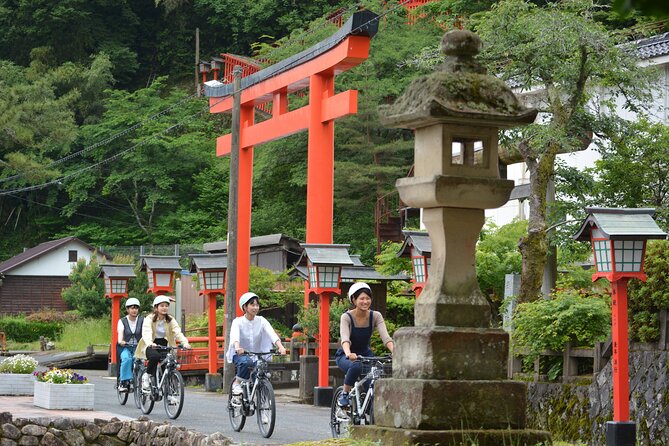
This route is paced like a storybook: you park the bike for short stops, you listen, and then you ride again. Most stops are 30 minutes, and that keeps the total experience around the advertised 3 hours.
Tonomachi Street (the main street vibe)
You roll along Tonomachi Street with your guide. This is where you get your bearings fast, because it feels like the everyday spine of Tsuwano rather than a distant monument. If you only visit one town street, make it the one locals would pass every day.
Yasaka Shrine (Hyakkeizu hidden stories)
Next comes Yasaka Shrine, and this is where the Hyakkeizu theme turns from “cool concept” into “I get it now.” The guide explains the history of the shrine and connects it to hidden stories behind the Tsuwano Hyakkeizu paintings.
What you should watch for here is how the shrine becomes a lens. The same place can look different depending on the viewpoint the painting is using, and your guide helps you interpret that. Past groups have praised guides for making explanations easy to follow, and that clarity helps you enjoy the details instead of translating everything in your head.
Quick note on value: admission is listed as free for this stop. That means your money stays focused on the guide and the bike, not extra site fees.
Narutaki jinja: waterfall, history, and a brief calm reset
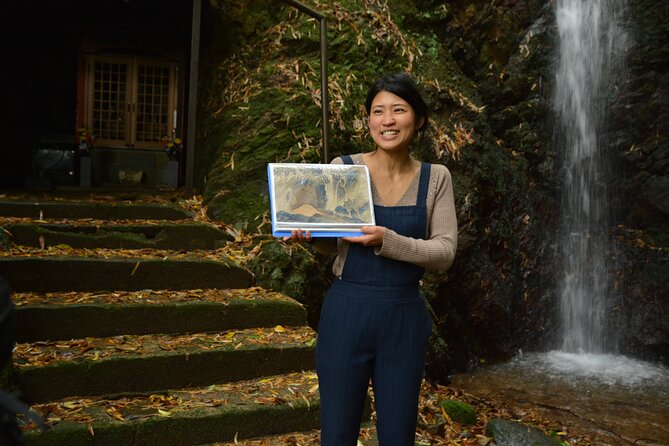
Narutaki jinja is the “hidden spot” stop on this route. You go to a waterfall area, learn more about Tsuwano’s past, and then practice simple meditation.
If you like travel that slows you down for a minute, this stop is the one you will probably remember most. The meditation part is short, but it changes the whole tone of the ride, because you go from “tour mode” to “quiet mode” before you hop back on the electric bike.
Another practical reason this stop matters: it gives variety in scenery. Up to this point, you have been shaped by street and shrine rhythms. The waterfall adds a different kind of sensory detail, and that makes the rest of the day feel lighter.
Washibara Hachiman Shrine and the Yabusame ritual trail
Then you reach Washibara Hachiman Shrine, and this is where the tour links place names to living traditions. The guide explains stories behind the large joyato (stone lantern) and the baba (horse track). Those details connect to the Yabusame ritual, horseback archery.
This is the part of the tour that feels most “alive,” even though you are outdoors in a calm town. You are not just looking at old stones; you are being taught why those objects were placed where they were, and what kind of event they supported. In past departures, guests have highlighted how the guide’s anecdotes and discussions help you appreciate the region, not just collect photo angles.
You will also come back to Washibara Hachiman at the end of the tour. That second visit works because it gives you a different frame the second time through. After learning the ritual and the physical layout, the area starts to make more sense as a whole.
Tsuwano Shrine and the rural view you carry home
Next is Tsuwano Shrine, surrounded by rural scenery. This stop is about learning the stories of the former lords of the Tsuwano domain.
The practical point for you: this is where your understanding of the town shifts from local streets and religious sites to the bigger political picture of the Edo era. You start connecting the dots between governance, sacred spaces, and how a domain used its land.
What I like about this kind of final “context stop” is that it prevents the tour from feeling like disconnected sightseeing. When you leave, you can explain Tsuwano to someone else in a way that sounds like you actually know the town, not just the itinerary.
And again, admission is listed as free for this stop, so you are getting guided interpretation without extra fees.
The final Washibara stop: the giant cedar that watched 1,000 years
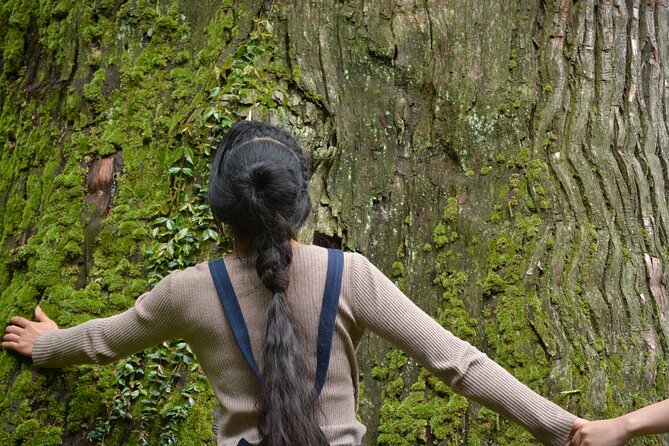
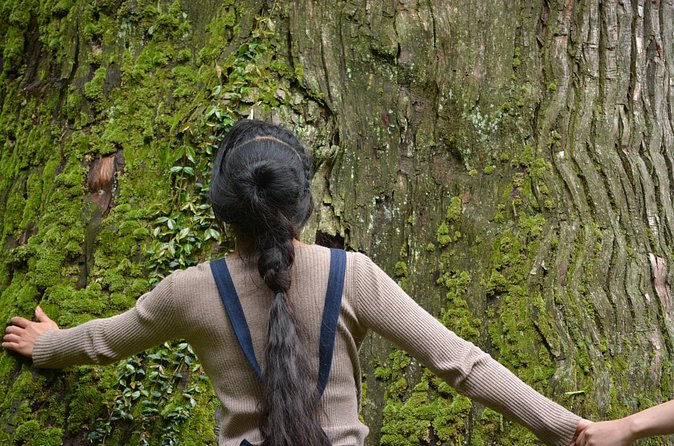
At the end, you visit a giant cedar tree at Washibara Hachiman Shrine. The tree is said to have watched over Tsuwano for more than 1,000 years, which gives the day a quiet sense of scale.
This is a good finish because it turns the route theme into a feeling. You spent the ride connecting Edo period paintings to present day corners. Now you land on something that anchors the idea in time, long after the paintings were made and long after the town’s major changes.
In a couple of past notes, people have described the experience as time travel in the modern world, and this ending image is exactly why. It is not an attention grabbing “show.” It is a grounded, lived in kind of history.
Price and value: why $99 can feel like a bargain here
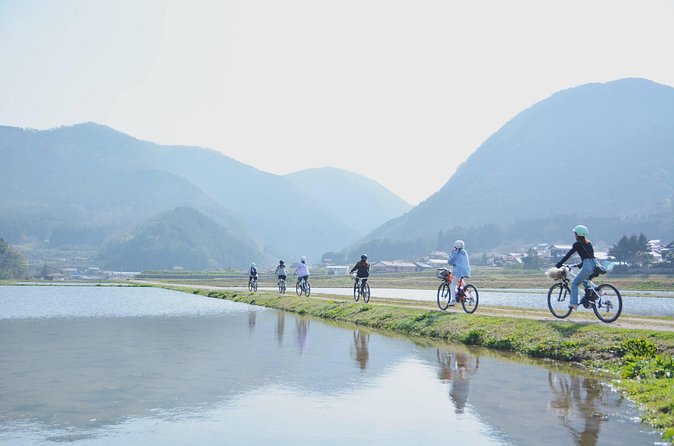
The price is $99 for about 3 hours, with bicycle use and a guide included. That combination matters more than the number alone, because you are paying for three things at once: transportation, interpretation, and a route that pulls you into places you might miss on your own.
Here’s what you are getting for that money, based on what is included and how the stops are structured:
- Electric bike access for the full ride, not just at the start
- A local guide who connects the Hyakkeizu paintings to each location
- Multiple sites where admission is listed as free, so you do not keep paying extra at every stop
Also, the group size maximum of 6 helps the value feel real. In a small group, you are more likely to get individualized answers and pacing that fits the group.
The only obvious “cost” is what is not included: snacks. If you plan a meal before you meet, that is a small trade.
Pace, guide style, and what to expect from the conversation
This is a guided cycling tour with short stop times and a calm tempo. The electric bike and the structure of the route make it accessible for most people, and guides have been praised for keeping the pace meticulous and explanations easy to understand.
In past groups, guides named Yui, Ale, and Alessandro have led rides. You can expect a friendly, story driven style focused on what you see and how it connects back to Tsuwano’s Hyakkeizu.
When the guide pulls up the idea of a viewpoint from the paintings and then points you to what is in front of you, you tend to look longer. That is the point, and it is also what makes the tour feel different from simply checking boxes.
Who should book this Tsuwano cycling tour, and who might not
This works best if you:
- Want a first visit to Tsuwano that helps you understand the town quickly
- Like history explained through real places and visual comparisons
- Enjoy cycling but prefer an electric bike that keeps things comfortable
- Appreciate quiet stops, like the waterfall meditation moment
You might think twice if:
- You are hoping for long-distance riding. The time is about 3 hours and the stops are frequent
- You planned to go no matter the weather. This tour requires good weather, so you need flexibility
Should you book? My take
I think you should book this tour if Tsuwano is new to you and you want a guided way to see why the town has kept its old feel. The standout value is the method: you ride with the Hyakkeizu as your lens, so every shrine and street becomes part of a larger story rather than scattered stops.
If your schedule is tight, the 3 hour timing is a sweet spot. You get town energy, shrine context, a nature pause, and an ending image at Washibara that makes the whole day click.
One last tip for your decision: bring a “slow down” mindset. This tour is not about speed. It is about noticing. And if you do, Tsuwano really can feel like you stepped into another chapter.
FAQ
How long is the Tsuwano cycling tour with a local guide?
It runs for about 3 hours.
Where does the tour start and end?
You meet at Tsuwano Eki mae Ushiroda, Tsuwano, Kanoashi District, Shimane 699-5605, Japan. The tour ends back at the same meeting point.
What is included in the price?
The included items are bicycle use and a guide.
Are any snacks provided?
No, snacks are not included.
Is admission required for the stops?
No. Admission tickets are listed as free for the stops on the route.
Is this tour near public transportation?
Yes, the meeting area is near public transportation.
How many people are in each tour group?
The maximum group size is 6 travelers.
Does the tour use an electric bike?
Yes, it is described as an electric bike cycling tour.
What happens if weather is bad?
The experience requires good weather. If it is canceled due to poor weather, you will be offered a different date or a full refund.
Can I get a full refund if I cancel?
Yes. You can cancel up to 24 hours in advance for a full refund. Cancellation less than 24 hours before the start time is not refundable.
More Cycling Tours in Shimane Prefecture
- Hidden Kyoto E-Biking tour
★ 5.0 · 1,843 reviews - Tokyo Guided Small-Group Biking Tour
★ 5.0 · 1,250 reviews - Bike Tour Exploring North Kyoto plus Lunch
★ 5.0 · 1,087 reviews - Tokyo Great Cycling Tour
★ 5.0 · 811 reviews
Cycling Tours, compared.

3h Tokyo E-Bike Tour: Hidden Gems, and Local Life with guide
Read our review →
Arashiyama Bamboo Forest & Hidden Gems Bike Tour (Early Bird)
Read our review →
Hiroshima in a Nutshell: Morning Bike Adventure
Read our review →Browse the lists this tour appears in