Reviewed · TOKYO TOURS
Tokyo:Calligraphy &Make your original folding fan in Asakusa
Tokyo can be noisy. This calligraphy class quiets your brain fast. In Asakusa, you learn the basics of Japanese writing with a professional instructor, then turn your strokes into real keepsakes like a fan and a postcard. I especially like how the lesson mixes technique with meaning, not just pretty results.
Two things I’d call out as standout value: first, you get hands-on guidance for posture and brush control, so your practice actually improves. Second, the workshop ends with take-home items that feel personal, not mass-made, including time to write a postcard to yourself.
One thing to consider: this is ink-on-thin-paper work, so you’ll want clothes you don’t mind getting a little stained, even with aprons ready.
Key things I’d prioritize before you go
- English instruction with patient coaching so you can ask questions while you practice
- Ink stick melting and fude brush technique, not just copying a sample
- A longer practice period (about 30 minutes) on thin paper so you can slow down
- Green tea plus a postcard to yourself, which turns the class into a souvenir you can feel later
- A custom folding fan using your own calligraphy, which makes the craft feel real
- A flexible class length (30 to 90 minutes depending on timing and option)
Asakusa calligraphy: why this workshop feels like a reset
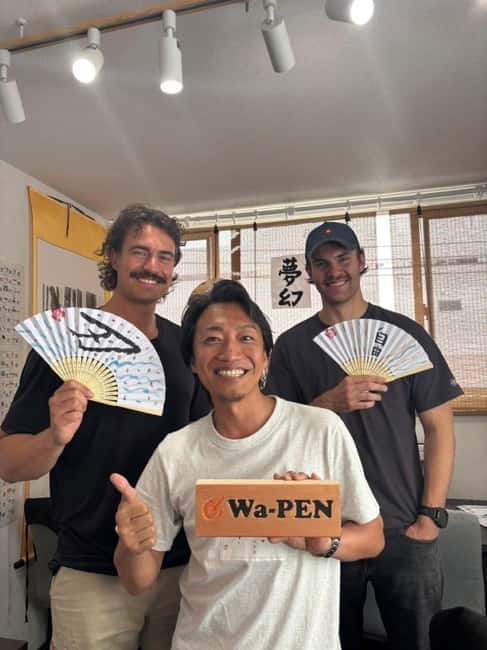
Asakusa is famous for energy and crowds. That’s exactly why this kind of class works. You step away from the street noise and do something slower, more deliberate. Calligraphy asks you to pay attention, but not in a stressful way. You’re guided to make your body and your brush move together.
What makes this experience click is the mix of learning and doing. You’ll start with the story behind Japanese calligraphy and hiragana, so you understand what you’re making before you make it. Then you practice strokes with expert support until you’re satisfied.
If you’re looking for a souvenir that isn’t just another photo, this one has emotional weight. You leave with your own writing, plus a folding fan that uses that writing. One student even described it as almost meditative, which is a good clue to expect calm focus, not performance.
A few more Tokyo days worth comparing
- Mt Fuji and Hakone 1-Day Bus Tour Return by Bullet Train
★ 5.0 · 26,383 reviews - 1-Day Tokyo Bus Tour
★ 5.0 · 14,250 reviews - Tokyo: TOKYO SKYTREE® Admission ticket
★ 4.5 · 11,192 reviews
Getting started with posture, ink sticks, and the fude brush
The workshop begins by setting you up for success. You don’t just get a brush and a blank sheet and hoped-for miracles. You learn the right attitude and posture for calligraphy, because your strokes depend on how you hold yourself. That sounds basic, but it changes everything. A slight shift in wrist angle or hand pressure can make your line look intentional instead of hesitant.
Then you learn about the tools. You work with a Japanese brush called fude and traditional ink that comes as solid ink sticks. You’ll use water to melt the ink stick into usable ink. It’s a small step, but it helps you feel the craft as a process, not a shortcut.
You’ll also get guidance on how much ink to use. That matters more than most people expect. Too much ink makes lines heavy. Too little makes them scratchy. This is the kind of detail that turns a class from copying to creating.
Expect the instructor to explain things in English, and the tone is practical. People consistently highlight that the teaching is patient, and that you’re allowed to practice at your own pace. In at least one booking, the instruction extended so the student could finish practicing to satisfaction, which tells me the goal is quality, not speed.
The practice block: guide paper, eight techniques, and 30 minutes on thin paper
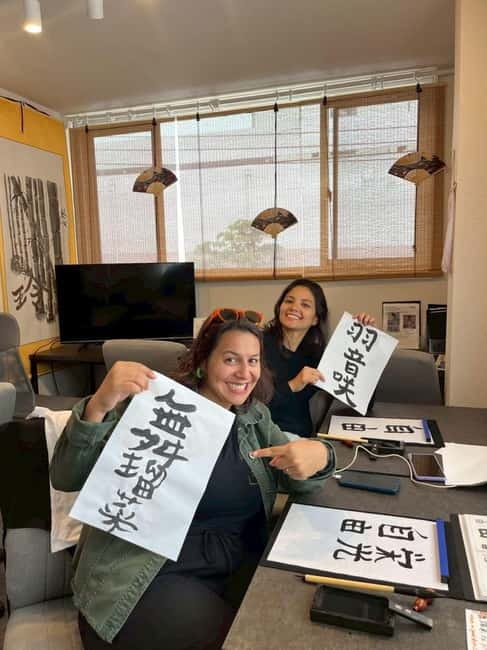
This workshop gives you structure for practice, which is a gift if you’ve never done calligraphy before. You start with guide paper and work through what are basically the core eight techniques. Think of this as your stroke training. The instructor shows how to make the shapes correctly, then helps you repeat them with corrections.
After the technique practice, you switch into the main writing session. You practice for about 30 minutes on thin paper. Thin paper is where beginners often struggle, because it’s unforgiving. But that’s why the class is worth it. The instructor sets you up with the tools and technique so you can focus on control rather than panic.
You also get to choose a design for your final work. You’ll pick your favorite from a sample book, or you can work with the instructor to decide. Once you choose, you write until you’re happy with the result. That matters because you’re not rushing to meet a demo pace.
One more detail I like: you aren’t forced into one style only. You can write Kanji letters and practice calligraphy that carries meaning, not just decoration. You also get context about hiragana and modern life culture, so your work feels connected to actual language and daily Japanese life.
Your keepsakes: writing a postcard and making a custom folding fan
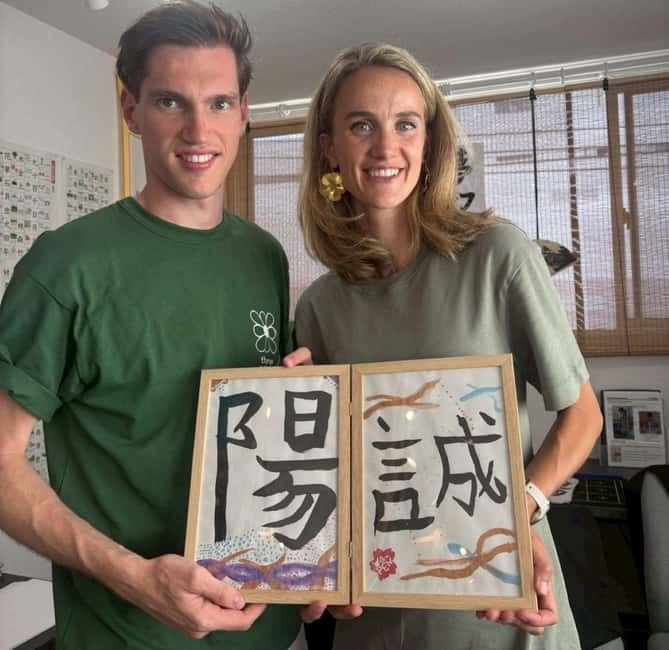
The class doesn’t end when you finish your calligraphy sheet. You get to turn that writing into something you can use and keep.
First comes a cup of green tea. That’s not a random add-on. It’s a moment to slow down after the hands-on work and let the lesson settle. Then you write a postcard for yourself at home. You explain your emotions and thoughts after calligraphy, so it becomes a little time capsule. When you open it later, you’re reminded of how it felt, not just what you did.
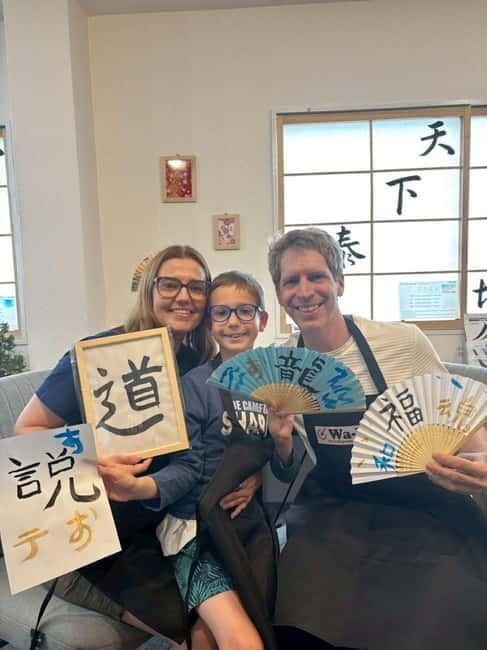
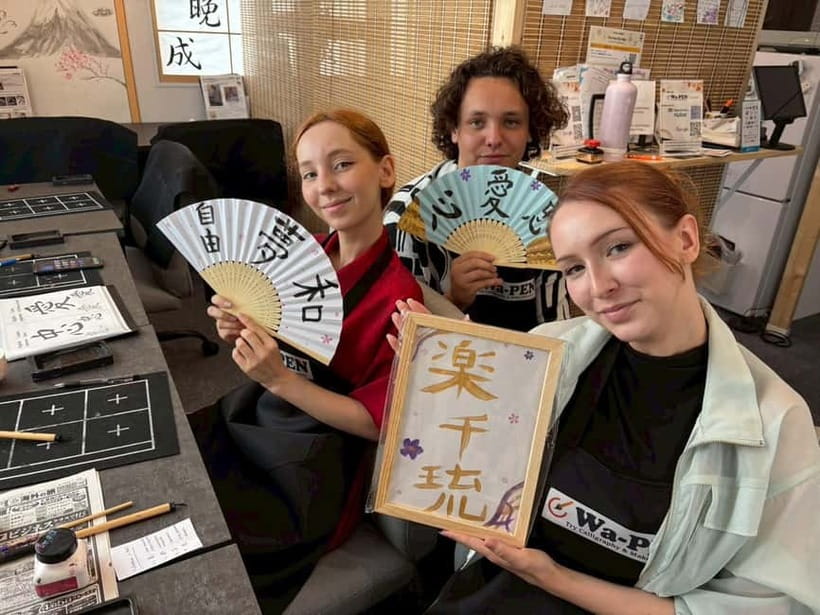
Finally, you make an original folding fan using your calligraphy. This is the souvenir that often gets people excited because it’s both practical and personal. You’re not just taking a framed sheet. You’re creating an object you could actually carry and use.
In some bookings, students mention an included fan and even add-on t-shirt printing options. The workshop itself focuses on calligraphy and the keepsake fan. If you want your calligraphy printed to a T-shirt, that part is not included, and there’s a separate clothes fee. You can buy a T-shirt in the shop if you want that option.
Same corner of Japan, a different kind of day:
- Tokyo: teamLab Planets TOKYO Digital Art Museum Entry Ticket
★ 4.6 · 9,779 reviews - Mt Fuji & Hakone Cruise, Drum Show Bullet Train 1 Day from Tokyo
★ 4.0 · 7,413 reviews - Tokyo: Sumo Show Experience with Chicken Hot Pot and a Photo
★ 4.8 · 6,678 reviews - Tokyo: Shinjuku Food Tour (13 Dishes at 4 Local Eateries)
★ 5.0 · 6,603 reviews
What you learn beyond strokes: hiragana mind and meaningful Kanji
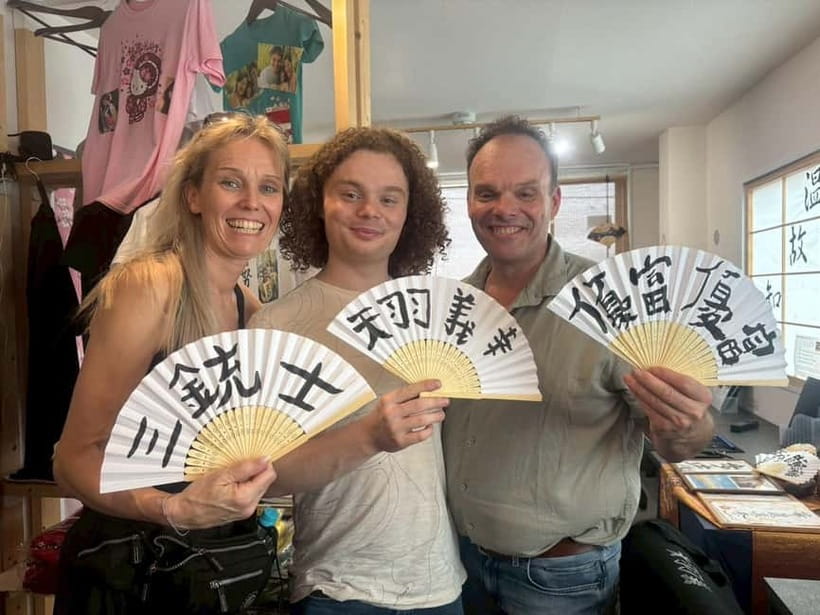
A good calligraphy class doesn’t treat Japanese writing like decoration. This one aims to help you understand the logic behind it.
You’ll learn the history of Japanese calligraphy and discover the mind of hiragana. That phrase is more than marketing. It signals that you’re learning not only how to form characters but also how Japanese writing carries intention in its motion. The strokes reflect balance, pressure, and rhythm.
You’ll also get context about modern life culture. Even if your Japanese is limited, that helps you connect the craft to what you see around you in Tokyo, from handwritten signage styles to how letters appear in everyday media.
And yes, you can write your own Kanji. For some students, that becomes the most meaningful part of the day, because names and characters can feel personal fast. If you’ve ever wondered what your name looks like in Japanese, you’ll probably leave with that satisfaction.
Price and time: is $16 really worth it in Tokyo?
At $16 per person for a session that runs from about 30 to 90 minutes, this is strong value. Here’s why: you’re getting expert instruction in English, traditional ink handling, a structured practice session, and take-home items that are not generic.
Most cheap activities in Tokyo either give you a brief introduction with no coaching, or you pay more for a souvenir that doesn’t involve real skill building. This workshop does both: you learn the process and you end with items made from your own work.
Time matters, too. If you’re short on daylight, the shorter slot still gives you guided practice and the keepsakes. If you have more time, you can usually practice longer and get closer to the final design you want.
This also works well as a break from the day’s walking. Asakusa can be intense on the feet. A desk-like, seated craft is a smart change of pace. Many people describe it as relaxing, even meditative. That kind of mental switch is a real part of travel value.
Who this suits best (and who might prefer something else)
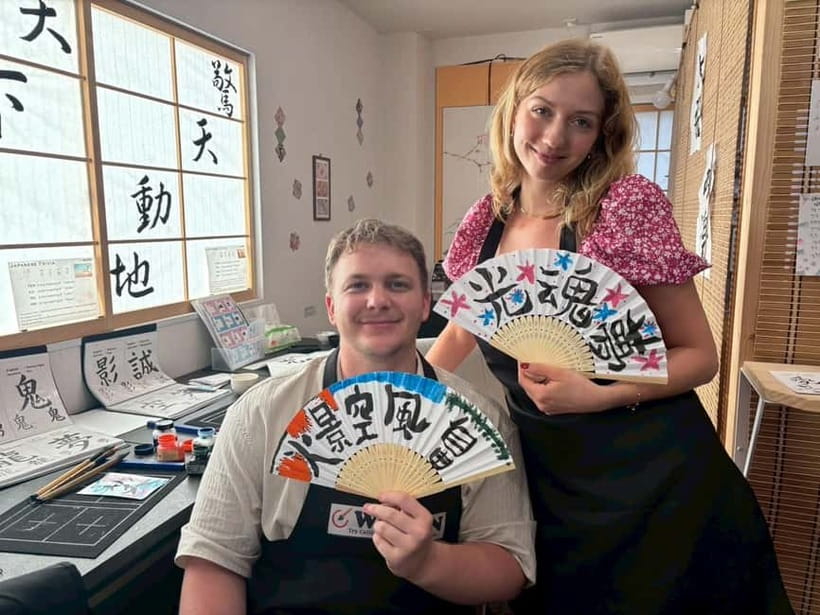
This class is a good fit for:
- Beginners who want real instruction, not just a hands-on souvenir assembly line
- People who like quiet activities during busy travel days
- Anyone who wants a meaningful take-home item, not only photos
- Families with children, as one booking notes a 6-year-old enjoying the class with patient teaching
It may be less ideal if:
- You need wheelchair accessibility. This activity is not suitable for wheelchair users.
- You’re expecting a high-energy sightseeing experience. This is focused craft time.
- You’re strongly food-and-drink dependent during long sessions, since no food and drinks are allowed during the workshop.
If you’re traveling with a grandparent or someone who loves Japanese culture but never had a formal class, this is also a great choice. Several bookings mention satisfaction from first-time students, including people bringing family members to share the experience.
Practical tips so your class goes smoothly
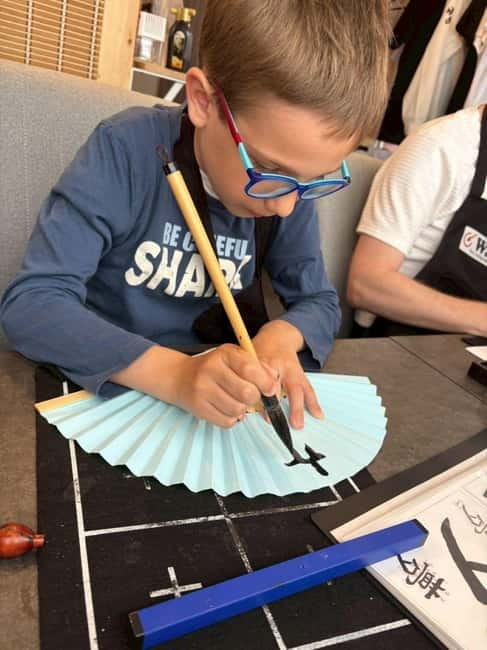
Wear comfortable clothes. You’re working with ink, and the guidance is to use clothes that can get a bit dirty, even though aprons are ready. Thin paper plus ink can be messy in small ways, so plan for it.
You should also be ready for hands-on work that takes concentration. Your best output will come if you show up with a calm mindset and don’t rush. This kind of activity rewards patience.
A small logistics note: the meeting point may vary depending on the option you book. You do have a coordinate reference of 35.7162239, 139.7922354, which can help if you’re navigating with a map app. Still, confirm the exact meet spot when you book.
Also note that pets are not allowed, except assistance dogs. If that’s relevant for you, double-check in advance so nothing surprises you on arrival.
Options and add-ons: what’s included, what’s not, and the henna note
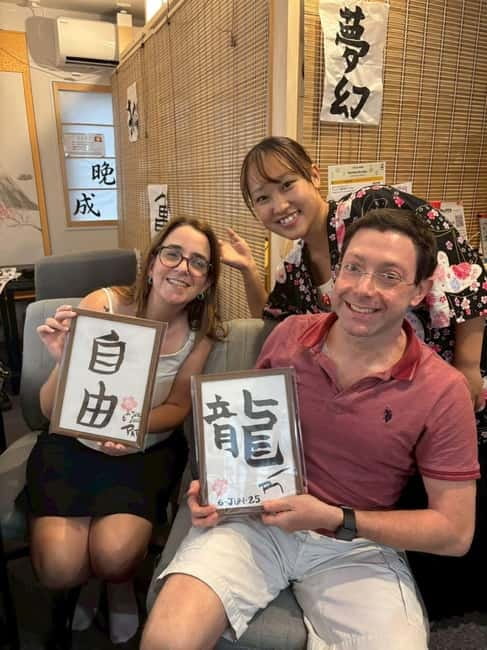
The core experience includes:
- History of Japanese calligraphy
- Posture and attitude for calligraphy
- Traditional ink melting
- Brush usage and techniques
- Practice with guide paper
- Custom design practice
- Writing a postcard
- Green tea
- Making an original folding fan
Not included items to keep straight:
- Printing your calligraphy design onto a T-shirt. If you want that, you can buy a T-shirt in the shop, and there is a separate clothes fee.
- If you select the henna tattoo options, the calligraphy experience is not included.
This matters because sometimes people choose bundled options thinking they’ll get both. If you want calligraphy and the folding fan, make sure you’re booking the calligraphy version, not a henna-only add-on.
Should you book this Asakusa calligraphy and fan workshop?
I’d book it if you want one afternoon in Tokyo that feels personal and calm. The best reason is the combination of instruction + practice + real keepsakes. You’re not just buying a souvenir. You’re making it, learning the why behind it, and taking home a fan plus a postcard that turns into a future memory.
Skip it if you want lots of sightseeing during the session, or if you’re not comfortable with ink mess on clothes. Also, if accessibility is a concern, remember this isn’t suitable for wheelchair users.
If you’re on the fence, here’s my simple decision rule: if writing with your own hand and leaving with something custom sounds like your kind of travel, this is an easy yes.
Fresh options around Tokyo
- Tokyo: Nikko Kegon Falls Lake Chuzenji Toshogu Temple & More★ 4.9 · 12 reviews
- Tokyo: Samurai History Walking Tour★ 5.0 · 12 reviews
- Harajuku: Kawaii Fashion and Pop-Culture Tour★ 4.7 · 12 reviews
- Tokyo: Mt. Fuji & Lake Kawaguchi Instagram Full Day Trip★ 4.1 · 12 reviews
- Shibuya Tokyo: Modern Kintsugi Workshop in Shibuya★ 5.0 · 12 reviews
- Tokyo: GTR Guided Daikoku Experience at Night★ 5.0 · 12 reviews
- Tokyo: Daikoku JDM Car Culture Tour★ 4.6 · 12 reviews
- Mt Fuji Private Day Trip from Tokyo with English speaking driver★ 5.0 · 13 reviews
Tokyo Tours, compared.

Mt Fuji and Hakone 1-Day Bus Tour Return by Bullet Train
Read our review →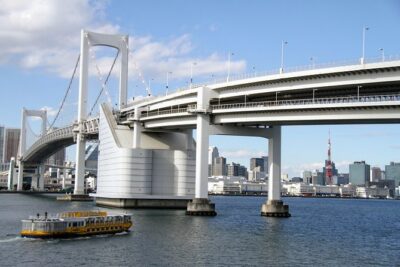


teamLab Planets TOKYO Digital Art Museum Entry Ticket
Read our review →
Mt Fuji & Hakone Cruise, Drum Show Bullet Train 1 Day from Tokyo
Read our review →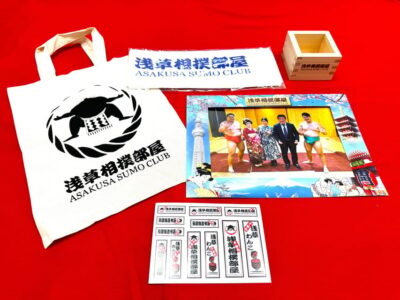
Sumo Show Experience with Chicken Hot Pot and a Photo
Read our review →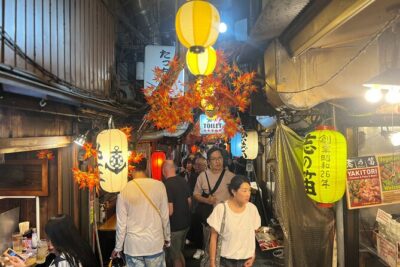
Shinjuku Food Tour (13 Dishes at 4 Local Eateries)
Read our review →