
Reviewed · KAMAKURA TOURS
Tokyo Yokohama Night View Tour With Kamakura And Enoshima
A coastal anime road trip, timed for night views. I like the Enoden train and the real-life Slam Dunk crossing, because they turn classic coastal sightseeing into something instantly recognizable.
This is also a shared-group day, so the pace can be tight and you will spend serious chunks on buses and trains. If you hate rushing or you want lots of time to wander Yokohama, plan carefully.
Key Points at a Glance
- Real Slam Dunk crossing near Kamakura Koko-mae, built for photos and quick nostalgia moments
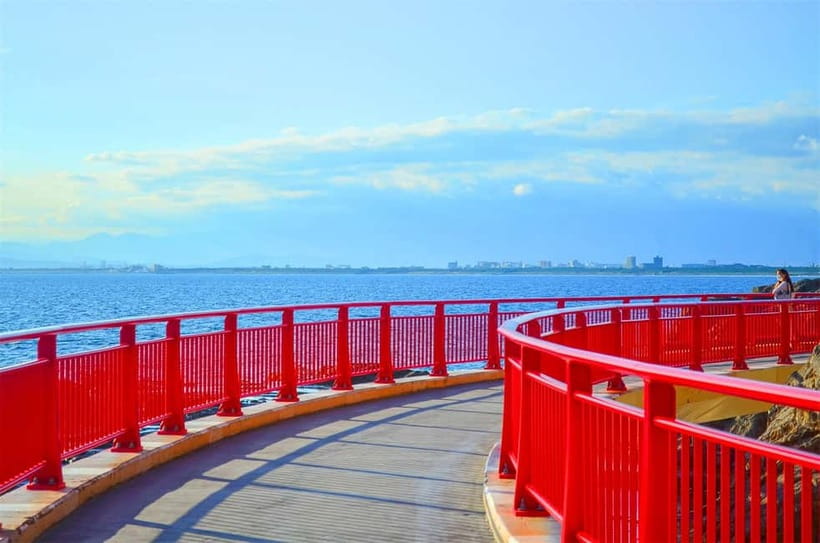
- Enoshima Island legends and shrines, including a stop at Enoshima Shrine founded in 552 AD
- Money-washing Water Dragon Shrine, where rinsing coins is said to bring prosperity
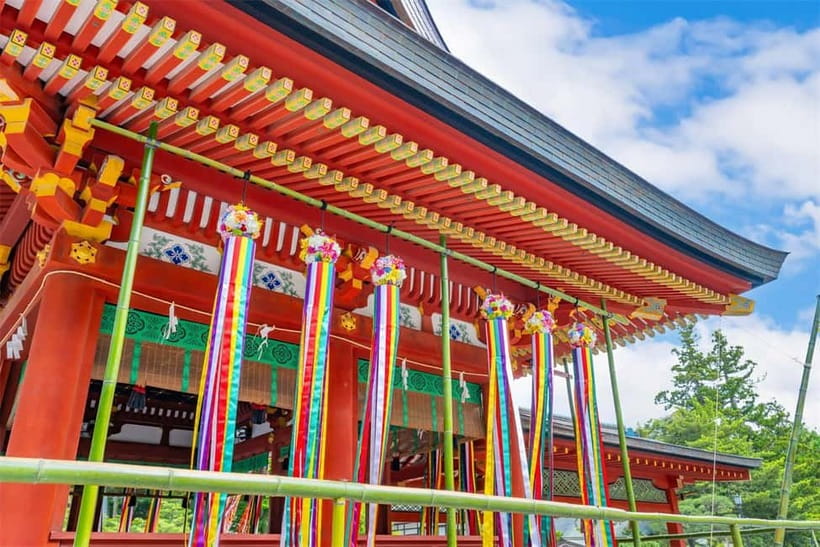
- Tsurugaoka Hachimangu Shrine with a guided visit in a prime Kamakura setting
- Komachi Street snack-and-shop lane, ideal for quick bites and souvenirs
- Yokohama after-dark free time, plus optional night-view add-ons you pay for yourself
Why This Kamakura and Enoshima Tour Makes Sense
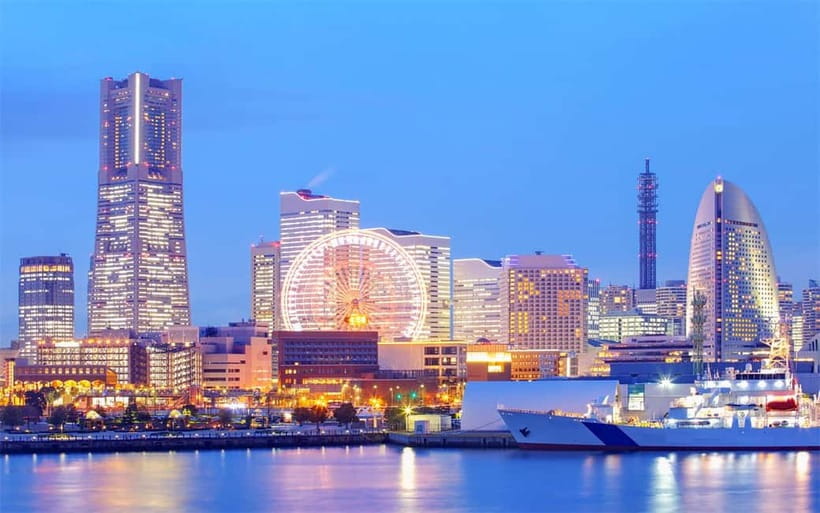
This is a smart “coast plus city lights” combo for your first time in the area. You start with Kamakura’s shrine scenery, switch to Enoshima’s sea views, then end in Yokohama when the harbor starts to glow.
I especially like that you get at least two different vibes: old-school seaside travel with the Enoden, and then modern port-city atmosphere at night. If you’re a fan of Japanese pop culture, the Slam Dunk crossing gives you a very concrete, walk-up-to-it photo moment.
The tradeoff is time. With a 10-hour day, you are doing a lot of moving, plus photo stops. So it works best if you’re okay with “see the highlights well” instead of “linger everywhere.”
A few more Kamakura days worth comparing
- Kyoto: Gion Magical Night Walking Tour with Geisha Trivia
★ 4.9 · 2,393 reviews - Night Walk in Gion: Kyoto’s Geisha District
★ 4.5 · 2,003 reviews - Kyoto Night Foodie Tour in Gion (9+ dishes + 6 Sake tastings)
★ 5.0 · 1,762 reviews
From Tokyo Pickup to Coastal Momentum: How the Day Flows
You meet at Tokyo MODE GAKUEN at 11:00am (Address: 1-7-3 Nishi-shinjuku, Shinjuku-ku, Tokyo, 160-0023 Japan). From there, you head out by coach, and the day is built around several fixed blocks of time.
A typical flow looks like this:
1) Bus from Tokyo toward Enoshima Island
2) Enoshima Island sightseeing with a photo stop
3) Enoden train time and movement along the coast
4) Kamakura stops, including more photo time
5) Guided shrine visit at Tsurugaoka Hachimangu
6) Break time at Komachi Street
7) Bus into Yokohama and a guided evening segment
8) Photo time at Yokohama Red Brick Warehouse
9) Return to Tokyo
One big practical point: you get some planned guided time, but you also get free time where you can choose your own pace, especially in Yokohama. That balance helps, but it also means you should go in with a game plan for what you want to do in the city.
Enoden Train Nostalgia and the Slam Dunk Railroad Crossing
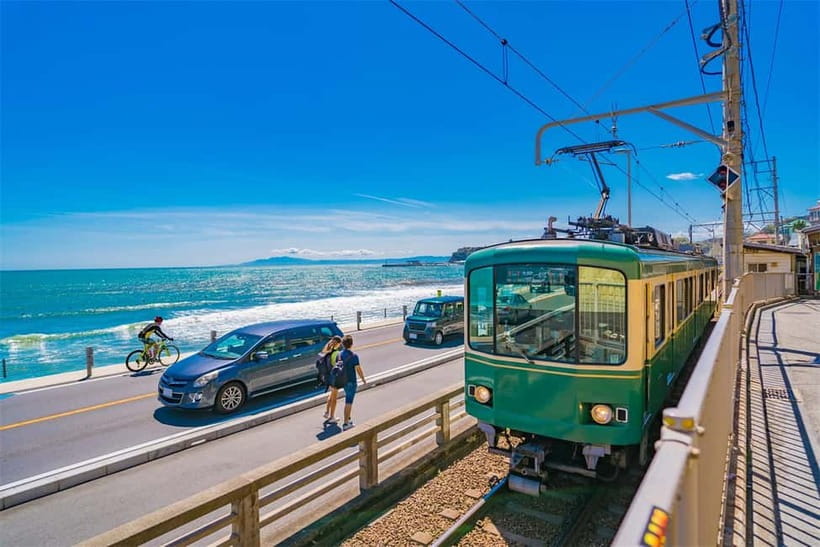
The Enoden ride is the heart of this itinerary, and for good reason. It’s part sightseeing, part time-machine feeling, with coastal views and that old-fashioned rhythm that makes the short distances feel fun instead of frantic.
The tour explicitly focuses on the Slam Dunk crossing near Kamakura Koko-mae Station. You step off, get time to look, and then continue through the area by foot and train connections. If you’re even casually familiar with the series, this is the kind of stop you instantly “get.”
After that, the schedule also includes a short panoramic train moment and additional photo time in the Kamakura area. So you’re not just riding the train and moving on. You’re building a little story arc from train nostalgia to recognizable street scenery.
Practical tip: treat this as your first photo priority. The best photos usually depend on light and crowd timing, and you will want to be ready right when your group arrives.
Enoshima Island: Myth, Shrines, and Sea-Air Breaks
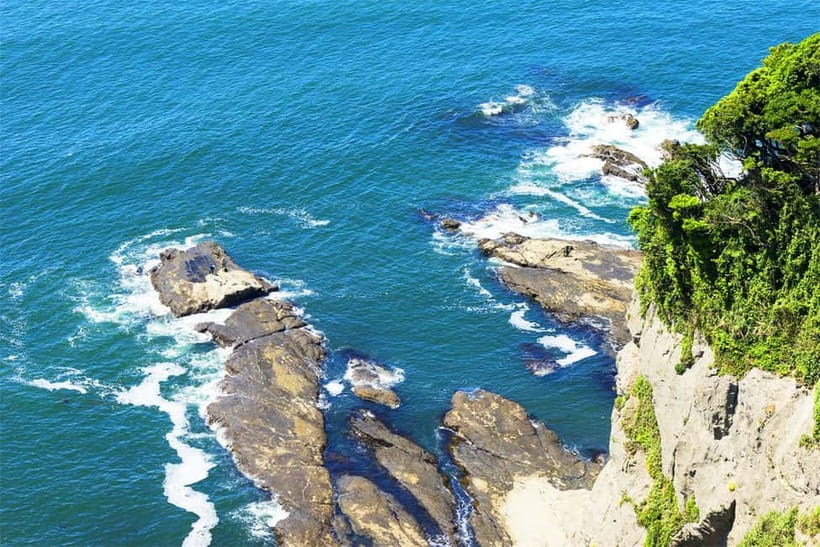
Enoshima Island is where the day shifts from anime-friendly stops to full-on coastal Japan energy. You cross by bridge to the island, which already changes your walking rhythm and your views.
The itinerary includes a photo stop and sightseeing time on Enoshima, plus time around the shrines. Enoshima Shrine dates back to 552 AD, and that long timeline matters. You are not looking at a random viewpoint shrine, you are visiting a place that has been a devotional destination for generations.
Then there’s the famous legend element. You’ll encounter the island’s story about a five-headed dragon and a goddess whose appearance changed the dragon’s ways. Even if you don’t care about myth, it adds context to what you’re seeing, and it helps you connect the dots between shrines, pathways, and the sea.
One of the most memorable stops is the Money-washing Water Dragon Shrine. It’s known for the ritual where people rinse coins and believe it brings prosperity. If you like cultural details that go beyond a quick snapshot, this is one of the best “why people come here” moments on the route.
Walking note: Enoshima is an island, so you’ll cover ground. Wear comfortable shoes and expect some stair-and-path movement.
Same corner of Japan, a different kind of day:
- Tokyo: Kamakura & Enoshima Day Trip including Temple Tickets
★ 4.5 · 1,375 reviews - From Tokyo: Kamakura & Enoshima 1-Day Bus Tour
★ 4.5 · 189 reviews - Kamakura Historical Walking Tour with the Great Buddha
★ 5.0 · 129 reviews - Kamakura Private Tour: Temples, Nature, and the Great Buddha
★ 5.0 · 121 reviews
Tsurugaoka Hachimangu and Komachi Street: Kamakura’s Old Town Day
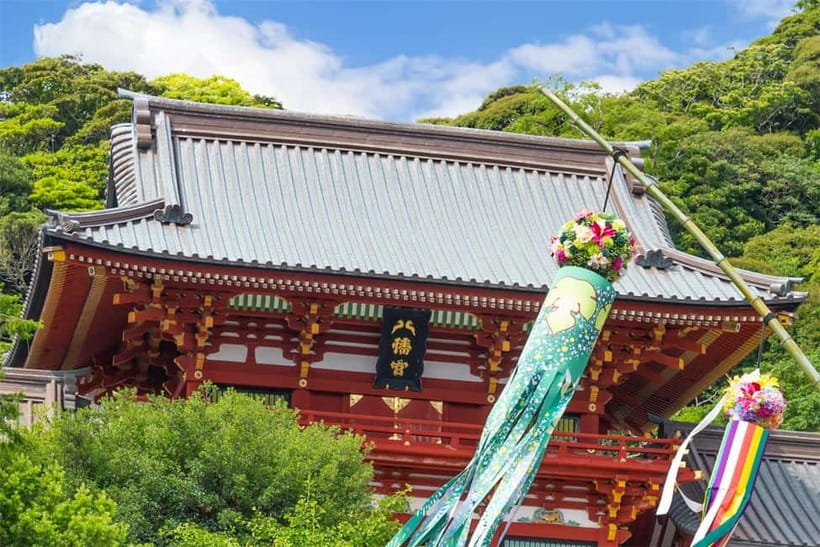
Kamakura is a shrine-and-town kind of place, and this tour concentrates on two of its most recognizable areas.
First up is Tsurugaoka Hachimangu Shrine, which is guided on the schedule. The shrine is deeply tied to samurai-era tradition and is counted among Japan’s Three Great Hachiman Shrines. Even if you only spend part of the time looking carefully, the guided structure helps you notice what you might otherwise skip, like directional layout and the cultural significance of the space.
After the shrine time, you get a break period and stop at Komachi Street. This lane is where you feel the Kamakura “small-town tourism” side in the best way: souvenir shops, snack options, and plenty of low-stakes wandering.
What I like about Komachi Street is that it’s flexible. If you’re hungry, snack. If you want souvenirs, browse. If you just want to rest your legs, you can sit briefly and people-watch without needing a ticket or a reservation.
If your pace is ambitious, you might be tempted to pack extra shopping. Don’t. You still have Yokohama waiting at the end of the day, and you will want your energy for night views.
Yokohama at Sunset and Night: Free Time With Real Choices
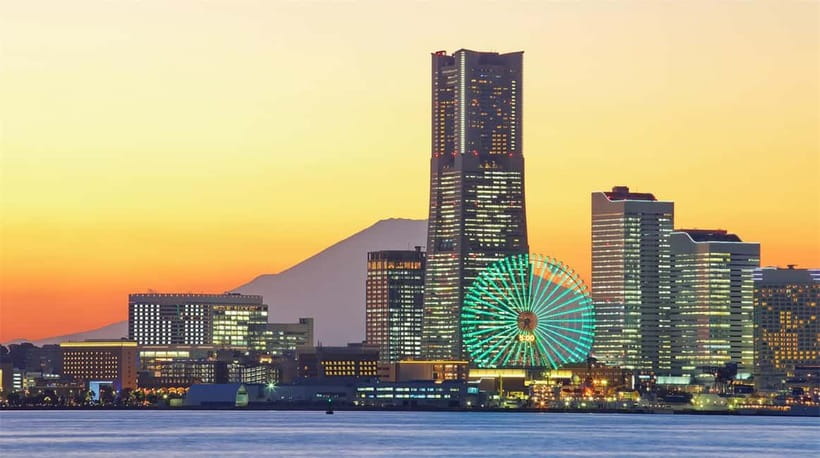
Yokohama is where the tour shifts from temple pathways to city lights. You arrive as the evening builds, and you get a guided tour segment followed by free time to explore at your own pace.
This is a key design choice. A long group day can feel exhausting when everything is locked to a script. Here, you get a window where you can choose what matters most to you:
- Use free time to explore the city around the harbor
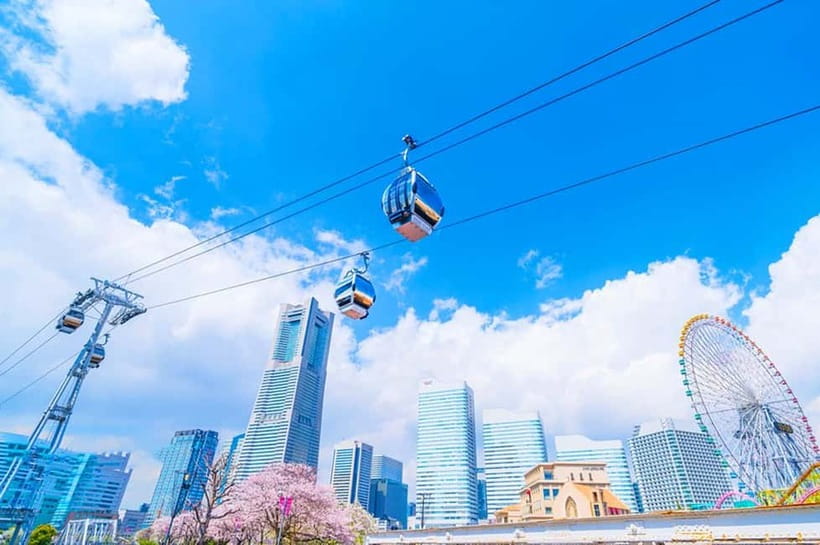
- Consider the Yokohama Air Cabin from Sakuragicho Station to Red Brick Warehouse (not included) for panoramic night views
- Walk the Red Brick Warehouse area for shops and cafés, and soak in that European-style port vibe
The Red Brick Warehouse stop is also built into the schedule as a photo stop. So even if you don’t plan much, you’ll leave with a recognizable Yokohama postcard setting.
One more practical thought: this tour includes Yokohama time, but it is still one part of a single 10-hour run. If you are the type who wants long, slow nights in a city, you may want to extend your stay and come back for more.
Price and Logistics: What You Pay For, What You Still Need to Budget
At $82 per person for a 10-hour day, you are paying for coordination, transportation, and a guided structure around multiple major stops. You also get admission to the Enoden train ride, plus pickup and drop-off at a designated point in Tokyo.
What is not included:
- Meals
- Personal expenses
- Yokohama Air Cabin or the ferris wheel
So the real value math depends on how you handle snacks and dinner. You will probably buy something in Kamakura on Komachi Street, and you might want a quick meal in Yokohama during free time. Budget that in now so you don’t end up stressed later.
A key logistics detail can affect the experience: if your group is smaller than 13 people, the guide may also serve as the driver. In that situation, commentary may be more basic. That can be totally fine for you if you mainly want scenic stops and don’t need long explanations.
Also, credit cards might not be accepted at certain locations, so bring some cash. And in the vehicle, food is not allowed, so plan to eat before boarding or during breaks.
Will the Guide Help Enough? How to Judge the Experience
This kind of tour lives or dies by communication. When the guide is actively explaining, the day feels like more than a bus route.
The tour offers live guiding in English, Japanese, and Chinese, and that matters because it changes how well you understand shrine context and the meaning behind the stops. I also recommend you show up with curiosity. If you ask a simple question, you’re more likely to get the kind of local answer that makes a shrine stop stick in your memory.
One helpful clue from past operations: a guide named KO has been noted for being informative and caring. If you see that name listed on your day’s details, that’s a good sign.
Still, be honest with your expectations. This is a shared group tour with fixed time blocks and frequent moving. If you want deep lectures, you might feel the schedule doesn’t allow it.
Who This Tour Fits Best (and Who Might Be Happier Elsewhere)
This works best for:
- You want one-day access to Kamakura and Enoshima without planning transport connections
- You want the Enoden ride and the Slam Dunk crossing as structured highlights
- You like a mix of guided moments and free time, especially in Yokohama
- You are okay with walking and a fairly busy schedule
It might not be ideal if:
- You dislike spending lots of time in vehicles
- You strongly prefer long, unstructured time in Yokohama
- You need wheelchair accessibility, since the tour is not suitable for wheelchair users
If you’re traveling with limited mobility, or you hate tight itineraries, you might do better with a smaller, more flexible plan focused on one area.
Tips That Make the Day Smoother
A few small prep moves can make this tour feel easy instead of exhausting.
- Wear comfortable shoes, because there is a fair amount of walking.
- Bring water and sunscreen, especially on Enoshima and along coastal paths.
- Bring a camera and keep your battery plan ready, since you’ll have multiple photo stops.
- Bring cash in case credit cards aren’t accepted at certain places.
- Plan on eating during breaks. Food is not allowed in the vehicle.
Also, keep your schedule open after the tour. Return time might run later due to weather, traffic, or holiday congestion, and that can affect how much time you get at stops.
Should You Book This Tokyo Yokohama Night View Tour?
I think you should book if you want a well-packed day that hits the big spiritual landmarks of Kamakura, the sea-and-shrine character of Enoshima, and then caps it with Yokohama harbor lights. The Enoden ride plus the Slam Dunk crossing is a rare combo, and it gives the day a fun personality beyond sightseeing checklists.
I would not book if you’re chasing deep, slow exploration, or if you want long free time in Yokohama to roam without time pressure. This tour is structured, and that structure can feel rushed to people who want every moment to be their own.
If you are the flexible type and you like hitting multiple places in one go, this is a good value at $82, especially because the Enoden admission and guided coordination are built in. If you’re uncertain, keep your plans flexible, because you can cancel up to 24 hours in advance for a full refund.
FAQ
What time and where do I meet for the tour?
You meet at Tokyo MODE GAKUEN at 11:00am. The address is 1-7-3 Nishi-shinjuku, Shinjuku-ku, Tokyo, 160-0023 Japan.
How long is the tour?
The tour duration is 10 hours.
What is included in the price?
The tour includes a tour guide, a driver, pick up and drop off at the designated point, and admission to the Enoden train ride.
Is the Yokohama Air Cabin or ferris wheel included?
No. Yokohama Air Cabin or the ferris wheel are not included.
What languages are available for the live guide?
The live guide offers English, Japanese, and Chinese.
Can I bring food in the vehicle?
No. Food is not allowed in the vehicle.
What should I bring with me?
Bring comfortable shoes, a camera, sunscreen, and water.
Do I need cash?
Yes, you should bring some cash because credit cards may not be accepted at certain locations.
Is the tour wheelchair accessible?
No. The tour is not suitable for wheelchair users.
Fresh options around Kamakura
- Kamakura Bamboo Forest and Great Buddha Private Tour★ 5.0 · 12 reviews
- First time in Kamakura? Enjoy a Tour of All Must-sees!★ 5.0 · 15 reviews
- Kamakura and Enoshima: Private Guided Day Tour with Vehicle★ 3.9 · 17 reviews
- Kamakura Half Day Tour with a Local Expert Guide★ 4.4 · 23 reviews
- Your Own HANKO Name Seal Activity in Kamakura.★ 5.0 · 24 reviews
- Buddha, Bamboo & Zen – Bespoke Kamakura Private Walking Tours★ 5.0 · 25 reviews
- Kamakura: A Journey Through Medieval Japan★ 4.9 · 32 reviews
- Exciting Kamakura – One Day Tour from Tokyo★ 5.0 · 40 reviews
Kamakura Tours, compared.
Kamakura & Enoshima Day Trip including Temple Tickets
Read our review →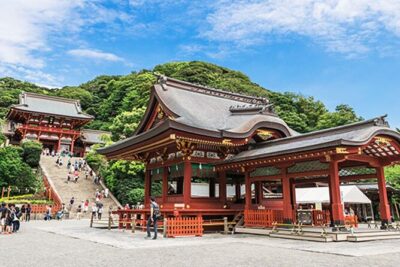
Kamakura Historical Walking Tour with the Great Buddha
Read our review →
Kamakura Private Tour: Temples, Nature, and the Great Buddha
Read our review →
Kamakura: Private Guided Walking Tour with Local Guide
Read our review →
Kamakura 4hr Private Trip with Government-Licensed Guide
Read our review →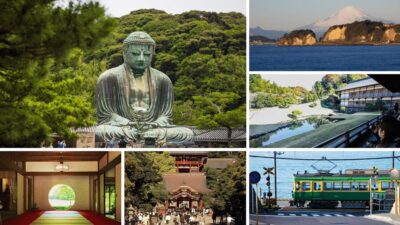
Kamakura Full Day Tour with a Local Expert Guide
Read our review →Browse the lists this tour appears in