Reviewed · TOKYO TOURS
Tokyo Imperial Palace with Kagurazaka Alley Tour
Cobblestones and palaces in one morning. This small-group Tokyo walk mixes Imperial Palace area sights with the Edo-era feel of Kagurazaka, and it’s guided with the kind of context that makes the city easier to read. I also like that the pace stays laid-back enough to ask questions without feeling rushed, even when the morning crowd starts to build.
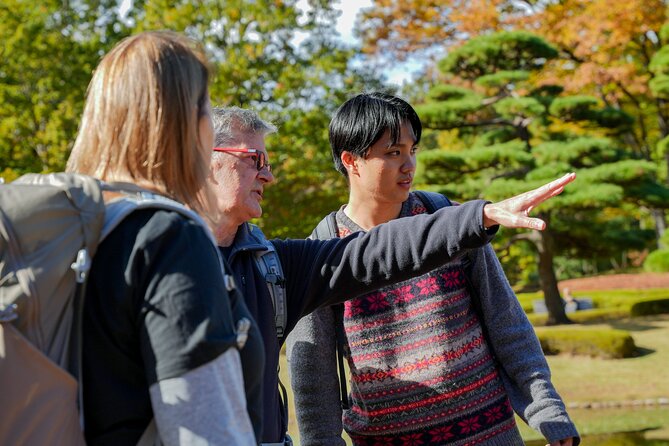
What I love most is how the guide turns details into stories. On past outings, guides such as Sho have brought the palace area to life with extra Japanese history context, and Aya has pointed out practical visual clues, like the meaning behind roof symbols including fish shapes. You end up seeing buildings and streets as evidence, not just scenery, and you get photo help along the way.
One thing to consider: this is still a walking tour, and Kagurazaka’s cobbled lanes plus an early 9:00 am start can feel like a lot if you prefer slower, sit-down sightseeing.
Key highlights that actually matter
- Max 8 people keeps the tour chatty and question-friendly, not a shuffle through crowds
- Imperial Palace grounds time focuses on gardens, moats, and park areas with free entry at this stop
- Kagurazaka’s lane-by-lane route includes Geisha Alley plus Hyogo Yokocho and Kakurenbo Yokocho
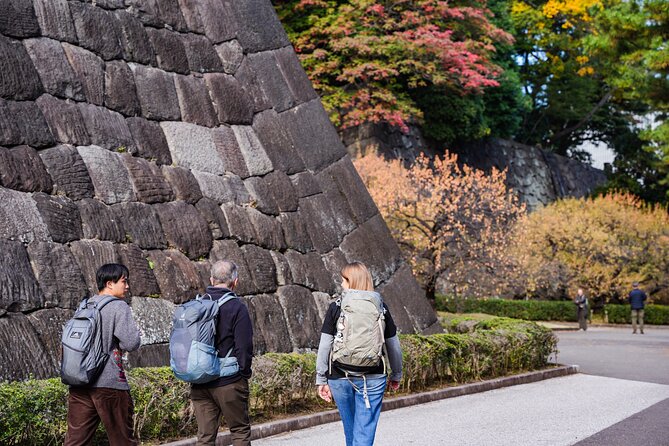
- Edo Castle connection comes up at Ushigome Mitsuke, one of the original Edo Castle gates
- Guides who notice details have talked roof symbolism and even plants when timing lines up with blossoms
A Tokyo morning that skips the usual checklist
Tokyo can feel like two cities at once. One is the headline sights everyone tries to tick off. The other is the Tokyo that looks ordinary until someone explains what you are actually seeing.
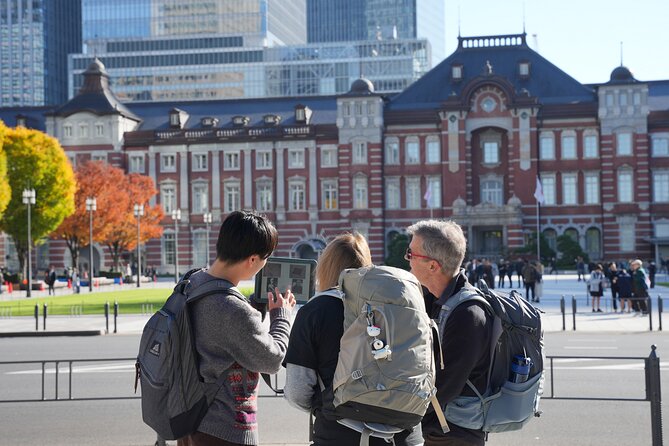
This tour leans hard into that second Tokyo. You start in Marunouchi, near Tokyo Station, then shift into the Imperial Palace area, and only later do you head into Kagurazaka, a neighborhood known for its mix of old and new Japan. The point is not just to walk past famous places. It is to connect the present street layout to earlier eras, including Edo period life and the Tokugawa Shogunate era.
Because the group is capped at 8 travelers, you get a more human experience than you do on big bus-style tours. People can ask questions. You can stop longer when something catches your eye. It stays relaxed.
The tour also runs with a mobile ticket. That means less fuss at the start point, as long as you have your phone ready.
A few more Tokyo days worth comparing
- Mt Fuji and Hakone 1-Day Bus Tour Return by Bullet Train
★ 5.0 · 26,383 reviews - 1-Day Tokyo Bus Tour
★ 5.0 · 14,250 reviews - Tokyo: TOKYO SKYTREE® Admission ticket
★ 4.5 · 11,192 reviews
Start at Tokyo Station, the fast way to get your bearings
The meeting point is the Shin-Marunouchi Building area (1-chōme-5-1 Marunouchi, Chiyoda City). The tour starts at 9:00 am, and the first stop is right by Tokyo Station.
Tokyo Station sounds simple until you stand under it and realize it is a transportation machine and a city landmark rolled into one. The stop is short, about 5 minutes, but it is a smart warm-up. It helps you orient yourself before you move into the palace-side streets and then across to Kanda and Shinjuku.
If you’re the type who likes understanding how neighborhoods connect, that quick Tokyo Station intro is useful. You learn to place the rest of the walk on your mental map.
And since the station stop is marked as free, the tour is not wasting your time with ticket lines. The time goes into direction and explanation.
Imperial Palace grounds: gardens, moats, and symbolism you can spot
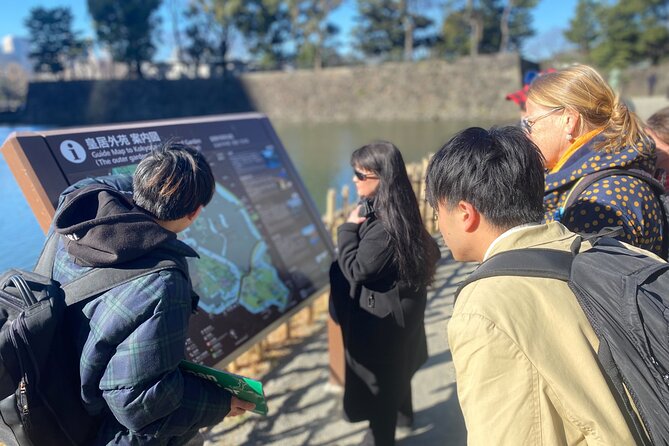
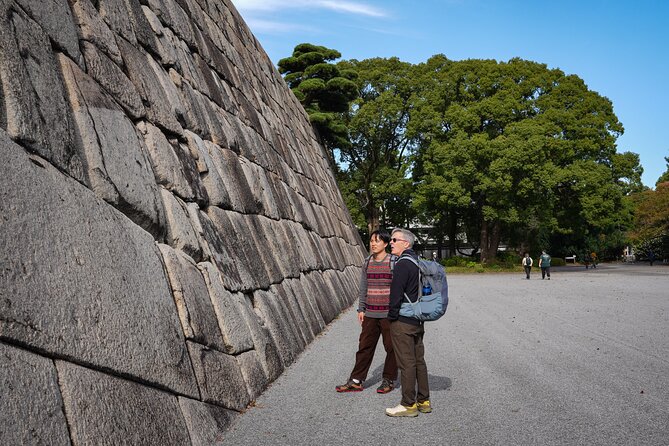
You spend the biggest chunk of your tour at the Imperial Palace area, about 55 minutes, with admission listed as free. The Imperial Palace is the official residence of Japan’s Emperor, and it is surrounded by gardens, a moat, and large park areas.
Here is the thing. Even when you know the basics, palace surroundings can be hard to interpret. Why is a certain wall placed there? Why does the garden layout feel deliberate? What does the architecture style mean in the context of Japan’s cultural layers?
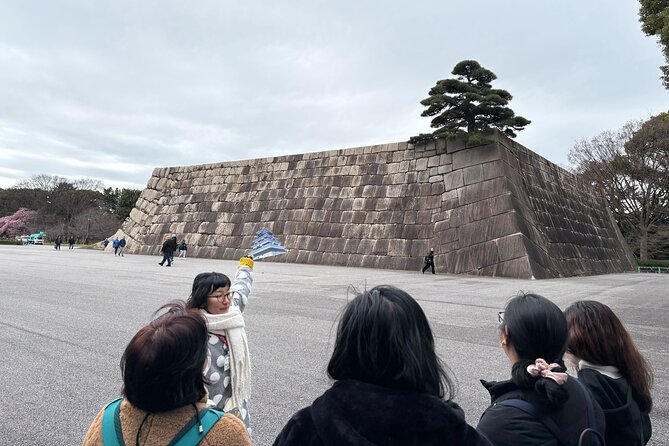
This is where the guide helps. In one outing described by a guest, a young guide tied architecture to Buddhist tradition and talked about plants when blossoms were in season. That kind of explanation changes how you look at the grounds. You start noticing details you would normally walk right past, like roof and ornament cues and how religious and cultural ideas show up in design.
Another guest highlighted roof symbolism, including the meaning of the fish shapes on traditional architecture. That is the sort of detail that makes the palace area feel more readable, not more confusing.
Also, the tour’s timing matters. Starting in the morning often keeps the mood quieter while you are learning the ropes. Even if you arrive with a guidebook mindset, you will likely leave with a better sense of how this space fits into Japanese identity.
From Nippon Budokan to Tokyo Daijingu in Kanda
After the palace area, the route continues to the Nippon Budokan. This famous indoor arena is located in Kitanomaru Park and was originally built in 1964 for martial arts events during the Tokyo Olympics. Today, it’s used for many kinds of events.
You might see Budokan and think, big modern venue, done. But on a walk like this, even a short stop becomes a bridge between eras. The palace grounds are tied to imperial symbolism. Budokan is modern Tokyo in a single recognizable shape. Then you move into a shrine that anchors the day back to older spiritual roots.
Next is Tokyo Daijingu Shrine in the Kanda district. It was established in 1880 and is dedicated to Amaterasu, the sun goddess, plus the spirits of Japan’s imperial family. The stop is about 15 minutes, admission listed as free.
A shrine stop like this is valuable because it adds cultural context that makes the morning’s palace and city symbolism feel connected rather than random. You are not just collecting places. You are collecting meanings.
If you like to understand what locals do on a daily basis, the shrine segment gives you that pause. It’s short enough to keep the tour moving, but long enough for a mental reset.
Same corner of Japan, a different kind of day:
- Tokyo: teamLab Planets TOKYO Digital Art Museum Entry Ticket
★ 4.6 · 9,779 reviews - Mt Fuji & Hakone Cruise, Drum Show Bullet Train 1 Day from Tokyo
★ 4.0 · 7,413 reviews - Tokyo: Sumo Show Experience with Chicken Hot Pot and a Photo
★ 4.8 · 6,678 reviews - Tokyo: Shinjuku Food Tour (13 Dishes at 4 Local Eateries)
★ 5.0 · 6,603 reviews
Kagurazaka cobblestones: geisha lanes and old-school alley eating
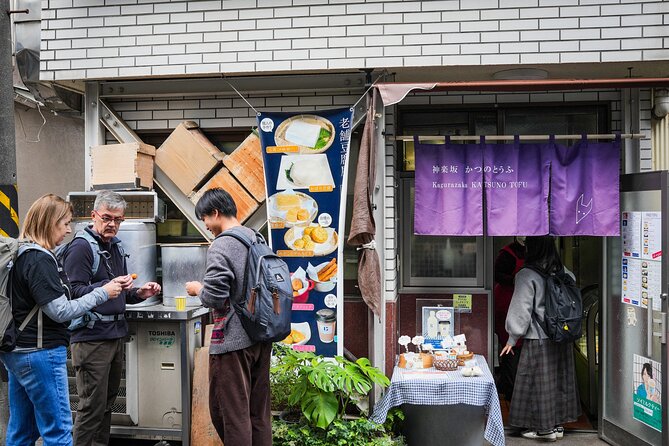
Now the tour shifts into what the neighborhood does best: Kagurazaka. This area is known for a mix of old and new Japan. It used to be a geisha district, and today its narrow, cobbled alleys are lined with traditional restaurants, stylish cafes, and boutique shops.
You spend about 30 minutes in Kagurazaka, and that time is broken into a few specific lanes:
Geisha Alley in Kagurazaka
This is a historic street once tied to geisha culture. Today it keeps a nostalgic feel with narrow lanes and traditional teahouses. It is exactly the kind of street where a guide’s context helps you slow down. Without that, it is easy to just snap a photo and move on.
Hyogo Yokocho
This is a narrow alley known for old-fashioned charm, lined with small cozy eateries and traditional shops. It feels more like an at-the-side-of-the-city experience than a staged tourist strip.
Kakurenbo Yokocho
This alley is described as hidden, with small bars and eateries. The vibe is intimate and quiet, the kind of place you likely wouldn’t hunt down on your own if you do not already know the name.
Because these spots are lanes, not big plazas, they work best when you have someone guiding you so you do not waste time walking past the wrong side of a street. The tour’s structure makes the neighborhood feel like it has chapters.
One more Edo connection shows up near the end: Ushigome Mitsuke, a gate related to the Edo Castle’s defensive structure. The gate itself no longer exists, but the tour is designed to help you understand how the area fit into Edo Castle defenses. That’s the hidden logic that turns Kagurazaka from a pretty stroll into a historical walk.
And since one of the highlights called out by a guest was the guide taking great group pictures, you can expect the tour to be photo-friendly. Just be aware that alley lanes are tight, so you’ll want to move carefully.
Why the small group changes everything (and makes photos easier)
The tour is capped at 8 travelers, which is small enough for conversations to happen without effort. You can ask questions, and the guide can adjust pacing if your group is curious.
This shows up in the way different guests described their experience. One person ended up with what felt like a more personalized tour, which allowed them to ask lots of questions. That matters because the most interesting parts of a place like this are in the details, not the big obvious signs.
You also get practical value out of the guide’s explanations. The fish symbolism example is a good one. Once you understand what a detail represents, you start seeing similar clues elsewhere in Tokyo. You stop treating architecture like decoration and start treating it like information.
Another guest talked about a chilly morning and how the guide’s enthusiasm kept the mood up. If you are the kind of person who worries that guided tours are boring, this small-group format helps a lot. When the guide is animated and the group is small, the whole morning feels more like a walk with a smart friend than a scripted lecture.
Price and value: why $52.84 can be fair
The price is $52.84 per person for an approximately 3 hours 30 minutes tour. That sounds like a lot until you look at what you are paying for.
Most stops are listed as free for admission, including Tokyo Station, the Imperial Palace area, Tokyo Daijingu Shrine, and Kagurazaka. So your money mainly goes to the guide, the route planning, and the storytelling that connects the places into a single experience.
If you were to do it on your own, you could visit many of these places without paying entry fees. But you would likely miss the specific cultural connections the guide brings, like Edo-era street links, shrine symbolism tied to Amaterasu, and architecture cues like roof fish shapes.
So the value question becomes simple: do you want to spend your morning turning scattered sights into a coherent picture? If yes, this price is reasonable. If you prefer silent wandering and you already know what you are looking at, you might feel it is optional. For most people, though, the guided context is what turns free sights into an actually memorable morning.
Making the most of the 9:00 am start and the walking time
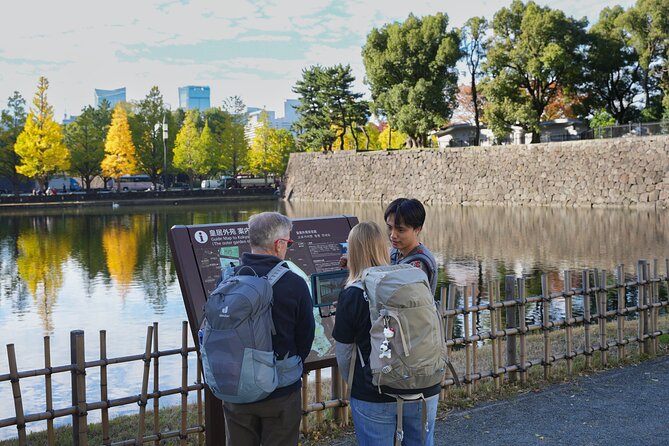
Because the tour is designed as a walking route, I recommend planning for time on your feet. There are multiple stops, alley segments, and cobbled lanes in Kagurazaka. Bring comfortable shoes and pace yourself.
The schedule starts at 9:00 am. That early start helps you enjoy Imperial Palace grounds before the day gets loud, and it gives Kagurazaka time to feel atmospheric rather than crowded.
At the end, the tour finishes near 3-chōme-2-202 Kagurazaka, Shinjuku City, near the main street of Kagurazaka. It is described as close to a FamilyMart. In practice, this is helpful because it drops you right where you can keep exploring or grab food nearby.
My advice: plan for a light lunch right after. Kagurazaka is set up for small bites and alley wandering, so you’ll be in the right mood to continue.
Who should book, and who might not love it
This is a strong fit for you if:
- You want more than photos and you like explanations that connect culture, architecture, and place names
- You like walking neighborhoods with character, especially when the route includes alley streets such as Geisha Alley, Hyogo Yokocho, and Kakurenbo Yokocho
- You prefer a small-group tour where questions are welcome and the guide can react to your interests
You might not love it if:
- You want a strictly monument-heavy day with long time at each major site
- You dislike walking or cobblestone lanes and would rather do everything by subway and then only short walks
Should you book this Tokyo Imperial Palace and Kagurazaka tour?
If you want an efficient way to see two sides of Tokyo in one morning, I think this is a smart booking. You get the Imperial Palace area with gardens and moat, then you move into shrine and arena symbolism, and finally you reach Kagurazaka’s cobbled lanes where the Edo-era connections feel tangible.
The only real downside is the walking and the early 9:00 am start. If you can handle that, the small-group size, the free stop lineup, and the way guides like Sho and Aya focus on details like roof symbolism and cultural meaning make the experience feel worth your time.
FAQ
How much does the tour cost?
The tour costs $52.84 per person.
How long is the tour?
It runs for approximately 3 hours 30 minutes.
What time does the tour start?
The start time is 9:00 am.
How many people are in the group?
The tour has a maximum of 8 travelers.
What is the meeting point?
You meet at Shin-Marunouchi Building, 1-chōme-5-1 Marunouchi, Chiyoda City, Tokyo 100-6590, Japan.
Where does the tour end?
The tour ends at 3-chōme-2-202 Kagurazaka, Shinjuku City, Tokyo 162-0825, Japan.
Do I need to buy admission tickets for the sights?
Admission is listed as free for the stops including Tokyo Station, the Imperial Palace area, Tokyo Daijingu Shrine, and Kagurazaka.
Is there a ticket type mentioned for this tour?
Yes, the tour uses a mobile ticket.
Is free cancellation available?
Yes, you can cancel for a full refund if you cancel at least 24 hours in advance of the experience start time.
Which areas are included on the route?
The tour includes Tokyo Station, the Imperial Palace area, Nippon Budokan, Tokyo Daijingu Shrine, and the Kagurazaka neighborhood, including alley areas such as Geisha Alley, Hyogo Yokocho, and Kakurenbo Yokocho, plus Ushigome Mitsuke.
Fresh options around Tokyo
- Tokyo: Nikko Kegon Falls Lake Chuzenji Toshogu Temple & More★ 4.9 · 12 reviews
- Tokyo: Samurai History Walking Tour★ 5.0 · 12 reviews
- Harajuku: Kawaii Fashion and Pop-Culture Tour★ 4.7 · 12 reviews
- Tokyo: Mt. Fuji & Lake Kawaguchi Instagram Full Day Trip★ 4.1 · 12 reviews
- Shibuya Tokyo: Modern Kintsugi Workshop in Shibuya★ 5.0 · 12 reviews
- Tokyo: GTR Guided Daikoku Experience at Night★ 5.0 · 12 reviews
- Tokyo: Daikoku JDM Car Culture Tour★ 4.6 · 12 reviews
- Mt Fuji Private Day Trip from Tokyo with English speaking driver★ 5.0 · 13 reviews
Tokyo Tours, compared.
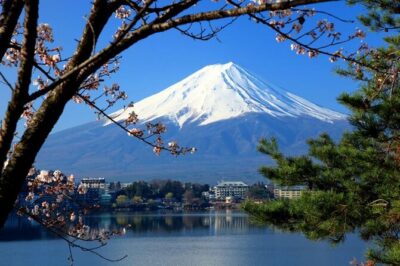
Mt Fuji and Hakone 1-Day Bus Tour Return by Bullet Train
Read our review →

teamLab Planets TOKYO Digital Art Museum Entry Ticket
Read our review →
Mt Fuji & Hakone Cruise, Drum Show Bullet Train 1 Day from Tokyo
Read our review →
Sumo Show Experience with Chicken Hot Pot and a Photo
Read our review →
Shinjuku Food Tour (13 Dishes at 4 Local Eateries)
Read our review →