Reviewed · TOKYO TOURS
Kintsugi Experience: Art of Golden Joinery in Tokyo
Broken ceramics become art here. In this kintsugi class in Tokyo, you fix a ceramic piece with lacquer mixed with gold, and you learn the idea that repair is part of an object’s life story. It’s taught in the Minami-Aoyama area, with a short, focused format that fits easily into a day of sightseeing.
I especially love the take-home souvenir: you leave with the plate you repair, not just photos. I also love how personal the teaching feels in a small studio setup, and you may even get to meet Master Taku during the 11:00am class.
One consideration: the workshop has no personal items rules. You work on a studio-supplied plate, and if you are under 6 years old, you cannot enter the atelier for safety reasons.
Key things to know before you book
- Gold-lacquer technique on a real ceramic plate, with tools and materials handled for you
- Small-group format (no more than 10 guests in the studio space) with a hard upper limit for the session
- Samue outfit: you’ll dress like a craftsperson while you work
- Philosophy made practical, including the wabi-sabi mindset that repair changes how you see objects
- Take-home care gets attention, since you are transporting something newly repaired
- Master Taku availability depends on the class time, with a chance in the 11:00am session
How Kintsugi Works in This Tokyo Workshop (Gold-Lacquer Repair in One Hour)
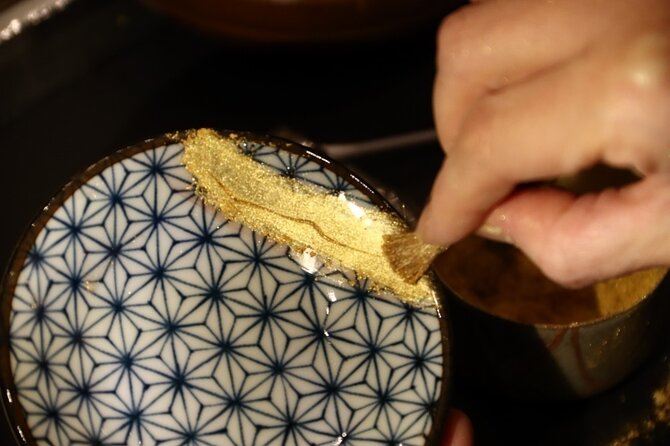
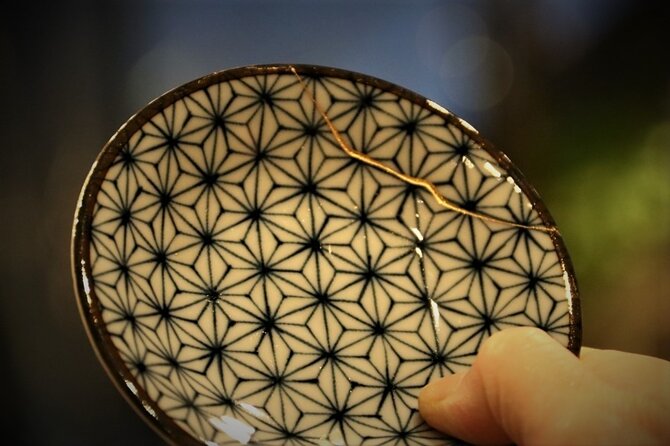
Kintsugi is pottery repair that treats breakage as history, not failure. In this workshop, the goal is simple: you’ll repair a ceramic plate using lacquer mixed with gold, so the “mended” lines become visible and intentional. That means your finished piece looks like it has a past, not like it was secretly restored.
The timing is also a big part of the appeal. You get about one hour of guided steps, and that makes it a good fit even if you only have a short window in Tokyo. It’s not a long apprenticeship. It’s a solid first taste of the craft, the mindset behind it, and the hands-on motion you need to create a believable kintsugi effect.
You should also know what kind of “repair” you’re doing here. This is not a big restoration job for a family heirloom. You are working with a studio plate designed for a beginner-friendly class. That keeps the lesson doable and keeps your results looking good enough to take home.
A few more Tokyo days worth comparing
- Mt Fuji and Hakone 1-Day Bus Tour Return by Bullet Train
★ 5.0 · 26,383 reviews - 1-Day Tokyo Bus Tour
★ 5.0 · 14,250 reviews - Tokyo: TOKYO SKYTREE® Admission ticket
★ 4.5 · 11,192 reviews
Your Minami-Aoyama Meeting Point, Getting There Without Stress
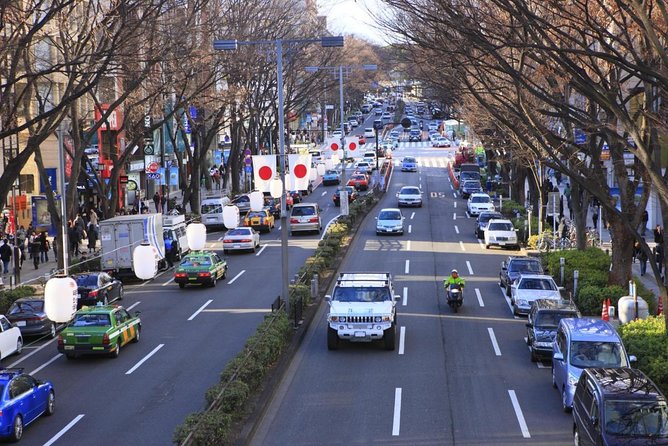
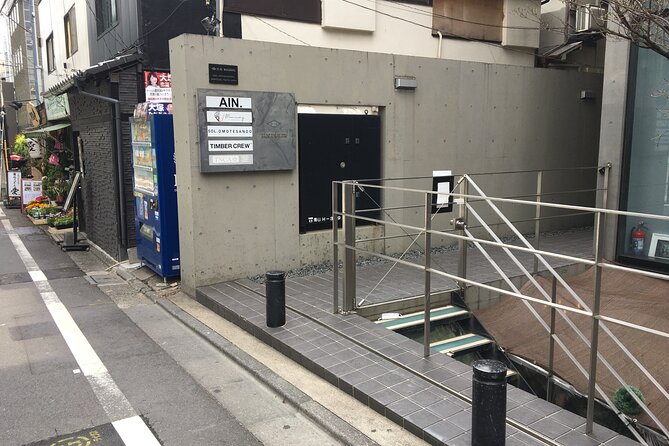
The class meets at TNCA Minami-Aoyama Studio, 3-chōme-8-2 Minamiaoyama, Minato City, Tokyo 107-0062, Japan. You make your own way there, and the area is in the Minami-Aoyama neighborhood close to Omotesando, which is handy because you can plan it around shopping and strolling.
This is a workshop where getting there on time matters. The class is short, and you’ll want to check in, change into the samue, and get the instructions before the work begins. If you’re the type who likes a calm start, I’d arrive a little early, even if the location looks easy on a map.
A practical tip from people who have done this: metro is often the quickest way to reach the area. If you use transit, give yourself a buffer for walking the last stretch inside Minato City streets.
The Small-Group Lesson Flow, Plus When You Might Meet Master Taku

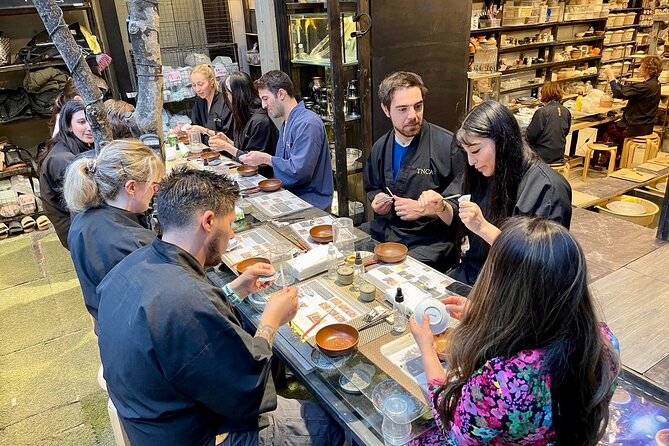
You’ll be in a small group setup. The studio experience is described as capped, with no more than 10 guests for the lesson group size, even though the activity has a higher maximum cap overall. The effect is that you actually get attention while you work, instead of feeling like you’re one person among a crowd.
The flow is straightforward. You meet the instructor and the team, you put on a traditional craft garment called a samue, then you start the kintsugi process step by step. The staff guides you through what to do and why you do it, and they help you stay on track as you apply the lacquer repair material.
One extra detail that adds charm: the owner and master artisan is often present in the atelier. The class notes specifically mention a chance to meet Master Taku in the 11:00am session. If meeting the master is a priority for you, choose that time and you’ll have that opportunity.
Expect the teaching style to be patient and clear. The class is built for beginners, including people without any ceramics experience. Even if your hands are not naturally steady, you’re not being graded. You’re learning.
What You Learn: Philosophy, Wabi-Sabi, and the Steps to Finish the Plate
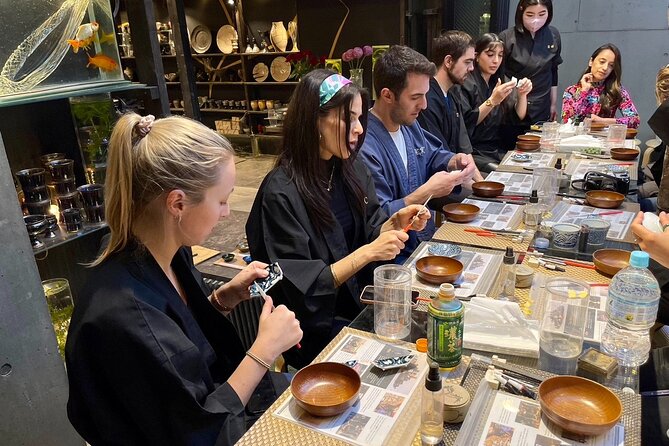
This workshop teaches both the how and the why. The “how” is the craft process: you follow the technique for repairing a ceramic piece with lacquer mixed with gold. You learn how to handle the break lines, how the gold-lacquer changes the look, and what makes the finished repair feel intentional.
The “why” is the Japanese philosophy that sits behind kintsugi. The basic idea is that breakage and repair are part of the history of an object. So instead of hiding damage or throwing something away, you keep the object and give it a new chapter. That’s where the wabi-sabi connection shows up: valuing imperfection, seeing beauty in wear, and treating flaws as part of the story.
In practical terms, this mindset changes what you notice. You stop seeing a crack as a problem to erase and start seeing it as a design decision. That’s why people leave the class with more than a souvenir. They leave with a different lens for everyday things.
What you are allowed to work on also supports that learning goal. You use a plate provided by the studio, not your own broken items. That keeps the focus on technique and avoids the stress of bringing something that the workshop cannot use. It also ensures the plate is appropriate for the beginner-friendly steps.
Same corner of Japan, a different kind of day:
- Tokyo: teamLab Planets TOKYO Digital Art Museum Entry Ticket
★ 4.6 · 9,779 reviews - Mt Fuji & Hakone Cruise, Drum Show Bullet Train 1 Day from Tokyo
★ 4.0 · 7,413 reviews - Tokyo: Sumo Show Experience with Chicken Hot Pot and a Photo
★ 4.8 · 6,678 reviews - Tokyo: Shinjuku Food Tour (13 Dishes at 4 Local Eateries)
★ 5.0 · 6,603 reviews
Your Take-Home Souvenir, Packing and Living With It Back Home
Your finished work is the main prize. The lesson includes the plate you repair, and you take it home after the workshop. This is a much better souvenir than a postcard because you created it, even if the technique is simplified for a first lesson.
Also, the class is designed with travel in mind. The details you’ll want to remember are: you are taking home something newly repaired, and it needs proper handling. People have noted the process is carefully thought out, especially around how you take the item back home. Translation: don’t assume you can just toss the plate in a bag. Follow what the staff tells you for safe transport.
Once you’re back in your apartment, what you do with the plate depends on its intended use. The workshop teaches you the repair art as a craft and aesthetic practice, so even if you keep it as a display piece, you’re still using it the way it makes sense: as a reminder that repair can be beautiful.
If you like thoughtful souvenirs, this one hits. It’s not mass-produced. It’s not identical. Your gold lines and your steps will have your fingerprints all over them.
Price and Value of $59.69 in Tokyo for a Kept-Item Workshop
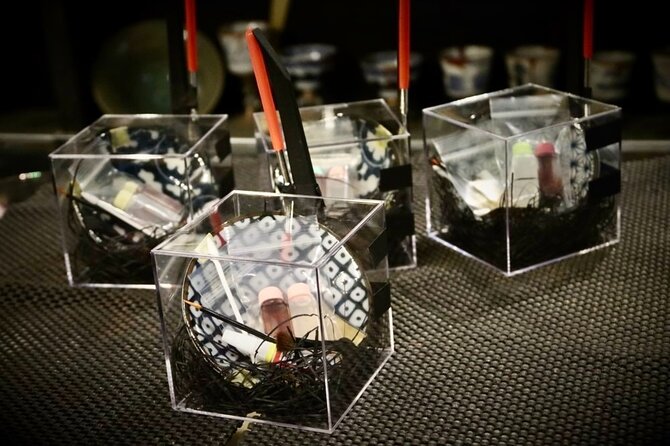
At $59.69 per person, the price can feel almost too reasonable for Tokyo, especially because you’re leaving with something you made. What makes it feel like real value is what’s bundled in.
You get the lesson fee, the ceramic plate for practice and for taking home, and all the necessary equipment. Taxes and handling charges are included too. In other words, you are paying mostly for instruction plus materials, not for a bare-bones guided walk.
The short duration also matters for value. One hour means you are not paying for a half-day that eats your schedule. It’s easier to fit into a day that already includes Omotesando-style strolling, cafes, and museum time.
What is not included is food and drinks, so plan on a snack or meal before or after. Also, the booking system uses a mobile ticket, so make sure you can access it on your phone without panic.
One more value point: group discounts can apply. If you’re traveling with someone and you can line up the timing, this kind of class can become an even better deal per person.
Who This Kintsugi Class Suits, and Who Might Want to Skip
This is a great choice if you want:
- a hands-on Tokyo craft that’s short enough to do on a busy day
- a souvenir that is personal, and not just decorative shopping
- a cultural lesson where philosophy connects to the physical act of repairing
- patient instruction, even if you have no art background
If you are traveling with a friend or family member and you like doing one shared activity, this class works well. The small-group feel helps, and the process is learnable.
You might want to skip or adjust your expectations if:
- you wanted to repair your own broken pottery. The class uses a studio-supplied plate, and personal items are not allowed.
- you are planning to bring a child under 6. They cannot enter the atelier for safety reasons.
- you are the kind of traveler who may change dates last minute. The experience is non-refundable and cannot be changed for any reason, so commit to the time you book.
Should You Book This Kintsugi Experience in Tokyo?
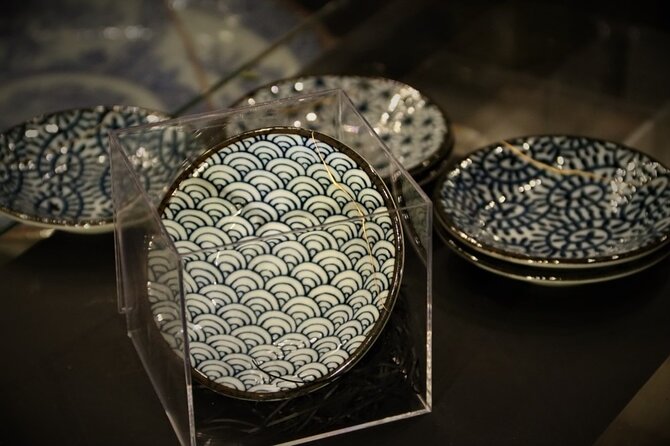
I think this is one of those “do it, even if you are not an artsy person” activities. The craft is visual and satisfying, the teaching supports beginners, and the souvenir is genuinely meaningful because you made it. You also get the philosophy behind the technique, which is what turns a craft class into a memory with a message.
Book it if you want a calm, hands-on hour in Tokyo that results in something you can keep. Choose the 11:00am class if meeting Master Taku matters to you. Bring good timing, and be ready to work with the plate they provide, not your own broken item.
If you want to fix a family heirloom, or you need a class you can easily reschedule, look for a different option. But for most first-time visitors who want a real craft experience, this is strong value and a very Japan kind of takeaway.
FAQ
How long is the kintsugi lesson?
The experience lasts about 1 hour.
Where do I meet for the workshop?
You meet at TNCA Minami-Aoyama Studio, 3-chōme-8-2 Minamiaoyama, Minato City, Tokyo 107-0062, Japan. The activity ends back at the meeting point.
What do I get to take home?
You repair a ceramic plate provided by the studio, and you bring that plate home after the lesson.
Can I repair my own broken pottery?
No. Personal items are not allowed. The studio provides the plate you use for the lesson.
Is there an age limit?
Yes. Under 6 years of age cannot enter the atelier for safety reasons.
How big is the group?
The studio lesson is described as a capped group with no more than 10 guests. The activity also lists a maximum of 20 travelers.
Is the workshop refundable?
No. The experience is non-refundable and cannot be changed for any reason.
What ticket do I receive?
You receive a mobile ticket.
Fresh options around Tokyo
- Tokyo: Nikko Kegon Falls Lake Chuzenji Toshogu Temple & More★ 4.9 · 12 reviews
- Tokyo: Samurai History Walking Tour★ 5.0 · 12 reviews
- Harajuku: Kawaii Fashion and Pop-Culture Tour★ 4.7 · 12 reviews
- Tokyo: Mt. Fuji & Lake Kawaguchi Instagram Full Day Trip★ 4.1 · 12 reviews
- Shibuya Tokyo: Modern Kintsugi Workshop in Shibuya★ 5.0 · 12 reviews
- Tokyo: GTR Guided Daikoku Experience at Night★ 5.0 · 12 reviews
- Tokyo: Daikoku JDM Car Culture Tour★ 4.6 · 12 reviews
- Mt Fuji Private Day Trip from Tokyo with English speaking driver★ 5.0 · 13 reviews
Tokyo Tours, compared.

Mt Fuji and Hakone 1-Day Bus Tour Return by Bullet Train
Read our review →


teamLab Planets TOKYO Digital Art Museum Entry Ticket
Read our review →
Mt Fuji & Hakone Cruise, Drum Show Bullet Train 1 Day from Tokyo
Read our review →
Sumo Show Experience with Chicken Hot Pot and a Photo
Read our review →
Shinjuku Food Tour (13 Dishes at 4 Local Eateries)
Read our review →