Reviewed · TOKYO TOURS
Calligraphy & print your calligraphy on a T-shirt.
Brush ink on a wearable souvenir. This hands-on Japanese calligraphy class in Honshu, Japan teaches the history of Japanese characters and the meaning behind how writing is done, with English guidance from Mana. You get the cultural story first, so the strokes feel like more than a craft.
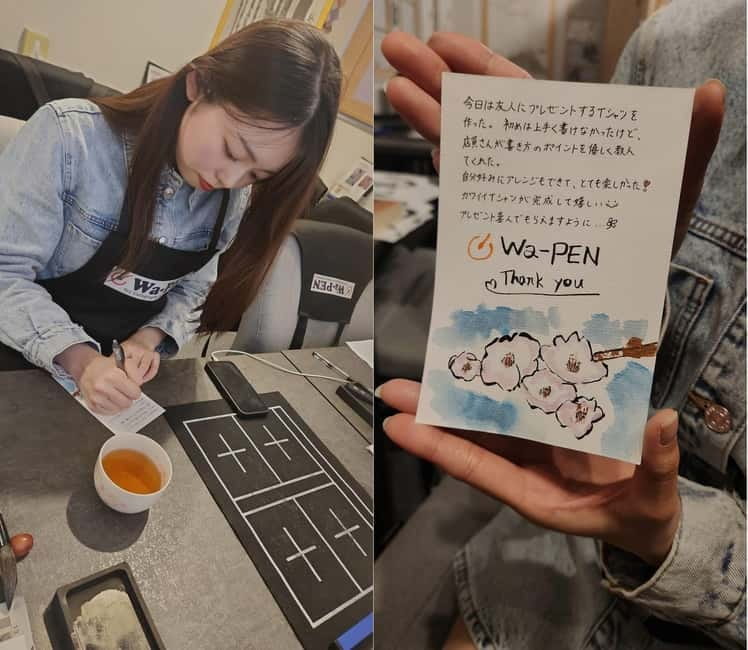
Then you move to the practical magic: you mix ink with water and a Sumi ink stick, practice with a fude brush, and finish by printing your selected design onto a T-shirt. I also love the calm pacing, especially the cup of green tea while you write a postcard to take home. The main tradeoff is simple, wear clothes you do not mind getting ink on.
Key moments you will remember
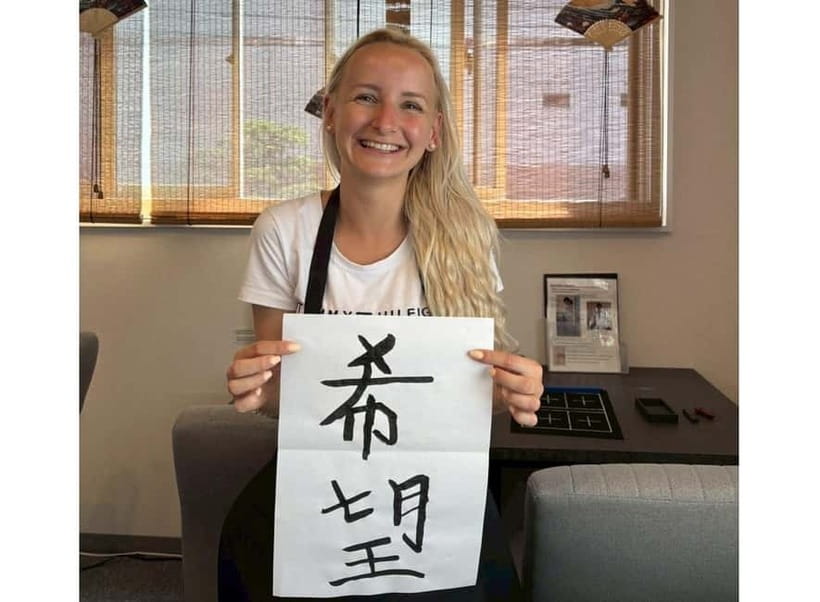
- Sumi ink, made by you: you prepare ink with water and a Sumi ink stick, not just use what is already made
- Fude practice with real tools: thin paper, a brush pen style you learn to control, and expert corrections
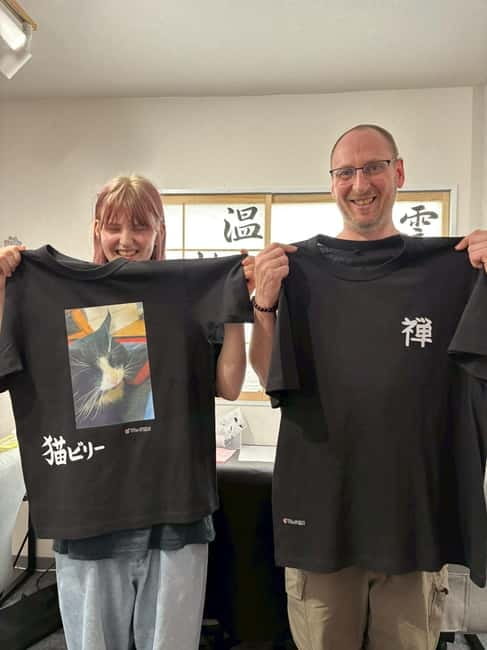
- Design choice that becomes wearable art: pick what you like, then choose where it prints on your clothing
- A postcard souvenir with your writing: you write it during class as part of the experience
- Green tea break, built into the flow: it keeps the session relaxing instead of rushed
Japanese Calligraphy Meets a T-Shirt, in 90 Minutes
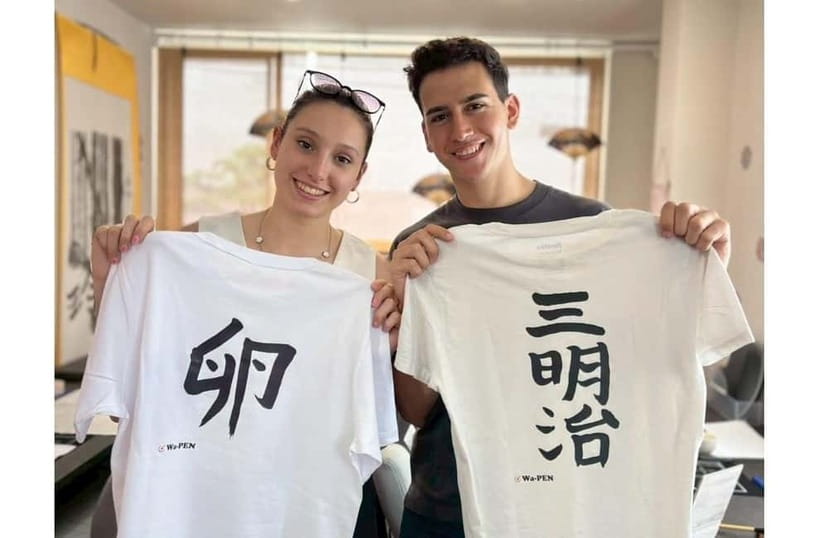
This class is for anyone who has wanted to try Japanese calligraphy but worried it would be too complicated. It is hands-on, structured, and paced so you get real results you can take home. You end up with two souvenirs, a postcard and a T-shirt with your own design.
The best part is that it is not just stamping a logo. You learn why strokes look the way they do, and you practice enough to build muscle memory before you commit to the final look.
A few more Tokyo days worth comparing
- Mt Fuji and Hakone 1-Day Bus Tour Return by Bullet Train
★ 5.0 · 26,383 reviews - 1-Day Tokyo Bus Tour
★ 5.0 · 14,250 reviews - Tokyo: TOKYO SKYTREE® Admission ticket
★ 4.5 · 11,192 reviews
Finding the Red Brick Building, and Showing Up Ready
The meeting point is a red brick building on the 3rd floor. There is a sign on the 1st floor, and the restaurant is also on the 1st floor. Go up the stairs to the right of the restaurant.
Plan to arrive 10 minutes early. That timing helps you settle in, get your materials set up, and avoid feeling rushed. Comfortable clothes are the call, and bring ones you do not mind if a little ink makes an appearance.
History First, So Your Writing Means Something
Class starts with learning about Japanese characters and culture from an expert. This matters because calligraphy is not just about spelling. It is about style, balance, and how writing connects to everyday life and tradition.
You also learn what to pay attention to before you start copying. That early guidance makes practice more productive, even if you have never held a brush for writing.
You can expect English instruction throughout, so you are not stuck decoding instructions. If you want to ask questions, this is a good moment, before your paper is already in front of you.
Making Ink with Water and a Sumi Stick
Next comes one of the most satisfying steps: making ink. You combine water with a Sumi ink stick, learning how to use it in a traditional way.
Then you get the inkstone setup, plus the support tools that make brushwork easier. You also learn how to use a Japanese pen called fude, which is the brush-style writing implement used for shodo.
This portion is great value because it turns the class from a one-time activity into something you understand. Even if you never reproduce the exact same ink texture at home, you will understand the why behind it.
Same corner of Japan, a different kind of day:
- Tokyo: teamLab Planets TOKYO Digital Art Museum Entry Ticket
★ 4.6 · 9,779 reviews - Mt Fuji & Hakone Cruise, Drum Show Bullet Train 1 Day from Tokyo
★ 4.0 · 7,413 reviews - Tokyo: Sumo Show Experience with Chicken Hot Pot and a Photo
★ 4.8 · 6,678 reviews - Tokyo: Shinjuku Food Tour (13 Dishes at 4 Local Eateries)
★ 5.0 · 6,603 reviews
30 Minutes of Practice on Thin Paper
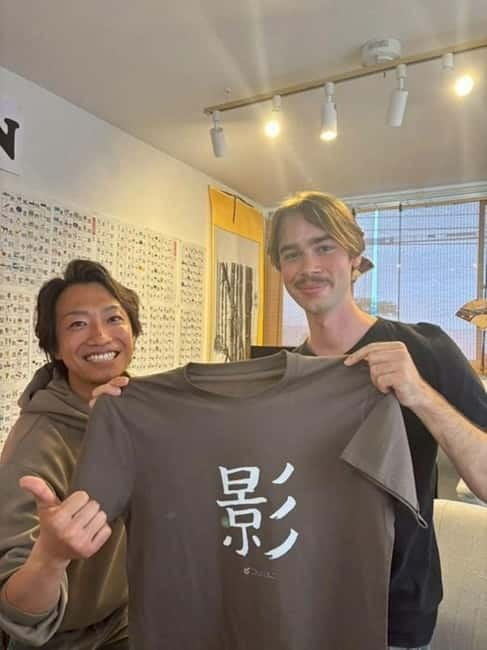
You get a full practice block, about 30 minutes, writing on thin paper with an expert. The paper is intentionally delicate. That pressure is part of the lesson, it forces you to control your brush and your speed.
You practice writing first, instead of going straight to the final design. That is key for confidence. The instructor guides your grip, stroke direction, and overall shape so you are not fighting the tool.
You will also create a postcard during the practice and writing portion. It is a practical way to try your writing again in a smaller format, and it becomes a real souvenir instead of scrap paper.
Choosing Your Favorite Design, Then Picking the Placement
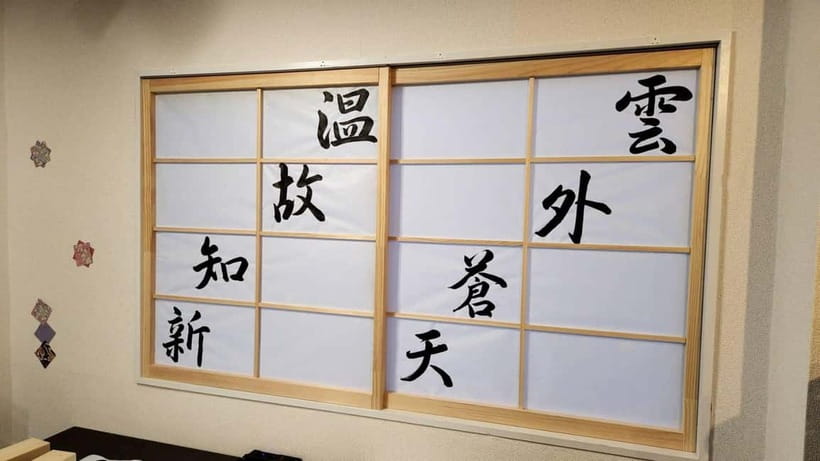
After practicing, you choose your favorite design. Then you decide where it goes on your clothing. That part feels personal, because you are making aesthetic choices, not just following a preset layout.
Design selection usually gives you a chance to compare different options side by side. If one looks better to your eye, that is the one you go with. It also helps to think about placement early, because the final look depends on how the calligraphy sits on the shirt.
If you are the type who loves customizing details, this is your moment. If you are more hands-on, just follow the instructor’s guidance and aim for a stroke style you can reproduce confidently.
The Wait: Printing Your Design onto Your T-Shirt
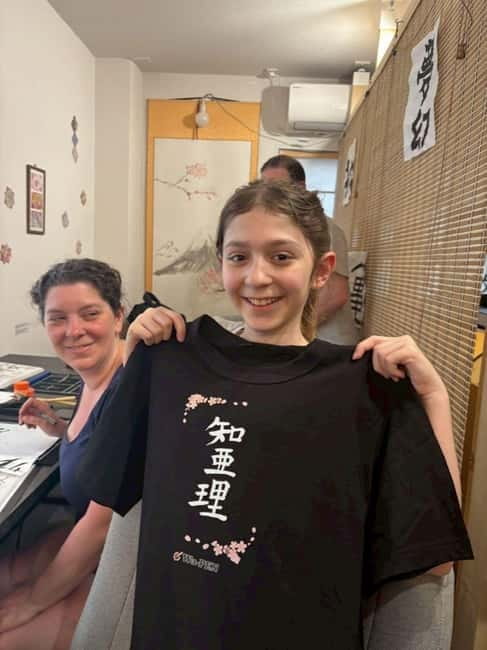
Once your design is chosen, the class shifts into the “creation to wearable” step. You will enjoy a cup of green tea as you write your postcard, and during the process your clothes are prepared.
After about 10 minutes, your T-shirt is printed with your design and becomes ready to take home. This timing is short enough that the class stays light, but long enough that your final output is ready before you leave.
If you are in the Asakusa area, this is a nice setup for morning planning. You can do the class, then use the in-between time for nearby sightseeing while the shirt is being finalized.
What You Actually Get, and Why It Feels Worth $48
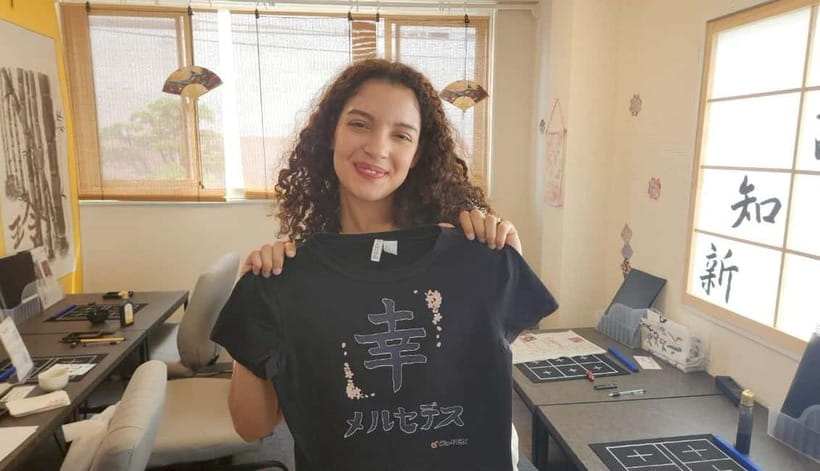
The price is $48 per person, and it can feel fair when you look at what is included. You are not paying just for instruction. You are also getting the materials and the finished products.
Included items cover the essentials:
- Expert guidance on Japanese writing
- All necessary writing materials, including pen, paper, ink, inkstone, paper-stopper, and under pad
- Green tea
- Postcard
- T-shirts
That last part matters. A lot of art workshops sell you instruction, then charge extra for the surface you take home. Here, your T-shirt is part of the package, and the design you create becomes wearable.
Also, you are getting both education and output. Learning the history of Japanese characters adds meaning, and the hands-on steps create something you can hold in your hands.
Small Group Energy, Big Instructor Attention
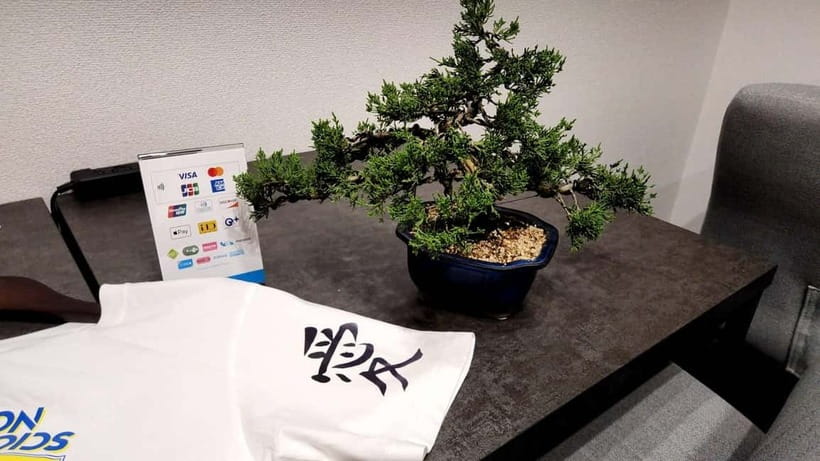
Classes are taught by Mana in English. The teaching style is patient and practical, with enough time for you to practice and get pointers. If you end up in a small group, it can feel extra special and less performative.
There are also moments that help the class feel human, not scripted. For example, one of the nice touches mentioned is that Mana may deliver creations personally when they are ready.
If you are coming with kids, this is one of those activities that can work well because the instruction is engaging and the session has clear steps. The tools are traditional, but the learning process is guided enough to stay fun.
Practical Tips That Make the Class Easier
These are the small things that help you enjoy it instead of stressing.
Wear clothes you do not mind getting ink on. Even if you are careful, ink work can be messy.
Wear comfortable clothes because you will be seated and practicing with paper. If you can move easily, you will write more naturally.
If you have a specific design style you like, think about it before you sit down. This makes choosing your design faster and helps you commit to strokes you feel good about.
Finally, take the green tea break seriously. It is not filler. It is part of the calm rhythm of the session, and it helps you focus while you write your postcard.
Optional Fan Calligraphy, If Offered
One helpful extra that you might see is an option to extend the session with fan calligraphy, for a small fee. That add-on was offered during one class experience, so it depends on the instructor’s plan that day.
If you want something more than the T-shirt output, ask if there is an extension option when you arrive. If it is available, it can be a fun way to broaden what you try beyond the basic postcard and shirt.
Who Should Book This Calligraphy T-Shirt Class?
You should book if you:
- Want a hands-on introduction to Japanese calligraphy, with guidance
- Like cultural context, not just a craft
- Want a take-home souvenir that looks good and feels personal
- Travel with time for a short class, then want to keep exploring after
You might want to consider something else if you:
- Expect a long, deep, beginner-to-advanced training session
- Are extremely sensitive to getting ink on clothes, even with precautions
That said, for most people, this hits a sweet spot. You get both learning and a finished product in about 1 hour to 90 minutes.
Should You Book It?
Yes, I think you should book this if you want an authentic souvenir that is made with your own hands. The value is strong because you get instruction, real tools, ink-making, and a T-shirt plus postcard.
It is also a smart choice for first-timers. The class starts with history and basic technique, then gets practical quickly. You are not left figuring things out alone.
Book it if you can wear old clothes, show up a few minutes early, and treat the session like a calm art lesson. Do that, and you will leave with something better than a postcard photo, a wearable piece of calligraphy you can actually keep.
FAQ
Where is the meeting point?
It’s in a red brick building on the 3rd floor. There is a sign on the 1st floor, and the restaurant is on the 1st floor. Go up the stairs to the right of the restaurant.
How long does the class take?
The experience lasts about 1 hour to 90 minutes, depending on the session time.
Is the instruction in English?
Yes. The instructor teaches in English.
What is the price?
It costs $48 per person.
What should I wear?
Wear comfortable clothes. You should also wear clothes you do not mind getting ink on.
What is included in the class?
You get expert guidance, all necessary writing materials (including pen, paper, ink, inkstone, paper-stopper, under pad), green tea, a postcard, and T-shirts.
Will I get my own T-shirt to take home?
Yes. Your custom design will be ready to take home after the class, and your clothes will be printed with your design during the session.
When does the printing happen?
After you write and enjoy the green tea, your T-shirt is printed after about 10 minutes, then it is ready to take home.
Do I need to bring any supplies?
No. All necessary writing materials are included.
What are the cancellation and payment options?
You can cancel up to 24 hours in advance for a full refund. You can also reserve now and pay later to keep your plans flexible.
Fresh options around Tokyo
- Tokyo: Nikko Kegon Falls Lake Chuzenji Toshogu Temple & More★ 4.9 · 12 reviews
- Tokyo: Samurai History Walking Tour★ 5.0 · 12 reviews
- Harajuku: Kawaii Fashion and Pop-Culture Tour★ 4.7 · 12 reviews
- Tokyo: Mt. Fuji & Lake Kawaguchi Instagram Full Day Trip★ 4.1 · 12 reviews
- Shibuya Tokyo: Modern Kintsugi Workshop in Shibuya★ 5.0 · 12 reviews
- Tokyo: GTR Guided Daikoku Experience at Night★ 5.0 · 12 reviews
- Tokyo: Daikoku JDM Car Culture Tour★ 4.6 · 12 reviews
- Mt Fuji Private Day Trip from Tokyo with English speaking driver★ 5.0 · 13 reviews
Tokyo Tours, compared.

Mt Fuji and Hakone 1-Day Bus Tour Return by Bullet Train
Read our review →


teamLab Planets TOKYO Digital Art Museum Entry Ticket
Read our review →
Mt Fuji & Hakone Cruise, Drum Show Bullet Train 1 Day from Tokyo
Read our review →
Sumo Show Experience with Chicken Hot Pot and a Photo
Read our review →
Shinjuku Food Tour (13 Dishes at 4 Local Eateries)
Read our review →