
Reviewed · 3-HOUR EXPERIENCES
All must-sees in 3 hours – Nara Park Classic Tour! From JR Nara!
Nara Park makes more sense with a guide. This 3-hour Nara Park Classic Tour strings together JR Nara Station, Kasuga Grand Shrine deer-spotting, and the Todai-ji Great Buddha Hall with clear, human explanations that help you look up instead of down. I especially like how the guide turns the deer from a gimmick into a story, and how the religion and temple background makes the whole park feel less random.
The one thing to plan around is timing. This is a group tour, it starts punctually, and if you arrive late you cannot join the tour.
Key highlights at a glance
- JR Nara Station start at the ticket gates, with a white NaraWalk flag to spot your guide fast
- Kasuga Grand Shrine for deer roaming close to the path, plus explanations of Shinto and Buddhism
- Todai-ji Great Buddha Hall included admission and a classic photo stop
- Nara Park loop that can include Todaiji area sights plus nearby shrines/temples depending on pace and season
- Small group size (maximum 15) so questions actually get answered
- Finish with directions for trains and afternoon plans after the walk ends at Kofuku-ji
JR Nara Station to Nara Park: the logistics that actually matter
If you have only a few hours in Nara, this tour is built for getting your bearings quickly. You meet at JR Nara Station in front of the ticket gates. There is one main ticket-gate area for meeting, so it is pretty straightforward: come out, look for your guide holding a white NaraWalk flag, and you are set.
One practical win is that you get one bus ride from JR Nara Station to the Nara Park area. That matters because the temples are spread out enough that walking the whole route from the station can eat your time fast. The tour then shifts into the classic Nara Park rhythm: short waits, guided stops, and lots of looking around.
This is also a true group format, not private. Maximum group size is 15, so you are not stuck in a giant crowd, but you are also not free to wander off whenever you want. The tour tends to end around 1 pm, which is what gives you breathing room for self-guided wandering afterward.
One more thing that affects your day: the route includes steps and a gravel path. If you are pushing a stroller, expect it to be harder than you want, and you may need to carry it or push carefully over uneven surfaces. For most people, solid walking shoes are the real “must pack” here.
A few more Nara days worth comparing
- World Heritage Kyoto & Nara Uji Authentic Matcha Experience
★ 5.0 · 1,573 reviews - Nara Half Day Trip Walking Tour (Private Option Available)
★ 5.0 · 937 reviews - Nara Early Morning Tour (Kyoto or Osaka Departure Available)
★ 5.0 · 676 reviews
Kasuga Grand Shrine deer-spotting, plus Shinto vs Buddhism in plain language
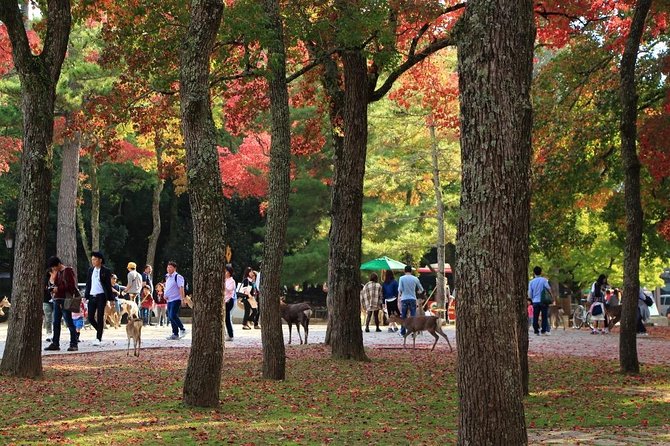
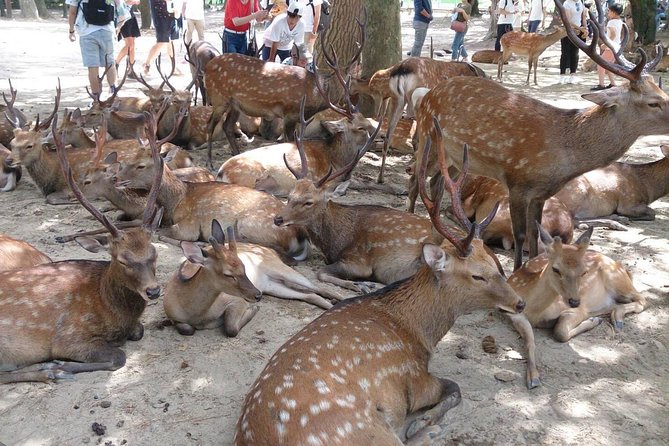
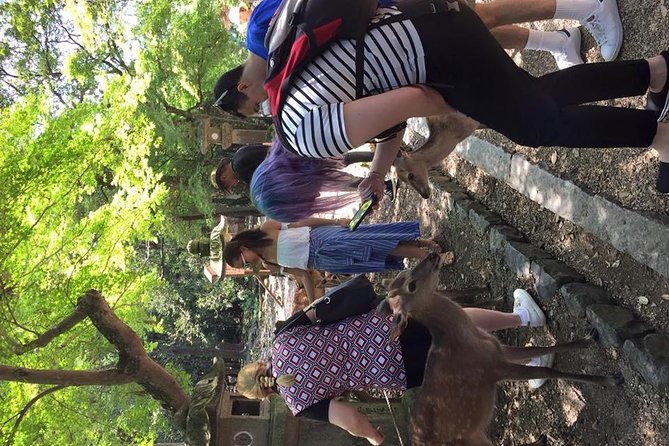
Kasuga Grand Shrine is where Nara’s famous deer energy kicks in. Your guide walks you through the precinct, and chances are good you will see deer moving through the area in between visitors, often close enough that they feel less like wildlife and more like part of the scenery.
What I like is that the guide uses the deer situation to explain the bigger picture. Instead of treating deer like a photo prop, the tour connects them to Nara’s shrine culture and to why animals are allowed to roam. The guide also addresses the difference between Shinto and Buddhism, which helps you make sense of why shrines and temples can feel related, but still distinct, in Japan.
You will typically spend about 30 minutes here. That is long enough to see what is going on, get your questions answered, and collect some photos without feeling like you are rushing past the best moments.
Heads up for your photo game: deer can shift direction quickly, and some may look calm while others are more curious than you expect. If you plan to feed deer later in the park, keep an eye on what the guide says so you do not end up doing something that makes the animals uncomfortable.
Todai-ji Great Buddha Hall: a photo stop with context, not just posing
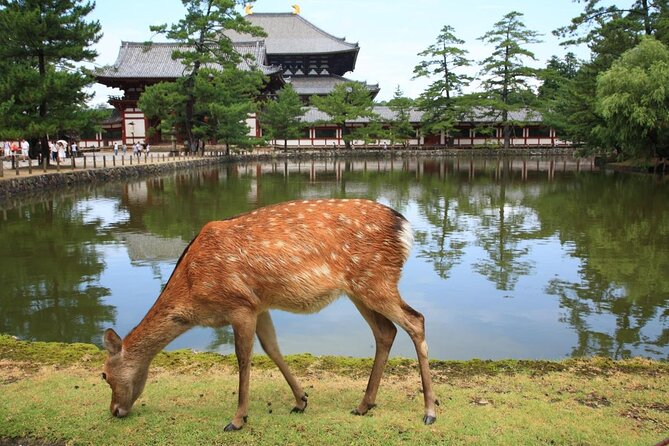
Next comes Todai-ji Temple and the Great Buddha Hall. This is the centerpiece for many first-time visitors, and the included admission is a nice value add because it is one of the biggest attractions on the route.
About 40 minutes at Todai-ji gives you time for the hall itself, listening to the stories behind the Big Buddha, and then getting your photos. What makes the stop work well for me is that the guide does not treat the statue like a museum object. You get the background so you understand why it matters, what you are looking at, and how the temple fits into Nara’s religious history.
There is also a famous “good health” practice people talk about at the site: a small passage hole associated with the pillars by the Great Buddha area. If you want to try it, bring patience and a sense of humor. It is narrow, and it is not about speed. It is about the experience, not squeezing past like a sports highlight.
Practical tip: the hall can be busy around peak times, so your best photos are often the ones where you step slightly aside and let the flow of visitors move. The guide can help you choose a spot that is less chaotic.
Nara Park highlights: seeing more by letting the guide choose the route
After Todai-ji, the tour moves through the wider Nara Park zone. This part is designed to hit multiple “main site” targets without you having to map every turn yourself.
The tour description signals a flexible approach. Depending on season and group speed, your guide may add more stops in the park area, but the plan centers on major sights that cluster around Nara Park, including the Todaiji area and nearby shrine and temple stops.
In your daily planning, this is valuable because it reduces the “what do I do next?” stress. Nara Park can feel like a choose-your-own-adventure, but only if you already know how everything connects. With this route, you are basically handed a ready-made path.
Expect about 30 minutes in this Nara Park segment. That is enough time to enjoy the atmosphere, notice how people and deer share the grounds, and still feel like you are moving toward the next landmark rather than looping in place.
And yes, deer show up again here. They can be surprisingly bold at Nara Park, which is why following the guide’s advice about feeding matters. One useful caution from the experience: male deer can get frisky, and they may react if they feel threatened. The goal is calm interaction and respectful distance, not “let’s see what happens.”
Same corner of Japan, a different kind of day:
- Osaka: Nara and Uji Day Trip with Deer Park and Hot Spring
★ 4.4 · 302 reviews - Kyoto/Osaka: Kinkakuji, Bamboo Forest, and Nara Deer Park
★ 4.4 · 265 reviews - Nara 6hr Private Tour with Government-Licensed Guide
★ 5.0 · 219 reviews - E-Bike Nara Highlights – Todaiji, Knives, Deer, Shrine
★ 4.8 · 186 reviews
Kofuku-ji pagoda finish: a strong end point with practical next steps
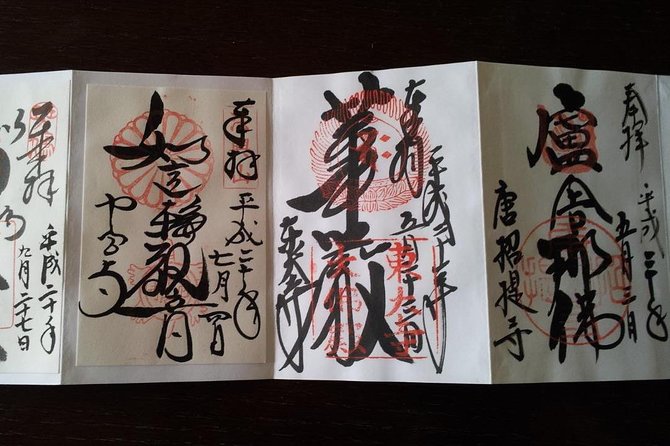
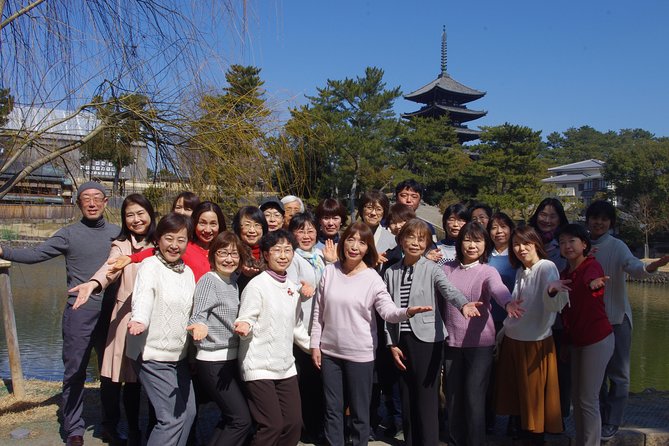
Most tours end at Kofuku-ji Temple, typically after about 20 minutes. This finish is a smart choice because Kofuku-ji’s five-storied pagoda is photogenic, and it is a natural transition point for wrapping up your Nara Park highlights.
The guide also uses this last stop to help you with real-life logistics. You get direction for train stations and advice for what to do next in the afternoon. This is underrated. Nara is easy to enjoy when you are not also trying to figure out transportation on the fly.
If you have ever wandered off after a big sightseeing chunk and realized you spent the next hour trying to work out how to get back, you will appreciate this part. It gives your day a clean finish so you can move on to your next destination without the mental clutter.
Pacing, walking, and the smart way to plan your shoes and your schedule
This tour is about 3 hours total, starting at 10:00 am. That compact timing is perfect if you are doing Nara as a day trip from Kyoto or Osaka, or if you already saw a lot and just want the park’s essentials.
The pace is usually designed to be workable, but it is still a walking tour. You are outdoors, you are on uneven ground in places (gravel path, steps), and you will be standing and moving between shrines and temples. In hotter months, that can feel like a lot. For me, the biggest “make or break” factor is footwear and water planning, since meals and drinks are not included.
Who this suits best:
- First-time visitors who want the top sights without the map-and-decoder work
- People who like culture explanations, especially the Shinto vs Buddhism context
- Families who want a guided flow but still want time after the tour to roam
- Anyone who prefers a guide to help manage crowds and spot photo angles
Who might rethink it:
- If you hate group pacing or you need frequent unscheduled stops
- If you rely on a stroller and cannot manage stairs or gravel paths
- If you are very sensitive to strict meeting times, because late arrivals cannot join
Price and value check: why $42.94 can make sense in Japan
At $42.94 per person, this tour has a clear value logic. You are paying for guidance, plus two concrete cost savers:
- Admission to the Great Buddha Hall
- One bus ride from JR Nara Station to the Nara Park area
You are also not paying for meals, so you will want a separate lunch plan. Still, when you add up a major attraction ticket plus transit support plus an efficient route, the price can feel fair, especially if Nara is one of your only stops on that day.
The other value is time. In just about half a day, you can knock off the core park icons and also get a “what next” handoff for the afternoon. That is often where guided tours pay off, because you do not just see the sites, you leave with a plan.
Small-group reality: guides like Mayumi, Nobuko, Seiko, and Reiko can change the feel
One of the biggest reasons this tour has such a strong reputation is the human factor: guides communicate clearly and answer questions. Names that show up again and again include Mayumi, Nobuko, Seiko, Kazu, Reiko, Makiko, Yoshi, and Setsuko. While each guide has their own style, the common thread is that they bring the sites to life with stories and explanations.
What I think you will notice right away is how the guide uses eye level information. The whole point is to look at the actual place around you: deer behavior, temple details, the feel of shrine grounds, and how the religious ideas connect.
Most tours work smoothly, but one honest consideration is this: English clarity and pacing can vary by guide and by group energy. If you are the kind of traveler who needs every sentence to land perfectly, you might find the experience depends on that particular day. Still, the overall structure is consistent enough that even if you miss a detail here and there, you still get the sights.
Also, while the tour is supposed to start punctually and not wait for late arrivals, real life happens. If you need a stress-free morning, build extra buffer time getting from your hotel to JR Nara Station.
Should you book the Nara Park Classic Tour?
Book it if:
- You want the top Nara Park must-sees in a short window
- You like learning why things matter, not just what they are
- You would rather follow a proven route than gamble on self-guided timing
- You appreciate help with train stations and afternoon plans when you are done
Skip it or choose a different format if:
- You prefer fully independent wandering with no group pacing
- You cannot manage steps and gravel path conditions
- You are arriving late or you cannot guarantee an on-time start
My bottom line: this tour is a smart way to get the essentials of Nara Park without turning your day into navigation work. The deer and temples are already spectacular, but what makes this one worth it is the way the guide connects the sites to culture and context, then hands you back time to enjoy the rest of Nara on your own.
FAQ
Where is the meeting point?
You meet at JR Nara Station in front of the ticket gates. Your guide is there holding a white NaraWalk flag.
What time does the tour start?
The tour starts at 10:00 am.
How long is the tour?
It runs for about 3 hours.
Is this tour private?
No. It is a group walking tour with a maximum of 15 travelers.
What is included in the price?
The price includes admission to the Great Buddha Hall, plus one bus ride from JR Nara Station to the Nara Park area.
Are meals included?
No. Meals and drinks are not included.
Does the tour end back at Nara Station?
No. The tour ends in a different location than where it starts.
Is the route stroller-friendly?
The route includes steps and a gravel path. A stroller may be hard to push, and you might need to carry it or handle it carefully.
What is the cancellation policy?
You can cancel for free up to 24 hours before the experience starts for a full refund. If cancelled less than 24 hours before, the amount paid is not refunded. If the tour is cancelled due to poor weather, you are offered a different date or a full refund.
Fresh options around Nara
- Nara World Heritage PRIVATE TOUR★ 4.5 · 15 reviews
- Nara: Todai-ji y parque de Nara (Spanish Guide)★ 5.0 · 16 reviews
- Nara Private Tour: Flexible Pickup from Kyoto, Osaka, or Nara★ 5.0 · 17 reviews
- Nara – Heart of Nature Cross Bike Tour★ 5.0 · 19 reviews
- Nara:Tea Tasting&Private Tea Ceremony -Master Matcha Making-★ 5.0 · 19 reviews
- Make Your Own Soy Sauce in Japan’s Old Capital Asuka Nara★ 5.0 · 22 reviews
- Nara: Essential Private Tour with Deer Park and Temples★ 5.0 · 24 reviews
- Nara:5 Type of Tea Tasting & Mindful Tea Ceremony★ 5.0 · 28 reviews
3-Hour Experiences, compared.

3-Hour Kyoto Insider Sake Brewery Tour with Tastings & Pairings
Read our review →

3h Tokyo E-Bike Tour: Hidden Gems, and Local Life with guide
Read our review →

3-hour Guided E-Bike Tour of the City’s Hidden Gems
Read our review →
3-Hour Tokyo Pub Crawl Nightlife Welcome Guided Tour in Shibuya
Read our review →
3-Hour Bike/E-Bike Tour of the City’s Highlights
Read our review →Browse the lists this tour appears in