
Reviewed · NARA TOURS
Kyoto/Osaka: Kinkakuji, Bamboo Forest, and Nara Deer Park
Kyoto and Nara in one day feels almost unfair. You get Kinkaku-ji shining with gold-leaf drama, plus the Sagano bamboo forest with that classic rustle that makes you slow down. The tradeoff is real: the pace can feel a bit rushed at each stop, especially when crowds are high.
What makes this trip work is the structure. You ride a comfortable coach, follow an English-speaking guide through the highlights, and avoid the stress of switching trains while you are trying to enjoy sacred temples and wild deer. If you want to linger for hours, you might feel like you are on a timetable instead of on vacation time.
Still, for first-timers, this hits a lot of the big icons without turning your day into a logistics puzzle. And if your guide is Eiko, Yuki, Jewel, Hama, or Winnie (names that show up in past departures), you can expect thoughtful explanations and solid help with where to go and when to meet back up.
Key things that make this day trip worth your time
- Golden Pavilion photos stay worth it because you get time for both the view and the gardens that keep an original 14th-century layout.
- Arashiyama bamboo feels special on foot, with the Katsura River area and Togetsukyo bridge in the mix.
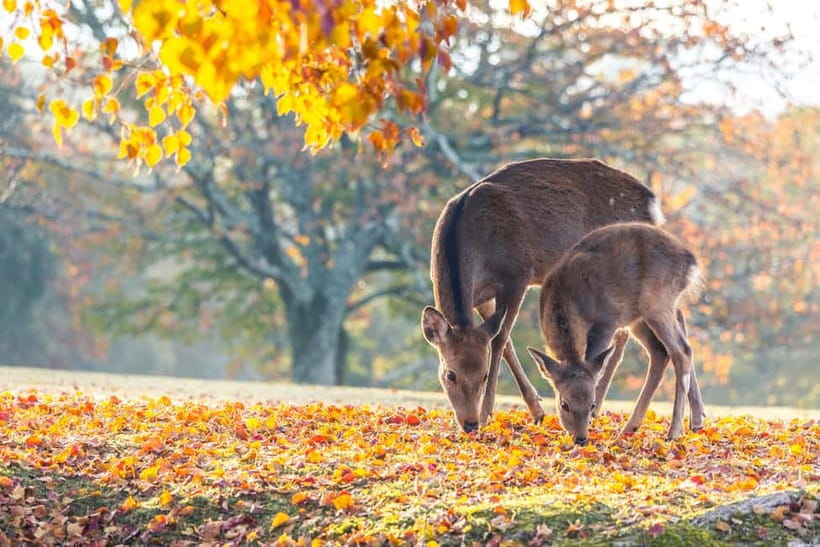
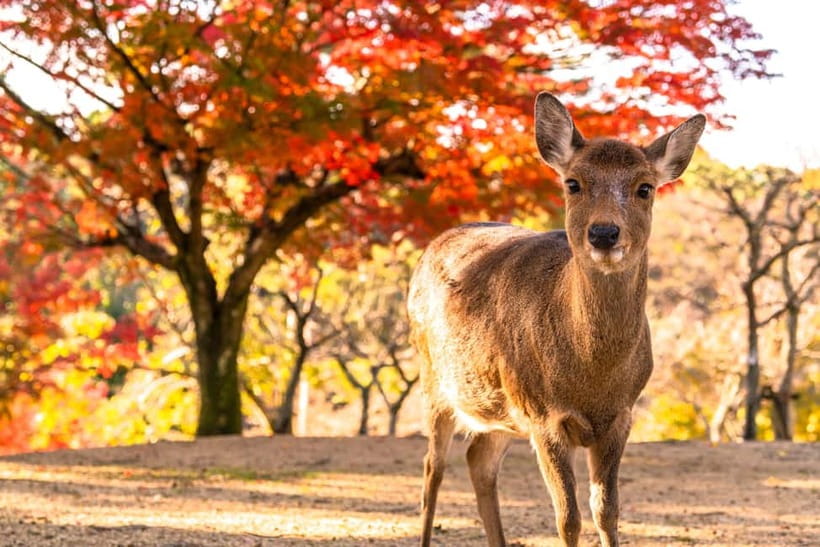
- Nara Park deer feeding is easy, if you follow rules, using shika-senbei only, and watching for the famous bowing behavior.
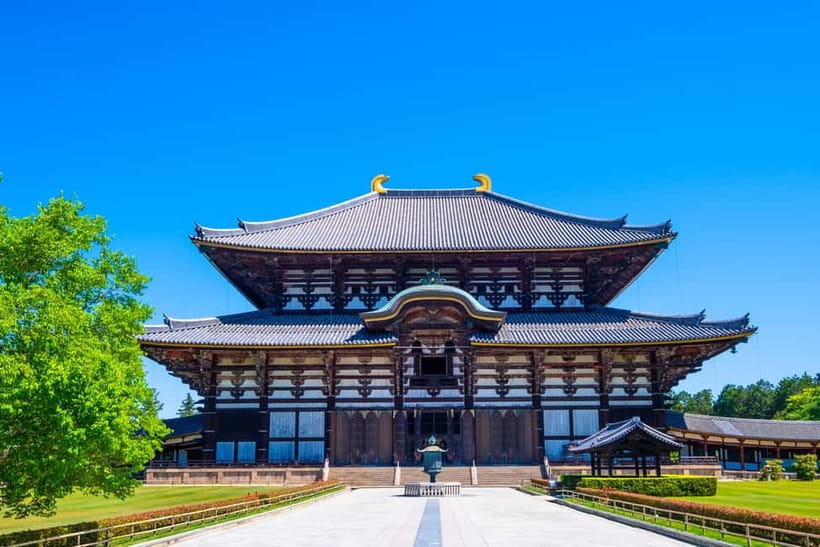
- Todai-ji delivers the scale factor, with the Great Buddha statue living in one of Japan’s most important temple complexes.
- Group logistics are handled well, with guides reported to be organized about meeting points and directions.
- The coach is built for comfort, with air-conditioning and Wi-Fi.
Why Kyoto, Osaka, and Nara fit together so well
If you base yourself in Kyoto or Osaka, this day trip is one of the simplest ways to cover three “must-see” places without spending your day figuring out routes. Arashiyama is a nature moment. Kinkaku-ji is a visual wow. Nara Park and Todai-ji bring history and an almost theatrical animal encounter.
The value is not only the sites. It’s the handrails. Your English-speaking guide lays out what to look for, where free time starts and ends, and how to find the group again. More than one review highlighted how guides helped people get back on track if they got separated, and that matters when you are dealing with crowds at big landmarks.
You also get a comfortable coach with Wi-Fi. That seems small until you realize it gives you a place to reset before a temple visit or between long walks in busy areas.
More Arashiyama tours:
- Kyoto: Fushimi Inari, Kinkakuji, Bamboo Grove 1 Day Bus Tour
★ 4.8 · 4,316 reviews - Osaka/Kyoto:Kinkakuji,Arashiyama,FushimiInariShrine,NaraPark
★ 4.1 · 1,596 reviews - Kyoto/Osaka: Nara, Fushimi Inari Taisha, Arashiyama Bus Tour
★ 4.7 · 1,275 reviews
Arashiyama bamboo forest: rustle, crowds, and Togetsukyo
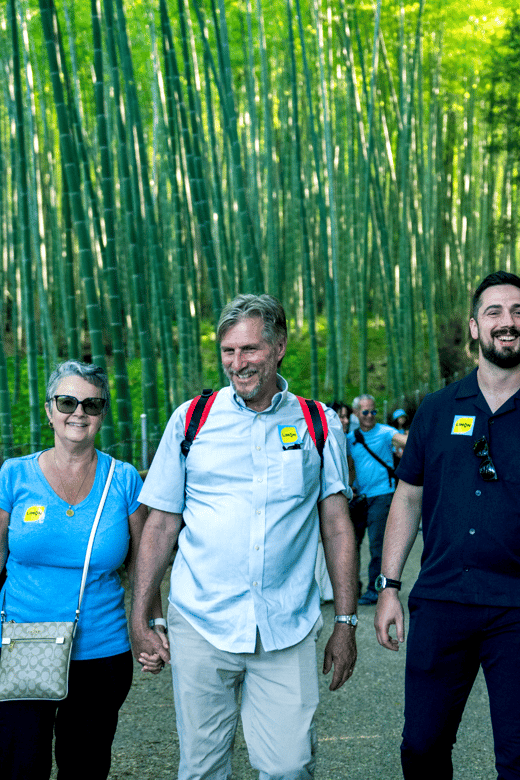
Most days start with Arashiyama, and that order is smart. It gets you into the outdoors early before the later temple crush. You’ll first enjoy a traditional Japanese lunch of seasonal Kyoto specialties if you selected the lunch option. After that, you head into the Sagano Bamboo Forest area.
What I like about this part is how it changes when you slow down. The bamboo grove is not just a pretty walkway. You notice the sound of leaves. You look for angles where the stalks line up. And you start moving more quietly than you would at a theme park, because the setting pushes you that way.
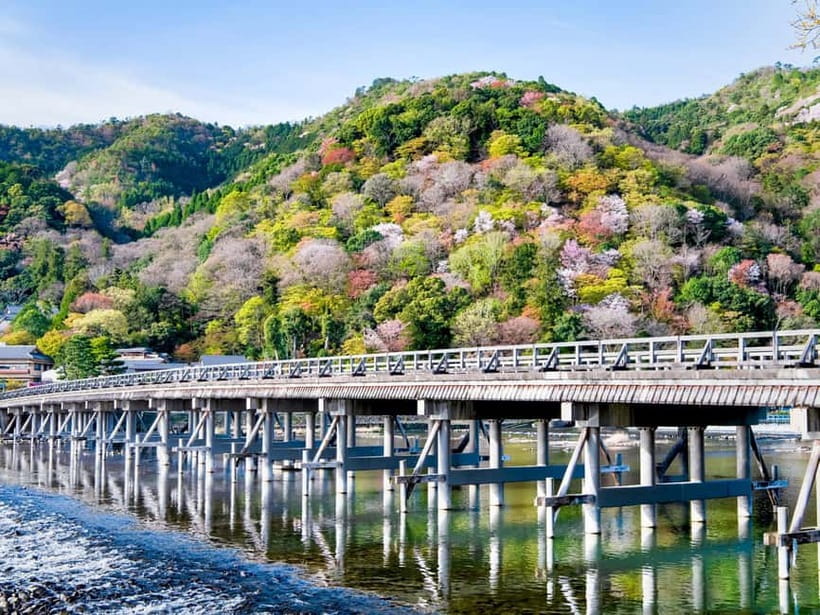
You can also spot the “moon-crossing bridge,” Togetsukyo, as you walk along the Katsura River area. That bridge is one of those details that makes the whole bamboo scene feel more connected to the surrounding landscape and not just a single photo wall.
One realistic consideration: Arashiyama can be crowded. If you are sensitive to crowds, go in expecting lots of people, and plan to enjoy the bamboo in smaller pauses rather than trying to capture the same perfect shot as everyone else.
Lunch in the mix: practical, not a food vacation
Lunch is included only if you choose the lunch option, and it is described as a traditional Japanese meal with seasonal Kyoto specialties. Reviews talk about a buffet setup on some departures, with enough variety to keep everyone fed for the rest of the day.
Here’s the balanced truth. Lunch is there to fuel you, not to steal the spotlight. Some people loved it. Others said it felt cramped or not especially impressive. That tells me your best move is to treat lunch as practical energy rather than a culinary destination.
Also note what you cannot rely on. Halal and vegan lunches are listed as not available. Vegetarian requests need coordination with the provider at least 3 days ahead. If dietary needs matter to you, this is worth sorting early.
Kinkaku-ji Golden Pavilion: gold leaf meets a mirror pond
Next comes Kyoto proper and the main event for many people, Kinkaku-ji, the Golden Pavilion. The gold-leaf covered temple is dramatic in sunlight. Even if you think you have seen photos before, seeing it in person lands differently because the colors look more exact, and the surface reflections actually pop.
The pond below helps with the magic. You get the temple scene mirrored in a way that is both beautiful and very photogenic. The trick is not to rush through the viewpoint. Spend time from more than one angle, and you’ll start to notice the composition shifts as the light changes and people move.
After you take in the pavilion, you also wander through the garden. This is not just a walkway to the next stop. The gardens have an original design that dates to the 14th century. That detail matters because you are seeing a layout meant to be experienced slowly, with sightlines and paths that were planned long before modern crowds.
The possible drawback is time. Reviews include comments about feeling a bit rushed between stops. Kinkaku-ji is one place where you might want extra minutes, especially if you love gardens. If you are the type who wants to sit and watch, you may feel the schedule squeeze here.
More temple and shrine tours in Nara:
- E-Bike Nara Highlights – Todaiji, Knives, Deer, Shrine
★ 4.8 · 186 reviews - Nara: Great Buddha, Kasuga Shrine & Deer Park Tour
★ 4.8 · 62 reviews - E-Bike Nara Highlights – Todaiji, Knives, Deer, Shrine, and Gems
★ 4.5 · 34 reviews - Nara: Essential Private Tour with Deer Park and Temples
★ 5.0 · 24 reviews
Nara Park: deer, bowing, and shika-senbei rules
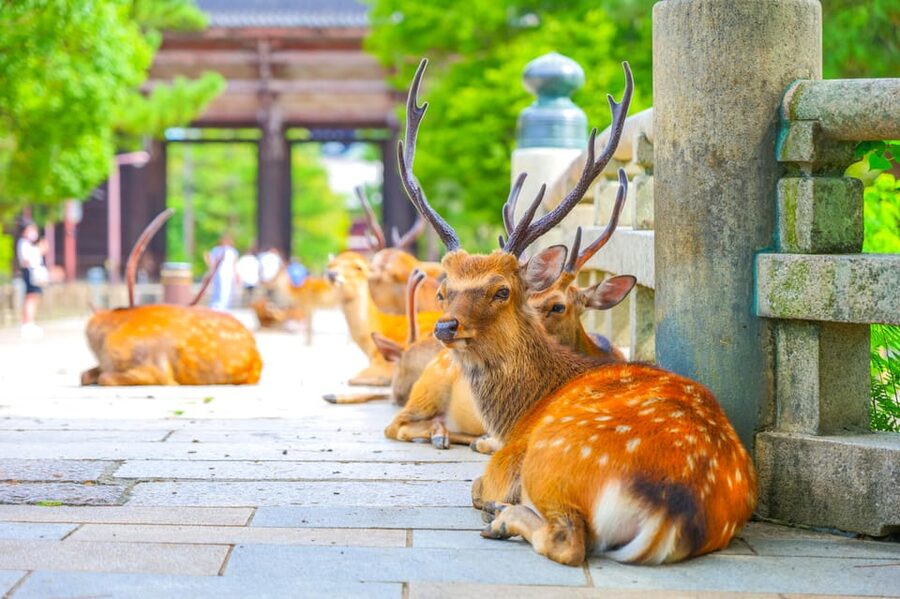
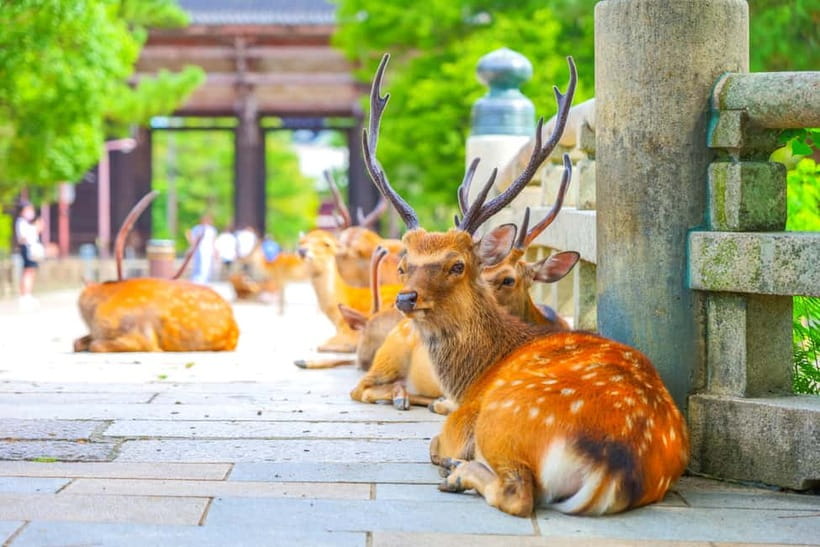
Then you head south to Nara, where the vibe changes from temple stillness to park energy. Nara Park is famous for the wild deer that roam freely, and yes, it can feel like you are walking through a living postcard.
The key activity here is feeding the deer with shika-senbei. The tour notes are clear: you should not feed the deer anything other than the provided shika-senbei. That rule protects the animals and keeps things orderly.
If you have never seen the bowing behavior up close, it is surprisingly quick and polite. The deer respond with that characteristic bow, and you get a moment that feels almost interactive. This is one of those experiences that is fun even if you are not a huge animal person.
Timing also affects how this part feels. One review mentioned that heavy rain earlier in the day made bamboo feel crowded but Nara more manageable. Translation: weather can change the crowd level more than you might expect. If you can pick your day based on forecast, you’ll likely enjoy the park more.
Todai-ji and the Great Buddha: scale you feel in your body
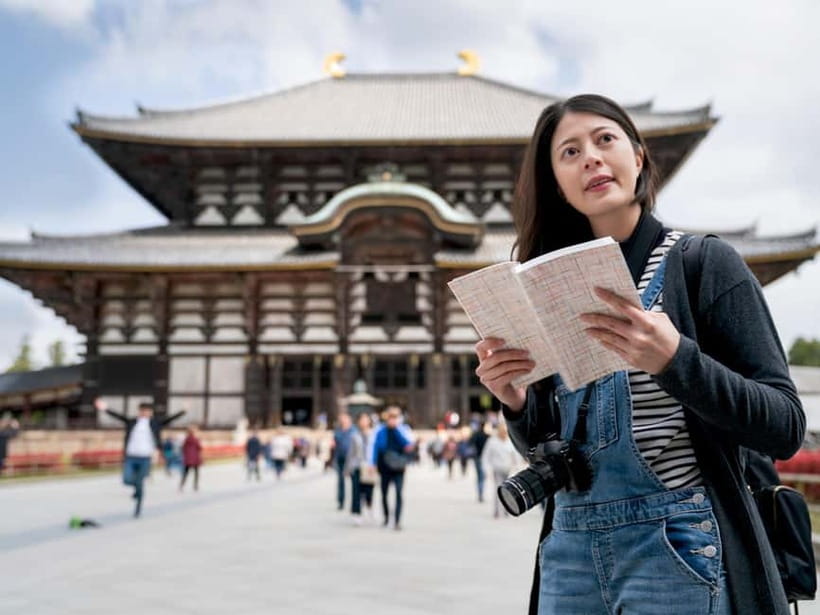
Within Nara Park you reach Todai-ji Temple, home to one of the three titanic Great Buddha statues of Japan. This is not a small side stop. Todai-ji gives you the sensation of entering a major religious space, not just sightseeing a landmark.
The Great Buddha is the reason most people come, and it is impressive for straightforward reasons: scale, setting, and atmosphere. You will likely spend time looking up and around, because the temple complex is designed to hold your attention beyond one photo spot.
Compared with the deer, Todai-ji is slower and more grounded. If your day has started fast, this section is the reset. It gives you breathing room to appreciate craftsmanship and sacred architecture with less of the playful chaos.
Pace and crowds: why some people feel rushed

This is a full day trip, and it tries to fit three major highlights into one timeline. That is great if you want efficient sightseeing. It can feel less great if you want to linger.
In past feedback, the most common theme is not that the sites were bad. It’s that the day can feel time-limited and busy, especially at major photo points and in crowded areas like the bamboo forest and Nara. One person even called out that having lunch would not be worth it, while another felt the buffet was solid.
My practical take: if you prefer slow travel, plan to adjust your expectations. Use your free moments intentionally. Decide what matters most to you at each stop, and do not try to do everything at once. You will enjoy the day more if you treat each place like a “highlights visit,” not like you are moving in.
Also consider transport flow. Coach tours rely on everyone meeting on time. If you fall behind, you might feel stressed. If you stick close to the group instructions, it stays smooth.
Price and value: is $69 fair for this lineup?
The listed price is $69 per person. For a day that combines Arashiyama, Kinkaku-ji, and Nara Park plus Todai-ji, that can be good value, especially because transportation and guide support are part of the deal.
Here is what drives value for you:
- An English-speaking guide that explains what you are looking at and helps with navigation.
- A coach with air-conditioning and Wi-Fi, which saves you from route-planning fatigue.
- Entry tickets to Kinkaku-ji and Todai-ji if you select those options.
- Lunch, if you select it.
Now the honest part. If you care most about food, reviews are mixed on lunch quality. So think of lunch as optional comfort. If you want maximum flexibility, skip it and use local eateries near the next area. But if you want fewer decisions, selecting lunch can reduce downtime stress.
Also, you do not get hotel pickup and drop-off. You start and end at a set meeting point. So make sure your lodging is close enough to reach Kyoto Station Hachijo Exit for the Kyoto departure or OCAT Building 1F for the Osaka (Namba) departure.
If you are new to Kyoto and Osaka transit, skipping the train-switching alone might be worth the price.
Guides and group experience: why names keep coming up
A lot of the positive energy in reviews centers on the guides. Past departures mention Eiko, Yuki, Jewel, Hama, Winnie, Maki, Alice, Lydia, and others. The common threads are clear: guides keep things organized, share local stories, and help you take better pictures by showing good angles or timing.
One review credited a guide, Eiko, with detailed background stories and even helping track down deer crackers later when stores ran out. Another mentioned Jewel going out of her way to accommodate everyone and taking many photos. Hama is described as on time, clear about where to meet, and helpful for staying on track. Lydia is praised for caring attention and knowledge, especially during a personal mishap.
Language quality can vary. One review noted a guide was hard to understand even though English was used. Another said a second guide spoke better English. Translation: you should expect a guided experience, but if you are very particular about commentary, the quality may depend on the guide assigned that day.
Either way, the support structure is what you are paying for. You are not just buying entry tickets. You are buying a guided path through three time-consuming areas.
Practical tips before you go: shoes, water, and deer etiquette
This tour gives you a short list, and it is exactly the list you should follow.
Bring:
- Comfortable shoes. You will be walking.
- Water.
Remember:
- Pets are not allowed.
- Oversize luggage is not allowed.
- Smoking is not allowed in the vehicle.
- Only foldable strollers are allowed, stored under the bus with luggage.
For the deer, the rule is simple and strict: only feed shika-senbei. If you want that moment where deer approach and bow, you will enjoy it more if you have patience and follow staff guidance rather than trying random feeding tricks.
For the rest, keep your phone charged. Even if you have Wi-Fi on the coach, you will want offline access for navigating if anything goes off-plan.
Should you book this Kyoto and Nara day trip?
Book it if you want an efficient, guided way to see Kinkaku-ji, the Sagano bamboo forest, and Nara deer plus Todai-ji without wrestling transit all day. It’s especially good for first-timers who want structure, clear meeting points, and someone to point out what is worth your attention.
Skip it or choose a lighter pace if your priority is slow wandering. If you dislike crowds or you need lots of quiet time at temples, you might feel squeezed by the schedule. Also think carefully if lunch options do not fit your dietary needs, since halal and vegan lunches are listed as not available and vegetarian requests require advance contact.
My bottom line: for the price, this is a strong way to pack in iconic western Japan sights with a comfortable ride and a guide who can make the places make sense. Just go in with the right mindset, highlights not marathon.
FAQ
What does this day trip include?
It includes an English-speaking guide, an air-conditioned coach with Wi-Fi, and lunch only if you select the lunch option. Entry tickets to Kinkaku-ji Temple and Todai-ji Temple are included only if you select those options.
How much is the tour?
The listed price is $69 per person.
Where do I meet the tour?
Meeting points vary by option booked, but the Kyoto departure meets at Kyoto Station Hachijo Exit Tourist Bus Parking at 9:05 AM. The Osaka (Namba) departure meets at OCAT Building 1F at 8:50 AM.
Is hotel pickup provided?
No. Hotel pickup and drop-off are not included.
Will I be able to feed the deer?
Yes. You can feed the deer using shika-senbei, and the tour specifically notes that you should not feed the deer anything other than the shika-senbei.
What should I bring?
Bring comfortable shoes and water.
Are tickets included for Kinkaku-ji and Todai-ji?
Entry ticket inclusion depends on the option you choose. Kinkaku-ji Temple entry is included only if that option is selected, and Todai-ji Temple entry is included only if selected.
Is there Wi-Fi on the coach?
Yes, the coach includes Wi-Fi.
Are pets allowed?
No, pets are not allowed.
Can I bring a stroller?
Only foldable strollers are allowed. They will be stored under the bus with the luggage.
What if I travel with an infant?
Ages 0-2 are free, but the seat and meal are not included. Infants must sit on an adult’s lap.
Fresh options around Nara
- Nara – Heart of Nature Cross Bike Tour★ 5.0 · 19 reviews
- Nara:Tea Tasting&Private Tea Ceremony -Master Matcha Making-★ 5.0 · 19 reviews
- Make Your Own Soy Sauce in Japan’s Old Capital Asuka Nara★ 5.0 · 22 reviews
- Nara: Essential Private Tour with Deer Park and Temples★ 5.0 · 24 reviews
- Nara:5 Type of Tea Tasting & Mindful Tea Ceremony★ 5.0 · 28 reviews
- E-Bike Nara Highlights – Todaiji, Knives, Deer, Shrine, and Gems★ 4.5 · 34 reviews
- Nara: City Highlights Shared Group or Private Bike Tour★ 4.9 · 34 reviews
- Sushi Making Experience Luxury Course in Nara★ 5.0 · 36 reviews
Nara Tours, compared.
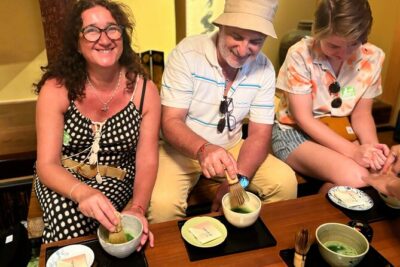
World Heritage Kyoto & Nara Uji Authentic Matcha Experience
Read our review →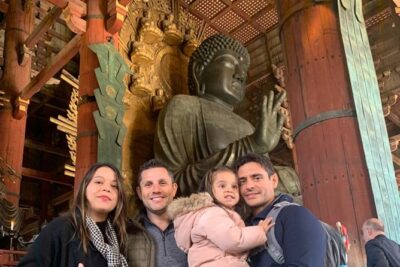
Nara Half Day Trip Walking Tour (Private Option Available)
Read our review →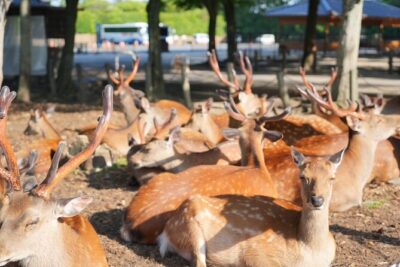
Nara Early Morning Tour (Kyoto or Osaka Departure Available)
Read our review →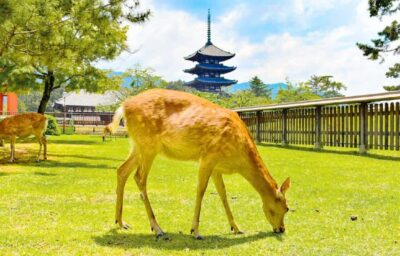
Nara and Uji Day Trip with Deer Park and Hot Spring
Read our review →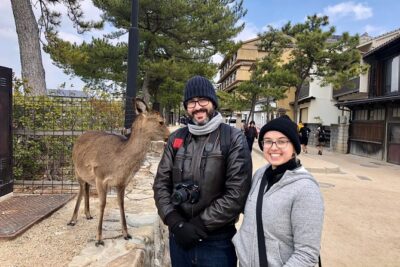
Nara 6hr Private Tour with Government-Licensed Guide
Read our review →
E-Bike Nara Highlights – Todaiji, Knives, Deer, Shrine
Read our review →
Nara Early Bird Tour (Kyoto Departure Option Available)
Read our review →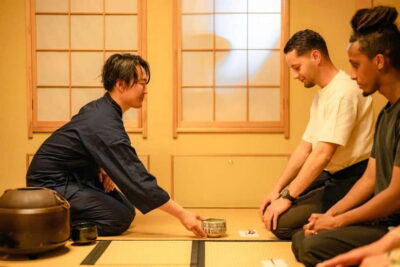
Nara:Authentic Tea Ceremony(Max 5 ppl) -Master Matcha Making
Read our review →Browse the lists this tour appears in