
Reviewed · TEMPLE & SHRINE TOURS IN KYOTO
Kyoto: Tea Ceremony Ju-An at Jotokuji Temple
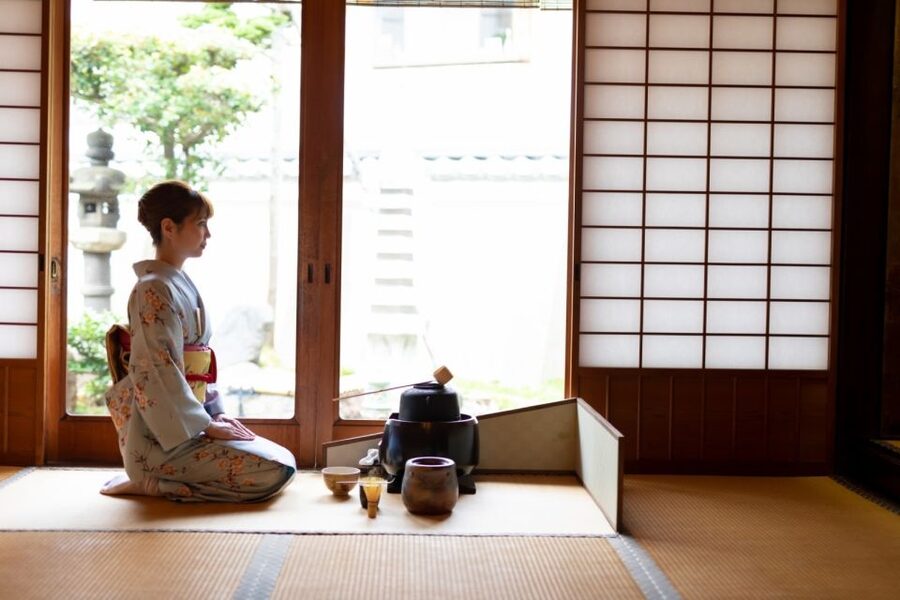
A quiet morning in Kyoto can change your pace. This Kyoto tea ceremony at Jotokuji Temple turns the usual sightseeing shuffle into a calm, guided chanoyu workshop. You get to enjoy the ceremony while also admiring the temple grounds, including the beautiful path into the tea space.
My favorite part is the blend of setting and hands-on practice: you walk the temple briefly, do a purification ritual, then learn matcha steps in detail from the Tea Master. My second favorite part is how manageable it is, limited to 10 people, with English instruction and time to ask questions. One possible drawback to plan for: the Grand Tearoom has three steps and you may sit on the floor, though stools can be provided.
Key highlights
- Jotokuji Temple architecture and atmosphere before you even sit down
- Purification ritual using the temple fountain, plus a short pause on the grounds
- Hands-on matcha guided by the Tea Master, not just watching
- Shoes off in the Grand Tearoom, with seating options for comfort
- Small group (up to 10), so the pacing stays personal
Jotokuji Temple and the calm of a small-group Ju-An tea ceremony
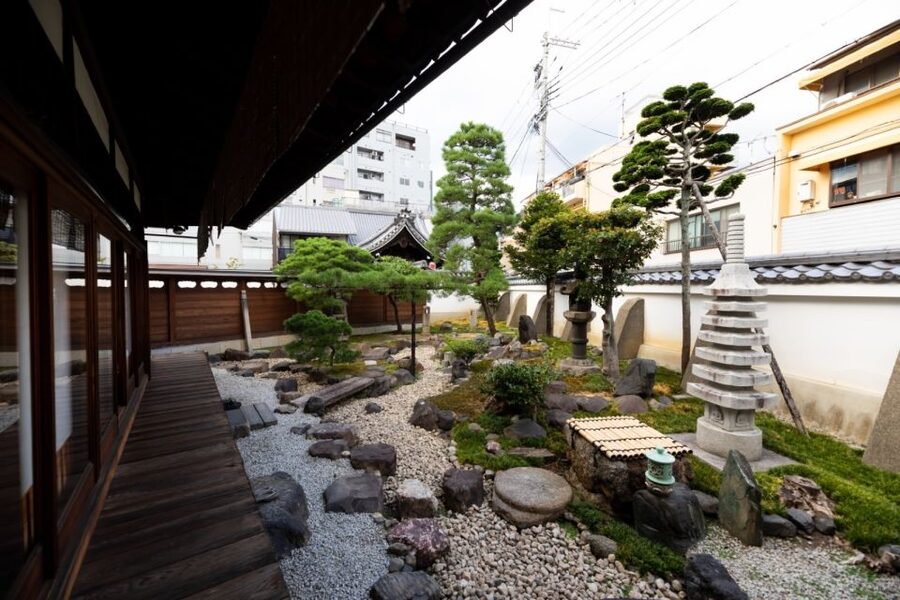
If you’re doing Kyoto as a checklist, this tea ceremony works like a reset button. At Jotokuji (a real working temple space), you slow down on purpose. That matters, because chanoyu is less about performance and more about attention, timing, and small movements done with care.
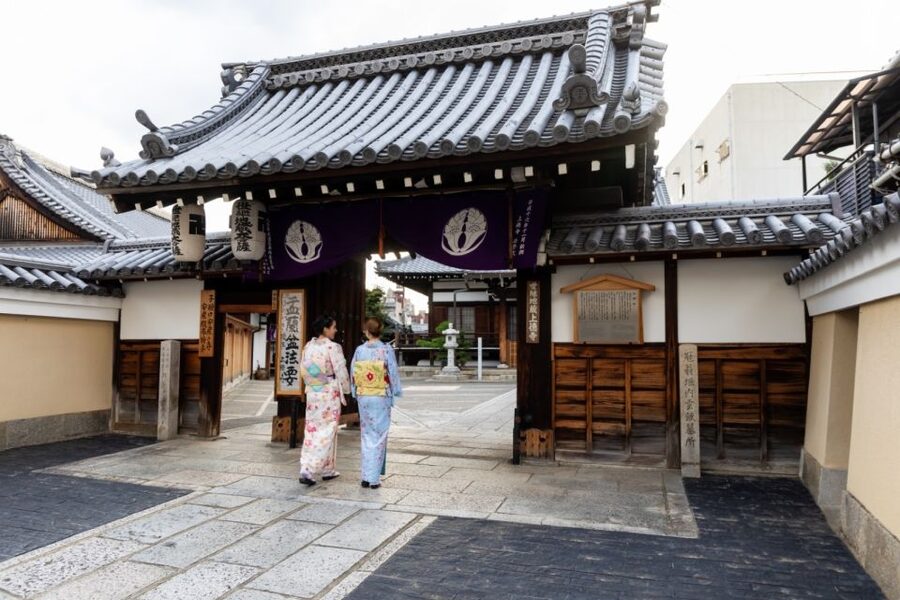
You’ll also see why the location fits the experience. The tour begins at the temple’s main gates and routes you through the grounds first, so the later seated moment feels grounded in the environment. And yes, matcha is the star, but the temple setting is what makes it feel like more than a quick activity.
One more practical note from the overall format: this is a 70-minute workshop. Full chanoyu traditions can run much longer, but this version gives you the core experience without turning it into a half-day commitment. If you want deep, multi-hour training, treat this as an excellent taste plus a strong foundation.
More Tea Ceremonies in Kyoto
- Kyoto: Tea Ceremony in a Traditional Tea House in Kiyomizu
★ 4.9 · 3,519 reviews - Kyoto: 45-Minute Tea Ceremony Lesson Experience
★ 4.3 · 2,378 reviews - Kyoto: Table-Style Tea Ceremony at a Kyo-Machiya
★ 4.9 · 1,211 reviews
Where to meet at Tea Ceremony Juan, and how to find the tearoom entrance
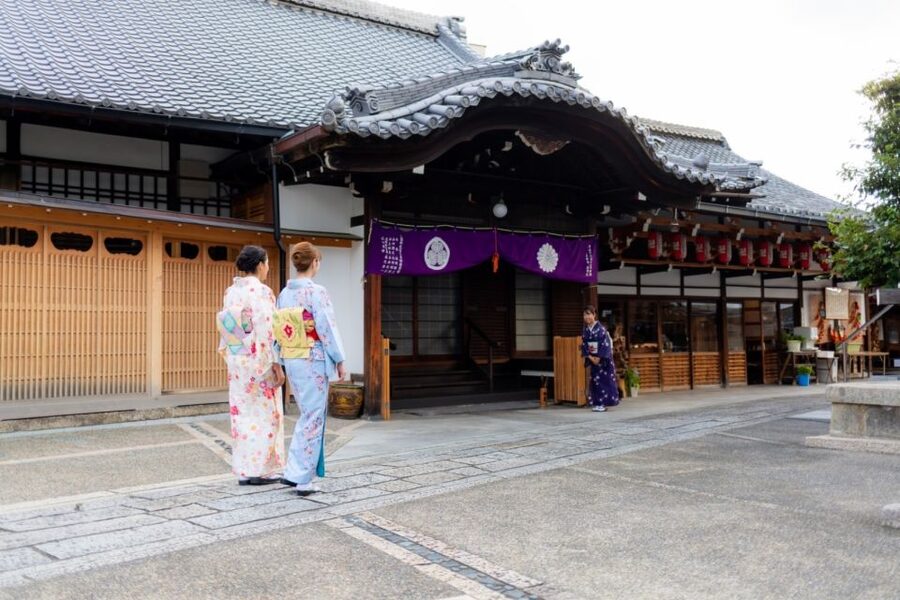
You meet at Tea Ceremony Juan, 556 Gojo-sagaru, Tominokoji Dori, Shimogyo-Ku, Kyoto. The key detail is what happens once you’re inside the temple grounds. When you face the Main Hall, look left for the steps that give access to the tea room.
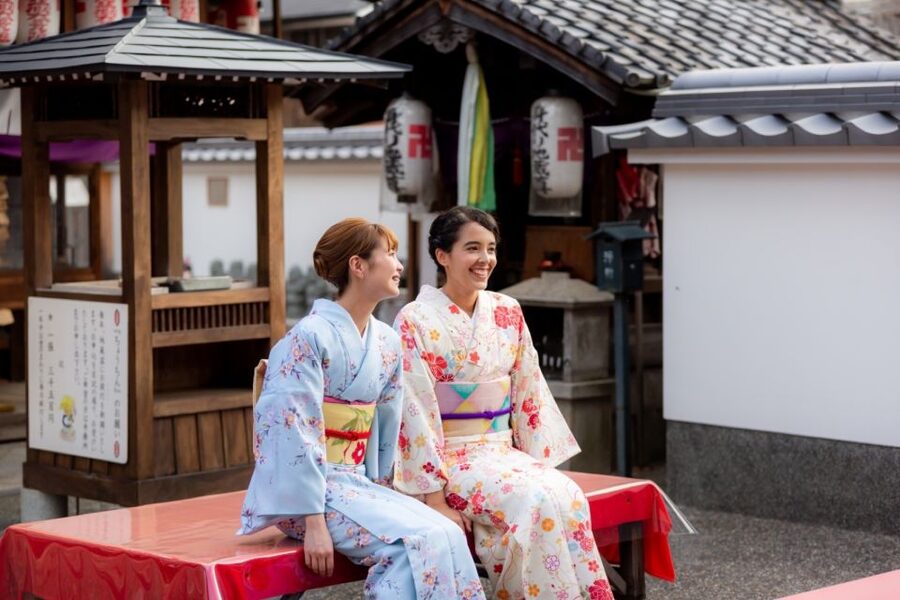
The meeting flow is simple and clear. You enter through the main gates, pass the entrance to the Grand Tearoom on your left, and you’ll spot a parish shop nearby. Then you gather at the nearby red benches while your guide prepares your group.
This is one of those tours where arriving a few minutes early helps. Kyoto can be full of foot traffic and confusing turns, and you’ll want a calm start so you can follow the group timing without stress.
The temple walk, red benches, and the purification ritual
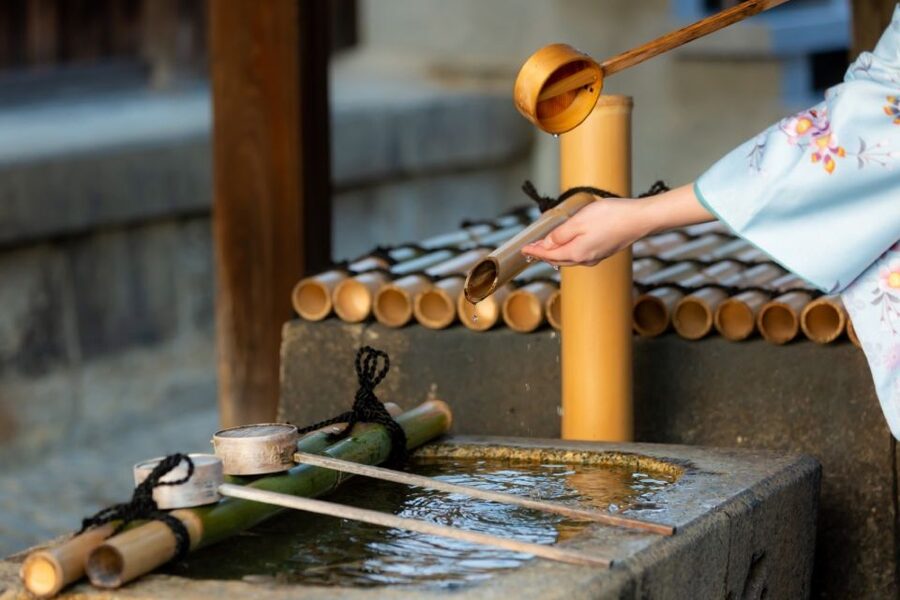
Before you ever lift a cup, you’ll move through the temple in a way that sets expectations. As you walk, you’re free to admire the architecture and take in the space at your own pace. There’s also time to stand by the purification fountain. For many Western visitors, that part is the “wait, this is real” moment.
Then comes the purification ritual. You’ll do it as part of the start of the workshop, and it’s one of the most distinctive features of this experience. It’s not just a show. It’s a structured piece of the ceremony that explains, in physical form, the idea of clearing your mind and preparing your body for what comes next.
If weather is a factor, the tour handles it thoughtfully. Weather permitting, you can sit at the red benches for a break. If it rains, you can stand under the gable near the shop or wait in the Grand Tearoom. Either way, you aren’t stuck outside with nowhere to go.
Grand Tearoom etiquette: shoes off, three steps, and seating options
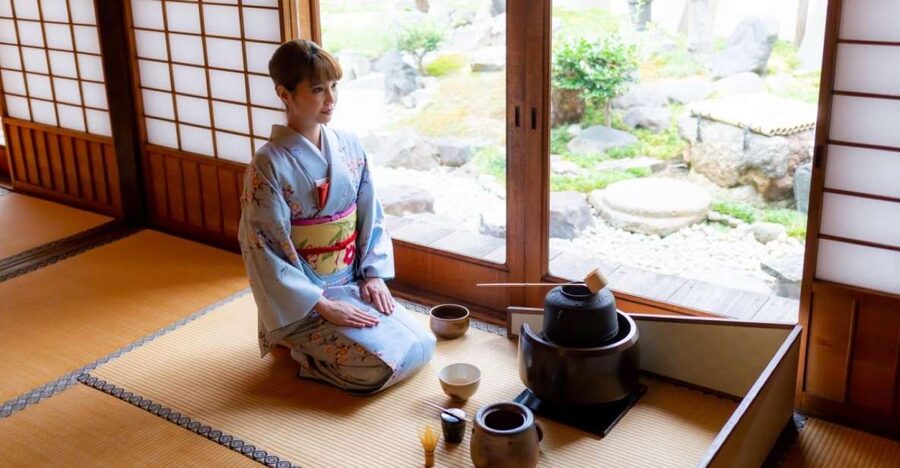
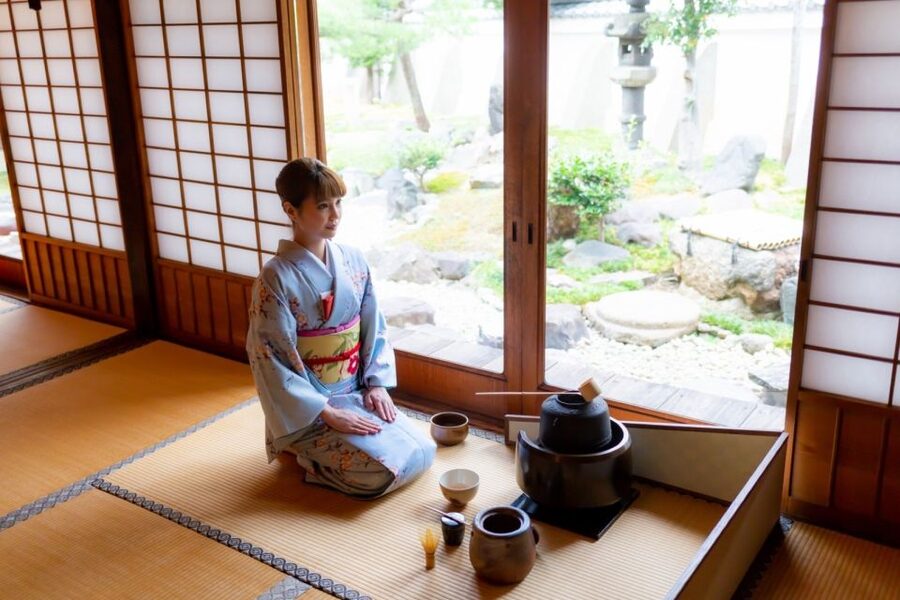
Once your temple walk and atmosphere time are done, you enter the Grand Tearoom where your instructor waits. Plan for standard Japanese etiquette here. You’ll remove your shoes at the entrance of the tearoom, and then your group proceeds inside to take your seats.
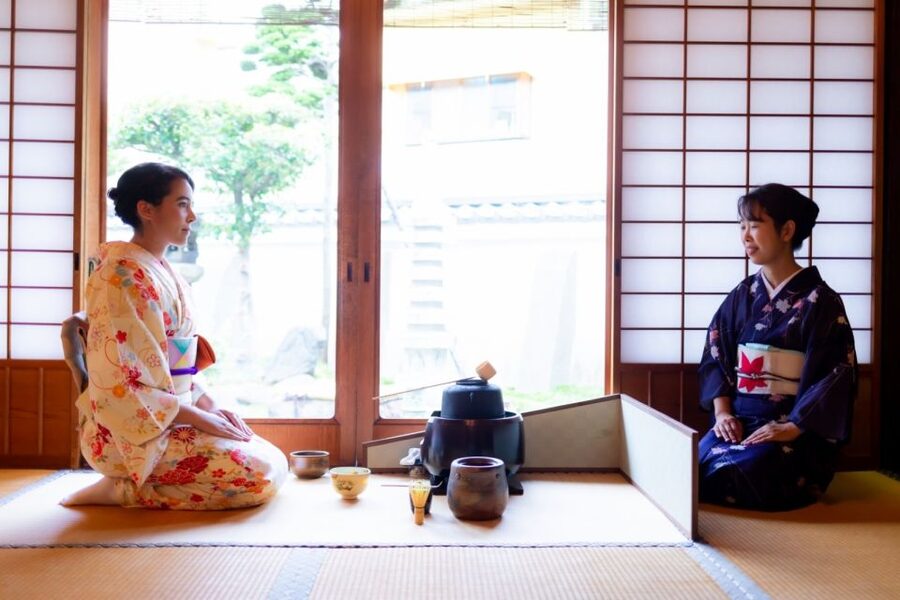
The tearoom setup is traditional, and that’s a big part of the value. You’re not just learning tea concepts. You’re experiencing the space and posture changes that come with chanoyu.
Comfort matters, and this tour gives an option. The tearoom is not wheelchair accessible because there are three steps, but the temple grounds are wheelchair accessible. If you’re not comfortable sitting in the traditional floor position, seats and stools can be provided. That means you can still participate even if floor sitting is hard for your body.
So if you’re considering this, think honestly about two things:
- Can you do shoe removal and floor seating (or use the stool option)?
- Are you okay with a quiet, structured pace where you follow instructions?
If yes, you’ll appreciate how quickly the workshop shifts you into a different mode of attention.
More Temple & Shrine Tours in Kyoto
- Kyoto: Fushimi Inari, Kinkakuji, Bamboo Grove 1 Day Bus Tour
★ 4.8 · 4,316 reviews - Fushimi Inari Hidden Hiking Tour (Private Option Available)
★ 5.0 · 1,750 reviews - Osaka/Kyoto:Kinkakuji,Arashiyama,FushimiInariShrine,NaraPark
★ 4.1 · 1,596 reviews - Kyoto/Osaka: Nara, Fushimi Inari Taisha, Arashiyama Bus Tour
★ 4.7 · 1,275 reviews
Chanoyu workshop: how matcha is prepared and how you learn to drink it
This is the part most people come for, and it’s handled well. In the Grand Tearoom, your Tea Master guides you through each step. You’ll get a chance to sample matcha, and you’ll also be taught the fine art of drinking it, not just pouring it.
One reason the experience feels special is the instruction style. Instead of showing and moving on, the Tea Master explains the why behind the gestures. That makes the ceremony easier to understand, so you’re not stuck thinking only about the mechanics of whisking.
In addition to matcha, you’ll also have something sweet alongside the tasting. It’s part of the balance of flavors and the rhythm of the seated sequence.
What you’ll likely walk away with is more than a memory. You’ll understand at least the basics of:
- how matcha is prepared in a ritual context
- how to handle the cup and drink with intention
- why the ceremony cares about more than taste
And because it’s a workshop with a small group, you can actually ask questions. That matters because tea ceremony can feel mysterious if you don’t know what you’re looking at.
70 minutes, small group pace, and what you really learn
A 70-minute format can sound short, but it works for two reasons. First, the experience is staged: temple introduction, purification, then seated tea practice. Second, the group size is limited to 10 participants, which keeps it from turning into a lecture line.
You’ll probably notice the rhythm right away. There’s time to observe temple details before you sit down. There’s also time to transition into the ritual with the purification step. Then it becomes focused on matcha.
The best part of the small group size is that you’re not just a spectator. You have space to participate and learn. Many people describe this as a welcome break from Kyoto’s busy sightseeing. Even if Kyoto crowds are unavoidable near major sites, the ceremony environment is quieter by design.
Also, keep your expectations realistic. This is not a multi-hour intensive training session. But it is a strong starting point, and it gives you enough understanding to appreciate what you see if you later visit other tea spaces in Japan.
Price and value: what $29 includes and what to plan for
At $29 per person for 70 minutes, this is fairly good value for Kyoto, mainly because it includes the core experience. You get a tour guide plus the chanoyu workshop ceremony. The Tea Master instruction is the heart of the value, not a token demonstration.
What’s not included is also important to know:
- Meals are not included
- Kimono is not included, though you can rent one separately
This means you should plan your day so you’re not hungry or rushed. Many people pair this with a lighter morning or an afternoon that can absorb a short sit-down experience.
And on the kimono question, don’t stress it. If you want the look, renting is possible, but the ceremony works without it. What matters most is your participation and comfort during the seated portion.
At this price point, you’re paying for time, guidance, and a structured cultural activity in a real temple setting. If you’re trying to see Kyoto without only chasing photos, this kind of ticket tends to be worth it.
Who this Kyoto tea ceremony is best for
This experience fits best if you want a slower, respectful cultural activity that you can actually learn from. Because it’s in English and capped at 10 people, it’s also a solid choice if you don’t want to feel lost.
It’s especially good for:
- people who like hands-on activities, not only watching
- couples and small groups who want a calmer contrast to other Kyoto stops
- first-timers who want the basics of matcha and why the ceremony matters
It may be less suitable if you have mobility challenges that prevent you from handling the tearoom steps. Wheelchair users can access the temple grounds, but the tearoom has steps. Also, if floor sitting is difficult, confirm you need stool seating ahead of time, since that option exists.
If you’re the type who likes to follow along, ask questions, and take your time, you’ll likely enjoy the pacing more than you would in a fast-paced attraction.
Should you book Kyoto: Tea Ceremony Ju-An at Jotokuji Temple?
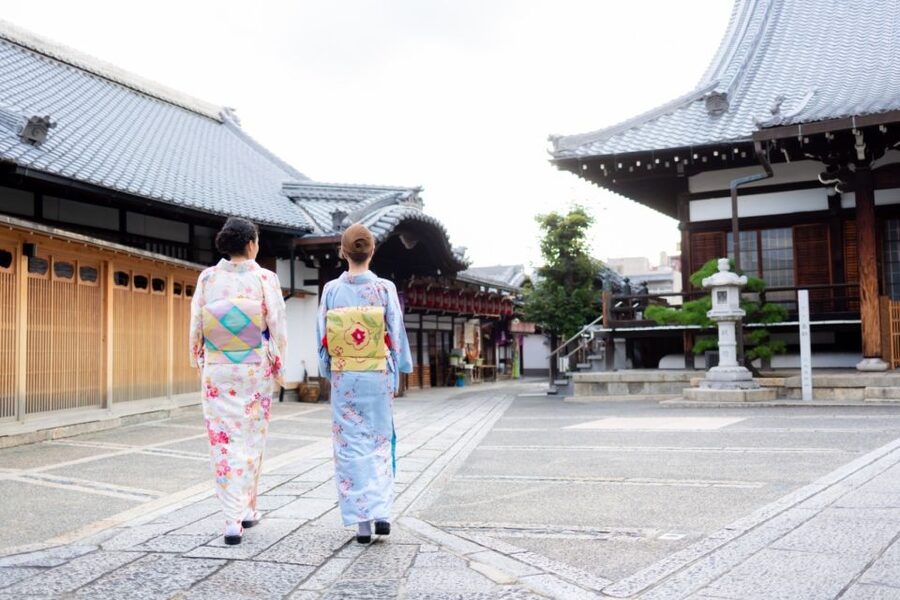
Book it if you want a genuine Kyoto tea ceremony at Jotokuji Temple that includes both explanation and participation. The combination of purification ritual, matcha practice, and a real temple setting makes it more memorable than a rushed demo. At $29 for 70 minutes with a small English group, it’s a strong value.
Skip or reconsider if you know you cannot manage the tearoom’s physical setup. The temple is wheelchair accessible, but the Grand Tearoom is not because of three steps, and the experience is traditionally seated.
If you’re unsure, the upside is the format: short enough to fit into a day, structured enough that you don’t need prior knowledge, and calm enough to feel like a reset from Kyoto’s crowds.
FAQ
How long is the Kyoto Tea Ceremony Ju-An at Jotokuji Temple?
The duration is 70 minutes.
How much does it cost?
The price is $29 per person.
Is the tea ceremony taught in English?
Yes, the instructor is English.
What’s included in the price?
A tour guide and the chanoyu workshop ceremony are included.
What is not included?
Meals are not included, and kimono is not included (though it can be rented separately).
Where do I meet for the tour?
Meeting point is Tea Ceremony Juan, 556 Gojo-sagaru, Tominokoji Dori, Shimogyo-Ku, Kyoto. Inside the temple, you face the Main Hall, then look left for the steps to access the tea room.
Do I get to drink matcha?
Yes. You sample matcha tea as part of the ceremony.
Is this wheelchair accessible?
The temple is wheelchair accessible, but the tearoom is not because there are three steps. The experience is not suitable for wheelchair users.
Can I reserve and pay later?
Yes, you can reserve now and pay later.
Fresh options around Kyoto
- Kyoto: Quiet and Graceful Tea Ceremony★ 4.5 · 19 reviews
- Oboro | Mindful Tea Ceremony in a 100-Year-Old Kyoto Teahouse★ 5.0 · 19 reviews
- Ikebana Traditional Japanese Art of Flower Arranging★ 4.5 · 19 reviews
- Kyoto Satoyama Cycling with Lunch and English Guide★ 5.0 · 19 reviews
- Kyoto International Party Solo Friendly Expats and Locals★ 5.0 · 19 reviews
- Tea Ceremony Experience in Traditional Kyoto Townhouse★ 5.0 · 19 reviews
- Kyoto: Amanohashidate Ine Funaya Tour★ 4.4 · 19 reviews
- Kyoto Private Food Tours with a Local Foodie: 100% Personalized★ 4.5 · 19 reviews
Temple & Shrine Tours in Kyoto, compared.
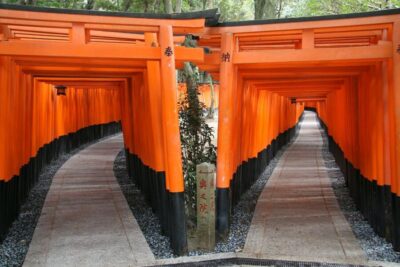
Fushimi Inari, Kinkakuji, Bamboo Grove 1 Day Bus Tour
Read our review →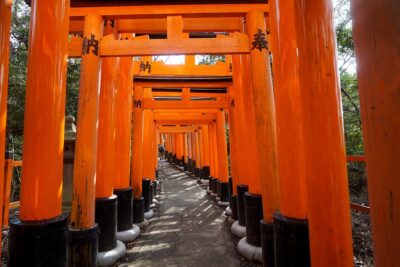
Fushimi Inari Hidden Hiking Tour (Private Option Available)
Read our review →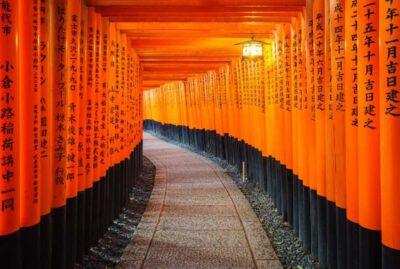
Osaka/Kyoto:Kinkakuji,Arashiyama,FushimiInariShrine,NaraPark
Read our review →
Kyoto/Osaka: Nara, Fushimi Inari Taisha, Arashiyama Bus Tour
Read our review →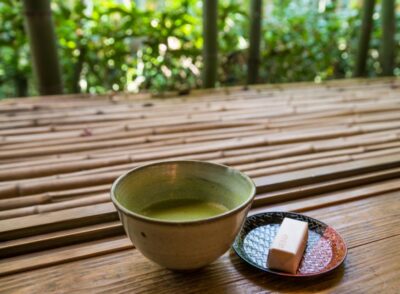
Arashiyama Bamboo, Temple, Monkeys, or Secret Sake Brewery
Read our review →
Arashiyama Bamboo Forest, Monkeys, Matcha & Temple Tour
Read our review →
Osaka/Kyoto: Arashiyama, Nara & Fushimi Inari Shrine w/Lunch
Read our review →
Nijo Castle, Kiyomizu & Fushimi Inari Guided Tour
Read our review →Browse the lists this tour appears in