Reviewed · TOKYO TOURS
Tokyo Asakusa:Calligraphy & Make T-shirt Activity
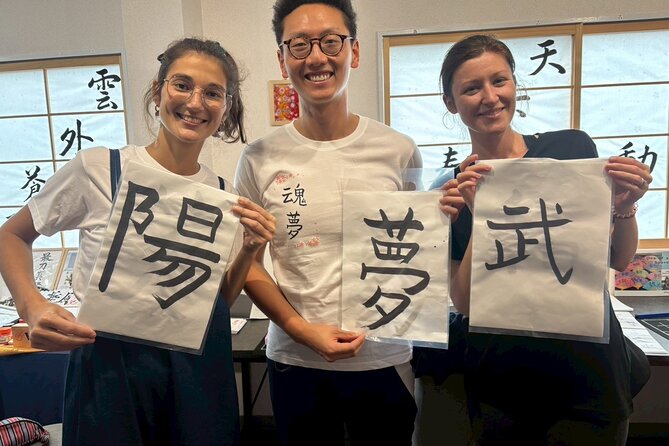
Ink on cloth in Asakusa. I love that you learn the brush basics with a fude and ink, and you leave with your own characters printed on a custom t-shirt, though the lesson is about an hour so you’ll want to pay attention and not treat it like open-ended practice.
This is a private session, so it’s just your group. One instructor you may meet is Mana, described as kind, joyful, and very knowledgeable about calligraphy, which matters because Japanese calligraphy is all about control and small details.
You do not need to source supplies. Everything is provided, and you also write a message on a postcard, so you end up with more than one souvenir without hunting around for extra materials.
Key things you’ll notice (and why they matter)
- Private instruction: You get hands-on guidance instead of following a crowd.
- Fude brush practice: You learn essential brushstrokes using the real tool, not a substitute.
- Thin-paper practice time: About 30 minutes of writing practice helps you get a feel for pressure and flow.
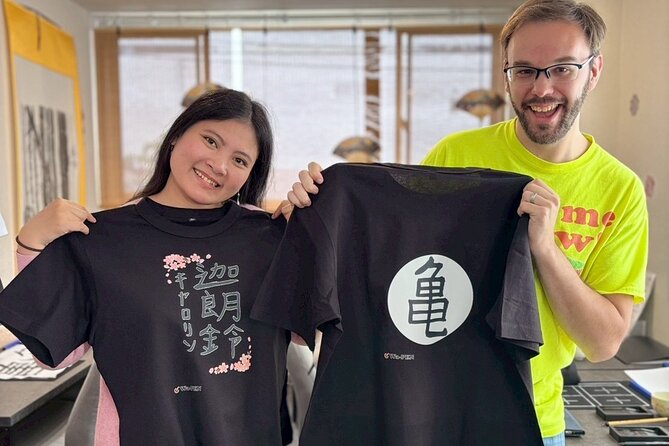
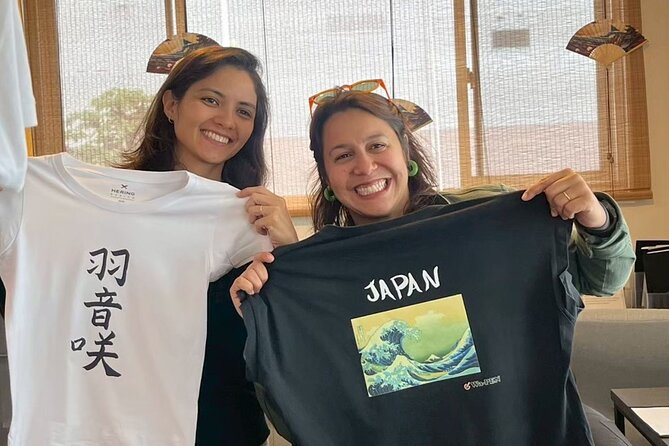
- Design choice and placement: You decide which writing/design you like and where it goes on your shirt.
- Take-home printing window: About 10 minutes later, your t-shirt is ready to go.
- Instant keepsake habits: A postcard message lets you capture memories in a more personal way than a generic souvenir.
Asakusa calligraphy, without the tourist-script feeling
Asakusa is the kind of place where it’s easy to turn your day into a loop of photos, snacks, and shopping streets. This activity pushes you into a different rhythm. For an hour, you’re focused on ink, stroke order basics, and the look of Japanese characters, not just where to stand for a picture.
The big value here is that it’s active. You aren’t watching a performance from a distance. You’re writing, correcting, and choosing your own output. That’s why the results feel personal, even if your first strokes are a little rough.
And yes, you still end up in the classic Asakusa setting. The session connects with the area near Senso-ji Temple and then continues around Asakusa, so you’re doing craft in a place that already has tradition woven into daily life.
A few more Tokyo days worth comparing
- Mt Fuji and Hakone 1-Day Bus Tour Return by Bullet Train
★ 5.0 · 26,383 reviews - 1-Day Tokyo Bus Tour
★ 5.0 · 14,250 reviews - Tokyo: TOKYO SKYTREE® Admission ticket
★ 4.5 · 11,192 reviews
Meeting near Senso-ji: where the session starts
You meet at Wa-PEN Calligraphy Attractions and Make Design clothes, Nishiasakusa in Taito City. The address listed is: Japan, 111-0035 Tokyo, Taito City, Nishiasakusa, 3-chōme272 三丁目ビル 3F.
From there, the experience includes stops tied to the area: first Senso-ji Temple, then Asakusa. You can think of it like this: you get oriented to why calligraphy fits here, then you shift into the craft part once you’re settled.
This matters because Japanese calligraphy isn’t just decoration. It carries meaning, history, and a sense of discipline. Starting near a well-known cultural landmark helps your brain switch modes from sightseeing to craft.
Also, it’s near public transportation, and it ends back at the meeting point. That keeps logistics simple, especially if you’re juggling temple time, lunch, and a late-afternoon transit plan.
The intro: what you learn before you touch the brush
Before you write, you get a short video introducing the history and meaning of Japanese calligraphy. That’s not filler. It gives you a reason to care about what you’re about to do.
Even if you can’t read Japanese well, you can still feel the difference between characters made for style versus characters made for intent. The instruction frames calligraphy as a skill where strokes carry a kind of voice. Your teacher then breaks down the basics you’ll practice, using the real writing setup.
This is one of the best parts of a workshop like this: you get context, then immediate practice. You don’t have to guess why you’re doing something. You get the what and the why, then you do it.
Using the fude and traditional ink the right way
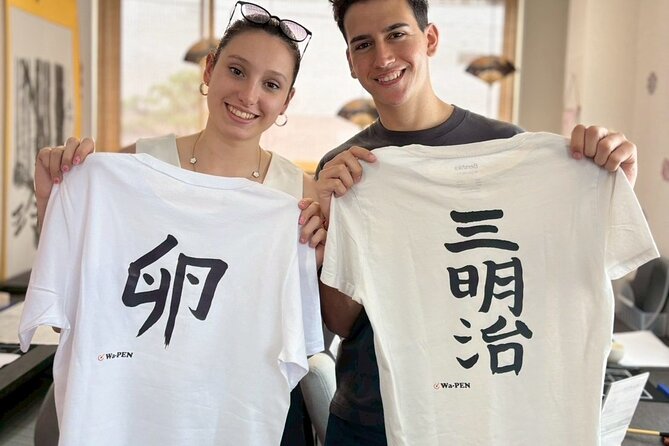
Next comes the practical training. You learn how to use the Japanese pen called fude and traditional ink.
The fude matters because it behaves differently than a typical pen. You’ll likely notice that pressure, angle, and brush control change the shape of each stroke. That’s exactly what makes calligraphy look alive instead of mechanical.
Traditional ink also affects your experience. It’s not just the look, it’s the feeling of working with something that responds to your technique. If you press too hard or move too slowly, the stroke can change. If you learn a steady rhythm, the line looks smoother.
Your teacher guides you through essential brushstrokes, so you’re not just copying random symbols. You’re learning foundational moves that show up again and again in Japanese writing.
Same corner of Japan, a different kind of day:
- Tokyo: teamLab Planets TOKYO Digital Art Museum Entry Ticket
★ 4.6 · 9,779 reviews - Mt Fuji & Hakone Cruise, Drum Show Bullet Train 1 Day from Tokyo
★ 4.0 · 7,413 reviews - Tokyo: Sumo Show Experience with Chicken Hot Pot and a Photo
★ 4.8 · 6,678 reviews - Tokyo: Shinjuku Food Tour (13 Dishes at 4 Local Eateries)
★ 5.0 · 6,603 reviews
Practice time: 30 minutes on thin paper
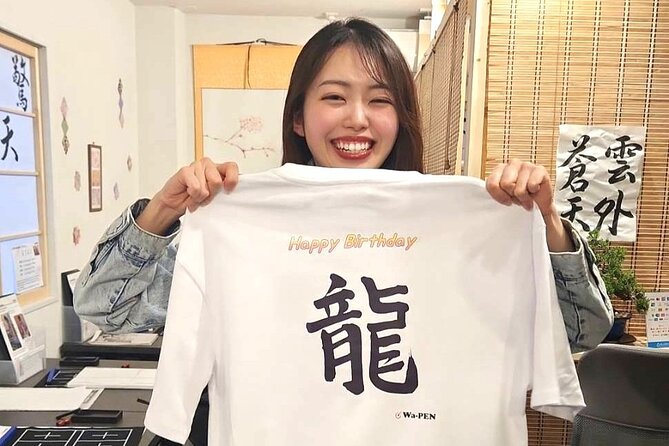
After the initial guidance, you get about 30 minutes of practice writing on thin paper, with expert help.
This portion is where you get real value. You’ll see how subtle changes in your hand position affect the line quality. You also learn what the teacher is looking for, so you can adjust before you finalize your final design.
If you’re the type who worries you’re not artistic, this is still the right length. Thirty minutes is enough time to improve, without turning the session into a marathon.
One practical note: thin paper can be less forgiving than thicker sheets. Go in ready to focus on technique. If you try to rush your perfection, you’ll probably just end up with blotchy results.
Designing your custom t-shirt: the fun part that becomes a souvenir
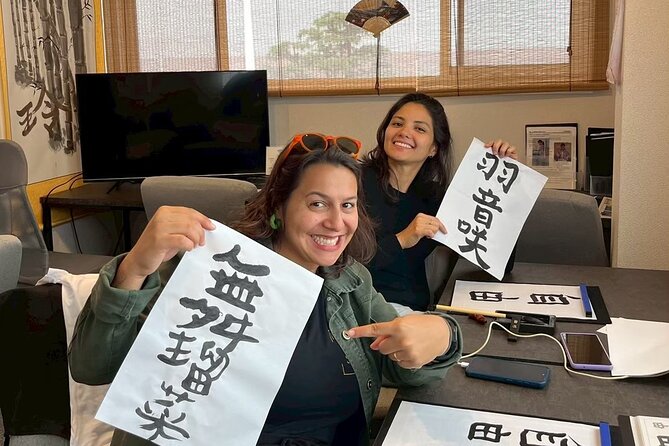
Once you’ve practiced, you move to the part everyone cares about: turning your writing into something wearable.
You choose the favorite design you wrote. Then you decide where to print it on your t-shirt. That choice makes the souvenir feel more like your story and less like a generic print that you could’ve ordered at a store.
This design step also makes sense educationally. You don’t practice endlessly and then hope the final result looks good. You practice key strokes, then you pick from what you created while your hand technique is still warm.
The activity turns the abstract idea of calligraphy into something concrete. Characters that seemed like shapes on paper become an image you can wear, show, and remember.
If you like travel souvenirs that you’ll actually use, this one has a strong advantage: it’s not just something to store in a drawer.
The postcard message: writing memories in character
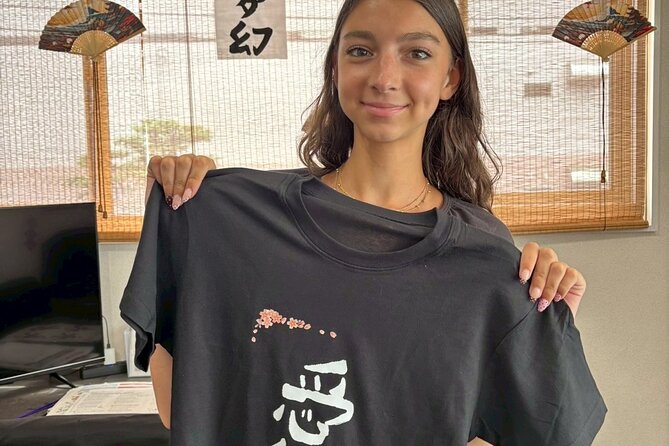
In the workflow, you also write a postcard message using traditional techniques to capture memories of your trip to Japan.
This is a surprisingly satisfying add-on. It shifts you from making a collectible to making a message you can send or keep. And writing by hand, with an actual craft process, usually produces more thoughtful words than you’d type in a phone note.
The best part is that this postcard step helps you slow down. Even if the t-shirt is the headline, the postcard is where you can reflect on what you want to remember.
If you’re the kind of traveler who collects experiences more than objects, this gives you a “memory page” without needing extra shopping.
The printing moment: about 10 minutes later, you’re done
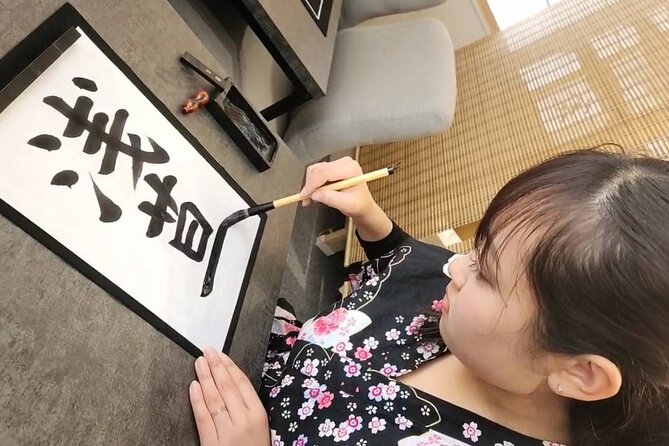
After you’ve chosen your final t-shirt design and placement, your clothes get printed. The process is described as taking about 10 minutes, after which your t-shirt is ready to take home as a souvenir.
That speed is a huge reason this workshop works well for busy travel days. You don’t need to come back later or wait while your entire trip is scheduled around pickup.
It also means you can plan your day around other Asakusa highlights without worrying your souvenir will be delayed.
Be ready to sit for the printing window and keep your outfit tidy. Once it’s done, you’ll leave with something that feels finished, not “in progress.”
Value and pricing: what $58 buys you in real terms
At about $58.13 per person, you’re paying for a full, guided craft session plus tangible take-home output.
Here’s what you get for your money, in practical terms:
- Instruction on how to hold and use the fude and ink
- About 30 minutes of guided practice on thin paper
- A t-shirt that uses your writing and your chosen placement
- A postcard message as an additional traditional keepsake
If you compare this to the cost of buying a basic calligraphy souvenir, this tends to feel fair because your result is built from your own work, not just printed on-demand. You’re also buying time with a teacher, and calligraphy is one of those crafts where feedback matters.
You’re not paying for a long, multi-hour cultural lecture. You’re paying for a focused craft session that ends with usable, personal goods.
The only caution is that it is about an hour total. If you want a deep course where you spend many sessions mastering brush technique, this is not that. If you want a meaningful introduction and a lasting souvenir, it’s a good fit.
Who should book this Asakusa calligraphy and t-shirt activity
This is ideal for you if:
- You want a hands-on cultural activity with real instruction, not just watching
- You like souvenirs you’ll wear or actually keep visible
- You’re comfortable doing a focused activity even if you’re not confident in writing
- You enjoy learning the meaning behind traditions, not just taking photos
It also works well for couples, friends, and families who want something interactive while in Asakusa. Since it’s private, you can move at your group’s pace instead of being squeezed into a larger schedule.
If you’re traveling with a very strict timeline, the good news is that the session includes a clear duration (about 1 hour). You can still do Senso-ji and nearby Asakusa streets, then return to transit without mystery delays.
Practical tips so your t-shirt turns out how you want
A few simple habits can make a real difference here:
- Pay attention during brush basics. Your practice time is the foundation for the final design.
- Choose a design you can stand behind. You’ll pick the favorite you wrote, so don’t wait until the last moment to decide.
- Watch placement decisions carefully. When you choose where your writing goes on the shirt, think about how you’ll wear it on day-to-day trips.
- Go with a calm mindset. Ink and brush technique respond to steadiness, not speed.
- Plan a clean souvenir carry strategy. Once the printing is done, treat it like something you just made, because you did.
And since it’s near public transportation, you can build this into an Asakusa day without needing complicated planning. Still, show up on time so you get the full sequence: intro, practice, design, postcard, and printing.
Should you book it? A friendly decision guide
Book this workshop if you want an experience that feels personal and ends with something you can take home that’s tied to your own writing. The mix of fude practice, postcard memories, and a t-shirt you select and print makes the price feel grounded, not just “experience pricing.”
Skip it if you hate structured craft activities or you’re hoping to spend hours perfecting calligraphy. This is a short, focused introduction. It gives you confidence and a souvenir, not a multi-session mastery path.
If you’re doing Asakusa anyway, this is one of the easiest ways to turn temple time and street wandering into something you can actually hold onto.
FAQ
How long is the Tokyo Asakusa calligraphy and t-shirt activity?
The duration is about 1 hour.
Is this activity private?
Yes. It is a private tour/activity, and only your group participates.
What is included in the price?
The activity includes a private calligraphy lesson, practice using a fude and traditional ink, making a customized t-shirt with your writing, and writing a postcard message.
Do I need to bring calligraphy supplies?
No. Everything is provided, and you do not need to source equipment.
Where does the activity start and end?
It starts at the Wa-PEN Calligraphy Attractions and Make Design clothes meeting point in Nishiasakusa, Tokyo, and ends back at the same meeting point.
Will I get both a t-shirt souvenir and a postcard?
Yes. You choose a design for your t-shirt and write memories on a postcard as part of the experience.
What is the cancellation policy?
You can cancel for free up to 24 hours in advance for a full refund. If you cancel less than 24 hours before the start time, the amount paid is not refunded.
Fresh options around Tokyo
- Tokyo: Nikko Kegon Falls Lake Chuzenji Toshogu Temple & More★ 4.9 · 12 reviews
- Tokyo: Samurai History Walking Tour★ 5.0 · 12 reviews
- Harajuku: Kawaii Fashion and Pop-Culture Tour★ 4.7 · 12 reviews
- Tokyo: Mt. Fuji & Lake Kawaguchi Instagram Full Day Trip★ 4.1 · 12 reviews
- Shibuya Tokyo: Modern Kintsugi Workshop in Shibuya★ 5.0 · 12 reviews
- Tokyo: GTR Guided Daikoku Experience at Night★ 5.0 · 12 reviews
- Tokyo: Daikoku JDM Car Culture Tour★ 4.6 · 12 reviews
- Mt Fuji Private Day Trip from Tokyo with English speaking driver★ 5.0 · 13 reviews
Tokyo Tours, compared.
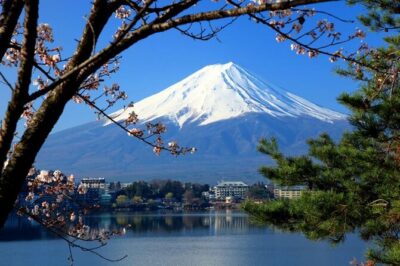
Mt Fuji and Hakone 1-Day Bus Tour Return by Bullet Train
Read our review →


teamLab Planets TOKYO Digital Art Museum Entry Ticket
Read our review →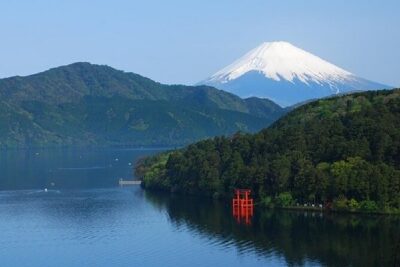
Mt Fuji & Hakone Cruise, Drum Show Bullet Train 1 Day from Tokyo
Read our review →
Sumo Show Experience with Chicken Hot Pot and a Photo
Read our review →
Shinjuku Food Tour (13 Dishes at 4 Local Eateries)
Read our review →