
Reviewed · FOOD & DRINK
Inside Tokyo’s Kitchen: Tsukiji Market, Food & Culture Tour
Tsukiji can overwhelm fast. I like the six-person group size and the chance to taste fresh sushi plus wagashi sweets while your guide keeps you moving. One thing to watch: the food can feel a bit light for heavy snackers, and vegetarian or vegan choices are available but limited.
You start at 8:00 am near Kabukiza, then spend about 3 hours walking the outer market with translation help and culture context built in. The mobile ticket is handy, but bring a little buffer for catching the right meet-up spot.
You also get two shrine stops, Kabuki Inari Shrine and Namiyoke Inari Shrine, which makes this more than a grab-and-go food crawl. Wear closed-toe shoes, because parts of the market area can be wet and slick.
Key things I’d circle before you go
- Max six people keeps the pace human and questions easy to answer
- Kabuki Inari Shrine start links food to Tokyo’s theater district right away
- Outer Tsukiji lanes first so you can taste without getting swallowed by the crowd
- Fresh sushi and wagashi sweets show the flavors people actually queue for
- Namiyoke Inari Shrine finish gives you a quiet reset before you head back out
Kabukiza mornings and Kabuki Inari Shrine, the perfect warm-up
This tour starts where Tokyo fans of theater begin: near Kabukiza. You meet by the Kabuki Inari Shrine, and the vibe shifts quickly from “main street Tokyo” to something more ceremonial. The guide points out details about Kabuki, Japan’s signature blend of drama and dance, and you get a look at the architecture around Kabukiza before you head into food mode.
I like this opener because it sets expectations. Tsukiji is famous, but it can feel like a chaotic patchwork of lines, stalls, and smells. Starting at the shrine gives you a calmer mental footing so the market later feels like a story, not a race.
And yes, you’ll see shrine features up close. Admission is listed as free for these shrine moments, so you’re not paying extra to step into the cultural side of the neighborhood.
Practical note: the meeting point matters. One bad start can throw off your whole first hour, so aim to arrive a few minutes early, especially if your route drops you at the wrong exit.
More Food Tours in Tokyo
- Tokyo: Shinjuku Food Tour (13 Dishes at 4 Local Eateries)
★ 5.0 · 6,603 reviews - Tokyo Tsukiji Fish Market Food and Culture Walking Tour
★ 5.0 · 3,184 reviews - Tokyo: Shinjuku Food Tour (15 Dishes and 4 Eateries)
★ 4.9 · 2,033 reviews
Walking the Outer Tsukiji Market without losing your appetite
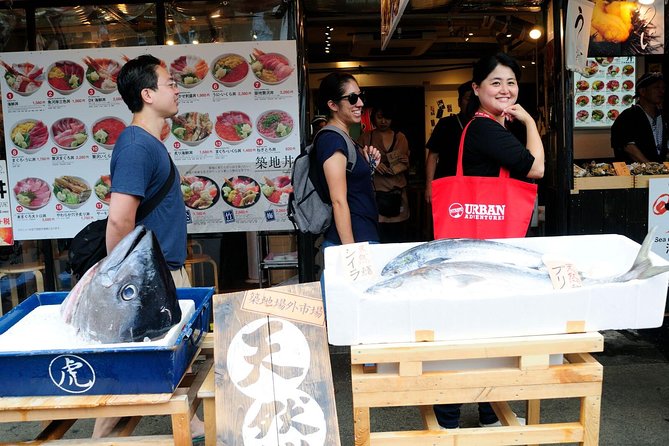
The main action is in the outer market area. This is the part that helps you avoid the classic Tsukiji problem: you arrive hungry, you get overwhelmed, and somehow you leave with nothing you truly wanted.
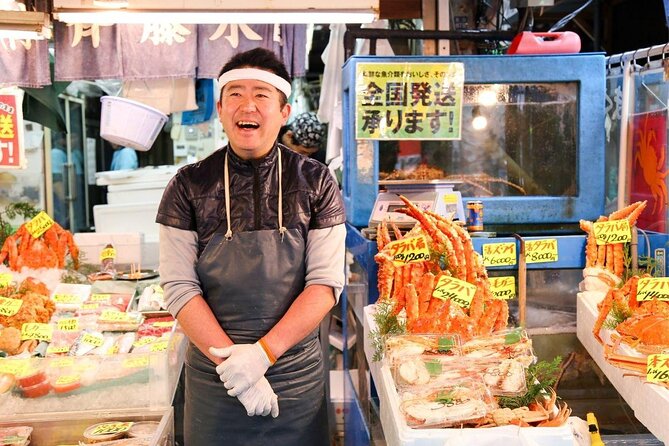
Instead, you follow a guided route through narrow alleys where seafood, vegetables, and grab-and-go snacks line up close together. Your guide translates and explains what you’re looking at, including how Japanese food culture shows up in small choices, like how items are prepared, served, and paired.
The best value here is not just the tastings. It’s the way someone helps you read the market. You learn what to look for, how to approach stalls, and what kinds of flavors are considered “standard” versus “special day” material.
This also matters for timing. Tsukiji moves early, and you’re limited to about 2 hours in the market section. If you try to do this solo, you can easily spend that time walking in circles or waiting in the wrong line. With a guide, your time is spent where it counts.
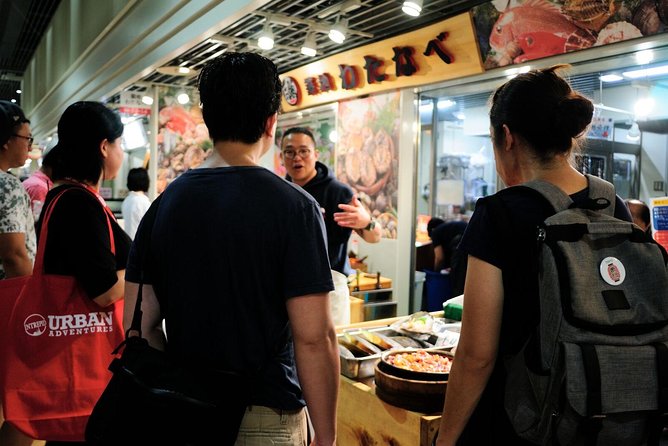
Also, the group size is small, capped at six. That means your guide can slow down when you want to ask questions, or speed up when you’re eager to keep tasting. It feels more like walking with a local friend who knows food routes than following a generic checklist.
The tastings: sushi, Japanese snacks, and Kawaii wagashi sweets
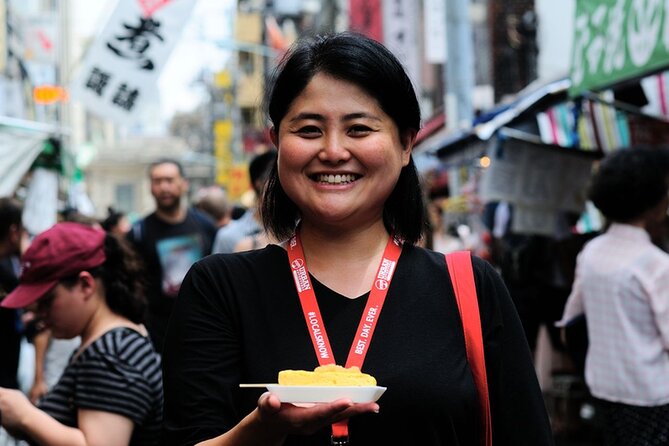
Let’s talk food. The tour includes freshly made sushi, local snacks, and wagashi sweets. That combo is smart because it covers the market’s three lanes: savory (sushi and fish-based bites), crunchy or handheld snack culture, and the lighter, more delicate sweets Japanese people often associate with tea time.
In practice, the exact items can vary by day, but the included tasting approach is consistent: you get enough variety to understand what people actually buy and eat, without leaving you with a suitcase full of receipts and regret.
A few specific tastings mentioned across experiences include things like tuna nigiri and sashimi styles, tamagoyaki (Japanese omelette), Satsuma-age (fish cake), and even sea eel roll. Some guides have also introduced practical extras such as wasabi preparation. One favorite detail: grinding your own wasabi using a tool so you can taste the difference right away.
Sweet lovers also have reasons to smile. Wagashi shows up here as more than decoration. It’s typically sampled in bite-sized forms that are easy to eat on the move. And for fruit-season flavor, some tours have included items like white strawberries as part of the snack run.
One balanced heads-up: drinks and any extra food are not included. So you’ll want a plan for hydration. If you know you’re a “water between every bite” person, budget for it.
Also, there’s a small caution for diet flexibility. Vegetarian and vegan options are available, but the selection is limited. That means you might not get the same fish-based items as everyone else, and you should come ready to make the best of what’s offered rather than expecting a full menu conversion.
Kabuki Inari and Namiyoke Inari, why the shrines fit the food story
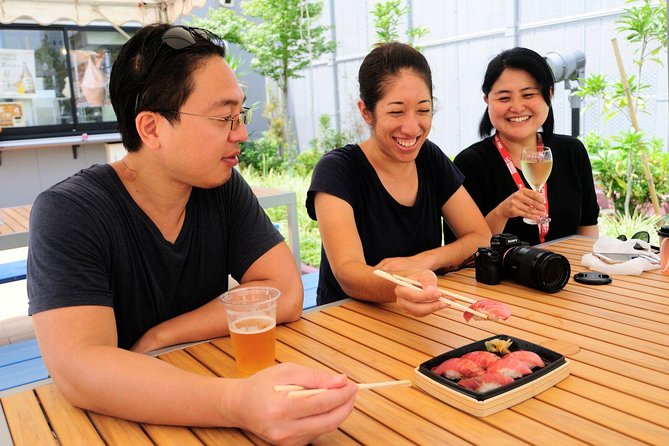
Shrines might sound like a detour on a food tour, but here it works because it connects food to place and tradition.
Kabuki Inari Shrine at the start gives you a cultural anchor right away. You’re learning about Kabuki culture and admiring the Kabukiza area, then the tour shifts from performance to pleasure, from stage stories to food stories.
The end stop, Namiyoke Inari Shrine, is the calm landing. You visit it near the Tsukiji area, enjoy the quieter atmosphere, then walk about 10 minutes to the nearest station.
I like this structure because it helps you pace your own body. After eating and walking for hours, a brief shrine moment helps you slow down, look around, and actually absorb what you just tasted. It turns “market chaos” into something you can remember clearly instead of forgetting as soon as you re-enter the subway crowd.
If you like Japan beyond food stalls, you’ll appreciate this extra layer. If you only want food, you might see the shrine stops as time you could spend eating. For most people, though, it makes the tour feel more Tokyo and less theme park.
More Market Tours in Tokyo
- Tokyo: Tsukiji Fish Market Food and Walking tour
★ 5.0 · 1,724 reviews - Tokyo: Tsukiji Fish Market Guided Walking Tour
★ 4.9 · 1,397 reviews - Tokyo Sushi Making Class in Tsukiji with Professional Chef
★ 5.0 · 1,177 reviews - Tsukiji Fish Market Guided Tour and Sushi Making with Pro Chef
★ 5.0 · 775 reviews
Timing, shoes, and how to avoid the wet-floor surprise
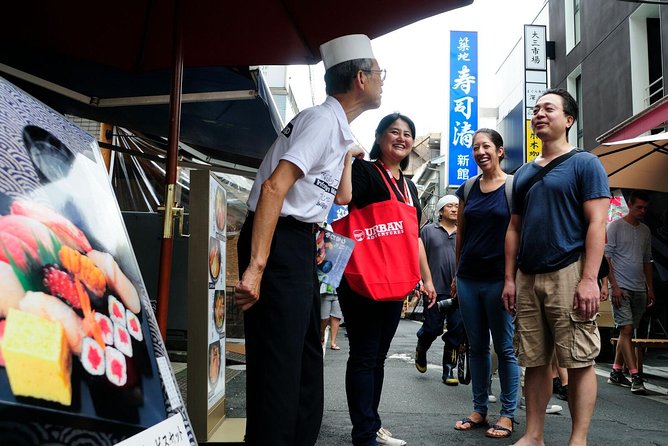
This is a morning tour, starting at 8:00 am. The total duration is about 3 hours, with roughly 2 hours inside the outer market portion and shorter time blocks for the shrine stops.
The schedule matters because Tsukiji is not a “sometime today” experience. You want to be there while vendors are active and before the day gets too hot or crowded for easy walking.
You should also dress for the surface conditions. The tour notes that inner market floors can be wet, so closed-toe shoes are strongly recommended, with sneakers as the practical pick. I’m glad they call this out. Slippery floors in the market are the kind of small risk that can ruin a morning, especially if you’re carrying a coat or a bag with snacks.
Weather plan: go with breathable layers. Even if the morning starts cooler, you’ll be moving constantly for those 3 hours.
Group size and guide quality, what you can expect from the experience
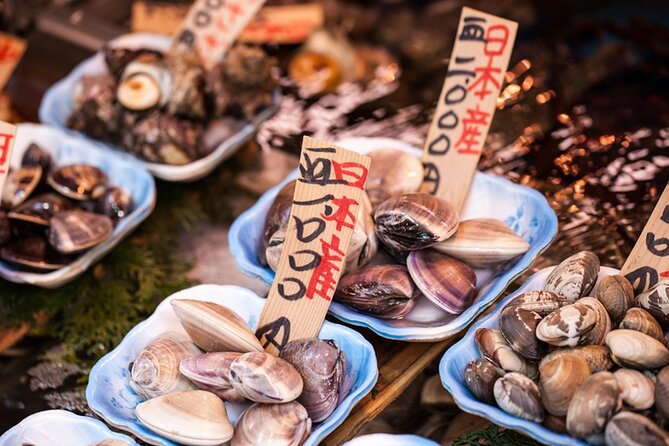
Max six travelers is the big deal. It changes how the tour feels. You get personalized attention, and you’re more likely to get straight answers instead of hearing the same explanation repeated over and over.
Guide style also shows up in the details people mention. Several named guides come up in experiences, including Mihari, Yuri, Shino, Aya, and Koz. Across those names, the common thread is active engagement: explaining what you’re eating, answering questions, and sometimes going beyond the basics with thoughtful touches like wasabi prep or adding cultural context to what you’re tasting.
One balanced note: the amount and exact timing of food can vary. A few experiences suggest that sometimes the tastings can feel more scheduled than “right at the counter where you want to watch the roll get made.” If your dream is watching the sushi making at the exact stall as you snack, manage expectations. This is designed as an outer-market walking tour with guided tastings, not a full behind-the-scenes masterclass.
Still, the overall rating is extremely strong, with a 4.9 average across 162 reviews and 98% recommending the tour. That’s a signal that most people end up feeling they got value for both food and guidance.
Price and value: what $83.35 buys you in Tsukiji time
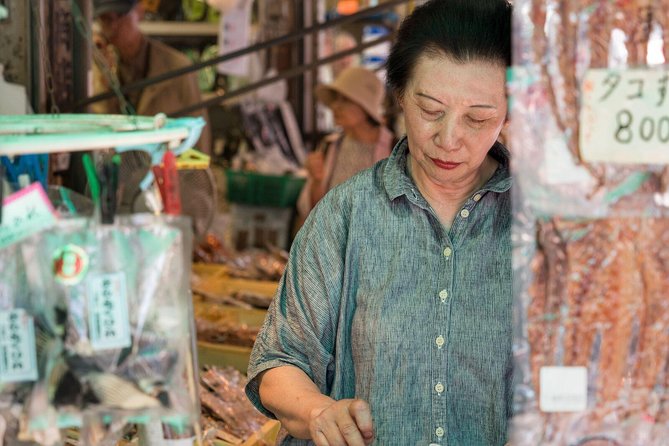
At $83.35 per person, this tour sits in the midrange for guided food experiences in Tokyo. The value comes from three places.
First, it bundles several included bites. You’re not just tasting one item; you’re getting freshly made sushi, local snacks, and wagashi sweets.
Second, you’re paying for someone to manage the route so you don’t waste time. Outer Tsukiji can be disorienting. A guide helps you avoid that “where do we even start?” confusion.
Third, you get culture stops that turn the tour into a Tokyo snapshot, not only a food sampler. The shrine moments are free admissions, so the added experience is low-cost for you and high-reward for the memory of the morning.
What’s not included is important. Drinks and additional food are on you, and tips for your guide are not included. So if you’re the type who always wants a cold drink with street snacks, you’ll want to budget a bit.
Also, this tour tends to be booked ahead, often around 38 days in advance on average. If you want a specific date or you’re traveling during busy weeks, plan earlier rather than waiting for a last-minute decision.
Who should book this Tsukiji Outer Market tour
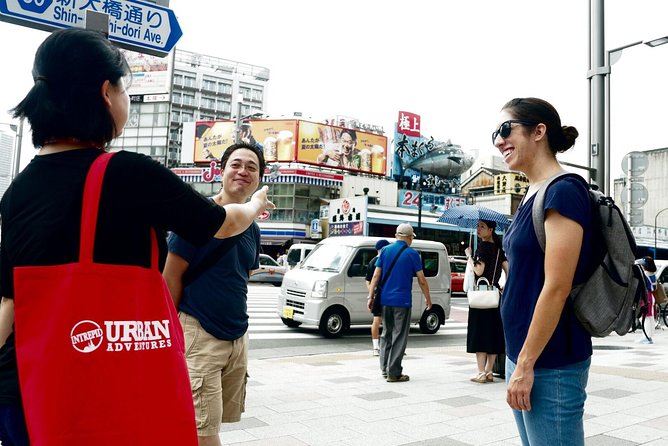
This is a strong fit if you want a first-timer friendly way to experience Tsukiji without getting lost. You’ll like it if you enjoy learning while you eat, and if you want your morning planned for you in a small group.
You’ll also probably enjoy it if you like variety: sushi plus snacks plus sweets. It’s not only about fish. It’s about the whole market palate.
This tour might be less ideal if you’re looking for a long, heavy eating session with lots of full meals included. Since drinks and extra food are not included, and portions can feel lighter than you expect, come hungry but also know you may want a follow-up snack or meal after.
For dietary needs, it’s promising but not perfect. Vegetarian and vegan options exist, but selection is limited. If your diet is strict, you should be ready to choose carefully and focus on what’s available on the day.
And if you travel with kids, it’s child-friendly. Children under 6 can join for free, which can make this an easier family decision.
Should you book it?
If you want an efficient, small-group introduction to Tsukiji Outer Market with sushi, Japanese snacks, and wagashi, I’d book this. The shrine stops add character, the 3-hour window keeps it doable, and the small group size helps you actually interact with the guide instead of just following.
I’d only think twice if you’re a serious seafood watcher who mainly wants to see sushi-making at the exact stall up close, or if you know you need a large volume of included food and drinks to feel satisfied. In those cases, plan to top off after the tour.
If you’re unsure, here’s my practical rule: if you’d rather spend your Tokyo morning eating and learning with a plan than wandering and guessing, this is the kind of tour that saves you time and stress.
FAQ
How long is the Inside Tokyo’s Kitchen: Tsukiji Market, Food & Culture Tour?
The tour duration is approximately 3 hours.
What is the group size for this tour?
The maximum group size is 6 travelers.
Where do I meet the guide, and where does the tour end?
You meet at Kabuki Inari Shrine at 4 Chome-12 Ginza, Chuo City, Tokyo 104-0061, Japan. The tour ends near Tsukiji Fish Market, accessible from Tsukiji Station on the Hibiya Tokyo Metro Line.
What food is included in the tour?
The tour includes freshly made sushi, local snacks, and charming wagashi sweets.
Are vegetarian or vegan options available?
Vegetarian and vegan options are available, but the food selection is limited.
Are drinks included?
No, drinks and additional food are not included.
Do I need to bring closed-toe shoes?
Yes. Closed-toe shoes are recommended because inner market floors can be wet, and sneakers are the suggested choice.
Is the tour family-friendly?
Yes. The tour is child-friendly, and children under 6 can join for free.
What is the cancellation policy?
You can cancel for free up to 24 hours in advance of the experience start time for a full refund. If you cancel less than 24 hours before the start time, the amount paid is not refunded.
More Shopping Tours in Tokyo
- Tokyo Food Tour Taste Fresh Delights at Tsukiji Market
★ 5.0 · 429 reviews - Tokyo Tsukiji Fish Market Tour and Sushi Making Lesson
★ 5.0 · 390 reviews - Tsukiji Fish Market: Street Food & Culture Walking Tour
★ 4.8 · 259 reviews - Tokyo Washoku 4-hour Cooking Class: From Market to Table
★ 5.0 · 253 reviews
More Markets in Tokyo
- Tokyo: Tsukiji Fish Market Food and Culture Walking Tour
★ 4.7 · 757 reviews - Tsukiji Fish Market: Street Food & Culture Walking Tour
★ 5.0 · 669 reviews - Tsukiji Fish Market Small-Group Food Walking Tour
★ 5.0 · 621 reviews - Tokyo: Tsukiji Fish Market Sushi Making Class with Pro Chef
★ 4.9 · 506 reviews
Fresh options around Tokyo
- Customizable Private Tokyo Trip with an English Speaking Driver★ 5.0 · 24 reviews
- Private Tour – History, Art and Nature at the Imperial Palace★ 5.0 · 24 reviews
- Tokyo VIP private nightlife tour with a local insider★ 5.0 · 24 reviews
- 1- Day Private Tour to Nikko Tochigi With English Speaking Driver★ 5.0 · 24 reviews
- Hop-On Hop-Off Tokyo Bus by Skyhop Bus★ 2.0 · 24 reviews
- [1 Group Only] Explore Tokyo Ginza Food Tour for Family★ 5.0 · 24 reviews
- From Tokyo: Mount Fuji and Hakone Full Customizable Trip★ 5.0 · 24 reviews
- Nagano Private Tour With English Speaking Driver★ 4.5 · 24 reviews
Food & Drink, compared.
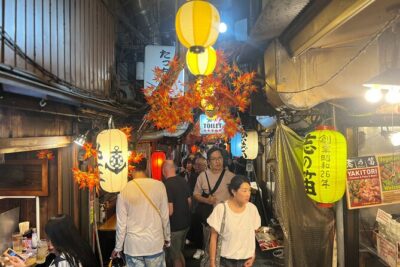
Shinjuku Food Tour (13 Dishes at 4 Local Eateries)
Read our review →
Tokyo Tsukiji Fish Market Food and Culture Walking Tour
Read our review →
Shinsekai Food Tour with 13-15 Dishes at 5 Eateries
Read our review →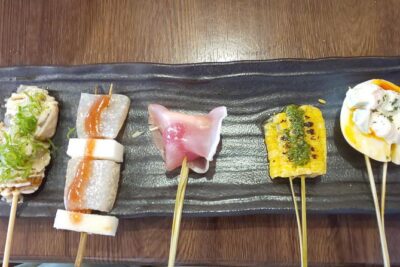
Osaka Food Tour: 13 Dishes at 5 Local Eateries
Read our review →
Shinjuku Food Tour (15 Dishes and 4 Eateries)
Read our review →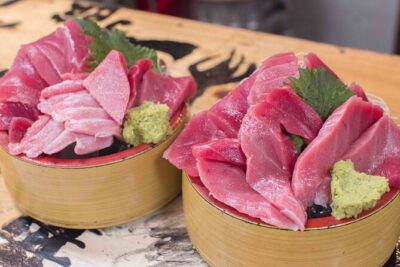
Best of Shinjuku: Izakaya Food Tour (4 Stops, 14+ Tastings)
Read our review →
Kyoto Night Foodie Tour in Gion (9+ dishes + 6 Sake tastings)
Read our review →
Hungry Osaka Street Food Tour:15 Tastings & 3 Drinks with a Local
Read our review →Browse the lists this tour appears in