Reviewed · TOKYO TOURS
TokyoSumoShow, ChickenHotPot, and Mochi-Pounding by Pro Wrestlers
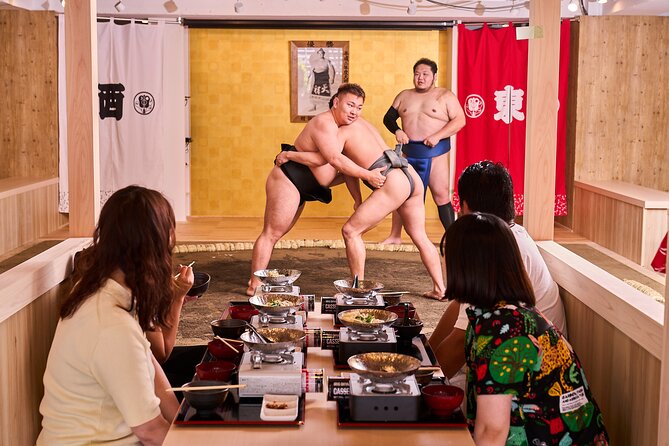
Sumo, but make it interactive. I love how SUMOLAND Tokyo in Ryogoku turns the sport into something you can actually do, not just watch, with mochi pounding plus a performance supervised by a top Yokozuna. You also eat a proper chicken chanko hot pot and get close enough for photos with former pro wrestlers.
My other favorite part is the pull-you-in energy of the ring entrance and the audience participation that leads to a real bout challenge. One thing to keep in mind, though, is that seats are assigned and certain interactive spots (like mochi pounding or the sumo challenge) can be limited if the room is busy.
Key Highlights You Should Care About
- Ryogoku location puts you in Tokyo’s sumo neighborhood, near Ryogoku Station
- Chicken chanko hot pot is included and served as part of the program
- Former pro wrestlers up close, including a ring entrance ceremony
- Mochi pounding challenge is hands-on and kid-friendly
- Photo time with wrestlers, plus a chance to step into the ring
- Diet limits are real: vegetarian or vegan by request, but no gluten-free or halal available
Ryogoku Basics: Finding SUMOLAND Tokyo near the Sumo Neighborhood
SUMOLAND Tokyo sits in Ryogoku, the part of Tokyo where sumo lives year-round. If you use the train, you’ll be aiming for Ryogoku Station, then walking a short distance to a storefront marked by big sumo wrestler signage and flags. The area is also a smart base for a full day, because you’re within reach of classic sightseeing zones like Asakusa, Akihabara, Nihonbashi, and Tokyo Skytree.
Plan to arrive a little early. The experience is designed to start on time, and the flow matters because you eat and then move through performances and challenges. With a mobile ticket, check-in is usually straightforward, but don’t treat it like a casual museum stop where you can wander in whenever.
If you’re planning your day, think of SUMOLAND as an activity that gives you a focused Tokyo memory fast. It’s not trying to be the quiet, traditional end of Japanese culture. It’s built for laughs, action, and interaction, with a sumo-themed show that works for first-timers.
A few more Tokyo days worth comparing
- Mt Fuji and Hakone 1-Day Bus Tour Return by Bullet Train
★ 5.0 · 26,383 reviews - 1-Day Tokyo Bus Tour
★ 5.0 · 14,250 reviews - Tokyo: TOKYO SKYTREE® Admission ticket
★ 4.5 · 11,192 reviews
A Warm-Up Meal: Chicken Chanko Hot Pot That Sets the Tone
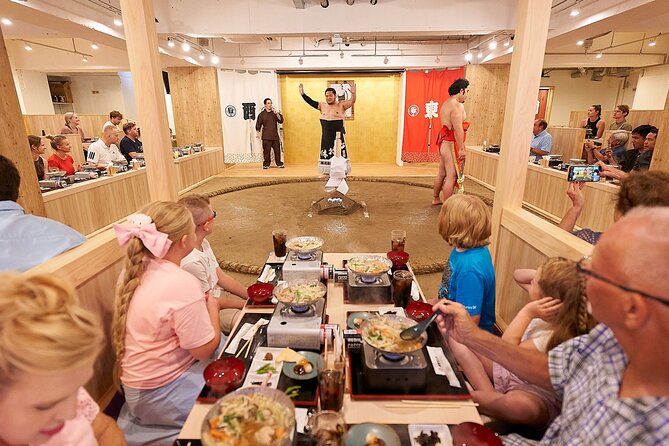
The program includes a meal: chicken chanko hot pot. It’s not a fancy “light snack” either. This is a real hot pot that sumo culture is famous for, and it’s specially prepared by sumo wrestlers, supervised by the Isegahama stable.
Why I think this matters for you: eating together early helps the group feel part of the experience right away. Instead of sitting around waiting for a show, you’re warming up with something hearty while the program gear shifts from food to performances.
Now the honest part. People who loved the show often felt the hot pot was tasty, but a few reviews described it as just OK compared to the entertainment. So go in with the right expectations: it’s included and satisfying, but your main “wow” is the sumo action and hands-on challenges.
Also note what’s not included. Alcoholic drinks and bottled water cost extra. If you need water, budget for it. If you want something beyond hot pot, you’ll have to handle that on your own.
Ring Entrance Ceremony and the Yokozuna-Supervised Show
Once the meal portion is underway, the program builds toward the performance. A ring entrance ceremony kicks things off, with former top-division wrestlers making a strong entrance. This is one of those moments where you instantly understand sumo is more than just fighting. There’s ceremony, presence, and showmanship.
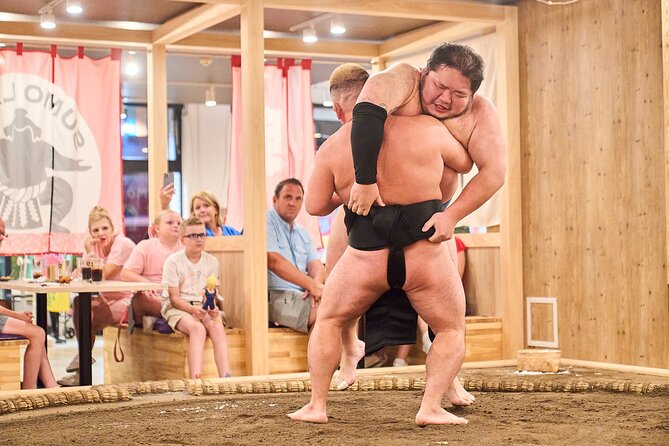
Then comes the sumo show itself, supervised by a Yokozuna. That supervision is a big deal because it signals the program is trying to teach you the sport in a way that’s accurate, not just cartoonish. You’ll see performance-style bouts and demonstrations that explain what makes sumo different, and you’ll get a version of the sport that’s tailored for mixed ages.
A practical tip: during any in-between segments, pay attention to the cueing from staff. The experience runs like a well-timed show, with you moving from one part to another without long dead time. If you zone out, you can miss the moment when the audience gets pulled in again.
If you want the rules of official tournaments in full detail, this may feel lighter than you’re hoping. The show is more about giving you a fun, understandable first look at sumo culture and technique. Think “friendly intro with real wrestlers,” not a textbook lesson.
Mochi-Pounding Challenge: Messy Hands-On Fun With Wrestlers
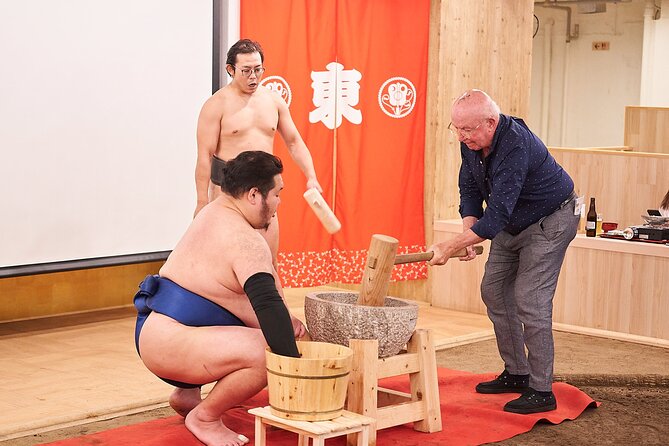
Here’s where SUMOLAND gets really memorable: the mochi-pounding challenge. You’ll try making mochi alongside the wrestlers. Kids are welcome, so this is a rare Tokyo activity where your child can do something physical, loud, and joyful, not just watch.
Mochi pounding sounds simple, but it has that great learning curve. You’ll feel how timing and teamwork matter, and the wrestlers make it look easy while also keeping the energy high for the audience.
One consideration to plan around: if a lot of people want to do mochi pounding, participation may be limited to one person per group or decided by lottery. That means you should not assume everyone in your party will get a turn.
If you’re traveling with kids, treat mochi pounding as the “must do.” Arrive early so you’re settled, and be ready to follow staff instructions quickly when the challenge time comes.
Same corner of Japan, a different kind of day:
- Tokyo: teamLab Planets TOKYO Digital Art Museum Entry Ticket
★ 4.6 · 9,779 reviews - Mt Fuji & Hakone Cruise, Drum Show Bullet Train 1 Day from Tokyo
★ 4.0 · 7,413 reviews - Tokyo: Sumo Show Experience with Chicken Hot Pot and a Photo
★ 4.8 · 6,678 reviews - Tokyo: Shinjuku Food Tour (13 Dishes at 4 Local Eateries)
★ 5.0 · 6,603 reviews
Sumo Bout Challenge: Stepping Into the Ring (Literally)
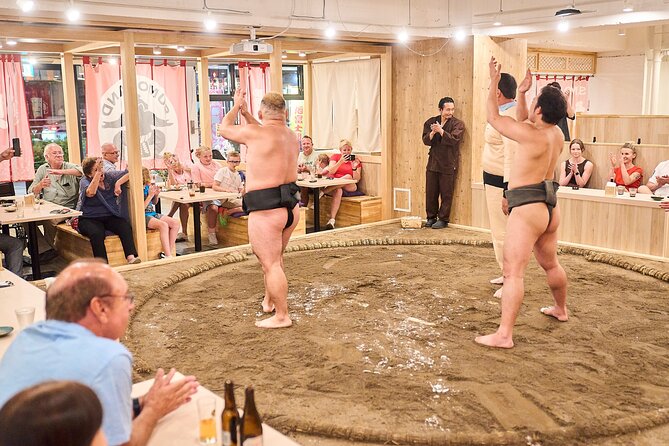
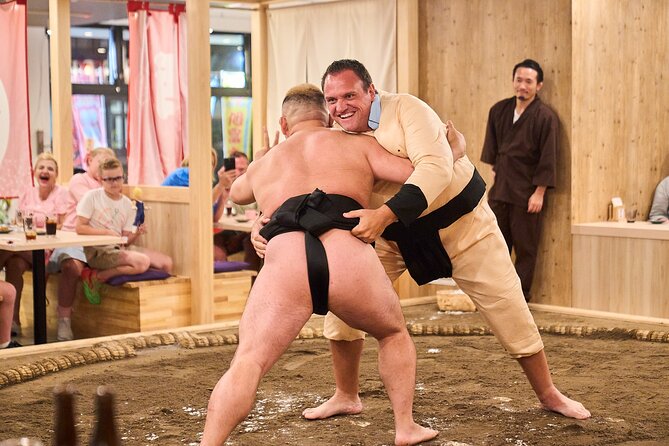
After mochi pounding, the show keeps rolling toward the interactive part that makes SUMOLAND worth it for many people: the sumo bout challenge. This is your chance to step into the ring and take on a real sumo wrestler, with kids welcome too.
This part is the heart of the experience if you like action and crowd participation. It’s also a good way to understand something you cannot really learn from videos: sumo technique is physical, and the wrestlers have balance, power, and timing that looks effortless only until you try it.
One thing to be aware of: just like with mochi pounding, your specific turn may depend on how many people sign up for participation at that moment. If it’s busy, you might be limited to one person per group or selected by lottery.
That’s not a dealbreaker. It just means you should go with flexibility. If you get selected, you’ll remember it for years. If you don’t get a turn, you’ll still have the show, the close-up moments, and the chance to interact in other ways.
Photo Time With the Wrestlers: Your Closest Proof You Were There
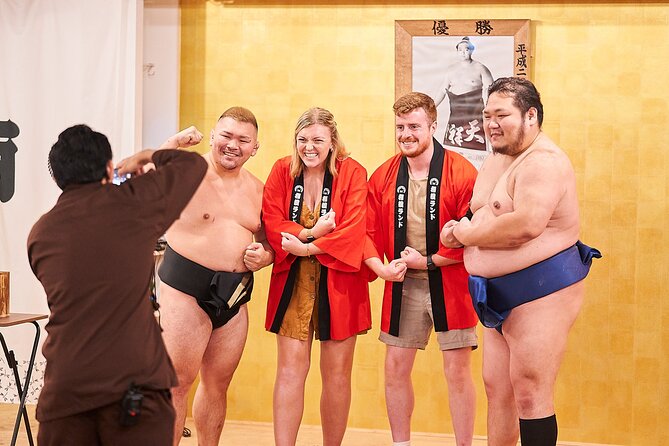
Between the challenges and demonstrations, there’s photo time with the wrestlers. This is one of the most practical parts of the whole day, because it turns “I saw sumo” into a real, tangible memory you can keep.
From a value standpoint, photo time matters more than it sounds. At many Tokyo shows, you get a view but not proximity. Here, you’re close enough to make photos feel special, especially if you’re sitting near where staff coordinates the audience.
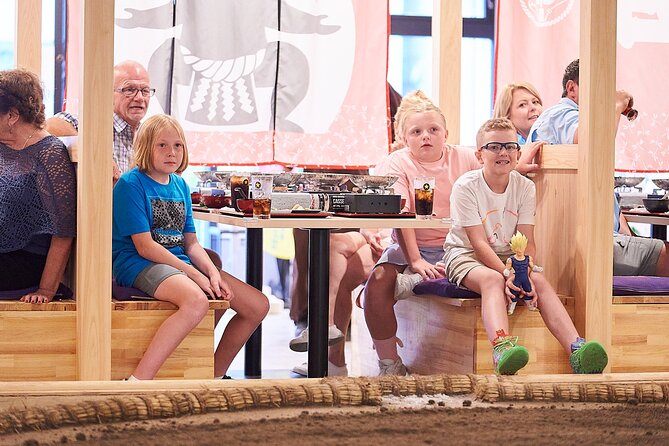
Also, keep in mind that seat selection isn’t offered. The venue assigns seating. Most people say there’s not a bad view, but the exact experience depends on where you’re placed.
If you’re bringing children, pay attention to the seating safety detail: standard seats are considered dangerous if you’re holding a child on your lap while seated, because of the arrangement. The box seats are safer for this, with seating for up to six people, and it’s possible to hold a child on your lap there.
Seats, Participation Limits, and Food Rules You Should Plan For
SUMOLAND runs smoothly, but a few rules can affect how your day feels.
Seats are assigned, not chosen. That means you should pick your session time based on your day plan, not on seat hunting.
Interactive participation can be limited. If many guests join the mochi-pounding or sumo challenge, participation may be restricted to one person per group or handled by lottery. If you’re traveling as a family, consider that you might want more than one adult or older kid ready, so at least someone in the group has a good shot at participating.
Dietary options have clear limits. Vegetarian and vegan meals are available if you request at least 2 days in advance. If you have gluten-free or halal requirements, the data says those meal types are not available. You can bring your own food, which is a good backup plan if your dietary needs fall outside vegetarian and vegan.
A practical strategy: if you’re relying on special meals, confirm your request early enough. If you’re in the gluten-free or halal category, bring a simple backup meal you know you can eat, so you’re not stuck making do during the event.
Finally, souvenirs are included, but the exact items can vary by season. That’s a small variable, but it’s good to remember you’ll likely get something as part of the value, not just an optional shop purchase.
Price and Value: Is $106.12 Worth It?
At $106.12 per person, this is not a cheap “walk-in” activity. The value only makes sense if you’re buying the whole package, not just a show ticket.
Here’s why it can be worth it:
- You’re paying for a live performance with former top-division wrestlers and audience participation.
- You get an included meal: chicken chanko hot pot.
- You get mochi pounding and a sumo bout challenge (or at least the chance to participate, depending on crowd flow).
- You get photo time with wrestlers and a souvenir.
In other words, you’re not only watching sumo. You’re eating sumo culture food, trying hands-on traditions, and stepping into the ring experience in some form. That turns it into a “do it” Tokyo memory, which is often what you’re really paying for when you choose an attraction over a free sightseeing day.
If you’re primarily looking for a deep dive into sumo rules and tournament structure, this may feel like it’s aiming at entertainment and first-time understanding. But if you want a fun, structured introduction with real performers, it’s priced like an experience package, and many people seem happy with the results.
Who Should Book SUMOLAND, and Who Might Skip It?
This experience is a strong fit if you:
- Want an easy family activity in Tokyo, including kids who can participate
- Are curious about sumo culture and want the fastest path to understanding it
- Like interactive shows where you might step into the action
- Appreciate English-friendly guidance and clear programming, since the event is built for broad audiences
You might hesitate if you:
- Need gluten-free or halal meals provided on-site
- Want a quiet, traditional experience without crowds and audience calls
- Expect every detail of tournament rules explained like a lecture
One more practical thought: if this is your first stop in Tokyo, it can help you “get your bearings” fast with something memorable and easy to understand. Ryogoku is also convenient for a larger sightseeing day.
Should You Book? My Simple Decision Rule
Book SUMOLAND if you want a sumo-themed, hands-on show with included food and a real chance to participate. The combination of ring ceremony energy, mochi pounding, and the sumo bout challenge is exactly the kind of activity that feels like a Tokyo “yes, do that” moment.
Skip it if your main priority is strict dietary compliance beyond vegetarian and vegan, or if you dislike interactive theater style programming. If neither of those applies, this is one of the more complete entertainment packages in the Ryogoku area, especially for families and first-time visitors.
FAQ
How long is the SUMOLAND Tokyo experience?
The experience runs about 1 hour 30 minutes to 2 hours.
What’s included in the ticket price?
Your ticket includes entry, chicken chanko hot pot, and a souvenir.
Are drinks included with the meal?
Alcoholic beverages and bottled water are not included.
Can you get vegetarian or vegan meals?
Yes, vegetarian and vegan meals are available if you request them at least 2 days in advance.
Is gluten-free or halal food available?
Gluten-free and halal meals are not available. You can bring your own food.
Can my group participate in mochi pounding and the sumo bout challenge?
Participation may be limited if it gets busy, sometimes to one person per group or decided by lottery. Also note that seats are assigned by the venue and cannot be selected. If you are holding a child on your lap, box seats are noted as safer compared with standard seats.
Fresh options around Tokyo
- Private Harajuku Omotesando Architecture Tour★ 4.9 · 18 reviews
- Tokyo Shopping Street Hopping Private Tour with Government Licensed Guide★ 5.0 · 18 reviews
- Tokyo: Private Mount Fuji and Hakone Day Trip with Guide★ 4.5 · 18 reviews
- Small-Group Osaka-Style Okonomiyaki Cooking Class★ 5.0 · 18 reviews
- Hakone Private One Day Tour From Tokyo: Mt Fuji, Lake Ashi, Hakone National Park★ 5.0 · 18 reviews
- Shinto Shrine Tour: Explore Japanese Culture in Tokyo★ 5.0 · 18 reviews
- PERFECT 1 Day Tokyo Highlights Tour with a Private Car★ 5.0 · 19 reviews
- Tokyo: Shinjuku Bar Hopping & Karaoke Night Tour★ 4.9 · 19 reviews
Tokyo Tours, compared.

Mt Fuji and Hakone 1-Day Bus Tour Return by Bullet Train
Read our review →

teamLab Planets TOKYO Digital Art Museum Entry Ticket
Read our review →
Mt Fuji & Hakone Cruise, Drum Show Bullet Train 1 Day from Tokyo
Read our review →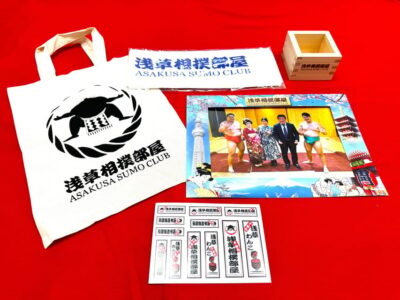
Sumo Show Experience with Chicken Hot Pot and a Photo
Read our review →
Shinjuku Food Tour (13 Dishes at 4 Local Eateries)
Read our review →