
Reviewed · ANIME & POP CULTURE TOURS
Tokyo’s Must-Sees: 5-hour Tsukiji, Akihabara & Asakusa Tour
Three neighborhoods, one efficient morning. This 5-hour Tokyo route is built for people who want Tsukiji seafood and the big-city energy of Akihabara and Asakusa without guessing their way through it, thanks to a certified guide and included tastings. You also get a practical perk: you do not have to stop to take photos, because the guide captures images and sends them to you later.
I like that the day is structured around the sights that most people come to Tokyo for, not just quick exterior photos. The only real catch is that it is a walking-heavy plan, and it is not recommended if you have mobility issues. Also, trains cost extra (390 yen), so keep a bit of cash or an IC card handy.
Key points at a glance
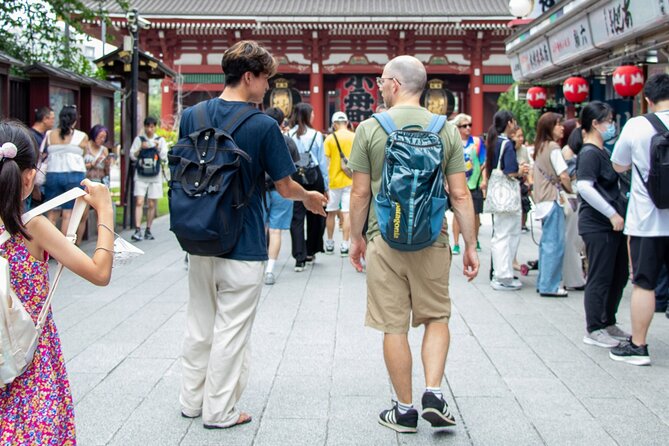
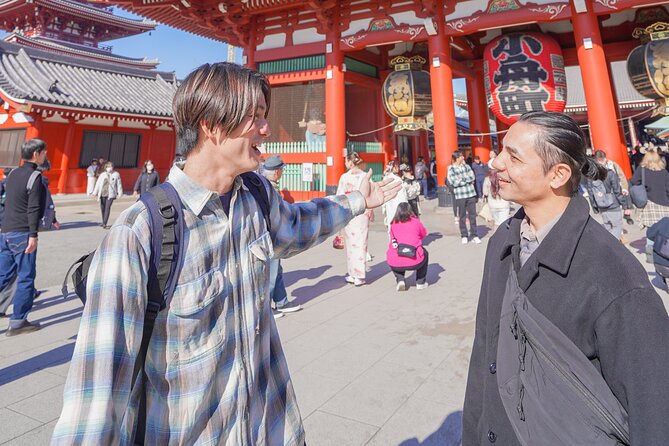
- Certified commentary, not guesswork: A guide leads the route and explains what you’re seeing at each stop.
- Tsukiji Fish Market tastings: Plan on 2 to 3 market samples, including fresh seafood opportunities.
- Photo help included: You can focus on the streets and scenes, not your camera.
- Akihabara with specific stops: Super Potato and Akiba Cultures Zone are part of the walkthrough.
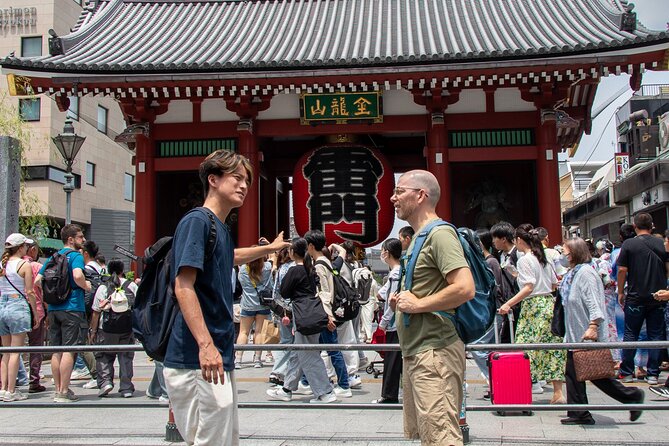
- Asakusa old-town landmarks: Kaminarimon Gate and Senso-ji Temple anchor the final stretch.
- Vegetarian and vegan lunch possible: Options require advance request, not day-of improvising.
A half-day plan that stitches Tsukiji, Akihabara, and Asakusa together
This is one of those Tokyo tours that makes sense when time is tight. In about five hours, you move through three very different parts of the city, with a guide guiding the pace and narration. Tsukiji gives you that early-market energy, Akihabara brings pop-culture overload, and Asakusa slows things down into temple-and-old-street Tokyo.
The best part is that you get a guided storyline. Instead of bouncing between neighborhoods on your own, you’re handed a route that hits the major landmarks and then fills in context along the way. That matters in Tokyo because crowds can be thick and signage can be intimidating when you’re moving quickly.
Also, the group stays small, with a maximum of 7 travelers. In practice, that usually means less waiting and more chance for the guide to keep an eye on the group. It also helps when you’re walking through busy areas that feel chaotic at first.
More Market Tours in Tokyo
- Tokyo Tsukiji Fish Market Food and Culture Walking Tour
★ 5.0 · 3,184 reviews - Tokyo: Tsukiji Fish Market Food and Walking tour
★ 5.0 · 1,724 reviews - Tokyo: Tsukiji Fish Market Guided Walking Tour
★ 4.9 · 1,397 reviews
Meeting at Tsukiji Honganji Temple, then head straight into market mode
The tour meets at 築地本願寺 正門3-chōme-15-1 Tsukiji, Chuo City. The starting point is Tsukiji Honganji Temple, a leading temple in Tokyo under the Nishi Honganji jurisdiction in Kyoto.
I like this choice because it gives you an immediate “Tokyo meaning” to the morning. You’re not dropped into a market and told good luck. You start at a temple, you get a quick orientation, and then the day transitions into Tsukiji Fish Market.
It’s also reassuring that the temple admission is free, so you’re not hunting down another ticket stop before you’ve even started. The tour also builds in short breaks, which helps given how fast these areas can feel.
Tsukiji Fish Market: tastings first, chaos under control
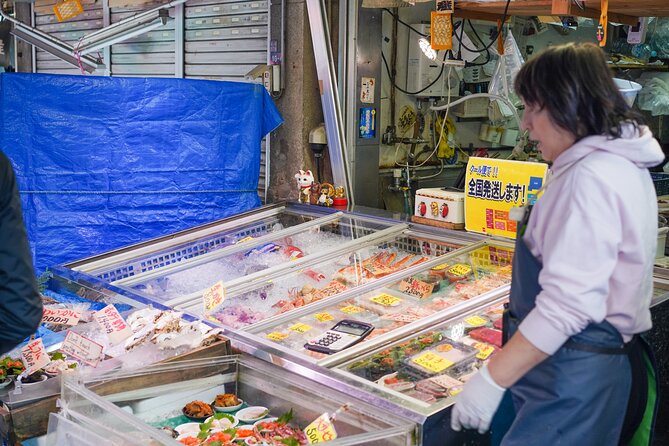
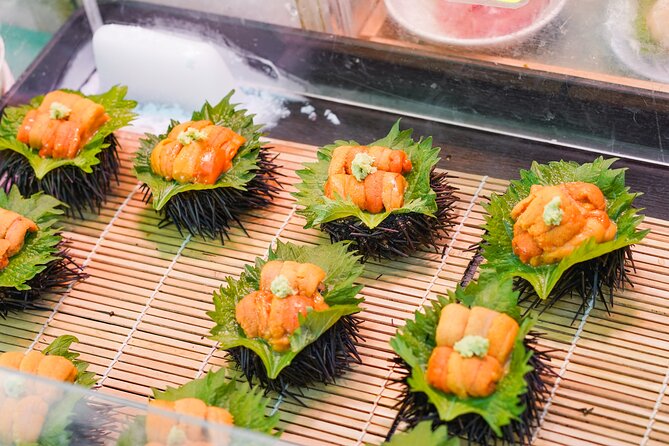
The Tsukiji Fish Market walk is the centerpiece for food-focused sightseeing. You’ll stroll around and try fresh seafood and local delicacies, with 2 to 3 food samplings included. Admission is listed as free, so the cost is mostly in your time and appetite.
Here’s the practical part: Tsukiji can feel loud, crowded, and fast. A guided route helps you avoid getting stuck at the wrong angle or spending time searching for what’s actually included in your tastings. You also get a “sample, don’t snack the whole day” approach. That’s a big deal if you want to enjoy seafood without turning your morning into a full-on meal hunt.
Food is included, but additional drinks and extra snacks are not. If you know you like drinks with seafood, it’s smart to plan for that and budget a bit.
If you have dietary needs, this is one of the spots where planning matters. The tour can offer vegetarian and vegan lunch options, but allergy-free guarantees are not promised. The info specifically says dietary requests must be submitted at least 1 day before the tour, and requests made on the tour day cannot be accommodated. If you have serious allergies, you’ll want to consider that carefully.
Akihabara game and anime culture, with specific shop stops
After Tsukiji, the energy shifts hard into Akihabara. This section runs about 2 hours 10 minutes and is built around game and anime culture, not generic wandering.
You’ll stop by Super Potato and Akiba Cultures Zone, plus other nearby spots. These are the kinds of places where the details matter. Without a guide, it’s easy to miss what you came for, especially if you’re trying to balance browsing, photos, and basic navigation at the same time.
I like that the tour doesn’t treat Akihabara like a single photo stop. It’s given proper time to breathe. You’ll have enough minutes to walk through the “wow factor” streets and do some browsing, while still staying on schedule for the rest of the day.
Two practical tips if you go into Akihabara on this route:
1) Wear shoes you can walk in for hours. Store hopping means lots of small steps.
2) Keep an eye on your pace. Akihabara crowds can slow things down, and your group wants to stay together.
Same corner of Japan, a different kind of day:
- Mt Fuji and Hakone 1-Day Bus Tour Return by Bullet Train
★ 5.0 · 26,383 reviews - 1-Day Tokyo Bus Tour
★ 5.0 · 14,250 reviews - Tokyo: TOKYO SKYTREE® Admission ticket
★ 4.5 · 11,192 reviews - Tokyo: teamLab Planets TOKYO Digital Art Museum Entry Ticket
★ 4.6 · 9,779 reviews
The route shift toward Asakusa, old Tokyo at walking speed
The itinerary then moves you toward Ueno and into the Asakusa side of town. This is the part that helps you understand how Tokyo neighborhoods connect. Even if you have never studied the geography, you feel the city’s texture changing as you move from one district vibe to another.
The goal here is a clean transition: you leave the neon and pop-culture atmosphere and shift into classic Tokyo temple and street life. This is where the tour becomes less about “shopping and street scenes” and more about “landmarks and meaning.”
And it’s also where the pacing matters. When you’re this close to Tokyo’s busiest sights, the difference between stressed and comfortable often comes down to arriving with a plan.
Kaminarimon Gate and Senso-ji Temple: seeing the landmark, learning how to pray
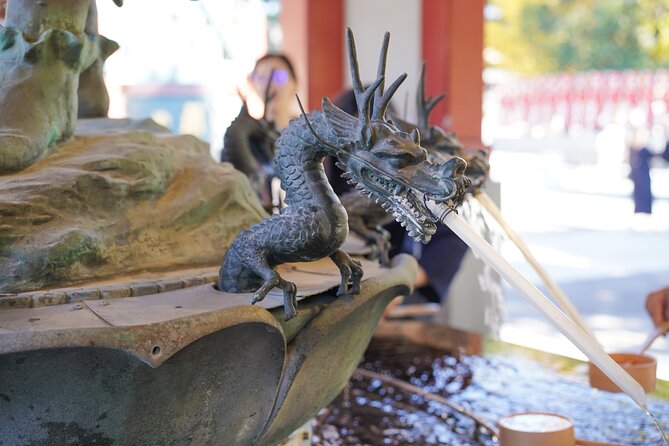
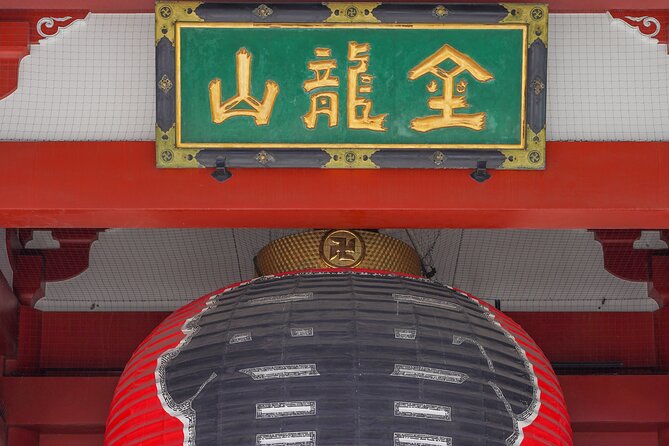
Asakusa starts with Kaminarimon Gate, one of the area’s best-known entrances. The tour then continues through old-town lanes where much of the past has stayed more intact than in newer districts.
Senso-ji Temple is next, with time to walk around and learn how people pray at Japanese temples. The tour lists Senso-ji as the oldest temple in Japan, and it includes practical time for observing how worship is done.
This is one of the best “Tokyo context” portions of the day. You’re not just looking at the architecture. You’re getting a gentle explanation of the actions people take, which helps you behave respectfully and feel less like a spectator.
Admission tickets at these temple-related stops are listed as free. So what you’re paying for is the guided flow: knowing where to go, how long to stay, and what to pay attention to.
One note for comfort: Asakusa can get busy, and you’ll be walking. Bring layers if weather is odd, and plan for standing and slow moving crowds near the main temple area.
Lunch in Asakusa with vegetarian and vegan options

Lunch is part of the plan and is included. The tour specifically mentions lunch in the Asakusa area, with vegetarian and vegan options available if you request in advance.
I like that this is not a “maybe we can find something” situation. If you tell the operator at least 1 day before, you give yourself the best chance of getting the meal you need.
Still, here’s the fairness note: the info is clear that allergy-free substitutions cannot be guaranteed. That means if you have a severe allergy, you might want to bring extra snacks you can safely eat, even if lunch options exist.
The included lunch is a key part of the value of this tour. Without it, you’d need to spend more time figuring out food during peak hours, which would make the five-hour schedule feel tighter.
Price and value for a 5-hour Tokyo hit list
At $101.74 per person for a 5-hour guided day, the value depends on what you’d otherwise do with your time. If you’re planning to DIY Tsukiji, Akihabara, and Asakusa in one day, the biggest costs are not just money, they’re friction. Navigation, timing, and figuring out what to see can burn your hours.
This tour packages those neighborhoods with:
- A certified guide for commentary and route flow
- 2 to 3 food samplings in Tsukiji
- Tour photos taken by the guide
- Lunch with vegetarian and vegan options available
Admission tickets at the listed stops are free, so you’re not paying entry fees for the highlights. Train fees are the main extra cost, and they’re listed as 390 yen.
Compared to a “market tour” that only focuses on food, this one also includes the pop-culture side of Akihabara and the iconic temple side of Asakusa. Compared to an “anime shopping tour” that mostly skims landmarks, you still get the Tsukiji food experience.
The bottom line: if you want three famous areas in one half-day and you prefer not to plan every turn, the price looks fair. If you already know Tokyo well and you’d rather travel at your own pace, you might find it less necessary.
Logistics that matter: start time, photos, and the train fee
The tour starts at 9:30 am, and it’s important to be on time. The information is straightforward: late arrivals can mean you cannot join, and you would not get a refund or reschedule if you miss the group.
It uses a mobile ticket, and it’s near public transportation. That’s helpful in a city where stations are everywhere but exits are not always intuitive.
Two practical perks deserve real attention:
- You do not need to take photos while you walk the route. The guide takes them and sends them to you, which cuts down stops and keeps your eyes on what matters.
- Your tastings and lunch reduce “food time.” You spend more time looking and listening, less time searching.
And yes, you should budget for the train fee, listed as 390 yen, not included. You can use an IC card for trains, or bring some cash.
Weather, walking pace, and who this tour is best for
This is a certified-guide walking tour, so weather and comfort matter. The info warns that weather can become more extreme, with summer highs reaching 40°C (104°F) and winter lows dropping to -5°C (23°F). Plan for heat, sun, rain, or cold. Wear breathable layers in summer and bring something for wind or cold in winter.
The tour may be canceled for safety due to unsuitable weather. If that happens, you’re offered a different date or a full refund.
In terms of who it fits best, this is ideal for:
- First-time visitors who want a fast, structured intro to Tokyo
- People who care about food sampling in Tsukiji
- Anyone who wants to see Akihabara without turning the day into a shop-only sprint
- Families and people of many ages, since the tour notes that most can participate
It’s not a great match if mobility is limited. The tour also says it is not recommended for people with mobility issues, so if that’s you, a private tour would likely be a better fit.
Guide quality: what you can expect from people like Kenji and Hana
The most praised part in past experiences is the guide. One name that comes up is Kenji, described as friendly, generous, and informative. Another guide mentioned is Hana, who was highlighted as very informative and a lovely person.
What that translates to for you is simple: you’ll get more than “here’s the landmark.” You get context, pacing, and a human tone that makes the busy parts easier to handle.
Also, a smaller group tends to improve the feel. With a max of 7 people, commentary can be clearer and the guide can keep everyone together.
Should you book this Tsukiji, Akihabara, and Asakusa tour?
If your goal is a high-impact Tokyo morning, I’d say this is a strong booking choice. It checks several boxes at once: Tsukiji seafood tastings, Akihabara game and anime stops, and classic Asakusa landmarks, all wrapped in one guided plan with lunch included.
Book it if:
- You have limited time and want a guided route that covers multiple neighborhoods
- You like food tastings and want them built into the schedule
- You’d rather let someone else manage the flow, photos, and explanations
Skip it or consider an alternative if:
- You need a low-walking pace, because this is not designed for mobility limitations
- You have very specific dietary allergies that require guaranteed allergy-free meals (the info does not promise that)
- You prefer complete independence and already know exactly how you’ll travel and eat between these areas
If you’re on the fence, this is one of the simplest ways to get oriented in Tokyo fast, without losing half a day to logistics.
FAQ
What is the duration of the Tokyo Tsukiji, Akihabara & Asakusa tour?
The tour is about 5 hours.
Where does the tour meet, and where does it end?
The tour meets at 築地本願寺 正門3-chōme-15-1 Tsukiji, Chuo City, Tokyo 104-0045, Japan and ends in Asakusa, Taito City, Tokyo 111-0032, Japan.
What is included in the price?
It includes 2 to 3 food samplings in the market, lunch, tour photos taken by the guide, and a certified guide by MagicalTrip. Vegetarian and vegan lunch options are available upon request in advance.
Are there any extra costs?
Train fees are not included. The listed train fee is 390 yen, and you can use cash or an IC card for trains.
Can I get vegetarian or vegan lunch?
Yes, vegetarian and vegan options are available if you request in advance. You must inform the operator at least 1 day before the tour if you have dietary requests or allergies to mention.
What about allergies?
The tour information says allergy-free meals cannot be guaranteed, and dietary requests made on the tour day cannot be accommodated. Meals are prepared in kitchens that do not belong to the operator.
Is it free to cancel?
Yes. You can cancel up to 24 hours in advance for a full refund.
What happens if the weather is bad?
The tour may be canceled for safety due to unsuitable weather. If that happens, you will be offered a different date or a full refund.
More Anime & Pop Culture Tours in Tokyo
- Official Street Go-Kart Tour – Akihabara
★ 5.0 · 1,578 reviews - Tokyo Go Kart: Asakusa, Skytree, and Akihabara **IDP MUST**
★ 5.0 · 988 reviews - Tokyo Studio Ghibli Museum and Ghibli Film Appreciation Tour
★ 4.5 · 421 reviews - Akihabara Anime & Game Adventure Walking Tour (Group or Private)
★ 5.0 · 404 reviews
Fresh options around Tokyo
- Tokyo: Nagano Snow Monkeys and Zenkoji Tour with Temples★ 4.9 · 19 reviews
- Yokohama Port: Private Customizable Tour with Transfer★ 5.0 · 19 reviews
- Explore Unique Tokyo Streets / Learn with a Pro Photographer★ 5.0 · 19 reviews
- Sushi Making with Interactive Samurai Experience at JIN-ASAKUSA★ 5.0 · 19 reviews
- DAIKOKU excursion by car DRIFT automobile encounter★ 4.5 · 19 reviews
- Official Street Go Kart Tour Akihabara 2nd★ 5.0 · 19 reviews
- Cosplay Experience with Professional Makeup and Photo Shoot!★ 5.0 · 19 reviews
- Japanese Traditional Sweets making★ 4.1 · 19 reviews
Anime & Pop Culture Tours, compared.
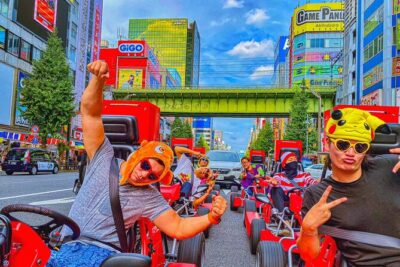
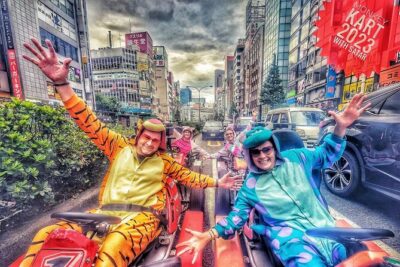
Tokyo Go Kart: Asakusa, Skytree, and Akihabara **IDP MUST**
Read our review →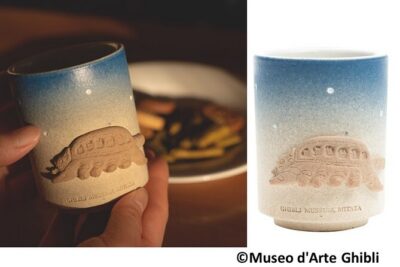
Tokyo Studio Ghibli Museum and Ghibli Film Appreciation Tour
Read our review →
Akihabara Anime & Game Adventure Walking Tour (Group or Private)
Read our review →

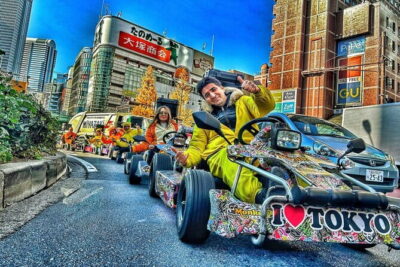
Tokyo Go-Kart Tour Shibuya-Harajuku-Shinjuku (*IDP Required)
Read our review →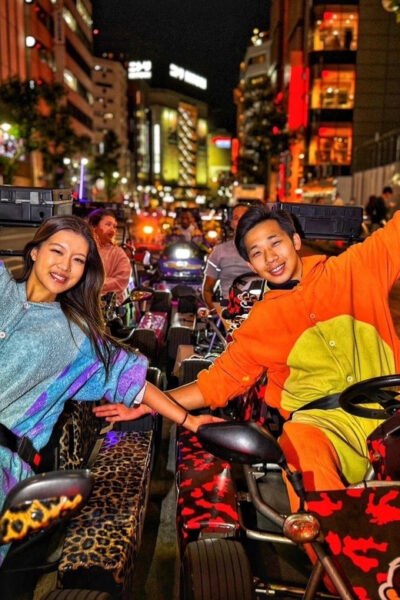
Guided Go Kart Tour from Harajuku to Shibuya Crossing
Read our review →Browse the lists this tour appears in