Reviewed · TOKYO TOURS
Tokyo Toilet Tour
Tokyo toilets can be art, not a joke. This private 3 hours 30 minutes tour stitches together architect-designed toilets and small neighborhood stops, with a private guide who tailors what you see. The one drawback to consider is that this tour is laser-focused on toilet design and the surrounding architecture, so it may feel niche if you want only classic big-ticket Tokyo sights.
If you like Tokyo for its details, you will probably have a great time. I like that the route mixes purpose-built design stops with easy walking links, including Shibuya Crossing and small parks. You may also care about the film connection here, since the Yoyogi Hachimangu stop ties to Wim Wenders Perfect Days, and your guide can point out why those choices land where they do.
Key highlights you should know before you go
- Toilet design by major architects: Shigeru Ban, Toyo Ito, Tadao Ando, Kengo Kuma, Fumihiko Maki, Kashiwa Sato, Nao Tamura
- A true private format for first-time Tokyo: you get personalized attention and can adjust what fits you
- A smart way to see less central streets: you move through parks and neighborhoods, not just the obvious lanes
- Perfect Days fans get extra context: the tour spot near Yoyogi Hachimangu connects to the movie’s lunch-break setting
- One guide can make the walk click: Ken, from Tanaka’s Tokyo Tours, has been praised for being friendly and for explaining the Shibuya City project and the architects involved
- Good balance of stops and walking time: you get multiple architecture moments plus short links, like the quick Shibuya Crossing crossing
Tokyo Toilet Tour is really about Tokyo details, not just toilets
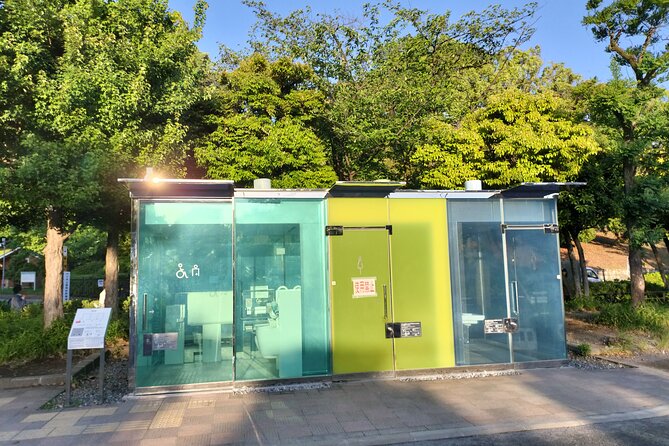
This tour works because it treats everyday design like it matters. You are not just hunting for toilets, you are walking through Tokyo spaces where architects were asked to think about light, privacy, and everyday use. That mindset is what makes it feel more like a guided neighborhood tour than a one-note gimmick.
I also like how the itinerary covers multiple micro-areas in a single stretch, mostly between Shibuya and Ebisu. It is a way to understand how different districts feel, without having to commit a full day to one giant route. And because it is private, you are not stuck with a pace that does not match your feet or your interests.
One practical thing to keep in mind: the tour is around 3 hours 30 minutes and is rated for moderate physical fitness. So plan on walking between stops, standing around to look, and moving on when the timebox ends at each location.
A few more Tokyo days worth comparing
- Mt Fuji and Hakone 1-Day Bus Tour Return by Bullet Train
★ 5.0 · 26,383 reviews - 1-Day Tokyo Bus Tour
★ 5.0 · 14,250 reviews - Tokyo: TOKYO SKYTREE® Admission ticket
★ 4.5 · 11,192 reviews
Price and what $223.34 per group really means
The price is $223.34 per group, up to 4 people. When you split it, it can drop to a pretty reasonable per-person cost, especially for couples or small families. If you are traveling solo, it is still fair for a private guide focused on a very specific theme, because you are paying for expertise and timing, not just transportation.
Here is how I think about value for this particular tour: you are paying to get a guided thread through several architect-linked sites, plus the ability to customize what you want to emphasize. You are also getting a mobile ticket, which helps keep things simple on the day.
It also tends to be booked ahead, with an average booking window of about 39 days. That matters if your travel dates are fixed, because private availability can tighten.
Where you meet, where you end, and how the route flows
You start at Yoyogi Fukamachi Mini Park (1-chōme-54-1 Tomigaya, Shibuya, Tokyo 151-0063). The tour ends at Ebisu Station (JR Yamanote Line and Tokyo Metro Hibiya Line), at 1 Chome-5 Ebisuminami, Shibuya, Tokyo 150-0022.
This start-to-finish setup is handy because it can fit into a Tokyo day without forcing you to backtrack. You also get a natural geographic storyline: Yoyogi into central Shibuya edges, then onward toward Ebisu.
Also note what is included and what is not. You get a private guide, but lunch and private transportation are not included. So if you care about food timing, you will need to plan that yourself around your 3 hours 30 minutes window.
Stop 1: Yoyogi Hachimangu Shrine and the clear cubicle moment
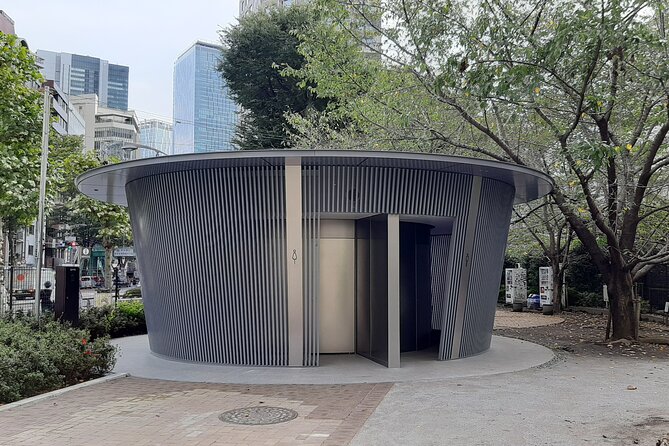
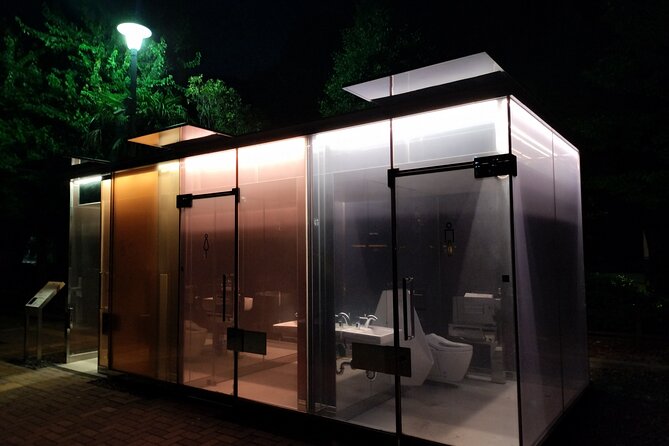
Your first architectural stop is Yoyogi Hachimangu Shrine, where you can see toilet designs associated with Shigeru Ban and Toyo Ito. The Shigeru Ban piece is described as a transparent cubicle, positioned near a small Shinto shrine.
This is a strong opener for two reasons. First, the contrast is immediate: traditional shrine setting, paired with design-forward modern toilet architecture. Second, there is a popular pop-culture hook here. If you are a fan of Wim Wenders Perfect Days, this is tied to the movie, since the main character is associated with having a lunch break at that kind of stop.
What to do during your time here: slow down and look at how the design relates to the surrounding public space. If you care about function, also notice how the design communicates privacy and openness in the same glance.
Same corner of Japan, a different kind of day:
- Tokyo: teamLab Planets TOKYO Digital Art Museum Entry Ticket
★ 4.6 · 9,779 reviews - Mt Fuji & Hakone Cruise, Drum Show Bullet Train 1 Day from Tokyo
★ 4.0 · 7,413 reviews - Tokyo: Sumo Show Experience with Chicken Hot Pot and a Photo
★ 4.8 · 6,678 reviews - Tokyo: Shinjuku Food Tour (13 Dishes at 4 Local Eateries)
★ 5.0 · 6,603 reviews
Stop 2: Miyashita Park between Shibuya and Harajuku
Next you head to Miyashita Park for another toilet design stop, associated with Tadao Ando. The park is in a location described as midway between Shibuya and Harajuku, with redevelopment happening in the last five years.
That “new meets old” context is part of why this stop fits the theme. Ando’s design reputation often shows up in people’s minds as concrete and calm, but here the setting matters too, because you are seeing design decisions in the middle of a shifting district.
Your timebox is about 30 minutes. Use that to compare the tone of this stop against Yoyogi Hachimangu: not just what the toilet looks like, but how the park surroundings shape the vibe of the architecture.
Possible drawback: if you are expecting nonstop landmark-style sightseeing, this stop is still very much about design observation. It is worth it if you like thinking about everyday spaces.
Stop 3: Shibuya Crossing as a quick connector
Then you cross over to the famous Shibuya Crossing for about 5 minutes. It is not described as being directly connected to the toilet project, but it is a recognizable anchor point as you move toward the next stop.
I like these short “connector” moments because they keep the day from feeling like only theme park viewing. You get a quick Tokyo icon, then you switch right back to the architectural thread.
If you are camera-ready, this is the time to take quick photos so you are not rushing later. Just remember the crossing is only given a short slot in the itinerary, so treat it as a fast snapshot, not a long hangout.
Stop 4: Nabeshima Shoto Park and Kengo Kuma in a residential pocket
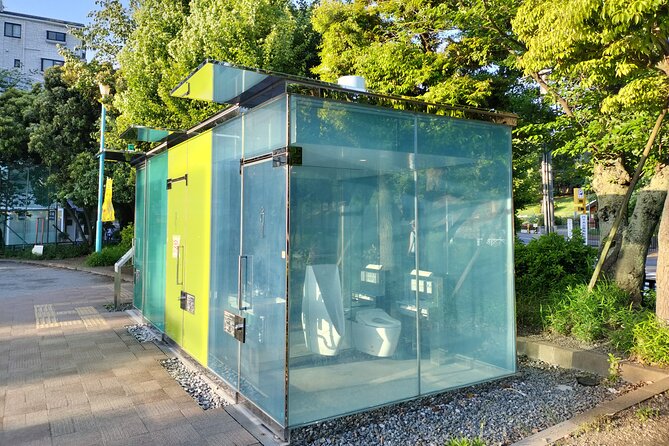
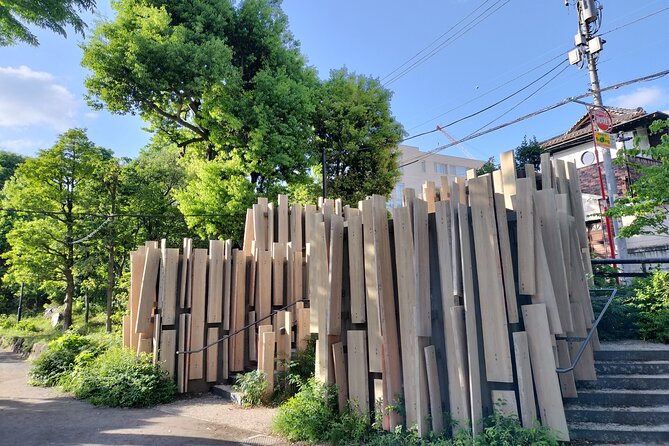
After the Shibuya icon, you go to Nabeshima Shoto Park for the toilet design associated with Kengo Kuma. This stop is described as a quieter residential area, about a kilometer away from the main station.
Kengo Kuma is a name many architecture-minded visitors recognize. But what makes this stop feel different is the setting: instead of only being in the high-visibility center, you are placed in a calmer pocket where the design can feel more “lived-in” and less staged.
You get about 15 minutes here, so it is a quick hit. Use that time to notice how the toilet design fits into the park and neighborhood feel, not just how it looks on its own.
One consideration: because it is in a quieter area, you might miss the sense of major landmark spectacle. But that can also be the point if you want the Tokyo that happens away from the loudest streets.
Stop 5: Ebisu, with three architect-linked toilet designs
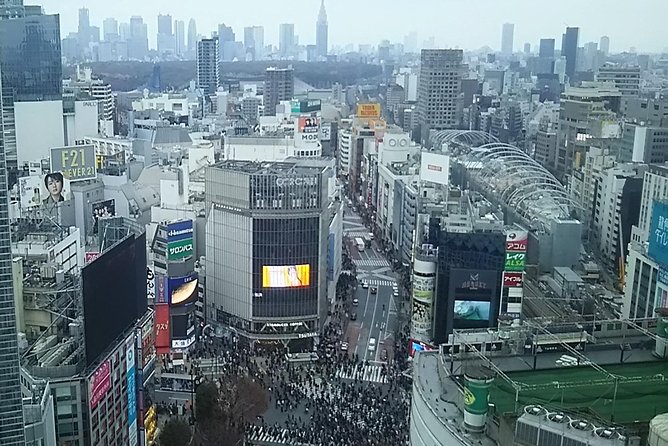
The final area is Ebisu, one station south of Shibuya. This is where you see toilet designs associated with Fumihiko Maki, Kashiwa Sato, and Nao Tamura.
This stop is a great capstone because you get variety within a single neighborhood zone. Three different architect names, and you get to compare them in sequence as you finish the walk. It is the kind of ending that leaves you with a mental checklist of how different design minds handled the same everyday problem.
You spend about 30 minutes in Ebisu. That is enough time to slow down, compare details, and ask your guide to explain what to look for if something stands out. In reviews, Ken from Tanaka’s Tokyo Tours is specifically praised for explaining the architects and the Shibuya City project context, which suggests your guide will connect the dots rather than just point.
Why a private guide makes this tour better than a self-guided walk
This is the part that turns it from sightseeing into learning you can actually use. You get a private guide, and the experience is built around personalization. The format is designed for first-time Tokyo visitors, but it is also flexible for couples, families, and solo travelers.
That customization matters because you can steer your time toward what you care about. The tour description also notes that you can collaborate with your guide to design your day based on interests and ability. It even lists examples of big Tokyo attractions you could swap in, like Tsukiji Market, Meiji Jingu Shrine, and the Imperial Palace.
So even if you book this as a toilet-architecture tour, you are not locked into one rigid script. If your priorities shift as you go, a guide can help adjust within the overall structure.
Also, I like that the guide can add context without turning the walk into a lecture. Reviews have highlighted Ken as friendly and informative, and specifically able to explain the history of the Shibuya City project and how the architects fit into that story.
Practical tips to make the most of each 15 to 30 minute stop
You have short timeboxes at most locations, so small choices help. Bring a mobile battery for maps and photos, and keep your camera ready during each location entry so you do not lose time at the edges.
Because the tour has you moving between parks and stations, dress for walking. The experience is rated for moderate physical fitness, so plan for steady movement rather than long rests.
Finally, set expectations with the theme. You are not here for museum-style indoor displays. You are here for designed toilets in real public spaces and for the way those toilets fit into the surrounding architecture and neighborhood planning. If you want Tokyo through design, that works. If you want a standard checklist of famous monuments only, you may feel a mismatch.
Who this Tokyo Toilet Tour is for, and who should skip it
This tour is a good match if you:
- Like architecture and design details more than souvenir shopping
- Want a guided way to understand Tokyo neighborhoods around Shibuya and Ebisu
- Are a first-time visitor who wants structured orientation without the impersonal feel of a big group
- Are a Perfect Days fan and want that movie link explained in a real setting
It may not be the best match if you:
- Want mostly mainstream attractions with long viewing times at each stop
- Prefer a traditional sightseeing loop where every stop feels like a major headline landmark
- Are not interested in toilet design as a serious architectural topic
The short Shibuya Crossing stop is also a hint. It is a quick connector, not a full immersion into the intersection.
Should you book Tokyo Toilet Tour?
Book it if you want Tokyo that feels specific and thoughtful, not generic. The private format, the architect names tied to real public toilets, and the way the route links Yoyogi, Shibuya, and Ebisu make it a fun way to get your bearings.
Skip it if your travel brain wants a classic itinerary with lots of iconic stops and long stays. This is a theme-forward walk, and it rewards curiosity about everyday spaces.
If you are traveling with up to three others, the per-group pricing also makes it easier to justify, since you can spread the cost while keeping the private-guide experience.
FAQ
How much does Tokyo Toilet Tour cost?
It costs $223.34 per group, up to 4 people.
How long is the tour?
The tour lasts about 3 hours 30 minutes.
Is this tour private or shared?
This is a private tour/activity. Only your group will participate.
Where does the tour start and end?
It starts at Yoyogi Fukamachi Mini Park in Tomigaya, Shibuya, and ends at Ebisu Station on the JR Yamanote Line and Tokyo Metro Hibiya Line.
What is included in the price?
The price includes a private tour guide.
What is not included, and can I cancel for a refund?
Lunch and private transportation are not included. Free cancellation is available up to 24 hours before the experience’s start time for a full refund.
Fresh options around Tokyo
- Tokyo: Nikko Kegon Falls Lake Chuzenji Toshogu Temple & More★ 4.9 · 12 reviews
- Tokyo: Samurai History Walking Tour★ 5.0 · 12 reviews
- Harajuku: Kawaii Fashion and Pop-Culture Tour★ 4.7 · 12 reviews
- Tokyo: Mt. Fuji & Lake Kawaguchi Instagram Full Day Trip★ 4.1 · 12 reviews
- Shibuya Tokyo: Modern Kintsugi Workshop in Shibuya★ 5.0 · 12 reviews
- Tokyo: GTR Guided Daikoku Experience at Night★ 5.0 · 12 reviews
- Tokyo: Daikoku JDM Car Culture Tour★ 4.6 · 12 reviews
- Mt Fuji Private Day Trip from Tokyo with English speaking driver★ 5.0 · 13 reviews
Tokyo Tours, compared.
Mt Fuji and Hakone 1-Day Bus Tour Return by Bullet Train
Read our review →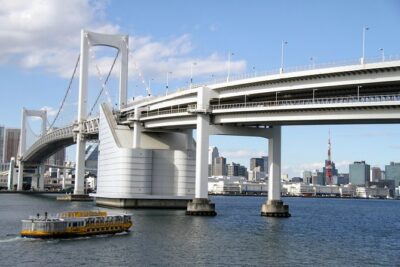
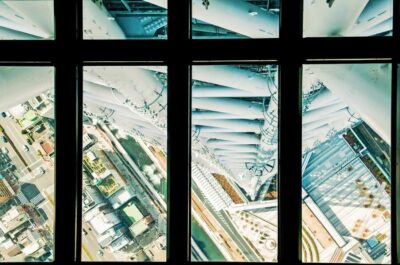

teamLab Planets TOKYO Digital Art Museum Entry Ticket
Read our review →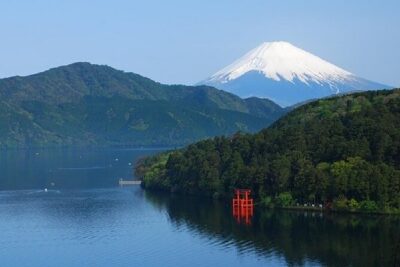
Mt Fuji & Hakone Cruise, Drum Show Bullet Train 1 Day from Tokyo
Read our review →
Sumo Show Experience with Chicken Hot Pot and a Photo
Read our review →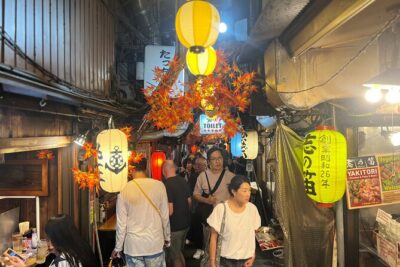
Shinjuku Food Tour (13 Dishes at 4 Local Eateries)
Read our review →